
Case Studies & Success Stories

Jenn Lueke Sells Grocery Lists to 182,000 Inboxes

August 19, 2026
Share
Jenn Lueke Sells Grocery Lists to 182,000 Inboxes

Get Creator Revenue Insights

How creators are turning audiences into subscription businesses
Share
Key Takeaways:
  • The eat goood newsletter lists over 182,000 subscribers and publishes three times a week, on Wednesdays, Fridays, and Sundays.
  • Lueke started posting recipes in 2018 as a college student, spent five years going nowhere, then broke out on budget meal planning content and left a corporate finance job at the end of 2023.
  • Her debut cookbook, Don't Think About Dinner, published by William Morrow on January 13, 2026, carries the New York Times bestseller line on its own cover copy.
  • The paid tier is not writing. It is meal plans, grocery lists, meal prep guides, and subscriber-only recipes, as she described on the Food Blogger Pro podcast.
  • Every one of those things is a screen. She is shipping software through an email client that cannot check off a box.
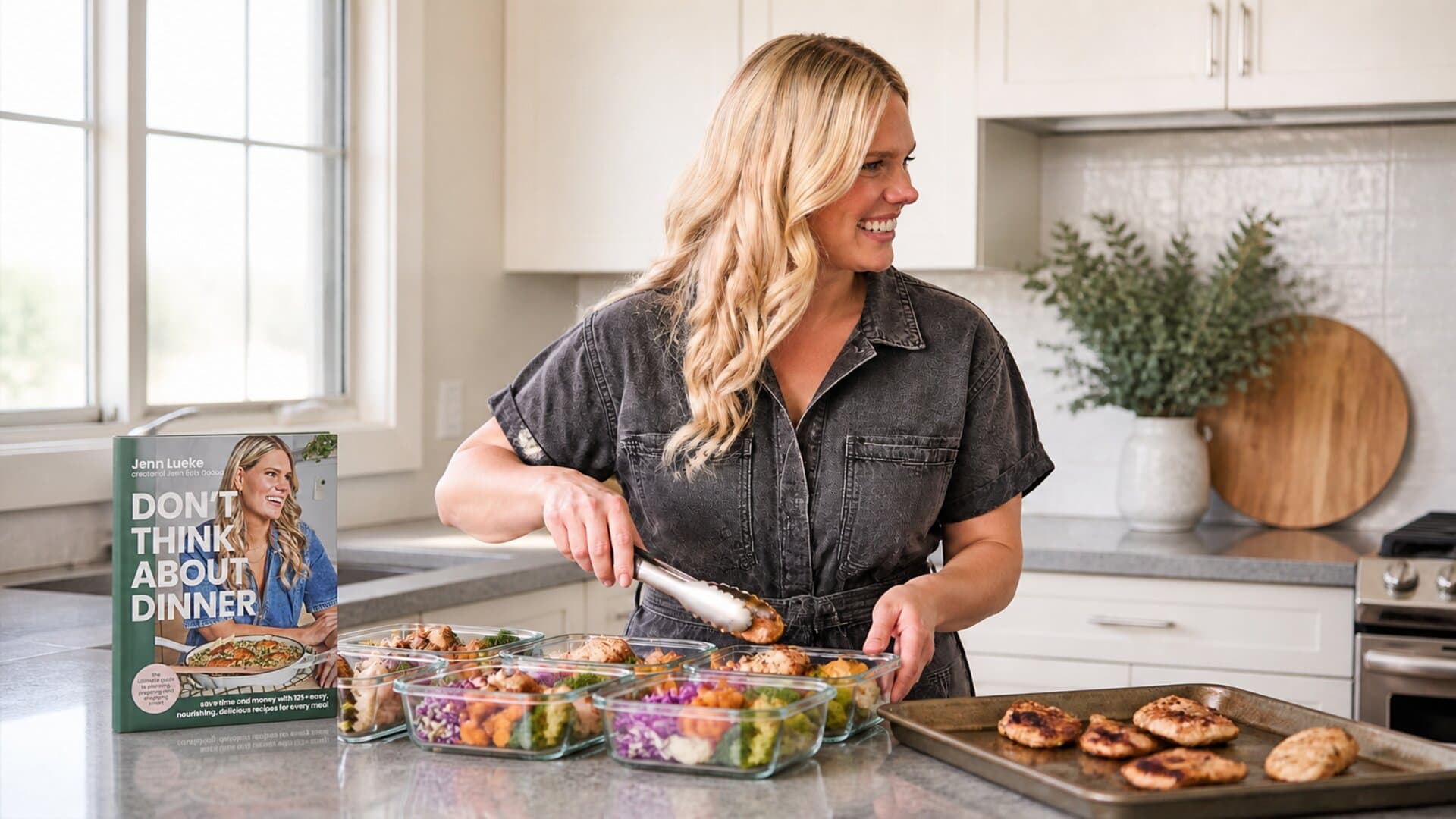
There is a specific kind of creator business that looks finished and is not. Jenn Lueke runs one. She has the audience, the bestseller, the recurring revenue, the team, and the discipline. What she does not have is the product shape her own paid tier keeps asking for. Jenn Lueke is a Boston-based recipe creator who publishes the eat goood newsletter to more than 182,000 subscribers and wrote the New York Times bestselling cookbook Don't Think About Dinner. She posts as @jenneatsgoood on Instagram, where she reached 1.7 million followers, and on TikTok, where the account sits near 798,000. The subject is narrow on purpose: nutrient-dense food that does not require you to think very hard on a Tuesday, built around budget grocery hauls and meal prep. The newsletter is the center of it. Her own framing on Food Blogger Pro was that "Substack is kind of the hub of my business," with the videos, carousels, and blog posts arranged around whatever the newsletters are doing that week. That is an unusually clear statement of strategy from a creator whose largest follower count is on Instagram. Lueke started in 2018, in college, as a hobby. It did not work for five years. Then in 2023 the budget meal planning content landed and the account went from thousands of followers to a million inside a year. She left her corporate finance job at the end of that year. The newsletter launched in January 2024. The first full-time hire came about a year into the growth, the second in December 2024, with contractors handling video editing, photography, and the content calendar. That sequence matters more than the follower count. Five years of nothing, then one year of everything, then immediately hiring. She treated the break as a business the moment it arrived, which is exactly what most creators do not do. They subscribe for meal plans, grocery lists, meal prep guides, and subscriber-only recipes, which is a utility product rather than a reading product. Three emails a week. Two free, one paid. The free ones do the work of proving she is worth trusting with dinner. The paid one is the tool. Read that list again and notice what is not on it. Nobody is paying for essays. Nobody is paying for a personality. They are paying for a thing that tells them what to buy at the store and what to do with it on Sunday afternoon so that Wednesday is not a crisis.
What the paid tier isWhat email can do with itWhat an app would do with it
Grocery listPrint it, or retype itCheck items off in the aisle, sorted by store section
Meal planRead it onceSwap Thursday, resize to two people, reshuffle the list
Meal prep guideScroll it with wet handsStep timers that run while you cook
Subscriber-only recipesSearch your inboxA saved, filtered, offline library
A Sunday habitHope the email gets openedA notification at 4pm on Sunday
The right column is not a wish list. It is the standard behavior of every cooking app in the App Store, and none of them have 182,000 people who already trust the author. Because a grocery list is stateful, and email is not. The value of a list is in checking things off, changing your mind, and having it in your pocket in aisle six. Email is a broadcast. It arrives, it is read once, and it goes to the bottom of a stack that gets 120 more messages that day. Everything that makes a meal plan useful happens after the email is opened: at the store, at the counter, on Thursday when the plan changes because someone is coming over.
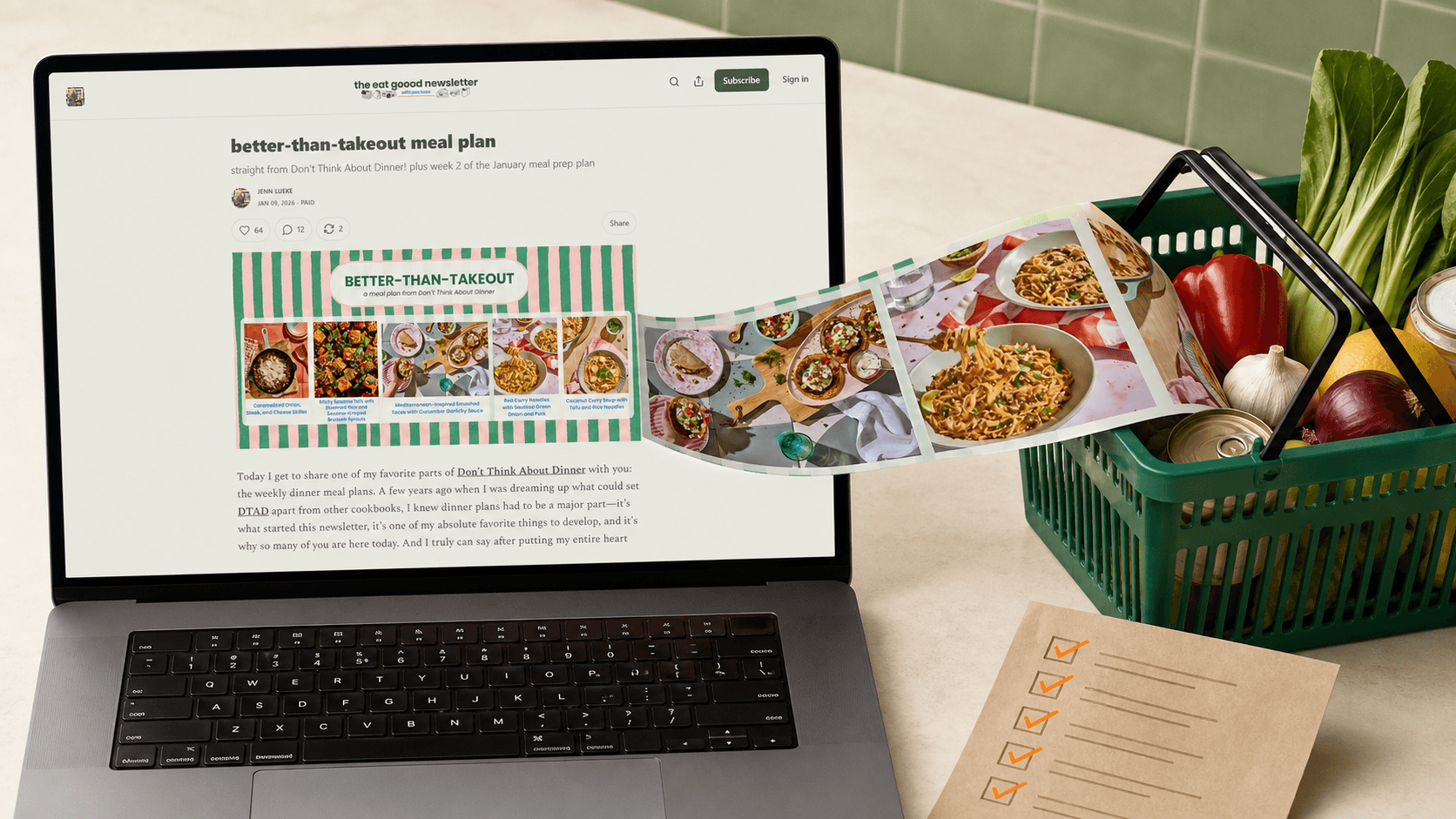
A weekly meal-plan email from Jenn Lueke extending out of a laptop into a real grocery basket and paper shopping list
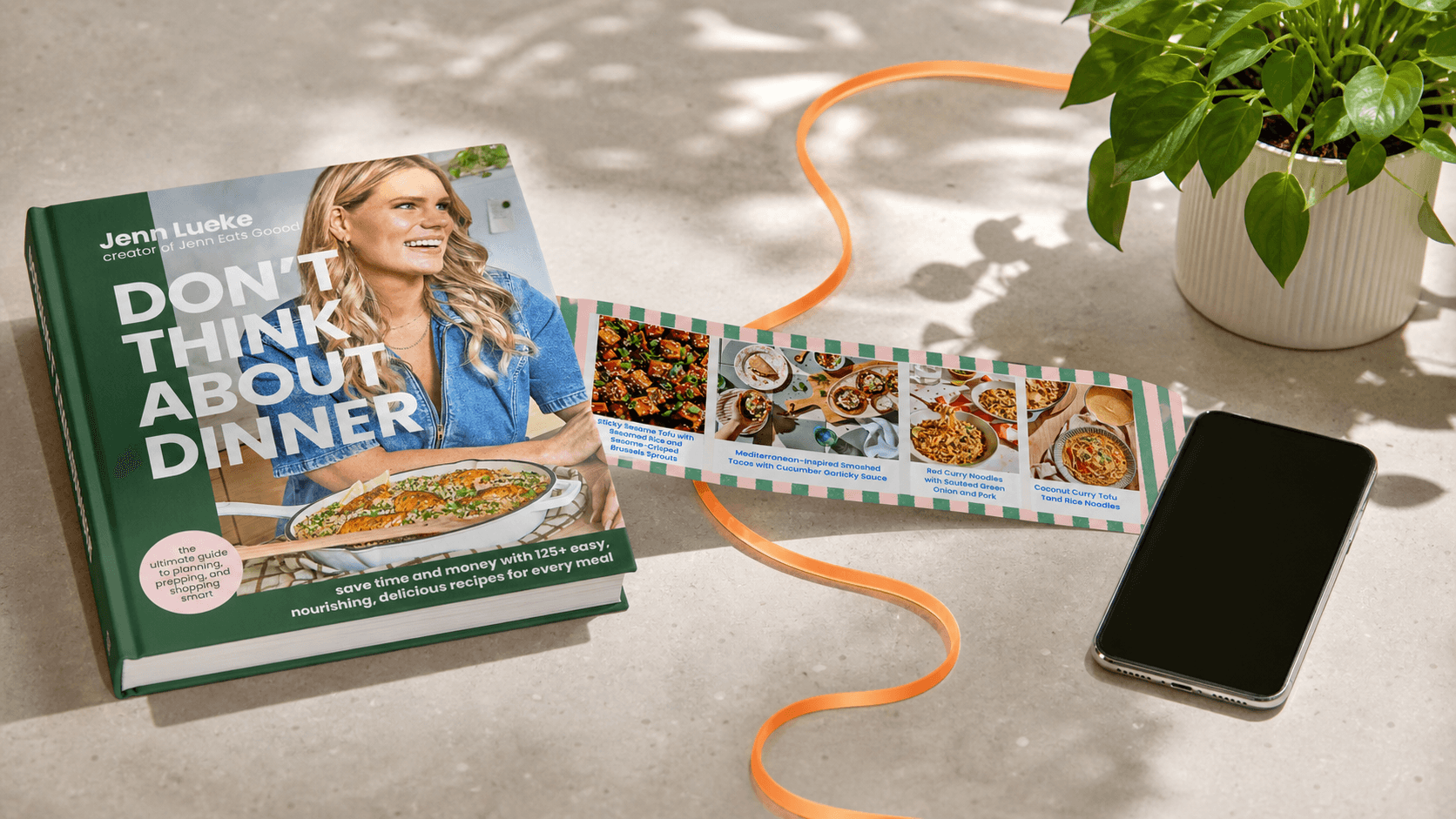
The gap shows up in the economics too. A paid newsletter on Substack costs 10% of every dollar forever, plus roughly 3% to Stripe, and the subscriber payment relationship lives in the platform's account rather than yours. We went through the whole fee structure in our Substack review, and the alternatives in 5 Substack alternatives. At 182,000 subscribers the take rate is no longer a starter tax. It is the largest permanent line item in the business, paid to a platform for a distribution network Lueke stopped needing somewhere around her second hire. Don't Think About Dinner came out on January 13, 2026 from William Morrow, an imprint of HarperCollins, with 125+ recipes and twelve weeks of dinner plans and grocery lists wrapped around them. It debuted in January and reached the New York Times bestseller list, as Northshore Magazine reported. It got the Good Morning America segment. In pre-order it climbed to number four across all cookbooks on Amazon. That is about as well as a creator cookbook goes. And it is a one-time $30 purchase with a royalty rate set by a publisher, sold to people who will buy exactly one copy and cook from it in February. The book is the best possible proof that her audience will pay for meal planning. It is also the least repeatable way to sell it. We wrote about this pattern in why creator product buyers never come back, and the same shape shows up in why creators are ditching merch for apps. The cookbook is a launch. The newsletter is a business. The app is the version of the newsletter that a reader opens on purpose instead of by accident.
Jenn Lueke's cookbook leading into a recurring weekly meal plan and a meal-planning app on a phone
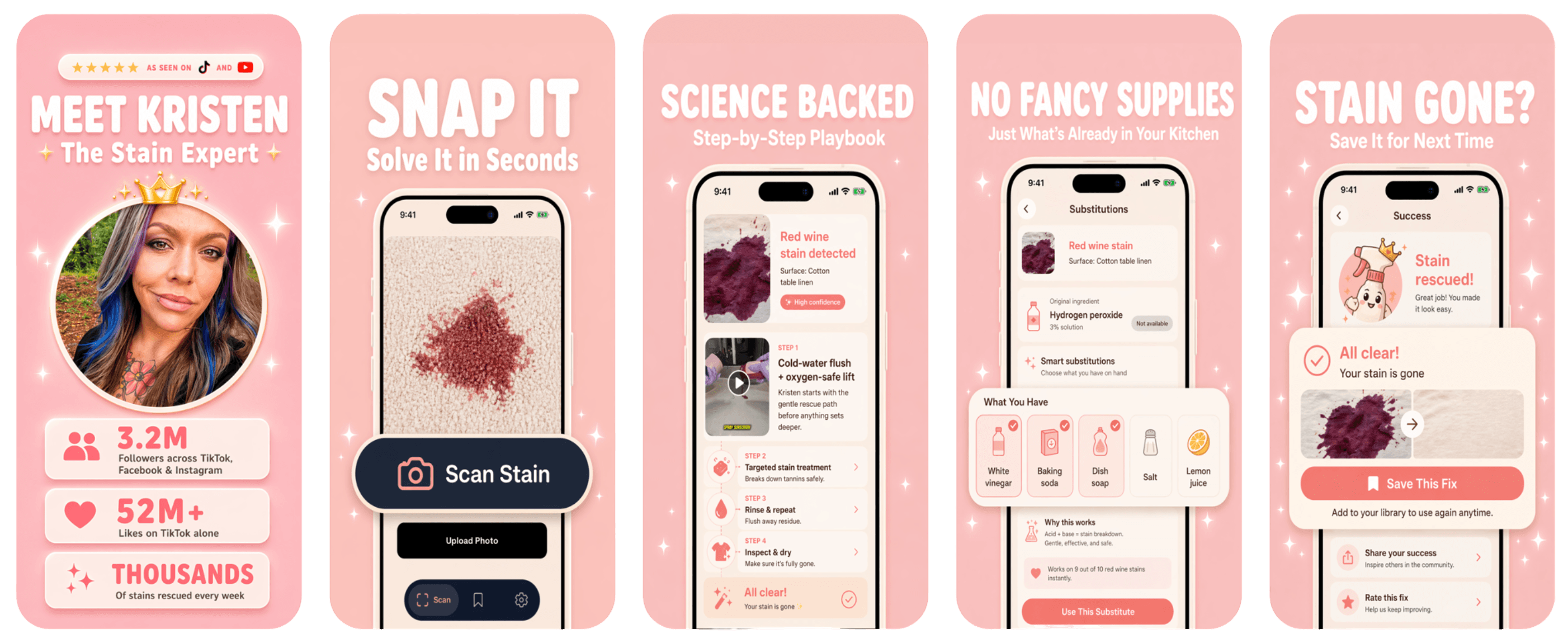
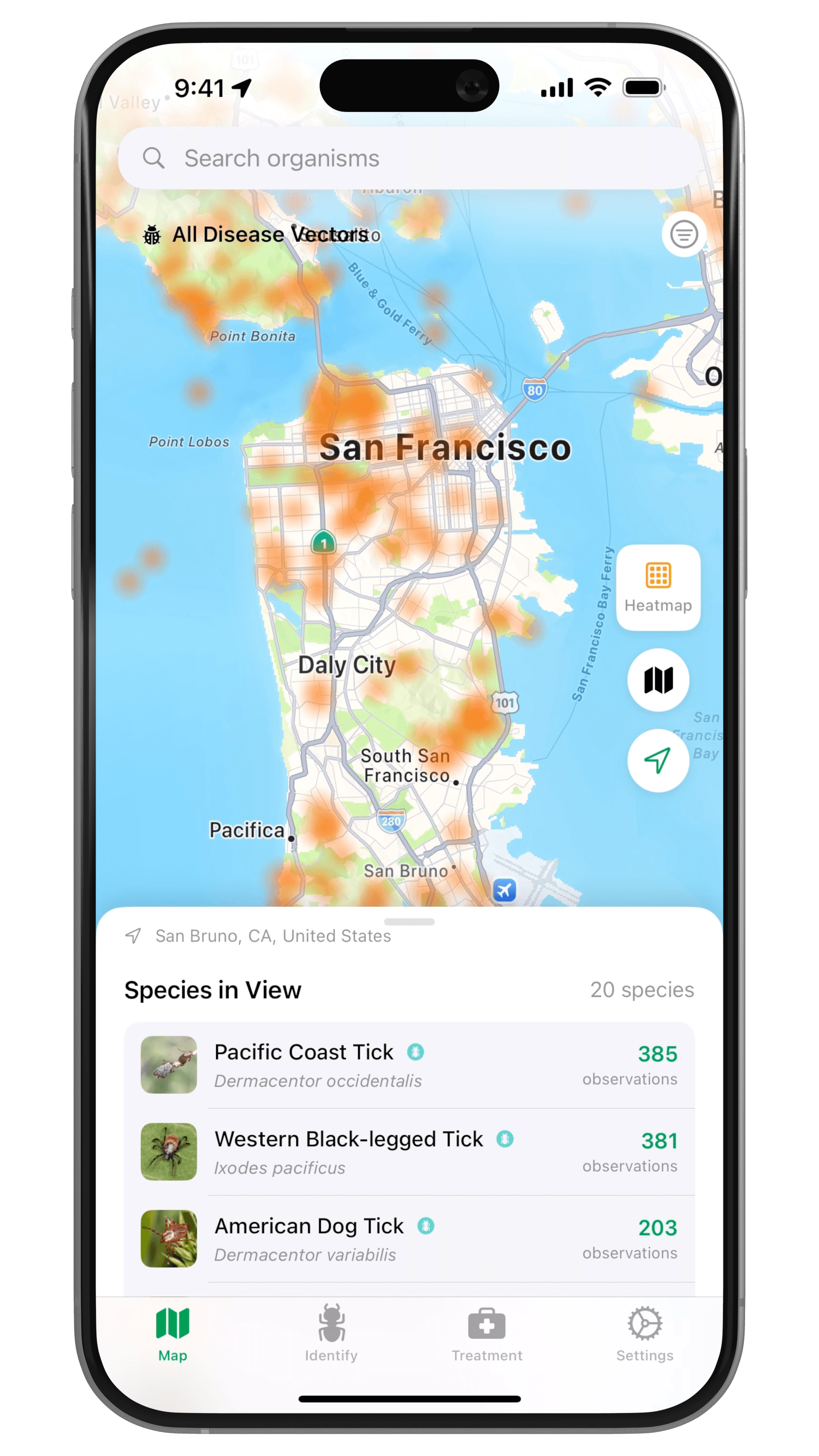
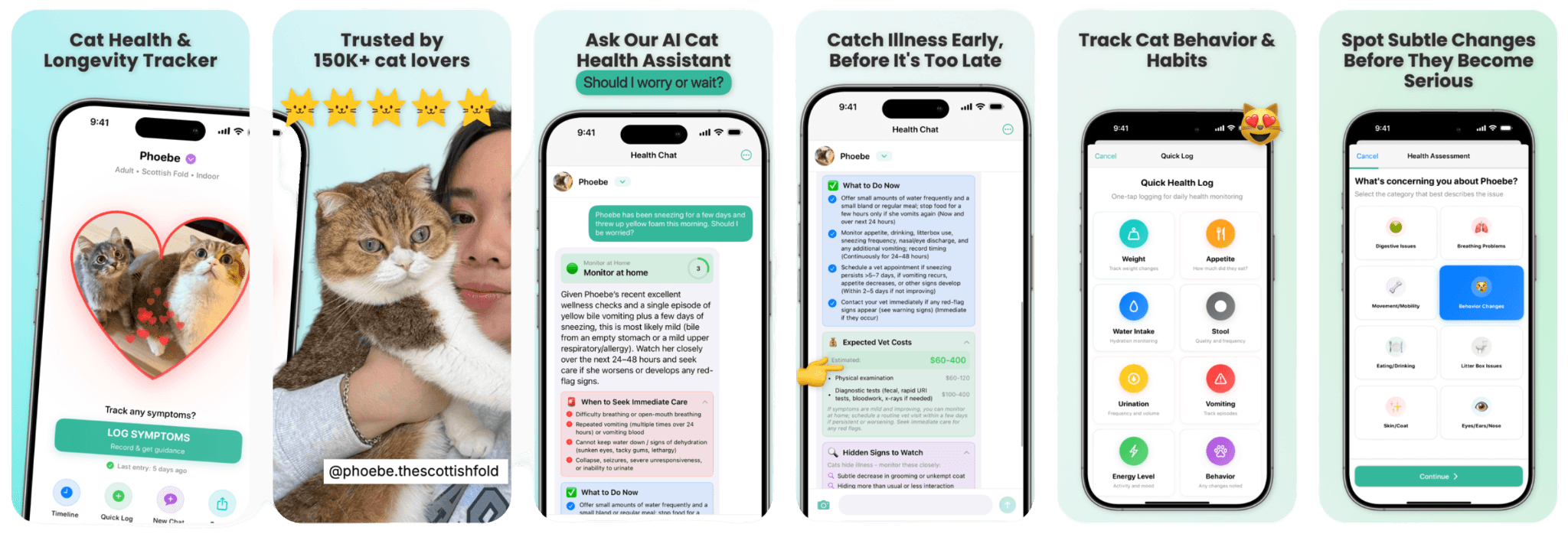
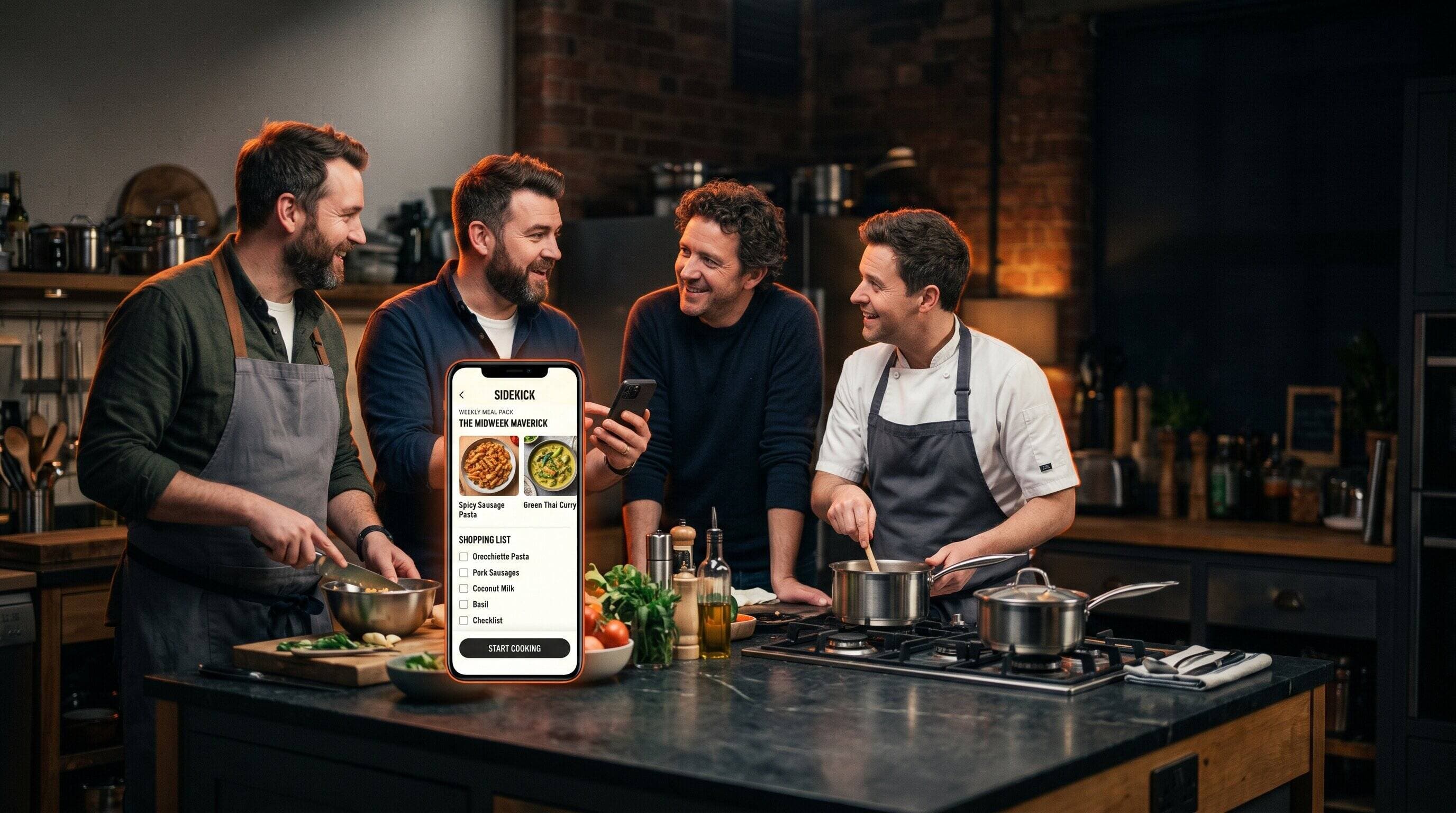
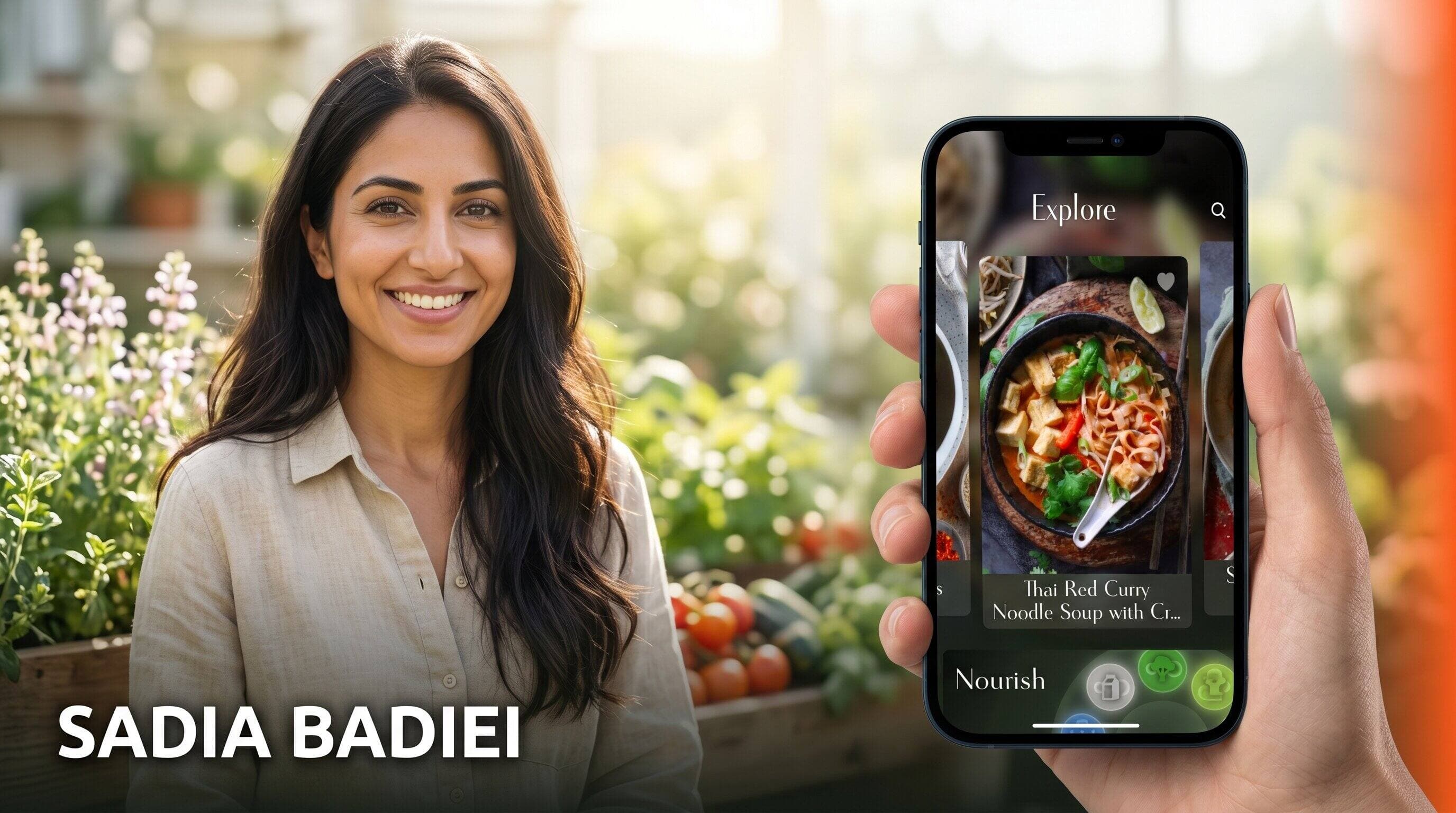
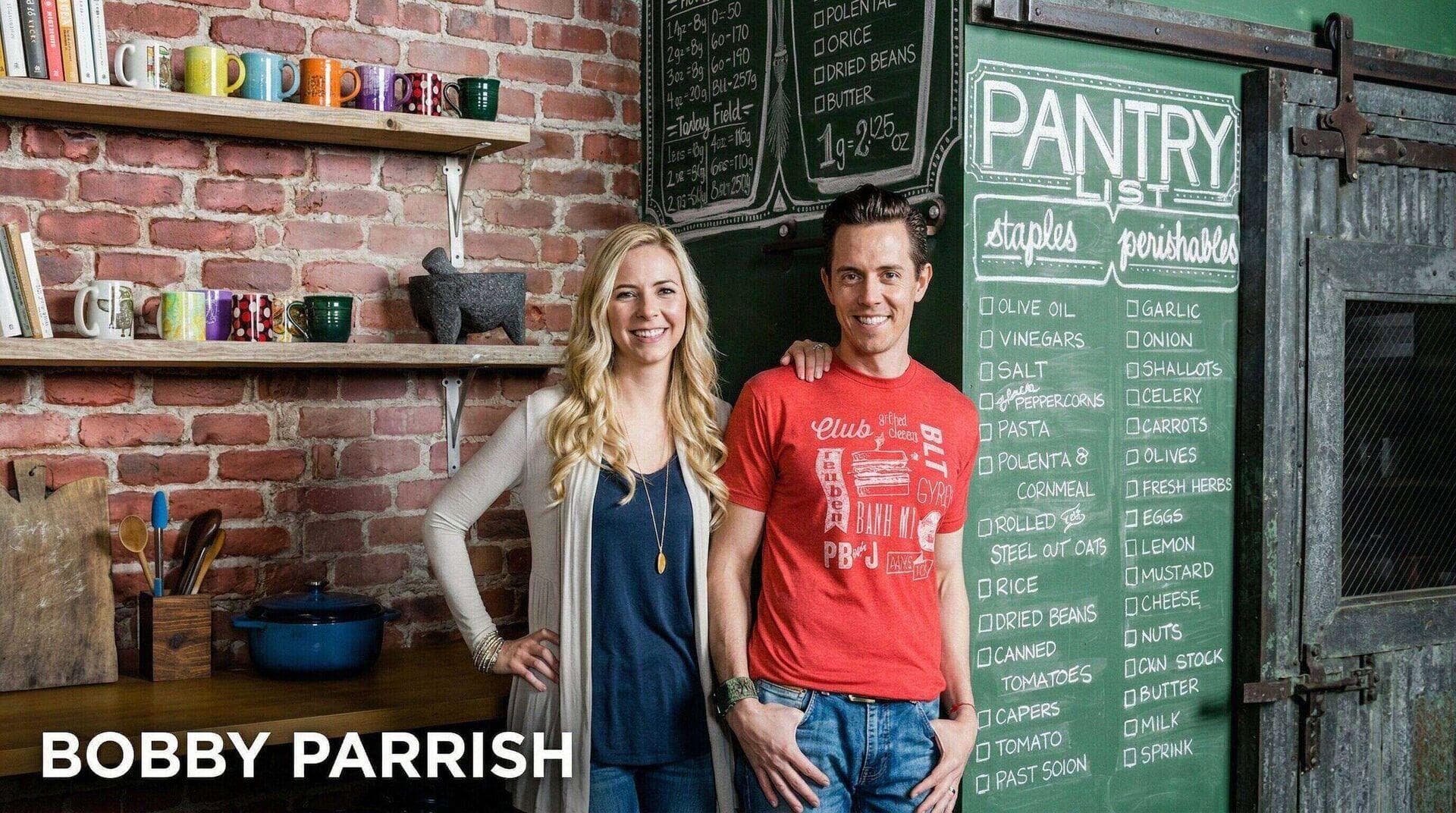
This is not really a post about one person. If you run a recipe account with a few hundred thousand followers and a paid tier that delivers meal plans, prep guides, or grocery lists, you are in the same position, and the diagnosis is short. You already found product-market fit. You found it the hard way, by getting people to pay monthly for something. The only unresolved question is the container. Email was the fastest thing to start with, and it is now the thing capping retention, because a subscription you have to remember to open churns faster than one that lives on a home screen. Why app subscribers cancel covers the retention mechanics, and annual vs monthly subscriptions covers the pricing side. Creators who made this move are already in the corpus. Bobby Parrish built the Bobby Approved food scanner out of a grocery haul channel. Sadia Badiei turned Pick Up Limes into a recipe app. Sorted Food built Sidekick and made the cooking itself the product. None of them started with more trust than Lueke has right now. 1. Narrow beats broad, and it took five years to find the narrow thing. Recipes did not work. Budget meal planning worked. The difference between the two is a specific problem with a specific person's Tuesday attached to it, and there is no way to find that except by publishing through the years when nothing happens. 2. Hire before it feels responsible. Two full-time employees plus contractors, inside two years of the break. Most creators at 1.7M followers are still editing their own videos at midnight and calling it discipline. 3. Look at what your paid tier actually delivers, not what platform it arrives on. If the thing people pay for is a plan, a list, a tracker, a schedule, or a library, you are running a software company that ships through an inbox. Our about page explains how the revenue share works, and App Care covers year two, which is where creator apps quietly die. The number that compounds is MRR, and it compounds better on a surface you own. Jenn Lueke is a Boston-based recipe creator who posts as @jenneatsgoood, where she has 1.7 million Instagram followers and roughly 798,000 on TikTok. She publishes the eat goood newsletter to more than 182,000 subscribers and wrote Don't Think About Dinner, a New York Times bestselling cookbook published by William Morrow in January 2026. Paid subscribers receive meal plans, grocery lists, meal prep guides, and subscriber-only recipes. The newsletter publishes three times a week on Wednesdays, Fridays, and Sundays, with two free editions and one paid edition. She started posting recipes in 2018 as a college student and grew slowly for about five years. Budget meal planning content broke through in 2023 and took the account from thousands of followers to a million within a year. She left her corporate finance job at the end of 2023 and launched the newsletter in January 2024. Because the paid product is already a tool rather than a reading experience. Grocery lists need checkboxes, meal plans need to be edited and resized, and prep guides need timers, none of which an email client can do. An app also removes the newsletter platform's 10% cut, puts the product on the reader's home screen where a habit can form, and gives the creator the subscriber relationship and the App Store listing outright.
Our work

Creators who already did this

These are apps we designed, built, shipped, and still run today, with the creator keeping the code and the audience.

Creator app strategy

Curious what your app could be?

Enter your handle and BUILT BY FOUNDRY will research your audience and present custom app concepts. Free.

Jenn Lueke Sells Grocery Lists to 182,000 Inboxes