
Substack Review 2026: Is It Worth It for Creators?

Substack Review 2026: Is It Worth It for Creators?

Foundry
May 10, 2026
Our verdict: Substack is the most credible place to publish a paid newsletter in 2026. The discovery network, the mobile app, and the writers already on it make it the easiest cold start in the creator economy. But Substack is a writing platform, not a business platform. The 10% take rate, the platform-owned subscriber relationship, and the lack of any product beyond an inbox put a hard ceiling on what you can build. Rating: 3.5/5. Key Takeaways:
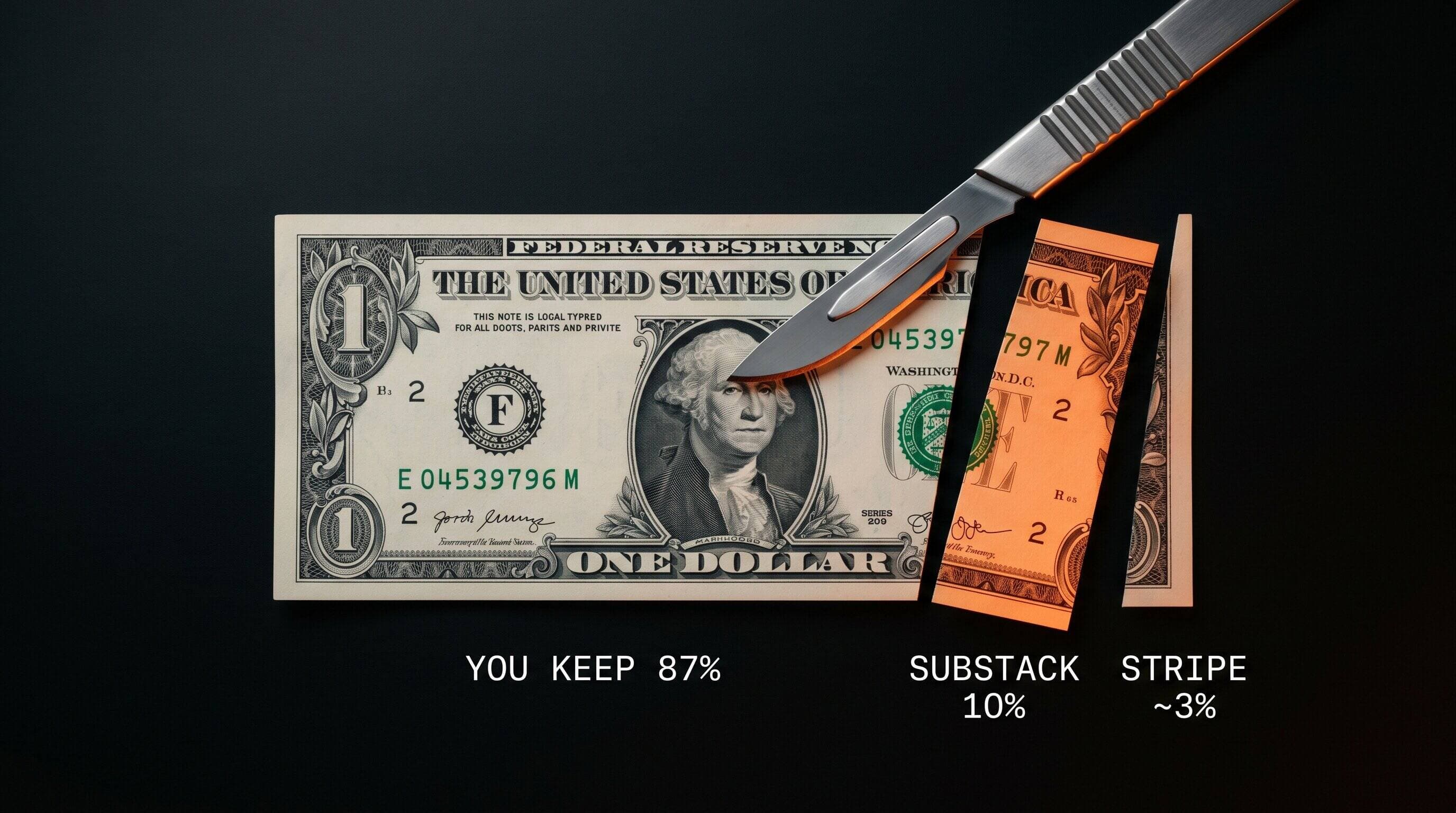
  • Substack is free to use and takes 10% of every paid subscription, plus roughly 3% in Stripe processing fees, which adds up to about 13% of every dollar you collect
  • The platform reports 35 million active subscriptions and 4 million paid subscriptions, according to Substack's own numbers
  • Substack Notes, the in-app social feed, and the Recommendations network are the strongest discovery engines on any newsletter platform, and they are why most writers stay
  • You do not own the App Store relationship, you do not own the recommendation graph, and you cannot easily build a product layer on top of an inbox
  • For writers, Substack is a great home. For creators trying to build a real subscription business with App Store discovery and a product their audience pays to use daily, an inbox is a starting point, not the destination
Substack is a publishing platform that lets writers and creators run free or paid email newsletters, host podcasts and video, and earn subscription revenue, with the company taking a 10% cut of paid subscriptions. Founded in 2017 by Chris Best (former CTO of Kik), Hamish McKenzie (a former tech journalist), and Jairaj Sethi, the company raised a Series B from Andreessen Horowitz in 2021 at a reported $650M valuation, and later ran a community equity raise on Wefunder in 2023. The platform's pitch has always been the same: writers should be able to own their audience and charge for their work without a publication in the middle. In 2026 that pitch has aged well. Casey Newton built Platformer into one of the most cited tech newsletters on the internet on Substack. Heather Cox Richardson's Letters from an American reaches more than two million subscribers. Many top political and cultural newsletters have crossed seven figures in annual revenue, according to The New York Times. Substack has also expanded beyond email. The mobile app launched in 2021. Notes, the in-app social feed, launched in April 2023. Podcast and video hosting are now native. The product has grown from "Stripe plus an email list" into a full publishing network with its own discovery layer.
CategoryScore
Writing and publishing tools4.5/5
Discovery and growth network4.5/5
Paid subscriptions take rate2/5
Mobile reading experience4/5
Audience ownership and portability3/5
Pricing value at scale3/5
Product surface beyond email2/5
Ceiling as a business model2.5/5
Overall3.5/5
Substack scores well on the things a writer cares about, the things a publisher cares about, and the things a reader cares about. It scores badly on the things a founder cares about. That gap is the whole story of this review. Substack itself is free to start. There is no monthly fee, no subscriber cap on the free tier, and no template store you have to pay extra for. The price you pay is a percentage of revenue, only when you charge for subscriptions. Here is what the numbers actually look like for a paid newsletter:
ChargeRateNotes
Substack platform fee10%Taken from every paid subscription
Stripe processingAbout 2.9% + $0.30Standard card processing on every transaction
Free tier hosting$0Newsletter, website, podcast, app distribution included
Refunds and chargebacksVariableStripe fees apply, Substack fee is reversed
Run the math. A creator with 1,000 paid subscribers at $8/month grosses $8,000/month. Substack takes $800. Stripe takes roughly $264. The creator nets about $6,936/month. Over a year, that is $9,600 paid to Substack and roughly $3,168 paid to Stripe. The 10% take rate is the single largest fixed cost in the business, and it never goes down. For comparison, Beehiiv charges a flat monthly platform fee and 0% on paid subscriptions. We covered the math in our Beehiiv 2026 review. At 1,000 paid subscribers and $8/month, the same creator on Beehiiv would pay roughly $109/month for the Max plan and zero in subscription fees. The annual difference is more than $8,000. That is a hire, a sponsorship, an entire product budget.
Substack take rate compared to other newsletter and creator platforms
Several pieces of the platform are genuinely excellent and worth the price to many writers. The writing experience. The editor is fast, distraction-free, and produces clean, readable posts on every device. You can paste in long-form drafts from Google Docs without the formatting blowing up. You can embed images, audio, video, and tweets without leaving the page. Other newsletter platforms feel like email tools that grew a publishing UI bolted on top. Substack feels like a publishing tool that grew an email layer underneath. That difference shows up every day for someone who writes for a living. The Recommendations network. Substack writers can recommend other Substack writers at signup. When a new reader subscribes to your newsletter, they see a list of curated recommendations and can subscribe to any of them with one click. The compounding effect is real. Many newer Substacks report that recommendations now drive 30% to 50% of new free signups, according to writers like Lenny Rachitsky. It is the closest thing to organic growth a newsletter platform has ever shipped. Notes and the social layer. Substack Notes is a Twitter-style feed inside the app, populated only by Substack writers and readers. It is small, but it is a high-signal social network where every poster has a paid newsletter and every reader has demonstrated willingness to subscribe to writing. Notes drives meaningful free-to-paid conversion for writers who post regularly. No other newsletter platform has anything close. The mobile app. The Substack app is the best newsletter reader in the App Store. Push notifications are subtle and configurable. Audio playback, video, and a clean reading view are all native. Once a reader installs the app and follows you, they are reading more posts and scrolling Notes between them. Engagement goes up, churn goes down. Brand and credibility. "Available on Substack" still carries weight. Journalists, academics, and tech founders publish there. A reader who lands on a Substack page assumes legitimacy. That brand equity does real work on free-to-paid conversion. The gaps show up the moment you try to treat your newsletter like a real business instead of a publication. The 10% take rate compounds against you forever. This is the biggest issue and it is structural. Beehiiv and Ghost charge a flat monthly fee and take nothing from your subscriptions. Mailchimp and ConvertKit work the same way. Substack's bet is that the discovery network is worth 10% of your revenue, and for a small newsletter with no audience yet, that may be true. For a newsletter with 5,000 paid subscribers it is no longer true. You are paying a six-figure tax for a recommendations widget you outgrew years ago. Subscriber portability is technically possible but practically painful. You can export your email list. You cannot easily migrate paid subscribers, because the Stripe customer relationship lives inside Substack's account, not yours. Moving to another platform means asking every paying reader to manually re-enter their card. In practice, most writers stay because the cost of leaving is too high. That is platform lock-in dressed up as a feature. Discovery cuts both ways. Recommendations send readers to your newsletter. They also send your readers to other newsletters. Notes shows your readers other writers' work alongside your own. The discovery network is owned by Substack, not by you, and Substack can change the algorithm tomorrow. We have seen this movie before on every other platform. (See our take on why creators are leaving Patreon for apps in 2026.) No App Store presence of your own. Your newsletter sits inside the Substack app, alongside thousands of others. You do not have a listing in the App Store. You do not show up when someone searches the App Store for the topic you cover. We wrote about why this matters in the App Store as a creator growth channel in 2026. New customers who never saw your work cannot find you on the App Store, because there is nothing to find. No real product surface. A paid newsletter is the same product whether you charge $5 or $50. You cannot build interactive features. You cannot add a workout tracker, a habit streak, a community feature, a leaderboard, a generator, a tool. The only product is the post, and the post is the same post readers can already get from a hundred other writers in your niche. Differentiation in 2026 is about what your audience can do with you, not just what they can read from you. Content moderation risk. Substack has had several public controversies about which writers it allows to publish and monetize on the platform. Whether you agree with the company's calls or not, the structural fact is the same: somebody else decides whether your business gets to keep operating tomorrow. Owning your own app removes that risk entirely. A paid newsletter and a subscription app look similar on a P&L statement. They both produce monthly recurring revenue. Beneath the surface, they are different businesses.
DimensionSubstack NewsletterCustom Subscription App
Take rate10% to Substack + ~3% Stripe0% platform fee + Apple/Google 15-30% on first year, 15% after
Discovery channelRecommendations + Notes (platform-owned)App Store search and editorial features
Subscriber relationshipLives in Substack's Stripe accountLives in your RevenueCat or Stripe account
Product surfaceNewsletter onlyAnything you can ship
Daily engagementOpen the emailOpen the app, every day, push notifications
Content engineWriter brainstorms each postEvery user action becomes content
Resale valueEmail listStandalone software business
The Apple and Google take rates look ugly on paper, but they buy you something Substack cannot buy: a place in the App Store where new customers find you without ever seeing a single piece of your social content. That is the single most valuable thing in creator monetization right now, and a newsletter platform cannot offer it. Read more on this in our deep dive on why creators are choosing apps over courses in 2026. The take rates also stop compounding once you scale. A creator with a real subscription app on revenue share with Built by Foundry keeps a clean economic model: we earn when you earn, the App Store takes its cut, and after the first year subscribers convert to a 15% Apple rate that does not increase no matter how big you scale. Substack's 10% does not change at any scale. Substack is the right tool for some creators and the wrong tool for others. Use Substack if you are a writer first, business second. If your craft is words, your audience is paying to read your sentences, and discovery from other writers matters more to you than App Store discovery, Substack is the best platform on the market. Casey Newton's audience subscribes to read Casey Newton. There is no app to build there. Substack is the right answer. Use Substack if you are testing a paid newsletter idea from scratch. Free hosting, low setup time, and a built-in recommendation engine make it the fastest way to go from "I have a thesis" to "I have 100 paying subscribers." Treat it as the validation phase, not the destination. Use something else if you have an audience that already pays you and a product idea bigger than email. A fitness coach, a meditation teacher, a finance creator, or a niche expert with 50,000 engaged followers is going to leave money on the table running a Substack. The product layer matters more than the writing layer, and Substack does not have a product layer. (For deeper context, see our 5 Substack alternatives that help creators earn more.) Use a custom app if you want recurring revenue you actually own. A custom subscription app costs nothing to start with Built by Foundry, gets you into the App Store in three weeks, and gives you a product your audience pays for monthly. We also handle ongoing maintenance, updates, and optimization through App Care so you can focus on what your audience already pays you for.
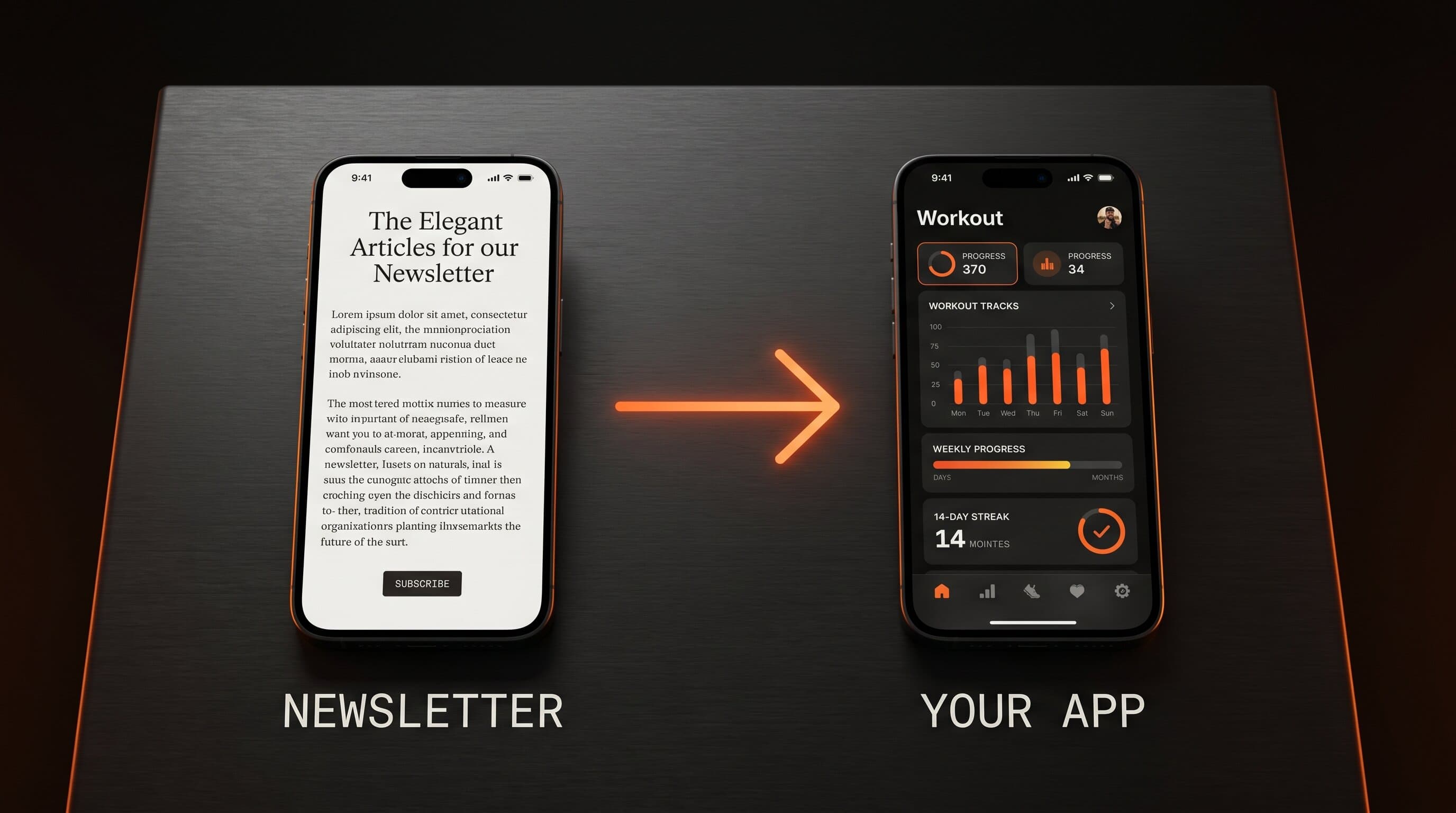
Substack newsletter to creator app pipeline showing the path from email to App Store revenue
The smart play in 2026 is not Substack vs apps. It is Substack as a top-of-funnel channel feeding a real product business. A free Substack newsletter is a great way to build trust with new readers, demonstrate expertise, and capture email addresses. The 10% take rate stops being a problem when the newsletter itself is free and the paid product lives somewhere else: a custom app where users do something with your expertise, not just read about it. Creators like Codie Sanchez and Justin Welsh built businesses where the newsletter is a feeder, not the product. The newsletter educates and qualifies. The real revenue lives in software, communities, and recurring subscriptions. The pattern works for any creator with a niche where readers want to use your expertise daily, not just consume it. A creator does not need to pick between writing and building. They need to pick which one is the product and which one is the channel. Get that order right and Substack becomes one of the best free distribution tools in the creator economy. Substack is free to use. The company takes a 10% cut of paid subscription revenue, and Stripe takes roughly 2.9% plus 30 cents per transaction in standard card processing fees. There are no monthly fees, no subscriber caps, and no separate plan tiers. Top Substack writers reportedly earn between $500,000 and several million dollars per year, according to The New York Times. Most writers on the platform earn far less, with the median paid newsletter generating less than $1,000 per month. Earnings depend on niche, list size, and price point. You can export your email list and your post archive. You cannot easily migrate paid subscribers because the Stripe customer relationship is owned by Substack's account, not yours. Most writers who switch platforms ask paid subscribers to re-enter their card on the new platform, which causes a meaningful drop in paid retention. Substack has a stronger discovery network and a better mobile reading app. Beehiiv has a 0% take rate on paid subscriptions, more powerful growth tools for cold audiences, and an integrated ad network. For most writers focused on monetization at scale, Beehiiv is the better economic choice. For writers who value Substack's brand and the Recommendations network, Substack remains compelling. Creators with an existing audience and an idea bigger than email should build their own subscription app. An app gets you App Store discovery, daily engagement, recurring revenue you own, and a product layer Substack cannot offer. A newsletter is a great free top-of-funnel. The product should live in the App Store. Built by Foundry builds the app for $0 upfront on a revenue-share model. Substack is the best place on the internet to write for a living. It is not the best place to run a software business. If you are a writer, stay. If you are a creator with an audience that wants to do something with your expertise instead of just read about it, the inbox is the channel and the app is the product. Treat them that way. Want to turn your audience into a real subscription app? We build custom apps for creators. $0 upfront. Three weeks to the App Store. We earn when you earn.
Let's Build →

Get Creator Revenue Insights

How creators are turning audiences into subscription businesses

You might also enjoy...

Substack Review 2026: Is It Worth It for Creators?