
Case Studies & Success Stories

Sorted Food: YouTube Cooks Who Built Sidekick App

Foundry
June 12, 2026
Share
Sorted Food: YouTube Cooks Who Built Sidekick App

Get Creator Revenue Insights

How creators are turning audiences into subscription businesses
Share
Sorted Food spent twelve years building one of the biggest cooking channels on YouTube. Then they did the thing most creators never do: they stopped renting their audience from the algorithm and built a product their fans pay for every month. That product is Sidekick, a subscription recipe app, and it turned four guys from Hertfordshire into founders. Key Takeaways:
  • Sorted Food has 2.9M+ YouTube subscribers and 1.38 billion views built over 15 years of free cooking content.
  • In 2022 they launched Sidekick, a £4.99/month meal-planning app, shifting from ad and sponsorship income to recurring subscription revenue.
  • Sidekick holds a 4.5-star rating across roughly 300 App Store reviews, with users having cooked over 4,000,000 dishes through it.
  • They headcount nearly doubled (12 to 25 staff) in the 18 months around the app build, funded by a model they own instead of one YouTube controls.
Sorted Food is a cooking media company started by four school friends, Ben Ebbrell, Mike Huttlestone, Jamie Spafford, and Barry Taylor, who launched their YouTube channel on March 10, 2010. Only one of them, Ben, trained as a chef. The other three were the audience, which is exactly why the channel worked: a trained cook explaining food to three normal blokes who ask the questions everyone watching is thinking. That format scaled. The channel now has more than 2.9 million subscribers and 1.38 billion total views across roughly 2,700 videos. They published cookbooks with Penguin, ran a podcast, and built a genuine community around the idea that cooking should be fun and unpretentious. For most creators, that's the finish line. For Sorted Food, it was the raw material.
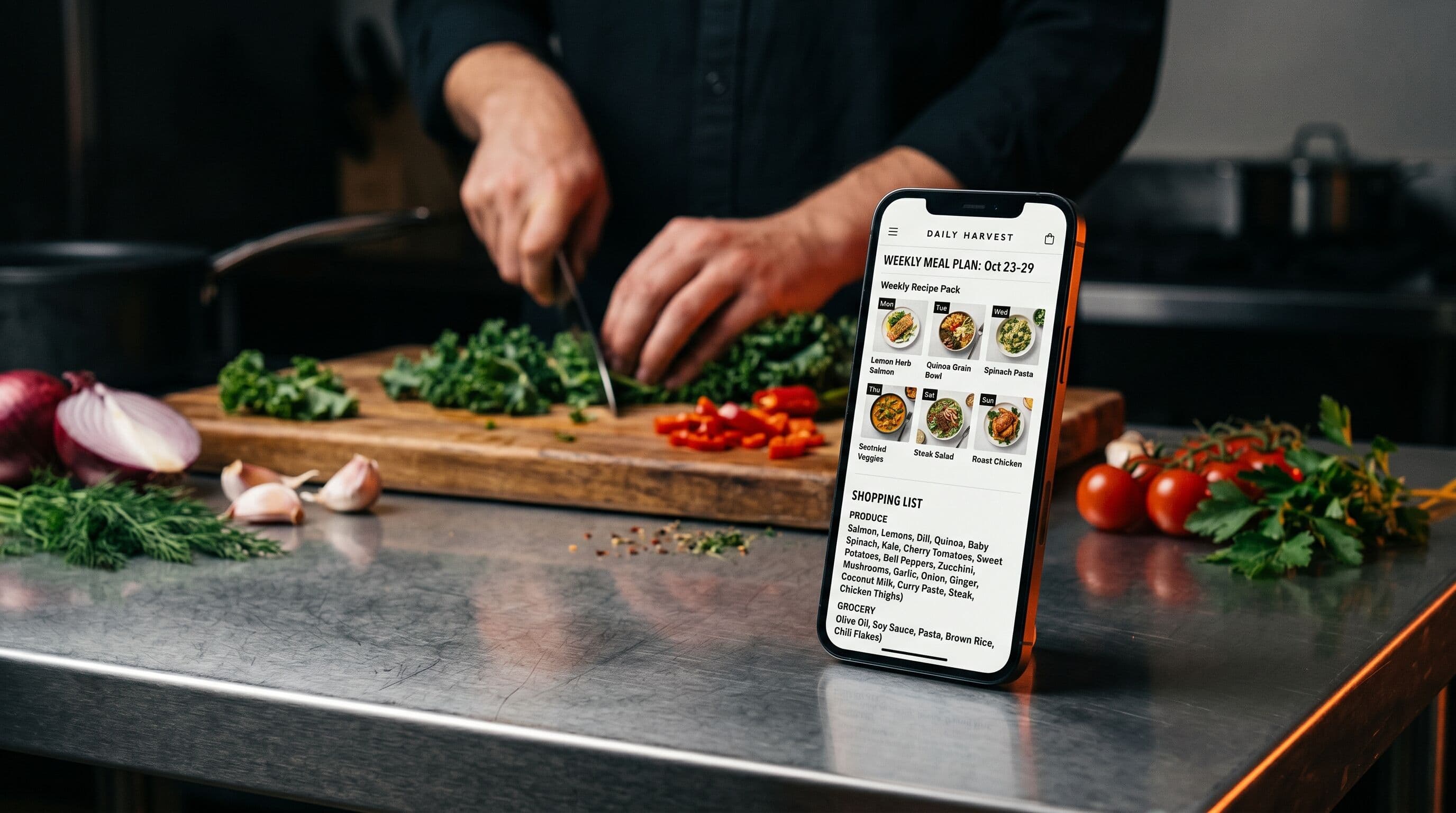
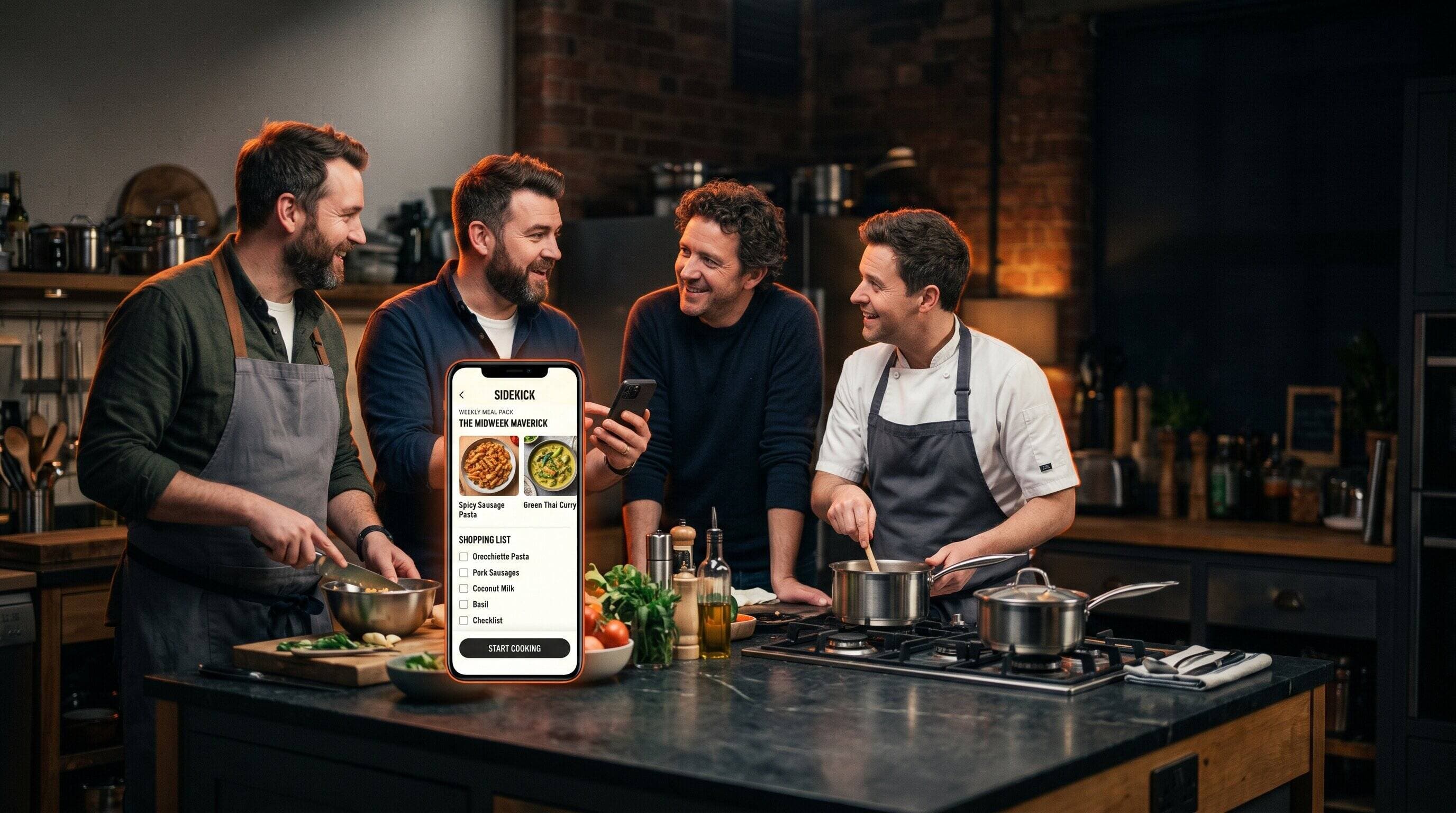
A smartphone propped on a kitchen counter showing a weekly recipe pack and shopping list while someone chops fresh vegetables
Here's the problem Sorted Food saw coming, and the one every creator eventually hits. A YouTube channel is a fantastic audience and a terrible business. Ad revenue swings with CPMs you don't set. Sponsorships dry up when budgets tighten. And the whole thing rests on an algorithm that owes you nothing, a trap we break down in The Algorithm Owes You Nothing. So Sorted Food built an asset they actually own. Before Sidekick they ran a membership called the Sorted Club, bundling cookbooks, weekly meal packs, a podcast, and restaurant guides. That taught them their fans would pay monthly for something useful. Sidekick was the refined version: a single app that solved a real, recurring problem instead of just selling more content. This is the move that separates a creator from a founder. A creator makes videos and hopes the ad money holds. A founder builds a product the audience needs every week, then charges for it. Sidekick is a subscription meal-planning app that gives subscribers weekly recipe packs designed to cut grocery spend and eliminate food waste. It launched in April 2022 for £4.99 a month, with an annual plan and a 30-day free trial. Today it holds more than 1,000 recipes and a 4.5-star App Store rating across nearly 300 reviews. The pitch is specific, not vague. Each recipe is designed to cost under £4 per portion and take under 30 minutes. Crucially, the meal packs share fresh ingredients across the week so nothing rots in the back of the fridge. As co-founder Jamie Spafford told The Grocer, "Sidekick users are likely to reclaim the monthly £4.99 cost in just one week." That's the difference between a content product and a software product. A cookbook gives you recipes. Sidekick gives you a system that saves money every single week, which is exactly why people keep paying for it.
Sorted Food AssetRevenue TypeWho Controls It
YouTube channelAd + sponsorshipThe platform
CookbooksOne-time saleThe publisher
Sidekick appRecurring subscriptionSorted Food
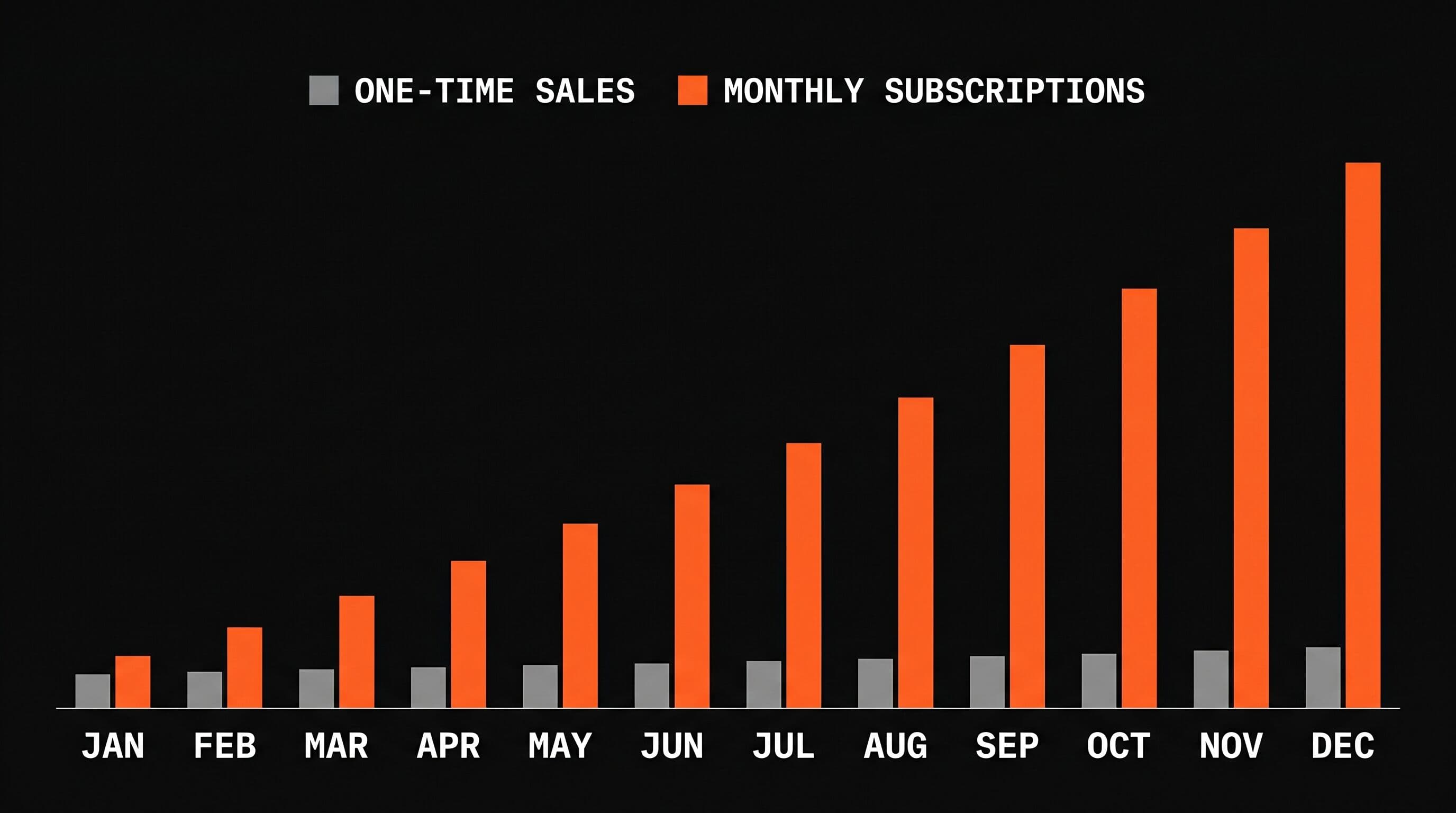
Sorted Food makes money from a stack of sources, but the one that changed the company is recurring subscription revenue from Sidekick. YouTube AdSense still brings in an estimated $49K a month, and that money is real, but it's rented. Subscription income from the app is owned, predictable, and compounds with every new member who sticks around. Look at the math behind the model. At £4.99 a month, 10,000 subscribers is roughly £600K a year in recurring revenue, on top of YouTube, cookbooks, and live shows. And subscription revenue doesn't reset to zero when they take a week off filming, which is the brutal reality of an income that resets every month for creators who only sell their attention. The headcount tells the story. Sorted Food grew from 12 employees in early 2021 to 25 by late 2022, right as the app scaled. You don't double a team on viral views. You do it on revenue you can forecast.
A bar chart comparing one-time content revenue against compounding monthly subscription revenue over twelve months
Because the app does three jobs at once, and each one feeds the others. This is the pattern behind every creator who builds software instead of just selling it, and it shows up in profiles like Bobby Parrish's FlavCity recipe app and Pick Up Limes' plant-based app. First, recurring revenue that scales past their follower count. The App Store puts Sidekick in front of people searching "meal planning app" who've never watched a single Sorted Food video. Second, an endless content engine. Every recipe pack, every money-saving result, every user transformation is a video they didn't have to brainstorm from a blank screen. Third, deeper engagement. A fan who opens your app every Sunday to plan dinner is a fan who never unfollows. A channel built on cooking videos and a channel built on a cooking app look similar from the outside. One depends on the algorithm to survive. The other owns the relationship and the revenue. You don't need 2.9 million subscribers to do what Sorted Food did. You need an audience that trusts you on a specific problem and is willing to pay you to solve it on repeat. A fitness coach with 60K engaged followers has the same opening Sorted Food had: a clear niche, a real recurring need, and fans who'd rather pay you than a faceless app. The lesson isn't "make a cooking app." It's that the creators who build durable businesses stop selling one-time products and start running software. If you want the full playbook for that shift, the guide on turning a YouTube channel into a subscription app walks through it step by step. Sorted Food spent a decade proving people loved their content. Then they built something those people couldn't get anywhere else, and charged for it monthly. That's the whole game. Sidekick is a subscription meal-planning app from the YouTube channel Sorted Food. For £4.99 a month it gives subscribers weekly recipe packs built to cut grocery costs and reduce food waste, with over 1,000 recipes and a 30-day free trial. Sorted Food has more than 2.9 million YouTube subscribers and over 1.38 billion total views, built since the channel launched in March 2010. Sidekick costs £4.99 per month, with a discounted annual plan and a 30-day free trial. The founders claim most users save back the monthly fee within the first week of grocery shopping. Yes. The model works at any size if your audience trusts you on a recurring problem. Built by Foundry builds and runs the entire app for creators with no upfront cost, taking a revenue share instead, so you don't need Sorted Food's scale to start. Sorted Food built it. Your turn. We build custom apps for creators, $0 upfront, three weeks to App Store, and we handle all the tech forever.
Let's Build →

Creator app strategy

Want us to review your creator business?

Apply for a Foundry Creator App Review. We'll tell you whether there is a real app opportunity hiding in your audience.

Sorted Food: YouTube Cooks Who Built Sidekick App