

5 Substack Alternatives Creators Use to Earn More

5 Substack Alternatives Creators Use to Earn More

Foundry
May 2, 2026
Key Takeaways:
  • Substack takes 10% of subscription revenue, plus Stripe's 2.9% + $0.30, and pushes your readers into a recommendation network you don't control
  • Beehiiv (free up to 2,500 subs, $39+/mo after) keeps 0% of subscription fees and gives you ad revenue, referral programs, and a real growth toolkit
  • Ghost ($9-259/mo, self-hosted free) is the fully-owned newsletter platform: your domain, your members table, your code, no platform cut
  • Kit (formerly ConvertKit, $0-379/mo) is the cleaner choice for creators who already sell digital products and need automation, not just a publish button
  • Patreon (8-12% take rate) wins on multi-tier memberships and behind-the-scenes content, but loses on email deliverability and SEO
  • The real Substack alternative isn't another newsletter tool. It's a subscription app you own, listed in the App Store, where readers become daily users and Apple does your distribution
Looking for Substack alternatives? You're in the right tab. Substack is a great place to start a newsletter. It's a terrible place to build a business. The platform takes 10% of every paid subscription forever, surfaces your readers to other writers in the recommendations feed, and locks your subscribers' relationship to its app instead of yours. Hannah Ray, an early Substack power user, told The Information in 2024 that she left after watching the platform funnel her audience to competitors. If you write a newsletter that pays the bills, you have two real questions. First, how do you stop renting infrastructure that takes a tax on every dollar you earn? Second, how do you turn an inbox-only relationship into a daily-use product that compounds? This guide answers both. We'll cover the five best Substack alternatives in 2026, what each does well, where each falls short, and the option most creators don't consider: skipping the newsletter platform entirely and building a subscription app you actually own. Substack is the default for new newsletters because it's free to start, the editor is clean, and the recommendation network drives early subscribers. Those same features become liabilities once you have an audience. Here's the structural problem. Substack takes 10% forever. On a $10/month newsletter with 1,000 paying subscribers, that's $12,000 a year you're paying Substack for hosting an email tool. After Stripe fees, your effective platform cost is roughly 13%. There is no annual discount. There is no enterprise plan. The cut never comes down. Substack owns the relationship. Readers subscribe to you through Substack's app, get push notifications from Substack's app, and read your work inside Substack's reader. When a writer leaves, the recommendation algorithm stops promoting them and the audience attrition begins. Substack is not search-optimized. Posts live on substack.com subdomains. Your SEO compounds for them, not for you. If you ever migrate, you start from zero on rankings. Substack pushes your readers to competitors. The recommendations feature is a feature for Substack and a leak for you. Every "you might also like" box is a new newsletter your reader subscribes to instead of opening yours. If your newsletter is a hobby, none of this matters. If it's $50K+ a year of revenue, all of it does. Before the deep dives, here's the full comparison.
PlatformPricingTake RateBest ForKey Limitation
SubstackFree10% + StripeStarting from zeroRecommendations leak readers, no SEO juice
BeehiivFree–$99+/mo0%Growth-focused newslettersAds-first culture, less polished writing UX
Ghost$9–$259/mo or self-host0%Owned media brands, devsSteeper learning curve, no native recs network
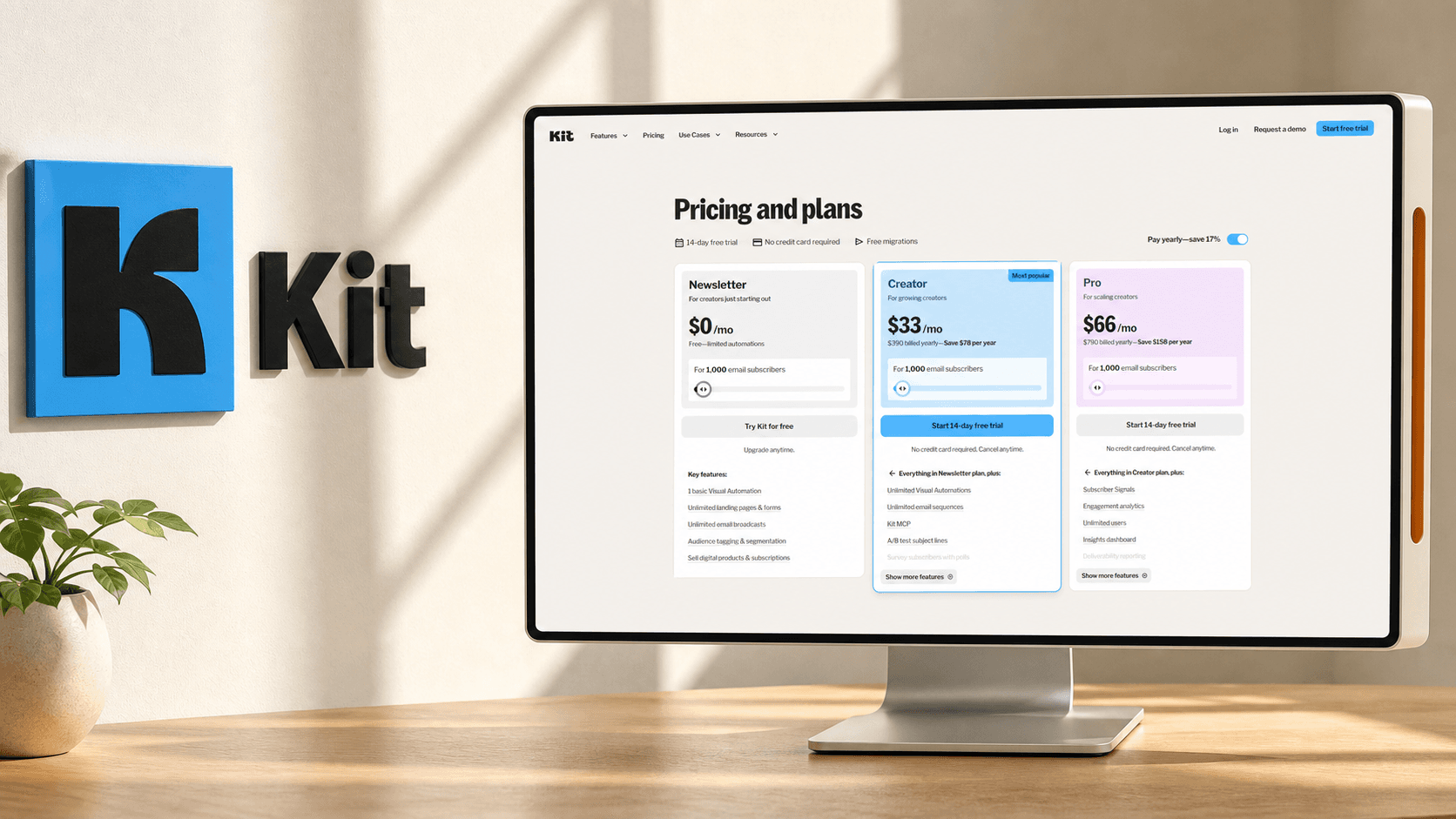
Kit (ConvertKit)$0–$379+/mo0% (3.5% + $0.30 on commerce)Creators selling digital productsNewsletter is one feature, not the focus
PatreonFree8–12%Behind-the-scenes communities, multi-tier perksEmail deliverability is poor, no SEO
Your own app (Foundry)$0 upfrontRevenue shareCreators with 50K+ engaged followersBest fit for content with daily-use behavior
Now the breakdowns.
Comparison concept showing newsletter clutter versus an owned app
Beehiiv was founded in 2021 by Tyler Denk, an early Morning Brew employee, and the platform is built around the same playbook: grow fast, monetize multiple ways, treat the newsletter like a media business. As Business Insider reported in 2024, Beehiiv crossed 15,000 publishers and was projecting $20M+ ARR. Pricing: Free up to 2,500 subscribers. Scale plan starts at $39/mo and goes up to $99+ for larger lists. Why creators move: No subscription cut, native ad network that pays per send, referral programs that convert one reader into ten, a growing affiliate program, and a website builder that gives your newsletter a real domain. If your newsletter is a media business, Beehiiv looks like the obvious upgrade. Where it falls short: The writing experience is less polished than Substack. The culture leans heavy on growth hacks (referral wheels, lead magnets, paid acquisition) which can feel mismatched if you're building a quiet, premium publication. And you're still in someone else's product. Who should switch: Newsletter writers who want to monetize via multiple channels (subscriptions, ads, sponsorships, affiliates) and who treat list growth as a core KPI. Ghost is the open-source membership platform that powers a long list of independent media brands, including 404 Media, which left Substack in 2023 to launch on Ghost. It's the closest thing to "own the whole stack" without writing it yourself. Pricing: Ghost(Pro) hosted plans run $9-$259/mo based on members. Self-hosted is free if you can manage a server. Why creators move: You own the domain. You own the database. You can export every member with one click. The platform takes 0% of subscriptions. SEO compounds for your domain, not Ghost's. If you ever want to fork the code, you can. Where it falls short: Ghost gives you fewer batteries. There's no built-in recommendation network, the analytics are thinner than Beehiiv's, and customizing the theme takes real technical work. It's the Linux of newsletters: powerful, owned, and you'll spend Saturdays on it. Who should switch: Creators building owned media brands who think about distribution as a long game and who plan to add other content types (podcasts, video, guides) to the same domain. We covered why this matters in Why Niche Creator Apps Beat Big Tech in 2026. Kit rebranded from ConvertKit in 2024 and leaned into its identity as the platform for "creators who sell things." Newsletter is a feature. Commerce, automation, and creator partnerships are the real product. Pricing: Free up to 10,000 subscribers (with Kit branding). Creator and Creator Pro plans run $25-$379/mo as your list scales. Commerce takes 3.5% + $0.30 per sale. Why creators move: Tag-based segmentation that beats anything Substack offers, automated sequences that nurture buyers across multiple products, a Creator Network for cross-promotion, and built-in commerce for digital downloads, courses, and physical products. If you sell a $200 cohort plus a $20 newsletter plus a $50 ebook, Kit handles all three from one dashboard. Where it falls short: Kit is a marketer's tool. The publishing UX is not the centerpiece, and writers who care about editorial polish will miss Substack's clean editor. It's also priced for businesses, not hobbyists, the moment you cross 10,000 free subscribers. Who should switch: Creators with a real product mix who already think about email as part of a funnel. Patreon isn't really a newsletter platform, but it's the place a lot of writers go when subscriptions hit a ceiling and they want to layer in audio, video, behind-the-scenes posts, and community. We covered the platform in detail in our Patreon review. Pricing: Free to join. Patreon takes 8% (Pro plan) to 12% (Premium) of revenue, plus payment processing. Why creators move: Multi-tier memberships ($5/$15/$50), native video and audio hosting, a real community feature with comments and posts, and an existing audience of users who pay for things on Patreon. For creators whose value is "more of me, behind the curtain," Patreon converts better than email. Where it falls short: Email deliverability on Patreon is bad. Discovery is weak. Your posts don't rank on Google. And the take rate is in the same neighborhood as Substack, which is the original reason you were leaving. Who should switch: Creators whose product is access (live streams, Q&As, exclusive content drops) more than written essays. Here's the option no one in the newsletter-tools-comparison ecosystem will tell you about, because they're all selling tools. A newsletter is a content format. A subscription business is a customer relationship. You can have the second without being trapped inside the first. What this looks like: A creator with a 50K+ engaged audience builds a subscription app instead of (or alongside) a paid newsletter. The app lives in the App Store. Subscribers pay through Apple's billing, not Stripe. The creator owns the customer list, the app, and every dollar minus Apple's 15% (after the first year of subscription, per Apple's small business program). Why this wins for the right creators:
  • App Store distribution is free traffic. Substack's recommendations send your readers to other writers. Apple's App Store sends new users to you, including users who've never heard of you. We dug into this in What Is ASO?.
  • Daily-use behavior beats weekly-open behavior. A newsletter gets opened on Tuesday morning. An app gets opened five times a day. Daily-use products have churn rates of 3-5%. Newsletters have unsubscribe rates of 15-30% per year.
  • Apple's billing is more durable than Stripe. Saved payment methods, family sharing, ad-free trial flows, and one-tap renewal all live on the App Store, not on Substack's checkout.
  • Your content engine compounds. Every user action inside the app is a piece of content you didn't have to think of. We covered this in The Content Treadmill Is Killing Creators.
Where it falls short: Apps don't make sense for every creator. If your audience is 5,000 paid subscribers reading 2,000-word essays, a newsletter is the right product. Apps work when there's a daily-use behavior to wrap (a workout, a journal, a tool, a daily prompt, a tracker). Codie Sanchez's newsletter empire is the textbook example of when a newsletter is the product. Most subscription apps are a different category. The economics are different too. A Substack with 1,000 subscribers at $10/month produces $9,000 a year of net revenue (after Substack's 10% and Stripe). A subscription app with 1,000 monthly active users at $10/month produces around $102,000 a year of gross revenue (after Apple's 15%). The same audience, ten times the topline, because daily-use behavior keeps churn low and Apple's distribution adds new users you didn't acquire. A simple decision tree.
  • You're under 1,000 paid subs and want to keep things simple. Stay on Substack or move to Beehiiv's free tier. The platform fee math doesn't matter yet.
  • You're a writer first and want to own the brand. Move to Ghost. Spend a Saturday learning it.
  • You sell multiple products. Move to Kit. The automation will pay for itself within a quarter.
  • You're building a community and access economy. Move to Patreon (and accept the SEO trade-off).
  • You have 50K+ engaged followers and a daily-use behavior to wrap. Skip the newsletter tools entirely and build an app. We covered the math in 5 Reasons Creators Choose Apps Over Courses in 2026.
Most creators default to "another newsletter tool" because that's the box they were sold. The creators who break out of the middle class do something the box doesn't include. They build the app version of their audience, run it themselves, and stop paying rent on someone else's platform. That's the one Substack alternative no one comparing tools will mention. For most paid newsletter writers, Beehiiv is the best Substack alternative. It takes 0% of subscription revenue, has a strong growth toolkit (referrals, ads, recommendations), and a free tier up to 2,500 subscribers. Ghost is the better choice for creators who want full ownership and don't mind a steeper setup. Yes. Substack takes 10% of all paid subscription revenue, plus Stripe's standard 2.9% + $0.30 per transaction. There is no annual plan, enterprise tier, or volume discount. On $100,000 of subscription revenue, you'll pay Substack roughly $10,000 plus another $3,000+ in payment processing. Yes. Substack lets you export your subscriber list as a CSV and your posts as a zip. Beehiiv, Ghost, and Kit all have one-click import flows from Substack. Paid subscriptions transfer with caveats: you'll need each subscriber to re-authorize the new payment platform. It depends on the behavior. Newsletters work for content read once a week. Apps work for daily-use behaviors (workouts, journals, trackers, tools). If your audience does something every day that you can wrap in software, an app produces 5-10x the revenue per user. For weekly essay content, a newsletter is the right tool. Most agencies charge $50K-$200K and take 6-12 months. Built by Foundry charges $0 upfront on a revenue share model and ships in three weeks. We build, launch, and run the app forever. You earn when we earn.
Substack is fine for starting. It's a tax for scaling. If you have a real audience, the question isn't "which newsletter tool?" The question is "what's the product version of what I do?"
Let's Build →

Get Creator Revenue Insights

How creators are turning audiences into subscription businesses

You might also enjoy...

5 Substack Alternatives Creators Use to Earn More