
Turning Knowledge into Products

How to Turn a Newsletter Into a Subscription App

Foundry
June 15, 2026
Share
How to Turn a Newsletter Into a Subscription App

Get Creator Revenue Insights

How creators are turning audiences into subscription businesses
Share
Key Takeaways:
  • Substack passed 5 million paid subscriptions in 2025, double the 2 million it reported in 2024, with writers earning a collective $450 million (Backlinko, 2026)
  • After the 10% platform fee and Stripe processing, most newsletter creators keep only 84% to 87% of every dollar a reader pays
  • James Clear built a 3 million subscriber newsletter, then shipped the Atoms app at $16.99/month, because an app earns what an email never will
  • A list of 10,000 readers converting at 4% to a $9/month app is roughly $3,600 in MRR, recurring, with no send schedule to chase
  • Six steps separate "newsletter with a paid tier" from "newsletter that runs a real subscription business"
What is a newsletter subscription app? A newsletter subscription app is a creator-owned mobile product that turns the knowledge, tools, and community behind a newsletter into a daily-use app readers pay for monthly. Unlike a paid Substack or Patreon, you own the customer, the data, and 100% of the revenue minus standard App Store fees. You write every week. You research, draft, edit, and hit send. The platform that delivers your email takes a cut, the payment processor takes a cut, and the open rate on the issue you spent six hours writing is sliding toward 30%. Then a reader who loves your work pays you $8 a month and the platform skims a tenth of it before it reaches your account. That math is fine until you realize the better version exists. The fix isn't a cheaper email tool. It's turning the relationship you already have with your readers into a product they keep on their phone. Here's the playbook. The most popular newsletter platforms charge a percentage of your revenue forever, and that percentage compounds against you as you grow. Substack takes a flat 10% of subscription earnings, and on top of that Stripe charges roughly 2.9% plus 30 cents per transaction, with an extra 0.5% on recurring billing. Add it up and most creators keep 84% to 87% of gross (beehiiv, 2026). That sounds reasonable until you do it at scale. A newsletter earning $10,000/month on Substack hands over about $1,000 every month, $12,000 a year, for hosting an email list. The fee never drops. The more you earn, the more you pay. Here is what the take looks like as you grow:
Monthly GrossSubstack 10%Stripe (est.)You Keep
$1,000$100$45$855
$5,000$500$200$4,300
$10,000$1,000$390$8,610
$25,000$2,500$950$21,550
The deeper problem isn't the percentage. It's that you don't own the relationship. When a paid reader cancels, you often don't learn why and you can't follow up. The platform owns the billing, the churn data, and the discovery. You're renting an audience you built. We made the broader case in why creators build on rented land and lose. Newsletter readers are the highest-intent audience a creator can have. They chose to let you into their inbox, they read in a focused setting, and they already raised their hand for depth. That's exactly the reader who pays for a product. Look at what James Clear did. He grew his 3-2-1 newsletter past 3 million subscribers, then in 2024 he launched the Atoms app, a daily habit product priced at $16.99/month or $119.99/year (Fast Company, 2024). The newsletter is free and builds trust. The Atoms app turns that trust into recurring revenue and a daily habit no email can create. The reason the conversion works is structural. An email is consumed once and archived. An app lives on the home screen, sends a notification, tracks progress, and gives the reader a reason to open it tomorrow. Ryan Holiday ran the same play, turning a daily Stoic email into a daily app, which we broke down in how Ryan Holiday built the Daily Stoic empire. Before you build, name the job. Not the topic. The job. A finance newsletter doesn't do "finance content." It does "stop me from making the dumb money move I'm about to make." A cooking newsletter does "tell me what to make for dinner tonight." A productivity newsletter does "help me actually finish the thing." The job is what your reader hires the newsletter to do every week. Your app should do that same job, but better, with persistence and personalization an email can't offer:
Newsletter TopicThe Real JobThe App Does It Better By
Personal finance"Keep me on track"Budget tracker, net-worth dashboard, weekly check-ins
Cooking"What's for dinner"Saved recipes, meal planner, smart grocery list
Habits and discipline"Help me stay consistent"Streaks, daily prompts, progress tracking
Career and writing"Make me better at my craft"Lesson library, prompt generators, accountability threads
If you can't write that one-line job statement, you don't have a product yet. Spend a week getting it right before you spend a dollar building. The mistake most newsletter creators make is locking old issues behind a paywall and calling it a product. An archive isn't a product. It's a filing cabinet readers visit once and forget. A recurring format gives the reader a reason to open the app every day or week. The formats that retain:
  • Daily prompt format. The reader opens the app each morning for today's lesson, today's plan, today's question. This is the Atoms model and it's why habit apps retain so well.
  • Tool format. Calculators, planners, and generators tied to the newsletter's job. A finance newsletter becomes a budgeting app. A writing newsletter becomes a draft and prompt workspace.
  • Tracking format. The app remembers what the reader did and shows progress over time. Streaks, scores, before-and-after, milestones.
  • Community format. Threads, weekly challenges, and live Q&A that turn solo readers into a group that holds each other accountable.
The strongest apps stack two formats. A daily prompt plus tracking. A tool plus community. One gives a reason to subscribe; the second gives a reason not to cancel. Stop pricing like a tip jar. Start pricing like a product. Two failure modes sink most launches. The first is pricing too low, $2.99/month, out of guilt about charging readers who already get the free email. The second is pricing like enterprise software, $40/month, before the app does $40 of work. The right zone for most newsletter apps is $6.99 to $14.99/month with an annual plan at 30% to 40% off. If you want the full breakdown, we wrote 5 pricing strategies for creator subscription apps. Here's what the model looks like at a few list sizes, assuming a realistic free-to-paid conversion:
List SizeRealistic ConversionPrice PointMRR
5,0003% to 5%$8.99$1,300 to $2,200
10,0003% to 5%$8.99$2,700 to $4,500
50,0004% to 6%$8.99$18,000 to $27,000
200,0003% to 5%$8.99$54,000 to $90,000
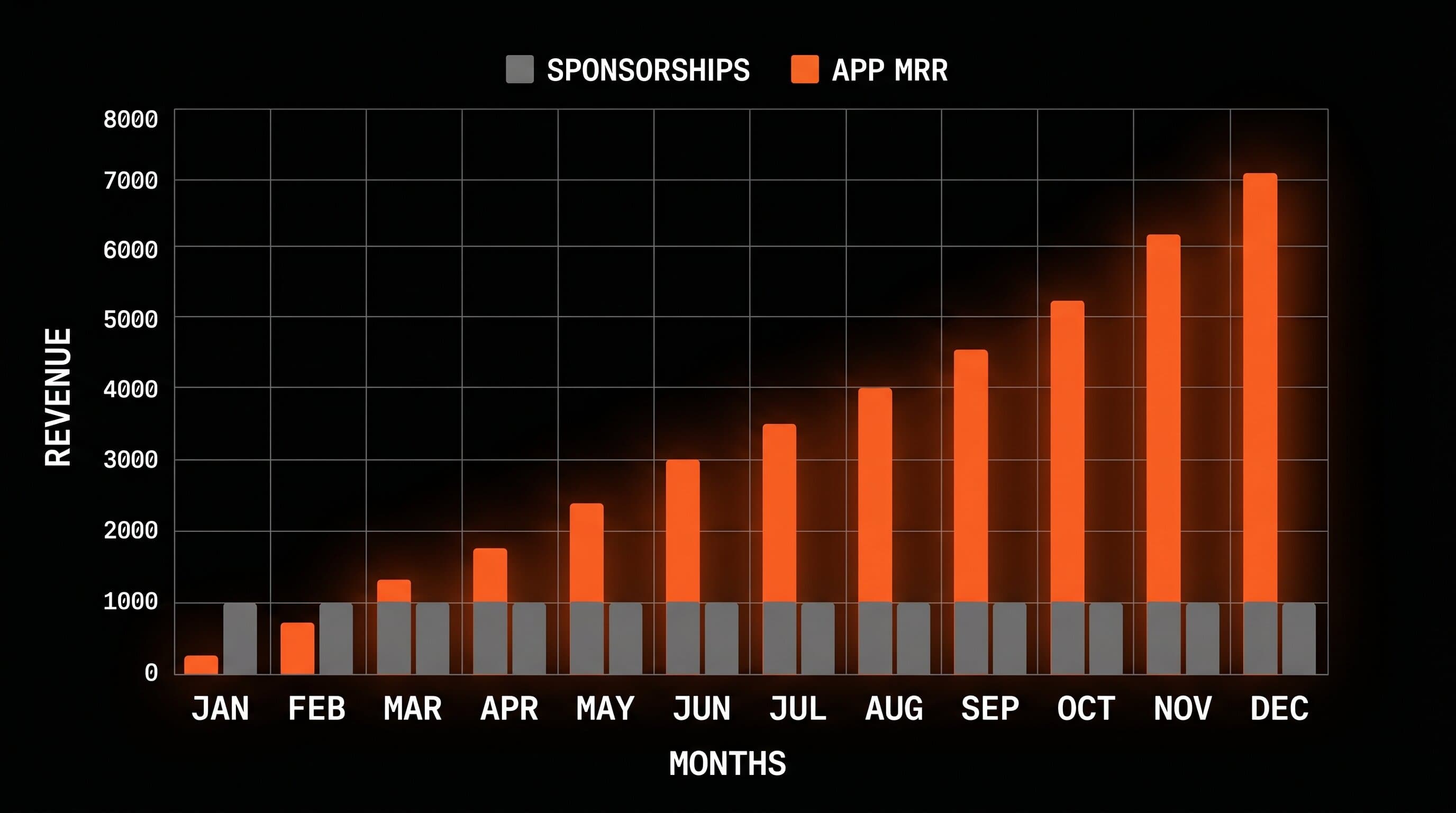
A newsletter with 50,000 readers converting 5% at $8.99 generates more recurring revenue than most creators earn from sponsorships and one-off products combined. And it compounds month over month instead of resetting to zero with every send. If MRR is new to you, start with what MRR means for creators.
Bar chart contrasting flat newsletter sponsorship income against compounding app subscription MRR over twelve months
Don't announce to the full list on day one. Build the conversion habit with your most loyal readers first. Smart creators launch the app to the top 5% of their list before they mention it publicly. Pull the readers who reply to every issue, click every link, and forward your work. Offer founding-member pricing for 90 days. That cohort becomes your proof, your testimonials, and the people who find the bugs before everyone else does. Then roll out to the full list in three waves:
  • Story wave. Two or three issues where you tell the story of why you built the app, who it's for, and what it does. The issue is the marketing. No hard sell.
  • Demo wave. Show a real reader using it. A short walkthrough of how one subscriber uses the app daily converts better than any pitch you write about yourself.
  • Offer wave. A clear founding offer with a real deadline. "$5.99/month locked in forever, until July 1." Scarcity that's actually true.
The worst approach, a permanent "P.S. check out my app" line at the bottom of every issue, trains readers to ignore it. Treat the launch like a campaign, not a footer. This is where newsletters have a structural edge. Every issue you send is a warm, direct line to a reader who already opted in. Most creators waste it. Build the app and the newsletter into one funnel:
  • The subject line is the hook. Preview a problem the app solves directly.
  • The body is the proof. Teach the concept, give the framework, name the problem your reader feels.
  • The bridge is a real story. "Last week a reader used the meal planner to drop their grocery bill by $60." Specific beats generic every time.
  • The call to action is one link. Not "download my app." A deep link with tracking that drops the reader on a paywall built for that exact issue's topic.
A 1,200-word issue is a 1,200-word landing page. Treat it that way. This also works in reverse: the app feeds the newsletter, which we covered in how your app becomes your content calendar.
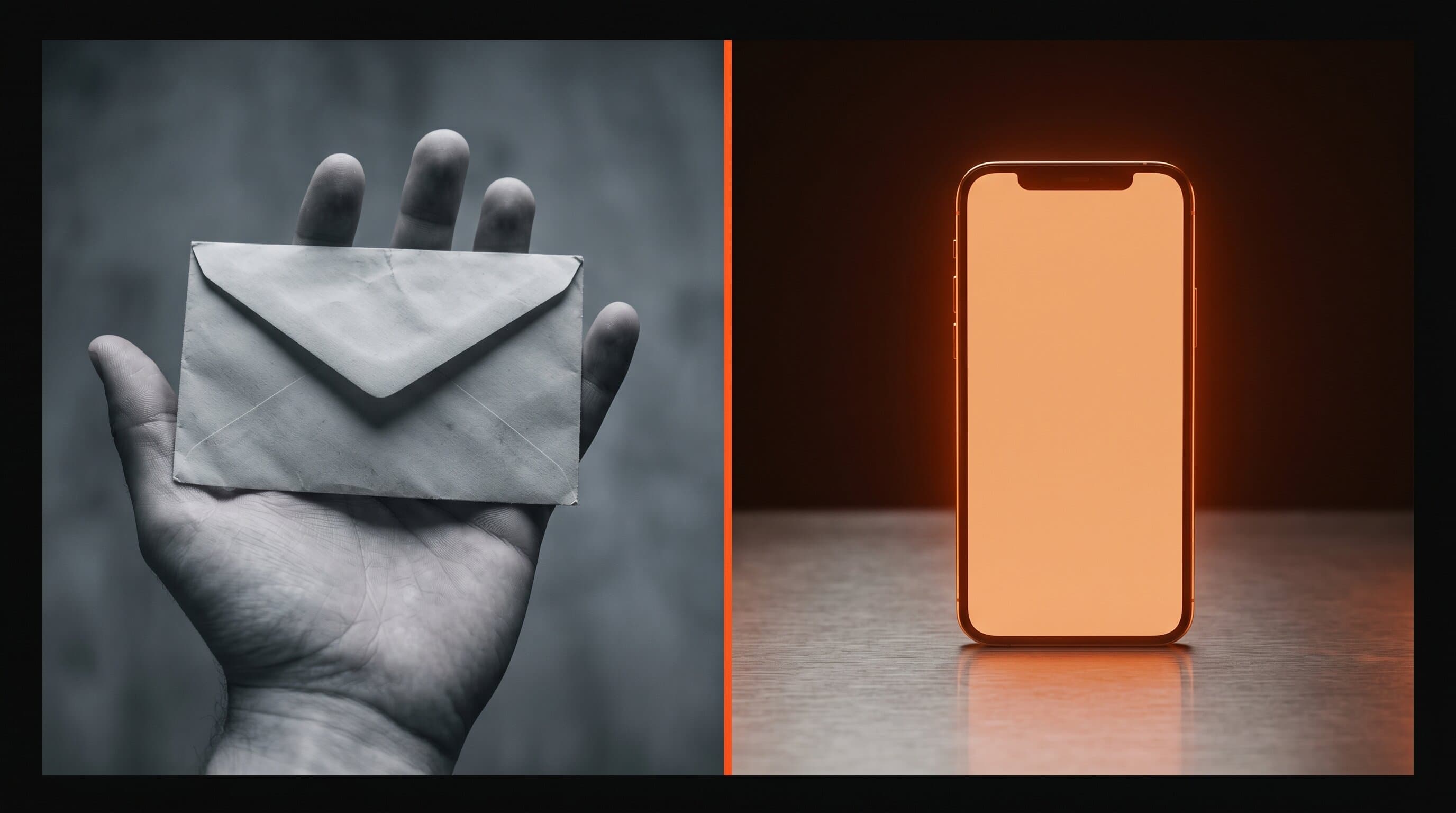
Conceptual split image showing a rented email inbox on the muted left side and an owned app on the warm-lit right side
The hardest part of running a newsletter isn't writing. It's deciding what to write about every single week with a blank page staring back. A subscription app solves that on autopilot. Every feature your readers use becomes an issue. Every common question in the app's community becomes a deep dive. Every weekly leaderboard becomes a roundup. Every milestone a user hits becomes a transformation story you didn't have to invent. This is the part most creators miss. The app isn't just a second revenue stream parallel to the newsletter. The app generates the material the newsletter covers, the newsletter drives signups to the app, and the two compound on each other. The same engine that powers a YouTube channel turned into a subscription app and a podcast turned into a subscription app works for the written word too. A creator with an editorial calendar fed by their own app's data writes sharper, more specific, more useful issues than one brainstorming alone on a Sunday night. That's the moat. Most creators who monetize a newsletter beyond sponsorships reach for Substack or Patreon because they're easy. Easy has a long-term price.
PlatformTake RateOwns CustomerMobile AppApp Store Discovery
Substack~13% to 16% all-inSubstackReader appNone
Patreon8% to 12% + feesPatreonWeb and appNone
Your Own App~15% Y1, ~15% Y2+YouYesApp Store + Google Play
The take rate is only half the story. The other half is who owns the customer. On Substack and Patreon, when a reader cancels you don't get their email, their reason, or the right to win them back. On your own app you own the email, the usage data, the cancel reason, and the App Store listing that brings in readers who never saw your newsletter. That's the line between renting an audience and owning a business. We made the case in full in your followers aren't your customers yet. This is the most common objection, and it's wrong. A 5,000-reader newsletter converting 5% at $8.99/month is about $2,200 in MRR. That's $26,000 a year of recurring revenue you didn't have, from a list most creators consider small. By year two, with steady growth and App Store discovery bringing in users who never opened your email, it compounds. You don't need 100,000 subscribers to ship an app. You need 1,000 readers who would pay for a daily product. If you've been writing for a year, you already have them. We ran the numbers in how 500 app subscribers make $10K/month. Traditional agencies charge $50K to $200K upfront. Built by Foundry charges $0 upfront and takes a revenue share, so we only earn when your app does. Most creators ship in three weeks. If 3% to 6% of your readers pay $8.99/month, you have a real business. Newsletter readers convert well because they already chose to give you their attention in a focused setting. That's the highest-intent relationship in the creator economy. Yes. The free newsletter is your acquisition channel. The paid app is your business. Killing the free issue kills the funnel that feeds the app. The two work together. No. Most successful creator apps don't paywall writing at all. They charge for tools, tracking, daily prompts, and community. The newsletter stays free; the daily product is what readers pay for. A newsletter app lives on the reader's phone, gets discovered through the App Store, and is owned by you. A paid Substack is a web page that takes a cut of every dollar and owns your customer relationship. Every week you send, you feed an asset you don't own. The platform takes its cut, owns the billing, and treats your readers as theirs. The open rate slides, the fee never does. The fix is shipping the product your newsletter was always pointing at. Six steps. Three weeks. A subscription business that earns whether you send this week or not. Want to turn your newsletter into an app you own? We build custom subscription apps for creators. $0 upfront, three-week delivery, and we run the tech forever.
Let's Build →

Creator app strategy

Want us to review your creator business?

Apply for a Foundry Creator App Review. We'll tell you whether there is a real app opportunity hiding in your audience.

How to Turn a Newsletter Into a Subscription App