
5 Pricing Strategies for Creator Subscription Apps

5 Pricing Strategies for Creator Subscription Apps

Foundry
March 23, 2026
Key Takeaways:
  • The sweet spot for creator subscription apps is $4.99 to $9.99/month, with fitness and coaching apps trending higher
  • Annual plans convert 20 to 30% of subscribers and reduce churn by up to 50%
  • Free trials between 3 and 7 days outperform both shorter and longer trial periods
  • Tiered pricing with 3 options increases average revenue per user by 15 to 25%
  • The "anchor and discount" approach (showing annual savings vs monthly) boosts annual plan adoption by 40%
Pricing is the single highest-leverage decision you make when launching a subscription app. Get it right and you build a compounding revenue machine. Get it wrong and you leave money on the table every month, forever. Most creators make one of two mistakes. They either price too low because they feel guilty charging their fans, or they copy whatever the biggest competitor charges without understanding why. Both approaches ignore what actually drives subscription revenue: perceived value relative to the specific audience you serve. Your fans already spend money. They buy your merch, your courses, your affiliate links. A subscription app that delivers daily value is worth more than any of those, and your pricing should reflect that. This guide breaks down five pricing strategies backed by real data from creator apps generating $5K to $50K+ in monthly recurring revenue. The data is clear. According to Sensor Tower's 2025 State of Mobile report, the median subscription price for health, fitness, and lifestyle apps on the App Store sits between $4.99 and $9.99 per month. Creator apps in the same categories perform best in that range. Here's how pricing breaks down by niche:
NicheMonthly PriceAnnual PriceExample
Fitness/Training$9.99 to $19.99$59.99 to $119.99Sweat by Kayla Itsines
Nutrition/Wellness$4.99 to $14.99$39.99 to $99.99Carbon Diet Coach
Education/Productivity$4.99 to $9.99$29.99 to $59.99Skillshare
Lifestyle/Community$2.99 to $7.99$19.99 to $49.99Patreon-style apps
Kayla Itsines priced Sweat at $19.99/month and reached 450,000 paying subscribers before selling for $400M. That price worked because the app replaced a $50 to $100/month gym membership and personal training sessions. The value equation was obvious. The lesson: price based on what your app replaces, not what your competitors charge. Yes. And it matters more than most creators realize. Free trials are the single most effective tool for converting followers into paying subscribers. But the length of your trial determines whether users actually engage or just sign up and forget. RevenueCat's 2025 State of Subscription Apps report found that 7-day trials convert at 2x the rate of 14-day trials. Shorter trials create urgency. A 7-day window forces users to engage immediately. A 14-day window lets them procrastinate, forget, and cancel. The optimal trial framework:
  • 3-day trial for apps with quick "aha" moments (games, simple tools)
  • 7-day trial for apps requiring habit formation (fitness, nutrition tracking)
  • 14-day trial only for complex apps where users need time to see results (coaching programs with weekly check-ins)
One detail that separates top-performing apps from the rest: require payment information upfront. Apps that collect payment details at trial signup convert 60% higher than those that don't, according to Adapty's subscription benchmarks.
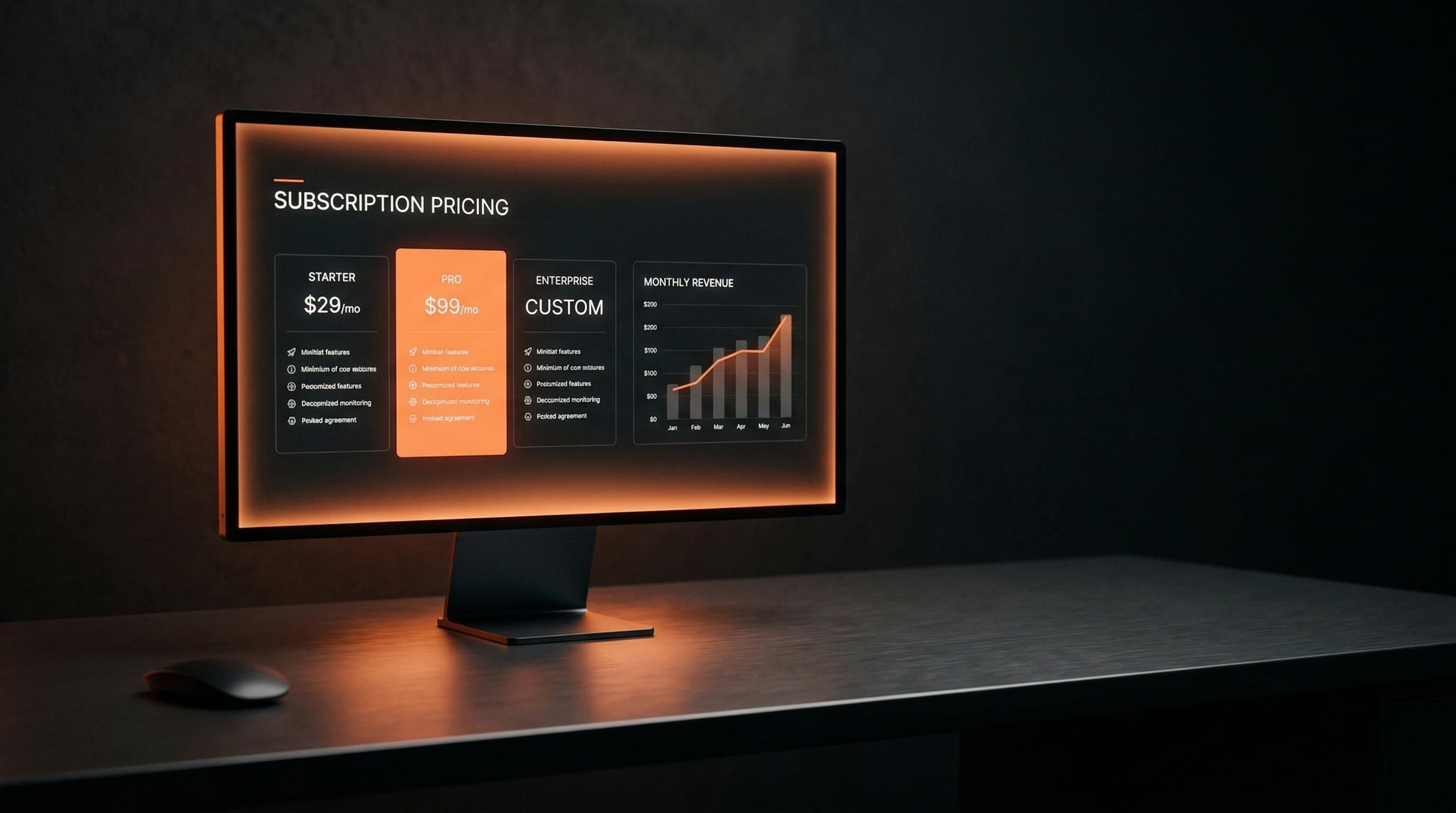
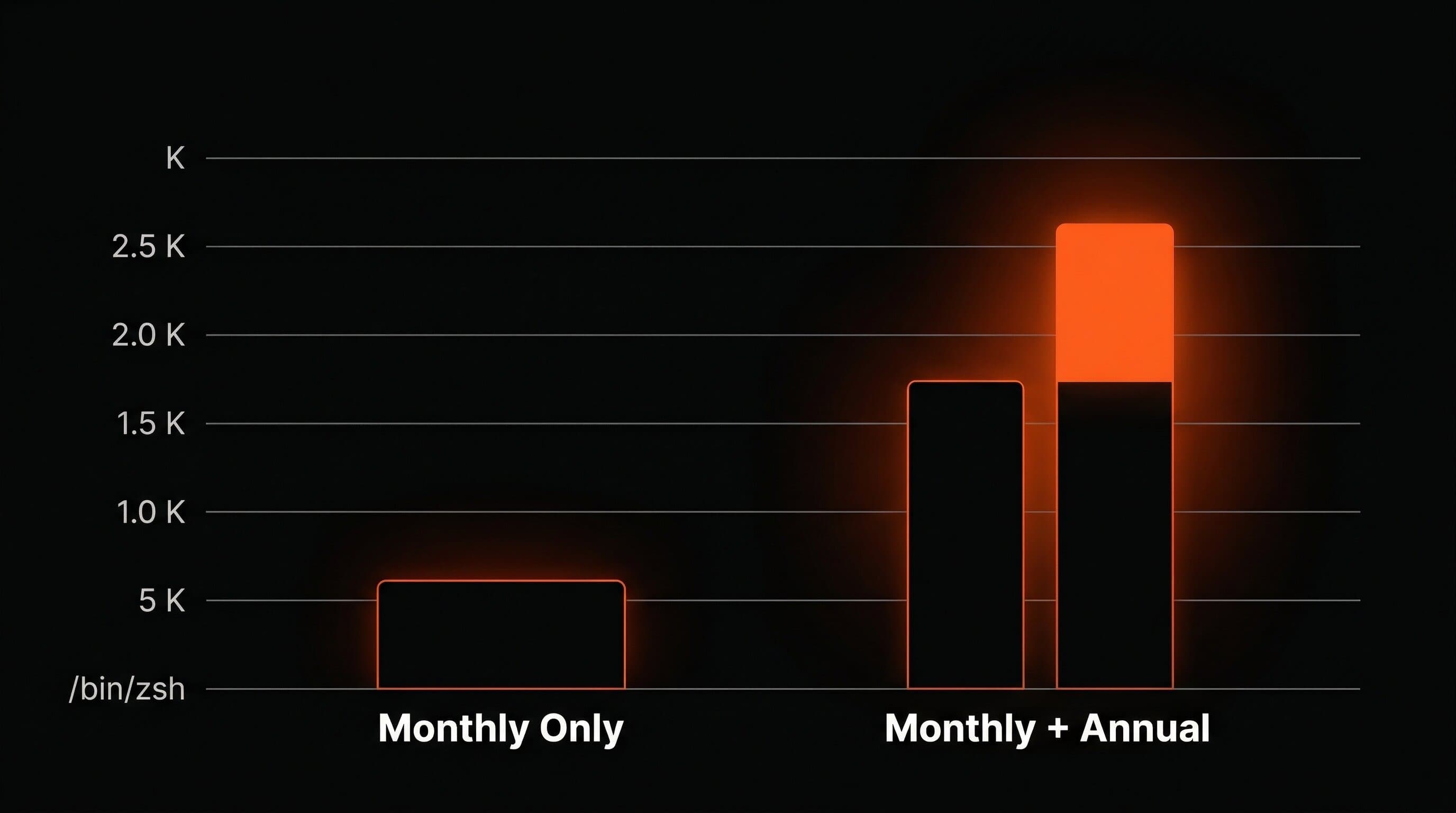
Visualization of creator app pricing tiers and free trial conversion funnel on a dark background
If you only offer monthly pricing, you're leaving 30 to 40% of potential revenue on the table. Annual plans do two things. First, they lock in revenue upfront, giving you cash flow to reinvest. Second, they dramatically reduce churn. Monthly subscribers churn at 6 to 8% per month on average. Annual subscribers renew at 50 to 60% per year, which works out to roughly 4 to 5% monthly equivalent churn. The key is making the annual discount feel significant. The standard playbook:
  • Monthly: $9.99/month
  • Annual: $59.99/year (that's $4.99/month, a 50% savings)
  • Show the per-month comparison directly on your paywall
The "anchor and discount" presentation matters. When users see "$9.99/month" first and then "$4.99/month (billed annually)," adoption of the annual plan jumps by 30 to 40% compared to showing prices without the monthly equivalent breakdown. Pamela Reif's PAM app uses this exact structure and converts a significant share of subscribers to annual plans, reducing her churn rate well below the fitness app average. Three tiers almost always outperform two. Behavioral economists call this the "decoy effect." When you offer Basic ($4.99), Premium ($9.99), and Pro ($14.99), the middle option becomes the anchor. Most users gravitate toward Premium because it feels like the reasonable choice between cheap and expensive. Here's a framework for structuring three tiers:
TierPriceWhat's IncludedPurpose
Basic$4.99/moCore content library, basic trackingEntry point, converts price-sensitive users
Premium$9.99/moEverything in Basic + personalized plans, communityWhere 60 to 70% of subscribers land
Pro$14.99/moEverything in Premium + 1-on-1 coaching, early accessAnchors Premium as "good value"
You don't need the Pro tier to have tons of subscribers. Its real job is making Premium look like a bargain. As we covered in our guide on going from content to a subscription product in six steps, your MVP should launch with one or two tiers. Add the third tier once you have data on what users value most. Your launch is your best pricing opportunity. The first 30 days after launch generate 3 to 5x more downloads than any subsequent month, because your audience is primed and excited. Use this window strategically: Launch pricing (first 30 days):
  • Offer a "Founding Member" annual plan at 40 to 50% off
  • This locks in early adopters and builds your subscriber base fast
  • Set a clear deadline: "Founding member pricing ends April 30"
Seasonal promotions:
  • January (New Year's resolutions): strongest month for fitness and self-improvement apps
  • September (back to school energy): second strongest conversion month
  • Black Friday: run a 24 to 48 hour annual plan promotion
The numbers back this up. Appsflyer's 2025 mobile app trends report shows that subscription apps running time-limited promotions see 2.5x higher conversion rates during promotional windows versus steady-state pricing. Five pricing mistakes kill creator app revenue. Avoid all of them. 1. Pricing based on guilt, not value. Your fans pay $6 for a coffee. They pay $15 for a Netflix subscription. A $9.99/month app that helps them get fit, eat better, or learn a skill is a steal. Stop feeling bad about charging. 2. Not testing prices. Your first price is a guess. Run A/B tests within the first 90 days. Even a $1 increase across thousands of subscribers compounds to tens of thousands in annual revenue. 3. Only offering monthly plans. Without an annual option, you're fighting churn every single month. Annual plans are your insurance policy. 4. Copying competitor pricing blindly. Sweat charges $19.99/month because it replaces a personal trainer. If your app replaces a $30 course, pricing at $19.99 doesn't make sense. Price relative to what YOUR app replaces for YOUR audience. 5. Launching with a free tier. Free tiers attract users who will never pay. They clog your support queue, skew your analytics, and make your paying subscribers feel less special. Use a free trial instead. Everyone starts on the path to paying. Understanding what a creator app actually costs to build and maintain helps you set prices that cover your costs while delivering value. Your pricing page is a sales page. Every element either increases or decreases conversions. The highest-converting paywalls share these elements:
  • Social proof above the fold. "Join 10,000+ members" or "4.8 stars from 2,300 reviews." Users need to know others have already committed.
  • Benefit framing, not feature lists. Don't say "Access to 200+ workouts." Say "Get the body you want in 15 minutes a day." Features tell. Benefits sell.
  • The annual plan highlighted as "Best Value." Use a badge, a different color, or a "Most Popular" tag. Visual hierarchy does the selling.
  • A clear "what you get" breakdown. List 3 to 5 specific benefits with checkmarks. Keep it scannable.
  • Urgency without dishonesty. "Start your 7-day free trial" creates natural urgency. Fake countdown timers and "only 3 spots left" destroy trust.
At Built by Foundry, we A/B test paywall designs for every app we build because even a 1% improvement in conversion rate on a paywall seen by thousands of users translates directly to thousands in monthly revenue. It's the highest-ROI optimization in subscription apps, and it's part of what we do after your app launches through ongoing App Care. Let's run the numbers. Scenario A: 500 subscribers at $4.99/month = $2,495 MRR Scenario B: 500 subscribers at $9.99/month = $4,995 MRR Same number of subscribers. Double the revenue. Over a year, that's $29,940 vs $59,940. The difference is a $30,000 annual decision. Now add annual plans. If 30% of Scenario B subscribers switch to annual at $59.99/year ($4.99/month equivalent):
  • 350 monthly subscribers: $3,497/month
  • 150 annual subscribers: $8,999 upfront (equivalent to $749/month)
  • Total: $4,246/month average, but with $8,999 cash in hand plus dramatically lower churn
That's the power of pricing strategy. Small changes compound into massive differences. Your content is already worth paying for. Price it accordingly.
Let's Build →
Most successful creator apps charge between $4.99 and $9.99 per month, with fitness and coaching apps trending toward $14.99 to $19.99. Price based on what your app replaces for your audience, not what competitors charge. No. Free tiers attract users who will never convert to paid. Use a 7-day free trial with payment info required upfront instead. This filters for users who are genuinely interested in paying. Track your trial-to-paid conversion rate. If it's above 15%, you can likely raise prices. If it's below 8%, test a lower price point or improve your onboarding to demonstrate value faster. Test a price increase when your trial-to-paid conversion consistently exceeds 20% or when you add significant new features. Grandfather existing subscribers at their current rate to avoid churn. Yes. Annual subscribers renew at 50 to 60% per year, compared to monthly subscribers who churn at 6 to 8% per month (which compounds to 50 to 65% annual churn). Annual plans are the single most effective churn reduction tool.

Get Creator Revenue Insights

How creators are turning audiences into subscription businesses

You might also enjoy...