
How to Turn Your Podcast Into a Subscription App

How to Turn Your Podcast Into a Subscription App

Foundry
May 1, 2026
Key Takeaways:
  • Podcast ad CPMs dropped from a 2021 peak of $25 to roughly $18 in 2024 according to Magellan AI, even as listening hours kept climbing
  • Apple Podcasts Subscriptions and Spotify's paid tier take 15% to 30% off the top, and you still don't own the customer relationship
  • A podcast with 5,000 weekly listeners and a 4% paid conversion rate at $9.99/month generates roughly $24K MRR
  • The creators winning in 2026 aren't fighting for ad reads; they're shipping apps that turn listeners into daily users
  • Six steps separate "podcast with a Patreon" from "podcast that runs a real subscription business"
What is a podcast subscription app? A podcast subscription app is a creator-owned mobile product that delivers premium audio, tools, and community to listeners for a recurring monthly fee. Unlike Patreon or Apple Podcasts Subscriptions, you own the customer, the data, and 100% of the revenue minus standard App Store fees. You record once a week. You record alone. You upload to a hosting platform that takes a cut, distribute through Spotify and Apple that take a cut, and sell ads through a network that takes a cut. Then a brand deal pays you $25 per thousand downloads in 2026, half of what it paid in 2021. That math doesn't work. And it gets worse every quarter. The fix isn't a better ad partner. It's owning the relationship with the people who already listen to you for two hours a week. Here's the playbook the smart podcasters are running. Podcast ad rates peaked in 2021 at around $25 per thousand impressions, fueled by pandemic listening growth and a flood of brand budgets. By 2024, Magellan AI's industry data tracked CPMs back down to about $18, and host-read pre-rolls in some categories now fetch closer to $14. Three things are squeezing the rates at the same time. First, supply caught up with demand: there are now over 5 million podcasts on Apple alone according to Podcast Index, and most can't fill their inventory. Second, programmatic ad networks commoditized the space, so a 50K-download show now competes against the same algorithm a 50M-download show does. Third, brand budgets that flowed into podcasts during 2020 and 2021 have largely shifted to short-form video. For a mid-tier podcaster pulling 30,000 downloads per episode, the math looks like this:
YearCPMDownloadsRevenue Per Episode
2021$2530,000$750
2024$1830,000$540
2026 (projected)$1530,000$450
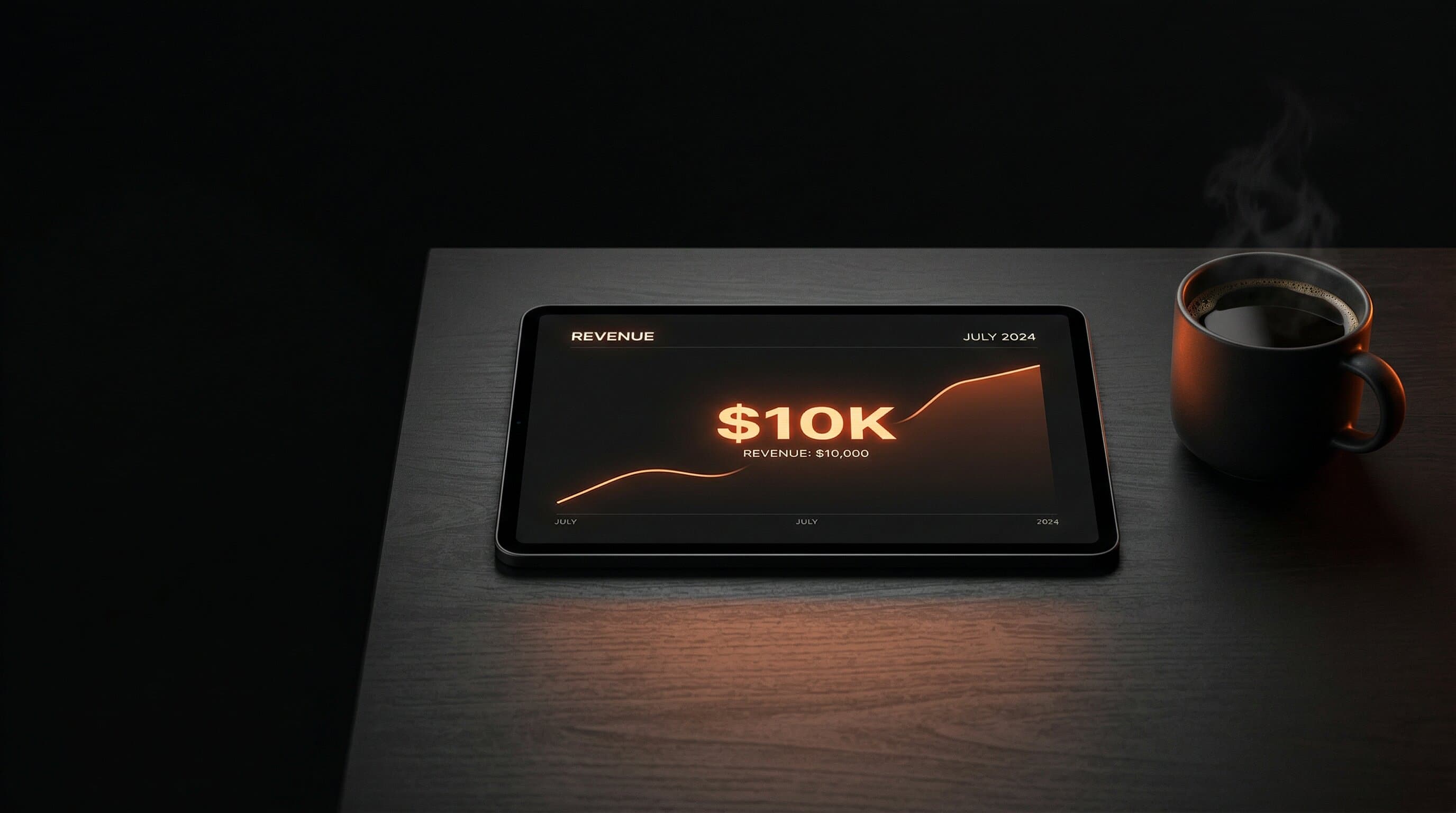
That's a 40% pay cut for the same work. Now consider what 1,000 of those listeners paying $9.99/month would generate: nearly $10,000 every single month, recurring, with no negotiation cycle. This is the gap. Podcasters keep optimizing for downloads when the better game is conversion. Podcasts have three things short-form video doesn't: dedicated time, deep trust, and a clear job. Listeners spend an average of 56 minutes per session with a podcast according to Edison Research's Infinite Dial 2024. They listen alone, often during a workout, commute, or chore. The host is in their head while their hands are busy. That's the highest-trust media relationship that exists right now. And trust is what converts. Compare that to Instagram or TikTok. A creator with 500K followers might get 50K views on a Reel and 200 link clicks. A podcaster with 50K weekly listeners can convert 4% to 8% to a paid product because the ask comes from a voice the listener has been with for hours. Like we covered in Andrew Huberman's path from Stanford podcast to $7M empire, the model isn't "more downloads." It's compounding paid relationships with the listeners you already have. Before you build, name the job. Not the niche. The job. A nutrition podcast doesn't do "nutrition content." It does "tell me what to eat this week without thinking about it." A finance podcast doesn't do "finance content." It does "stop me from making the dumb money decision I'm about to make." A language learning podcast does "give me 15 minutes of Spanish I can do during my commute." The job is what your listener hires the podcast to do. Your app should do the same job, but better, with persistence, personalization, and ownership. A few examples of the translation:
Podcast TopicThe Real JobThe App Does It Better By
Meditation"Calm me down right now"Personalized session library, streak tracking, sleep timer
Fitness coaching"Tell me what to do today"Daily plan, video form checks, progressive overload tracking
Business interviews"Help me think like an operator"Searchable transcript library, founder Q&A threads, weekly playbooks
Language learning"15 min of Spanish daily"Spaced repetition, listening tests, pronunciation feedback
If you can't write that one-line job statement for your show, you don't have a product yet. Spend a week writing it before you spend a dollar building. The mistake most podcasters make: launching a "premium feed" of bonus episodes behind a paywall. That's not a product. That's a tip jar with extra steps. A bonus episode is consumed once and forgotten. The listener has no reason to renew next month. Churn destroys the business before it starts. A recurring format gives the user a reason to come back every day or week. Look at what works:
  • Daily plan format. The listener opens the app each morning to get today's workout, today's meditation, today's lesson. The Body Coach app from Joe Wicks runs this format and we broke down the model in Joe Wicks' Body Coach app strategy.
  • Library + tracking format. The podcast becomes the index. The app becomes the searchable, personalized version. Users return to find specific episodes by topic, save favorites, track what they've consumed.
  • Tools format. Calculators, planners, generators tied to the podcast's job. A finance podcast becomes a budgeting app. A nutrition podcast becomes a meal planner.
  • Community + cohort format. Live Q&A every week, listener challenges, accountability groups. The podcast feeds the community; the community feeds retention.
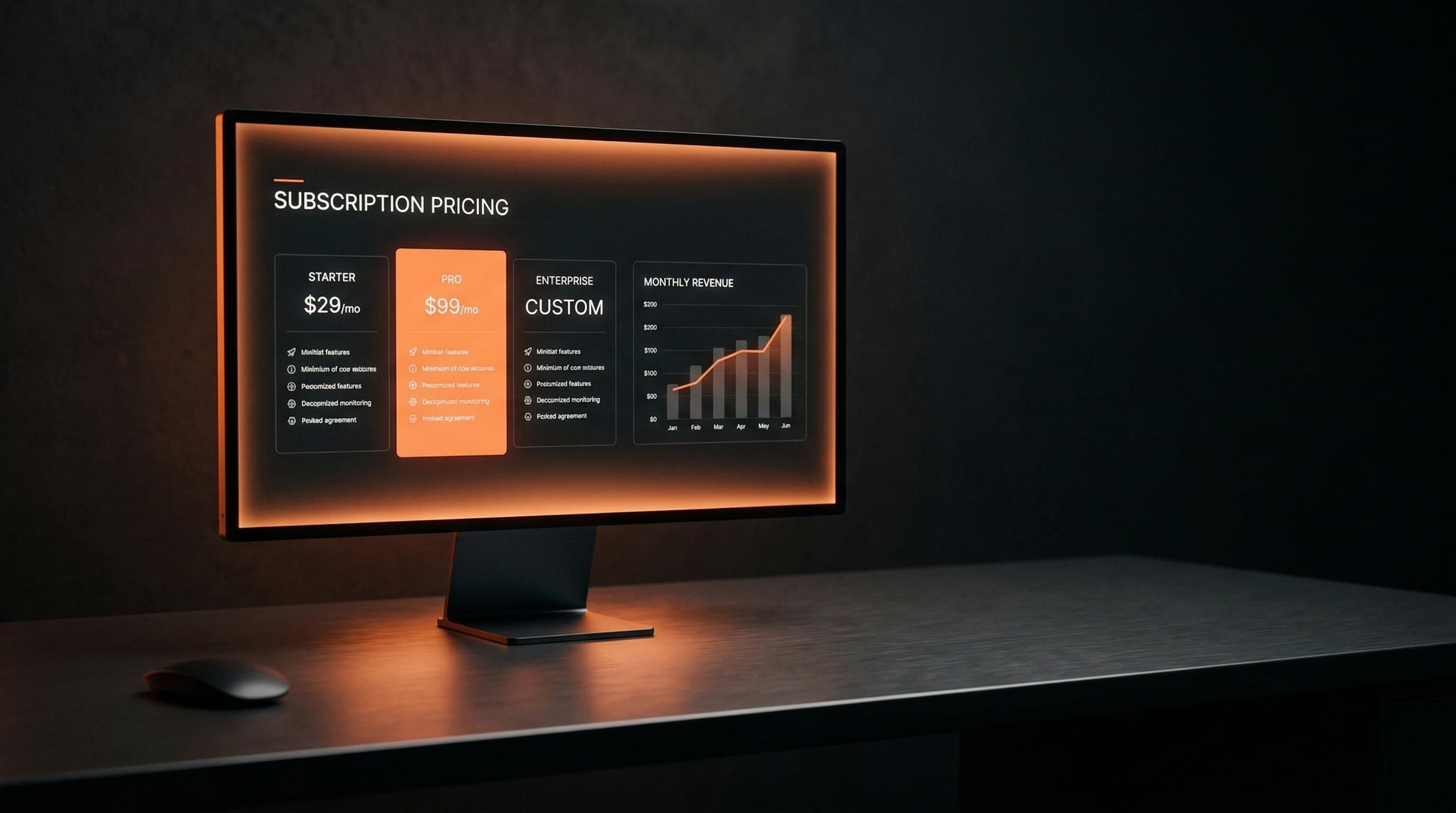
The best apps stack two of these. Daily plan plus library. Tools plus community. One format gives you a reason to subscribe; the second gives you a reason not to cancel. Stop pricing like a tip. Start pricing like a product. The two failure modes are equal and opposite. The first is pricing too low ($2.99/month) because you feel guilty asking listeners for money. The second is pricing like a SaaS company ($49/month) before the app does anything close to $49 of work for the user. The right zone for most podcast apps is $7.99 to $14.99/month, with an annual option at 30% to 40% off. We covered the math in detail in 5 pricing strategies for creator subscription apps, but the short version:
Listener CountRealistic ConversionPrice PointMRR
5,000/episode3% to 5%$9.99$1,500 to $2,500
25,000/episode4% to 6%$9.99$10,000 to $15,000
100,000/episode4% to 7%$9.99$40,000 to $70,000
500,000/episode3% to 5%$9.99$150,000 to $250,000
A podcast with 25K weekly listeners hitting 4% paid conversion at $9.99 generates more recurring revenue than most podcasters earn from ads, brand deals, and merch combined. And it compounds month over month instead of resetting.
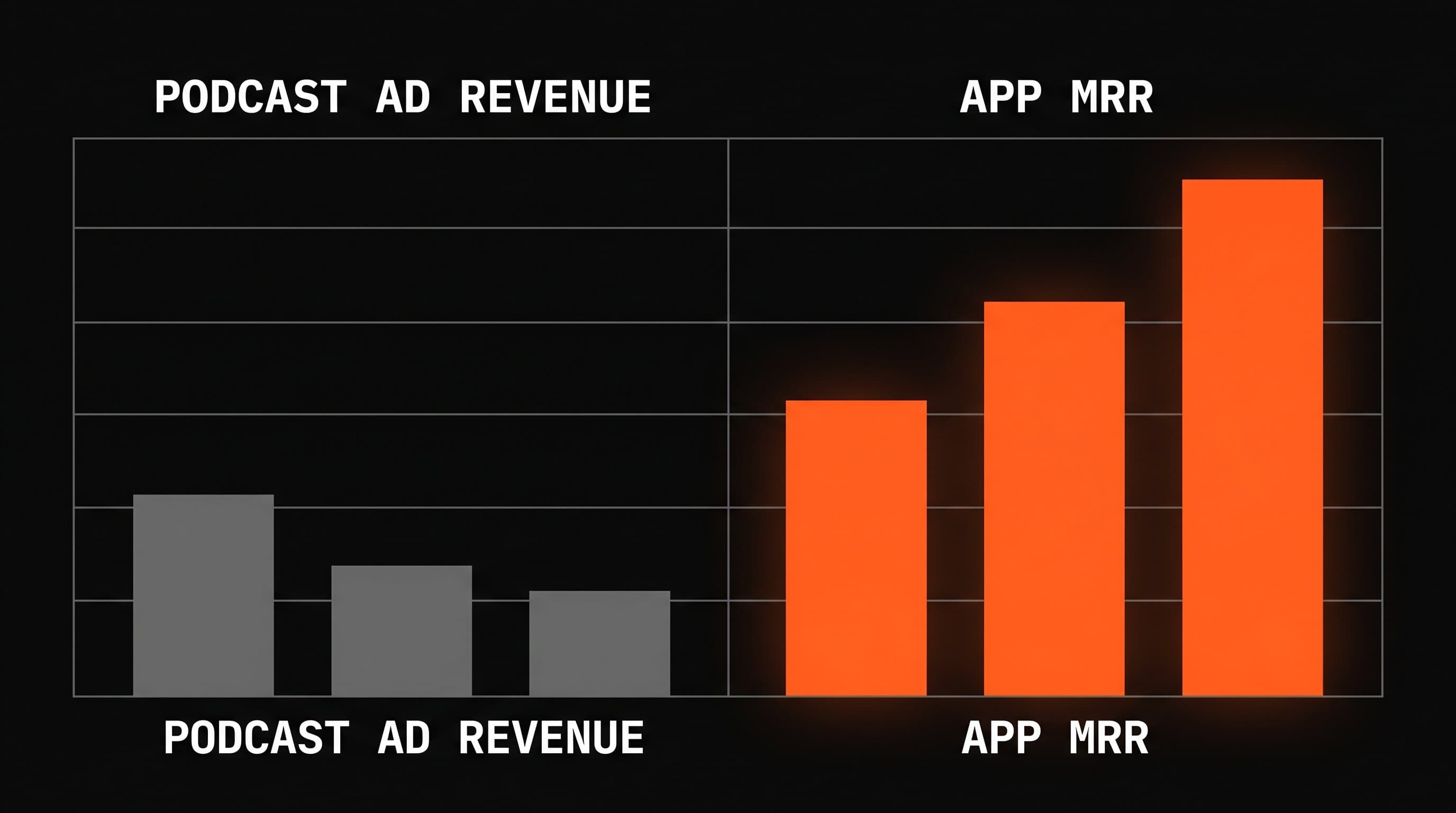
Bar chart contrasting declining podcast ad revenue with rising app subscription MRR
Don't announce on episode one. Build the conversion habit first. Smart podcasters launch their app to the most loyal 5% of their listeners before they ever mention it on the main feed. They post in the show's email list, send a DM to their top commenters, and offer founding-member pricing for 90 days. That cohort becomes the proof, the testimonials, and the bug-fixers. Then the rollout to the main feed happens in three waves:
  • Story wave. Three to four episodes where you tell the story of why you built the app, who it's for, and what it does. No hard sell. The episode IS the marketing.
  • Demo wave. A short mid-roll demo, ideally with a listener using the app live. Hearing another listener describe how they use it converts better than any host pitch.
  • Offer wave. A clear founding offer with a real expiration. "$5.99/month, locked in forever, until June 1." Scarcity that's actually true.
The pattern most podcasters use, mentioning the app once at the end of every episode forever, is the worst possible approach. It feels desperate, drives no action, and trains listeners to skip the outro. This is where podcasts have the structural advantage no other format has. Every episode you record is a 45-minute warm intro to your product. Build the app and your show into one funnel:
  • The cold open is the hook. First 90 seconds previews a topic the app helps with directly.
  • The middle is the proof. You teach the concept, give the framework, name the problem.
  • The mid-roll is the bridge. Twenty to thirty seconds, host-read, with a real listener story. "Last week, Sarah used the meal planner to lose 8 pounds in her first month."
  • The outro is the action. One specific URL, one specific offer. Not "go to the app store." Use a deep link with a UTM that funnels into a paywall designed for the listener of that exact episode.
A 45-minute podcast is a 45-minute landing page. Treat it that way. This is also why the app feeds the podcast back. Like we covered in how your app becomes your content calendar, every user submission, leaderboard, before/after, and weekly milestone is a free episode topic you didn't have to brainstorm. The hardest problem in podcasting isn't recording. It's "what do I cover next?" A subscription app solves this on autopilot. Every feature your users hit becomes a topic. Every common question in the in-app community becomes an episode. Every weekly leaderboard becomes a roundup show. Every milestone a user crosses becomes a transformation episode. This is the part most podcasters miss. The app isn't just a revenue stream parallel to the podcast. The app generates the content the podcast covers. The podcast drives signups to the app. The two compound on each other. That's the moat. A podcaster with a content calendar fed by their own app's data is producing better, more specific, more useful episodes than a podcaster brainstorming alone with a blank Notion doc on Sunday night. Most podcasters who try to monetize beyond ads start with Patreon or Apple Podcasts Subscriptions because they're easy. Easy comes at a price.
PlatformTake RateOwns CustomerMobile AppApp Store Discoverability
Patreon5% to 12% + payment feesPatreonWeb onlyNone
Apple Podcasts Subs30% Y1, 15% Y2+AppleYesApple Podcasts only
Spotify Subs0% to 5% (variable)SpotifyYesSpotify only
Your Own App~15% Y1, ~15% Y2+ (App Store fee)YouYesApp Store + Google Play
The take rate is only half the story. The other half is who owns the customer. On Patreon, when a listener cancels you don't get to know why or contact them. On Apple, you can't email your subscribers. On your own app, you have the email, the usage data, the cancel reason, and the right to win them back. That's the difference between renting an audience and owning a business. We covered the broader framing in why creators are ditching Patreon-style platforms for owned apps. This is the most common objection and it's wrong. A 3,000-listener podcast with 5% paid conversion at $9.99/month is $1,500 of MRR. In year one, that's $18,000 of recurring revenue you didn't have. By year two, with even modest growth and App Store discoverability, that compounds. We broke down the math in how 500 app subscribers make $10K/month. You don't need 100,000 listeners to ship an app. You need 1,000 true fans willing to pay for a daily product. If you've been recording for a year, you already have them. Traditional agencies charge $80K to $250K. Built by Foundry charges $0 upfront and takes a revenue share. We earn when you earn. Most podcasters ship in 3 weeks. If 4% to 6% of your weekly listeners pay $9.99/month, you have a real business. Conversion rates this high happen because podcast listeners spend 45+ minutes a week with you. That's the highest-trust media relationship in the creator economy. Yes. The free podcast is your acquisition channel. The paid app is your business. Killing the free show kills the funnel. The two work together, not against each other. No. Most successful podcast apps don't paywall episodes at all. They paywall tools, plans, tracking, and community. The audio stays free; the daily product is what people pay for. A podcast app lives on the user's phone, gets discovered through the App Store, and is owned by you. A Patreon is a web page that takes a cut and owns your customer relationship. Every week you record, you're feeding an asset you don't own. The hosting platform, the ad network, Spotify, Apple, all take a cut and treat your audience as theirs. The fix is shipping the product the podcast was always pointing at. Six steps. Three weeks. A subscription business that earns whether you record or not. Want to turn your podcast into a subscription app? We build custom apps for podcasters and creators. $0 upfront, 3-week delivery, we run it forever.
Let's Build →

Get Creator Revenue Insights

How creators are turning audiences into subscription businesses

You might also enjoy...

How to Turn Your Podcast Into a Subscription App