
Turning Knowledge into Products

Beehiiv vs Substack 2026: 7 Costs Compared

August 23, 2026
Share
Beehiiv vs Substack 2026: 7 Costs Compared

Get Creator Revenue Insights

How creators are turning audiences into subscription businesses
Share
Key Takeaways:
  • Substack is free to start and takes 10% of every paid subscription, plus credit card fees, according to its own going paid page
  • Beehiiv takes 0% of subscription revenue on every plan, but paid subscriptions are not available on the free Launch tier, so the 0% costs $43 a month on the Scale plan
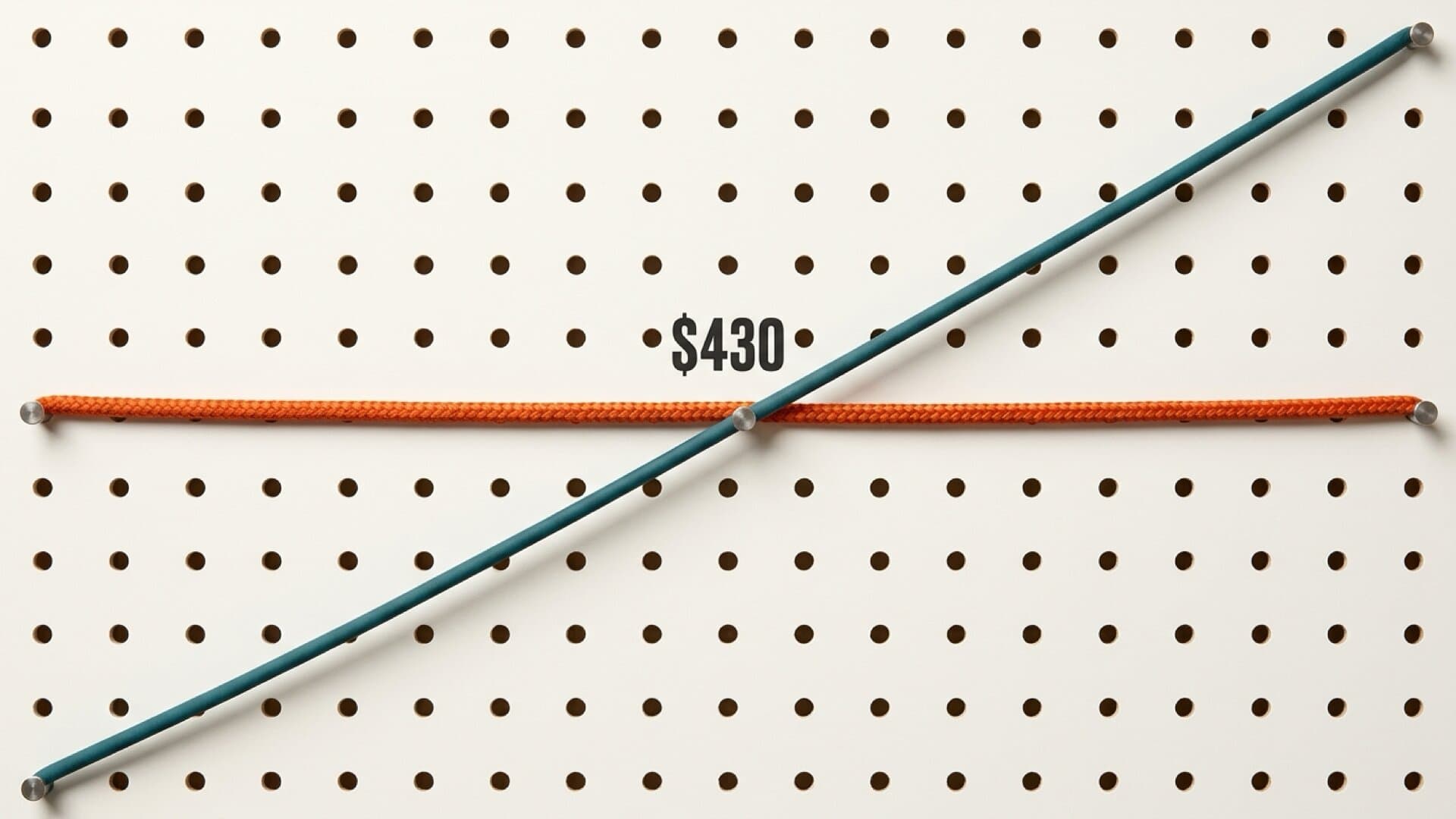
  • The crossover is $430 a month in paid revenue. Below it Substack is cheaper. Above it Beehiiv is cheaper, and the gap widens every month you grow
  • At $10,000 a month in paid subscriptions, Substack takes about $1,000 a month and Beehiiv takes $43, a difference of roughly $11,500 a year
  • Both are inboxes. Neither one puts an app with your name on it in the App Store, and that is the cost neither pricing page prints
If you are comparing Beehiiv and Substack, you have already made the harder decision: you are going to charge money for something you know. What is left is a fee schedule, and the two companies structure theirs in opposite directions. Substack charges nothing to exist and takes a percentage of every dollar your readers pay you. Beehiiv charges a monthly subscription and takes nothing. That single difference decides which one is cheaper, and it decides it entirely on the basis of how much money you are making. There is a number where the answer flips. Most comparisons on the internet never print it. We reviewed each platform on its own terms in our Beehiiv review and our Substack review. This piece puts the current numbers next to each other, finds the crossover, and then asks the question neither pricing page will ask you. Every figure below comes from the two companies' own published pages, checked on August 23, 2026.
CostBeehiivSubstack
Publishing on a free plan$0, up to 2,500 subscribers$0, no published subscriber cap
Unlocking paid subscriptionsScale plan, $43 a month billed annually$0
Platform cut of subscription revenue0% on every plan10%
Payment processingStripe standard, 2.9% + $0.30Credit card fees, charged on top of the 10%
Platform cost at $1,000 a month in paid revenue$43$100
Platform cost at $10,000 a month in paid revenue$43$1,000
Removing platform brandingMax plan, $96 a month billed annuallyNot offered
The shapes are opposite, and the consequence is worth saying plainly. Substack's bill grows with your success. Beehiiv's bill does not. Substack is free to publish and takes 10% of paid subscription revenue plus credit card fees. Beehiiv takes 0% of paid subscription revenue on every plan, but paid subscriptions require the Scale plan, listed at $43 a month billed annually ($517 a year). Substack's own writer-facing page states it directly: writers keep 90% of their revenue minus credit card fees. There is no plan to choose, no tier to upgrade, and no monthly invoice. You publish, you turn on payments, and Substack's cut appears in the ledger as a percentage forever. Beehiiv's pricing page lists four tiers. Launch is free and covers up to 2,500 subscribers, and its published feature list includes newsletters, a website, a podcast, custom domains, and the recommendation network. It does not include paid subscriptions. That is the detail most Beehiiv comparisons get wrong, and it changes the math: Beehiiv's famous 0% take rate is real, and it costs $43 a month to switch on. Scale covers up to 100,000 subscribers, three team seats, and three publications. Max, at $96 a month billed annually ($1,151 a year), adds unlimited seats, the Send API, ten publications, and the removal of Beehiiv branding. Both platforms move money through Stripe, so the processing cost is roughly the same on either side and mostly cancels out of the comparison. Beehiiv states the standard 2.9% plus $0.30. Substack's 10% sits on top of the card fees, not in place of them. $430 a month in paid subscription revenue. Below that, Substack's 10% costs less than Beehiiv's $43 monthly Scale plan. Above it, Beehiiv is cheaper every single month, and the gap grows in a straight line. The arithmetic is one division. Beehiiv's $43 equals 10% of $430. That is the whole crossover. At a $10 a month subscription price, $430 is 43 paying readers. Forty-three. That is not a milestone, it is a Tuesday for anyone with an engaged list, which means the majority of newsletters that charge money at all are already past the point where Substack is the more expensive option. Here is what the gap looks like once you are through it, counting platform fees only.
Monthly paid revenueSubstack takesBeehiiv Scale costsYearly difference
$500$50$43$84
$1,000$100$43$684
$5,000$500$43$5,484
$10,000$1,000$43$11,484
A flat orange cord and a rising teal cord pinned across a pegboard, crossing at a point marked $430
At $10,000 a month, the choice of platform is worth about $11,500 a year. That is a real number and it is the strongest argument Beehiiv has. It is also, at $10,000 a month, roughly 4% of your annual revenue. Which raises the question the fee comparison is quietly avoiding: if the difference between the best and worst fee structure in the category is 4%, is the fee structure actually the decision? Kit is free up to a point, then $33 a month for the Creator plan at 1,000 subscribers, and its published rate on digital products and recurring subscriptions is 3.5% plus $0.30. It sits between the two: cheaper than Substack above about $508 a month, more expensive than Beehiiv above about $286 a month. Kit's pricing page lists a free Newsletter plan, Creator at $33 a month, and Pro at $66 a month, quoted at 1,000 subscribers. Unlike Beehiiv, Kit's plan price scales with list size, so verify your own tier before you plan around $33. Kit also retains 23.5% of earnings on Paid Recommendations, which is a separate product from subscriptions and easy to misread as a subscription fee. The hybrid model means Kit is never the cheapest option for long. It beats Substack once your monthly paid revenue clears about $508, and it loses to Beehiiv once you clear about $286, so its window as the cost winner is a narrow band most growing newsletters pass through in a quarter. We went through its free tier in detail in our Kit review. Choose Kit for its automation and tagging, which are genuinely the best in the category, not for its fees. Fee comparisons make Substack look indefensible. It is not, and pretending otherwise would make this post useless to you. Substack has the only real cold-start engine in newsletters. Notes, the Recommendations network, and the reader app put your writing in front of people who never heard of you, and no Beehiiv feature matches it at the same scale. Substack reports 35 million active subscriptions and 4 million paid subscriptions in its own disclosures. For a writer with no list, that distribution is worth more than 10%, because 10% of nothing is nothing. There is a second thing worth naming: Substack's payments run through your own Stripe account. You are not waiting on a platform payout, and the customer billing relationship is yours in a way that many creator platforms do not offer. So the honest read is not "Beehiiv wins." It is that Substack sells distribution and charges for it as a percentage, which is exactly the right price when you have no audience and exactly the wrong price when you do. If you already have 50,000 engaged followers on another platform, you are not buying Substack's discovery. You are paying a distribution tax on an audience you brought with you. No. Neither Beehiiv nor Substack publishes a branded app under your name on the App Store. Substack readers use the Substack app, Beehiiv readers use email and a web archive, and in both cases the listing, the reviews, and the search ranking belong to the company you are paying. This is the cost that never appears in a fee table, and it is larger than the 10%. An owned app inverts every part of that. Your listing ranks in App Store search, which means strangers can find the product before they find you, and new subscribers arrive without a single post. Daily use inside the app produces the raw material for your next week of content, which quietly solves the hardest recurring problem in a creator's calendar. And the subscription renews on the first of the month whether or not you wrote anything, which is the entire difference between an income and a business. We walked through that migration in how to turn a newsletter into a subscription app, and laid out the wider field in five Substack alternatives.
A hollow steel letter slot standing on nothing beside an orange steel mailbox bolted to a poured teal plinth
If you are a writer with no list and no other audience, start on Substack. The 10% buys you the only discovery engine in the category, and paying a percentage of nothing costs nothing. Move when the fee starts to sting, which will be sooner than you expect. If you are a creator with 50,000 engaged followers who already sell something, and your newsletter is a channel for an audience you built elsewhere, Beehiiv is the correct bill. You are not buying discovery. You are buying delivery, and $43 a month is the honest price of delivery. Every dollar above $430 a month that Substack would have taken stays with you. If you run a business where email is one of several surfaces and lifecycle automation matters more than either fee, look at Kit and accept that you will pay a little more than Beehiiv for tooling that is genuinely better at segmentation. And if the honest answer to "what does a subscriber do with this on Tuesday morning?" is a task rather than a read, none of the three is your destination. Tracking, planning, logging, scoring, generating, adapting: those are software behaviors, and no newsletter platform will ever be good at them, because that is not what any of these companies are building. Run one test on any platform decision. If this company doubled its fee tomorrow, what would you still have? On Substack you would have a subscriber export and a Stripe account. On Beehiiv you would have a subscriber export and a Stripe account. In both cases the product is a list of email addresses and a habit of writing, and the discovery, the app, the reviews, and the retention mechanics stay with the company you were paying. That is the actual cost, and it does not appear in either fee schedule. Built by Foundry builds the other version: a subscription software business in about three weeks, $0 upfront, on a revenue share. The creator owns the business and the revenue. We ship it, then we keep improving it after launch, because our side only works if the product keeps earning. Beehiiv and Substack are both good at collecting money for something you already wrote. The better question is what you would build if the product itself were yours. Above $430 a month in paid subscription revenue, yes. Beehiiv's Scale plan costs $43 a month billed annually and takes 0% of subscription revenue, while Substack takes 10% with no monthly fee. Below $430 a month, Substack's 10% costs less than Beehiiv's monthly plan. Yes, on every paid plan, and Beehiiv states it on its pricing page. The qualifier is that paid subscriptions are not included in the free Launch plan, so reaching the 0% take rate requires the Scale plan at $43 a month billed annually. Substack has no plan fee. It takes 10% of paid subscription revenue plus credit card processing fees, which its own page describes as writers keeping 90% of revenue minus card fees. On a $10,000 month that is about $1,000 to Substack before processing. Both platforms support subscriber export, and because Substack payments run through your own Stripe account, the billing relationship moves with you more cleanly than on platforms that hold the merchant account. Expect to lose Substack's Notes and Recommendations traffic, which for many writers is the larger cost of leaving. Kit is the strongest of the three at automation, tagging, and segmentation, and it is priced in between: $33 a month at 1,000 subscribers plus 3.5% and $0.30 on subscriptions and digital products. It is cheaper than Substack above roughly $508 a month in paid revenue and more expensive than Beehiiv above roughly $286 a month.
Our work

Creators who already did this

These are apps we designed, built, shipped, and still run today, with the creator keeping the code and the audience.

Creator app strategy

Curious what your app could be?

Enter your handle and Built by Foundry will research your audience and present custom app concepts. Free.

Beehiiv vs Substack 2026: 7 Costs Compared