

Turning Knowledge into Products

5 Ways Creators Hit $20K MRR Without Going Viral

Foundry
May 22, 2026
Share
5 Ways Creators Hit $20K MRR Without Going Viral

Get Creator Revenue Insights

How creators are turning audiences into subscription businesses
Share
A creator with 80,000 followers makes $4,200 a month. A different creator with 12,000 followers makes $23,000 a month. The difference is not the algorithm. It is the business model. In 2026, the creators stacking real monthly recurring revenue are not the ones going viral. They are the ones who stopped trying to. They built products their audience pays for every month, then let the App Store sell those products to people who never watched a single video. Key Takeaways:
  • Going viral generates spikes, not income. $20K MRR is a flat line that grows month over month.
  • The most profitable creators in 2026 own a subscription app, not a content channel that hopes for brand deals.
  • App Store discoverability now drives 40 to 60 percent of new subscribers for the best creator apps (Sensor Tower, 2025).
  • Niche creators with 10K to 50K engaged followers consistently outperform 1M follower generalists on revenue per subscriber.
  • The math is simple: 1,000 paying subscribers at $20 a month is $20K MRR. That is the whole game.

Creator working on app revenue strategy
Viral content is a one-time payout. Recurring revenue is a salary. A 4 million view TikTok pays roughly $400 to $800 from the Creator Fund. A brand deal off that same video might pay $5K to $15K once. Then the view count decays and the income resets to zero. The creator economy has been running on this loop for almost a decade. Brand deals get bigger, but they never compound. You are only as valuable as your last 30 days of engagement metrics. Subscription apps invert that math. A subscriber who pays $19.99 a month in January is still paying $19.99 in December. New subscribers stack on top of existing ones. The income line goes up and to the right whether you post or not. That is what we mean by building a business bigger than your audience. $20K MRR means $240K a year in recurring revenue before any sponsorships, ads, or one-off products. It is a six figure business that runs on autopilot. Run the math three ways:
  • 1,000 subscribers at $19.99 a month
  • 2,000 subscribers at $9.99 a month
  • 4,000 subscribers at $4.99 a month
All three hit roughly the same number. The shape of the business depends on which niche you serve and what outcome you deliver. We broke down the math in detail in our breakdown of $10K brand deals versus $10K MRR, and the conclusion is brutal: a creator hitting $20K MRR in month 12 will out-earn a creator pulling $10K brand deals every other month, then keep widening the gap forever. The single biggest unlock for creators in 2026 is owning a product instead of producing content for someone else's platform. The App Store is now a discovery channel that brings paying customers to creators who never saw their videos. Apple reported over 650 million weekly App Store visitors in 2024. A well-positioned creator app captures search traffic for terms like "yoga at home," "Spanish for beginners," or "high protein recipes." Sami Clarke's FORM app reportedly hit a $42M valuation partly because Apple kept featuring it in the Health & Fitness category, where new subscribers found her without ever opening Instagram. Read the full Sami Clarke FORM story. Compare two creators with identical follower counts: one runs a Linktree pointing at a course landing page. The other has an app on the App Store. The first only reaches people who watch her content. The second reaches everyone who searches for what her content is about. Creators who hit $20K MRR sell results, not videos. The customer is not paying $19.99 to watch a workout. They are paying $19.99 because they want to lose 15 pounds, and the app tells them exactly what to do each day to get there. This is why courses keep losing to apps. A course is a library. An app is a coach. We laid out the full revenue math in app vs course revenue for creators, but the short version: courses sell once, apps sell every month, and apps deliver an outcome that the buyer can measure. The framing change is critical. Stop pitching "my workout program." Start pitching "the app that makes you stronger in 12 weeks." One is a SKU. The other is a job to be done. Top earning creators stopped trying to monetize TikTok and Instagram directly. Those platforms are funnels. The destination is your owned product. Look at Jillian Michaels' move from DVDs to a fitness app with over a million users. Her social channels are not the business anymore. They are the top of the funnel that points to The Fitness App, which is the business. We covered her entire pivot in the Jillian Michaels fitness app profile. Practical version of this tactic:
  • Every video ends with one CTA, the app
  • Your bio link goes to the App Store, not a landing page
  • You stop measuring views and start measuring app downloads per video
  • You stop chasing virality on the platform and start measuring conversion from the platform
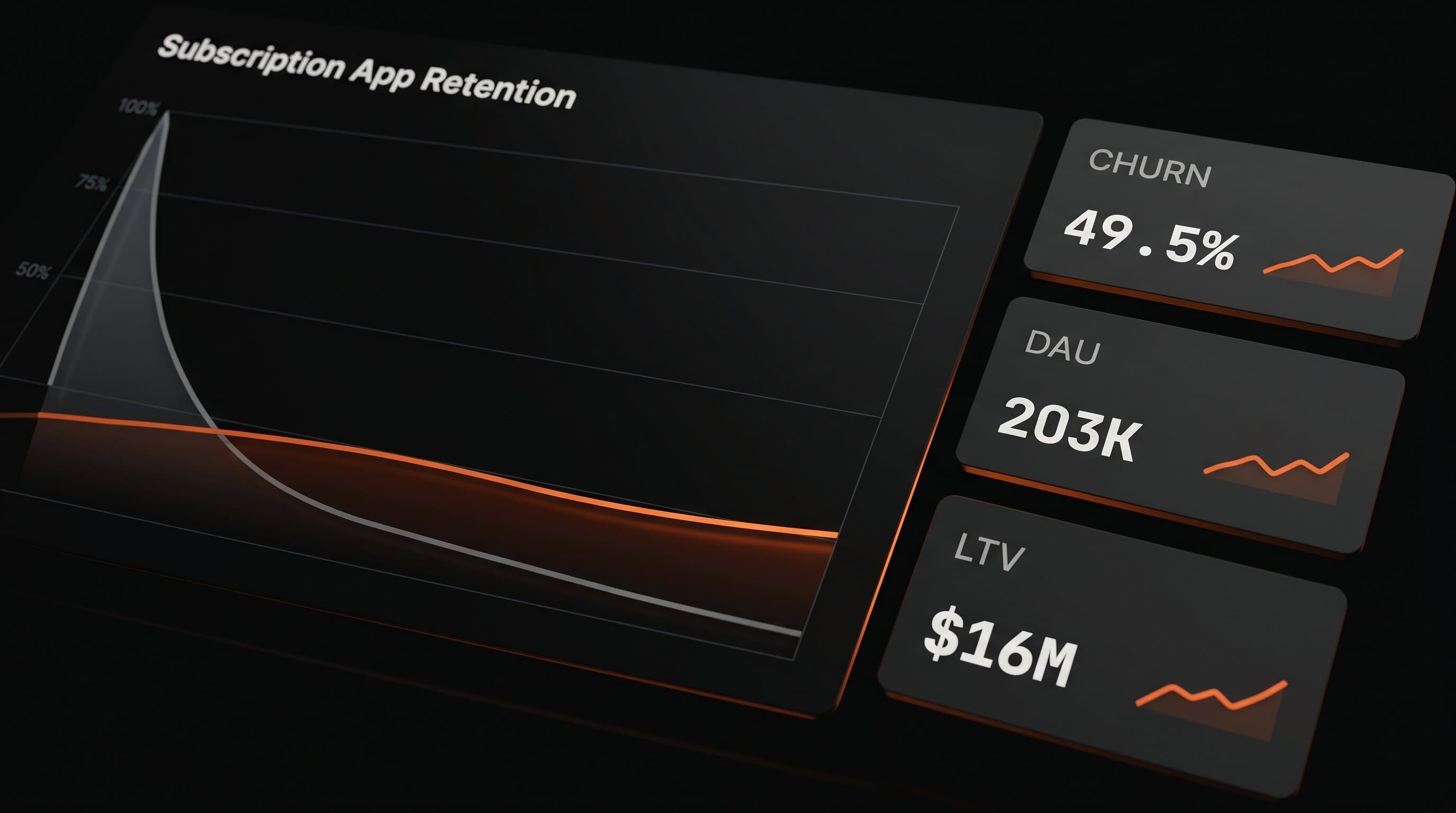
A 30,000 view video that converts 2 percent to a 7-day free trial generates 600 trials. At a 35 percent trial-to-paid conversion (a reasonable benchmark from our free trial guide), that is 210 new subscribers. At $19.99 a month, that single video adds $4,200 in MRR. Forever. Creators with 1M generalist followers earn less per subscriber than creators with 25K hyper-niche followers. The reason is simple: the narrower the niche, the higher the willingness to pay. A general "wellness" creator competes with Headspace, Calm, Apple Fitness+, Peloton, Sweat, and 200 other apps. A "perimenopause strength training" creator competes with nobody. There is no Headspace for perimenopause strength training. There is only her. This is the lesson behind every successful creator app in the last five years. Adriene Mishler did not win by being the biggest yoga teacher on YouTube. She won by being the only one who understood her exact audience well enough to build Find What Feels Good for them. Chris Williamson did not build a podcast empire by chasing every news cycle. He built it by going extremely deep on one niche: high performance for self-improvement obsessives. The right way to test if your niche is narrow enough: can you describe your exact ideal subscriber in one sentence, including their age, the problem they have right now, and the result they want in 90 days? If yes, you have a niche. If no, you have an audience, which is not the same thing. A creator with 5,000 subscribers and 4 percent monthly churn loses 200 subscribers a month. They need to acquire 200 new ones just to stay flat. At $20 a month, that is $4,000 of revenue going out the door every 30 days. A creator with 5,000 subscribers and 2 percent monthly churn loses 100 subscribers a month. Same audience size, double the long-term revenue. The math gets even more punishing as you scale. RevenueCat's 2024 State of Subscription Apps report puts median monthly churn for content and lifestyle apps at 8 to 12 percent. Top quartile apps run at 3 to 5 percent. That difference is the gap between a business that grows and a business that stalls. Retention is now the only metric that matters. Daily active use, push notification opt-in rates, streaks, weekly check-ins. The mechanics of building an app that fans come back to every day is its own discipline. We walked through the core levers in 7 ways creator apps turn followers into daily users.
Creator app retention dashboard
Compounding is the part most creators miss. A $20K MRR business is not built in a viral month. It is built in 12 disciplined months of stacking subscribers. Here is what stacking looks like in practice:
MonthNew SubsChurnedNet SubsMRR ($19.99)
180080$1,599
31208280$5,597
618022620$12,394
922032920$18,391
12240381,002$20,030
This is a creator adding 80 to 240 new paying subscribers per month, at a 3 percent monthly churn rate. No viral moment. No PR launch. Just consistent funnel, retention, and product improvement. Hit those numbers and you cross $20K MRR in month 12. Keep the curve going and you cross $50K MRR in month 24. The tactics above are interdependent. The app gets discovered (Tactic 1). The product delivers an outcome (Tactic 2). Content funnels people in (Tactic 3). The niche makes the conversion rate higher (Tactic 4). Retention compounds the whole thing (Tactic 5). Skip one and the math breaks. The pattern repeats across categories. Fitness, education, finance, faith, niche hobbies. Whenever a creator has stopped trying to grow followers and started trying to grow paying users, the revenue follows.
  • Adriene Mishler (Yoga With Adriene) built a subscription business around her exact niche, then let the app run while she kept teaching
  • Cassey Ho (Blogilates and Popflex) turned a 17 year YouTube channel into a multi-product business with recurring revenue at the core
  • Sami Clarke (FORM) built a $42M business by being the only creator app for her specific approach to strength training
  • Multiple creators we covered in 12 creator apps making real money cleared $1M ARR with under 250K followers
None of them did it by going viral. All of them did it by owning a product. According to Business Insider's 2024 reporting on Sweat, app revenue can scale to hundreds of millions while founders barely show up on TikTok. Most creators who reach $20K MRR do it in 12 to 18 months from launch. The first 90 days are usually under $3K MRR. The compounding kicks in around month 6 once retention, App Store ranking, and content funnel feedback loops start reinforcing each other. No. The math works on 1,000 paying subscribers at $19.99 a month. Creators with 25K to 50K highly engaged followers in a narrow niche consistently outperform 1M follower generalists. The variable that matters is how willing your specific audience is to pay for a specific outcome. Yes. Most creators who hit it never had a viral moment. They built a small, consistent funnel from their existing audience plus App Store search, then improved conversion and retention every quarter. Viral content can accelerate the curve, but it is not required. A brand deal pays $20K once and ends. $20K MRR pays $20K every month for as long as your subscribers stay. By month 12, the MRR creator has earned $240K and still has the recurring base. The brand deal creator has earned $20K and is on the next pitch. An app. Courses sell once for an average $200 to $400, then churn the customer immediately. Apps convert the same buyer into recurring revenue at $10 to $30 a month. The lifetime value math is not close. We broke the full comparison down in 5 reasons creators are choosing apps over courses. A follower costs you content and time. A customer pays you every month. The whole gap between "creator with an audience" and "founder with a business" comes down to that one swap. The five tactics above are not theory. They are what the highest grossing creator apps actually do. They are what we build with our clients. They are also what most of your favorite creators are quietly doing right now, while their public output still looks like the same content treadmill everyone else is on. The reason $20K MRR feels far is not the followers. It is the model. Want to turn your expertise into an app? We build custom apps for creators, $0 upfront, 3-week delivery, and we run them forever so you can keep creating.
Let's Build →
5 Ways Creators Hit $20K MRR Without Going Viral