
7 Ways Creator Apps Turn Followers Into Daily Users

7 Ways Creator Apps Turn Followers Into Daily Users

Foundry
April 14, 2026
Key Takeaways:
  • The average app loses 93% of its users within 30 days. Creator apps that build daily habits keep subscribers paying 3x longer.
  • Duolingo grew daily active users 4.5x in four years by optimizing its streak system. Creator apps can steal the same playbook.
  • Peloton members who engage socially work out 15% more often and churn 60% less than solo users.
  • Personalized push notifications hit a 76% open rate, but more than 6 per week from one app makes users 3.4x more likely to delete it.
You launched your app. You announced it to your audience. Downloads spiked. And then... silence. This is the most common pattern in creator apps. The average mobile app retains only 25 to 30% of users after Day 1, and by Day 30, that number drops to 5 to 7% (Business of Apps, 2026). That means 93 out of every 100 people who download your app will stop using it within a month. Here's what most creators miss: getting someone to download your app isn't the hard part. Getting them to open it tomorrow is. And the day after that. Because subscribers who don't use your app cancel. 40% of subscription cancellations come from low usage, not price. What is a daily active user (DAU)? A DAU is someone who opens and meaningfully interacts with your app at least once per day. The DAU/MAU ratio (daily active users divided by monthly active users) measures how "sticky" your app is. A 20%+ DAU/MAU ratio is considered strong for most app categories. The 7 strategies below are how the best subscription apps turn one-time downloaders into daily users who never cancel.
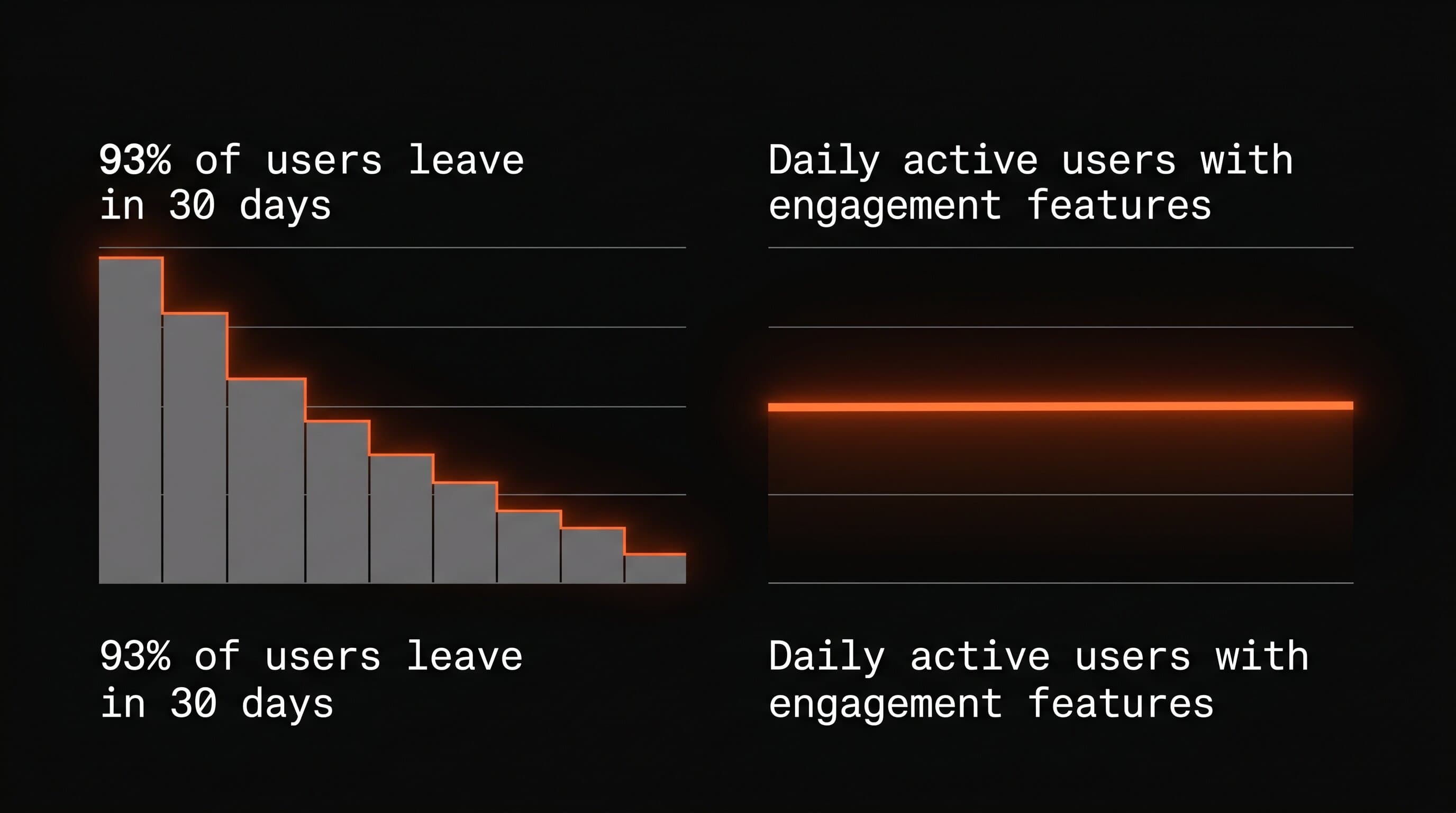
Most apps lose 93% of users in 30 days. Engagement features flatten the curve.
Nobody opens an app to see the same thing they saw yesterday. Your app needs to feel different every single day. The Sweat app, built by Kayla Itsines, does this by serving personalized daily workouts based on each user's program, week, and fitness level. You never see the same workout twice. Every morning, there's something new waiting. That daily reset is a big part of why Sweat hit $100M in annual revenue. This works because it creates urgency. A static library of pre-recorded videos doesn't give anyone a reason to come back today. A daily personalized feed does. How to apply this to your creator app:
  • Rotate daily challenges, prompts, or content based on the user's progress
  • Surface "today's plan" on the home screen the moment someone opens the app
  • Use the user's history to recommend what they should do next
The content doesn't have to be new every day. It has to feel new to that specific user. Duolingo's streak system grew their daily active users from 12 million to 52.7 million in four years, a 4.5x increase (Sensor Tower, 2025). Over 10 million users now have a 365-day consecutive streak (PocketGamer, 2025). Ten million people opened an app every single day for a year. Not because they were forced to, but because they didn't want to lose their streak. Streaks work because of loss aversion. Once someone has a 30-day streak, skipping a day feels like throwing away a month of effort. The longer the streak, the stronger the pull. Creator apps can use streaks for:
  • Daily workout completions
  • Daily check-ins or journal entries
  • Consecutive days of practice or learning
  • Daily submissions or participation
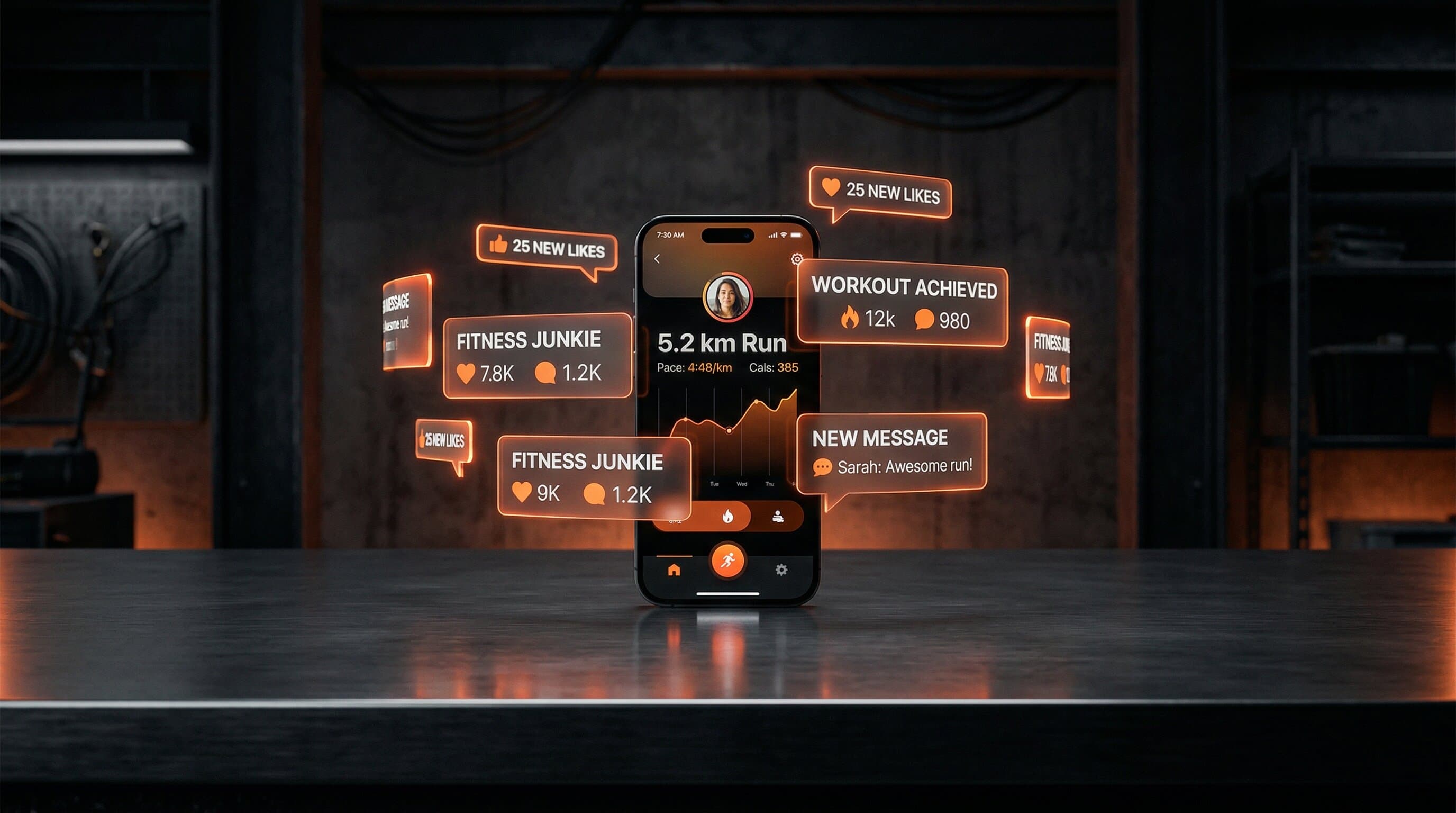
The key: make the daily action small enough that skipping feels lazy. A 5-minute daily workout. A single journal entry. One practice session. Lower the bar so keeping the streak alive is always easier than breaking it. Solo users quit. Users with friends don't. Peloton proved this: members who engage socially on the platform work out 15% more frequently than solo users (Extole, 2025). Members who participate in multiple workout types churn 60% less. Peloton's 12-month subscriber retention rate hit 89% in Q4 2025. The Sweat app leans into the same principle. Their Community tab lets users share progress photos, celebrate milestones, and participate in forum discussions. When someone posts a transformation photo, that's not just engagement; it's free content for the creator and social proof for other users who are thinking about quitting. Community features that drive daily engagement:
  • Leaderboards: Real-time rankings create friendly competition
  • Teams or groups: Small groups of 5 to 20 people create accountability
  • Activity feeds: Showing what other users accomplished today
  • Challenges: Time-limited group challenges (e.g., "30-Day Ab Challenge")
The social layer does two things at once: it keeps users coming back (engagement), and it generates content the creator can post about. Push notifications are the most powerful retention tool you have. They're also the fastest way to get your app deleted. Personalized push notifications achieve a 76% open rate (Amra and Elma, 2026). But users who receive more than 6 notifications per week from a single app are 3.4x more likely to uninstall it within 30 days. The difference between a notification that works and one that annoys: relevance.
Notification TypeOpen RateUninstall Risk
Personalized (based on behavior)76%Low
Generic blast ("Come back!")~15%High
Streak reminder ("Don't lose your 14-day streak!")~60%Low
Social trigger ("Sarah just completed Day 7")~45%Low
Excessive (6+ per week)Declining3.4x higher
Rules for creator app notifications:
  • Send 2 to 4 per week, maximum
  • Make every notification about the user, not about you
  • Streak reminders work because they reference the user's own progress
  • Social triggers ("Your friend just worked out") create urgency
  • Let users pick their notification timing and preferences
Users who receive even a single push notification within their first 90 days are 3x more likely to still be using the app than users who receive none (Pushwoosh, 2026). This is where creator apps have an unfair advantage over regular apps. Every user action generates content. And that content makes the app feel alive. When a user submits a workout selfie, that goes into a community feed. When someone hits a milestone, that's a notification to their friends. When a leaderboard updates, that's a reason to check in. Your users are creating the content that brings other users back. The apps that retain best aren't the ones with the most content. They're the ones where the content comes from the users themselves. Your app writes your content for you, and your users write each other's reasons to come back. This is the content engine flywheel: user activity creates content, content creates engagement, engagement creates more activity. It's self-reinforcing. And it means the creator never has to sit down and ask, "what do I post?" The app answers that question every single day. Gamification works when it makes real progress visible. It backfires when it adds decoration to nothing. Random points and meaningless badges don't change behavior. But showing someone how far they've come, and how close they are to the next milestone? That creates a daily pull. What works:
  • Progress bars: Showing how far through a program the user is (e.g., "Week 3 of 8")
  • Milestone badges: Celebrating real accomplishments ("100 workouts completed")
  • Before/after tracking: Built-in photo comparison tools that turn results into motivation
  • Level systems: Unlocking new content or features based on engagement
  • Weekly summaries: "You worked out 4x this week, up from 3x last week"
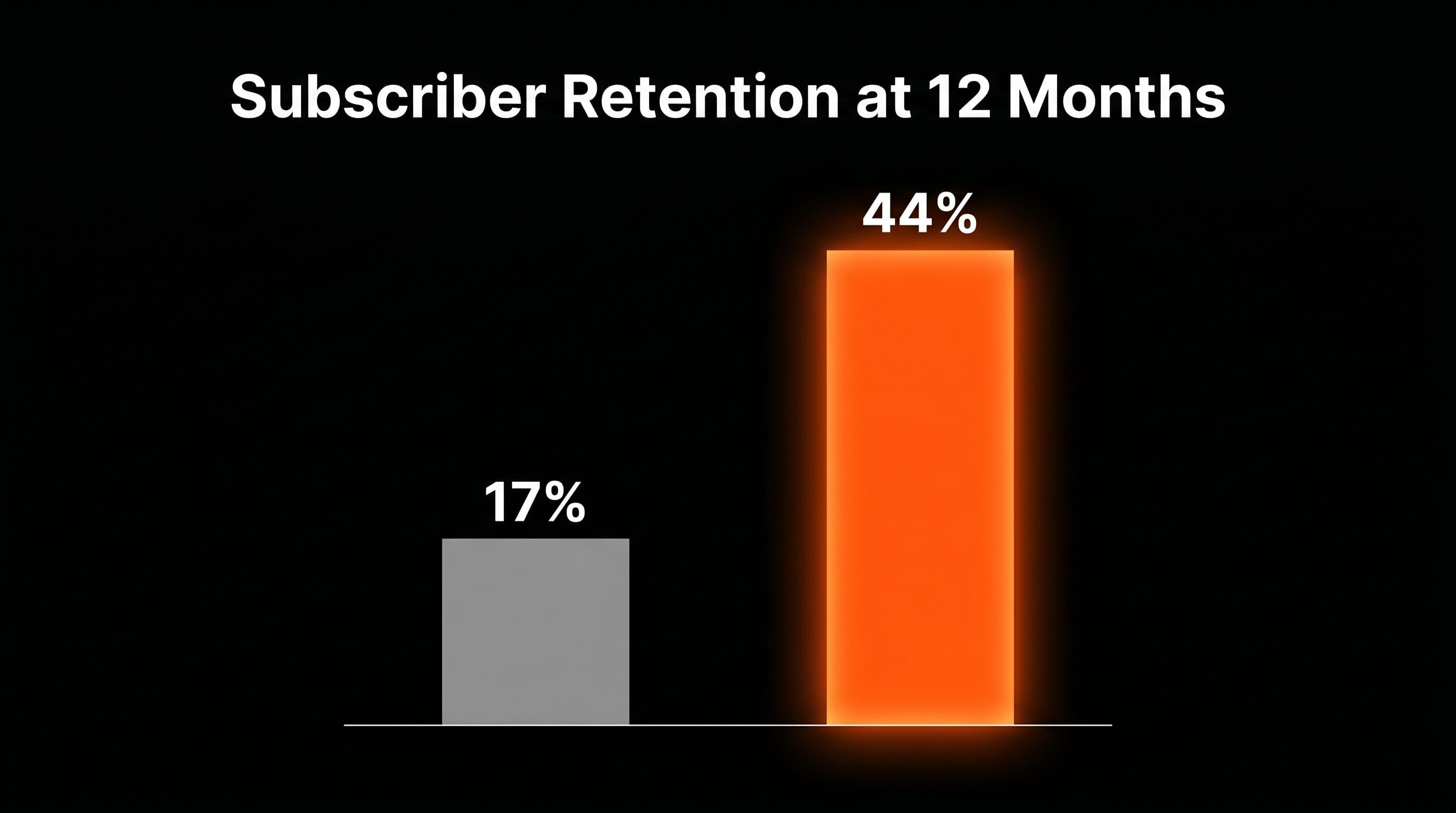
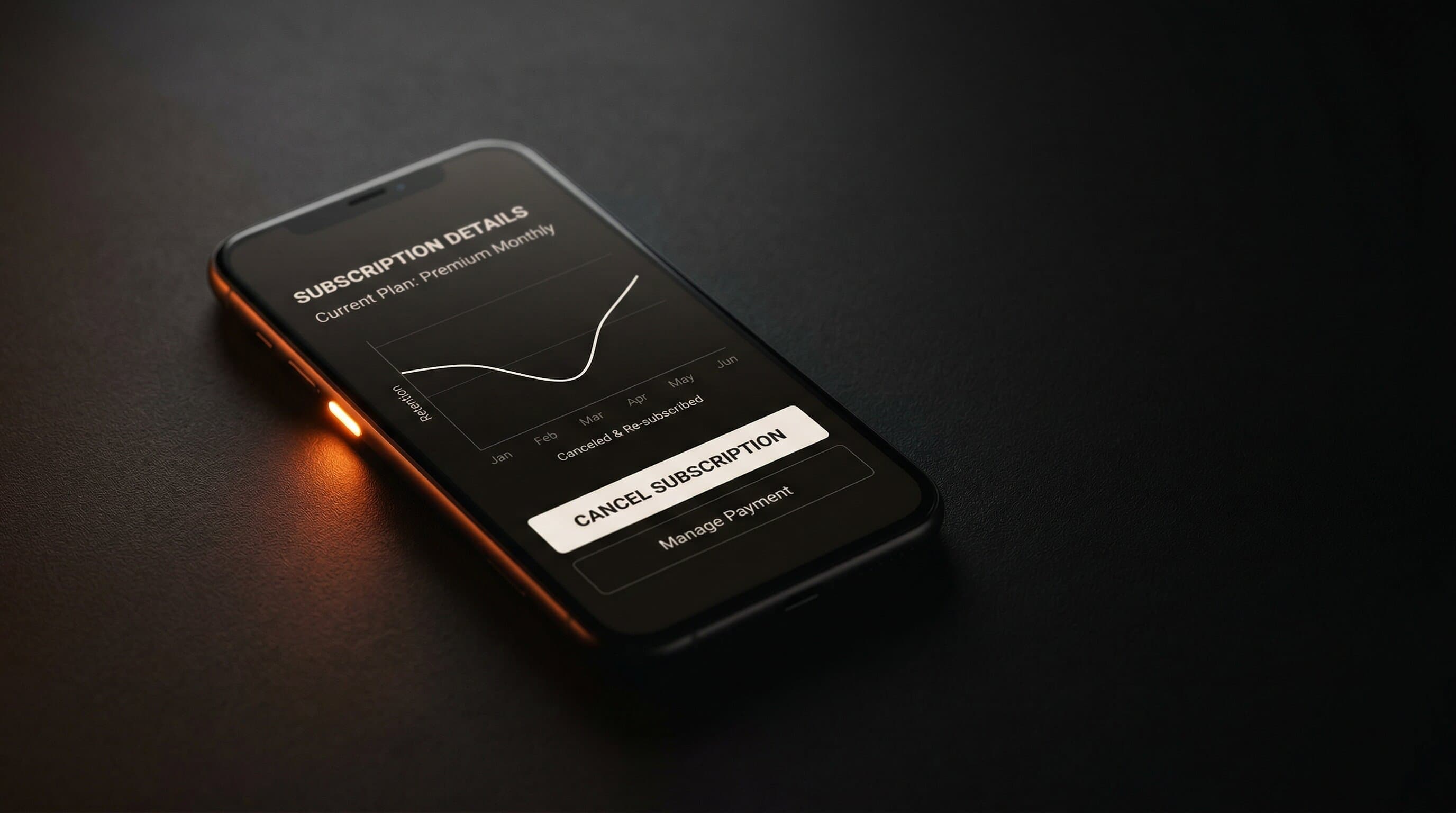
The Sweat app uses workout badges and program completion tracking. Users can see exactly where they are in their fitness journey, and every completed workout brings visible progress (Sweat, 2026). That visibility is what creates the daily pull. Here's the business case: daily engagement directly drives subscription retention. And retention is where the money lives. Annual subscribers retain at 44.1% after 12 months versus 17% for monthly subscribers (RevenueCat, 2025). But those numbers only hold for users who actually use the app. Among subscribers who cancel, 40% cite low usage as the reason.
Monthly vs annual subscriber retention at 12 months: 17% vs 44%.
The math is simple. If your app has 1,000 subscribers at $9.99/month:
  • At 17% monthly retention (no engagement strategy): ~170 subscribers after 12 months = $1,698/month
  • At 44% annual retention (strong engagement): ~440 subscribers after 12 months = $4,396/month
That's a $32,000/year difference per 1,000 subscribers, just from keeping people engaged enough to stay. And as your subscriber base grows, that gap compounds. Getting your first 1,000 subscribers is step one. Keeping them is where you build wealth. And here's what most creators forget: every engaged user is also a walking referral. They post their progress. They share their streaks. They tell friends. Daily users don't just pay you; they recruit for you. Your app acquires customers who never saw your social content because those customers found the app through the App Store, or through a friend who couldn't stop talking about it. Want to build an app your audience uses every day? We build creator apps with engagement systems baked in: streaks, community, personalized content, smart notifications. $0 upfront, 3-week delivery, and we handle everything forever. Learn more about how we work.
Let's Build →
A healthy DAU/MAU ratio for a creator app is 20%+. That means at least 20% of your monthly users open the app on any given day. Fitness apps with strong engagement hit 25 to 30%. If you're below 15%, your app needs better daily hooks like streaks, personalized content, or community features. Yes, if the core action in your app is something users should do daily (workouts, practice, journaling). Streaks grew Duolingo's DAU 4.5x in four years. The key is making the daily action small enough that it takes under 5 minutes to maintain the streak. Two to four. Personalized notifications (based on user behavior) hit 76% open rates. But more than 6 per week from a single app makes users 3.4x more likely to delete it. Quality beats quantity every time. Peloton's data says yes: socially engaged members work out 15% more and churn 60% less than solo users. Even a basic activity feed or group challenge can meaningfully improve daily engagement. Keeping existing ones. Acquiring a new subscriber costs 5 to 7x more than retaining one. Annual subscribers who use your app daily retain at 44% after 12 months versus 17% for monthly plans. Engagement is retention. Retention is revenue.

Get Creator Revenue Insights

How creators are turning audiences into subscription businesses

You might also enjoy...

7 Ways Creator Apps Turn Followers Into Daily Users