
Creator Economy Trends

YouTube Now Tags Amazon Products: 10 Commission Rates Compared

September 2, 2026
Share
YouTube Now Tags Amazon Products: 10 Commission Rates Compared

Get Creator Revenue Insights

How creators are turning audiences into subscription businesses
Share
Amazon products can now be tagged directly inside YouTube videos, Shorts and livestreams by eligible US creators, and the commission you earn is set by Amazon's published fixed rate for that product category, which ranges from 10.00% down to 0.00%. The most common categories a creator actually recommends, meaning home, sports, pets, toys, beauty and tools, all pay 3.00%. Key takeaways:
  • YouTube announced the Amazon integration on 27 August 2026 for eligible US creators (YouTube Blog)
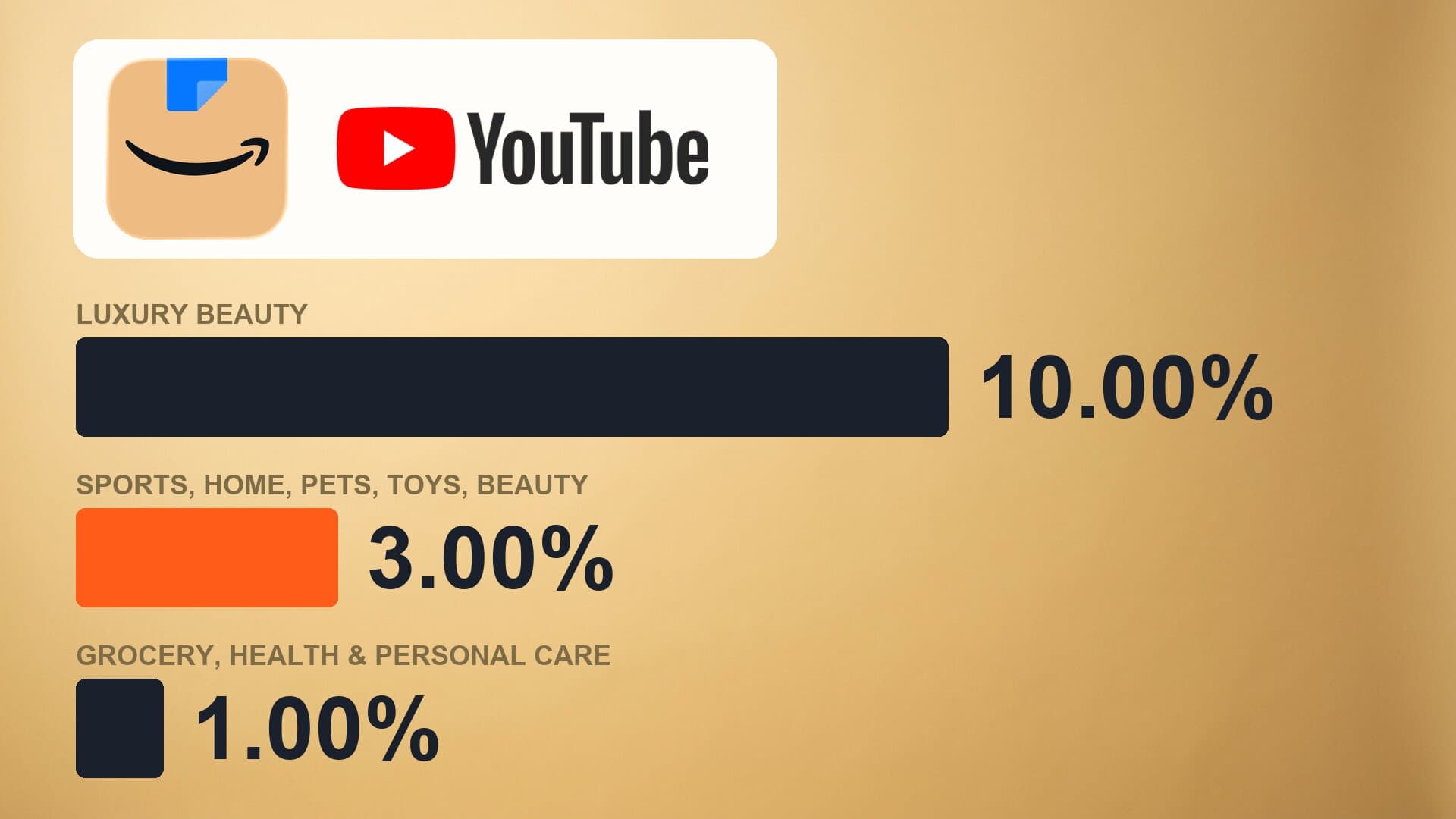
  • Amazon's published fixed standard rate is 10.00% for luxury beauty, 3.00% for home, sports, pets and toys, and 1.00% for grocery and health (Amazon Associates)
  • Your claim on a customer expires 24 hours after they click, unless they added the item to a cart
  • YouTube pays affiliate earnings 60 to 120 days after the purchase, to allow for returns
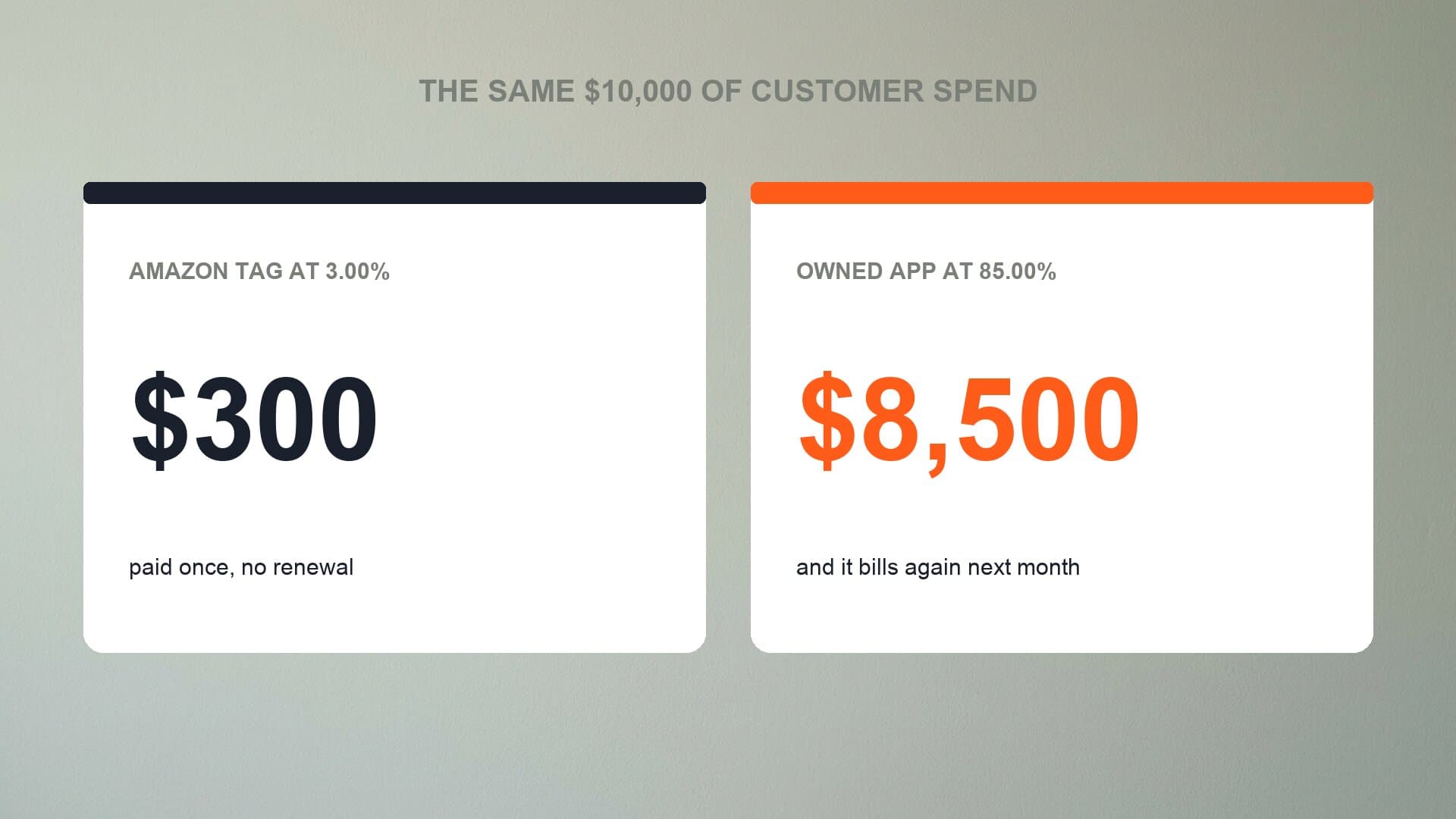
  • $10,000 of tagged sports purchases pays a creator $300, once. $10,000 of subscription revenue in an owned product pays $8,500 under Apple's Small Business Program, and it renews
For a decade the shopping recommendation has been the most valuable unpaid thing a creator does. This integration finally puts a price on it. The price is published, it is a table, and every creator should read it before deciding how much of their video to hand over. Amazon pays a fixed percentage of the item price set by product category, published in its Associates fee schedule, and the same schedule governs Amazon products tagged through YouTube Shopping. YouTube's own help page is explicit that the retailer sets the rate: "Every participating brand and retailer will set their commission rates and attribution window for each product." Here is Amazon's published fixed standard program fee table, read on 2 September 2026, alongside what each rate pays a creator on $10,000 of purchases.
Product categoryPublished ratePays on $10,000
Luxury Beauty, Luxury Stores Beauty, Amazon Explore10.00%$1,000
Digital Music, Physical Music, Handmade, Digital Videos5.00%$500
Physical Books, Kitchen, Automotive4.50%$450
Apparel, Shoes, Watches, Jewelry, Luggage, Echo, Fire, Ring4.00%$400
All other categories4.00%$400
Toys, Furniture, Home, Pets, Beauty, Sports, Outdoors, Tools, Baby, Musical Instruments3.00%$300
PC, PC Components, DVD and Blu-Ray2.50%$250
Televisions, Digital Video Games2.00%$200
Amazon Fresh, Grocery, Health and Personal Care, Physical Video Games and Consoles1.00%$100
Gift cards, alcoholic beverages and other excluded items0.00%$0
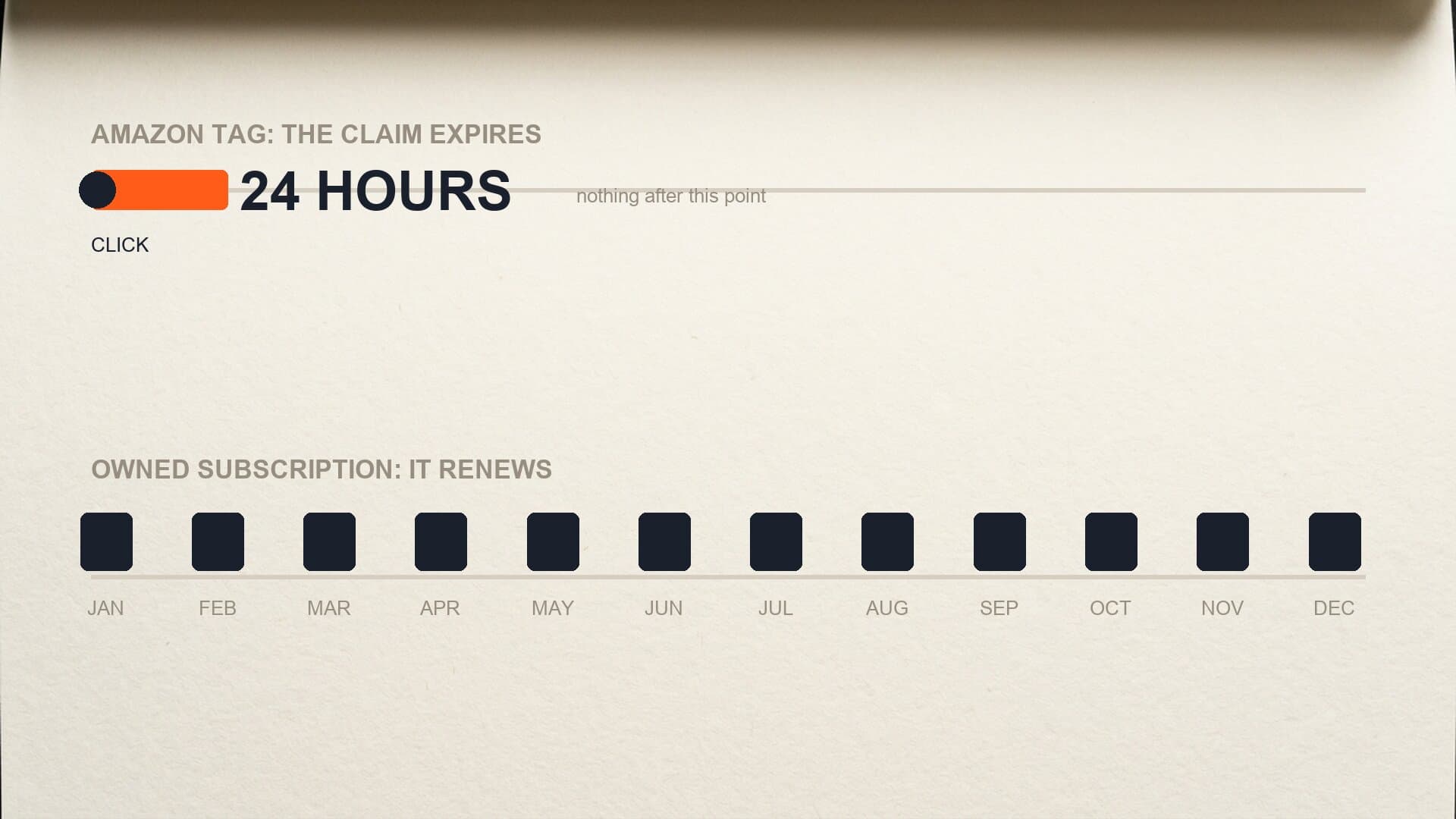
Read the sixth row again, because that is the one that applies to almost everybody. A fitness creator recommends sports equipment. A home cook recommends kitchen tools, which is one of the better rows at 4.50%, and then a pan organiser, which is Home at 3.00%. A dog trainer recommends a harness, a crate and a treat pouch, all Pets, all 3.00%. A skincare creator recommends a cleanser, which is Beauty at 3.00%, not the 10.00% Luxury Beauty row that gets quoted in every headline. You must be in the YouTube Partner Program, based in one of fourteen eligible countries, and separately enrolled with Amazon, with your channel linked to your Amazon profile. YouTube's eligibility page lists Argentina, Brazil, India, Indonesia, Japan, Korea, Malaysia, Mexico, Philippines, Singapore, Taiwan, Thailand, the United States and Vietnam, and the Amazon tagging itself launched for US creators. There are exclusions worth knowing before you plan around this. Music channels, Official Artist Channels, channels tied to labels, distributors, publishers or VEVO, and channels whose audience is set as Made for Kids are all out. And YouTube Partner Program entry still runs through Google's published thresholds: 1,000 subscribers with 4,000 qualified watch hours in the last 12 months, or 1,000 subscribers with 10 million qualified Shorts views in the last 90 days. The gate everybody forgets is the payment schedule. YouTube's help page states that affiliate commissions are paid through AdSense 60 to 120 days after the purchase, to absorb returns. A sale you drove in September may not reach you until January. Everyone argues about the percentage. The percentage is the smaller problem. The real structure sits in Amazon's operating agreement, which defines the earning session as beginning when a customer clicks your link and ending when, among other triggers, "24 hours elapse from that click." If the customer adds the item to a cart inside that session, the order can complete up to 89 days later and still pay you. So the asset a creator builds here has a shelf life of one day per viewer. Someone watches your review, does not buy, comes back four days later convinced, and buys the exact product you recommended. You earn nothing. The purchase was caused by your video and attributed to nobody. That is not a flaw in the program, it is what affiliate revenue is. You are being paid a finder's fee on a transaction that belongs to somebody else, on a customer you introduced and do not keep. Amazon learns the buyer's address, payment method, replenishment cycle and every subsequent purchase. You learn a number in a dashboard, four months later. Compare that with what happens when the same viewer subscribes to something you own. The relationship does not expire in 24 hours. It renews on the first of the month whether you posted or not, and every month it runs it accumulates the thing affiliate revenue can never accumulate, which is a record of who that person is and what they actually do.
The 24-hour affiliate attribution window against a subscription that renews every month
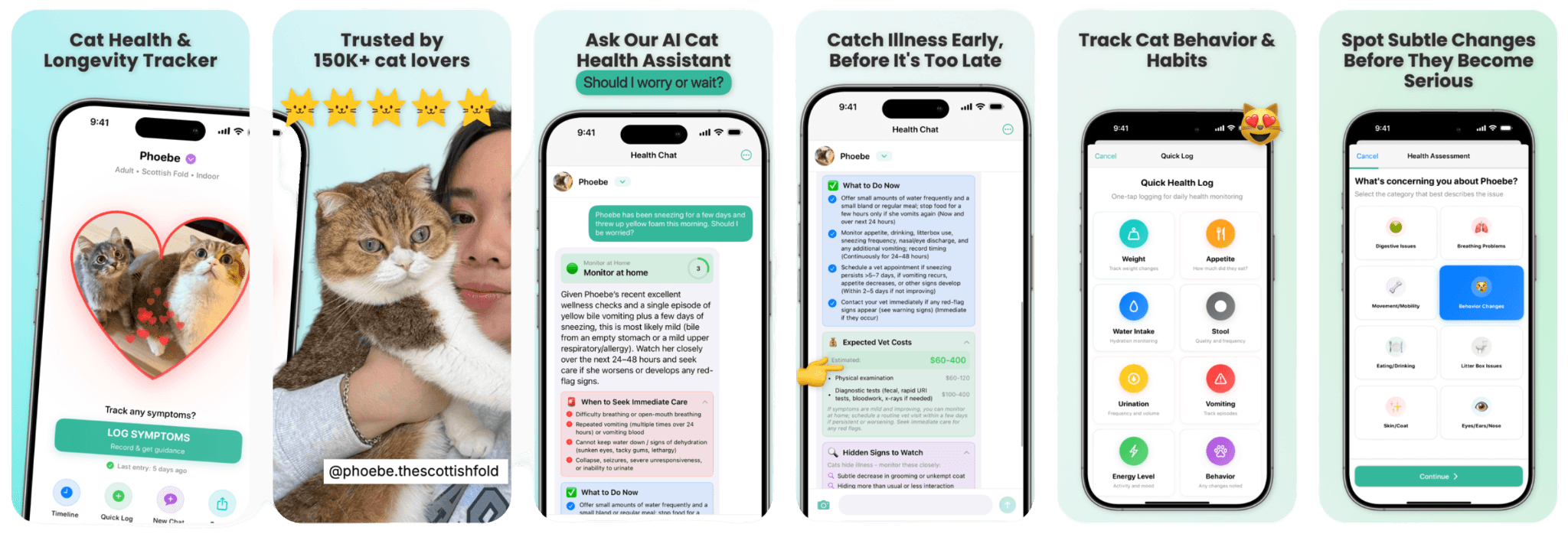
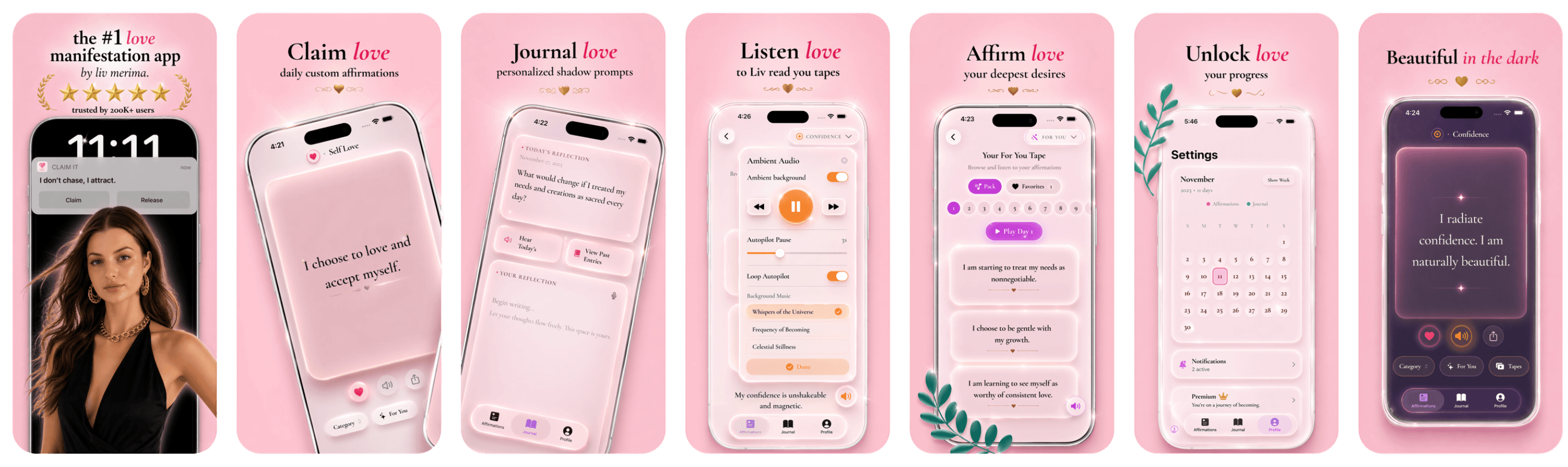
Ten thousand dollars of tagged Amazon purchases in the categories creators actually recommend pays $300 and ends. Ten thousand dollars of subscription revenue in an app you own pays $8,500 under Apple's published Small Business Program rate, and it bills again next month.
RoutePublished rate to the creatorOn $10,000Recurs
Amazon tag, sports or home or pets3.00%$300No
Amazon tag, luxury beauty (the best row)10.00%$1,000No
Owned subscription app, Apple Small Business Program85.00%$8,500Yes
What $10,000 pays a creator through an Amazon tag against an owned subscription under Apple's Small Business Program
The gap is not 28 times because Apple is generous. It is 28 times because the two rows describe different things. In the first, the money is the customer's, the product is Amazon's, and you are paid for the introduction. In the second, the money is yours, the customer is yours, and Apple is paid for the payment rail and the storefront. We wrote out the enrollment rules that get you the 15% rate instead of 30%, because most creator apps qualify on day one and never claim it. This is the same arithmetic that makes brand deals look better than they are. A one-time payment, however large, is a number that has to be re-earned from zero next month. A subscription is a number that starts next month where this month ended. Affiliate income is a brand deal chopped into thousands of small pieces, with the same property: your income resets to zero every month. Yes, if you already recommend physical products, because it is paid on behaviour you are performing anyway. The links were going in the description regardless. A tag that sits on the video, the Short and the livestream reaches the viewers who never scroll to a description at all, and it costs you nothing to enable. Turn it on. Then be honest about what you turned on. It is a better version of the tip jar, not a business. Ask three questions about it:
  • What percentage of your recommended catalogue sits in the 3.00% and 1.00% rows? For most creators the answer is nearly all of it.
  • What happens to that income during a month you do not post? It goes to zero within 24 hours of your last video.
  • Who owns the customer list at the end of the year? Not you.
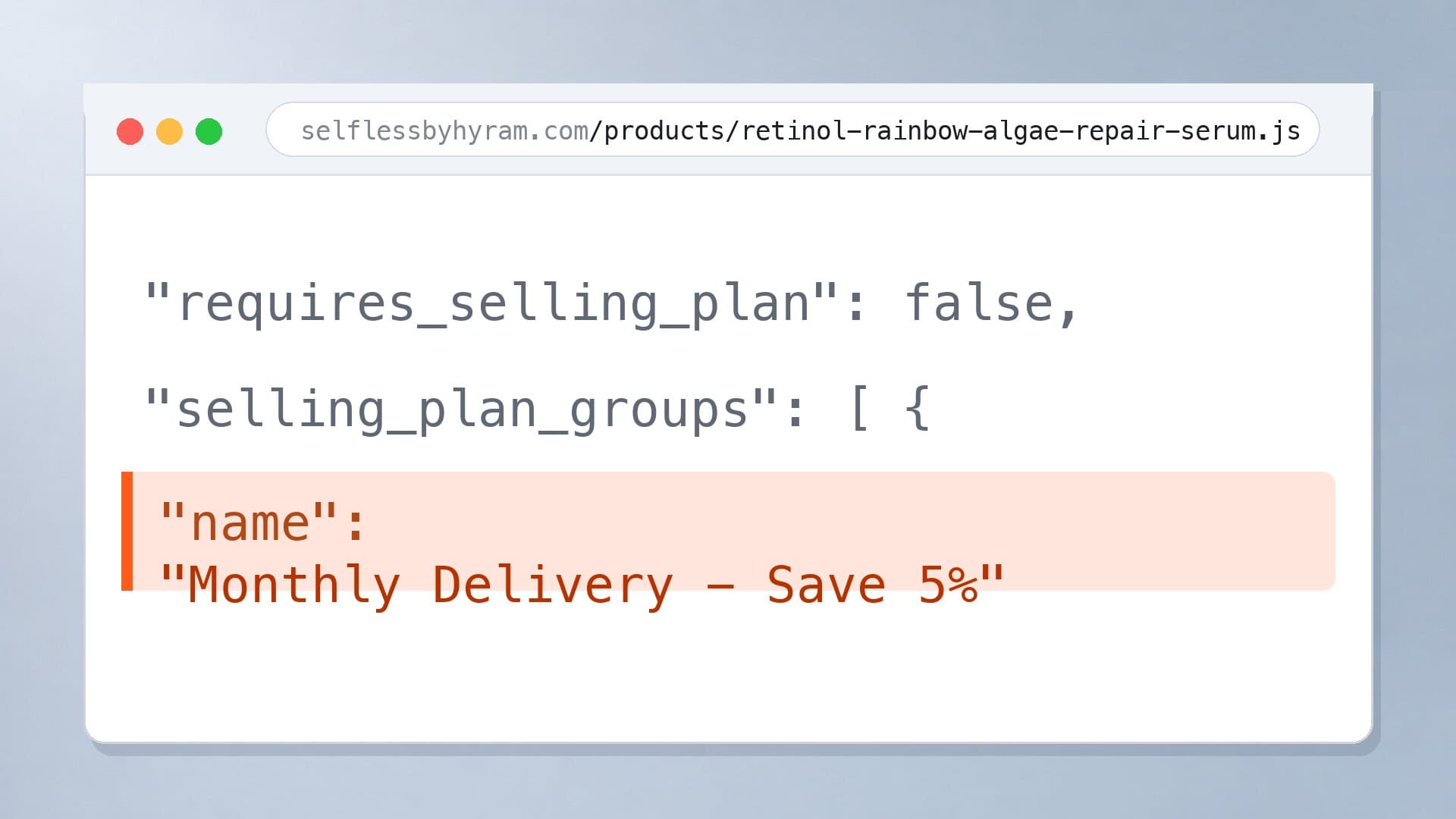
If you are a creator with 50,000 engaged followers who has been sending your audience to Amazon for years, you have already run the hardest experiment in this business and passed it. You have proved that people buy what you tell them to buy. You just did it inside somebody else's checkout, for 3.00%, on a claim that expired in a day. The TikTok Shop numbers tell the identical story at a different scale. Open your Amazon Associates or YouTube Studio earnings for the last 12 months and write down two numbers: total commission, and the single category that generated most of it. Then look at that category and ask what the recurring version of it would be. Someone buying a foam roller has a training programme. Someone buying a starter kit has a routine. Someone buying a puppy crate is at the start of a dated, high-stakes project with a deadline. Amazon sells them the object. Nobody is selling them the sequence. You can check the same thing on your own store in about four minutes with one URL and four numbers, and the answer is usually that nothing you sell renews. The tag is a good addition to a video. It is not a business, because a business is something that keeps paying when you stop filming. That is the whole difference, and it is the only one worth building for.
Our work

Creators who already did this

These are apps we designed, built, shipped, and still run today, with the creator keeping the code and the audience.

Creator app strategy

Curious what your app could be?

Enter your handle and BUILT BY FOUNDRY will research your audience and present custom app concepts. Free.

YouTube Now Tags Amazon Products: 10 Commission Rates Compared