
Your Income Resets to Zero Every Month

Your Income Resets to Zero Every Month

Foundry
April 2, 2026
Key Takeaways:
  • Most creator income (brand deals, courses, merch drops) resets to $0 on the first of every month
  • Subscription app revenue compounds: month 6 builds on months 1 through 5, not from scratch
  • 500 subscribers at $20/month is $10K/month that renews automatically without new launches
  • The "big month" illusion keeps creators sprinting instead of building
  • Founders build floors. Creators chase ceilings.

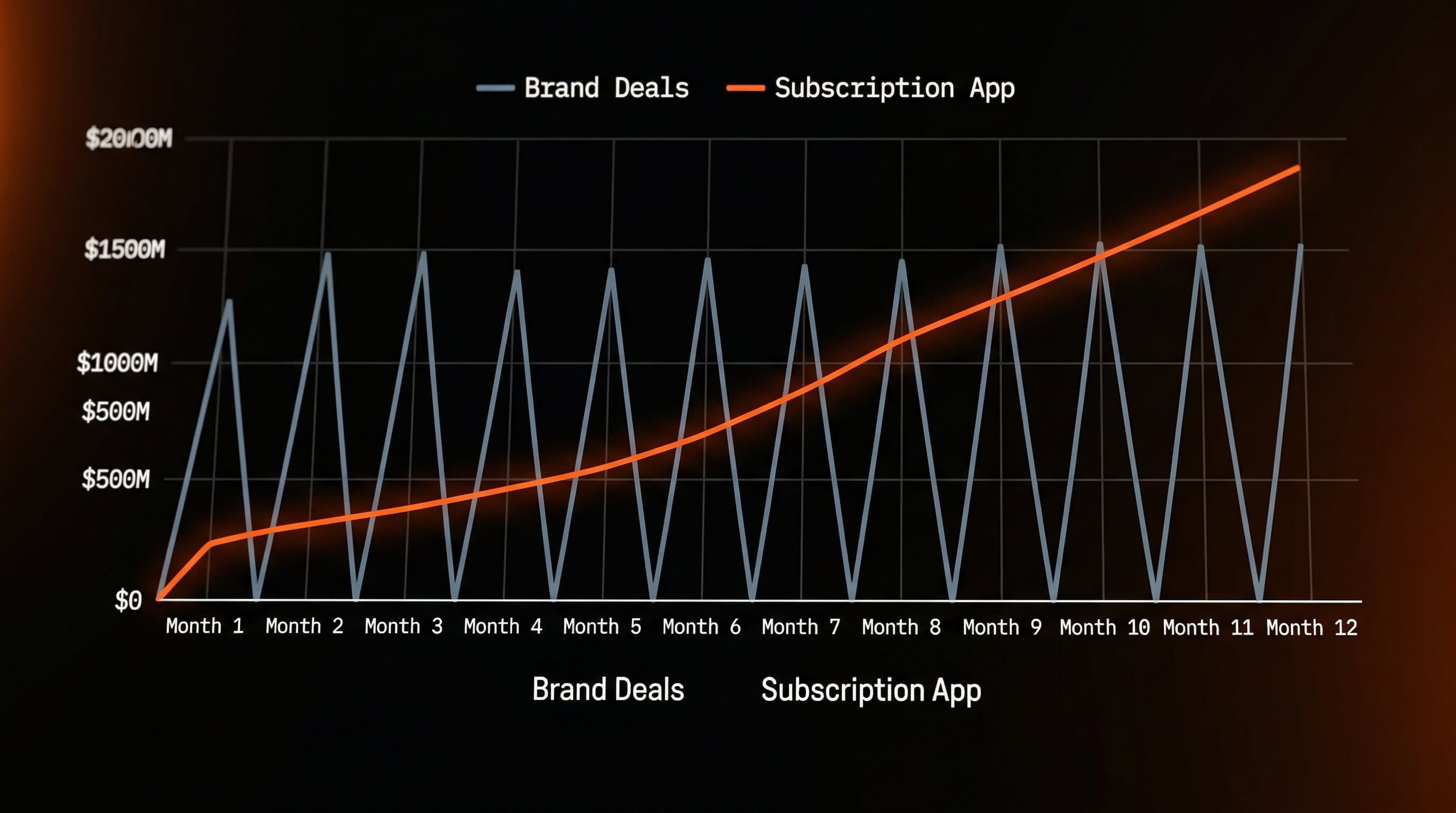
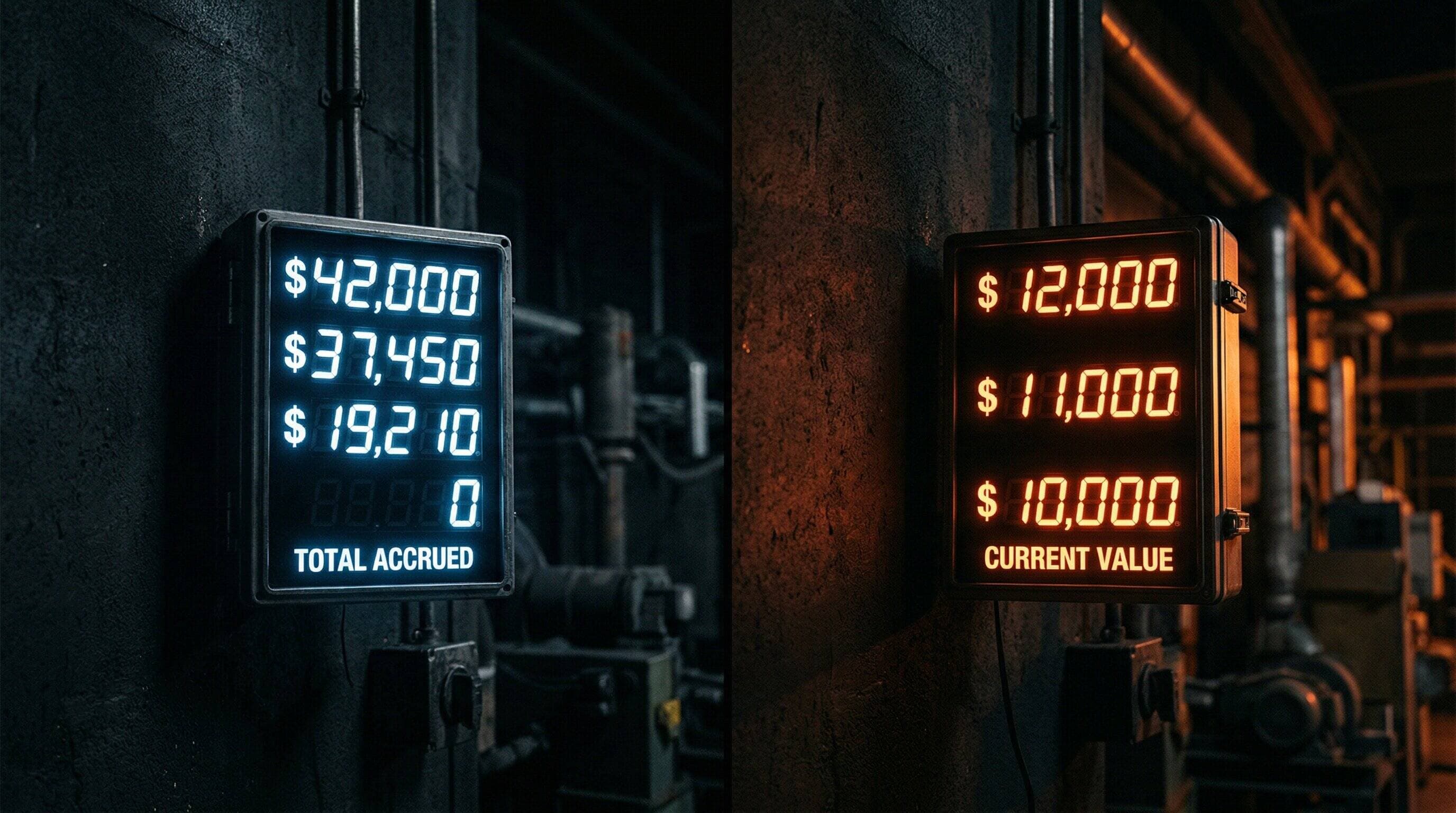
You had a great March. $22K from brand deals, a course launch that did $14K in 48 hours, a merch drop that cleared $6K. Total: $42K. Your best month ever. Then April 1st hit. Your revenue: $0. Every creator knows this feeling. The first of the month is a reset button you never asked for. No matter how hard you worked last month, no matter how big the numbers were, you start at zero. Again. That's not a business. That's a treadmill. Most creator revenue comes from one-time transactions. A brand deal pays once. A course launch spikes and fades. A merch drop sells through and stops. Every dollar requires a new effort, a new pitch, a new campaign. Compare that to a subscription app. If you ended March with 500 paying subscribers at $20/month, April starts at $10,000. Not $0. Ten thousand dollars before you post a single piece of content, send a single email, or pitch a single brand. That's the difference between creator income and founder income. One resets. The other compounds.
Brand deal revenue spikes and resets to zero each month while subscription app revenue climbs steadily over 12 months
What is compounding revenue? Compounding revenue means each month's income builds on the previous month's subscriber base, not from scratch. New subscribers add to existing ones, and the total grows month over month without requiring new launches or campaigns. Let's run real numbers. Two creators, both earning about $120K per year.
Creator A (Brand Deals)Creator B (Subscription App)
Monthly starting revenue$0Previous month's MRR
Month 1$12,000 (3 brand deals)$3,000 (150 subscribers)
Month 6$8,000 (2 brand deals)$7,500 (375 subscribers)
Month 12$15,000 (big Q4 deal)$14,000 (700 subscribers)
Revenue if they stop working$0 immediately$14,000/month continues
Annual total~$120,000~$102,000 Year 1, $168,000+ Year 2
Stress level on the 1stHighLow
Creator A had a fine year. But every dollar required a new deal. Creator B started slower, but by month 12, the app earns $14K/month on autopilot. Year 2 starts at $14K, not $0. This is why MRR changes everything for creators. It's not about making more money faster. It's about building a floor that rises every month instead of a ceiling you have to reach for every time. Course creators love launch numbers. "$50K launch!" "$100K in a week!" These numbers are real, and they're impressive. But they hide something: the crash after. A typical course launch curve looks like this: spike, cliff, flatline. You sell 80% of units in the first 72 hours, then traffic drops to near zero. To hit those numbers again, you need another launch. New content, new marketing, new stress. A subscription app curve looks different: slow climb, steady rise, plateau at a higher number each quarter. No spikes. No crashes. Just a line going up. The math between a one-time course and a subscription app makes this painfully clear. A $50K course launch sounds better than $5K MRR until you realize that $5K MRR becomes $60K ARR in Year 1 and $120K+ in Year 2, while you need two $50K launches every year just to stay even. Three reasons. 1. Big numbers feel good. A $15K brand deal hits your account and your brain lights up. It feels like progress. But $15K once is not the same as $15K/month. Founders know the difference. Creators don't, because nobody teaches them to think in terms of run rate. 2. Launch culture is addictive. The creator economy celebrates launches. "Six-figure launch!" "Sold out in 24 hours!" Nobody posts about "Month 14 of steady $12K MRR." But Month 14 of steady MRR is the better business by every measure. 3. Building feels harder than selling. Pitching a brand deal is familiar. Launching a course is a known playbook. Building an app feels foreign. But that's exactly why it works: the barrier to entry is your moat. Most creators won't do it. The ones who do build something that compounds while they sleep. Here's what changes when your income doesn't reset. The first of the month: You check your dashboard. Last month's subscribers are still there. New ones from App Store search joined overnight. Your revenue floor is higher than last month's floor. You haven't done anything yet. Content creation: Your app generates content ideas for you. User submissions become reaction videos. Leaderboard updates become weekly posts. Before/after results become transformation content. You're not staring at a blank screen wondering what to post. The app tells you what to post. Growth: Some of your new subscribers this month didn't come from your social media at all. They found your app by searching the App Store. Kayla Itsines' Sweat app reached 450,000+ paying subscribers, and a significant portion came through App Store discovery, not her Instagram. Your app is a growth channel that works while you sleep. Mental state: You're not anxious about next month. You're not scrambling for the next deal. You're thinking about how to improve the product, not how to make rent. That's the founder life. Not glamorous. Not viral. Just compounding.
Crumbling disconnected steps versus a solid staircase lit with warm orange light climbing upward, representing resetting income versus compounding revenue
You don't need to quit brand deals tomorrow. But you need to start building something that doesn't reset. Step 1: Identify what you teach, solve, or entertain with daily. If your audience comes back to you for something repeatedly, that's your app. Step 2: Turn that into a subscription product. Not a course. Not a PDF. An app that people use daily or weekly and pay monthly for. Step 3: Let someone build it while you keep creating. You don't need to learn to code. You don't need to manage developers. You need a product partner who handles everything while you keep doing what you're already doing. Step 4: Watch the compound effect. Month 1 is small. Month 3 is better. Month 6 is meaningful. Month 12 is "why didn't I do this sooner?" The math is simple. The hard part is deciding you deserve a business that doesn't reset. Here it is: What would your life look like if you woke up on April 1st and your income from March was still there? Not gone. Not spent. Still earning. Plus whatever April adds on top. That's not a fantasy. That's what subscription revenue does. 500 subscribers at $20/month is $10,000. On the first of the next month, it's still $10,000 (minus normal churn, plus new subscribers). You didn't have to pitch anyone. You didn't have to launch anything. The app just runs. Creators chase ceilings. Founders build floors. Your floor is zero right now. It doesn't have to be. Ready to build a floor that rises every month? We build subscription apps for creators. $0 upfront, 3 weeks to the App Store, and we run everything forever.
Let's Build →

Get Creator Revenue Insights

How creators are turning audiences into subscription businesses

You might also enjoy...

Your Income Resets to Zero Every Month