
Platform Reviews

Kajabi vs Teachable in 2026: 7 Plans, a $0.50 Free Student, and the 280-Student Line

October 14, 2026
Share
Kajabi vs Teachable in 2026: 7 Plans, a $0.50 Free Student, and the 280-Student Line

Get Creator Revenue Insights

How creators are turning audiences into subscription businesses
Share
Key Takeaways:
  • Teachable's three listed plans cost $39, $89 and $189 a month ($29, $69 and $139 billed yearly), per its pricing page. Starter adds a 7.5% transaction fee. Builder and Growth charge 0% when you use Teachable Payments
  • Kajabi's three plans cost $179, $249 and $499 a month ($143, $199 and $399 billed yearly), per its pricing page. Kajabi takes no revenue share, but charges 2%, 1% or 0.5% on top if you use a third-party payment processor where Kajabi Payments is available
  • Teachable's Usage Fees page, last updated September 28, 2026, now charges $0.50 a month for every student above 100 who joined any way other than a paid Teachable checkout. Free courses and 100% coupons count
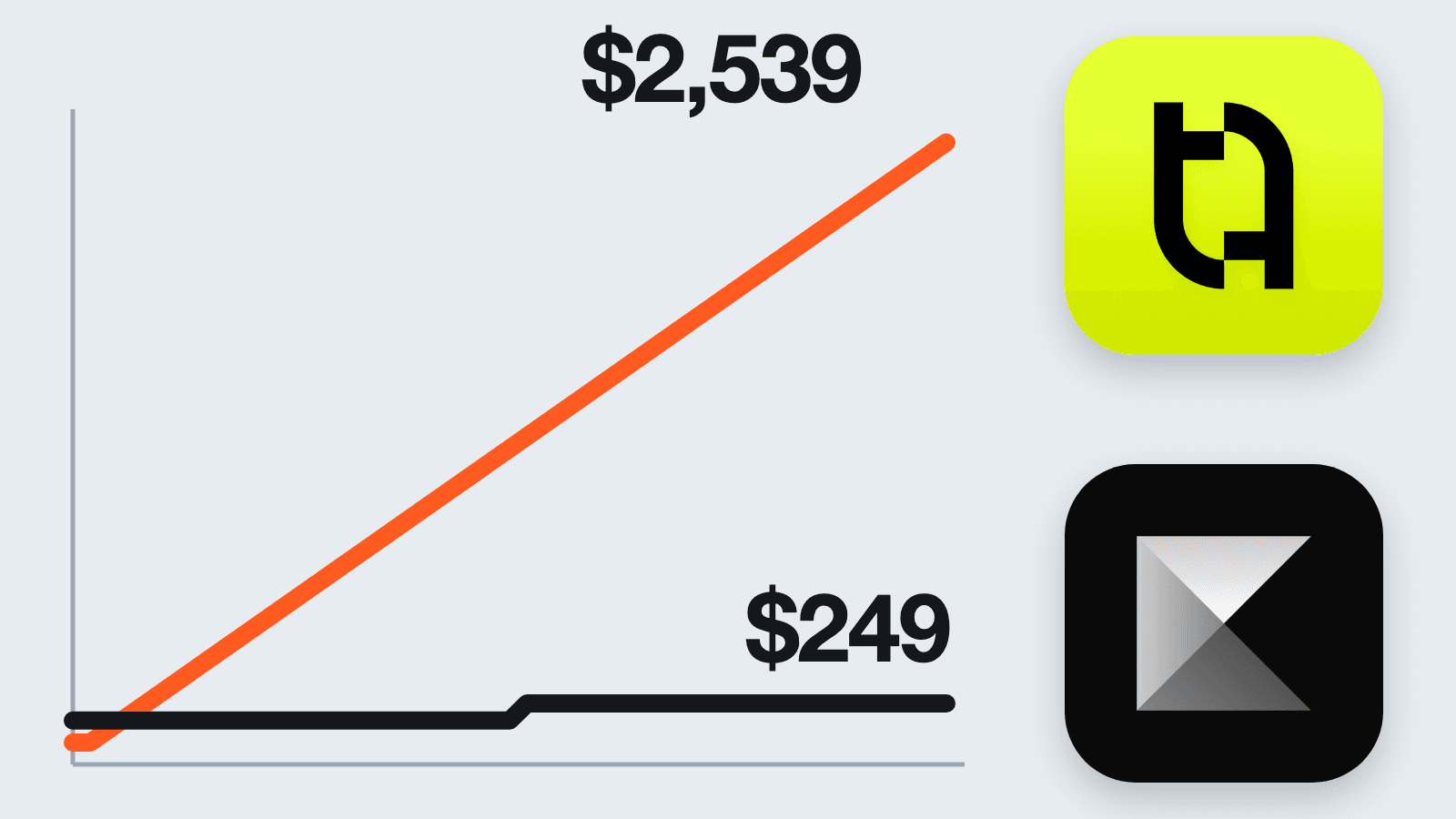
  • On monthly billing, a creator with 280 free students pays the same on Teachable Builder as on Kajabi Basic: $179. Every free student after that makes Teachable the larger bill. At 5,000 free students it is $2,539 against $249
  • If every student pays, Teachable stays cheaper: Builder costs $90 a month less than Kajabi Basic at every sales volume, with the same 2.9% plus $0.30 card rate on both
Kajabi and Teachable are the two names most creators compare when they want to sell a course from their own website. For years the comparison was simple. Teachable cost less and did less. Kajabi cost more and bundled your email, website, funnels and community with the course. That is still true if every student pays. It stopped being the whole answer in September. Teachable rewrote its usage-fee policy, and a student who enrolls for free now has a monthly price. The most common way creators fill a course business is a free mini-course or lead magnet, so this changes which platform is cheaper for a lot of people. This comparison puts all seven plans side by side from the companies' own pages, read on October 14, 2026. Then it finds the student count where the answer flips. Monthly prices are what you pay billing month to month. The yearly price, shown per month, is in parentheses. Teachable's fourth plan, Custom, is quoted by its sales team.
PlanMonthly pricePlatform fee on salesProductsIncluded audience
Teachable Starter$39 ($29 yearly)7.5%5Unlimited paid students, 100 free
Teachable Builder$89 ($69 yearly)0% with Teachable Payments10Unlimited paid students, 100 free
Teachable Growth$189 ($139 yearly)0% with Teachable Payments50Unlimited paid students, 100 free
Teachable CustomContact sales0% with Teachable PaymentsFlexibleFlexible
Kajabi Basic$179 ($143 yearly)0% (2% with a third-party processor)52,500 contacts
Kajabi Growth$249 ($199 yearly)0% (1% with a third-party processor)5025,000 contacts
Kajabi Pro$499 ($399 yearly)0% (0.5% with a third-party processor)Unlimited100,000 contacts
Card processing sits on top of every plan. Teachable lists 2.9% plus $0.30 for US cards and 3.9% plus $0.30 for international cards. Kajabi Payments lists 2.9% plus $0.30 on Basic, 2.8% on Growth and 2.7% on Pro, plus $0.30, for US businesses. On a $100 sale the difference between the two at the entry tiers is zero. Two lines in that table are easy to miss. Teachable's "unlimited" counts only students who paid through its checkout. Kajabi's contact limit counts everyone in your account, buyers and email subscribers alike, and extra contacts come "in blocks of 25,000 for $125 a month, at any size," per Kajabi's pricing FAQ. Teachable now charges $0.50 per student per month, above an allowance of 100, for every student added outside a paid Teachable checkout. That includes free products, 100% coupons, admin imports, API enrollments and buyers from another platform. Students who paid more than $0 through Teachable's own or custom payment gateways never count. The fee is the same on every plan. The rule sits on Teachable's Usage Fees page, which reads "Last updated September 28, 2026." Schools created on or after September 3, 2026 are on it from the start. Older schools stay on a legacy schedule until their first renewal on or after April 30, 2027, when they convert automatically. On conversion the count starts at zero, and students already in the school are never counted.
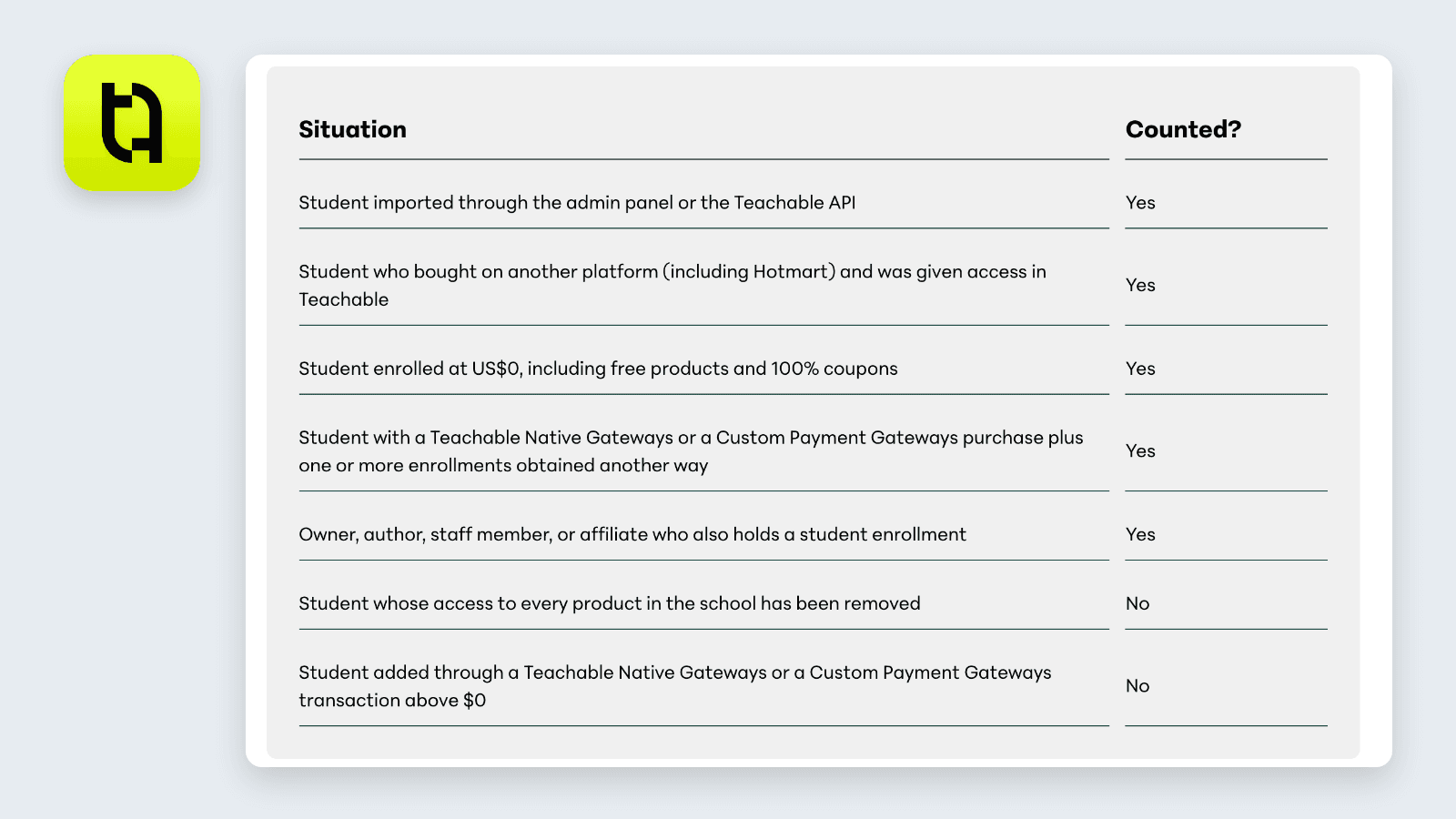
Teachable's usage-fee table "Which students count", showing Yes for students imported by admin or API, students who bought on another platform, students enrolled at US$0 including free products and 100% coupons, buyers who also hold a free enrollment, and staff who hold an enrollment, and No only for students whose access was removed or who paid through a Teachable gateway
Three details in that table matter more than the headline rate:
  • A buyer can still count. A student who paid through Teachable "plus one or more enrollments obtained another way" counts against the 100. If your funnel is a free course followed by a paid one, your best customers carry the fee until you remove their free access.
  • Removing access stops the meter, deleting does not refund it. Teachable bills "the highest number of countable students your school reached at any point during that period." Deleting someone lowers next month's count, not this month's.
  • The allowance is not a cap. Teachable says you are never blocked for passing 100. You are billed instead.
Teachable says more than 80% of its customers incur no usage fees at all. That is plausible for creators who only sell. It is not the shape of a creator who grows a list with free courses. On monthly billing, Teachable Builder costs $89 plus $0.50 for each free student above 100. Kajabi Basic costs a flat $179 up to 2,500 contacts. The two bills meet at 280 free students. Above 280, Kajabi Basic is cheaper, and Kajabi's next step up is a flat $249 for 25,000 contacts. Here is the same school at five sizes, with every free student still enrolled and processing left out because it is the same on both entry tiers.
Free students in the schoolTeachable BuilderKajabi (cheapest plan that fits)
100$89$179 (Basic)
280$179$179 (Basic)
1,000$539$179 (Basic)
2,500$1,289$179 (Basic)
5,000$2,539$249 (Growth)
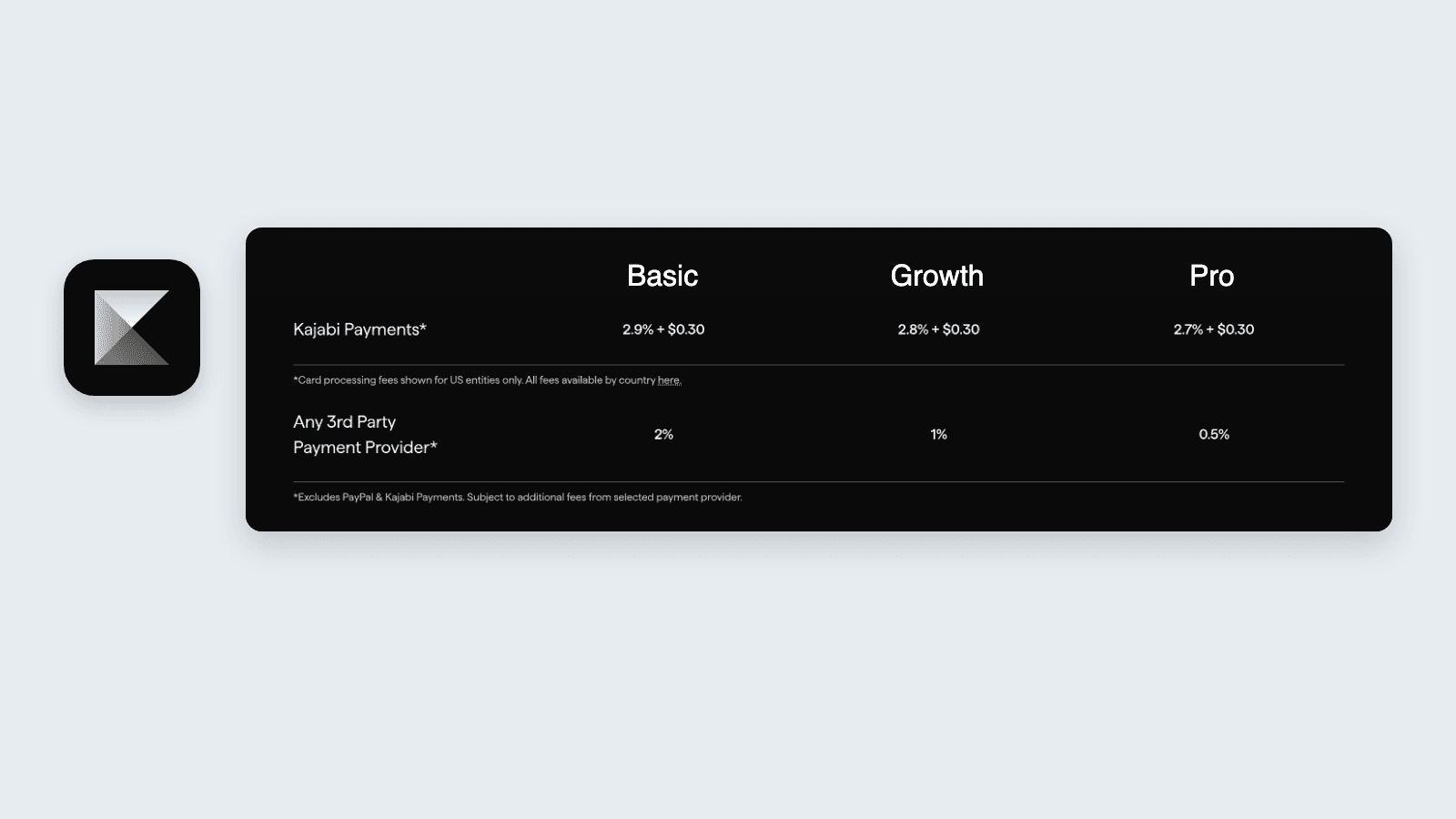
The Kajabi column assumes those students are your only contacts. If you also run a 10,000-person email list on Kajabi, you are on Growth at $249 from the start, and the line moves to 420 free students. Teachable Starter crosses Kajabi Basic at 380 free students before counting its 7.5% fee, so it is never the cheap option for a free-course funnel. On yearly billing the gap at the line narrows to $74 a month ($143 against $69), which moves the crossover to 248 free students. Kajabi takes no platform revenue share when you use Kajabi Payments. If you are in a country where Kajabi Payments is available and you choose a third-party processor, Kajabi adds 2% on Basic, 1% on Growth or 0.5% on Pro. PayPal is excluded from that surcharge. Kajabi's pricing page leads with "No hidden fees. No revenue sharing." Its own FAQ then explains the exception: "if you are in a region where Kajabi Payments is offered but opt to use third party payment processor, there is an additional processing fee." The comparison table further down the same page prints the rates.
Kajabi's pricing-page fee table for Basic, Growth and Pro: Kajabi Payments at 2.9%, 2.8% and 2.7% plus $0.30, and any third-party payment provider at 2%, 1% and 0.5%, excluding PayPal and Kajabi Payments
On $5,000 a month of sales through an outside processor on Basic, that 2% is $100, which is more than the gap between Kajabi Basic and Teachable Builder. Teachable's 0% has the mirror-image condition: its FAQ says Builder, Growth and Custom have "0% transaction fees when you use Teachable Payments." Use each platform's own checkout, or price the surcharge in. We covered the earlier history in our Kajabi review, including how Basic came to its current 2,500-contact limit. Use the bills above with what you actually do, not what you plan to do.
  • You sell one course and give nothing away. Teachable Builder at $89 is the cheaper home by $90 a month at any volume. Starter at $39 only wins below $667 a month in sales, where its 7.5% fee stays under the $50 gap.
  • You grow with a free course or challenge. Count the free students you expect to keep enrolled. Past about 280, Kajabi Basic is cheaper, and the gap widens by $0.50 a student every month after that.
  • You need email, a website and a community in one bill. Kajabi includes unlimited marketing emails, funnels and landing pages on every plan. Teachable lists built-in email marketing among its features, and our Teachable review found that most serious sellers still pair it with a separate email tool.
If you are a creator with 50,000 engaged followers, a free course is the obvious way to turn followers into an email list. Assume 2% enroll. That is 1,000 free students, and on Teachable Builder it is $450 a month in usage fees before anyone buys, for as long as they stay enrolled. On Kajabi it is covered by Basic's 2,500 contacts. You can manage the Teachable fee. Expire free access after a set period, or host the free lesson somewhere else and bring only buyers into the school. Teachable's own table says a student whose access to every product has been removed no longer counts. But that is now a decision you have to design, not a default you can ignore. Choose Teachable Builder if nearly every student pays you through Teachable's checkout. It costs $90 a month less than Kajabi Basic with the same card rate. Choose Kajabi if you grow your list with free courses, coupons or imports, or if you want email, funnels and community in one bill. Past 280 free students, Kajabi Basic is the cheaper platform. Before you commit, run one check on each. On Teachable, open your school's admin area after the first free signups: Teachable says "the number you see is the same number billing uses." On Kajabi, count every contact you will import, not just buyers, against the 2,500 limit. Moving later is possible but not free. Our migration guide covers what to test before you switch a paying audience between platforms. Kajabi and Teachable both rent you a place to put a course. Both have apps, but they are not yours by default. Teachable students use the Teachable app, and Kajabi customers use the Kajabi app. A branded app in the App Store is a Kajabi Pro feature at $499 a month, which Kajabi itself values at $199 a month. A course also has an end. A student who finishes it has no reason to pay again next month, which is why we compared the two models in the revenue math of an app versus a course and showed how to turn a course into a subscription. Built by Foundry builds that recurring business with creators: a subscription product, usually an app people open every day, built in about three weeks for $0 upfront on a revenue share. The creator owns the business and the revenue, and App Store search brings in people who have never seen the creator's videos. After launch, we keep running and improving it, because our share only works when the product keeps earning. Teachable is cheaper if your students pay through its checkout. Builder costs $89 a month against $179 for Kajabi Basic, and both charge 2.9% plus $0.30 on US cards. Teachable becomes the larger bill once a school holds more than about 280 students who joined free. Yes, for schools on its current policy. Teachable's Usage Fees page charges $0.50 a month per student above 100 who joined through a $0 checkout, a 100% coupon, an import or the API. Schools created before September 3, 2026 convert at their first renewal on or after April 30, 2027. Kajabi charges no platform revenue share with Kajabi Payments. It charges an extra 2% on Basic, 1% on Growth and 0.5% on Pro when you use a third-party processor in a country where Kajabi Payments is available, excluding PayPal. Yes. Teachable's pricing page lists a 7.5% transaction fee on Starter, which costs $39 a month or $29 billed yearly. Builder, Growth and Custom list 0% when you use Teachable Payments. Kajabi Basic includes 2,500 contacts, Growth 25,000 and Pro 100,000. Kajabi sells extra contacts in blocks of 25,000 for $125 a month.
Our work

Creators who already did this

These are apps we designed, built, shipped, and still run today, with the creator keeping the code and the audience.

Samantha Mae

Samantha Mae

Founder & CEO of NineLives

Cat health tracking from the world's most beloved Scottish Fold.

Top Health App150K+ followers
Read the case study
NineLives screenshots
Liv Merima

Liv Merima

Founder & CEO of Claim It

Custom affirmations that help millions choose themselves.

Top Lifestyle App150K+ followers
Read the case study
Claim It screenshots
Brandon Whiteleather

Brandon Whiteleather

Founder & CEO of Freeze Dry Buddy

Freeze drying made foolproof, from a homesteader who's done it 1,000 times.

Top Food App1.4M+ followers
Read the case study

Creator app strategy

Curious what your app could be?

Enter your handle and BUILT BY FOUNDRY will research your audience and present custom app concepts. Free.

Kajabi vs Teachable in 2026: 7 Plans, a $0.50 Free Student, and the 280-Student Line