

Kajabi Review 2026: Is It Worth It?

Kajabi Review 2026: Is It Worth It?

Foundry
March 31, 2026
Our verdict: Kajabi is the most feature-complete creator platform on the market. Courses, email, funnels, community, coaching, podcasts, checkout, all under one roof. If you want an all-in-one web business and you're willing to pay $143+/month for it, Kajabi delivers. But a January 2026 price hike, a 75% contact limit slash on the Basic plan, and growing platform lock-in make it a harder sell than it was a year ago. Rating: 3.5/5. Key Takeaways:
  • Kajabi replaces 5+ tools (courses, email, funnels, community, website) starting at $143/month annually
  • The January 2026 pricing update cut Basic plan contacts from 10,000 to 2,500 while raising the price from $149 to $179/month
  • Using your own Stripe account now costs an extra 2% surcharge on Basic, on top of Stripe's fees
  • Kajabi creators have processed $5B+ in total revenue (PR Newswire)
  • The platform is built for web-based course businesses, not subscription apps that live on the App Store

Kajabi is an all-in-one platform for selling online courses, memberships, coaching, and digital products. Founded in 2010 and headquartered in Irvine, California, it bundles course hosting, email marketing, website building, sales funnels, community, podcast hosting, and checkout into a single subscription. Over 60,000 creators use Kajabi, and the platform has processed more than $5 billion in total creator revenue. The pitch: pay one monthly fee, cancel all your other subscriptions (Mailchimp, WordPress, ClickFunnels, Teachable), and run your entire business from one dashboard. That pitch is real. For the right creator, it works. The question is whether you're that creator, and whether the 2026 pricing still makes sense. Kajabi overhauled its pricing in January 2026. Here's what each plan includes:
PlanMonthlyAnnual (per month)ProductsContactsWebsitesAdmin Users
Basic$179$14352,50012
Growth$249$1995025,000111
Pro$499$399Unlimited100,000326
All plans include unlimited funnels, landing pages, marketing emails, and one community. The headline change in January 2026: Basic plan contacts dropped from 10,000 to 2,500. That's a 75% reduction paired with a $30/month price increase. If you had 5,000 email subscribers on Basic before, you now need the $199/month Growth plan. Reddit threads and a Change.org petition followed. Product limits went up (Basic: 3 to 5, Growth: 15 to 50, Pro: 100 to unlimited), but most creators hit the contact ceiling long before the product ceiling. This is where it gets interesting. Kajabi introduced its own payment processor, Kajabi Payments, which charges 0% platform fee (just standard processing: 2.9% + $0.30 on Basic, slightly less on higher plans). But if you use Stripe or PayPal instead, Kajabi now adds a surcharge:
PlanKajabi Payments FeeThird-Party Processor Surcharge
Basic2.9% + $0.30+2.0% on top of Stripe/PayPal
Growth2.8% + $0.30+1.0%
Pro2.7% + $0.30+0.5%
On Basic with Stripe, your total processing cost is roughly 4.9% per transaction. On a $100 course sale, that's $4.90 in fees plus $0.30. For comparison, Teachable charges 7.5% on its Basic plan and Thinkific charges 0% on all plans. The surcharge is Kajabi's way of pushing creators onto Kajabi Payments. It works from a business perspective. From a creator's perspective, it means less control over your payment infrastructure.
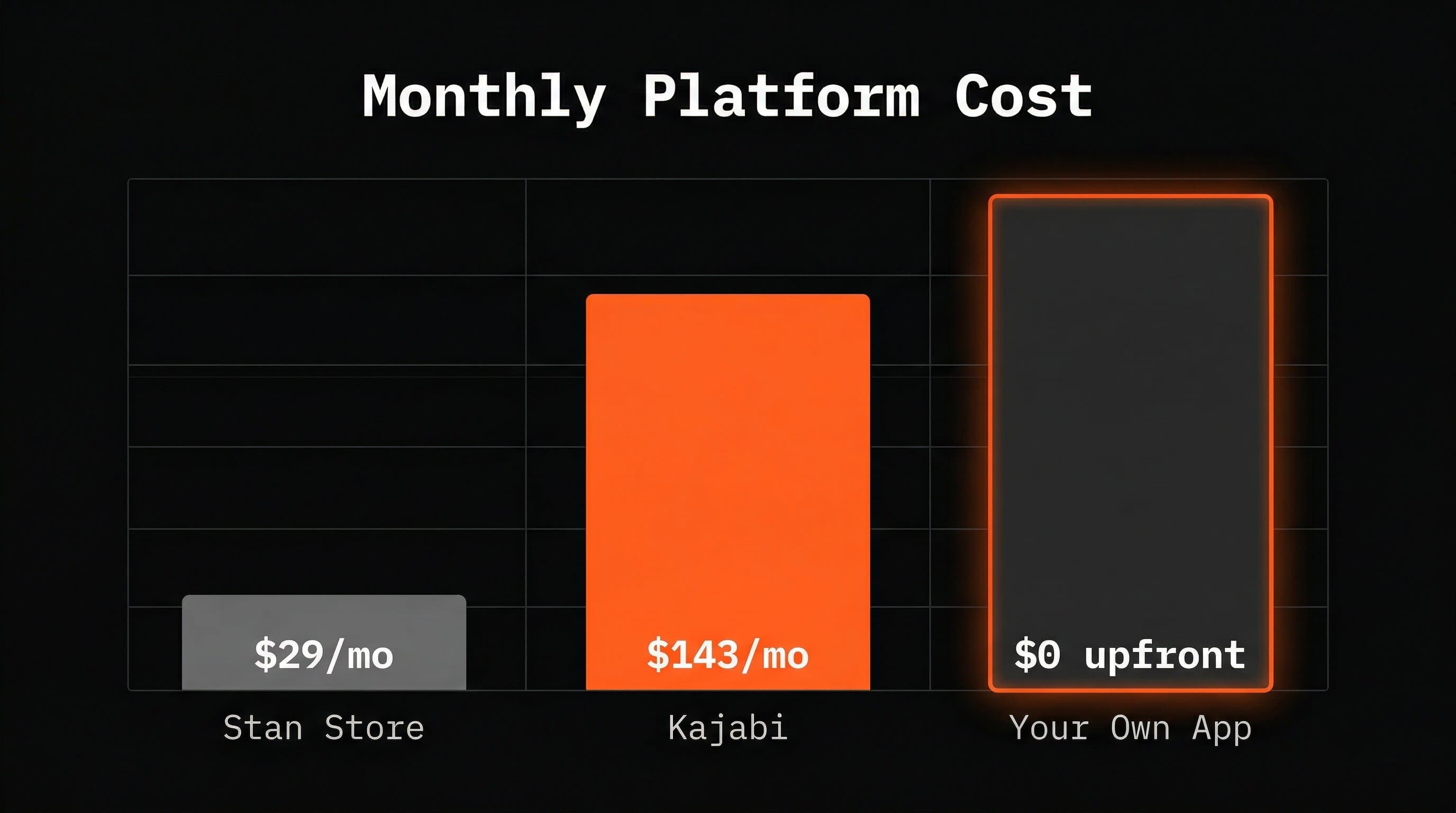
Monthly platform cost comparison: Stan Store at $29/mo, Kajabi at $143/mo, your own app at $0 upfront
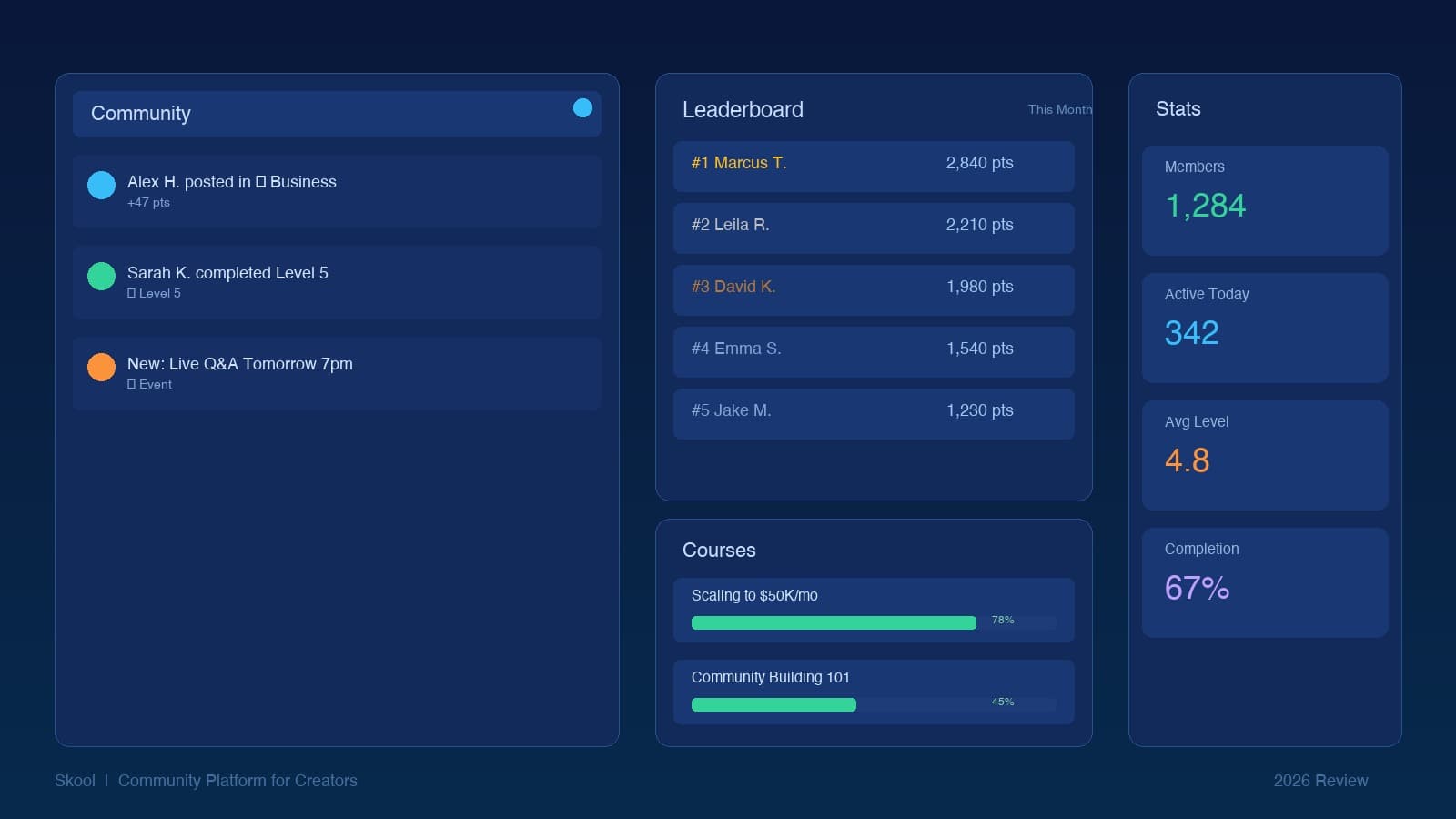
Credit where it's due. Kajabi ships a lot of product, and the September 2025 "Kajabi Evolved" update (BusinessWire) was the company's biggest release ever. Here's what actually works well: Course builder. Drip content, quizzes, assessments, completion certificates. The new Cohort Courses feature (Growth and Pro) lets you run time-bound courses with start/end dates. The course engine is mature and reliable. Email marketing. Full-featured email with segmentation, automation sequences, and analytics. Unlimited sends on all plans. This genuinely replaces ConvertKit or Mailchimp for most creators. Funnels. Unlimited funnels on every plan with pre-built templates. If your business runs on webinar funnels or product launch sequences, Kajabi handles it without ClickFunnels. AI tools. Video transcription, auto-generated subtitles, and AI dubbing for multi-language translation (Growth/Pro). Useful if you produce video-heavy courses for international audiences. Unified mobile app. The new Member Mobile App puts courses, coaching, podcasts, and community in one place for your students. Community is basic. Kajabi added community to all plans, but it's bare-bones compared to Skool ($99/month flat). No gamification, no multi-image posts, no Zoom integration, limited moderation tools. If community is your core product, Kajabi isn't the answer. Design flexibility is limited. The website builder works for simple sites, but you'll hit walls fast compared to WordPress or Webflow. Templates feel constrained. If your brand demands a custom look, prepare to fight the builder. Lock-in is real. Funnels, automations, email sequences, course structures, checkout flows. Once you build all of that on Kajabi, migrating away is a multi-month project. Every creator on Reddit who's tried to leave describes the same thing: months of manual export work. As we covered in why creators leave Kajabi, the all-in-one model is also an all-in-one trap. Customer support is inconsistent. Capterra and Trustpilot reviews show a split: some creators praise the support team, others describe ignored cancellation emails and non-functional cancel buttons. Mixed signals. No App Store presence. Kajabi products live on the web. Your students access courses through a browser or Kajabi's generic mobile app. You don't get a branded listing on the App Store or Google Play. That means you miss the biggest organic discovery channel in mobile: people searching for apps in your niche who've never heard of you. Kajabi is a strong fit if all of these are true:
  • You sell online courses or memberships as your primary product
  • You have 2,500+ email subscribers and can justify $143+/month
  • You want one dashboard for courses, email, funnels, and checkout
  • You're comfortable with web-only delivery (no native app)
  • You don't need deep community features
The platform's sweet spot is the established course creator doing $5K-$50K/month who wants to consolidate tools. Amy Porterfield, Brendon Burchard, and Ali Abdaal all run Kajabi businesses. For that tier, the all-in-one convenience is worth the premium. If you're just starting out, $143/month for 2,500 contacts is steep. Stan Store at $29/month or Gumroad are more sensible starting points.
Platform complexity vs owning your own app: multiple dashboards on the left, one clean smartphone on the right
This is where our analysis of Kajabi vs Stan Store vs your own app becomes relevant. Kajabi is a tool. A good one. But it's still a tool you rent.
FactorKajabiYour Own Subscription App
Monthly cost$143-$499/month$0 upfront (revenue share with Built by Foundry)
Revenue modelOne-time course sales or membershipsRecurring subscriptions that compound monthly
Customer acquisitionYou drive all traffic yourselfApp Store organic discovery brings new users who've never seen your content
Content engineYou brainstorm and create everythingApp usage generates content ideas (user submissions, leaderboards, transformations)
OwnershipKajabi owns the platform, you rent spaceYou own the business, the brand, the customer relationships
Exit value$0. You can't sell a Kajabi accountReal equity. A subscription app with paying users has a measurable valuation
Kajabi creators build courses. App founders build businesses. The difference isn't about which tool is better. It's about what you're building. A course on Kajabi generates revenue when you sell it. A subscription app generates revenue every month, automatically, and acquires new customers through the App Store without you posting a single piece of content. Every creator who builds a subscription app through Built by Foundry keeps their existing Kajabi business running if they want to. The app doesn't replace courses. It adds a recurring revenue layer on top. $0 upfront, built in three weeks, and we handle the tech forever. For established creators doing $5K+/month in course revenue, yes. The all-in-one model saves time and replaces multiple subscriptions. For beginners with under 2,500 contacts, the $143/month minimum is hard to justify when alternatives like Stan Store cost $29/month. Yes, but Kajabi charges a surcharge: 2% on Basic, 1% on Growth, 0.5% on Pro, on top of Stripe's standard 2.9% + $0.30. Using Kajabi Payments avoids the surcharge. In January 2026, Kajabi raised prices (Basic went from $149 to $179/month) and cut the Basic plan contact limit from 10,000 to 2,500. Product limits were increased to partially offset the change. Kajabi offers a unified Member Mobile App where students access courses and community. But you don't get a standalone, branded app with its own App Store listing. For that, you need a custom-built app. Teachable ($39/month) for budget course hosting. Thinkific ($49/month) for zero transaction fees. Skool ($99/month) for community-first businesses. Stan Store ($29/month) for social-first creators. Or build your own subscription app with a partner like Built by Foundry for $0 upfront if you want to own the business entirely.
Kajabi is a solid platform. But platforms are rentals. The creators who build real equity, real recurring revenue, and real businesses that work while they sleep aren't renting space on someone else's software. They're building their own.
Let's Build →

Get Creator Revenue Insights

How creators are turning audiences into subscription businesses

You might also enjoy...

Kajabi Review 2026: Is It Worth It?