
Turning Knowledge into Products

Membership Platform Migration: 5 Tests Before You Move

September 7, 2026
Share
Membership Platform Migration: 5 Tests Before You Move

Get Creator Revenue Insights

How creators are turning audiences into subscription businesses
Share
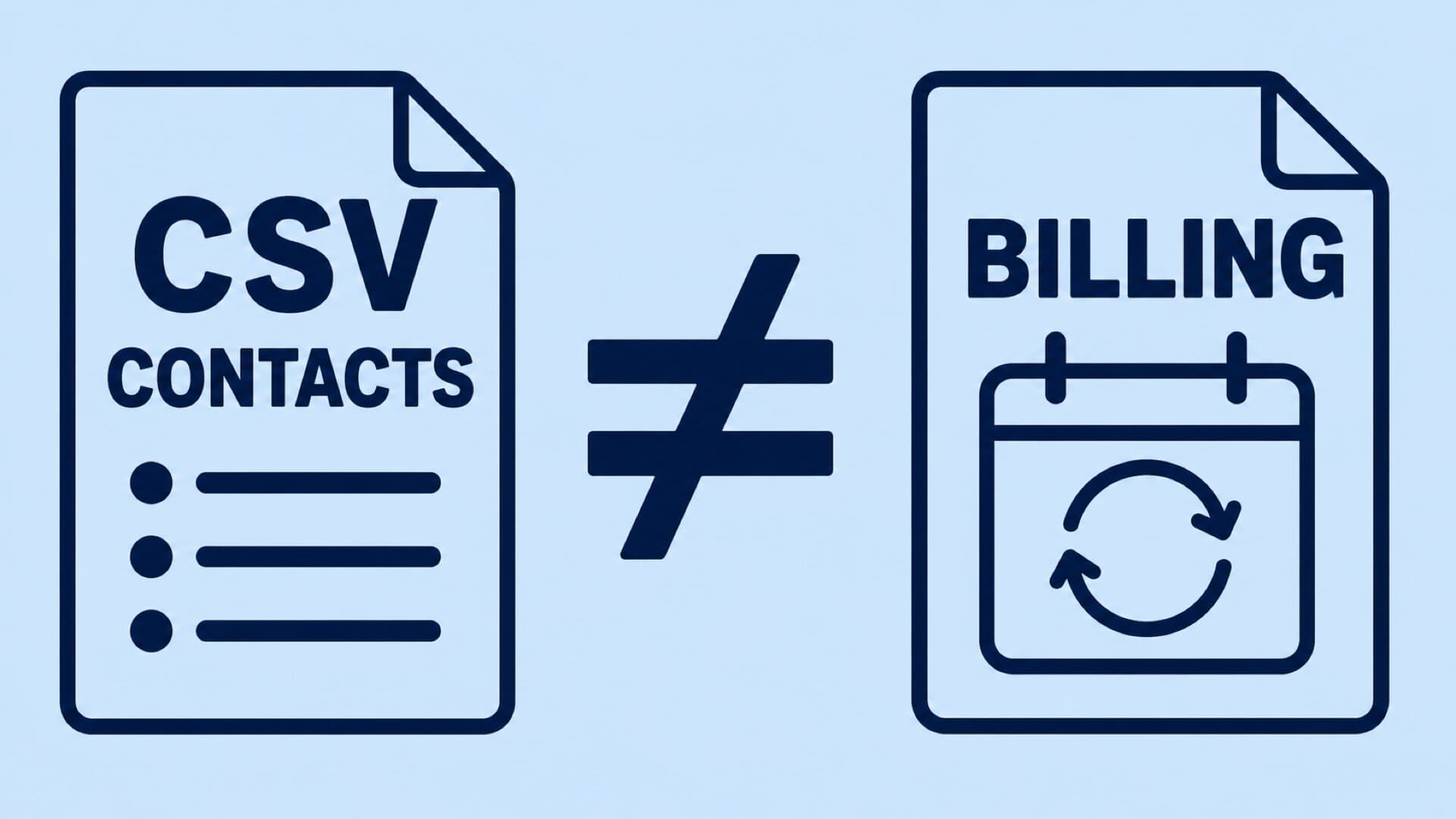
Before a membership platform migration, prove that you can move contacts, payment arrangements, paid access, content, and incoming links. An email export completes only the first job. The business survives the move when a member can arrive, sign in, find what they bought, and renew on the correct terms. Patreon documents a contact export. Stripe documents a separate process for transferring card data, and explicitly excludes subscriptions from that export. Those two facts should change how you evaluate your next platform. If you have 50K engaged followers and already sell a membership, your next business decision deserves more than a feature comparison. Lower fees help only if the customers and the work you have already done survive the switch. Use the five tests below before choosing a moving date. These are operational acceptance tests for your team, grounded in public documentation checked on September 7, 2026. They are not a claim that every platform supports every transfer. A useful member export identifies whom you can reach and preserves the distinctions between active buyers, former buyers, and free contacts. A file containing email addresses alone cannot recreate a membership business. Start with a dated export from your current account. Open the file and check what it actually contains before anyone promises to import it elsewhere. Patreon's export instructions take creators through Creator studio, Audience, and the Relationship manager. You can filter the list and download a CSV covering the selected criteria. That last detail matters: an export made while viewing canceled members is not your complete audience. Circle's member export documentation likewise describes exports from Manage audience and recommends the unfiltered All tab for the full audience. Its documented fields include profile information and engagement metrics. Check your actual export rather than assuming two platforms use the same columns. Create a reconciliation sheet with the source count, exported count, imported count, and any exclusions. Investigate duplicates and missing records. Keep unsubscribe and communication-preference information attached to the relevant member; changing software should not erase someone's choice. Then test the destination with an account your team controls. Can that person receive the intended message and reach the correct sign-in page? A successful file upload proves that software accepted a file. This test proves that you have a working route back to a person. Our Patreon alternatives guide helps identify possible destinations. Add this export test to your shortlist before comparing how each destination looks. Subscriptions keep billing only when the destination has a supported payment arrangement and the correct subscription schedule. Moving an email address does not establish either one. Ask who controls the payment account. A platform using Stripe somewhere in its payment flow does not, by itself, establish that you control the Stripe account or can request its data transfer. Get an answer for your specific account and destination. Stripe's payment-data export documentation describes a secure transfer to another PCI DSS Level 1-compliant processor. It also identifies limits: credentials saved through Link cannot transfer between processors, and the export excludes subscriptions and payment history. Retrieve the separate records through the supported Dashboard or API routes. Do not put card numbers into your migration spreadsheet. The billing schedule needs its own work. Stripe's subscription migration toolkit uses fields for the customer, recurring price, start date, and other subscription settings. Its instructions also cover billing dates, coupons, and cancellation at period end. That is a distinct job from transferring a saved payment method. Have the operator responsible for billing document the route for monthly plans, annual plans, discounts, trials, and customers who have already canceled future renewal. Where the route requires customers to authorize payment again, plan for that explicitly. Do not describe an invitation to resubscribe as an automatic transfer. Before the full move, prove the billing behavior in the destination's test environment. Check that the next charge has the expected amount and date, and that the old system will not also charge. Assign one person to reconcile the first live renewal cycle and handle exceptions.
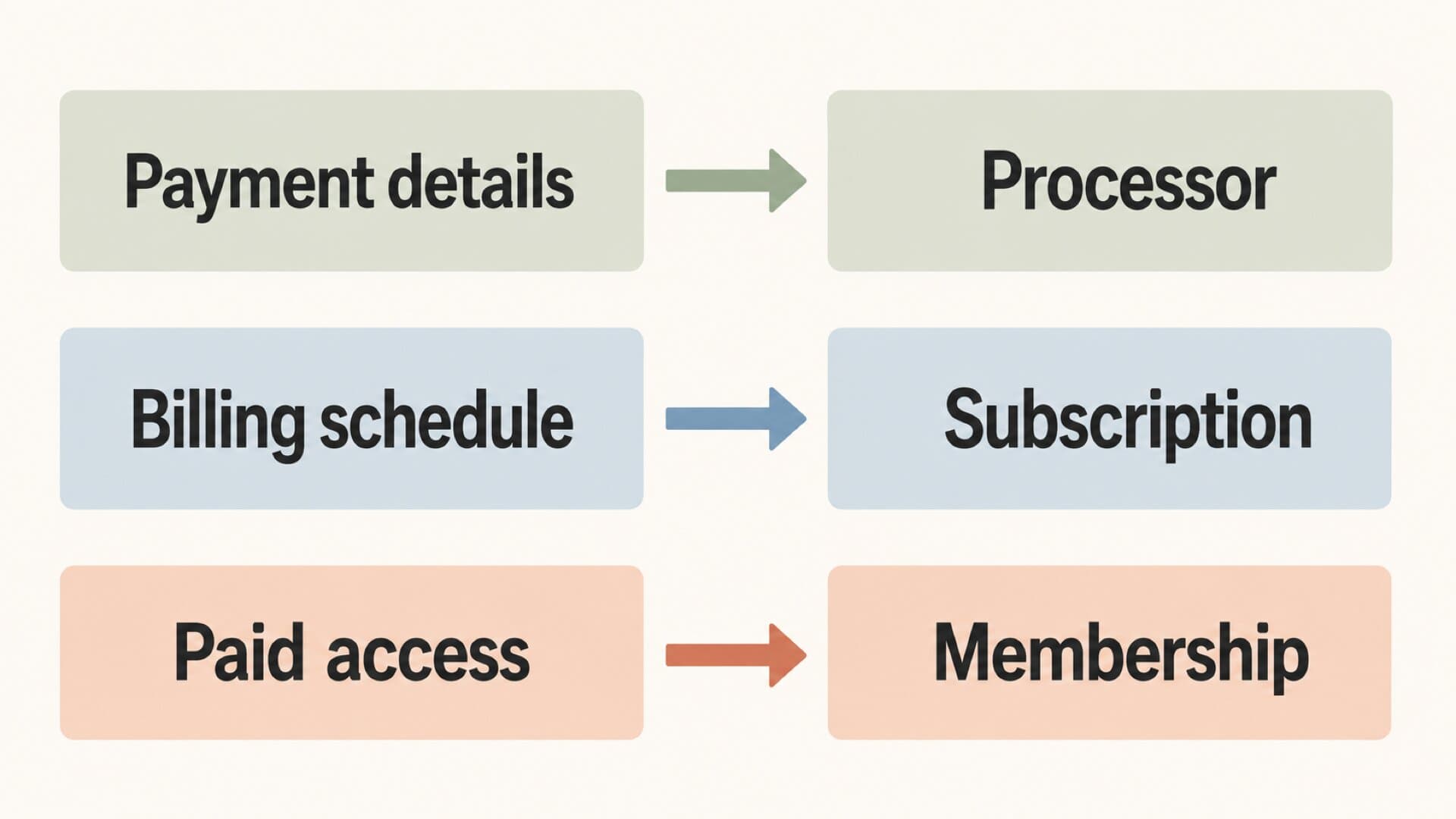
Three separate migration routes: payment details to a processor, billing schedule to a subscription, and paid access to a membership
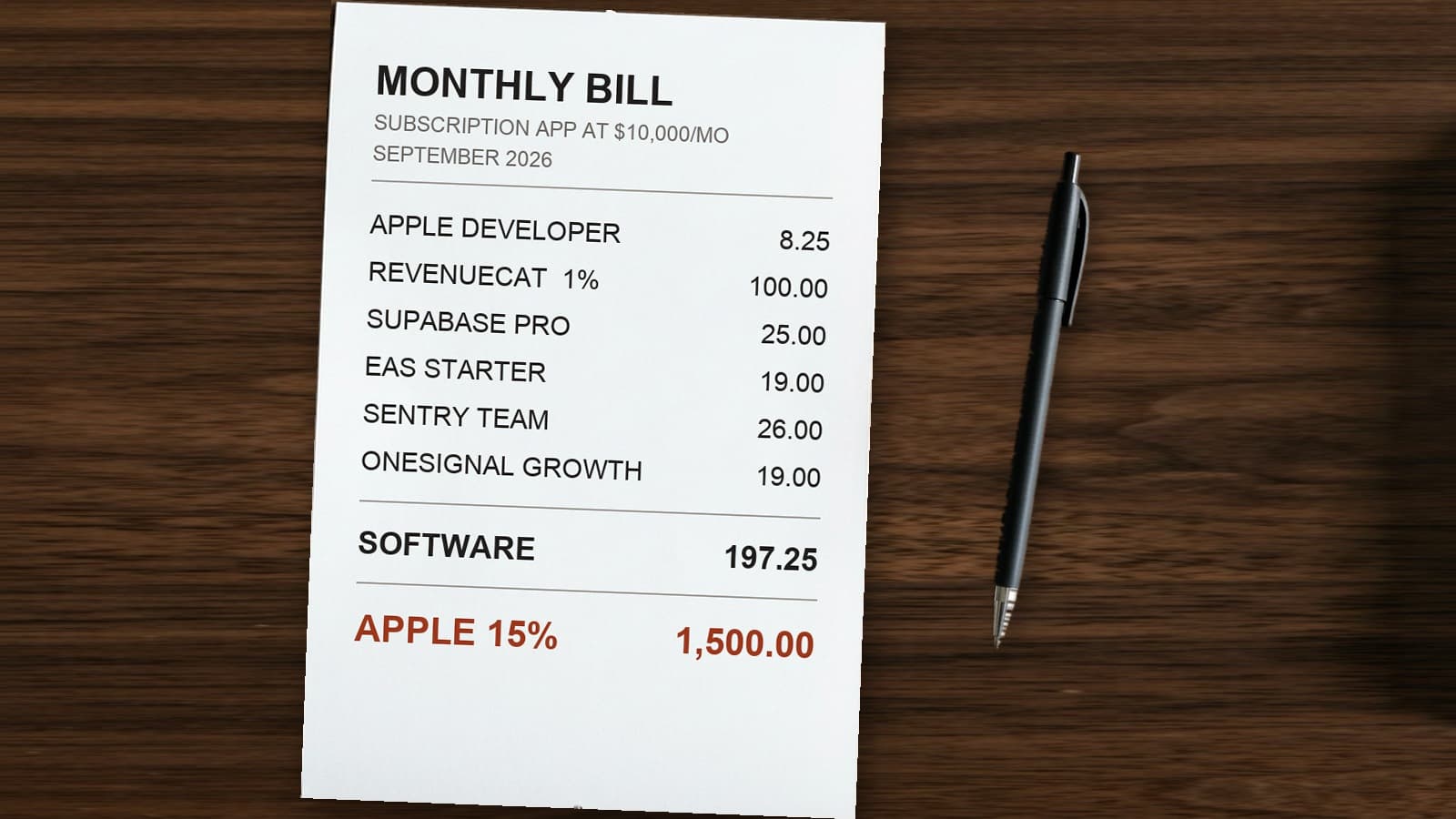
Payment and access need separate checks. A member who paid annually may have months of access remaining after canceling renewal. A free subscriber may share the same email format as a paying customer. Neither should be treated as a generic imported contact. Build a small set of representative test accounts before importing the full audience. Include an active monthly member, an annual member, a canceled member whose paid period remains open, a free member, and someone with a legacy offer. These are proposed test cases, not a list of features every platform promises to migrate. For each account, write down the expected destination behavior. Which library can they enter? Which community spaces can they see? When does access end? What happens if the next payment fails? Record the answer in plain language so the creator can review it without reading code. The pass condition is specific: each test account gets exactly the access the customer bought. An import count cannot tell you that. Log in as the controlled test accounts and open the actual lessons, downloads, or spaces. Also decide how much customer progress the move must preserve. For a teaching business, the useful relationship may include a saved plan, completed lessons, or a practice history. That information helps a fan return to their next task instead of starting over. It can also make the creator's follow-up more relevant. A creator business accumulates value when customers can keep using what they have paid for. Treat the member's next session as part of the migration specification, with the same care you give the next invoice. Download one representative piece of each paid content type and try to use it in the destination. Include a video, a written lesson, a downloadable file, and any discussion format central to the offer. Choose formats you actually sell; a podcast membership needs different tests from a drawing course. Check the file itself. A spreadsheet listing video titles is not a video archive. A lesson export may contain text while its images still depend on the old host. A link that works during the trial period may stop working when the source account closes. Read the export documentation for each format separately. For example, Circle documents live chat log downloads as a specific CSV export. A downloadable chat log does not establish that the destination can recreate the original conversation, identities, and permissions. Ask the receiving platform what its importer supports, then test the result. Keep your original media in storage your business controls. For member contributions, define what is necessary to preserve and use the permissions that apply to that material. A private community archive should retain its intended audience after the move. This work also protects your content engine. An organized lesson library gives you something concrete to revisit in public: a demonstration, a practice challenge, or an answer to a recurring question. Each useful piece can introduce the product to someone who has never followed your account. Losing the library means rebuilding both the paid experience and the material that helps sell it. Our MatPat profile examines the broader task of building a creator business that can operate beyond its original presenter. Here, the test is narrower: can another operator reopen the material and deliver the promised experience? Customers can keep finding a migrated membership when old links lead to the right new destination and the business retains control of its public address. Copying content does not redirect existing links. Inventory the links people already use: your bio, popular videos, welcome emails, public lessons, and paid-member bookmarks. Distinguish addresses on a domain you control from addresses belonging to the platform. Ask what happens to each when the old account closes. For public pages whose URLs change, Google's site-move guidance recommends mapping old URLs to new destinations, configuring redirects, and monitoring traffic. Apply this where you control the old address or the platform supports the redirect. You cannot assume control over another company's domain. Test your most valuable entry points on a phone while signed out. Follow the link through to the promised content or sign-in step. Send an existing member to the account-recovery path using a controlled test account. If finding the new home depends on seeing your latest social post, the transition still has a gap. This matters for acquisition as much as retention. A useful public lesson can introduce a stranger to your paid product long after you published it. Preserve that route so discovery can keep working while you make something else. Give every unresolved link an owner and a remedy: a redirect, an updated description, a replacement email, or a clear relocation notice. Keep the old service available for the agreed transition period. End it after verifying that the routes you depend on work. Put the five results on one page. Mark each as passed, unresolved, or requiring member action. Attach the evidence: reconciled counts, billing test results, access checks, reopened content, and working links. Choose the moving date after the unresolved items have an acceptable plan. The same standard applies when commissioning your own product. Ownership requires working access to the accounts and records needed to operate it, plus a team responsible for keeping them usable. Our ongoing care model is part of that operating work. Before approving a new destination, also budget the continuing expenses covered in our seven-line-item subscription operating-cost guide.
Our work

Creators who already did this

These are apps we designed, built, shipped, and still run today, with the creator keeping the code and the audience.

Creator app strategy

Curious what your app could be?

Enter your handle and BUILT BY FOUNDRY will research your audience and present custom app concepts. Free.

Membership Platform Migration: 5 Tests Before You Move