

Teachable Review 2026: Is It Worth It?

Teachable Review 2026: Is It Worth It?

Foundry
March 19, 2026
Our verdict: Teachable is a reliable course delivery platform with a clean builder and solid tax compliance — but rising prices, hard student caps, and weak marketing tools make it a tough sell for creators who want to build real businesses. Rating: 3.0/5. Key Takeaways:
  • Teachable's drag-and-drop course builder is still one of the cleanest in the space
  • Pricing jumped again in 2025 — the Starter plan now runs $39/month with a 7.5% transaction fee on every sale
  • Hard student caps (100 on Starter, 1,000 on Builder) mean you pay more as you grow
  • No built-in audience, no email marketing, no native mobile app with your branding
  • If you already have a marketing stack and just need course delivery, Teachable works. If you want to build a business, it's a starting point — not a destination.
Teachable is a hosted course platform that lets creators build and sell online courses, coaching programs, and digital downloads through a drag-and-drop interface — without writing code or managing servers. Ankur Nagpal founded Teachable in 2014 (originally called Fedora). It grew fast on a simple pitch: you teach, we handle the tech. By 2020, Teachable had paid out over $1 billion to creators and processed 43 million student enrollments (Teachable blog). Hotmart acquired Teachable in 2022, and the platform has gone through multiple pricing restructures since. The core idea hasn't changed: upload your content, set a price, sell to your audience. Teachable handles payment processing, sales tax, EU VAT compliance, student management, and certificates. You handle everything else — traffic, marketing, branding, retention.
CategoryScore
Course builder4.5/5
Ease of setup4/5
Pricing value2/5
Marketing tools2/5
Analytics2.5/5
Mobile experience2/5
Ownership & portability2.5/5
Overall3.0/5
Teachable earns points for its course builder and admin compliance tools. It loses points everywhere a creator needs to actually grow a business: marketing, analytics, mobile, and ownership. Teachable overhauled its pricing in January 2026. The new plans add hard limits on students and published products — a big shift from the unlimited access older plans offered.
PlanMonthlyAnnual (per month)Transaction FeeProductsStudents
Starter$39/mo$29/mo7.5%1100
Builder$89/mo$69/mo0%51,000
Growth$189/mo$139/mo0%255,000
Advanced$399/mo$309/mo0%1005,000
On top of plan fees, every transaction runs through Teachable's payment processor with standard processing fees: 2.9% + $0.30 for U.S. cards, 3.9% + $0.30 for international cards. The Starter plan's 7.5% transaction fee is the real kicker. Sell a $100 course and Teachable takes $7.50 before Stripe's cut. At $5,000/month in revenue, that's $375 in transaction fees alone — on top of $39/month for the plan. You'd spend over $800/month just on platform and processing costs. The Builder plan eliminates transaction fees but caps you at 1,000 students and 5 products. Cross those limits and you're forced to upgrade to Growth at $189/month. This is a pattern we've seen across the industry: platforms start affordable, then squeeze revenue as creators scale. Teachable's pricing has increased three times since 2023 (SchoolMaker). Credit where it's due. Teachable has real strengths. The course builder is excellent. Drag-and-drop modules, video hosting (1TB included), PDFs, quizzes, completion certificates, drip scheduling, and student progress tracking. If your product is a structured online course, the creation experience is smooth. You won't fight the tool. Tax compliance is handled. Teachable automatically collects sales tax, handles EU VAT, generates 1099-K tax forms, and sends student receipts. This alone saves creators hours of admin work and the cost of an accountant. For international sellers, this is a genuine headache remover. The checkout experience converts. One-click upsells, order bumps, cart abandonment recovery, coupon codes, and payment plans. Teachable's checkout flow is optimized for course sales and it shows in the conversion rates creators report. Certificates and compliance. For creators in professional education — where students need proof of completion for continuing education credits — Teachable's certificate system works well. Here's where the honest review gets honest. No built-in audience. Teachable gives you zero traffic. Unlike Udemy (70M+ students) or Skillshare (12M+ members), every single student must come from your own marketing. You're paying for a delivery system, not a distribution channel. Weak email marketing. Teachable has basic email functionality — drip campaigns tied to course enrollment and broadcast emails to student lists. But there's no automation builder, no segmentation engine, no lead scoring, no A/B testing. Most serious creators still run ConvertKit, Mailchimp, or ActiveCampaign alongside Teachable, which adds $30–$100+/month and creates data fragmentation. Limited analytics. You get revenue reports and basic student progress data. What you don't get: conversion funnel analysis, cohort retention, lifetime value calculations, or A/B test results. Creators who want to optimize their business run blind on Teachable's native analytics. No native mobile app with your brand. Teachable has a student mobile app, but it's the Teachable app — not YOUR app. Your course lives inside Teachable's container. Students download "Teachable" from the App Store, not your brand. Push notifications come from Teachable. The experience is generic. This is the biggest miss. Creators like Kayla Itsines didn't build $400M businesses through someone else's generic app. They built branded apps that their audience identified with — apps people searched for by name in the App Store. No community features. Teachable has no forum, no group chat, no community feed. If community is part of your product — and for most creator businesses, it should be — you'll need a separate tool. That's another subscription, another login, another platform your students have to manage.
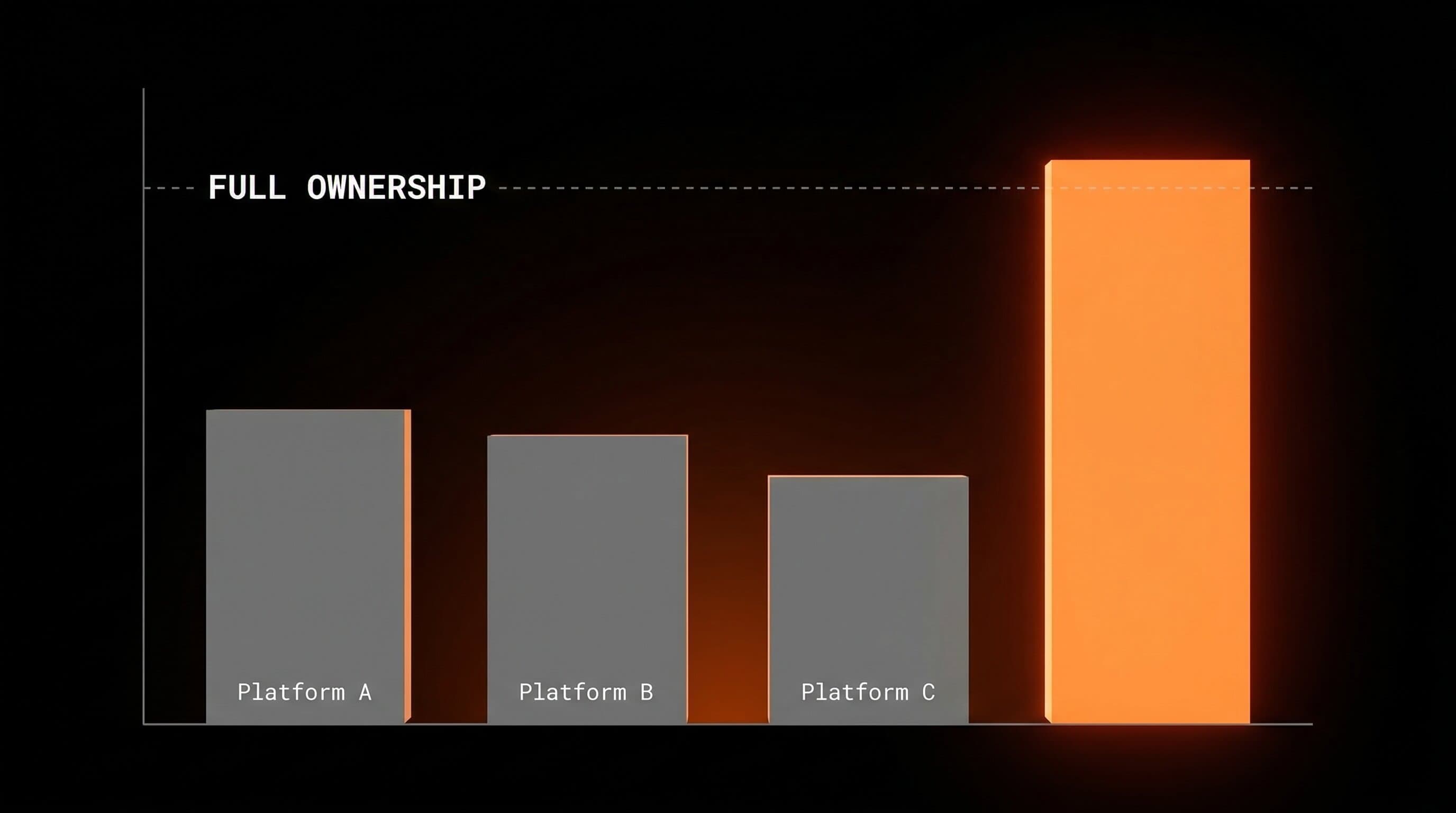
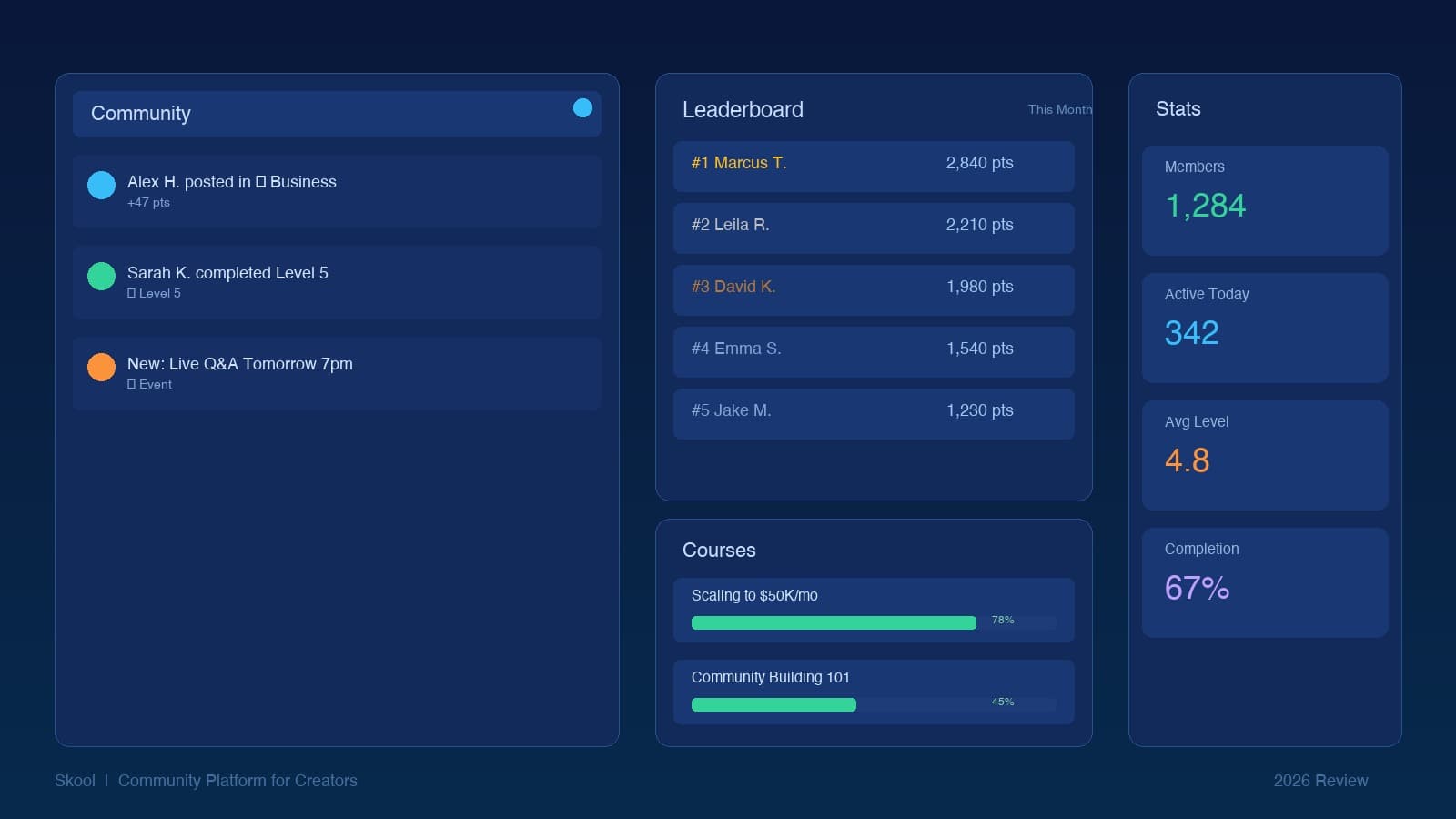
Comparison of creator platform features: course delivery vs full business ownership
Teachable still makes sense for a narrow use case. You're a good fit if:
  • You sell standalone courses (not memberships or communities)
  • You already have a marketing stack (email, social, ads) that drives traffic
  • You want simple course delivery without managing servers or code
  • Tax compliance and international sales matter to your business
  • You're on the Builder plan or higher (the Starter plan's fees eat your margins)
You're not a good fit if:
  • You want to build a subscription business with recurring revenue
  • You need community features alongside your courses
  • You want a branded mobile app in the App Store
  • You're trying to build a business asset you could sell someday
  • You need advanced marketing and analytics tools built into your platform
The honest assessment: Teachable is a course delivery tool. It's not a business platform. The moment you need email marketing, community, a mobile app, or advanced analytics, you're bolting on other tools — and managing the integrations yourself.
FeatureTeachableKajabiSkoolCustom App
Course builderStrongStrongBasicCustom-built
Email marketingBasicBuilt-inNonePush notifications
CommunityNoneBasicExcellentCustom-built
Mobile appGeneric (Teachable-branded)Generic (Kajabi-branded)PWA onlyYour brand in App Store
Starting price$39/mo$69/mo$99/mo$0 upfront (revenue share)
Transaction fees7.5% (Starter)0%0%0%
Data ownershipLimited exportLimited exportLimited exportFull ownership
Scalability ceilingStudent capsContact capsPlatform-dependentUnlimited
The comparison tells the story. Teachable, Kajabi, and Skool each solve one piece of the puzzle. None of them give you full ownership of your business, your users, or your brand. Building your own app costs more in effort — but it's the only path to real ownership. That's why creators who build the biggest businesses eventually leave platforms like Kajabi and build their own products. Worse, by most measures. Since Hotmart's 2022 acquisition, Teachable has:
  • Killed the free plan (early 2025)
  • Raised prices three times
  • Added hard student caps where there were none
  • Removed the popular Basic plan and replaced it with a more expensive Builder plan
The trend line isn't creator-friendly. Every change has either increased costs or reduced what you get at each tier. Creators who locked in old pricing are sitting on grandfathered plans that no longer exist — and worrying about when those get killed too. Meanwhile, competitors are moving in the opposite direction. Thinkific offers unlimited students on paid plans. Systeme.io has a functional free tier. And creators who build their own apps never deal with platform pricing changes at all. When a platform's business model depends on charging you more as you succeed, the incentives aren't aligned with your growth. Your success becomes their revenue opportunity — and that math gets worse over time. If you have fewer than 100 students and sell a single course, the Starter plan at $29/month (annual) gets you started. But the 7.5% transaction fee means you're paying a meaningful tax on every sale. Once you cross 100 students, you're forced to upgrade. For true beginners testing an idea, free alternatives like Systeme.io or even a simple Gumroad setup have lower risk. Plan fees range from $29/month (Starter, annual) to $399/month (Advanced, monthly). But the real cost includes transaction fees (7.5% on Starter), payment processing (2.9% + $0.30 per sale), and the inevitable need for external tools — email marketing ($30–$100/month), community platform ($99+/month), and analytics. A creator doing $10K/month on the Builder plan is paying roughly $200–$400/month across all tools. You can export student data (emails, names) and download your own content files. But course structure, student progress, completion data, and purchase history don't export cleanly. Migration to another platform means rebuilding your course from scratch and re-enrolling students. The switching costs are real — which is exactly why platform lock-in matters. It depends on what you need. Kajabi offers more all-in-one features. Skool is better for community. Thinkific is cheaper for unlimited students. But if you want to actually own your business — your brand in the App Store, your user data, your push notifications, your subscription billing — the answer is building your own app. We do exactly that at Built by Foundry: $0 upfront, 3-week delivery, and we handle everything forever. Teachable has a student-facing mobile app, but it's branded as Teachable — not your brand. Students download the "Teachable" app and access your course inside it. You can't customize the app's appearance, send branded push notifications, or get discovered independently in the App Store. For creators who want their own branded mobile presence, this is a dealbreaker.
Teachable delivers courses. But your audience deserves a business. We build subscription apps for creators — fully branded, fully owned, in the App Store in 3 weeks.
Let's Build →

Get Creator Revenue Insights

How creators are turning audiences into subscription businesses

You might also enjoy...