
Turning Knowledge into Products

A Declined Card Gets 60 Days on Apple and 14 on Substack: How 5 Platforms Handle Failed Payments

September 25, 2026
Share
A Declined Card Gets 60 Days on Apple and 14 on Substack: How 5 Platforms Handle Failed Payments

Get Creator Revenue Insights

How creators are turning audiences into subscription businesses
Share
Key takeaways:
  • A declined renewal is not a cancellation. Every platform in this guide retries the charge automatically. They differ on how long they retry and on whether the fan keeps access while they do
  • Apple retries for up to 60 days. By default the subscriber's paid service pauses during that time. Turning on Billing Grace Period keeps access open for 3, 16 or 28 days (3 or 6 for weekly plans)
  • Google Play turns a grace period on by default, then an account hold. Together they run 60 days unless you change them, and must total at least 30
  • Stripe, used directly, recommends 8 tries within 2 weeks and lets you stretch that to 2 months. Access during the retry is whatever your own product decides
  • Patreon retries up to six times in the month of the decline, removes access to member-only content immediately, and converts the member to Free after about 30 days
  • Substack gives the reader a two-week window with access kept, with Stripe generally retrying three times, then drops them to a free subscription
  • It matters: RevenueCat's 2026 report puts billing errors at 15.2% of App Store cancellations and 32.2% of Google Play cancellations
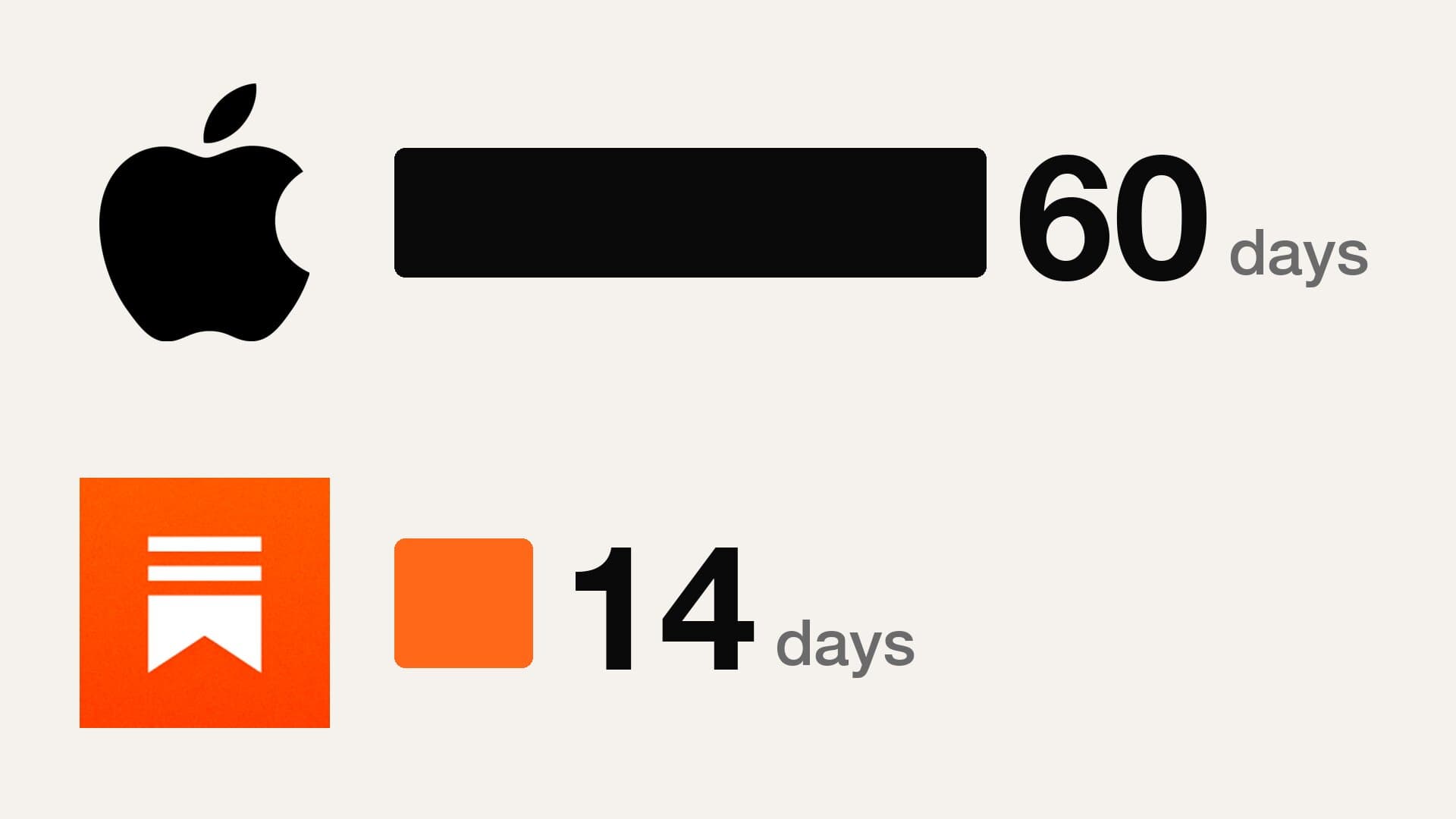
Every month, some of the people who pay you will fail to pay you without meaning to. A card expires. A bank flags a foreign charge. A debit account runs short for two days. None of those people decided to leave. What happens next is mostly out of your hands. It is decided by the platform your subscription runs on, in a setting you may never have opened. We read the current help pages and developer documentation for five of the platforms creators use most and put the answers side by side. The renewal fails, the platform marks the subscription as past due, and it starts retrying the charge on a schedule it controls. Two things vary from one platform to the next: how long the retrying lasts, and whether your subscriber can still use what they paid for while it happens. That second question is the one creators rarely ask. A fan whose card failed quietly and who can still read, watch or train usually never notices. They update their card when the email reaches them, or the bank clears the charge on the next attempt. A fan who is locked out on the first failure notices right away, and their first experience of the problem is your product not working. The industry name for this is involuntary churn: people who leave because the payment failed, not because they chose to. We cover the broader picture in our guide to churn. This piece is narrower. It covers the clock that starts the moment a charge fails. Apple and Google Play keep trying for up to 60 days. Patreon gives about 30. Substack and Stripe's recommended default give 14. Only Google Play and Substack keep the fan's access open by default.
PlatformHow long it retriesFan's access while retryingWhat happens afterWho sets it
Apple App StoreUp to 60 daysPaused by default. Kept for 3, 16 or 28 days if you enable Billing Grace PeriodSubscription lapsesApple, plus one setting in App Store Connect
Google Play60 days by default (grace period plus account hold)Kept during grace period, blocked during account holdSubscription expiresGoogle defaults, adjustable in Play Console
Stripe (selling direct)Recommended 8 tries within 2 weeks, configurable up to 2 monthsYour product decidesCancel, mark unpaid, or leave past dueYou
PatreonUp to 6 retries in the month of the declineMember-only content blocked until paidConverted to Free after about 30 daysPatreon
SubstackAbout 3 tries in a two-week windowKept for the two weeksConverted to a free subscriptionSubstack
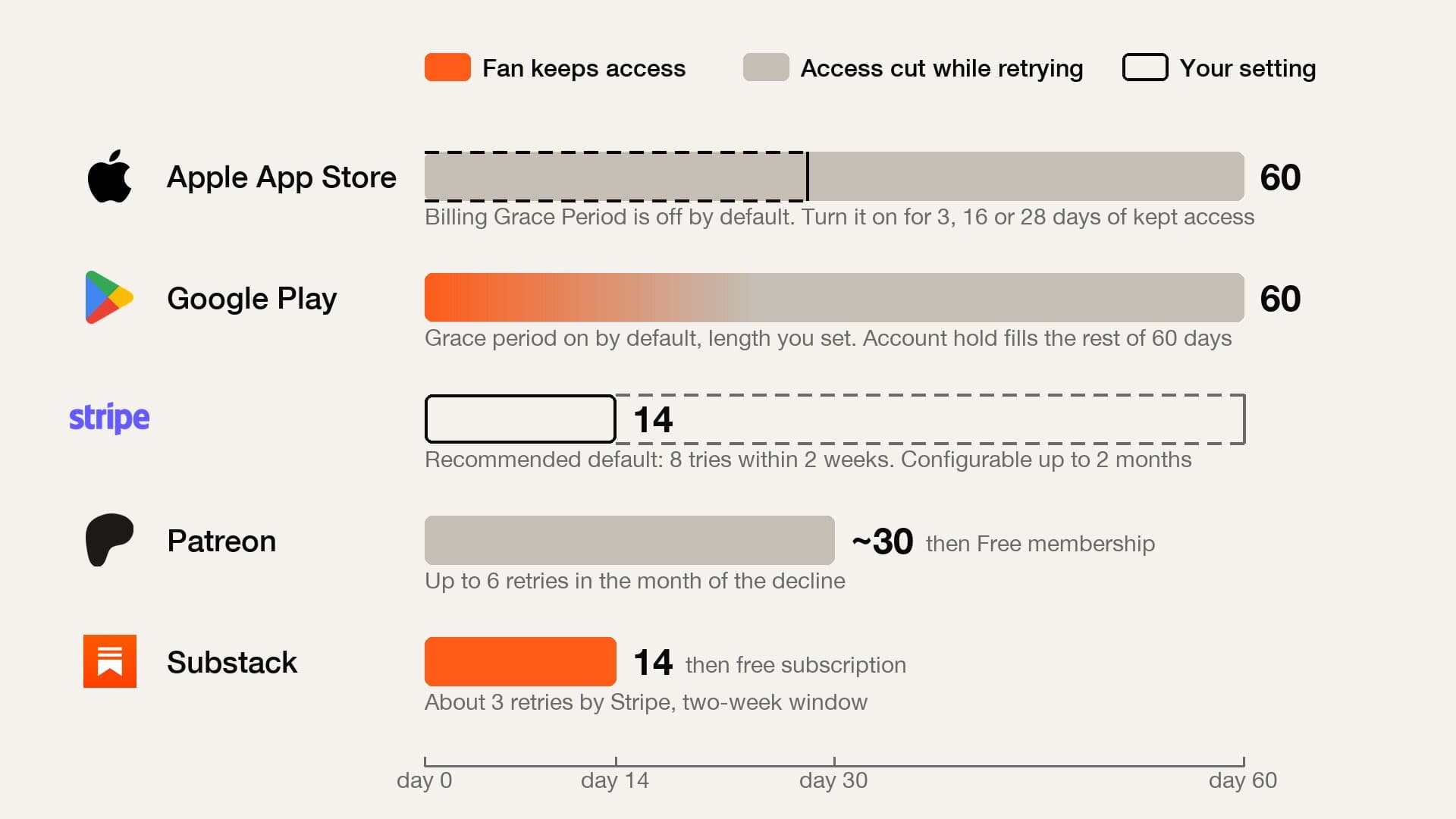
A timeline chart on a 60-day axis showing how long five platforms retry a declined subscription payment. Apple App Store runs 60 days with access cut unless an optional grace period of up to 28 days is enabled. Google Play runs 60 days, with access kept during a grace period whose length the developer sets, then blocked during account hold. Stripe's recommended default is 8 tries within 2 weeks, configurable up to 2 months, with access set by the seller. Patreon runs about 30 days with access cut, then Free membership. Substack runs 14 days with access kept, then a free subscription
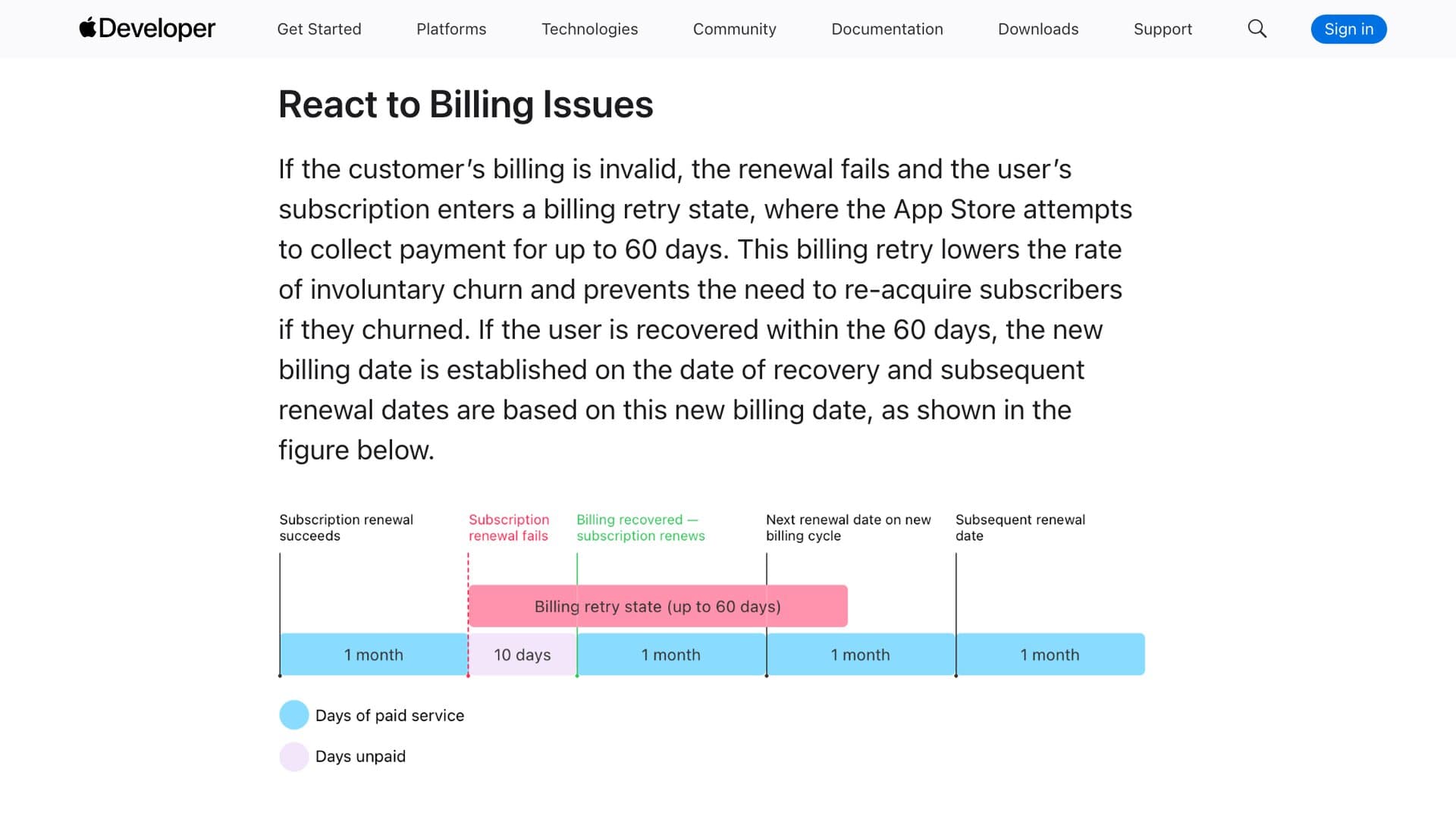
The spread is wide. The same expired card gets two weeks on one platform and two months on another. On one it quietly keeps working, and on another the member hits a locked post the next time they open the app. Apple's developer documentation states it plainly: when billing is invalid, the subscription "enters a billing retry state, where the App Store attempts to collect payment for up to 60 days." If Apple recovers the payment in that window, the new billing date is set to the day of recovery, and every later renewal follows from it.
Apple's developer documentation page Reducing Involuntary Subscriber Churn, section React to Billing Issues, stating that when a renewal fails the subscription enters a billing retry state where the App Store attempts to collect payment for up to 60 days, with Apple's diagram showing a 10-day unpaid gap inside the billing retry state before billing is recovered and a new monthly cycle begins
The part creators miss is in the diagram. Those 10 days are marked unpaid. Without a grace period, Apple says "the subscriber's days of paid service pause until Apple is able to collect payment." The subscriber is locked out, and your billing calendar shifts. Billing Grace Period changes that. It is a switch in App Store Connect. When it is on, subscribers keep full access while Apple keeps trying, and Apple's help page promises "there won't be any interruption to the subscriber's days of paid service or to your revenue if Apple recovers the subscription within the grace period." You choose the length:
  • 3, 16 or 28 days for monthly and longer subscriptions
  • 3 or 6 days for weekly subscriptions, because Apple will not let a grace period run longer than the subscription itself
There is one trade to know. If Apple recovers the payment after the grace period ends but still inside the 60 days, the subscription renews on the recovery date, and Apple's documentation notes that "payment for the provided full service during the grace period would not be collected." You gave those days away. For most creator products that is a small price for a fan who never saw an error screen. Google splits the same 60 days into two phases. First comes a grace period, and Google's documentation says "by default, all auto-renewing base plans have grace period enabled." During it, "the user should still have access to their subscription entitlement." Then comes account hold, where "you should block access to the subscription entitlement." Its default length is "60 days minus any grace period duration," so the two phases add up to 60 days unless you shorten them. Google's Play Console help adds a floor: account hold and grace period together must total 30 days or more. Google also warns that shortening either one "may reduce the number of subscriptions recovered from payment declines." The default is sensible, so leave it alone unless you have a specific reason. Here the two platforms most creators start on take opposite approaches. Patreon retries a failed payment "up to six times within the month they decline," emails the member, and shows them a banner. It also restricts "access to member-only content until past-due bills are collected." After roughly 30 days the member is converted to a Free membership. Patreon's help page also notes that decline rates run highest in the first days of the month and fall as retries succeed, so a scary number on the 2nd usually improves by the 20th. Creators can filter for declined members in Relationship Manager and send a personal note, which Patreon recommends. Substack keeps the reader in. Its reader help page says: "We'll provide you a two-week window to get this resolved with your bank. During the two weeks, you'll still have access to the paid subscription." On the writer's side, Stripe "will generally retry payments 3 times automatically before a paid subscription is canceled," and the reader then becomes a free subscriber. Neither approach is wrong. Patreon protects the creator from giving away content that never gets paid for. Substack protects the relationship. But a creator on either one should know which they are running, because it shapes the email they should send. On Patreon your member is already locked out. On Substack they probably have no idea anything happened. We compare the two platforms more broadly in Substack vs Patreon. If you run your own checkout on Stripe, you set every part of the clock yourself: how many retries, over how long, and what happens to the subscription when they run out. Stripe's Smart Retries documentation says "the recommended default setting is 8 tries within 2 weeks," and you can choose a window of 1 week, 2 weeks, 3 weeks, 1 month or 2 months. When the retries run out, you pick one of three outcomes: cancel the subscription, mark it unpaid, or leave it past due. Two details matter more than the schedule. First, Stripe will not automatically retry a hard decline, such as lost_card, stolen_card or incorrect_number. Those only go through once the customer adds a new payment method, so an email asking them to update their card is the only fix. Second, Stripe controls billing but not access. Whether a past-due fan can still log in depends on your own product code, and many small creator checkouts never make that decision on purpose. More than most creators assume. RevenueCat's State of Subscription Apps 2026 finds that billing errors cause 15.2% of App Store cancellations and 32.2% of Google Play cancellations. Those figures come from RevenueCat's report, which measures subscriptions sold through its own platform, so they describe app stores rather than Patreon or Substack. Still, the scale is clear. On Android, nearly a third of the people who stop paying never chose to stop. Recovering even part of that group is often worth more than a price change, and it costs nothing to set up. Our churn reduction guide covers the voluntary side, where the product itself has to earn the next month. There is also a pricing angle. An annual subscriber has one renewal a year that can fail, while a monthly subscriber has twelve. That is one more reason the annual versus monthly decision is worth making deliberately. Whatever you sell on, these steps take minutes:
  • App Store: open App Store Connect, find Billing Grace Period for your subscriptions, and turn it on. 16 days is a reasonable middle choice for monthly plans. It applies to billing errors from then on and cannot be changed for a subscriber once assigned.
  • Google Play: confirm your grace period and account hold are still on. If someone shortened them, restore the defaults unless there was a reason.
  • Stripe direct: check your retry window and the outcome you chose when retries run out, then decide on purpose whether a past-due customer keeps access.
  • Patreon: once a week in the first half of the month, filter Relationship Manager for declined payments and send a short personal note. Your members are already locked out.
  • Substack: filter failed payments in your Stripe dashboard, as Substack suggests. Your readers probably have not noticed, so a friendly heads-up works better than an alarm.
Each of these platforms made a reasonable choice about how to treat a fan whose card failed. The point is that someone made it, and on most of them it was not the creator. Owning a subscription business means those choices are yours: the length of the grace period, the tone of the reminder, whether the fan ever sees a locked screen. That is the kind of work Built by Foundry takes on. We build the product, and then we run it for good: renewals, billing edge cases, offers and pricing, so the business keeps collecting while the creator keeps creating. Here is how the model works, and here is how the revenue share is structured.
See What We’d Build You →
Sources verified September 25, 2026: Apple Developer Documentation, Reducing Involuntary Subscriber Churn; App Store Connect Help, Enable Billing Grace Period for auto-renewable subscriptions; Android Developers, Manage the subscription lifecycle; Play Console Help, grace period and account hold settings; Stripe Docs, Automate payment retries; Patreon Help Center, How to manage failed payments from members and Failed payment help; Substack Support, What happens when a subscriber's payment fails and Why is my payment to renew a subscription failing; RevenueCat State of Subscription Apps 2026. Retry windows and defaults are platform policy and can change without notice. Current-state claims require revalidation before later use.
Our work

Creators who already did this

These are apps we designed, built, shipped, and still run today, with the creator keeping the code and the audience.

Samantha Mae

Samantha Mae

Founder & CEO of NineLives

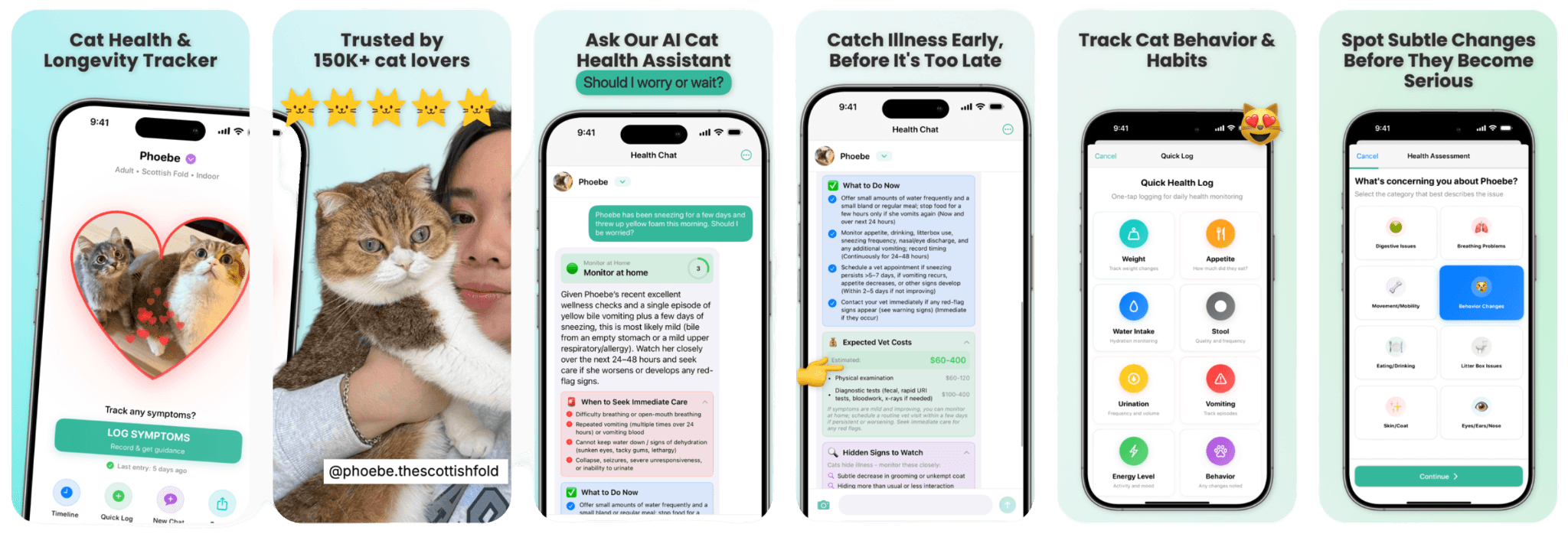
Cat health tracking from the world's most beloved Scottish Fold.

Top Health App150K+ followers
Read the case study
NineLives screenshots
Liv Merima

Liv Merima

Founder & CEO of Claim It

Custom affirmations that help millions choose themselves.

Top Lifestyle App150K+ followers
Read the case study
Claim It screenshots
Brandon Whiteleather

Brandon Whiteleather

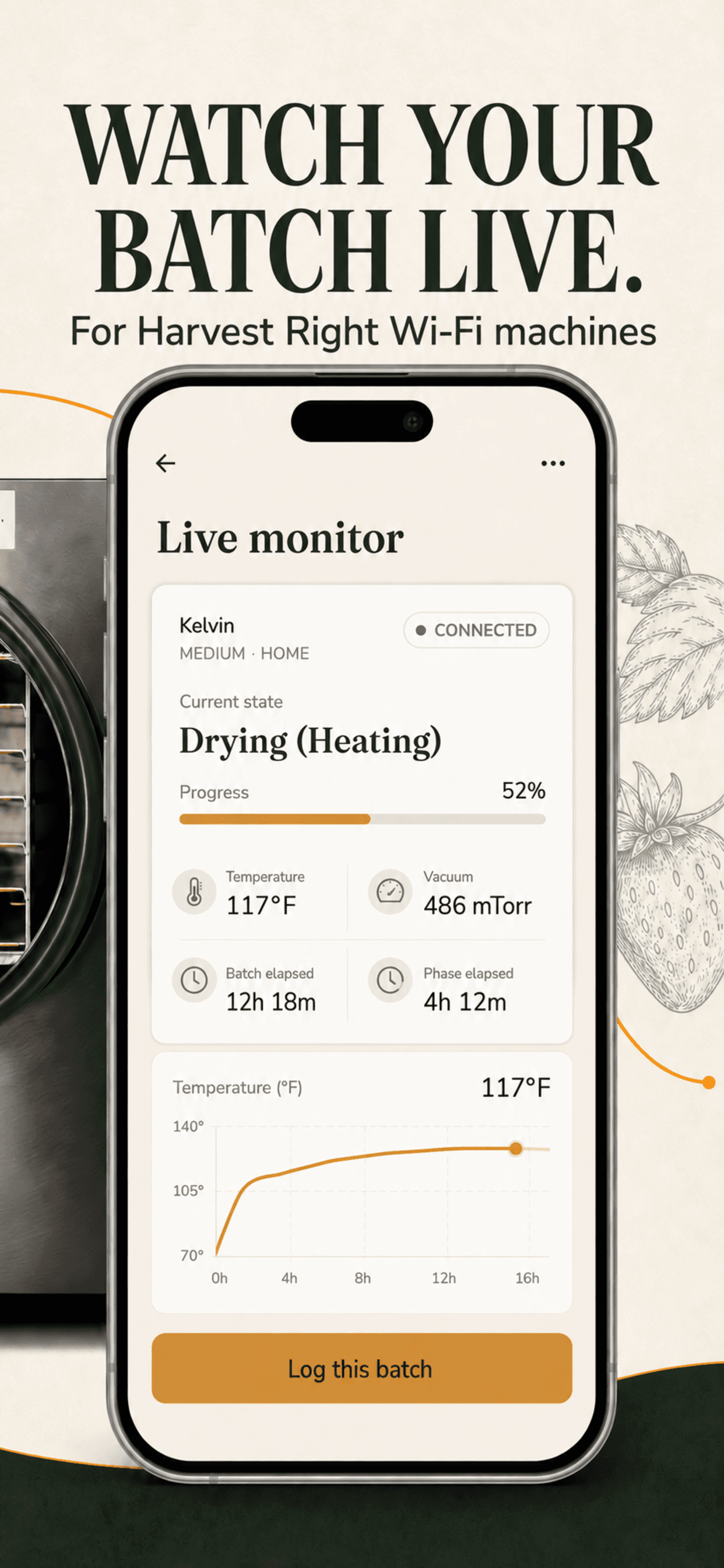
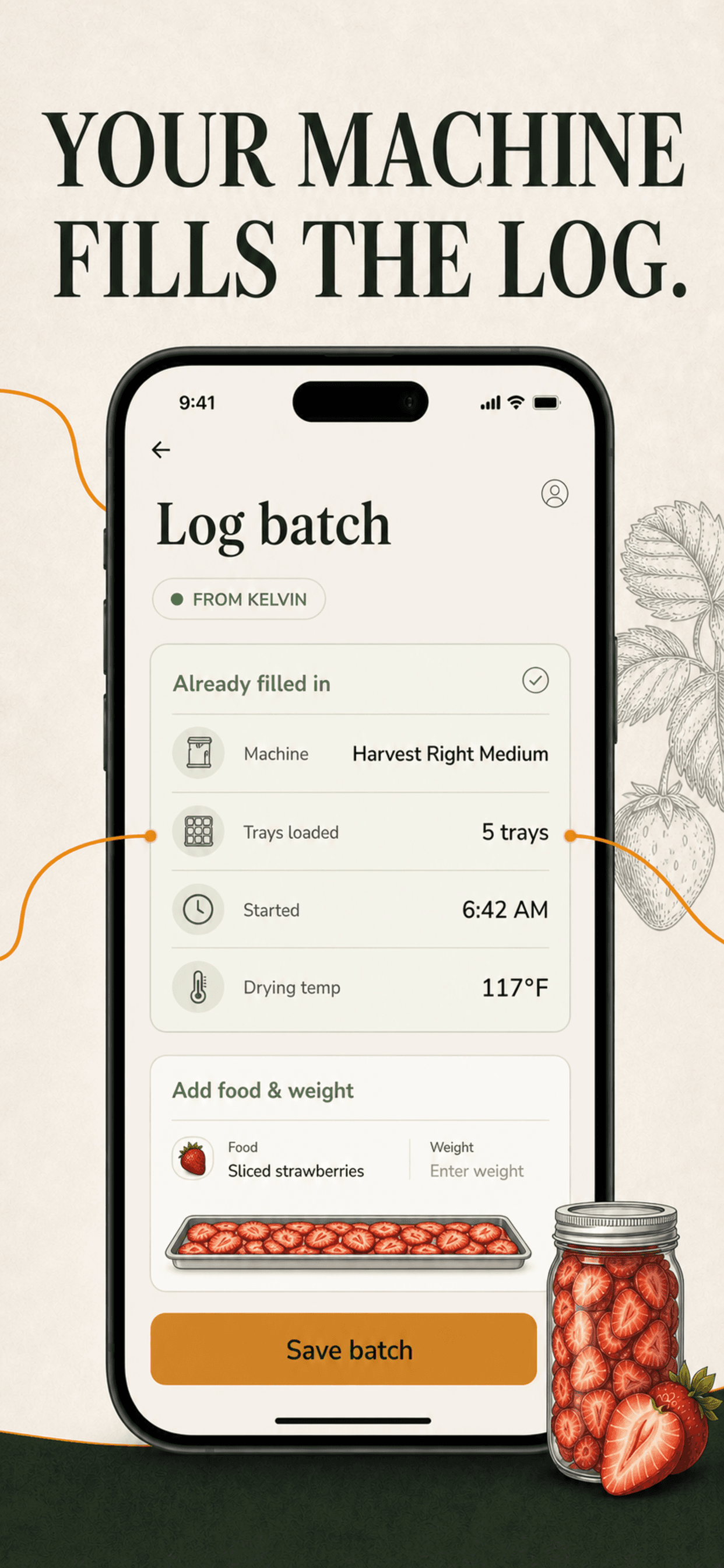
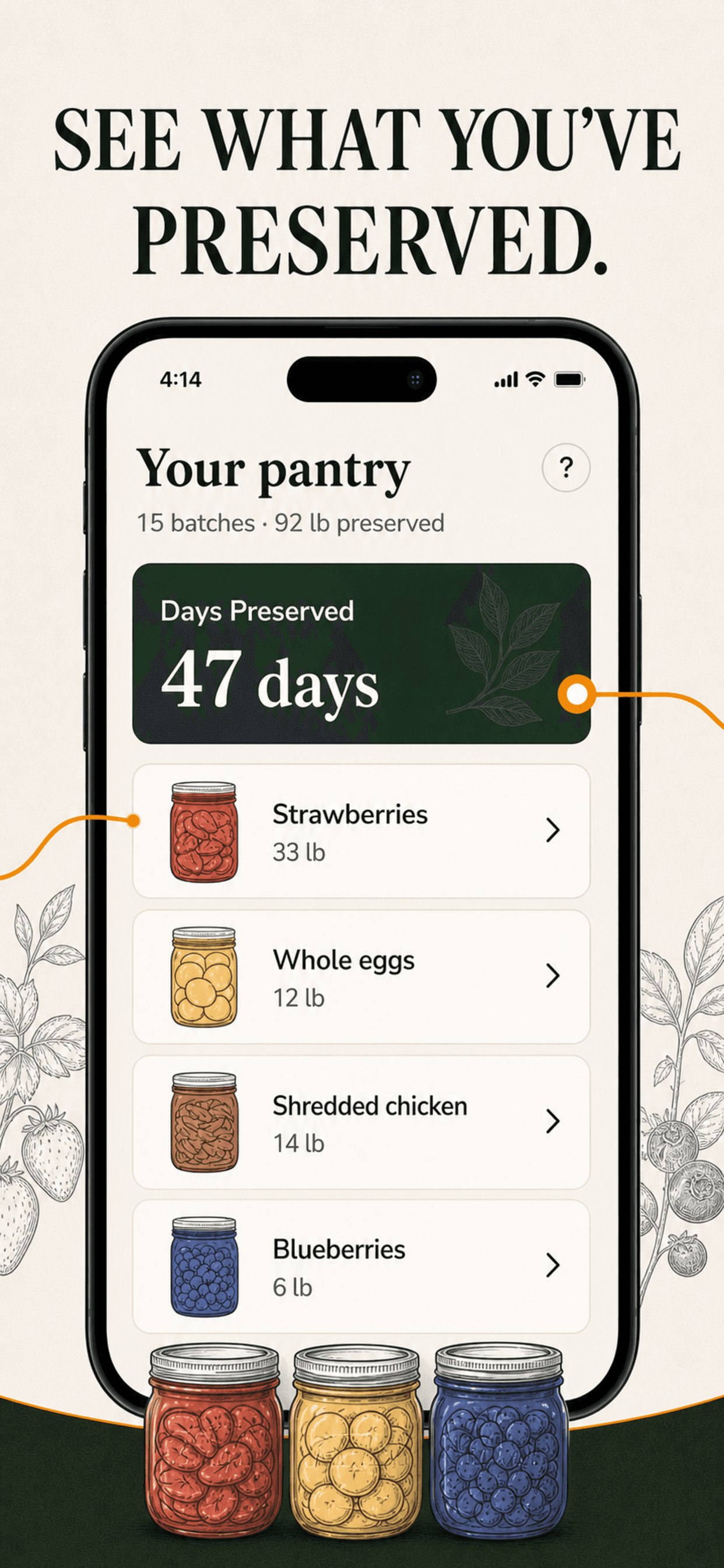
Founder & CEO of Freeze Dry Buddy

Freeze drying made foolproof, from a homesteader who's done it 1,000 times.

Top Food App1.4M+ followers
Read the case study

Creator app strategy

Curious what your app could be?

Enter your handle and BUILT BY FOUNDRY will research your audience and present custom app concepts. Free.

A Declined Card Gets 60 Days on Apple and 14 on Substack: How 5 Platforms Handle Failed Payments