
What Is Revenue Share? Creator App Deals Explained

What Is Revenue Share? Creator App Deals Explained

Foundry
March 19, 2026
Key Takeaways:
  • Revenue share means your development partner builds your app for free and takes a percentage of the money it makes
  • Typical creator app revenue splits range from 10% to 50%, depending on who does what
  • Revenue share aligns incentives — your partner only wins when you win
  • It eliminates the $50K-$250K upfront cost that stops most creators from building software
  • Not all revenue share deals are equal — the details of what's included matter more than the split
Revenue share is a business model where your development partner takes a percentage of your app's revenue instead of charging you upfront. You pay nothing to build. They earn nothing until your app makes money. If it makes $0, they make $0. If it makes $100K, they get their cut. The risk shifts from you to them. This is how Software People Love works. We build, launch, and run apps for creators at $0 upfront, taking a revenue share on what the app earns. We've done this because we believe the upfront cost model is broken for creators. The math is simple. A traditional app development agency charges $50,000 to $250,000 before you've made a single dollar. That's money most creators don't have — and even if they do, it's a terrible bet. You're paying for code, not for results. Revenue share flips this. Your partner gets paid from the money the app generates, not from your savings account. This means:
  • $0 risk to start. You don't need funding, investors, or a second mortgage.
  • Aligned incentives. Your partner makes more money when your app makes more money. They're motivated to build something that actually works.
  • Ongoing commitment. Unlike a fixed-price contract where the agency disappears after delivery, a revenue share partner stays involved because their income depends on the app's long-term success.
If you're weighing the real numbers behind building an app, this honest cost breakdown lays out every model side by side. Creators have four main options when building an app. Here's how they stack up:
ModelUpfront CostOngoing CostWho Bears RiskPartner Incentive
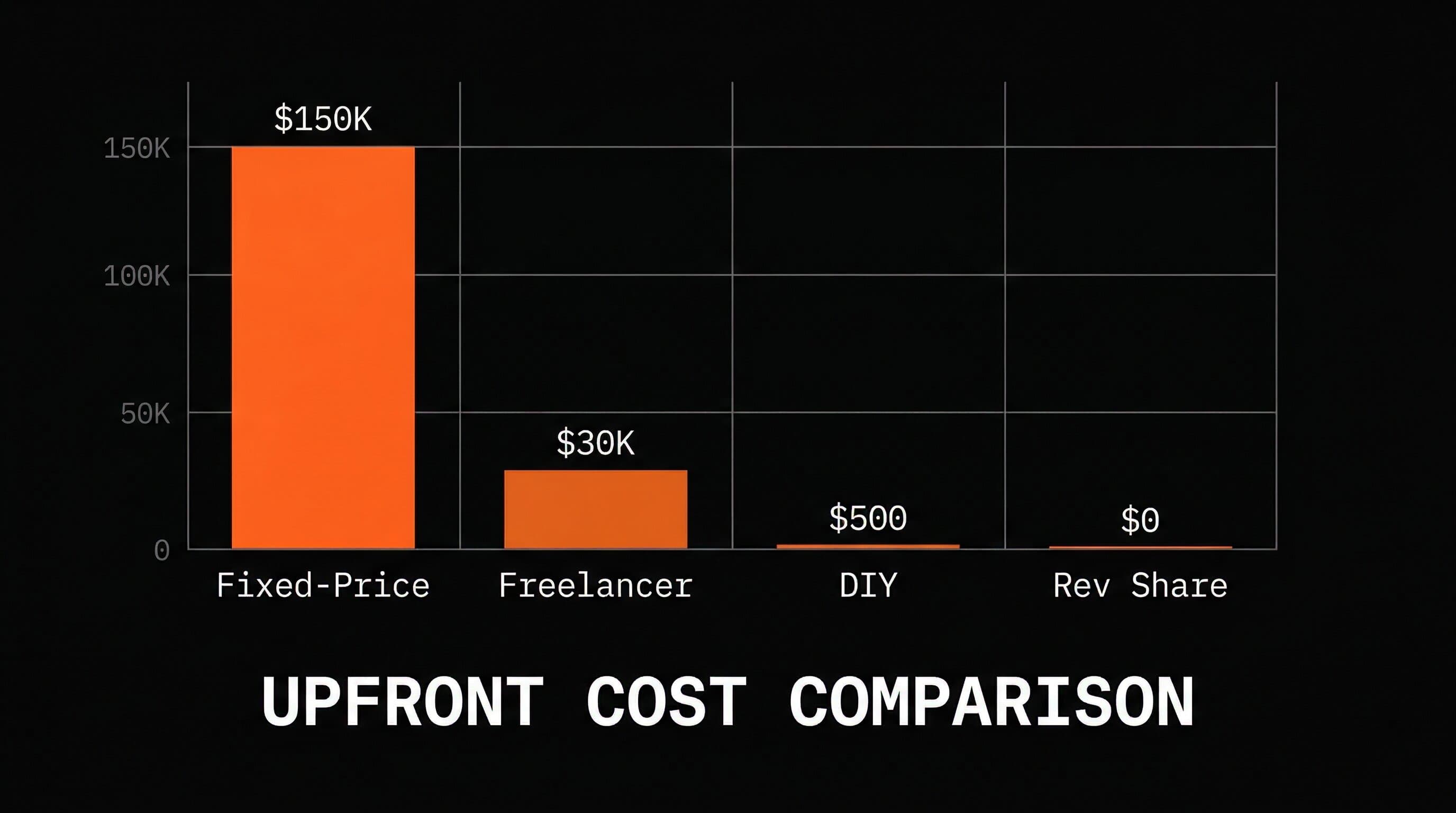
Fixed-price agency$50K-$250K$0 (you maintain)YouShip and move on
Hourly freelancer$5K-$50K+Hourly billingYouBill more hours
Vibe coding (DIY)$0-$500Your timeYouNone (it's a tool)
Revenue share$0% of revenueSharedGrow your revenue
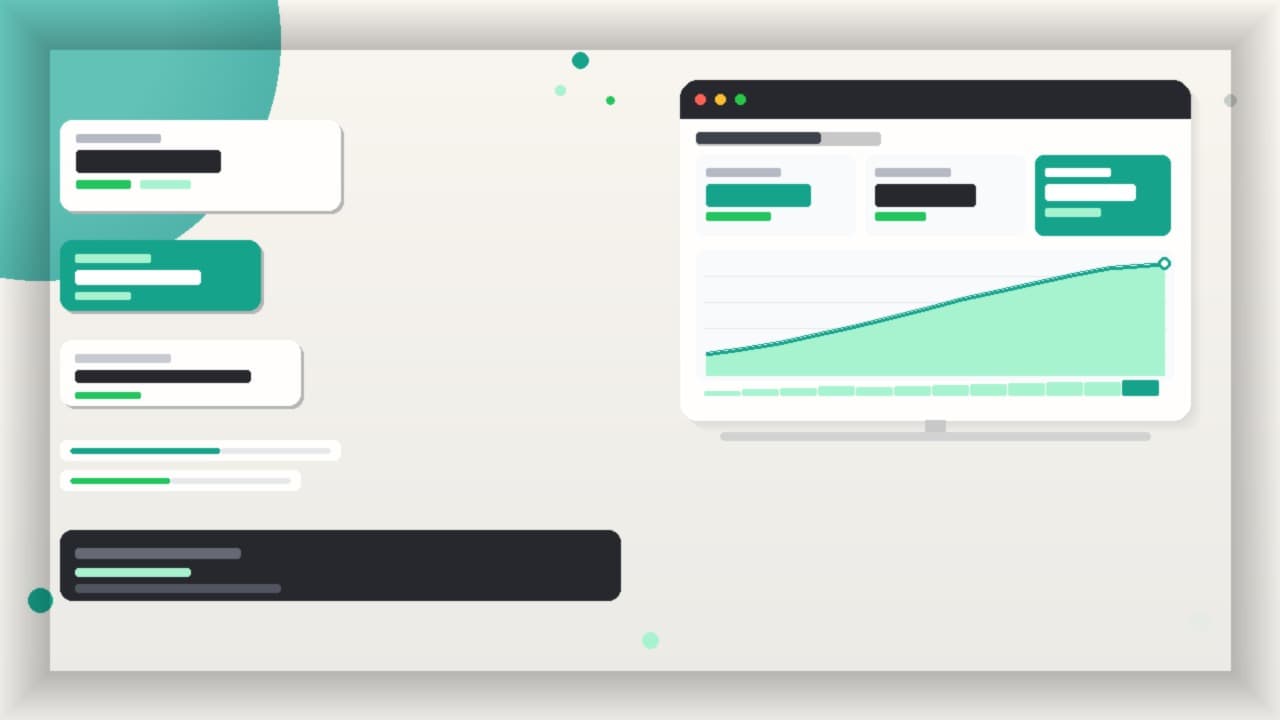
Upfront cost comparison across app development models — fixed-price agencies cost $150K, freelancers $30K, DIY tools $500, and revenue share $0
The revenue share model is the only one where your partner's financial outcome is tied to yours. Every other model pays the builder regardless of whether your app succeeds. This is the question every creator asks first. The answer depends on what's included. A 20% revenue share where your partner handles everything — design, development, App Store submission, hosting, updates, customer support, analytics, and optimization — is a different deal than a 10% share where they hand you the code and wave goodbye. What to look for in the fine print:
  • What's included beyond the build? Ongoing maintenance, updates, and bug fixes matter more than the initial launch. Apps that don't get updated die.
  • Who handles App Store and payments? Apple takes 30% (15% for small businesses). Google takes the same. Your revenue share should be calculated on what you actually receive, not the gross number.
  • Is there a minimum or cap? Some deals include minimum monthly payments or cap the partner's take after hitting certain revenue thresholds.
  • Who owns the IP? You should own your app and your brand. Period. If the revenue share deal doesn't give you ownership, walk away.
The MRR explainer breaks down how subscription revenue actually flows for creators — worth reading before you negotiate any deal. "Revenue share means I'll make less money." Wrong. You make less per dollar earned, but you earn those dollars with zero upfront investment. A creator keeping 80% of $20K MRR ($16K/month) is in a stronger position than a creator who paid $150K upfront and keeps 100% of $20K MRR but won't break even for 7+ months. "Any developer will work for revenue share." Most won't. Revenue share means the developer takes on significant risk — they invest months of work with no guaranteed return. Only partners who genuinely believe in your product and audience will agree to this model. That's actually a feature, not a bug. If someone won't bet on your idea, maybe it needs more validation first. "Revenue share deals are all the same." They're not. A rev-share deal with a solo freelancer who builds your app and disappears is fundamentally different from a partner who builds, launches, markets, maintains, and optimizes your app indefinitely. Compare what you're getting, not just the percentage. It depends on where you are. If you have $200K sitting around and absolute confidence your app will succeed — pay upfront and keep 100% of revenue. You'll come out ahead financially if the app hits. But most creators aren't in that position. Most creators have an audience, an idea, and zero interest in gambling six figures on something they can't evaluate until it's built. For them, revenue share removes the barrier entirely. The real comparison isn't "20% less revenue forever." It's "would this app exist at all without revenue share?" For most creators, the answer is no. And an app that exists and earns $15K/month at 80% ($12K) beats an app that never gets built at 100%. This is the same math behind the brand deal vs. MRR calculation. The question isn't "which pays more per unit?" — it's "which model actually builds something?" Honesty matters here. Revenue share isn't right for everyone:
  • If you just need a simple landing page or Shopify store, pay a freelancer. Revenue share is for real software products with ongoing subscription revenue.
  • If your audience is under 10K followers, you might not have enough distribution to generate meaningful app revenue yet. Build the audience first.
  • If you don't have a clear product idea, revenue share partners need conviction in the product. "I want an app but don't know what it does" isn't a pitch — it's a brainstorm. That's fine, but do the brainstorming before seeking a partner.
Revenue share works best when a creator has a real audience, a validated idea, and needs a technical partner to turn it into a product. If that's you, the model is built for you. If you're exploring whether you're ready, these 9 signs can help you figure it out. Splits typically range from 10% to 50%, depending on what's included. A full-service partner handling design, development, launch, maintenance, and growth will take a larger share than someone who just writes code. Focus on what you're getting, not just the number. You should. Any reputable revenue share partner will give you full IP ownership from day one. If a deal doesn't include ownership, that's a red flag. You're building your business — you need to own it. With a true revenue share model, you owe nothing. Your partner absorbs the loss. This is why revenue share partners are selective — they need to believe your app will succeed because their income depends on it. Revenue share takes a percentage of revenue (money the app earns). Equity takes a percentage of ownership (the company itself). Revenue share doesn't dilute your ownership or require you to set up a complex corporate structure. You own everything. Your partner just gets a cut of the earnings. Many agreements include buyout provisions. Once your app reaches a certain revenue threshold, you can negotiate to buy out the partner's share and keep 100% going forward. This should be discussed before signing anything.
Your audience is a business. Revenue share lets you build it without betting the house. Software People Love builds, launches, and runs creator apps. $0 upfront. Three weeks to the App Store. We handle everything — you own everything.
Let's Build →

Get Creator Revenue Insights

How creators are turning audiences into subscription businesses

You might also enjoy...