
Turning Knowledge into Products

What Is CAC Payback? The 12-Month Rule for Creators

August 10, 2026
Share
What Is CAC Payback? The 12-Month Rule for Creators

Get Creator Revenue Insights

How creators are turning audiences into subscription businesses
Share
CAC payback period is the number of months of subscriber revenue it takes to earn back what you spent acquiring that subscriber. It is the metric that decides how fast you can reinvest, and most creator apps get it wrong by forgetting Apple takes its share first. Key Takeaways:
  • CAC Payback = CAC / Net Revenue Per Subscriber Per Month
  • Apple pays out 70% of the subscription price during a subscriber's first year and 85% after a year of paid service (Apple Developer), so payback runs on net revenue, never on sticker price
  • A $12.99/month app netting $9.09 after Apple's 30% clears a $45 CAC on the fifth payment
  • Median month-12 retention for monthly plans is 17.0%, versus 44.1% for annual plans (RevenueCat, State of Subscription Apps 2025), which is why a payback period past month 12 is a bet on subscribers who are statistically already gone
  • An annual plan collects the whole year up front, so it pays back a typical creator CAC on the first payment
CAC payback period is how long a paying subscriber takes to return the money you spent to acquire them. Spend $45 to win a subscriber who nets you $9 a month, and you are underwater until the fifth payment. Everything after that is margin.
CAC Payback Period = CAC / Net Revenue Per Subscriber Per Month
Three numbers feed it: what you spend per acquired subscriber, what you keep per payment after the App Store's commission, and how long that subscriber actually stays. The first two are arithmetic. The third is the one that kills apps. CAC payback is the timing version of a ratio you already know. LTV to CAC tells you whether a subscriber is worth acquiring at all. Payback tells you when you get the cash back so you can spend it again. A 4:1 LTV to CAC ratio with a 20-month payback still starves you, because the money is locked in subscribers instead of buying the next ones. Start with net revenue, not price. Apple's published terms: you receive 70% of the subscription price at each billing cycle during a subscriber's first year of service, and 85% after that subscriber accumulates a year of paid service. Developers in the App Store Small Business Program, which covers anyone whose proceeds were up to $1 million in the prior calendar year, receive 85% from the start. Worked example. A fitness creator prices their app at $12.99/month, sits outside the Small Business Program, and spends $4,500 on Reels production and Apple Search Ads to win 100 paying subscribers. CAC is $45.
  • Net per payment: $12.99 minus Apple's 30% equals $9.09
  • Payments to clear $45: 4.95, so payback lands on the fifth payment
  • Month 5 onward: $9.09 a month of margin per surviving subscriber
Now run the same $45 CAC against four sets of terms.
Plan and termsPrice per paymentNet after Apple's cutPayments to clear a $45 CAC
Monthly, 30% commission$12.99$9.095
Monthly, 15% Small Business Program$12.99$11.045
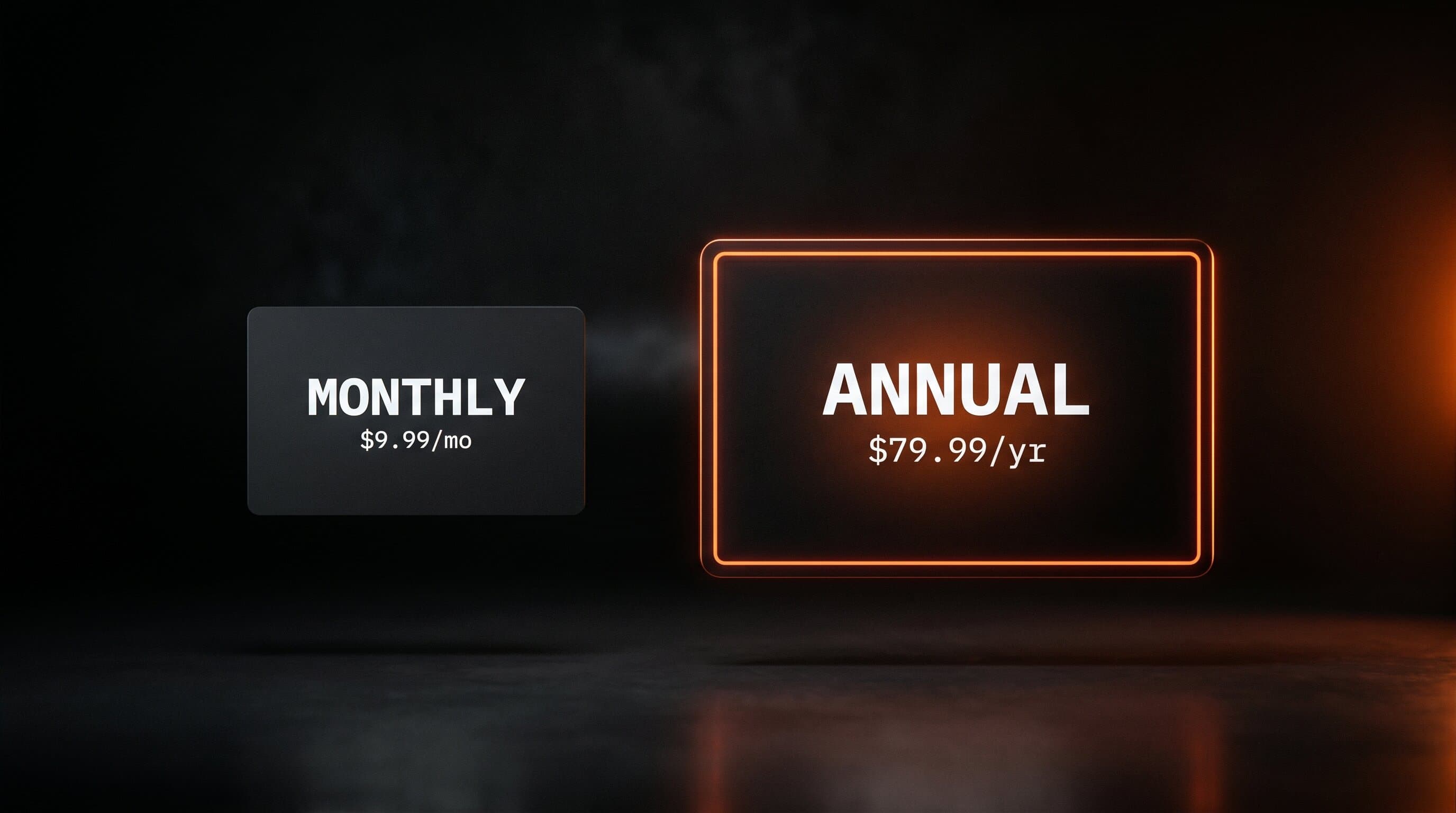
Annual, 30% commission$79.99$55.991
Annual, 15% Small Business Program$79.99$67.991
Two things fall out of that table. The commission tier barely moves the payback month on a monthly plan, because you still need five whole payments either way; it moves your margin after payback. Billing period moves everything, because an annual plan collects twelve months of revenue in one transaction. One detail most spreadsheets miss: Apple excludes free trials and renewal extensions from days of paid service. A seven-day trial pushes both your payback date and your step up to 85% out by a week per subscriber. The rule is that a consumer subscription app should recover CAC inside 12 months of subscriber revenue, because most subscribers do not last longer than that. RevenueCat's State of Subscription Apps 2025 puts median month-12 retention at 17.0% for monthly plans, 44.1% for annual plans, and 3.4% for weekly plans, all down year over year. Read that against a payback calculation. A 14-month payback on a monthly plan means you designed your unit economics around the 17% of subscribers who are still there in month 12, and you are counting on two more months from them. Five out of six subscribers churn before they ever repay the money you spent to get them.
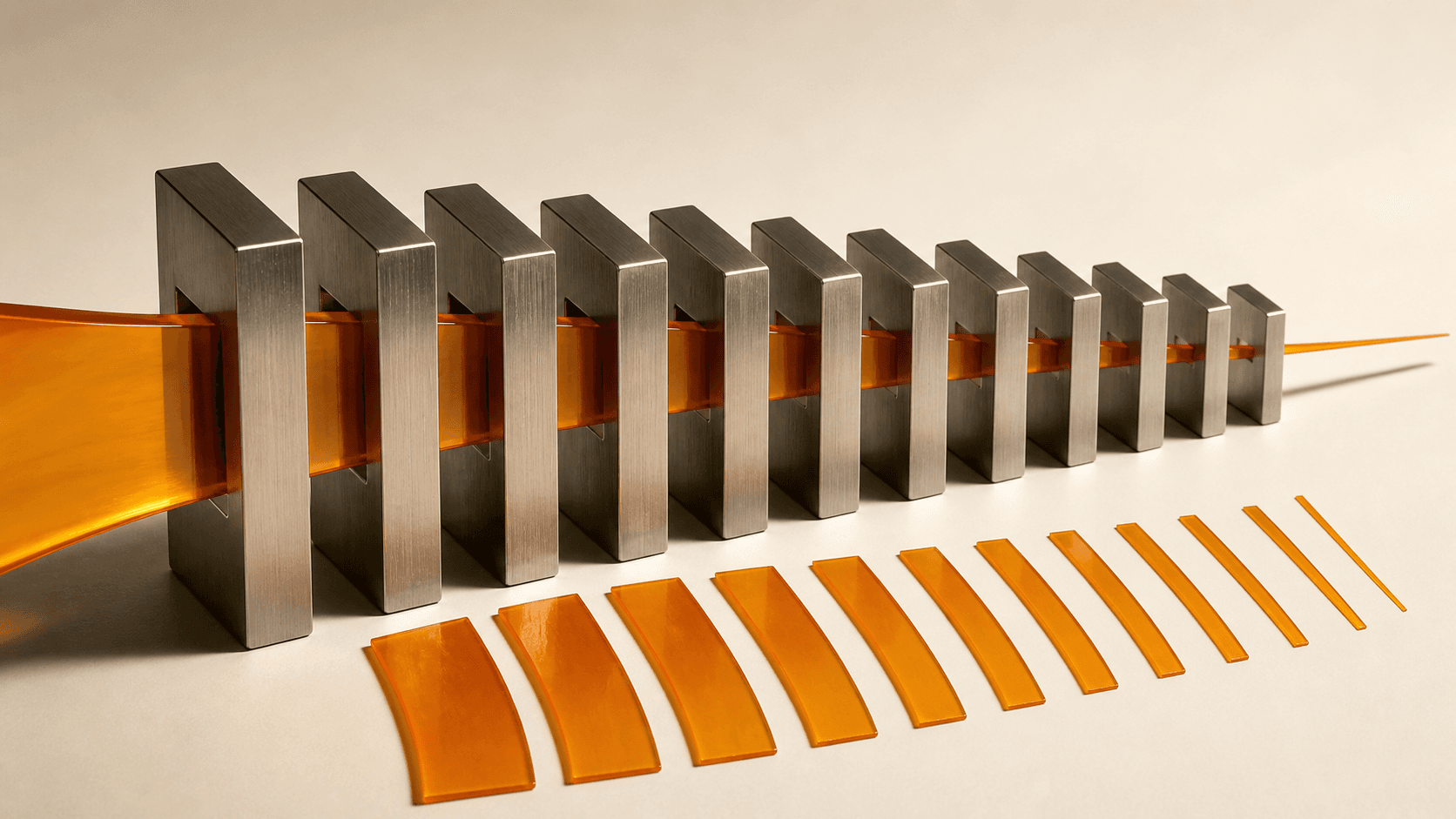
An orange retention ribbon narrowing as it passes through twelve physical steel gates
This is why payback and churn are the same conversation. Every month you add to the payback period, you hand a larger share of your subscribers a chance to leave before they break even. Cutting CAC shortens the window. Cutting churn widens the runway. Doing one without the other leaves the math exactly where it was.
Live every Thursday

Watch us tear down a creator business, live

Every Thursday at 11 AM PT we take a real creator business and show the app hiding inside it: the wedge, the paid loop, the pricing, and what would sink it. Free, and the replay goes to everyone who registers.

Save your seat → (opens in a new tab)
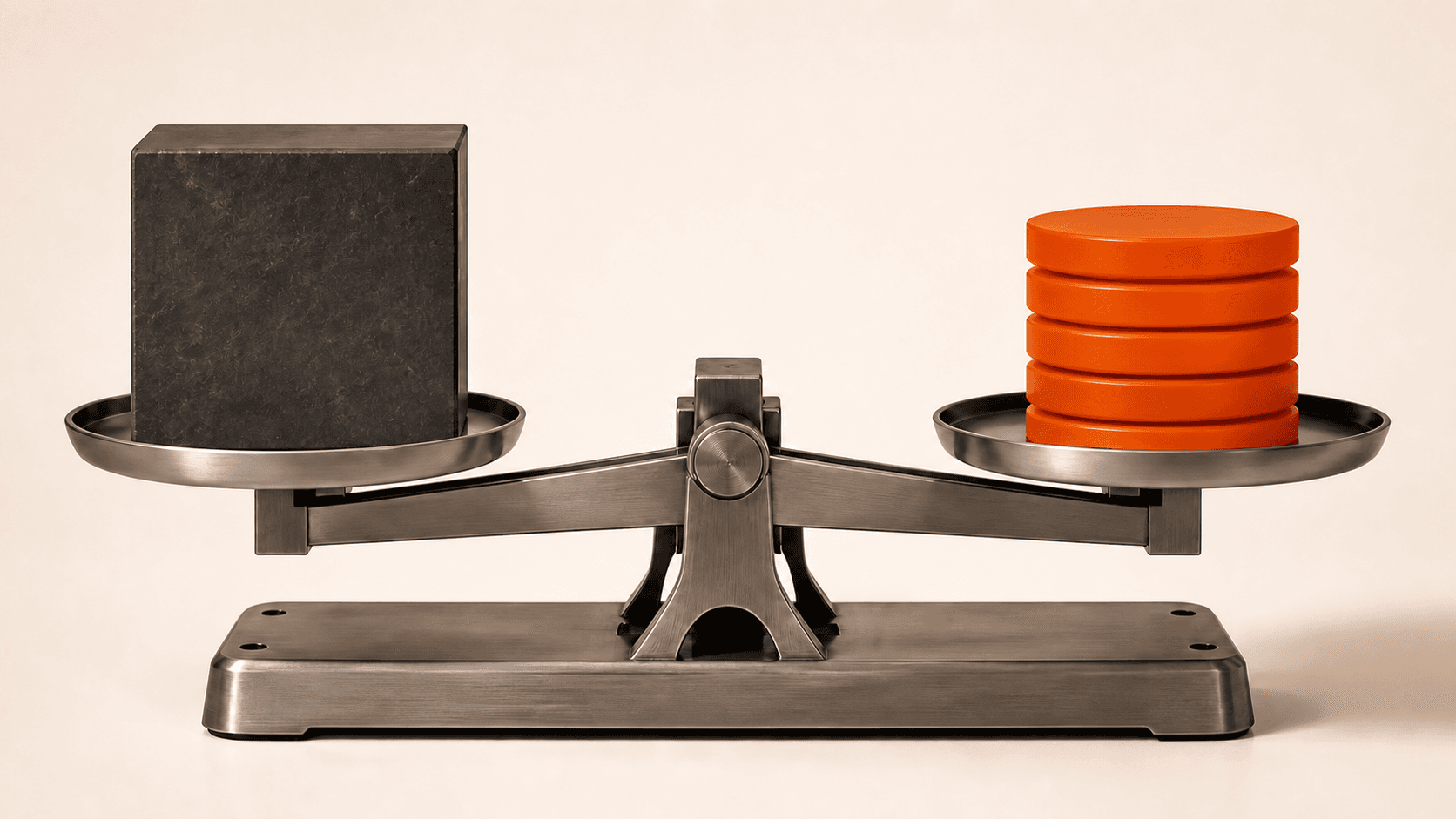
An annual plan is the fastest structural fix for a payback problem. At $79.99 a year with 30% commission, you bank $55.99 the moment the subscriber converts. A $45 CAC is repaid before the first push notification goes out, and the remaining $10.99 funds the next acquisition.
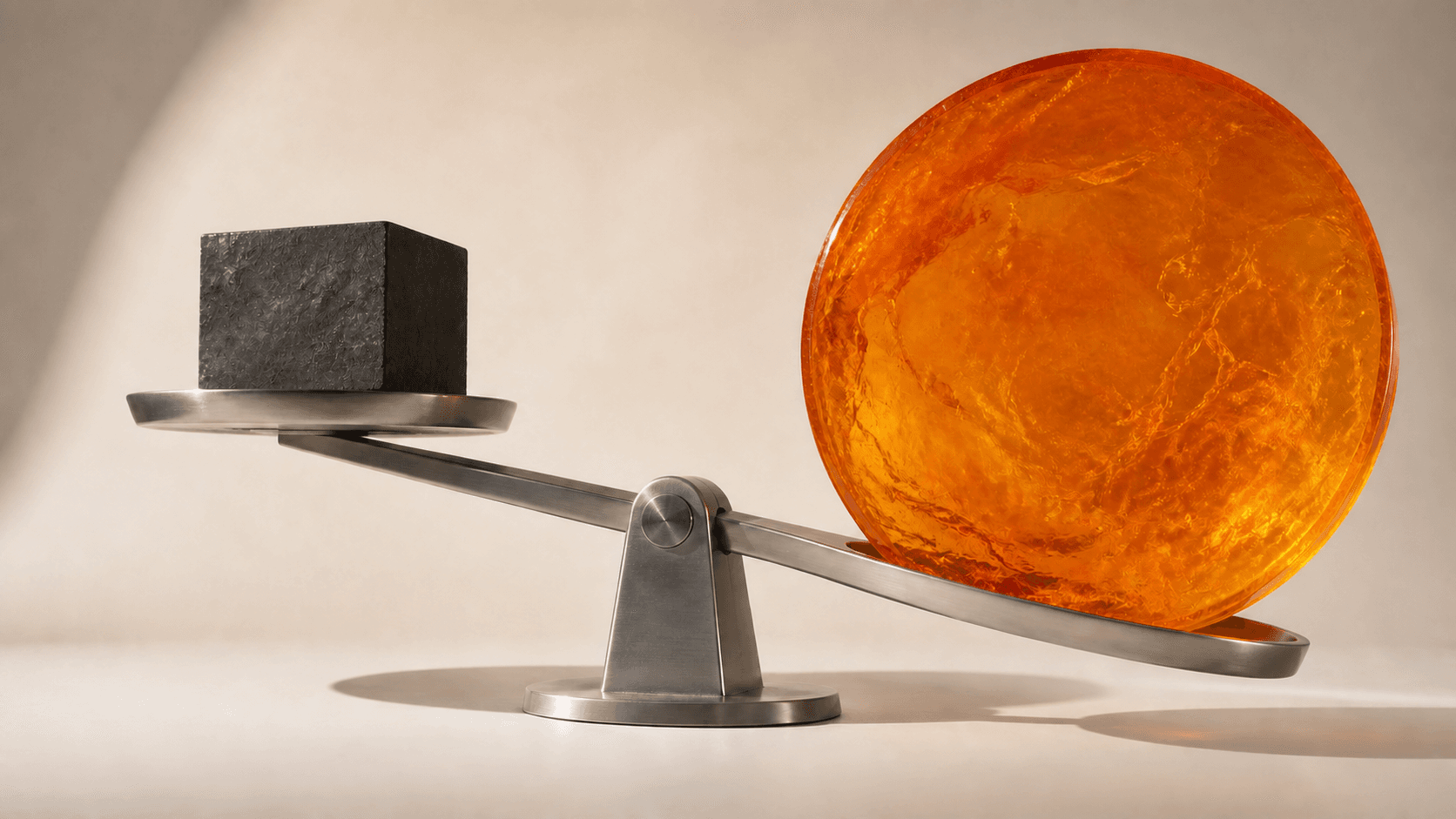
One oversized orange annual payment outweighing the acquisition cost on a physical balance
That is the structural reason annual and monthly pricing produce different businesses rather than different revenue lines. Annual buys you the cash to reinvest and twelve months of revenue you already hold, whatever the subscriber decides in month three. RevenueCat's 2025 data shows annual plans already carrying 67% of revenue in Health and Fitness, which is the category most creator apps compete in. The catch is honest: annual asks for more trust up front, and trust is exactly what a creator brings that a nameless app does not. Here is where creator apps break the model that venture-funded consumer apps have to live inside. A cold app pays $30 to $80 for a subscriber and then spends five months earning it back. A creator with 50K engaged followers and an email list pays for that subscriber in a Story slot they were going to post anyway. Call it $2 of allocated effort per subscriber. At $9.09 net per monthly payment, payback arrives on the first payment, every time, with no exceptions and no ad account. The whole subscriber lifetime after that is margin, and the compounding starts on day one instead of month five. That is the number to sit with. A software company would restructure its entire growth org to get a one-payment payback. You have it by default, and you are currently spending it on brand deals that pay once. Run your own version of the table above with your real price and your real audience size, then compare the answer to what your last sponsorship paid. The benchmarks in our creator app benchmarks breakdown give you the rest of the targets to check it against. Under 12 months of subscriber revenue for a consumer subscription app, and under 6 months if you want to reinvest aggressively. Annual plans commonly pay back on the first payment because the full year is collected up front. Anything beyond 12 months relies on subscribers who statistically will have churned. Net revenue, after the app store commission and after taxes. Apple pays out 70% of the subscription price in a subscriber's first year and 85% after a year of paid service, so a $12.99 plan contributes $9.09 toward payback in year one, not $12.99. LTV to CAC measures whether a subscriber is profitable over their whole lifetime. CAC payback measures when the cash comes back. An app can have a healthy 4:1 lifetime ratio and still run out of money, because a long payback period leaves the cash trapped in future months instead of funding the next subscriber. Effectively yes. When subscribers come from an audience the creator already owns, allocated acquisition cost per subscriber falls to a few dollars, and the first payment clears it. That is the unit economics advantage no amount of ad budget buys.
Every month of payback is a month someone else's platform holds your money. Built by Foundry builds subscription apps for creators, then runs and optimizes them. $0 upfront, revenue share, three weeks to the App Store.
See What We’d Build You →

Creator app strategy

Curious what your app could be?

Enter your handle and Built by Foundry will research your audience and present custom app concepts. Free.

What Is CAC Payback? The 12-Month Rule for Creators