
Turning Knowledge into Products

Creator App Benchmarks: The Numbers to Hit in 2026

Foundry
June 14, 2026
Share
Creator App Benchmarks: The Numbers to Hit in 2026

Get Creator Revenue Insights

How creators are turning audiences into subscription businesses
Share
Most creators launch an app with no idea what "good" looks like. They watch the download counter, panic when the conversion rate sits at 4%, and never find out that 4% is normal for a cold install. Creator app benchmarks fix that. They tell you the trial-to-paid rate to expect, the price to charge, the retention curve to plan for, and the subscriber count it takes to hit real money. Here are the numbers, pulled from the two biggest public datasets in mobile subscriptions, and how a creator with an audience should read them. Key Takeaways:
  • The global median trial-to-paid conversion rate is about 25.6%, and Health & Fitness leads every category at roughly 35% (Adapty, 2026).
  • Median subscription prices land near $7.48/week, $12.99/month, and $38.42/year, while the median consumer subscription app charges $29.99 (RevenueCat, 2025).
  • Cheap annual plans retain up to 36% of subscribers after a year. High-priced monthly plans keep just 6.7% (RevenueCat, 2025).
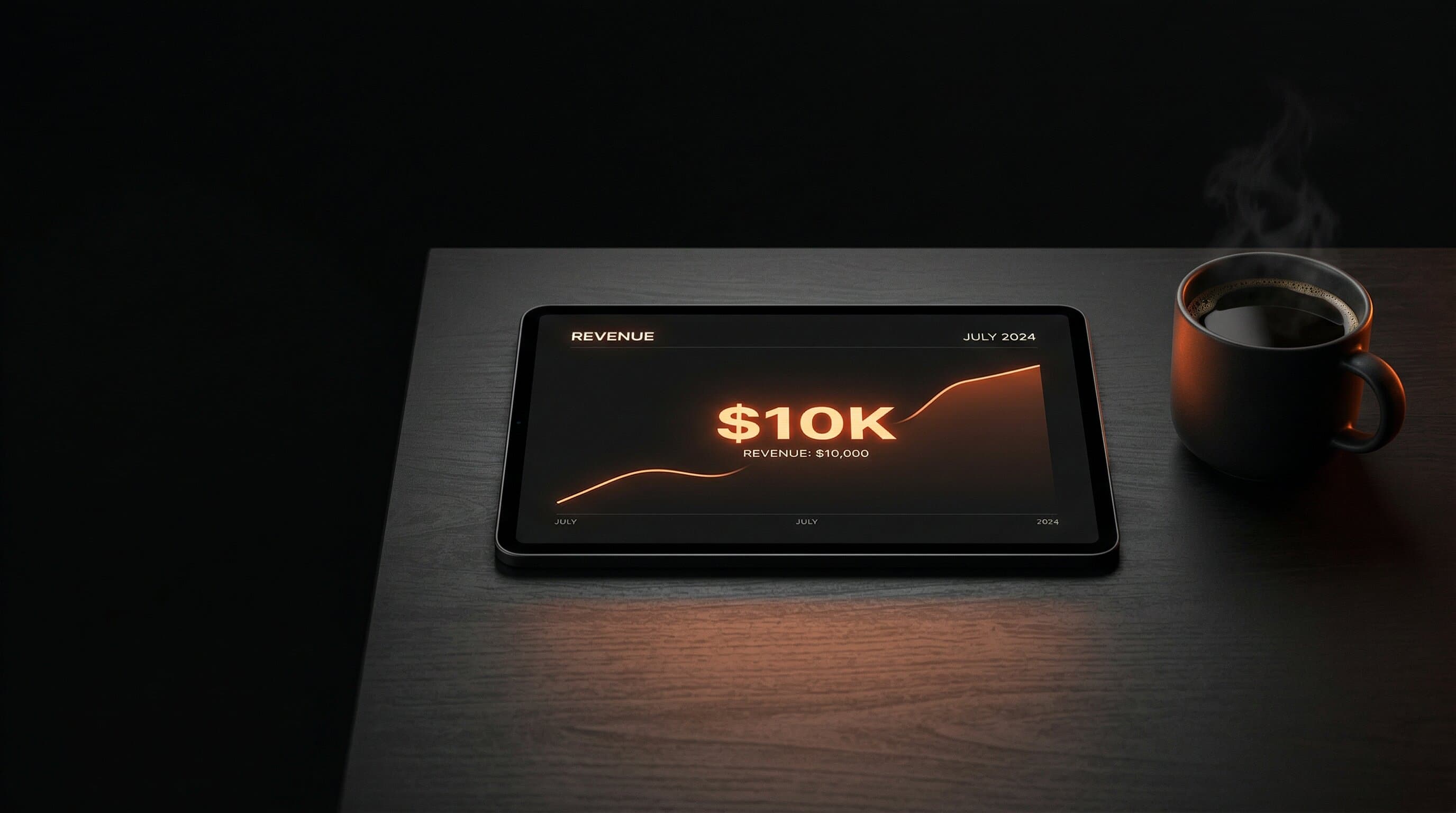
  • It takes roughly 500 paying subscribers at $20/month to clear $10K MRR, and a creator audience makes those 500 far cheaper to reach than a cold ad funnel.

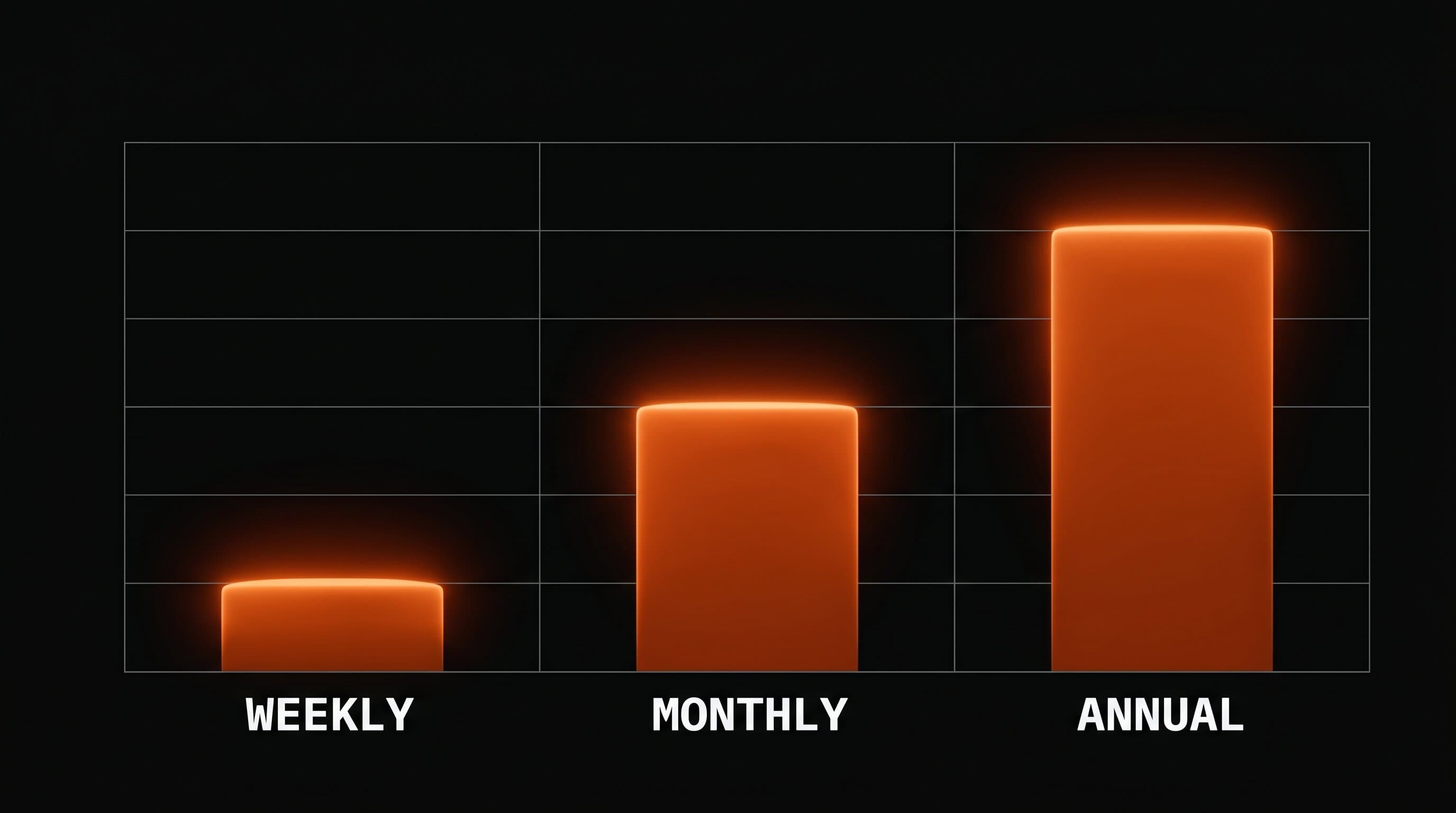
Creator app benchmarks are the standard performance numbers a subscription app should hit, measured across conversion, pricing, retention, and revenue per user. They come from aggregated data across tens of thousands of live apps, so you can compare your app to the field instead of guessing whether your numbers are good or broken. The two datasets worth knowing: RevenueCat's State of Subscription Apps analyzed 75,000 apps and more than $10B in tracked revenue, and Adapty's State of In-App Subscriptions reports conversion and pricing benchmarks across categories. Neither is creator-specific, but the categories creators dominate, health, fitness, education, and lifestyle, are the strongest performers in both. A benchmark is a starting line, not a ceiling. The point is to know where the field sits so you can tell the difference between a real problem and a normal one. The global median trial-to-paid conversion rate is about 25.6%, meaning roughly one in four people who start a free trial become paying subscribers (Adapty, 2026). Category matters a lot. Health & Fitness leads at around 35%, while entertainment trails near 19%. The bigger lever is how you gate the app. RevenueCat's 2026 data shows hard paywalls convert about 5x better than freemium: a 10.7% median day-35 trial-to-paid for hard paywalls versus 2.1% for freemium. If you let people wander the app for free forever, most never pay. Trial length matters too. Long trials of 17 to 32 days convert to paid at roughly 42.5%, far above the 25.5% of trials shorter than four days. The instinct to use a tight three-day trial usually costs you money. For a deeper teardown of the funnel itself, our trial-to-paid conversion guide for creator apps walks through each drop-off point and how to fix it. The median subscription app charges about $7.48 per week, $12.99 per month, or $38.42 per year, but the median consumer subscription app sits higher at $29.99, with top-quartile apps charging close to 3x that (RevenueCat, 2025). Pricing depends on category and how committed your buyers are, not on what feels comfortable to you. A few patterns hold across the data:
  • Annual plans win on retention. Health & fitness apps sell roughly 68% of their volume as annual plans, and annual buyers stick around far longer.
  • Weekly plans convert better up front but churn fast. They are a tool for impulse categories, not for building a stable base.
  • Higher prices filter for intent. High-priced apps see a download-to-trial rate near 9.8%, more than double the 4.3% of low-priced apps, because the people who start a trial actually mean it.
You can see this play out in the real world. Joe Wicks' Body Coach app charges roughly $14.99 to $19.99 a month or about $120 a year, anchors on the annual plan, and built a business worth over £24 million on top of a free YouTube audience. The free content is the funnel. The paid app is the margin.
Dark editorial chart visualizing creator app subscription pricing tiers with a warm orange accent
Retention is where most apps quietly bleed out, and the benchmarks are blunt about it. RevenueCat found cheap annual plans retain up to 36% of subscribers after a full year, while high-priced monthly plans retain just 6.7%. The plan you sell shapes your retention before a single user opens the app. Churn clusters early. About 55% of three-day trial cancellations happen on day zero, and 84% happen within the first day. For annual subscriptions, 35% of all cancellations hit in the first month. The first session and the first 30 days decide your year. Billing failures are a hidden tax. RevenueCat attributes 31% of Google Play cancellations and 14% of App Store cancellations to failed payments, not unhappy users. That is recoverable revenue most creators never even see leaving. Here is how the core benchmarks stack up so you can grade your own app at a glance.
MetricMedian BenchmarkStrong (Top Quartile)
Trial-to-paid conversion25.6%35%+
Monthly price$12.99$29.99+
Annual price$38.42$100+
1-year retention (annual)up to 36%36%+
Day-60 revenue per install$3.09$3.00+
If you want to attack the retention line specifically, our breakdown of 7 retention tactics that beat creator app churn covers the first-session and dunning fixes that move these numbers most. You need roughly 500 paying subscribers at $20 per month to clear $10,000 in monthly recurring revenue. That is the whole math, and it reframes the goal. You are not trying to go viral. You are trying to convert 500 committed people. Run it at a few price points:
  • At $9.99/month, about 1,000 subscribers gets you to $10K MRR.
  • At $19.99/month, about 500 subscribers gets you there.
  • At $49.99/month for a premium coaching app, about 200 subscribers does it.
For a creator with 50,000 engaged followers, converting 1% to a $20 app is 500 subscribers and $10K a month. We break the full calculation down in how 500 app subscribers make $10K a month. The number is small on purpose. The reason most creators never hit it is that they never build the product, not that the audience is too small.
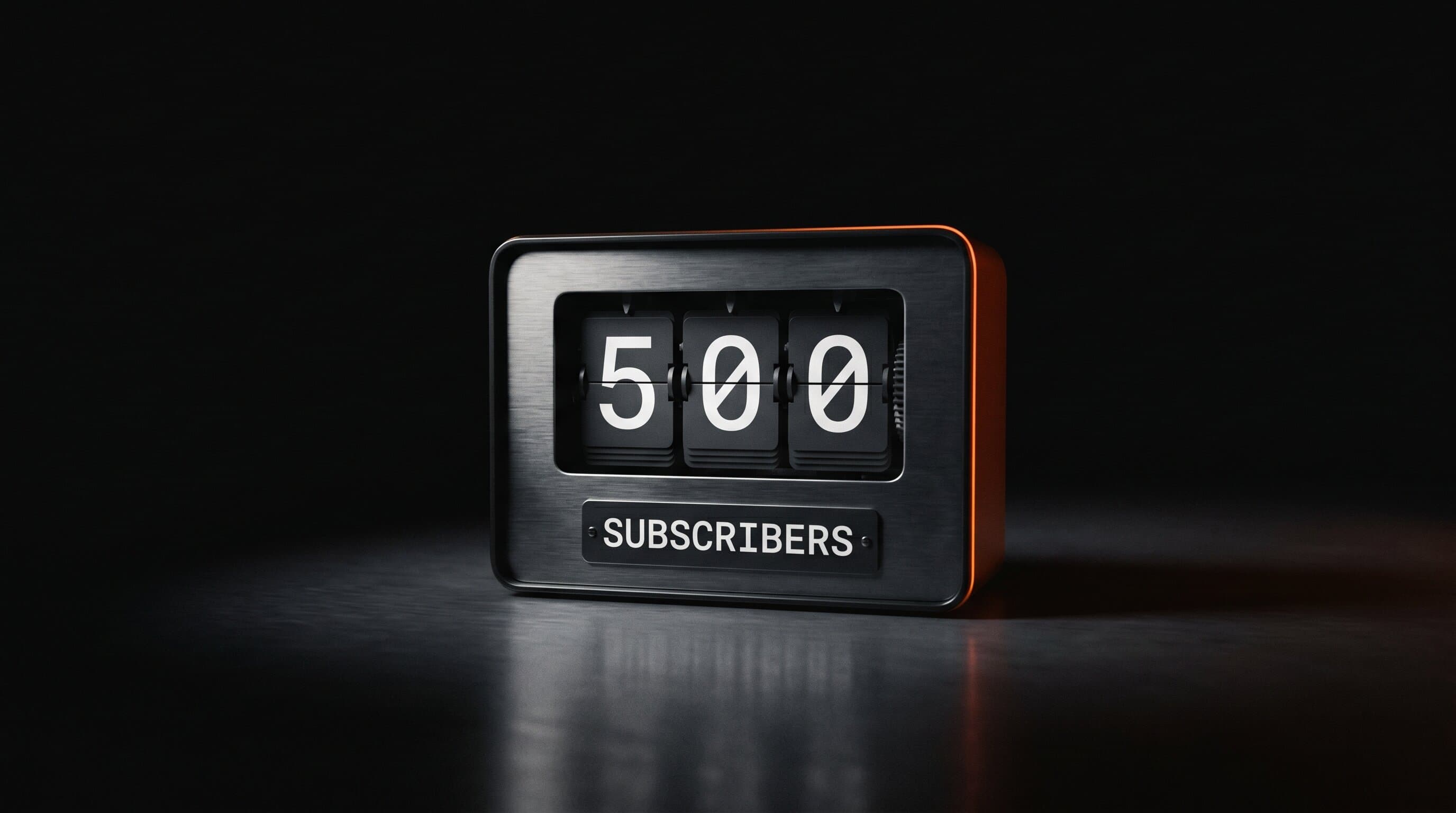
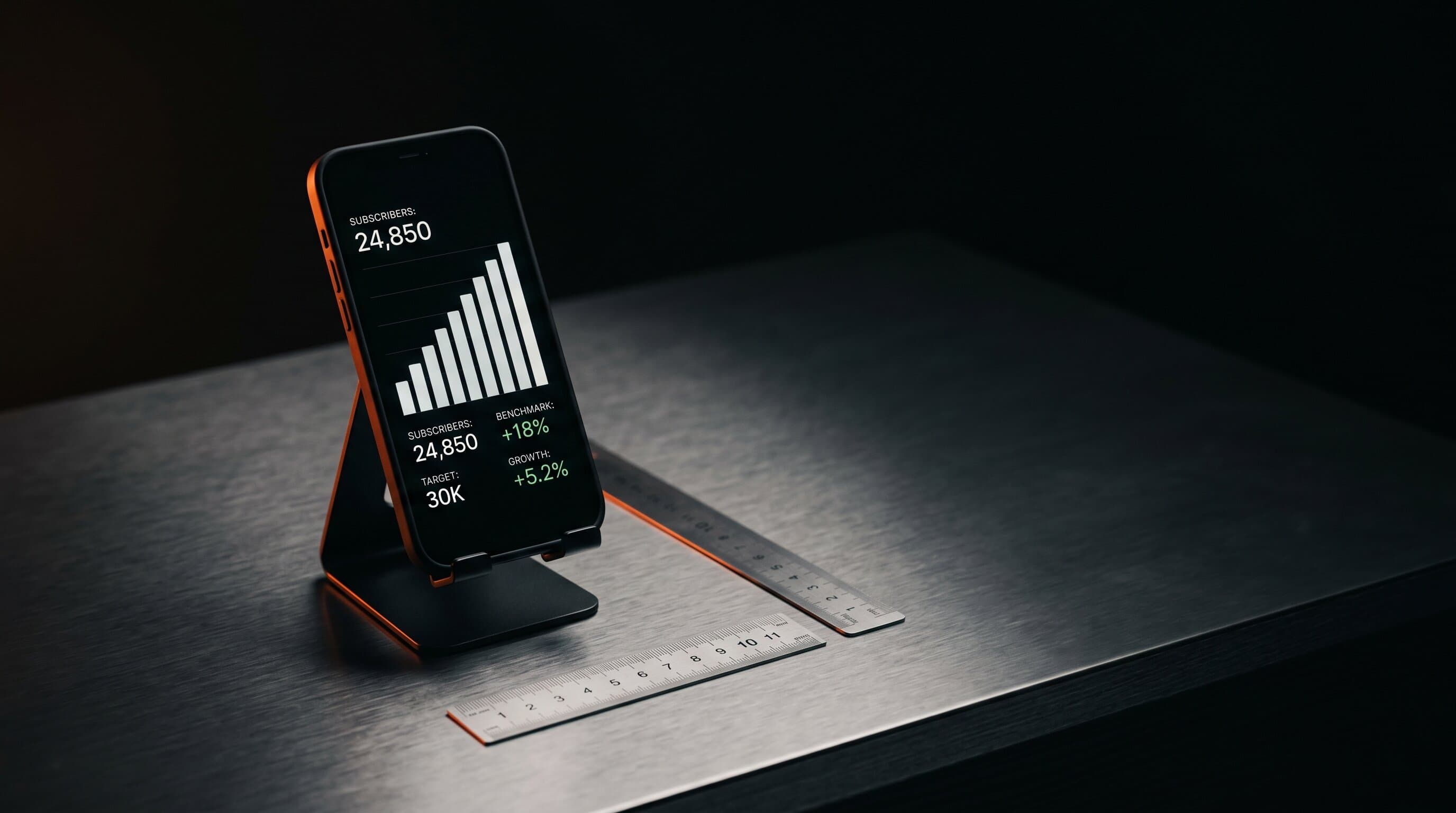
Conceptual dark image of a subscriber counter ticking toward a revenue milestone with warm orange glow
These numbers were measured mostly on apps that buy their users with paid ads. That is the part that should change how you read them. A typical app pays to acquire a stranger, prays they start a trial at 4 to 10%, and hopes one in four converts. You start with an audience that already trusts you. That trust compresses the funnel at every step. Your install-to-trial rate runs higher because people came for you, not for a keyword. Your day-zero churn runs lower because they already know what they are buying. And your customer acquisition cost is close to a free post instead of a $5 ad click. The benchmark is the floor for cold traffic. Warm traffic clears it easily. This is the structural edge we keep coming back to: an audience is the most expensive thing in the subscription business, and creators already have it. The whole creator economy is heading toward $480 billion by 2027 precisely because owned audiences convert better than bought ones. Knowing the benchmarks is step one. Hitting them is a product problem: a clean onboarding, a hard paywall placed after the first win, a trial long enough to convert, an annual plan as the default, and dunning that recovers failed payments. Miss any one and you fall below the median. That is the work most creators are not set up to do alone. You can spend a year learning App Store mechanics, paywall placement, and retention engineering, or you can partner with people who run it for you. At Built by Foundry, we build the app, launch it, and run the optimization forever, and you can read exactly how the $0-upfront, revenue-share model works. We also handle the ongoing updates and platform changes through our app care service, because hitting a benchmark once is easy and holding it for years is the actual job. The uncomfortable version: the benchmarks are public and the math is small. If you have the audience and still have no app, the only thing missing is the build. A good trial-to-paid conversion rate is around 25% globally, and Health & Fitness apps average closer to 35%. Apps using a hard paywall convert roughly 5x better than freemium apps, so gating matters more than almost any other single factor. Most successful creator apps charge $9.99 to $19.99 per month or $80 to $120 per year, and lean on the annual plan because annual subscribers retain far longer. Premium coaching apps can charge $40 or more per month when the value is high-touch. About 500 paying subscribers at $20 per month, or 1,000 at $9.99 per month. For a creator with an engaged audience, converting even 1% of followers usually clears that line. Most agencies charge $50K to $200K upfront. Built by Foundry charges $0 upfront and takes a revenue share, so we only earn when your app does. We handle design, development, App Store submission, and ongoing updates. Want an app that hits these benchmarks instead of guessing at them? We build custom subscription apps for creators. $0 upfront, three-week delivery, and we run the tech forever.
Let's Build →

Creator app strategy

Want us to review your creator business?

Apply for a Foundry Creator App Review. We'll tell you whether there is a real app opportunity hiding in your audience.

Creator App Benchmarks: The Numbers to Hit in 2026