

What Is LTV? Lifetime Value for Creator Apps

What Is LTV? Lifetime Value for Creator Apps

Foundry
April 10, 2026
Lifetime Value (LTV) is the total revenue a single subscriber generates over their entire relationship with your app. For creators building subscription businesses, LTV is the metric that separates "I have an app" from "I have a business." Key Takeaways:
  • LTV = Average Monthly Price x Average Subscriber Lifespan (in months)
  • A subscriber paying $20/month who stays 14 months has an LTV of $280
  • Health and fitness apps lead all categories with a median payer LTV of $16.44/month (RevenueCat, 2026)
  • Subscription businesses generate 70% higher customer lifetime value than transactional businesses
  • One subscriber with $280 LTV is worth more than a $250 brand deal, and the next subscriber stacks on top
LTV (Lifetime Value) is the total amount of money one customer pays you from the moment they subscribe until the moment they cancel. It's the single metric that tells you whether your business math works. If you already understand MRR (Monthly Recurring Revenue), think of LTV as MRR's older sibling. MRR tells you what's coming in this month. LTV tells you what each subscriber is actually worth to your business over time. A brand deal pays once. A subscriber pays every month until they leave. The longer they stay, the more that single person is worth. LTV captures that compounding effect in one number. The formula:
LTV = Monthly Subscription Price x Average Months Before Cancellation
Example: your app charges $20/month. Your average subscriber stays 14 months. LTV = $20 x 14 = $280 Every new subscriber who signs up is worth $280 to your business. Not today, not all at once. But the revenue is locked in the moment they subscribe, because it compounds automatically. RevenueCat's 2026 State of Subscription Apps report analyzed over 115,000 apps and $16 billion in revenue. Key finding: higher-priced apps generate nearly 7x the median LTV ($55.21) compared to low-priced apps ($8.08). Price with confidence. Charging more doesn't just increase MRR. It multiplies LTV.
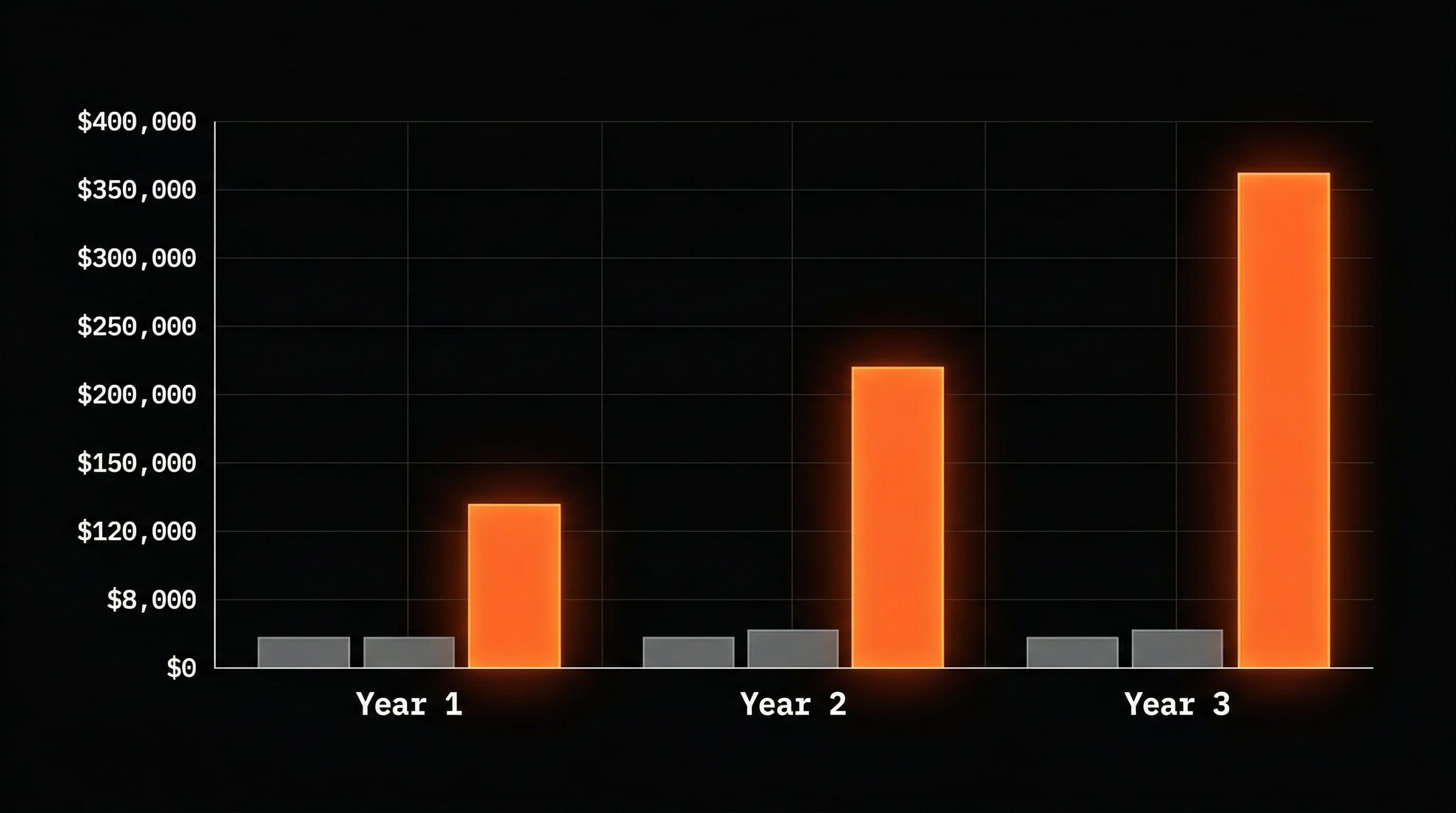
LTV comparison showing high-priced subscription apps generating 7x the median lifetime value of low-priced apps
Creators obsess over follower counts. Brands obsess over reach. Neither tells you what a customer is actually worth.
CreatorFollowersApp SubscribersMonthly PriceAvg LifespanLTV per Sub
Creator A500,000800$15/month10 months$150
Creator B50,000500$25/month16 months$400
Creator B has 10x fewer followers but each subscriber is worth 2.6x more. The business with better unit economics wins. That's what LTV measures: not how many people follow you, but how much each paying customer is worth. This is why app subscribers beat brand deals. A mid-tier creator with 100K followers might land a $2,000 brand deal. But 100 app subscribers at $20/month with a 14-month lifespan? That's $28,000 in lifetime value from a single cohort. And unlike brand deals, the next cohort stacks on top of the last. Here's the three-year comparison for a creator with 100K followers:
Revenue SourcePaymentYear 1Year 3
Brand deals (4/year at $2K)$2,000 each$8,000$24,000
Course launch (1/year)$5,000 each$5,000$15,000
App (500 subs at $20/mo)$20/mo per sub$120,000$360,000+
The app wins by an order of magnitude. And the gap widens every year because subscription revenue compounds while brand deal income resets to zero. According to Business of Apps, subscription businesses generate 70% higher customer lifetime value than transactional businesses. Three factors determine whether your app's LTV is $50 or $500: 1. Retention. The longer subscribers stay, the higher the LTV. Annual subscribers retain at 44% after 12 months versus 17% for monthly plans. Health and fitness apps already sell 68% annual subscriptions, the highest of any category. Reducing churn is the fastest way to increase LTV. A subscriber who stays 18 months instead of 12 increases their LTV by 50% with zero additional acquisition cost. 2. Pricing. Higher prices don't always mean fewer subscribers. RevenueCat found that high-priced apps generate nearly 7x the median LTV compared to low-priced apps. Creators who understand their audience's willingness to pay can charge $20 to $30/month for specialized expertise and still convert. 3. Usage. 40% of subscription cancellations come from low or no usage, not price complaints. The secret to high LTV isn't convincing people to stay. It's building something they actually use every day. A strong LTV for a creator subscription app is $150 to $400+. At $20/month with a 14-month average subscriber lifespan, you're at $280 LTV. Top-performing health and fitness apps push above $500 by combining annual pricing with strong retention. MRR tells you how much total subscription revenue your app generates right now. LTV tells you how much a single subscriber is worth over time. MRR is a snapshot; LTV is a projection. Together they tell the full story: MRR says "here's what's coming in," LTV says "here's what each new subscriber is really worth." You can estimate it. If you know your target price ($20/month) and can benchmark retention against similar apps (health and fitness apps retain about 33% of annual subscribers each year), you can model expected LTV before writing a line of code. Focus on three levers: retention (reduce churn with daily usage habits), pricing (test higher price points), and engagement (push notifications, fresh content, community features). Annual pricing is the single biggest LTV driver: annual subscribers retain at 2.6x the rate of monthly subscribers.
Your followers have a lifetime value. Do you know what it is? Built by Foundry builds subscription apps for creators. $0 upfront, revenue share, three weeks to the App Store.
Let's Build →

Get Creator Revenue Insights

How creators are turning audiences into subscription businesses

You might also enjoy...

What Is LTV? Lifetime Value for Creator Apps