
Turning Knowledge into Products

What Is a Win-Back Offer? 5 Live Offers, a 24-Month Window

November 26, 2026
Share
What Is a Win-Back Offer? 5 Live Offers, a 24-Month Window

Get Creator Revenue Insights

How creators are turning audiences into subscription businesses
Share
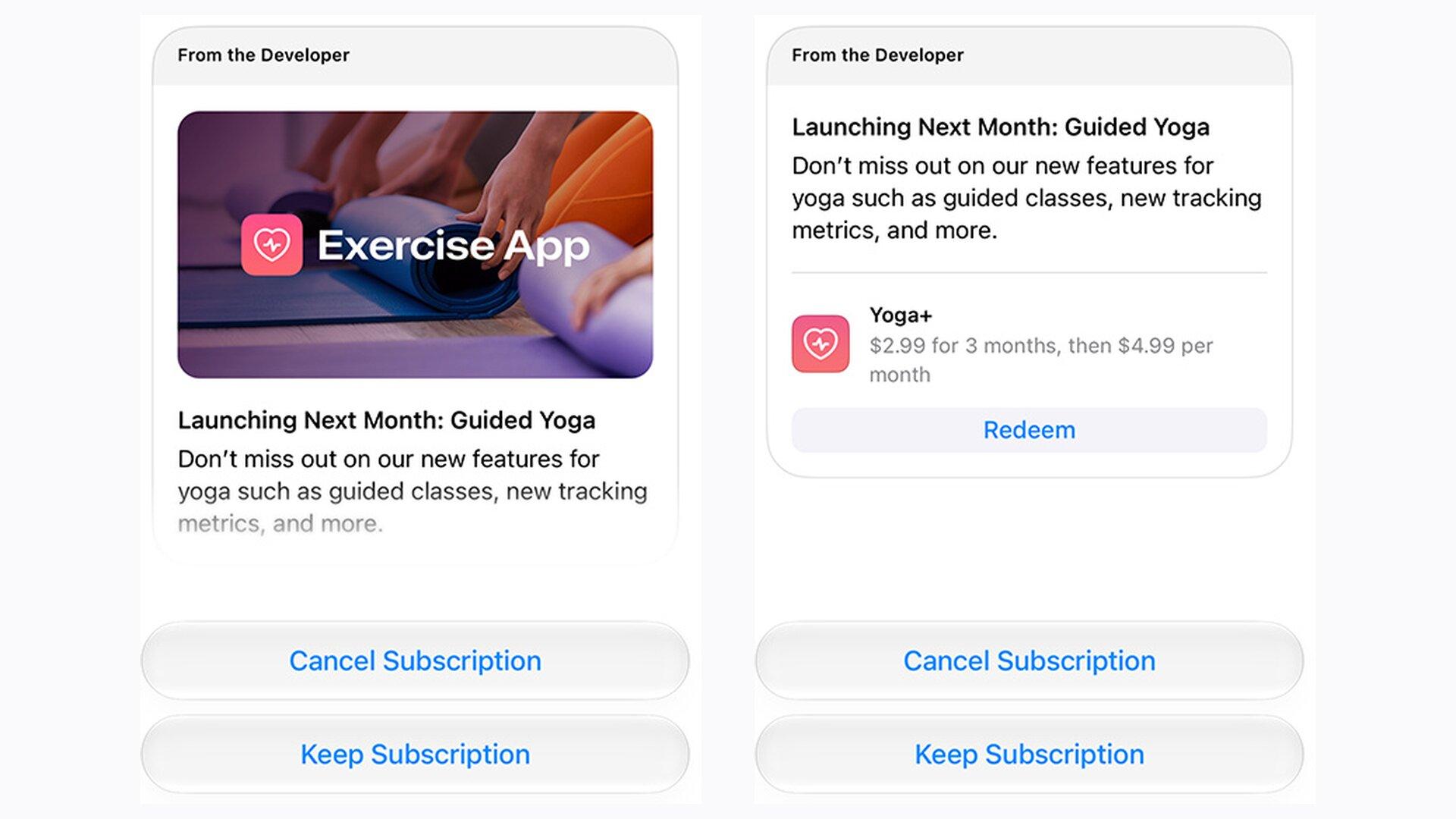
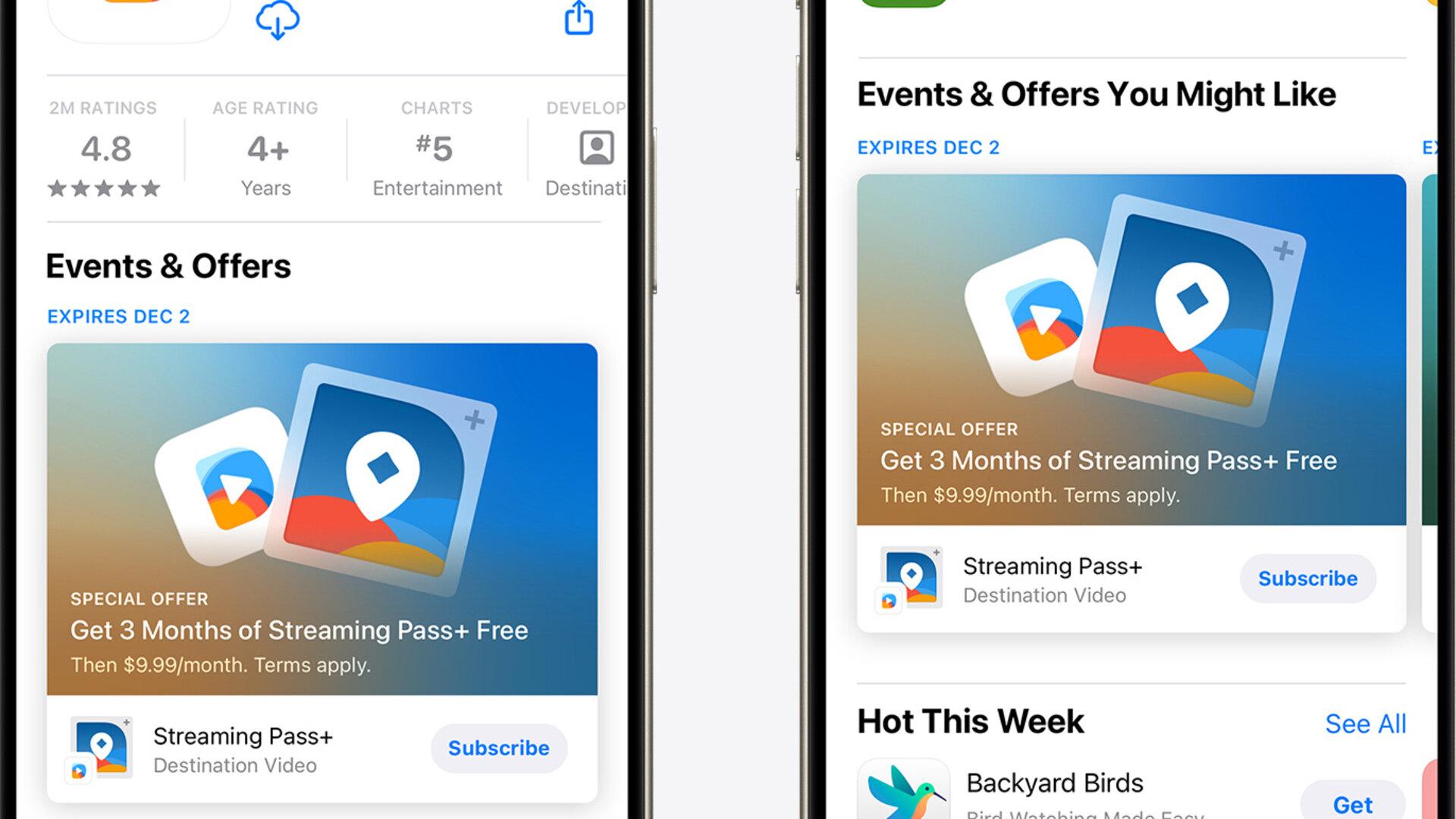
A win-back offer is a discounted or free subscription period that an app store shows to people who used to pay for your subscription and have since let it lapse. On Apple's App Store you set it up in App Store Connect, decide who qualifies, and Apple finds those former subscribers and shows them the offer, including in places your own marketing can't reach. Apple opened win-back offers to developers on September 10, 2024. Its example was a reduced price of $9.99 for six months on a subscription that normally renews at $39.99 a year. Google followed with an announcement of native Play Store winback offers in a September 29, 2026 post. For anyone running a subscription, the idea is simple. The people most likely to pay you again are the ones who already did. Hero image: Apple's own example screens from its announcement. Left, a win-back offer under Events & Offers on an app's product page. Right, the same offer in the App Store's "Events & Offers You Might Like" recommendations. Key Takeaways:
  • A win-back offer targets lapsed subscribers only: people who paid, stopped, and haven't come back
  • Apple lets you run up to 5 win-back offers per storefront, per subscription at a time, and create up to 350 per subscription over its life
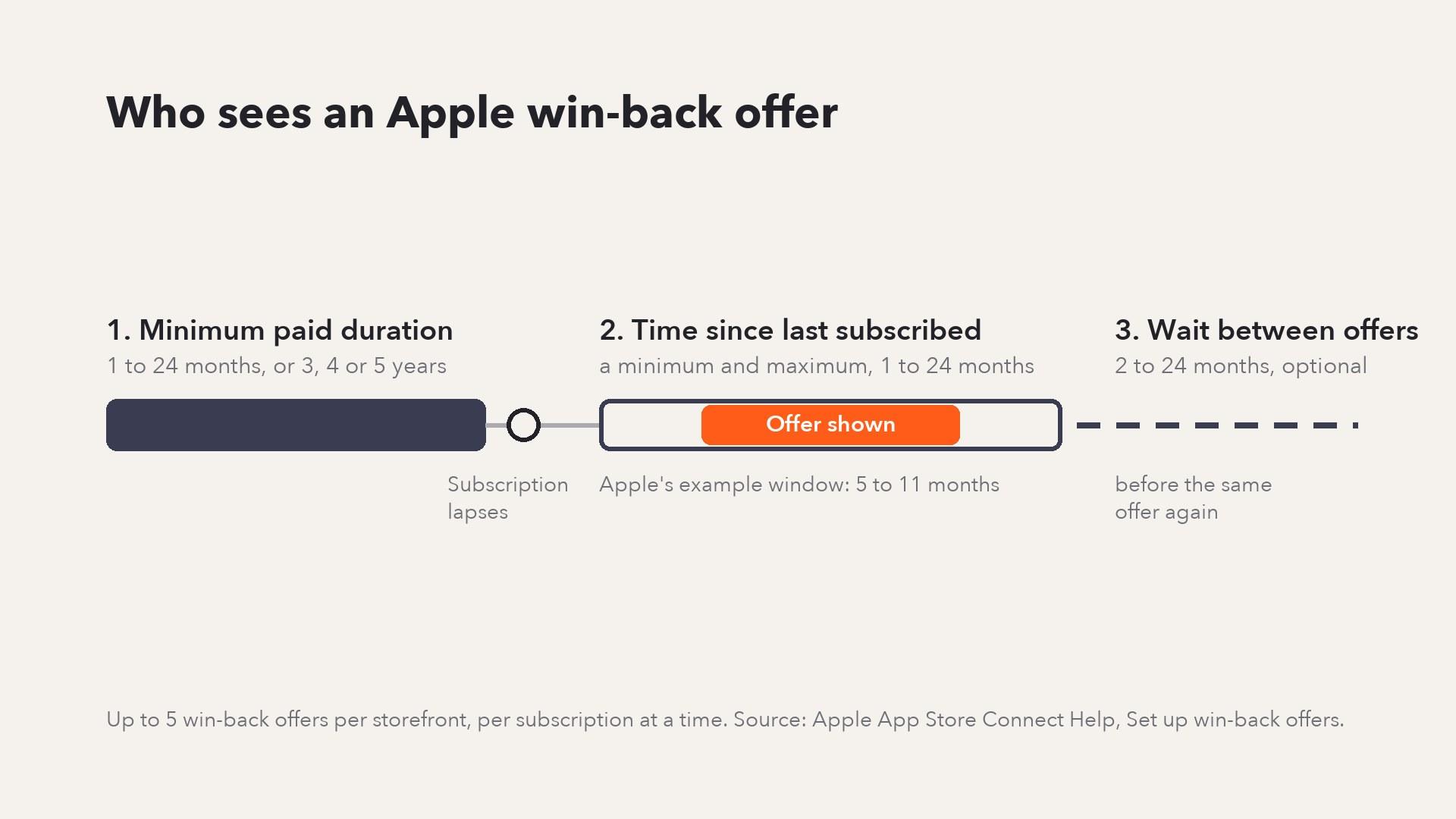
  • You choose three eligibility rules: minimum paid duration (1 to 24 months, or 3, 4 or 5 years), time since last subscribed (a minimum and maximum between 1 and 24 months), and an optional wait between offers (2 to 24 months)
  • The offer can be pay as you go, pay up front, or free, and the price can't be changed once the offer is created
  • Google Play has long supported win-back offers that your app decides who sees. Native Play Store winback offers were announced in September 2026, without public setup steps when we checked
It is the store's version of a "come back" email, with one big difference: the store already knows who left. Apple's App Store Connect help page describes the feature as a way "to encourage lapsed subscribers to re-subscribe on the App Store." Three things make it its own category:
  • It only reaches former subscribers. Nobody who has never paid can see it, and nobody currently paying can see it.
  • Apple does the targeting. You write rules. Apple checks every customer's subscription history against them.
  • It works when your app is gone. A former subscriber who deleted your app never opens your push notifications or emails. They can still see the offer in the App Store and in their subscription settings.
Win-back offers apply to auto-renewable subscriptions sold through the App Store. A membership sold on your website through Stripe or a creator platform doesn't get them. If you are new to why lapsed subscribers matter so much, start with our explainer on churn in creator apps. In four places, according to Apple's announcement:
  • Across the App Store, on your product page and in "personalized recommendations and editorial selections on the Today, Games, and Apps tabs," as the hero image shows
  • Inside your app or game, on a win-back offer sheet
  • Through a direct link you share in your own marketing
  • In Subscription settings, the Manage Subscriptions page in a customer's Apple Account
The App Store placements are opt-in. Apple's help page says an offer appears on the App Store only if you promote it and have an approved promotional image, which may not be your app icon or one of your screenshots. Unpromoted offers still appear in Manage Subscriptions and inside your app. Promoting a win-back offer also replaces any In-App Purchase promotions in that storefront, so choose which one you want featured. The in-app sheet and App Store placements need iOS 18, iPadOS 18 or macOS 15. The Manage Subscriptions placement reaches back to iOS 14.3. Every Apple win-back offer is defined by three rules, all set per subscription product rather than per subscription group.
Timeline of one subscriber: a minimum paid duration of 1 to 24 months or 3, 4 or 5 years, then the subscription lapses, then a time-since-last-subscribed window you set between 1 and 24 months, during which the win-back offer can be shown and redeemed, followed by an optional wait of 2 to 24 months before the same offer can be redeemed again
SettingWhat it meansAllowed values
Minimum Paid DurationHow long the person must have paid for this subscription1 to 24 months, or 3, 4 or 5 years
Time Since Last SubscribedHow long ago they lapsed, as a windowMinimum and maximum, each between 1 and 24 months
Wait Between OffersHow long after one offer ends before the same person can redeem it again2 to 24 months, optional
Apple's own example window is a minimum of 5 months and a maximum of 11. A customer is only eligible for their most recently lapsed product within each subscription group, so if you sell a monthly plan and an annual plan you need a separate offer for each. Apple also caps the volume. You can create 350 win-back offers per subscription, and run 5 at a time per storefront. When offers overlap, "Apple automatically selects and displays one offer to eligible customers based on price, duration, and other factors such as the customer's paid subscription tenure." A High Priority setting tells Apple which offer matters most to you. Apple now has three tools aimed at the same subscriber at different moments. They're easy to mix up:
ToolReachesWho finds the personWhen
Retention MessagingCurrent subscribersApple, on the cancel screenWhile they are cancelling
Win-back offerFormer subscribersApple, using your eligibility rulesAfter the subscription has lapsed
Offer codeNew, current or expired subscribersYou, by sending the codeWhenever you distribute it
The split is about who does the work. A retention message catches people at the door. A win-back offer finds them later, even if they've uninstalled. An offer code goes only to the people you can reach yourself, which for a creator usually means their audience. A creator with a big following can use codes and win-back offers together: the code for followers who see a post, and the win-back offer for lapsed subscribers who no longer follow. Google Play has supported win-back offers for years, with a catch. Its subscription documentation lists "developer determined" eligibility, where "you solely decide the business logic and determine eligibility in your app," and gives the example of limiting an offer "to past subscribers who have previously canceled with the aim of winning them back." Because the logic lives in your app, Google says these offers "cannot be purchased outside of your app." A lapsed subscriber who deleted the app never sees it. Each Play subscription can hold up to 250 base plans and offers, with 50 active at once. The newer piece is Play's native winback offers, announced by Google Play product manager Sheenam Mittal on September 29, 2026, which present offers to lapsed subscribers "directly on the Google Play Store." That would close the uninstall gap. The post gives no eligibility rules or launch date for this feature, and we found no Play Console help page for it when we checked on November 26, 2026. If you sell on Android, ask your Google Play contact whether you can join the program early. A lapsed subscriber pays you nothing, so it is tempting to call every redemption pure gain. That holds only if the person would never have come back on their own. Take Apple's example. The subscription renews at $39.99 a year, and the win-back offer is $9.99 for six months. Someone who would have returned anyway at the full price pays about $20 for six months. With the offer, they pay $9.99. That's roughly $10 lost on each person who didn't need the discount. Someone who would never have returned is $9.99 gained, plus a $39.99 renewal if they stay. The eligibility window is how you keep the offer away from the first group. People who lapsed last week are the likeliest to return unprompted, so a minimum of a few months saves the discount for people who have really drifted away. A minimum paid duration does the same job from the other side: someone who paid for a year has already shown they value the product. Three settings are easy to regret because they can't be changed:
  • The price. "After you've created your offer, you can't change the price," Apple's help page says.
  • The offer identifier, which is how redemptions show up in Sales and Trends and in StoreKit transactions.
  • The reference name.
The lesson from holiday membership discounts applies here too. The number that matters is who is still paying at the renewal price a year later. This is an illustration, not a recipe. Test it against your own numbers.
  • One offer per plan. A monthly plan and an annual plan each need their own win-back offer.
  • Minimum Paid Duration of 2 months. That excludes people who tried one month and decided against it.
  • Time Since Last Subscribed of 3 to 12 months. Recent leavers can come back on their own, and the window stops at a year.
  • Wait Between Offers of 12 months, so nobody learns to cancel every winter for a discount.
  • A new reason to return. A discount brings people back once. Keeping them takes something new to come back to: a new program, a fresh season of recipes, the next challenge. That's where a creator's ongoing work does what no discount can, as Sydney Cummings Houdyshell's monthly $8.99 calendar shows: something new arrives every month.
Then read the result in App Store Connect's Sales and Trends report, filtered by the offer identifier, and compare those returning subscribers' renewals with your usual lifetime value. Running offers, eligibility rules and renewal reviews every season is operating work, the kind App Care covers after launch. It is also part of the whole business Built by Foundry builds and runs with creators. Read how we work. A win-back offer is a discounted or free subscription period that an app store shows only to people who used to subscribe and have let the subscription lapse. On Apple's App Store, the developer sets eligibility rules and Apple shows the offer to customers who meet them. Apple allows up to 5 active win-back offers per storefront, per subscription at a time, and up to 350 win-back offers per subscription in total. You can't change its price, offer identifier or reference name once it is created. Apple lets you delete a win-back offer at any time, and a customer who opens a link to a deleted offer is told it is no longer available. Google Play supports developer-determined offers that your app shows to past subscribers, but they can't be bought outside your app. Google announced native winback offers on the Play Store in September 2026, without public setup steps as of November 26, 2026. You distribute an offer code yourself, to anyone you choose. Apple shows a win-back offer automatically to former subscribers who match your eligibility rules, including in the App Store and in their subscription settings. Sources checked November 26, 2026: Apple Developer News, Win-back offers for auto-renewable subscriptions now available; Apple App Store Connect Help, Set up win-back offers; Google Play Console Help, Understanding subscriptions; Android Developers Blog, Driving growth on Google Play: The next era of subscriptions.
Our work

Creators who already did this

These are apps we designed, built, shipped, and still run today, with the creator keeping the code and the audience.

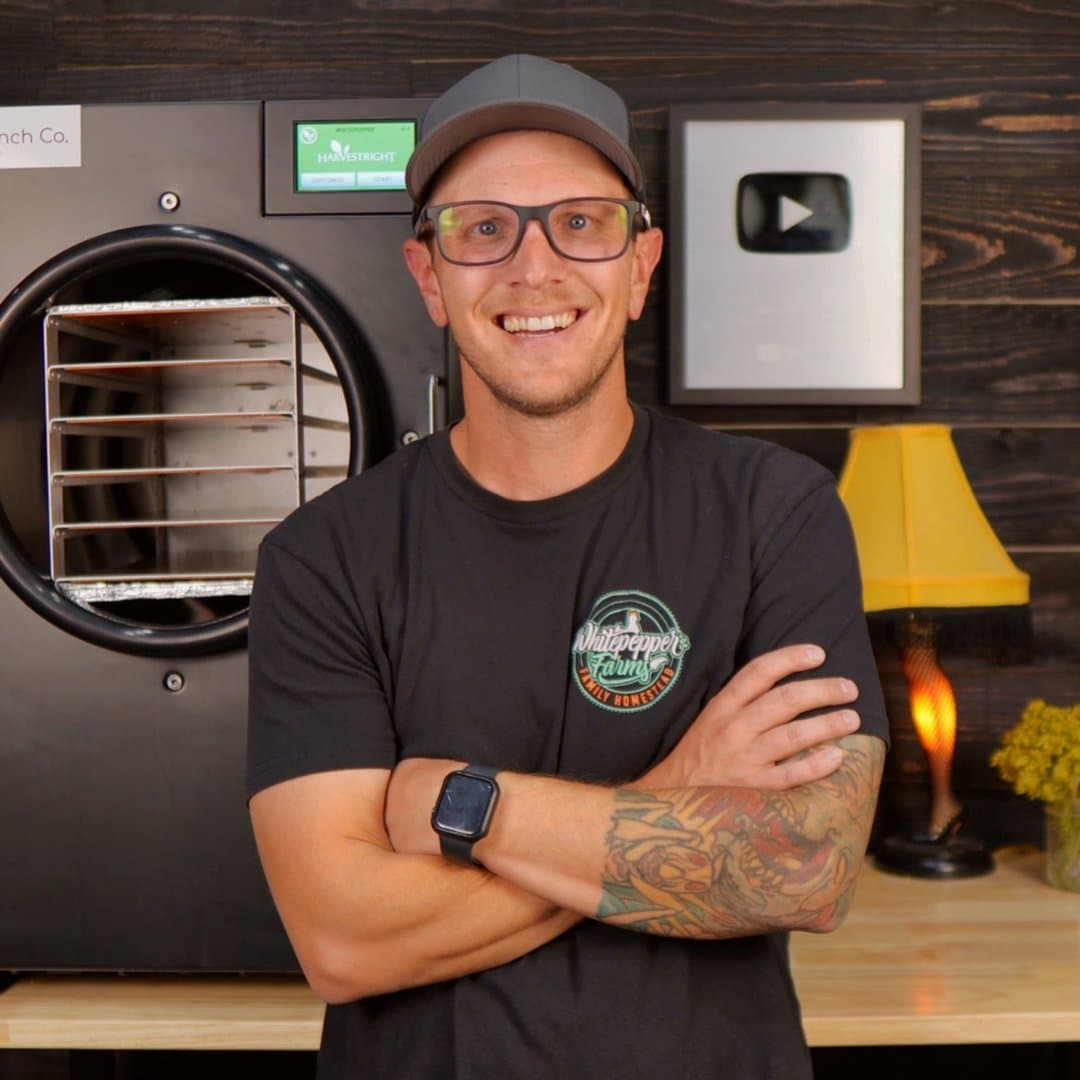
Brandon Whiteleather

Brandon Whiteleather

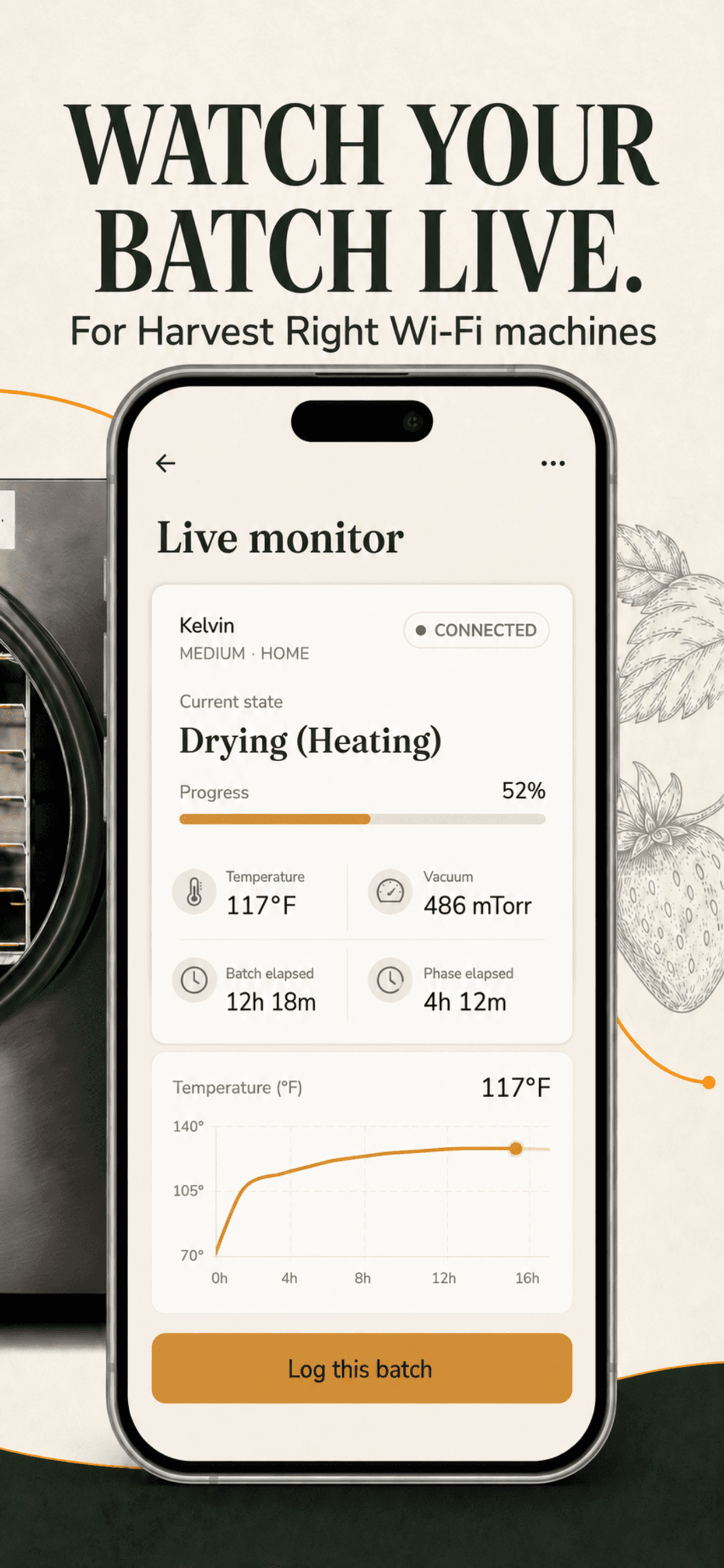
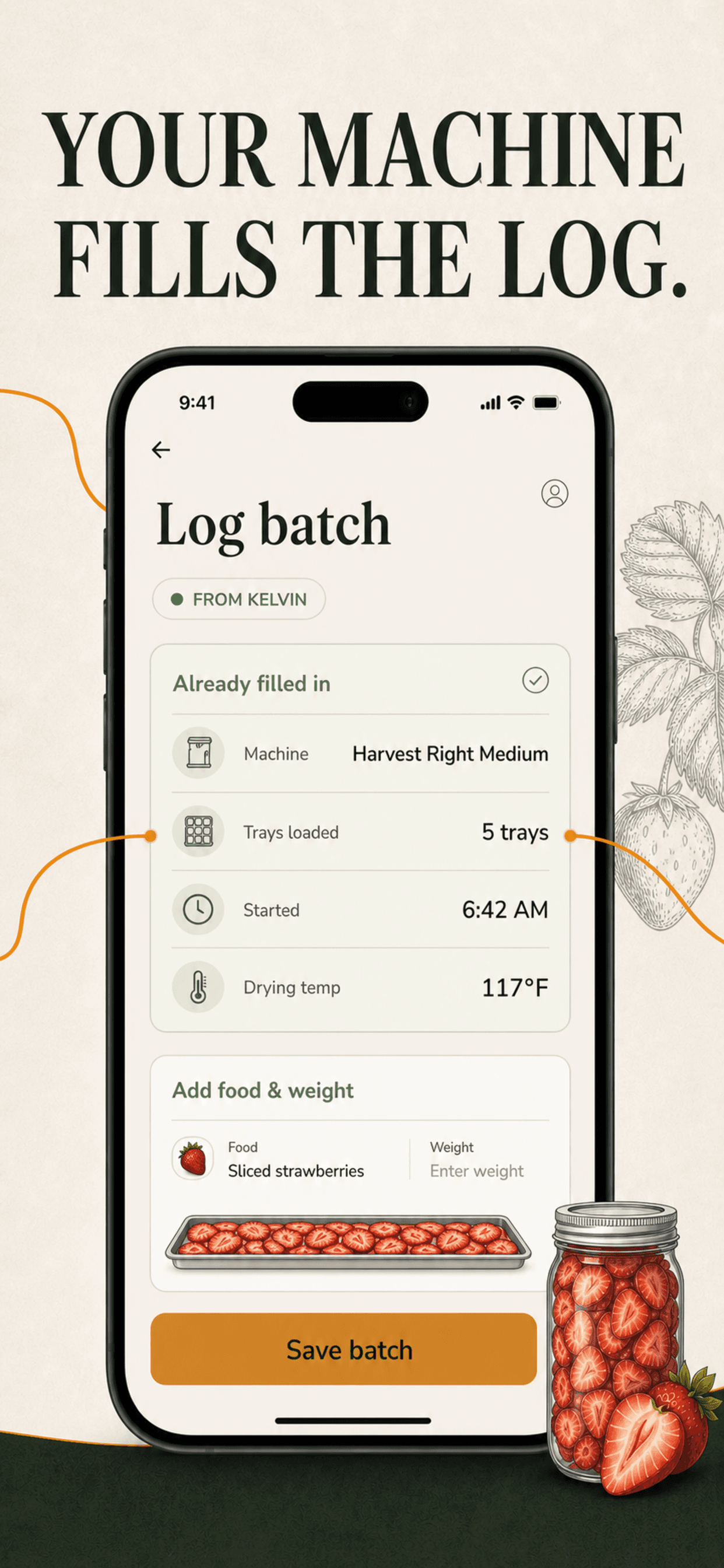
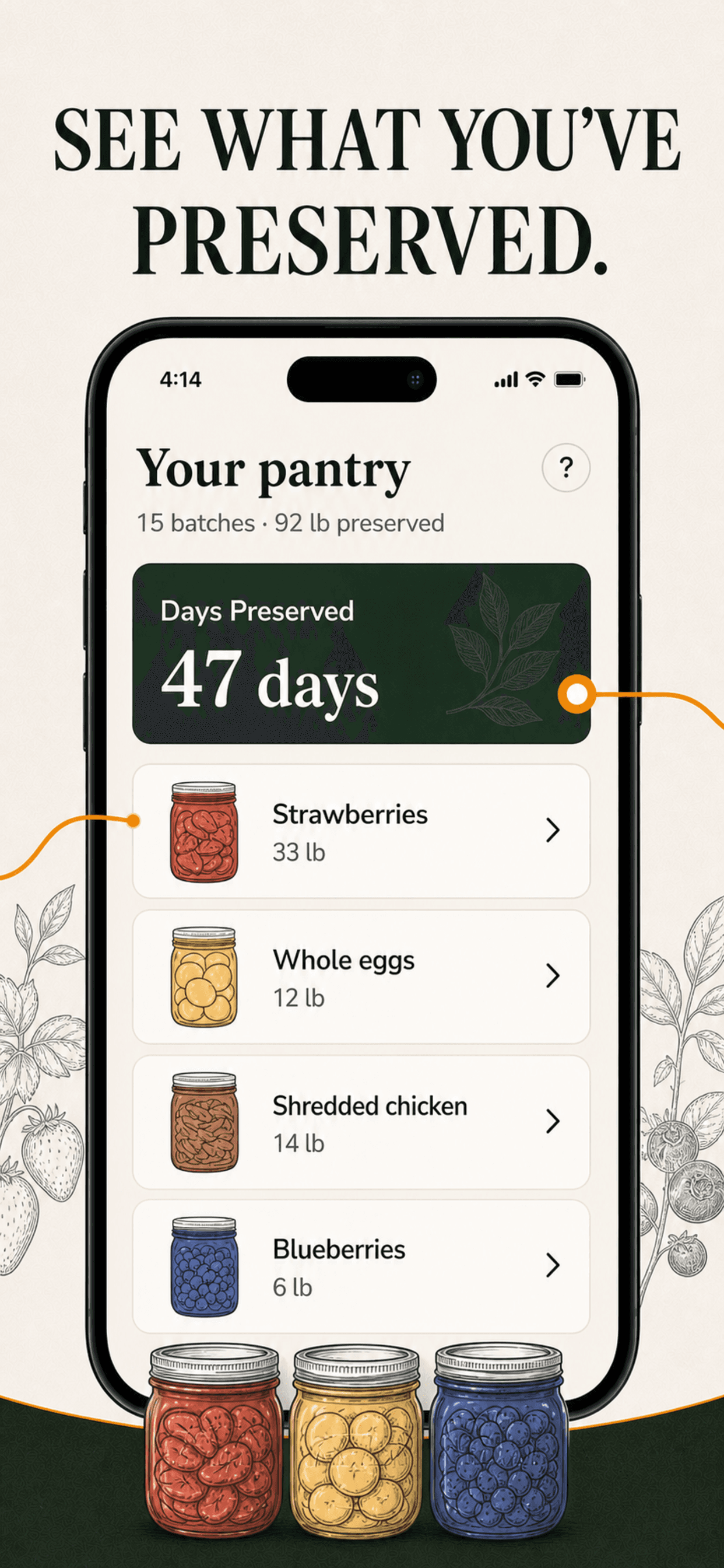
Founder & CEO of Freeze Dry Buddy

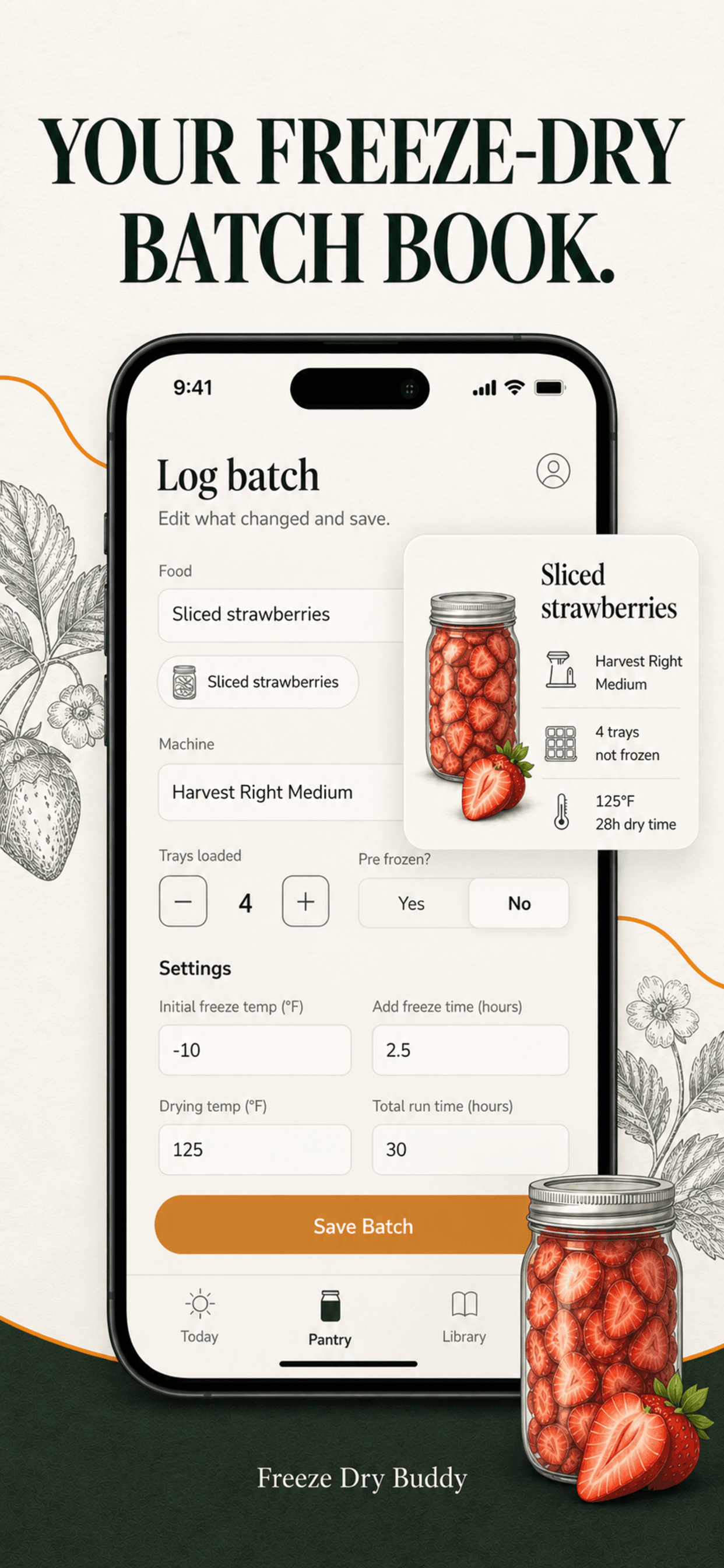
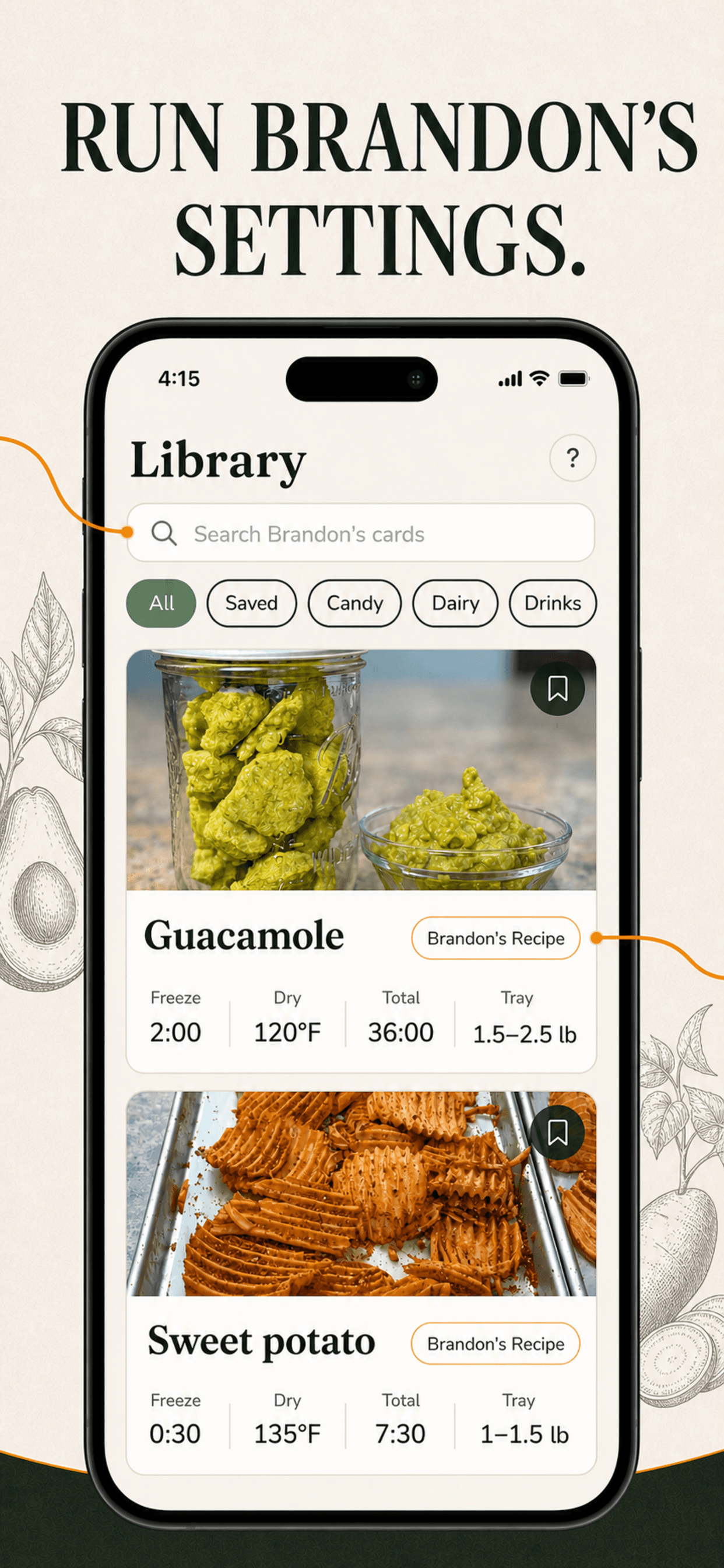
Freeze drying made foolproof, from a homesteader who's done it 1,000 times.

Top Food App1.4M+ followers
Read the case study
Kristen Donathan

Kristen Donathan

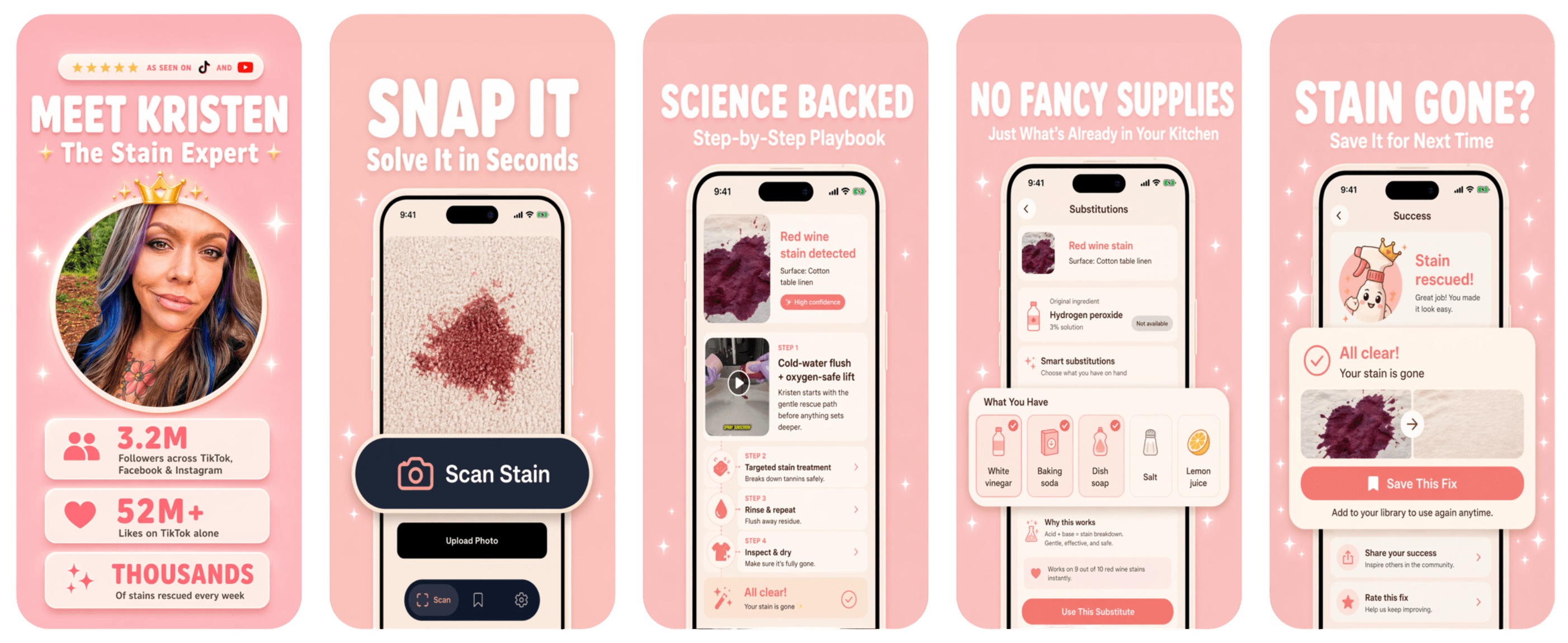
Founder & CEO of Stain Fix

Snap a stain. Get the fix in seconds.

Top Lifestyle App1.5M+ followers
Read the case study
Stain Fix screenshots
Ellie Fausett

Ellie Fausett

Founder & CEO of Vector Guard

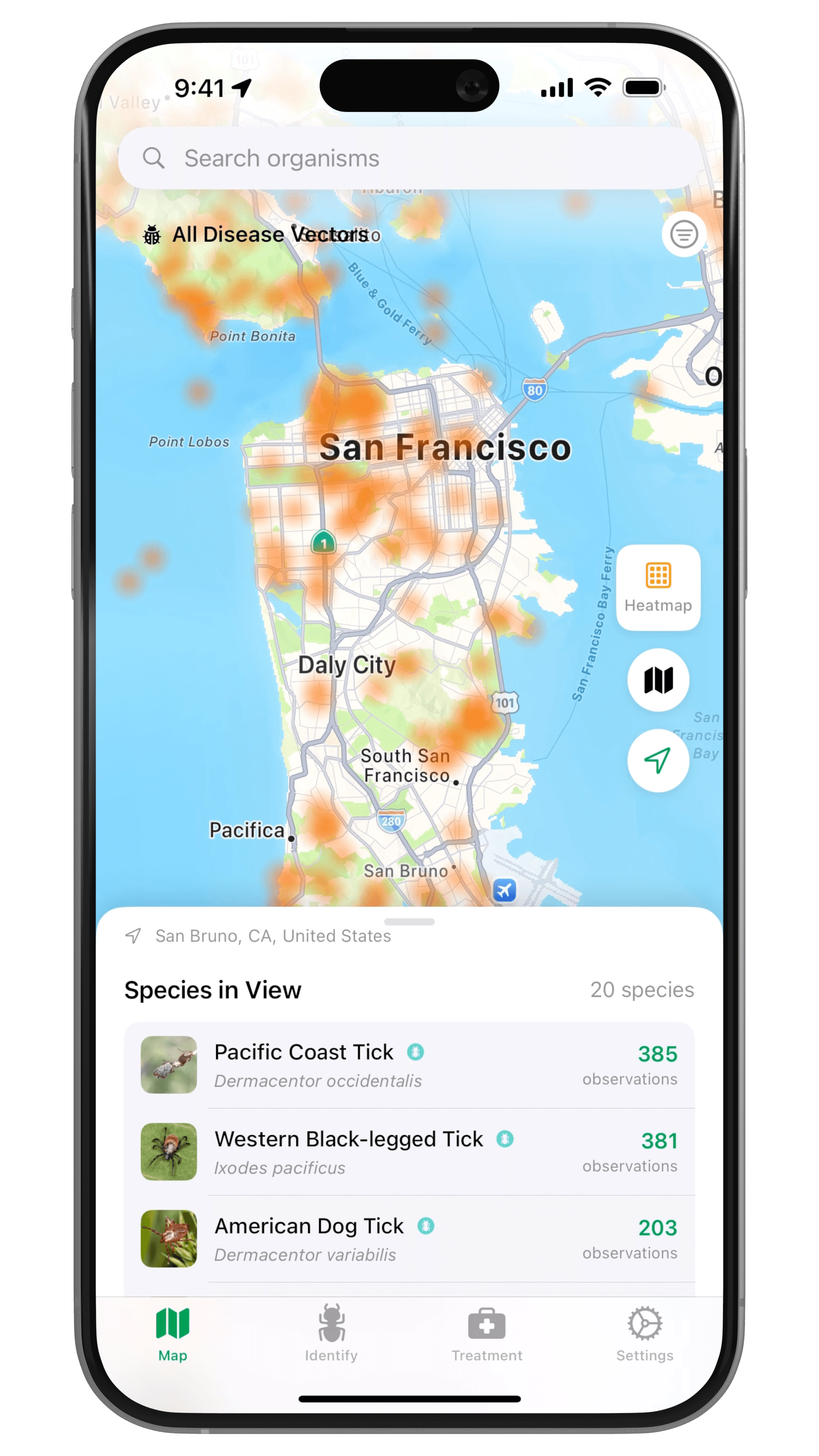
Spot disease-carrying pests before they reach your family.

Top Health App
Read the case study
Vector Guard screenshots

Creator app strategy

Curious what your app could be?

Enter your handle and BUILT BY FOUNDRY will research your audience and present custom app concepts. Free.

What Is a Win-Back Offer? 5 Live Offers, a 24-Month Window