
Turning Knowledge into Products

Black Friday Membership Discounts in 2026: 4 Platforms, 3 Durations, and the Renewal Test

October 21, 2026
Share
Black Friday Membership Discounts in 2026: 4 Platforms, 3 Durations, and the Renewal Test

Get Creator Revenue Insights

How creators are turning audiences into subscription businesses
Share
Key Takeaways:
  • Black Friday falls on November 27, 2026, and Cyber Monday on November 30. A membership sale is different from a merch sale, because the price someone joins at can follow them into every renewal
  • Patreon membership discounts run from 5% to 90% and apply "only to new members during their first month or first year of membership." After that, the full price applies
  • Ghost lets a discount apply "once, over multiple months, or forever." Forever means the member pays the sale price for as long as they stay
  • Substack asks you to set a discount amount and a duration, and can apply an offer to monthly subscribers who upgrade to an annual plan
  • Apple's App Store offers always end the same way: "the subscription auto-renews at the standard price." Cutting the base price instead is the riskiest sale you can run, because existing subscribers renew at the lower price and you cannot keep them on the higher one
  • On 100 new members at $10 a month, 50% off for the first month costs $500 in the first year. The same 50% off forever costs $6,000 a year, every year
In five weeks your inbox will be full of Black Friday sales, and many creators with a paid membership will run one of their own. That's sensible. People are in a buying mood, and a discount gives you a reason to post about the membership. The mistake is in a setting that most people skip on the way to the percentage: how long the discount lasts. A t-shirt sold at 40% off is one sale at a lower price. A membership sold at 40% off can be the price that person pays for the next three years. We read the discount documentation for four platforms creators use to sell memberships on October 21, 2026. Here is what each one does when the discount ends. The renewal test asks one question of any membership discount: what does the member pay on the second bill? If the answer is the full price, the discount is a cost to win the sign-up. If the answer is the sale price again, the discount is a permanent price cut for that member. Every platform below answers it differently, and some let you choose. Run the test before you pick a percentage. A 50% first-month discount and a 50% forever discount look identical on the sale banner. Over a year they are far apart.
PlatformWho can use the discountWhen it endsRange or limitsSource
PatreonNew paid members onlyAfter the first month or first year5% to 90%; codes live up to 180 days; public sale up to 31 daysPatreon "Managing discounts"
GhostAnyone with the offer linkOnce, multiple months, or forever (you choose)Percentage or fixed amount, any tierGhost "Creating discount and trial offers"
SubstackNew subscribers, plus monthly subscribers upgrading to annual if you allow itThe duration you set on the offerMonthly and annual plans onlySubstack "How do I offer a discount"
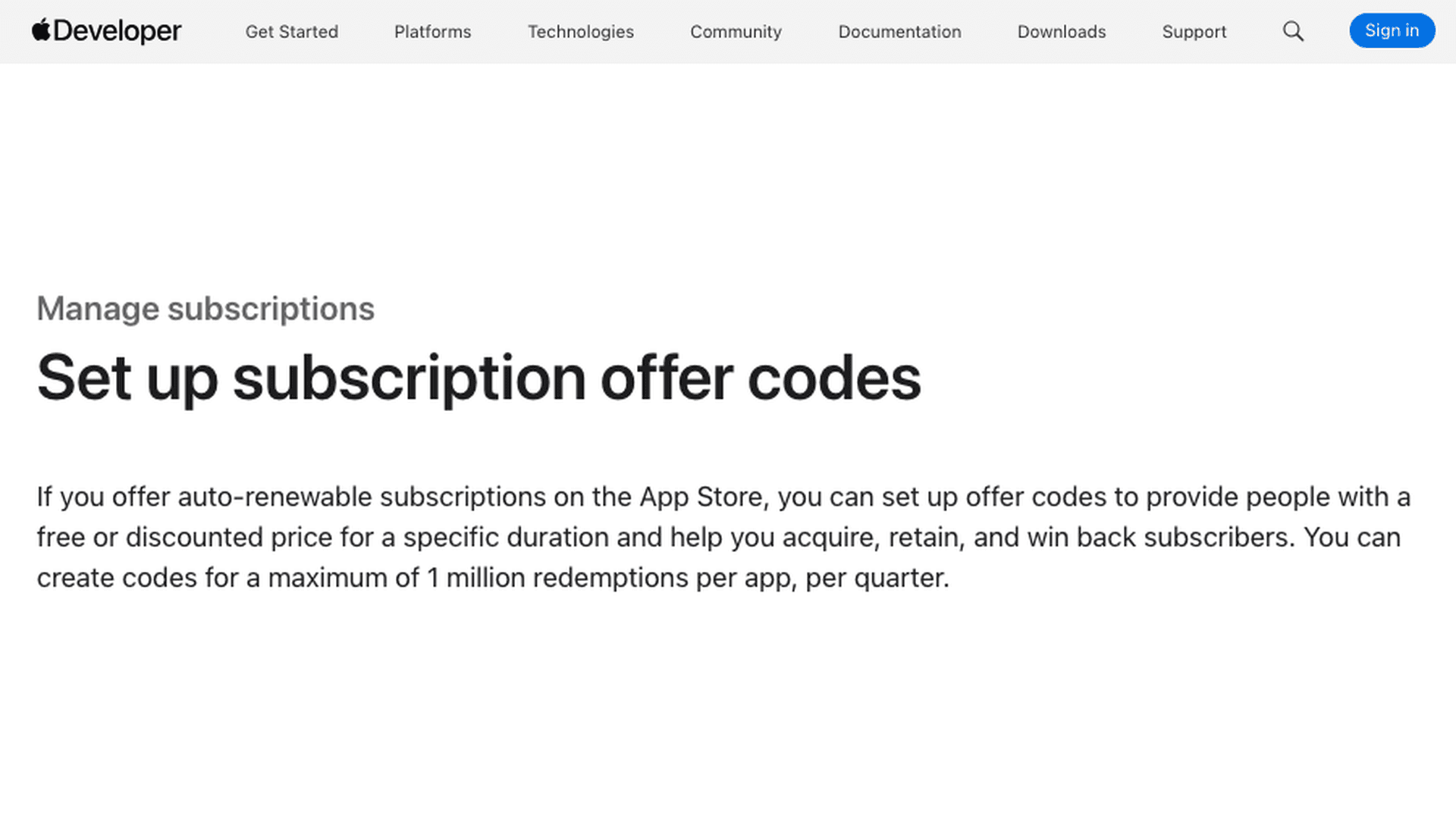
Apple App StoreDepends on offer type: new, existing, or former subscribersAlways renews at the standard priceFree trial, pay as you go, or pay up front for a set durationApple "Auto-renewable subscriptions"
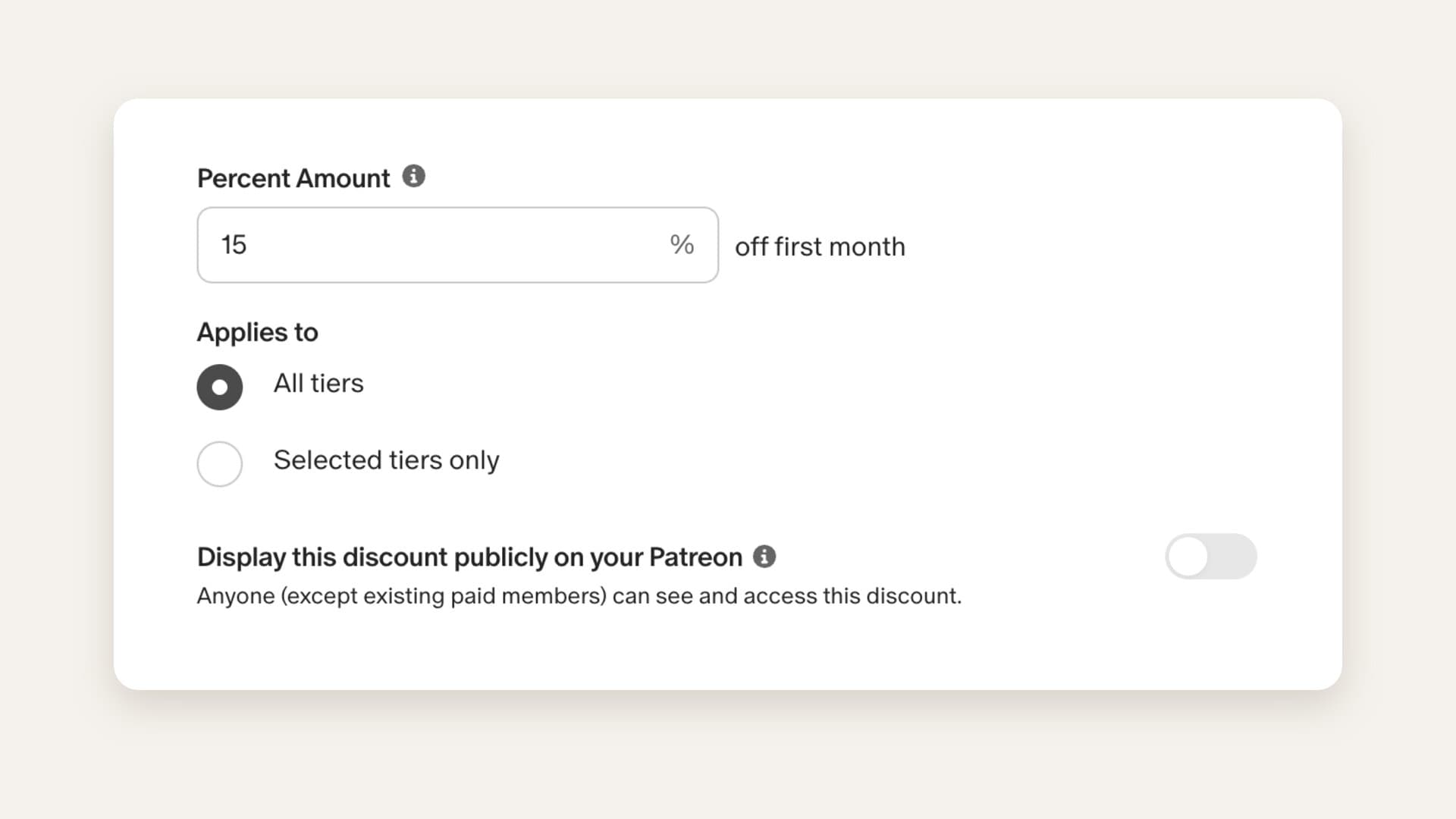
A Patreon membership discount takes 5% to 90% off the first month or the first year of a tier, for new paid members only. Patreon's help center says the full price "will apply for subsequent billing cycles," so every Patreon discount passes the renewal test by design. You set it up in Creator studio under Promotions, then Discounts. The form asks whether the code is valid for the first month, the first year, or both. You can show a discount publicly on your page, which displays it to everyone "except existing paid members," but only one public discount at a time. A public discount can stay visible for up to 31 days, and Patreon makes you wait 7 days between public discounts. A shareable code can run for up to 180 days.
Patreon's own Create new discount form from its help center, showing a 15 percent amount labeled off first month and a public display toggle that reads anyone except existing paid members can see and access this discount
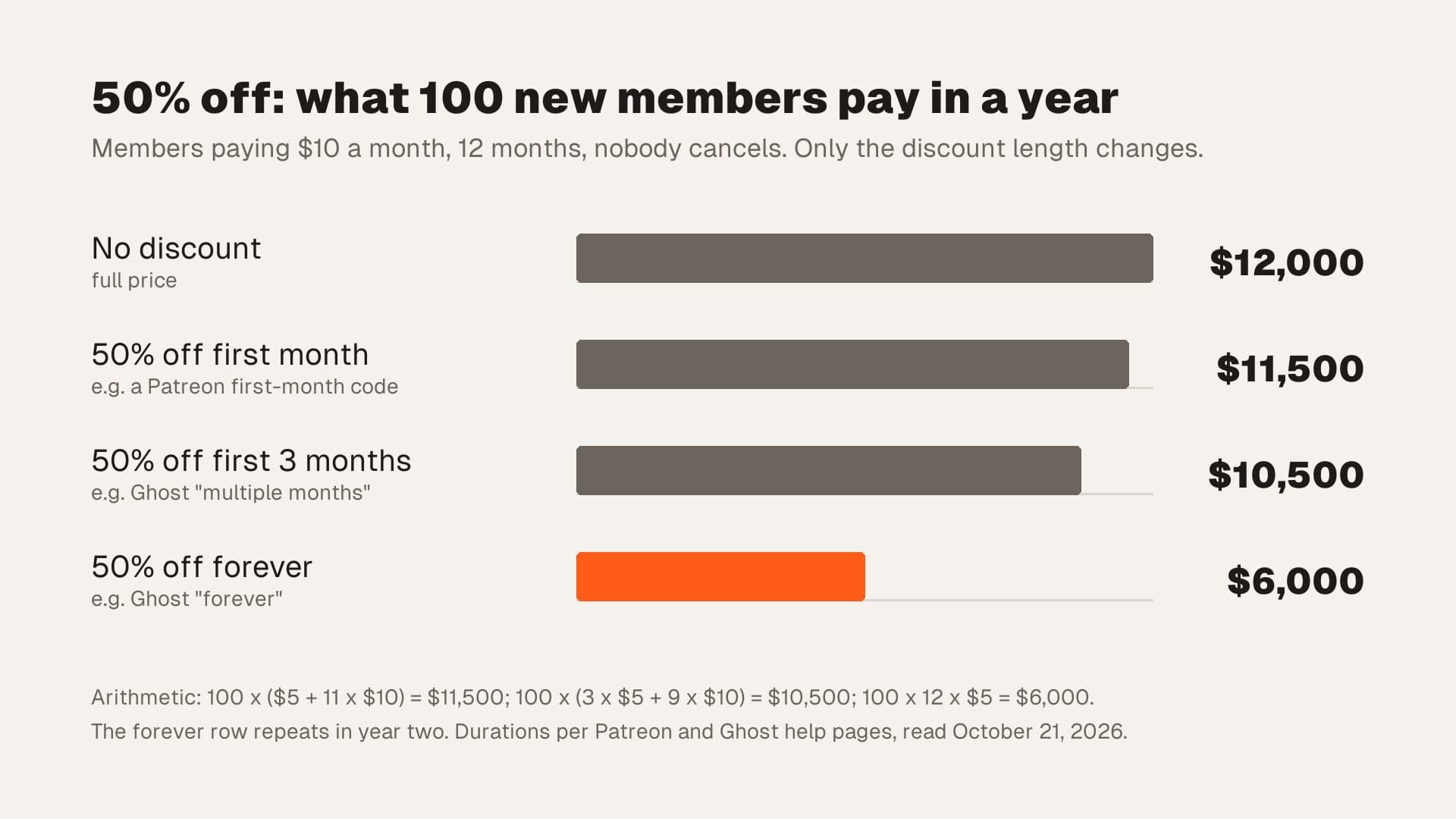
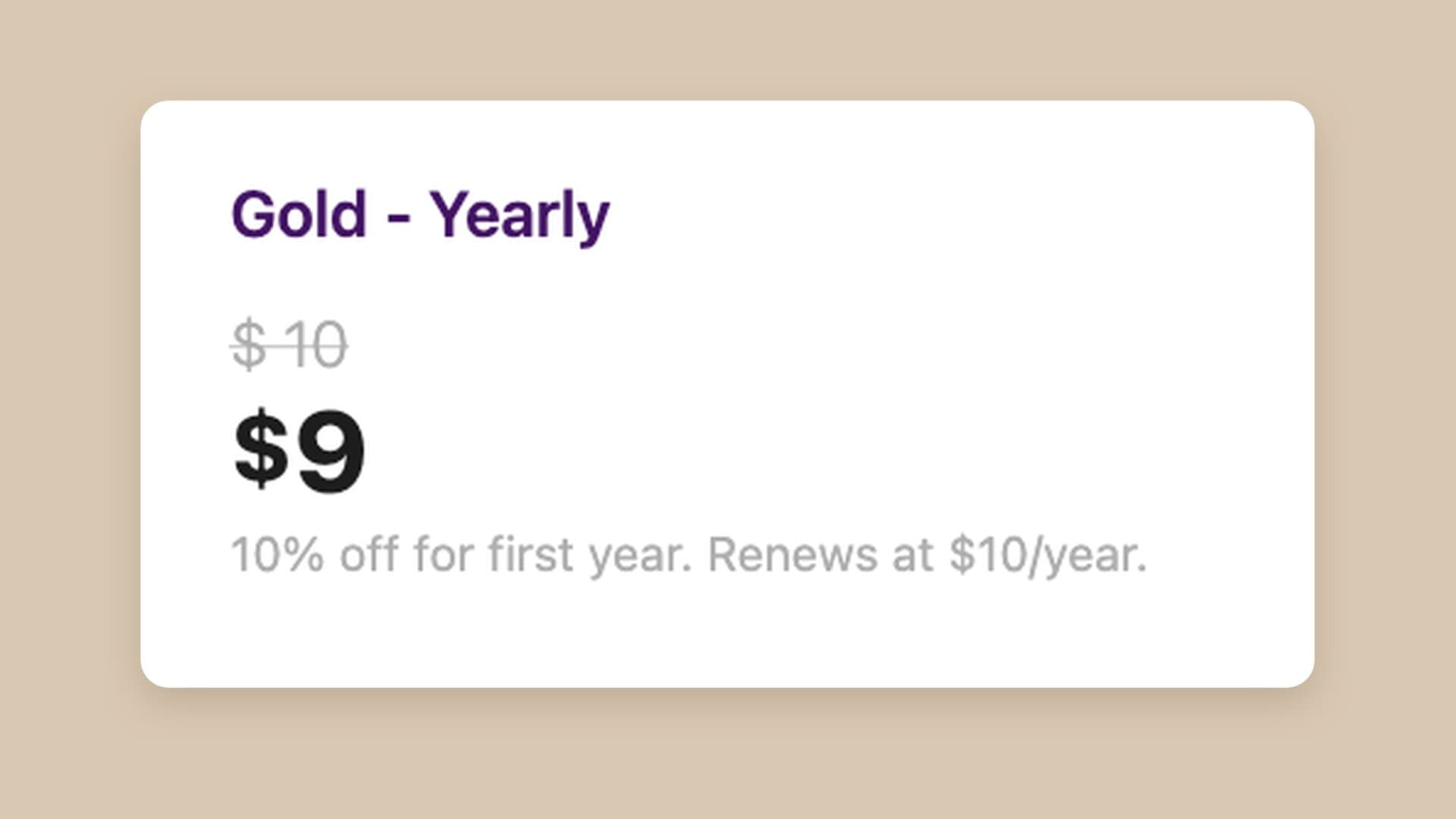
Two details matter for a Black Friday plan. First, if you run a public sale that ends after November 20, you cannot start another public one on November 27. Second, annual discounts stack on top of your annual price. Patreon warns that "the percentage off will be from your annual price, which may already be discounted," so 30% off an annual plan that is already 15% cheaper than twelve months is a much deeper cut than it looks. Our Patreon vs Ko-fi comparison covers the fees you pay on whatever price is left. Substack special offers are discount links for monthly and annual plans. The creator sets the discount amount and duration, can add an end date for redeeming it, and can apply it automatically to all new subscribers. An offer can also reach monthly subscribers who upgrade to annual, once per subscriber. The setup is under Settings, then Payments, then "Manage special offers." The upgrade option is the useful one for Black Friday. If you toggle on "Available to paid subscribers," a monthly reader who switches to annual gets the discount automatically on their Manage Subscription page. That turns the sale into an offer for the people who already pay you, and moves them to a plan they renew once a year rather than twelve times. Substack's own example of a time-limited coupon is "33% off for your first year." Its help center also explains why your dashboard and Stripe will disagree afterward: Stripe counts a discounted subscription at "their eventual full price rather than their current 33% off price." If most of your new subscribers arrive on a deep discount, expect a gap between the two numbers until the discounts expire. Our Ghost vs Substack comparison compares what each platform costs at the same size. Ghost gives you the widest choice and therefore the easiest way to fail the renewal test. Its help page says discounts "can be applied once, over multiple months, or forever," as a percentage or a fixed amount, on any tier. Each offer gets its own URL and code, and you can archive and reactivate it later. The checkout preview in Ghost's own documentation shows the renewal test in one line. A yearly plan listed at $10 shows $9, with the words "10% off for first year. Renews at $10/year." That's the sentence a member should see on any discounted checkout. If yours says nothing about renewal, check the duration before you share the link. Ghost also has retention offers, which appear when a paid member tries to cancel. They can give "a set amount of free months off, or a percentage discount off of upcoming payments," and Ghost does not show one to a member on a trial, a member already using an offer, or a member who has redeemed one before. If you only plan to discount once this year, a save offer at the cancel button may do more work than a Black Friday banner. If your membership lives in an app, Apple decides the renewal test for you. Apple's subscription guide says that at the end of every offer period, "the subscription auto-renews at the standard price unless a subscriber cancels it." There is no forever option. You do choose who an offer reaches. Introductory offers are for new subscribers, and a customer can redeem one per subscription group. Promotional offers go to "existing or former subscribers," with up to 10 per subscription. Offer codes are custom codes, such as one you name yourself, or one-time codes. Win-back offers are for previous subscribers. Each can be a free trial, a reduced price each period for a set duration, or a single up-front price for a set duration. Apple's own example: $9.99 up front for six months of a subscription that renews at $39.99 a year. Our guide to free app codes covers the redemption limits on offer codes. Lowering a subscription's list price for a weekend is riskier than any discount offer, because on the App Store existing subscribers automatically renew at the lower price and the developer cannot keep them on the higher one. Raising the price back afterward can require each subscriber to agree, and anyone who does not respond loses the subscription at the end of the billing cycle. Apple's wording is direct: "If you decrease the price of your auto-renewable subscription, existing subscriptions will automatically renew at the lower price. You don't have the option to preserve the higher price for existing subscribers." On price increases, "Some price increases require subscribers to opt in," and "If someone doesn't respond to the increase, their subscription expires at the end of their current billing cycle." Picture an app with 400 subscribers at $9.99 a month whose owner drops the price to $4.99 for Black Friday. Those 400 people now renew at $4.99, which is about $2,000 a month less. Putting the price back can mean asking all 400 to accept a doubled price, and some of them won't open the email. A sale built from an introductory or promotional offer avoids this entirely, because the list price never moves. Our guide to raising an app subscription price explains when Apple and Google ask subscribers to consent. On 100 new members at $10 a month, a 50% discount costs $500 in the first year if it lasts one month, $1,500 if it lasts three months, and $6,000 if it lasts forever. Only the forever version keeps costing $6,000 in the second year and every year after. The arithmetic assumes no one cancels, which flatters every row equally. Full price for a year is $12,000. One discounted month brings in 100 × ($5 + 11 × $10), or $11,500. Three discounted months bring in 100 × (3 × $5 + 9 × $10), or $10,500. Forever brings in 100 × 12 × $5, or $6,000.
Revenue from 100 new members at 10 dollars a month over 12 months with a 50 percent Black Friday discount: full price 12,000 dollars, first month only 11,500 dollars, first three months 10,500 dollars, forever 6,000 dollars
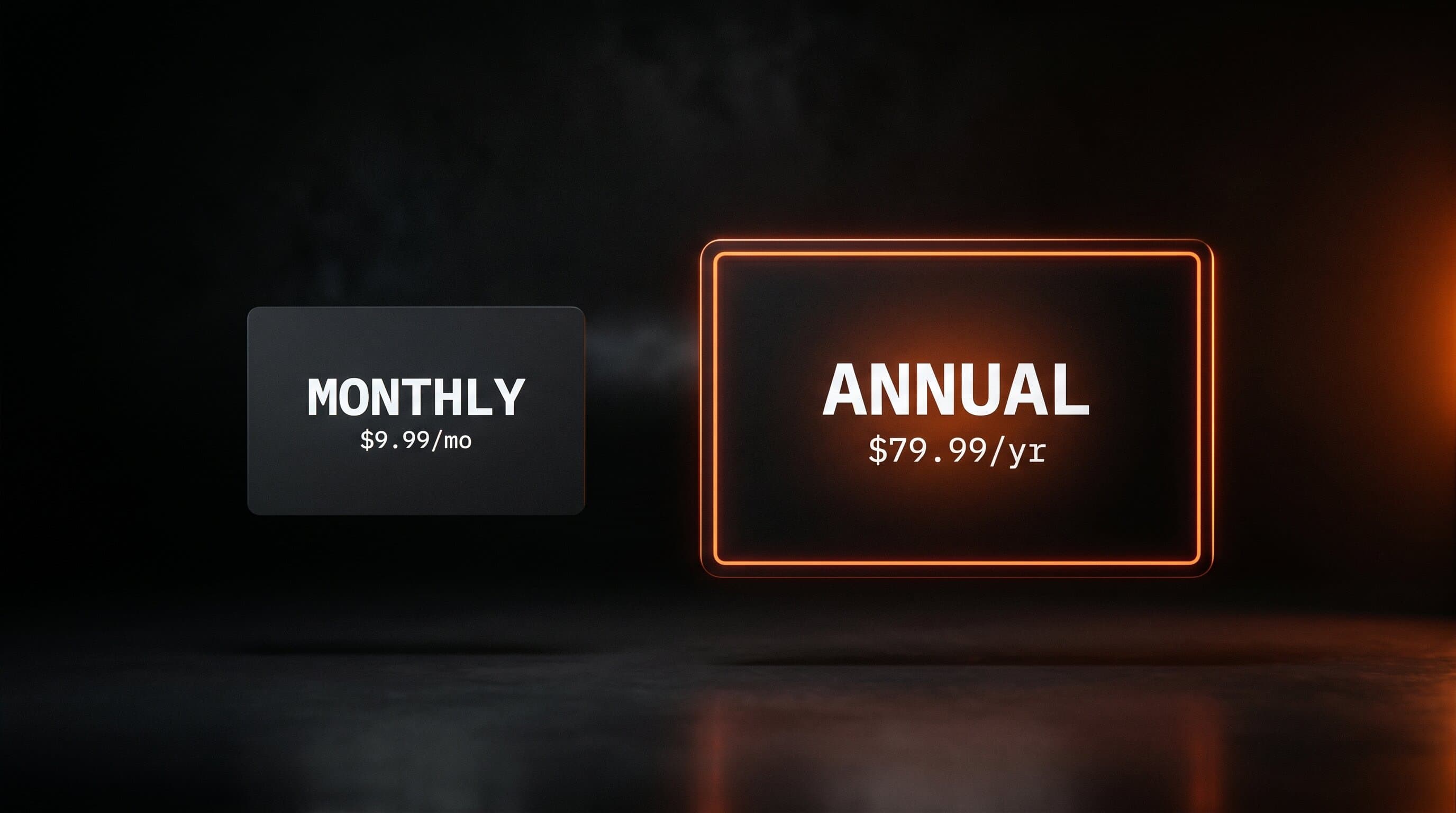
The forever discount has a second cost that the chart doesn't show. Members who joined at half price will compare every future price change with what they pay, and a forever group grows with every sale you run. Discounts that end let you see who stays at full price. (For the everyday version of a discount, the gap between monthly and annual pricing, see our annual vs monthly guide.) That's the number that tells you whether the membership is worth paying for. You probably have two audiences for a Black Friday sale: followers who have never paid you, and members paying monthly. Give them different offers. For new members, use a discount that ends: Patreon's first-month or first-year code, a Ghost offer set to "once" or "multiple months," a Substack offer with a fixed duration, or an App Store introductory offer. Keep the sale short, Friday through Monday, and say on the checkout what the price becomes. For existing members, offer the switch to annual. Substack can apply the offer to upgrades automatically, and Apple's promotional offers reach current subscribers. Patreon's discounts are for new members only, so on Patreon the annual nudge is a post, not a code. A member on an annual plan faces one cancellation moment a year instead of twelve, which our retention guide calls the largest retention lever in a subscription business. Then, in January, count how many Black Friday sign-ups paid their first full-price bill. If most of them left, the discount bought a weekend, and the next question is what would make people stay. Usually the answer is something they use between your posts, not a cheaper version of the same content.
DateWhat to do
By November 20End any public Patreon discount, so its 7-day gap clears before Friday
November 20 to 25Create the offers, set each duration, and test a checkout on a second account
November 27 (Black Friday)Open the new-member sale and email existing members the annual upgrade
November 30 (Cyber Monday)Last day of the sale; set every offer's end date to that night
Late December to JanuaryCount first full-price renewals from the sale cohort
A discount changes the price. It doesn't change why people pay you, and if the membership is a back catalog of content, a holiday sale mostly reaches people who were already close to joining. The renewals in January will tell you more about the membership than the sign-ups on Friday. Built by Foundry builds the other kind of recurring business: a product your audience uses every week, designed, built and launched in about three weeks at $0 upfront on a revenue share. We keep running it after launch, including the pricing and offers. You can read more about how Built by Foundry works.
See What We’d Build You →
No. Patreon's help center says membership discounts "only apply to new members during their first month or first year of membership," and a public discount is shown to anyone "except existing paid members." For current patrons, a gift or a bonus post is the usual alternative. A Ghost discount set to "forever" applies to that member for as long as the subscription lasts. Archiving the offer stops new sign-ups from using it. Ghost's help page does not say that archiving changes the price for members already on it, so treat a forever discount as permanent for everyone who used it. Yes. Apple's subscription documentation says that at the end of the offer period "the subscription auto-renews at the standard price unless a subscriber cancels it." That applies to introductory offers, promotional offers, offer codes and win-back offers. Not on the App Store. Apple says existing subscriptions "will automatically renew at the lower price," with no option to keep the higher price for them, and raising it again can require each subscriber's consent. Use an introductory or promotional offer, which leaves the list price where it is. Black Friday is Friday, November 27, 2026, the day after Thanksgiving in the US. Cyber Monday is November 30, 2026.
Our work

Creators who already did this

These are apps we designed, built, shipped, and still run today, with the creator keeping the code and the audience.

Liv Merima

Liv Merima

Founder & CEO of Claim It

Custom affirmations that help millions choose themselves.

Top Lifestyle App150K+ followers
Read the case study
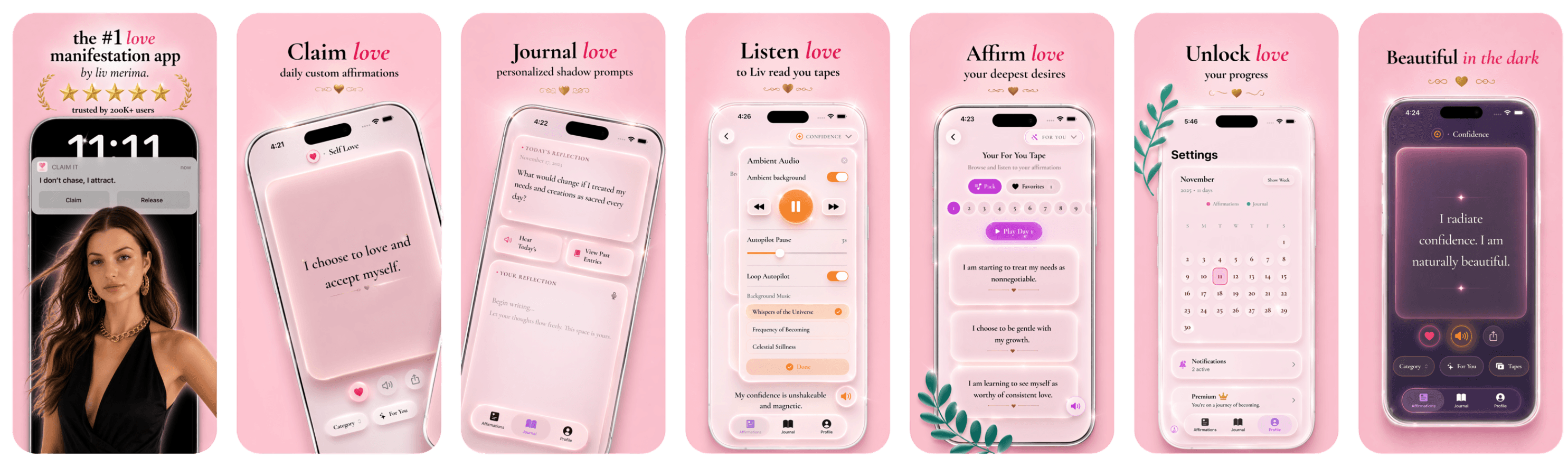
Claim It screenshots
Brandon Whiteleather

Brandon Whiteleather

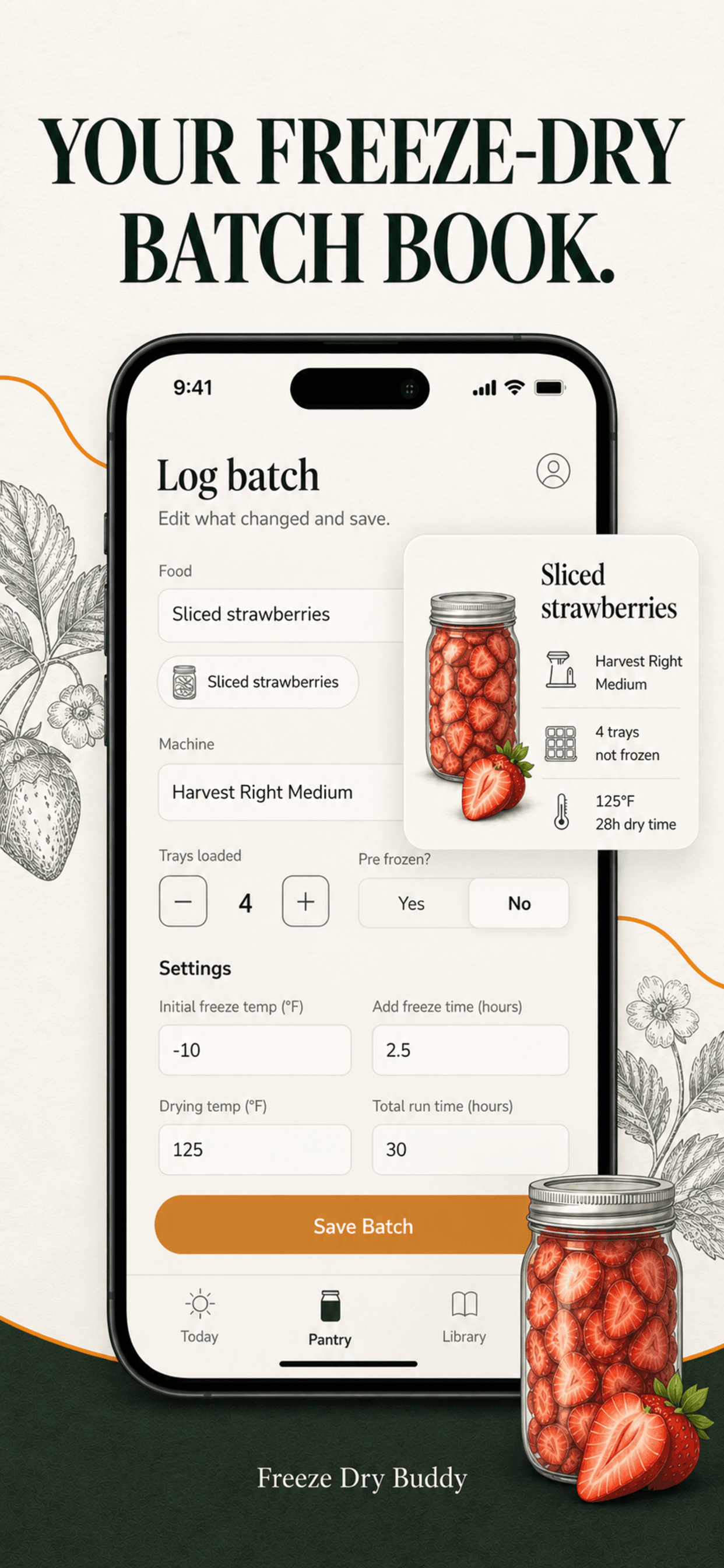
Founder & CEO of Freeze Dry Buddy

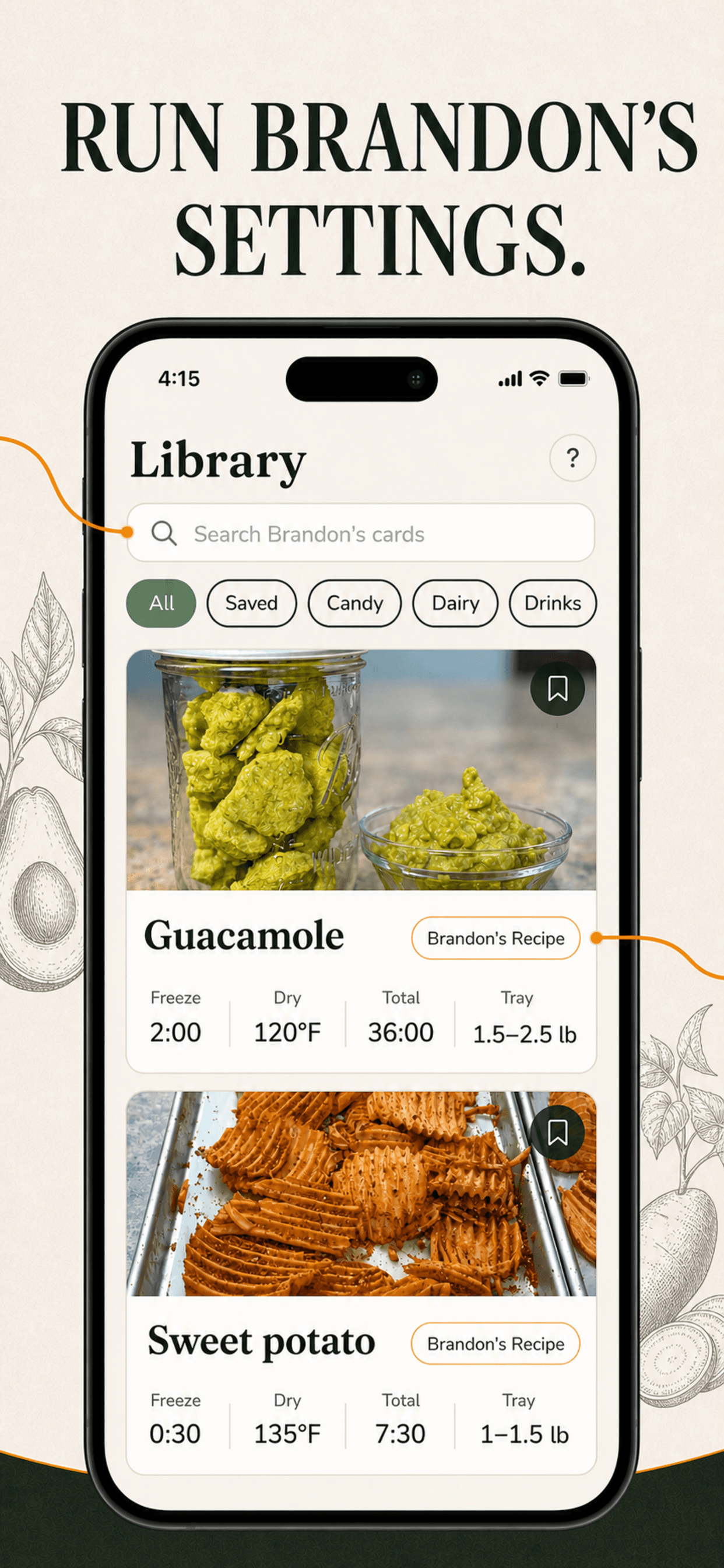
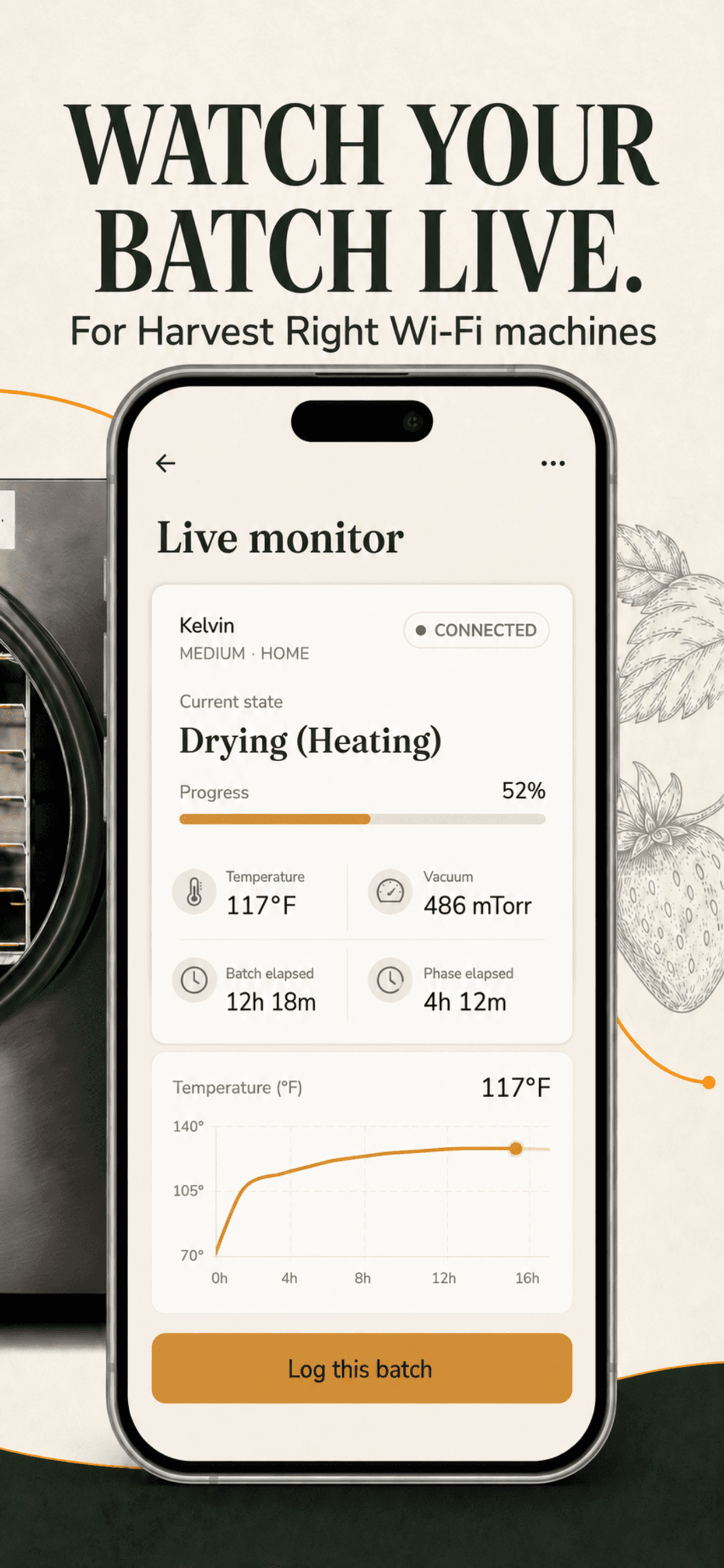
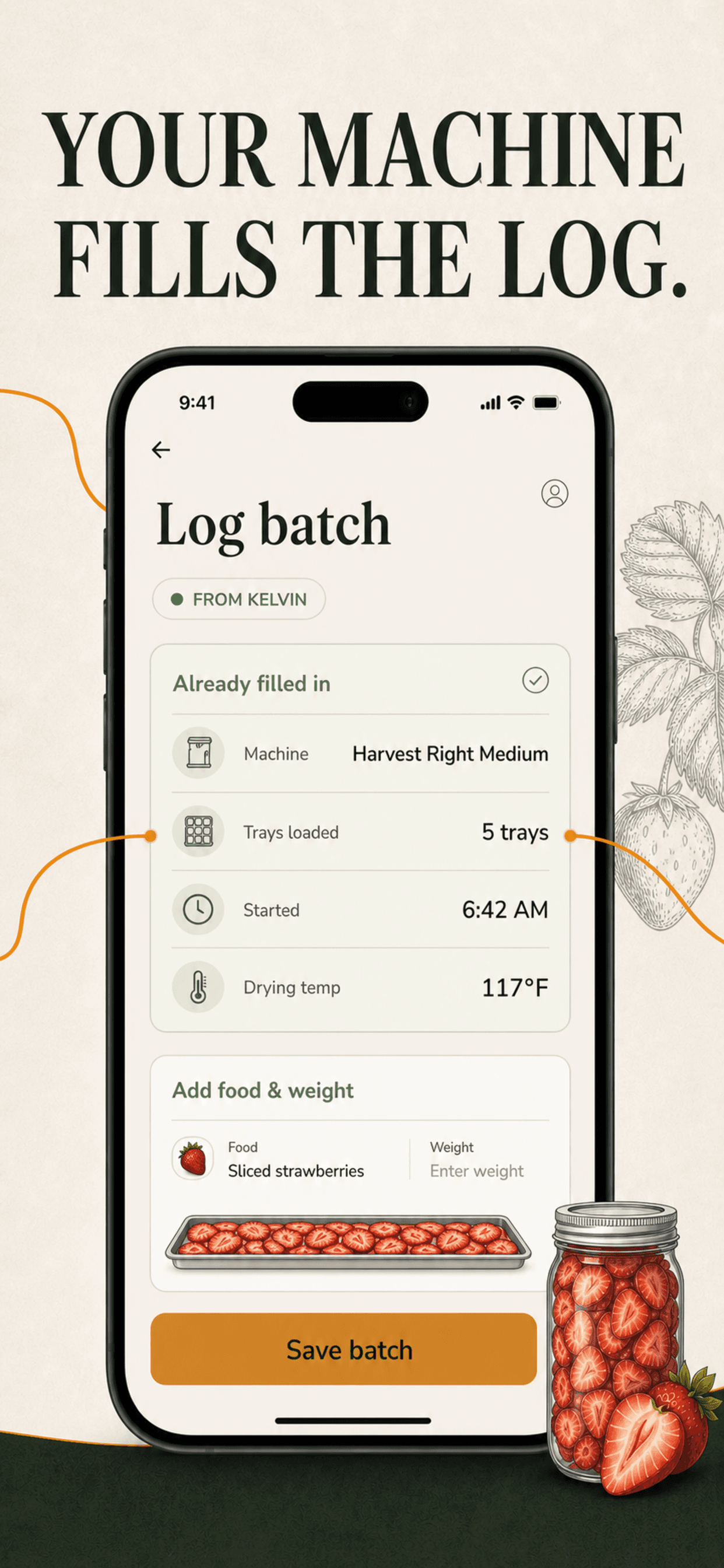
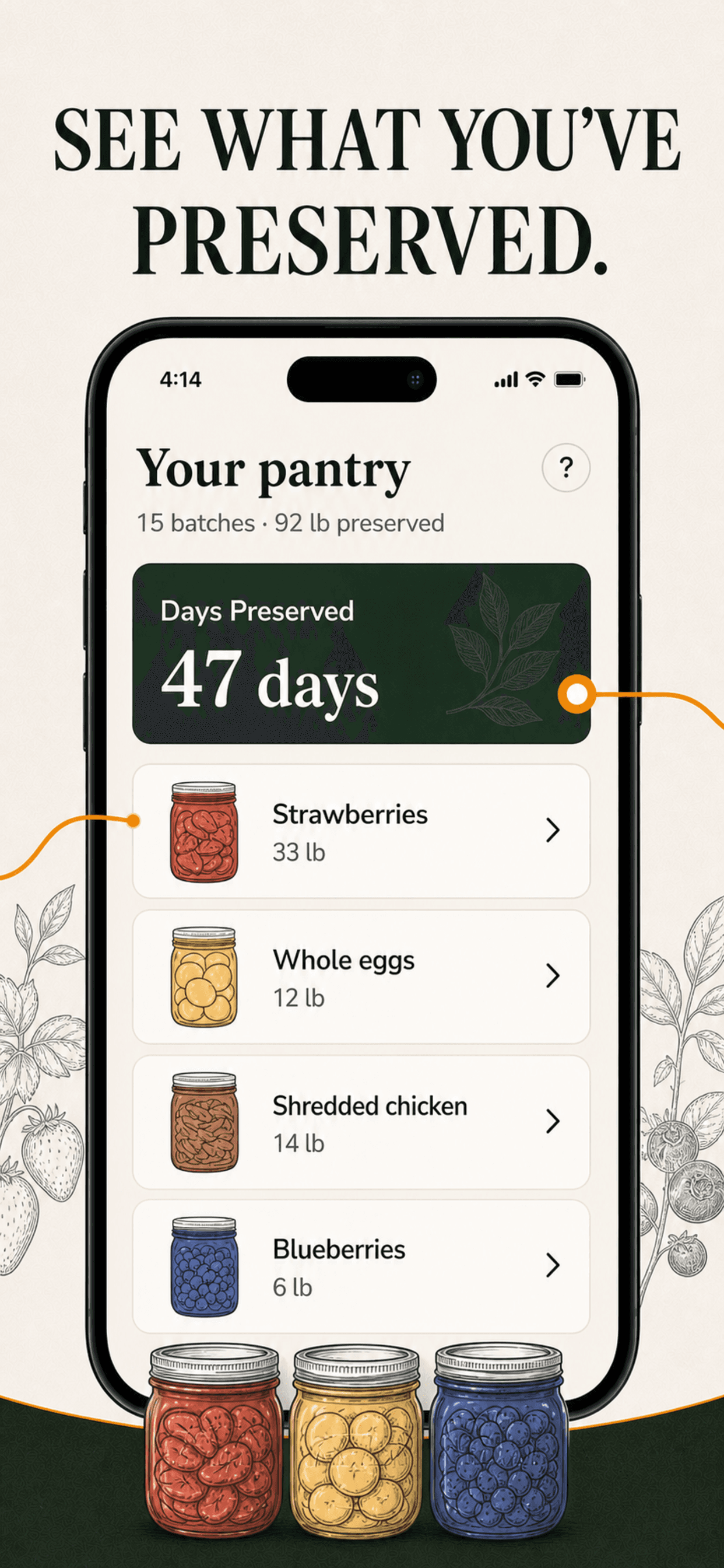
Freeze drying made foolproof, from a homesteader who's done it 1,000 times.

Top Food App1.4M+ followers
Read the case study
Kristen Donathan

Kristen Donathan

Founder & CEO of Stain Fix

Snap a stain. Get the fix in seconds.

Top Lifestyle App1.5M+ followers
Read the case study
Stain Fix screenshots

Creator app strategy

Curious what your app could be?

Enter your handle and BUILT BY FOUNDRY will research your audience and present custom app concepts. Free.

Black Friday Membership Discounts in 2026: 4 Platforms, 3 Durations, and the Renewal Test