
Turning Knowledge into Products

Push Notifications for Creator Apps: 2026 Guide

Foundry
June 10, 2026
Share
Push Notifications for Creator Apps: 2026 Guide

Get Creator Revenue Insights

How creators are turning audiences into subscription businesses
Share
Key Takeaways:
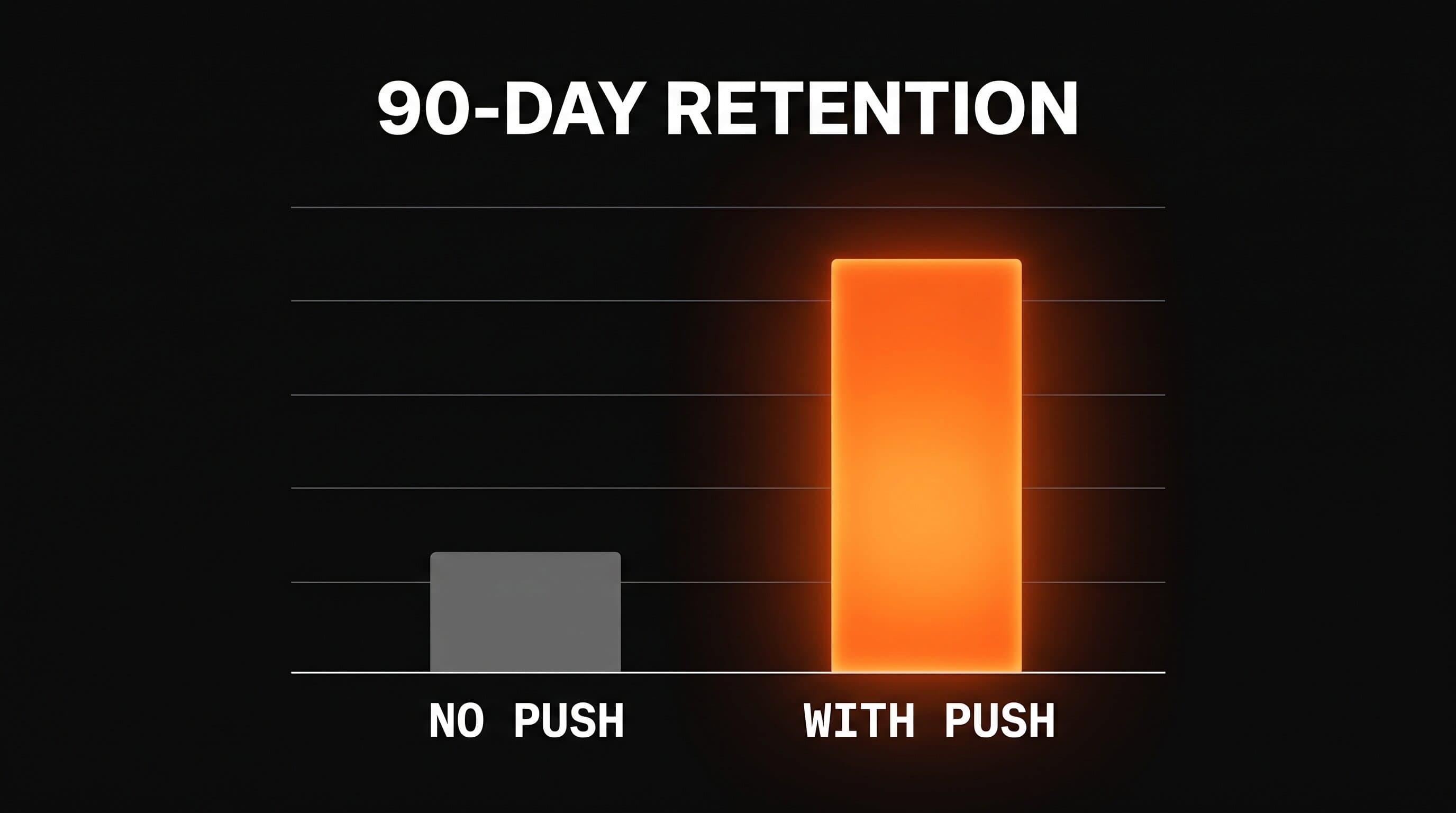
  • Airship studied 63 million app users and found retention was nearly 3x higher for users who got at least one push notification in their first 90 days versus those who got none
  • 95% of users who opt in to push but receive nothing in 90 days end up churning
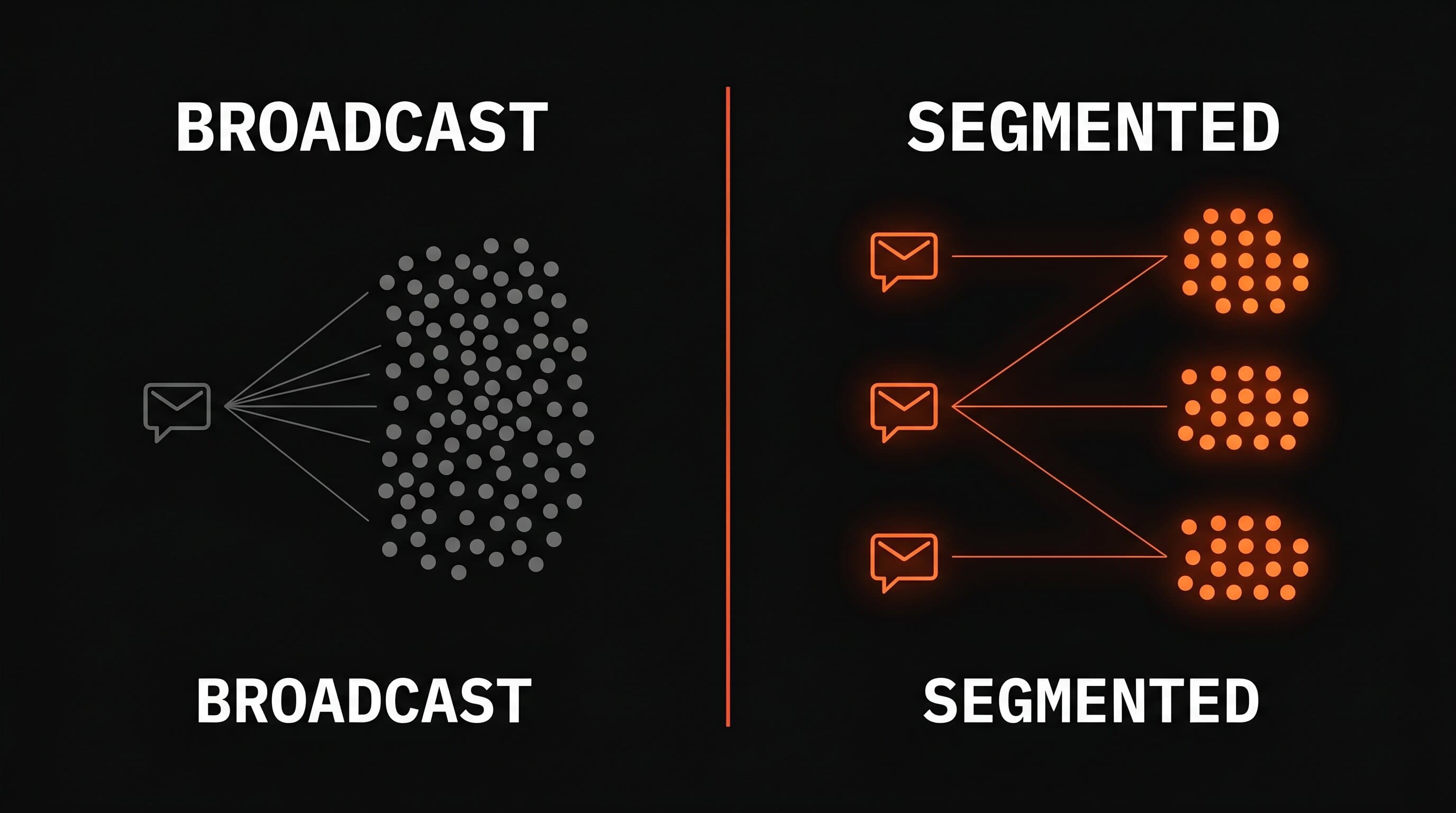
  • Segmented, behavior-based notifications convert far better than broadcast blasts: roughly 54% of opens convert on segmented sends versus 15% on broadcasts
  • The average push reaction rate sits near 7.8% across all apps, so the message has to earn its place on the lock screen
  • For a creator app, every push is also a content prompt, a re-engagement loop, and a retention lever at the same time
What are push notifications for creator apps? Push notifications are the short messages a creator's app sends to a subscriber's lock screen to pull them back into the app. For a subscription business, they are the cheapest re-engagement channel you own, and they decide whether an install becomes recurring revenue or a forgotten icon. Here is the uncomfortable truth most creators learn too late: getting someone to download your app is the easy part. Keeping them is the business. A subscriber who opens your app three times a week renews. A subscriber who forgets it exists cancels at the end of the trial. Push notifications are the difference between those two outcomes, and most creator apps treat them like an afterthought. This guide breaks down how to use push the way a founder does. Not as spam. As the single most important retention tool you have. Push notifications are the highest-leverage retention lever a creator app has, and the data is not close. Airship analyzed 63 million new app users across roughly 1,500 apps and found that retention rates were nearly 3x higher for users who received at least one push notification in their first 90 days compared to users who received none (Airship, 2025 benchmarks). The same research found something brutal: 95% of users who opt in to notifications but never receive one in their first 90 days churn anyway. Permission to message someone is worthless if you never use it. For a creator app, this maps directly to money. Retention is the engine of monthly recurring revenue, and churn is the thing quietly draining it every month. Look at what a few points of retention does to a $9.99/month app:
Monthly RetentionAvg Subscriber LifetimeLifetime Value at $9.99/mo
80%5 months~$50
88%8.3 months~$83
93%14.3 months~$143
That is the same app, the same price, the same audience. The only variable is whether people keep coming back. Push is how you make them come back.
Bar chart comparing 90-day retention for creator app users who received no push notifications versus users who received push, showing roughly 3x higher retention with push
You earn the opt-in by asking at the right moment, not on launch. The default iOS prompt only fires when you call it, and Airship's data shows roughly 50% of iOS users opt in versus 85% on Android, where notifications are on by default. That iOS gap is where most creator apps bleed reach. The fix is a soft ask. Before you trigger Apple's system prompt, show your own screen that explains the value: "Get notified when [creator] drops a new workout" or "We will remind you on your rest days, never more." Only fire the real iOS prompt after the user taps yes on your screen. This way a user who would have said no never burns your one system prompt, because once they deny it, you cannot ask again without sending them to Settings. Time the ask to a moment of value, not a moment of friction. Ask after someone finishes their first session, hits a streak, or saves a favorite. Never ask during signup when they have no reason to trust you yet. Send when your specific audience actually opens their phone, then prove it with data. There is no universal best time, but there are reliable starting points: fitness apps win early morning and early evening, meditation and journaling apps win at night, and cooking apps win late afternoon before dinner. Start with your niche's rhythm, then watch your own open rates and adjust. The bigger timing win is behavioral triggers over scheduled blasts. A notification fired because someone did something, finished a lesson, abandoned a cart, hit day six of a trial, beats a notification fired because the clock said 9am. We cover the trial-end trigger in depth in our trial to paid conversion guide, where a single day-six push can lift conversion by 8 to 15 points. Match the message to the moment:
TriggerTimingExample Message
New content dropWithin an hour of publish"New 20-minute core session is live"
Streak at riskEvening, day of"Keep your 12-day streak alive"
Trial endingDay 6 of a 7-day trial"Your trial ends tomorrow. Lock in your plan"
Win-back7 days inactive"Your saved workouts are waiting"
Segmented notifications win, and it is not subtle. Broadcasting the same message to everyone produces an open rate near 3%, while segmented messages sent to the right slice of users land closer to 7%, and the conversion gap is even wider (Business of Apps, 2026). Of the people who open a notification, roughly 54% convert from a segmented send versus only 15% from a broadcast.
Diagram contrasting a broadcast push notification sent to one undifferentiated grey crowd versus segmented notifications targeted to three distinct user groups in orange
What is segmentation? Segmentation is splitting your users into groups based on behavior or attributes, then sending each group a message built for them. A new user gets an onboarding nudge. A power user gets advanced content. A lapsed user gets a win-back. For a creator app, the simplest segments are the ones that move money:
  • Trial users versus paid subscribers
  • Daily-active users versus people who have not opened the app in a week
  • Users who finished onboarding versus users who stalled
You do not need a data team to do this. You need an app built so the segments exist and the triggers fire automatically. That is an architecture decision, not a marketing one, which is exactly why the build matters. Send notifications that the user would thank you for, not ones that serve your dashboard. The test is simple: would this message make a real fan happy to see it, or annoyed? If you are sending "we miss you" with no reason behind it, you are training people to swipe you away. Here is where the creator app model has an edge nothing else does. Every action inside your app is raw material for a notification, and that same material is raw material for your content. This is the content engine working twice. A leaderboard reset is a push and a weekly recap post. A user hitting a milestone is a push and a celebration story. The app generates the reasons to reach out so you never stare at a blank screen wondering what to say. The notifications that work for creator apps fall into a few buckets:
TypePurposeWhy It Works
Content alertsNew drops from the creatorThe reason people subscribed
Progress and streaksPersonal wins and milestonesIdentity reinforcement
Social and leaderboardsWhat other users didBelonging and competition
RemindersScheduled habitsUtility, not promotion
Win-backRe-engage the lapsedCatches churn before it locks in
Notice that only one of those is promotional. The rest are genuine value. That ratio is the whole game. This is also how an app turns passive followers into daily active users who never unfollow, because the app earns a place in their routine. The ceiling is the moment usefulness drops, and for most creator apps that lands around three to five well-targeted notifications per week. There is no magic number, but there is a clear failure mode: the instant a notification feels like noise instead of value, people either mute you or delete the app. A muted app is a dead app, because you have lost the one channel that drives retention. Frequency tolerance scales with relevance. A daily fitness app can send a morning nudge every day if users opted in for exactly that. A weekly newsletter app sending daily pushes is asking to be uninstalled. Let behavior set the cap, and give users granular controls so they can dial down categories instead of turning everything off. When in doubt, send less and segment more. One perfectly targeted message beats five generic ones, and it protects the asset. Most creator apps lose subscribers to a handful of avoidable errors. These are the ones we see wreck retention again and again:
  • Asking for permission on launch. You get one shot at the iOS prompt. Spend it after the user sees value, not before.
  • Going silent after opt-in. Remember the 95% churn stat. Permission you never use is permission wasted.
  • Broadcasting everything to everyone. Generic blasts train people to ignore you, then to mute you.
  • All promotion, no value. If every push is "upgrade now," the lock screen becomes a sales floor people walk past.
  • No win-back logic. The seven-day inactive user is the cheapest subscriber to save and the easiest one to lose. We break down the full save sequence in our guide to why app subscribers cancel and how to stop it.
Every one of these is a build decision. A push strategy is only as good as the app architecture underneath it, which is why the people who build your product and the people who run it should be the same team. That is the model behind our ongoing app care: we do not hand you a finished app and walk away. We run the retention engine forever. A creator posts and hopes the algorithm delivers it. A founder owns a channel that reaches their audience on command. That is the real shift push notifications represent. You are not renting attention from a platform that can throttle you tomorrow. You own a direct line to the people who pay you, and you decide when it rings. The creators who treat push as spam stay stuck in the install-and-forget cycle. The ones who treat it as a retention system build apps that compound, because every well-timed notification is one more renewal, one more streak, one more reason a subscriber stays. The tooling is the same. The mindset is the difference. If you have an audience and an idea, the only thing standing between you and a recurring-revenue business is the build. We handle that part. Want to turn your expertise into an app? We build custom apps for creators, $0 upfront, 3-week delivery, and we handle all the tech forever, including the push and retention systems that keep subscribers paying.
Let's Build →
Yes. Airship's analysis of 63 million users found retention was nearly 3x higher for users who received at least one push in their first 90 days versus users who got none. Notifications are the single most reliable retention lever a subscription app has. The average reaction rate across all apps is roughly 7.8%, with Android higher than iOS. Segmented, behavior-based messages routinely beat that, while generic broadcasts often sit near 3%. Targeting is the biggest driver of open rate. Most creator apps do well with three to five targeted notifications per week, but the real cap is relevance. A daily-use app can send daily if users opted in for that. The moment a message feels like noise, you risk being muted or uninstalled. Use a soft ask. Show your own screen explaining the value before triggering Apple's system prompt, and ask after a moment of value like a completed session or a new streak. This protects your one shot at the iOS permission dialog. Most agencies charge $50K to $200K upfront. Built by Foundry charges $0 upfront. We build your app, wire in the push and retention systems, submit to the App Store, and take a revenue share. We earn when you earn.

Creator app strategy

Want us to review your creator business?

Apply for a Foundry Creator App Review. We'll tell you whether there is a real app opportunity hiding in your audience.

Push Notifications for Creator Apps: 2026 Guide