
Creator Economy Trends

IAB Creator Economy Report 2026: 7 Numbers Behind Brand Deals

November 16, 2026
Share
IAB Creator Economy Report 2026: 7 Numbers Behind Brand Deals

Get Creator Revenue Insights

How creators are turning audiences into subscription businesses
Share
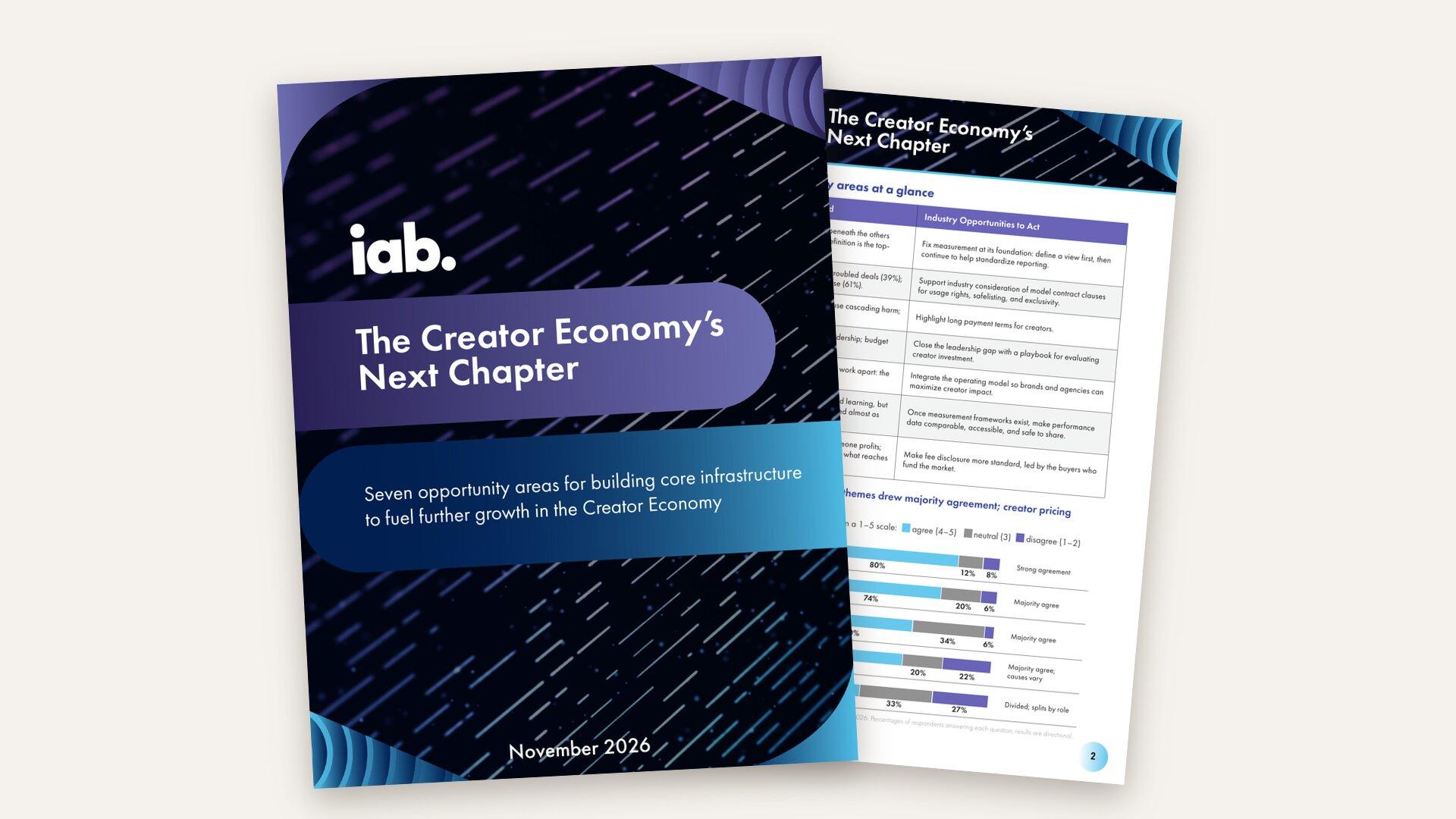
On November 10, 2026, the IAB published The Creator Economy's Next Chapter, a survey of 53 leaders from brands, agencies, platforms, talent managers and measurement firms. Its conclusion is blunt. Creator media budgets are expected to reach $44 billion this year, and the systems that measure, contract and pay for creator work have not kept up. In the report's words: "Today, they cannot." The IAB wrote the report for the companies that buy creator work. Creators can read it as a list of the places where a brand deal slows down, shrinks, or arrives late. We read the full 20-page PDF and pulled out the seven numbers that matter most to someone on the receiving end of a brand deal. Key takeaways:
  • Measurement is the top complaint (67%). Two-thirds of respondents (66%) want one cross-platform definition of a view.
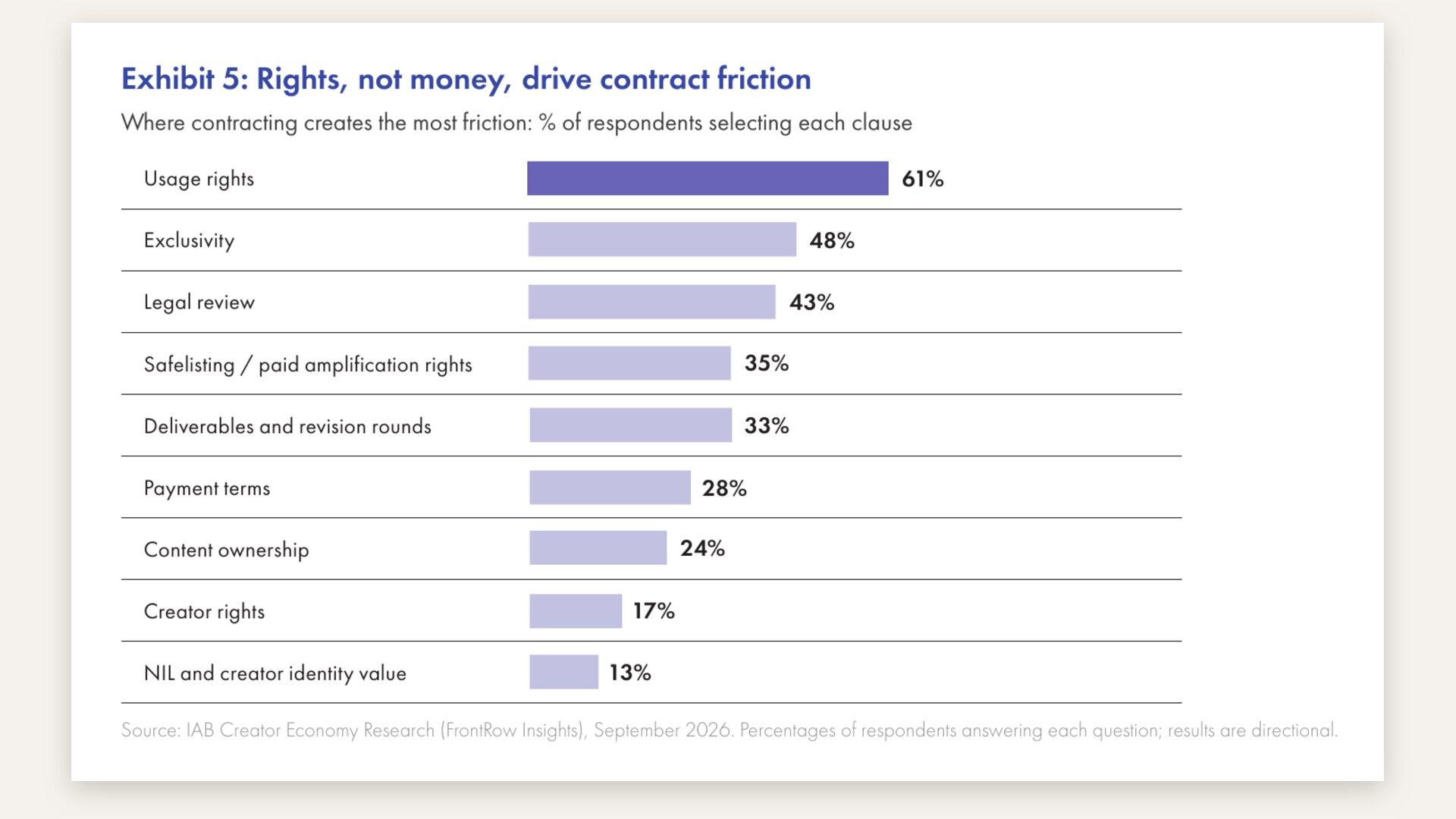
  • In contracts, usage rights cause more friction (61%) than any other clause, ahead of exclusivity (48%).
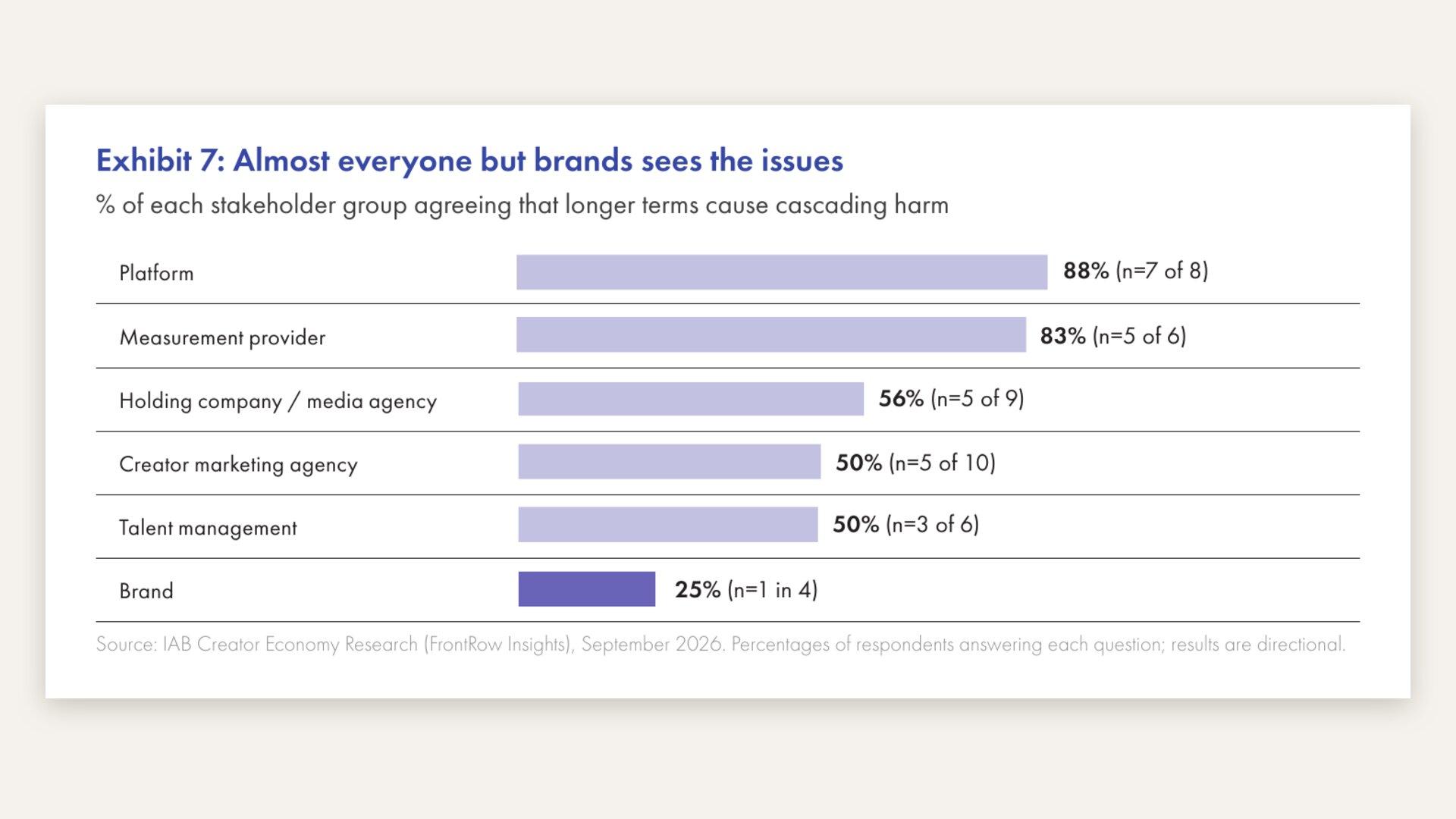
  • 60% say long payment terms cause harm down the chain. Brands are the group least likely to agree, at 1 of 4.
  • The IAB calls every figure "directional", because the sample is small and leans toward intermediaries.
It is the research behind the IAB's upcoming Trusted Creator Brand Deal Initiative, and a preliminary readout was shown at the IAB's first CreatorFronts event on September 15, 2026. The IAB ran it with FrontRow Insights & Strategy. Interviews by the IAB Creator Economy Board came first, then a survey fielded from July to September 2026. The respondent mix matters. It included creator marketing agencies (10), platforms (10), holding companies and media agencies (9), talent management (6), measurement providers (6), brands (5), affiliate networks and publishers (2) and five people who described their own role. None of the named groups is creators. The report itself says that creators "hold neither the performance data nor the outcome data." So this is how the buyers and middlemen see the deal. That is why it is useful to a creator: it shows how the other side of the table thinks.
NumberWhat it measuresWhy a creator should care
$44 billionExpected 2026 creator media budgets, up from $13.9 billion in 2021The money is real and growing nearly four times faster than media overall
53Industry leaders surveyed, with no creator respondent groupYou are reading the buyers' view of your deals
67%Named measurement and attribution as what is not workingYour rate is being judged on numbers nobody trusts
61%Named usage rights as a top contract friction clauseRights, not the fee, decide how long a deal takes
60%Agree long payment terms cause cascading harmSlow payers push their cash flow problem onto you
36%Have no visibility into how much of a budget reaches creatorsFee layers are often invisible, even to insiders
94%Say senior leadership decisions conflict with practitioners at least sometimesBudget allocation is where that conflict lands most (90%)
Because every other argument depends on it. Asked what is not working, 67% named measurement and attribution, almost twice as many as named any other problem. Among the standards respondents asked for, a common definition of a view came first at 66%. All six measurement providers chose it. The IAB's explanation is short: "Each platform counts a view differently." We saw this happen in August, when YouTube changed how it counts views. Public view counts went up, and creator earnings did not move with them. Brands now have to compare a YouTube view, a TikTok view and a Reel view, and the platforms do not define them the same way. When the units differ, rates cannot be compared either. If you are paid per view, as in clipping campaigns, the platform's definition of a view sets your pay. The confidence gap is just as telling. In Exhibit 4, no brand and no talent manager said they were "very confident" in their own metrics. Platforms (67%) and creator marketing agencies (56%) were the most confident, and they are the groups that produce the reports. The IAB plans to work with the Media Rating Council to publish cross-platform definitions of view, impression, reach and watch time. Its goal is one or two platform commitments in the first year. The second opportunity area is contracts. Of the respondents who described a deal that ran into serious trouble in the past year, 39% blamed contracting and negotiation, more than any other cause. One holding company described a pharmaceutical creator program whose terms took nearly two years to settle.
IAB Exhibit 5 from The Creator Economy's Next Chapter: usage rights 61%, exclusivity 48%, legal review 43%, safelisting or paid amplification rights 35%, payment terms 28%
The IAB titled this chart "Rights, not money, drive contract friction," and the bars back that up. Usage rights (61%), exclusivity (48%) and paid amplification rights (35%) all rank above payment terms (28%). Nearly half of the respondents who described their process (48%) said the core of the contract is already standard: deliverables, disclosure, approvals and the payment schedule. The parts that get fought over on every deal are rate, usage, exclusivity and terms. For a creator, that changes where to focus. A brand that wants to run your video as a paid ad for a year is buying something different from a brand that wants one organic post. Price the rights as a separate item, because the other side already treats them that way. The smallest party in the chain. Three in five respondents (60%) agreed that longer payment terms cause cascading harm, and only 6% disagreed. Creator agencies described paying creators on time while their own clients paid late. An entertainment studio said it was "forced to act as a bank." One talent agency put it plainly: "Employees are not asked to wait a month to a quarter to be paid. Stop asking creators to."
IAB Exhibit 7: agreement that longer payment terms cause cascading harm, with platforms at 88%, measurement providers 83%, holding companies 56%, creator agencies and talent management 50%, and brands 25%
The split above is the finding to remember. The groups that end up carrying the wait agree most strongly. Brands, the ones setting the terms, agree least, at 1 of 4. Creators have started to respond on their own: a platform respondent said some creators now ask not to be matched with brands known for slow payment. The report also describes a brand bankruptcy that left an agency unable to pay creators on unrelated campaigns, after which the agency itself failed. On this issue the IAB does not go beyond suggesting that firms "may wish to individually consider" prompt payment. No industry payment standard is coming. We have compared how fast six payers actually release creator money, and the published terms vary widely. Apple, for example, pays developers within 45 days of the end of the fiscal month in which a sale happened. That date is printed, and it does not change from one deal to the next. Nobody in the survey agrees, and that disagreement is the finding. Every creator marketing agency estimated that more than half of campaign spend reaches creators. Every brand estimated half or less, and three of the five brands put it under 30%. Not one respondent on either side landed in the other side's range. More than a third of respondents (36%) said they have no visibility at all, including 8 of 10 platforms. Nearly three-quarters (74%) agreed that fee opacity persists partly because some parts of the industry benefit from it. No respondent named their own organization. Support for a disclosure standard splits the same way: 4 of 5 brands chose it, against 1 of 10 creator marketing agencies. The IAB notes that the gap "may reflect margin, different definitions of campaign spend, or both." It proposes a standard line-item breakdown: creator fee, management commission, agency fee, paid media and measurement costs. The report is written for buyers, but several of its fixes are things a creator can request today. Each item below comes from a recommendation in the report.
  • A usage-rights line with a term and channels. Ask how long the brand can use the content, where, and whether it can run as a paid ad. Price it separately from the post.
  • An exclusivity window with a defined category and end date. Exclusivity was the second most common friction clause (48%). Vague category terms can block future deals.
  • A payment date, not a payment term. A term that only starts counting once an invoice is approved can start late. A fixed calendar date is easier to enforce.
  • A results-sharing clause. The IAB suggests adding one "so creators and their representatives see the outcomes of their own work." Without it, you cannot show your value in the next negotiation.
  • The line items. If an agency is in the middle, ask what share of the budget is your fee. The IAB's own proposed breakdown gives you the vocabulary.
Disclosure rules apply on top of all of this. Our guide to sponsorship disclosure in 2026 covers what the FTC requires. The IAB's fixes improve deals that a creator still does not control. Measurement standards, model clauses and fee disclosure will make sponsorships fairer. They will not make them recurring. Each one is still a negotiation with a buyer who sets the payment terms, keeps the performance data and may disagree with their own leadership about the budget. 94% of respondents said that conflict happens at least sometimes. That is the gap between a creator middle class paid by deals and a creator who owns a product. When people subscribe to your app or buy your product, you can count them yourself. They pay through a store with a published schedule, and the customer relationship stays with you. We laid out the math in brand deals versus subscription apps. Brand deals still pay, and the IAB's work may make them pay more fairly. They work best as one revenue line among several. Building and running that owned product is what we do at Built by Foundry. After launch, our App Care team keeps it updated, supported and measured. The IAB (Interactive Advertising Bureau) published it in November 2026 with FrontRow Insights & Strategy. The report says this work is becoming the IAB Trusted Creator Brand Deal Initiative. 53 industry leaders, surveyed from July to September 2026. The IAB says the sample leans toward high-volume intermediaries, brands are the smallest group (5), and all figures should be read as directional. Defining a view, model contract clauses for usage, exclusivity and safelisting, prompt payment, a playbook for senior leaders and finance teams, better brand operating models, easier sharing of performance data, and fee disclosure led by buyers. The IAB has made the view definition its 2027 priority. No. The report calls an IAB-created standard creator contract "unlikely" and says the immediate goal is for the industry to consider model clauses for usage rights, safelisting and exclusivity.
Our work

Creators who already did this

These are apps we designed, built, shipped, and still run today, with the creator keeping the code and the audience.

Ellie Fausett

Ellie Fausett

Founder & CEO of Vector Guard

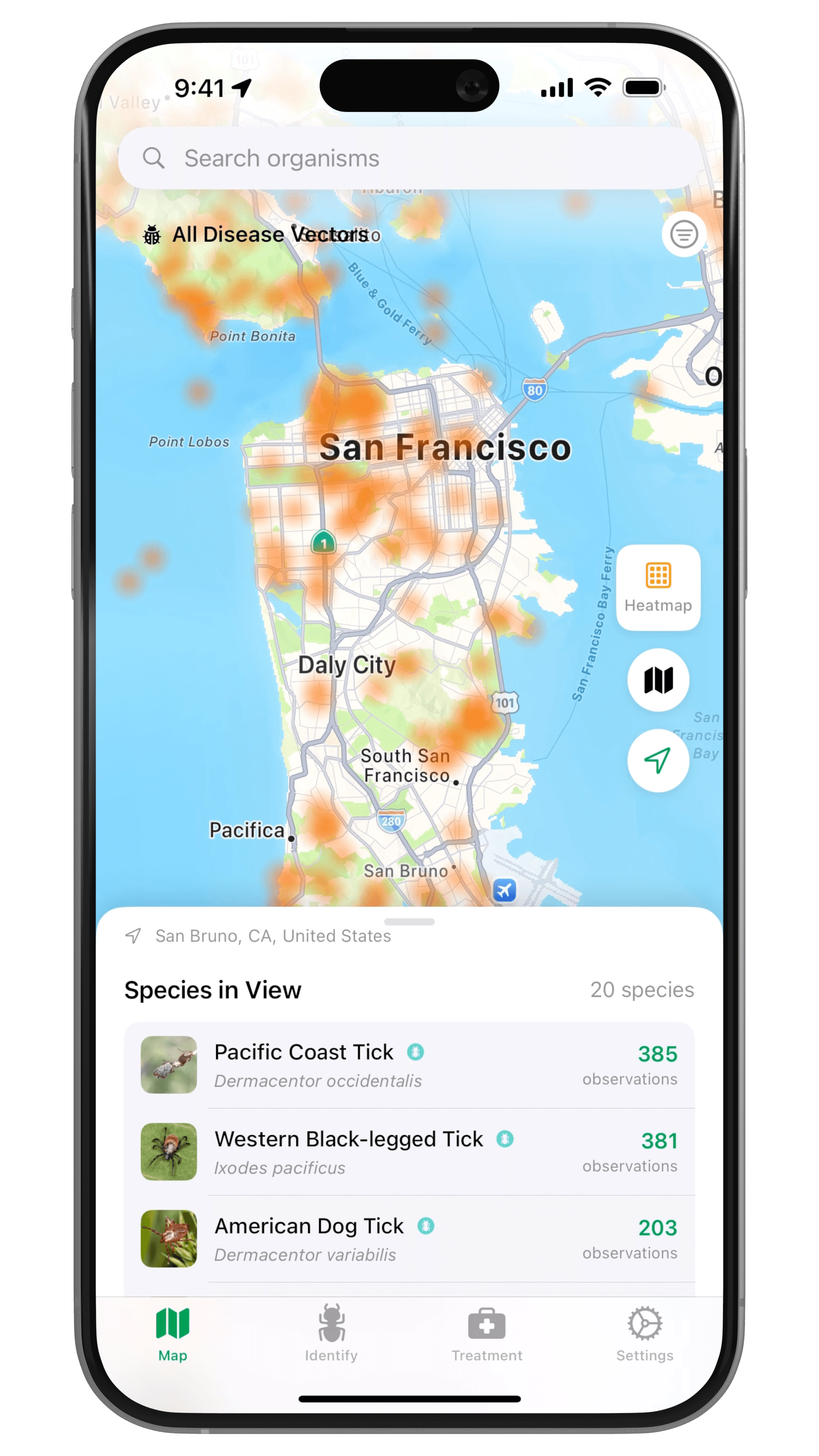
Spot disease-carrying pests before they reach your family.

Top Health App
Read the case study
Vector Guard screenshots
Samantha Mae

Samantha Mae

Founder & CEO of NineLives

Cat health tracking from the world's most beloved Scottish Fold.

Top Health App150K+ followers
Read the case study
NineLives screenshots
Liv Merima

Liv Merima

Founder & CEO of Claim It

Custom affirmations that help millions choose themselves.

Top Lifestyle App150K+ followers
Read the case study
Claim It screenshots

Creator app strategy

Curious what your app could be?

Enter your handle and BUILT BY FOUNDRY will research your audience and present custom app concepts. Free.

IAB Creator Economy Report 2026: 7 Numbers Behind Brand Deals