
Turning Knowledge into Products

What Is Clipping? $1 per 1,000 Views Across 50 Campaigns

September 28, 2026
Share
What Is Clipping? $1 per 1,000 Views Across 50 Campaigns

Get Creator Revenue Insights

How creators are turning audiences into subscription businesses
Share
Key Takeaways:
  • Clipping is paying other people, per 1,000 views, to cut your long videos into short ones and post them on their own TikTok, Reels, Shorts and X accounts
  • We read the 50 campaigns on the Content Rewards "All campaigns" board on September 28, 2026. The median rate was $1.00 per 1,000 views, the range ran from $0.05 to $3.00, and together they had budgeted about $1.10 million and spent about $784,000
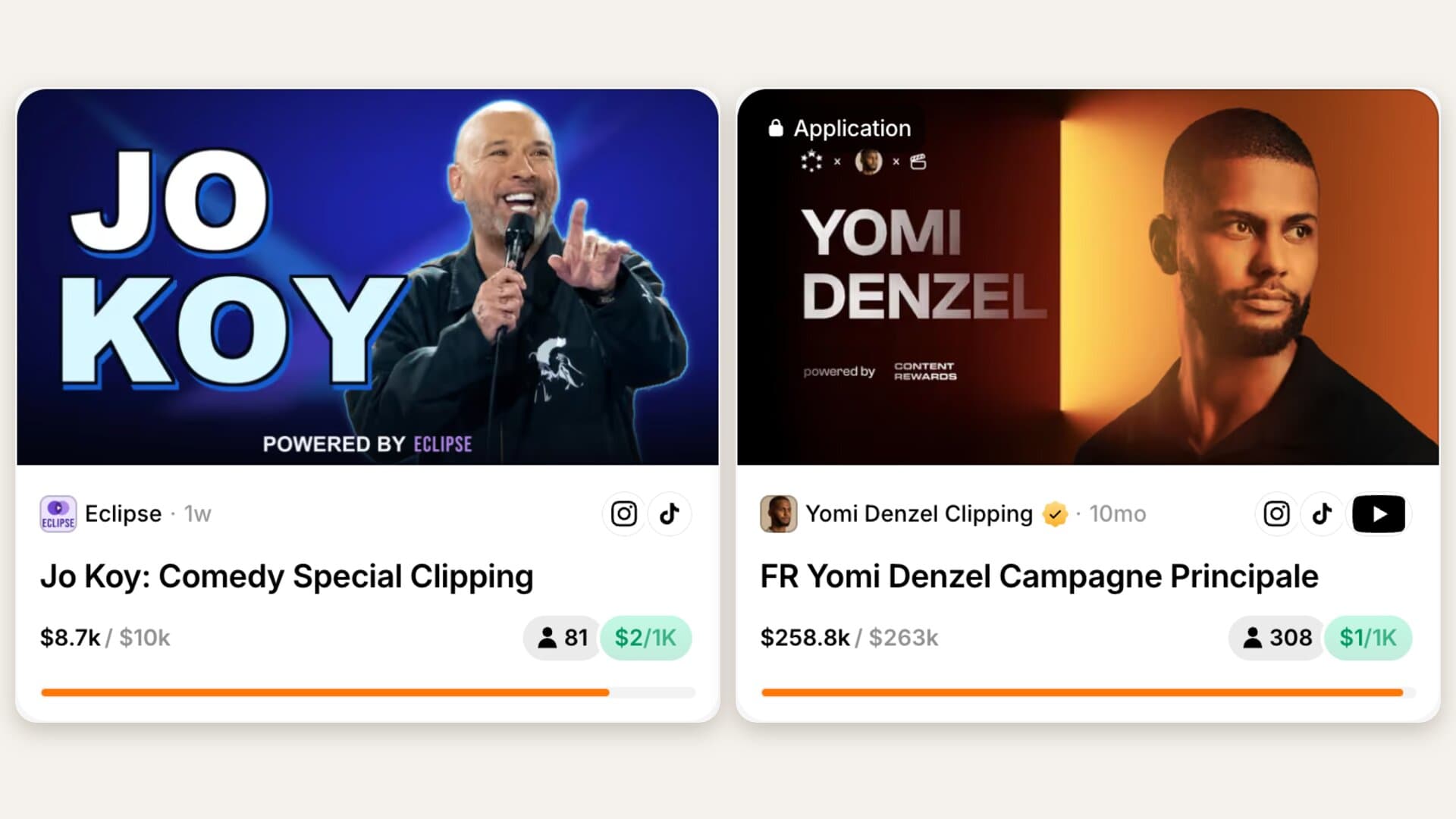
  • At least 18 of the 50 were built around a named person's content rather than a company's, including comedian Jo Koy and French entrepreneur Yomi Denzel, whose campaign had spent $258,800 of $263,000
  • Whop's own terms take a 10% fee on everything paid out and require every clip to carry a disclosure such as #Sponsored. Clipping buys views at a posted price. It pays off only when those views have something to buy
Clipping went from a side hustle to a line item in 2026. Podcasters, streamers, comedians and course sellers now post a budget and a rate, and thousands of strangers compete to make their best 30 seconds travel. If you have long-form content and an audience, someone has probably asked whether you should run a campaign. Here is what the word means, what it costs today, and the one question to answer before you pay for a single view. Clipping is a paid distribution model in which a creator or brand pays independent editors, called clippers, a fixed rate for every 1,000 verified views their short clips earn. Clippers cut moments from the creator's long videos, post them on their own social accounts, and submit them for approval. On the largest marketplace, Whop's Content Rewards, the typical rate in September 2026 was $1 per 1,000 views. The key word is their own accounts. A clip does not appear on your channel. It appears on a page with a name like "Daily Podcast Moments," run by someone you have never met, and you pay for the views it gets there. Whop's help documentation describes two campaign types. Clipping turns existing long-form content (podcasts, livestreams, webinars) into short clips. UGC asks people to make original content about a brand. This post is about the first. A campaign is a short form with a handful of numbers, and each one does a specific job. Whop's docs define them this way:
  • Reward rate. What a clipper earns per 1,000 views.
  • Minimum payout. The smallest earning that reaches your review queue. Whop's example: a $3 rate with a $6 minimum means only clips with at least 2,000 views ask for your approval.
  • Maximum payout. A cap per clip. With a $3,000 cap and a $3 rate, a clip stops earning at 1 million views, however far it keeps going.
  • Flat fee bonus. Optional. A $10 bonus on a $3 rate pays $16 for a 2,000-view clip.
  • Platforms and requirements. Which apps you accept, and the rules a clip must follow to be approved.
You fund the budget up front. According to the Content Rewards terms, you can reject a clip only if it breaks your brief or the terms, looks fraudulent, or arrives after the budget or end date runs out. Whop counts only "legitimate views" and excludes anything from bots or paid inducements. On top of the payouts, Whop deducts a Content Reward Fee of 10% of everything paid to clippers. Nobody publishes an official rate card, but the campaign board itself is public. On September 28, 2026 we read all 50 campaigns in the "All campaigns" view of contentrewards.com/discover, which lists each one's rate, spend and budget.
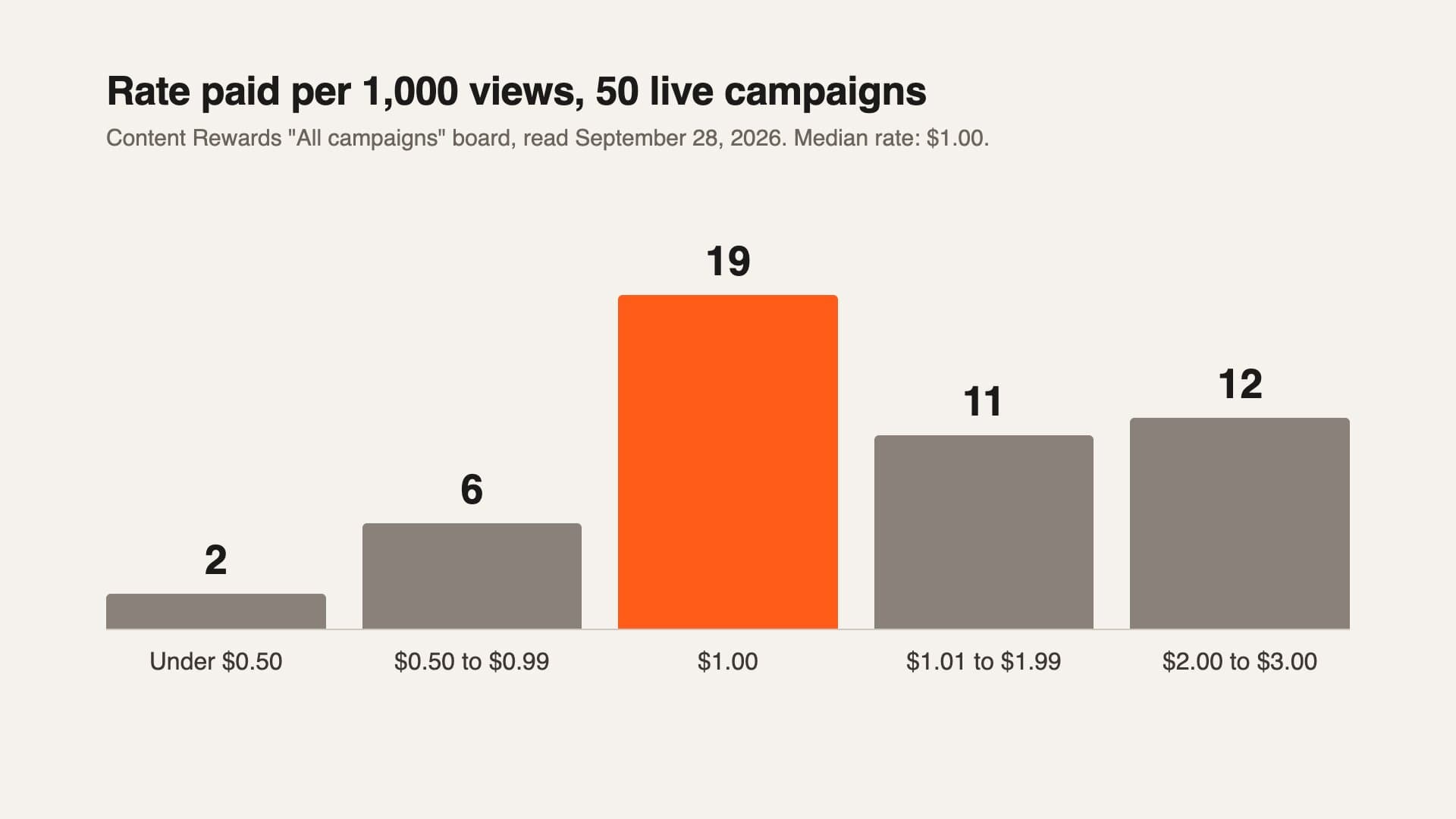
Bar chart of the rate paid per 1,000 views across 50 live Content Rewards campaigns on September 28, 2026: 2 campaigns under $0.50, 6 from $0.50 to $0.99, 19 at exactly $1.00, 11 from $1.01 to $1.99, and 12 from $2.00 to $3.00. The median rate is $1.00
Nineteen of the 50 paid exactly $1.00. Twelve paid between $2 and $3, usually for harder briefs such as original UGC or a big entertainment release. The lowest, a poker site's logo campaign, paid $0.05. Across the board the 50 campaigns had budgeted $1.10 million and spent $784,000. The scale behind that board is large. The Content Rewards hub on Whop showed 605,431 members the same day, and Forbes reported in April 2026 that the marketplace was paying clippers roughly $40,000 a day. Brands still write most of the checks: Lovable, Boxabl, Coinbase, Prime Video. But at least 18 of the 50 campaigns clip a named person's own content, some run by the person's own team and some by clipping agencies. Here are four of them:
  • Jo Koy, whose new comedy special is being clipped through the agency Eclipse at $2 per 1,000 views, $8,700 of $10,000 spent
  • Yomi Denzel, the French entrepreneur, at $1 per 1,000 views, with $258,800 of $263,000 spent across 48,253 submissions
  • Charlie Berens, the Midwest comedian, at $1, $4,600 of $6,400 spent
  • Michael Porter Jr., whose Curious Mike podcast is being clipped at $1.25
The clearest of these is Denzel, whose campaign runs under his own name. His domain, yomidenzel.com, opens Mindeo, an online school selling business, investing and personal development courses. At a flat $1 rate, $258,800 buys on the order of 250 million paid views. And every one of them points back to something he sells. This is the same machine Andrew Huberman runs in-house, where every episode feeds dozens of clips that feed the paid tier. Clipping marketplaces rent the editing labor instead of hiring it. Here is the arithmetic at the rates the board actually shows, including Whop's 10% fee:
Rate per 1,000 viewsPaid to clippersWhop fee (10%)Your total for 1M views
$0.50$500$50$550
$1.00 (median)$1,000$100$1,100
$2.00$2,000$200$2,200
$3.00$3,000$300$3,300
A million views for $1,100 is cheap next to almost any paid ad. But a view is not a customer. It is an impression on somebody else's page. If you track customer acquisition cost, the number that matters is how many of those million people bought something, and a clip can't tell you that unless there is a product at the end of it. A clip builds an audience for whoever posted it. Followers who like a clip follow the clipper's page, not yours. What you do own is the footage: under Whop's terms, clippers grant the seller a "worldwide, royalty-free, sublicensable, irrevocable, perpetual" license to the clips. You can repost the ones that work on your own channels. That split is the real lesson of clipping. Reach is now a commodity with a posted price, about a dollar per thousand. Ownership is not for sale on the same board. A creator whose only product is their own content is paying to send strangers to someone else's page. A creator with a subscription, a course school or an app is paying to send strangers to a checkout. Yes. A paid clip is an endorsement, and Whop's terms make the seller responsible for it.
Whop's Content Rewards terms, section Endorsements and Federal Trade Commission, stating that the seller must ensure each participant clearly and conspicuously discloses their relationship with the seller in close proximity to any deliverable, for example with the hashtag #Sponsored or #[SellerName] Ad, that the disclosure is required regardless of space limitations, must appear before a user has to click more, and must not be buried in text or multiple hashtags
The clause points to the FTC's Disclosures 101 for Social Media Influencers and its Endorsement Guides FAQ. "As between Whop and Seller," the terms say, the seller "is solely responsible" for clippers' compliance. If you run a campaign, write the disclosure into your requirements and reject clips without it. Our guide to disclosing a sponsorship covers the rules that apply to each platform. If you are a podcaster, streamer or educator with 50K or more engaged followers and hours of long-form footage, clipping is one of the cheapest reach tools you can buy. Run one test before you spend: name what a stranger who loves the clip can buy from you tomorrow. If the answer is "nothing, but they might follow me," you are buying followers for someone else's page at $1.10 per thousand impressions. If the answer is a product, the math changes. Denzel's campaign makes sense because Mindeo exists. The Whop review covers the rest of the platform the campaigns run on. Built by Foundry exists for the other case: a creator with the footage and the audience but no product yet. We build it, launch it and run it for a revenue share, so the next clip has somewhere to send people.
See What We’d Build You →
Clipping is when a creator or brand pays independent editors a set rate per 1,000 views to cut short clips from long videos and post them on the editors' own social accounts. Payment happens only after the creator approves the clip and only for verified views. Across the 50 campaigns on the Content Rewards "All campaigns" board on September 28, 2026, the median rate was $1.00 per 1,000 views. Rates ranged from $0.05 to $3.00, and 12 of the 50 paid $2 or more. Whop's Content Rewards terms set a 10% Content Reward Fee on all amounts paid from the seller to participants. At a $1 rate, one million paid views cost $1,000 in payouts plus a $100 fee. Yes. Whop's terms require each clip to disclose the paid relationship clearly, near the content and before any "more" link, for example with #Sponsored or #[SellerName] Ad, and they cite the FTC's endorsement guidance. The clipper posts the clip on their own account, so its followers belong to that account. Under Whop's terms, the clipper grants Whop and the seller a perpetual, royalty-free, sublicensable license to use the clip in any media.
Our work

Creators who already did this

These are apps we designed, built, shipped, and still run today, with the creator keeping the code and the audience.

Brandon Whiteleather

Brandon Whiteleather

Founder & CEO of Freeze Dry Buddy

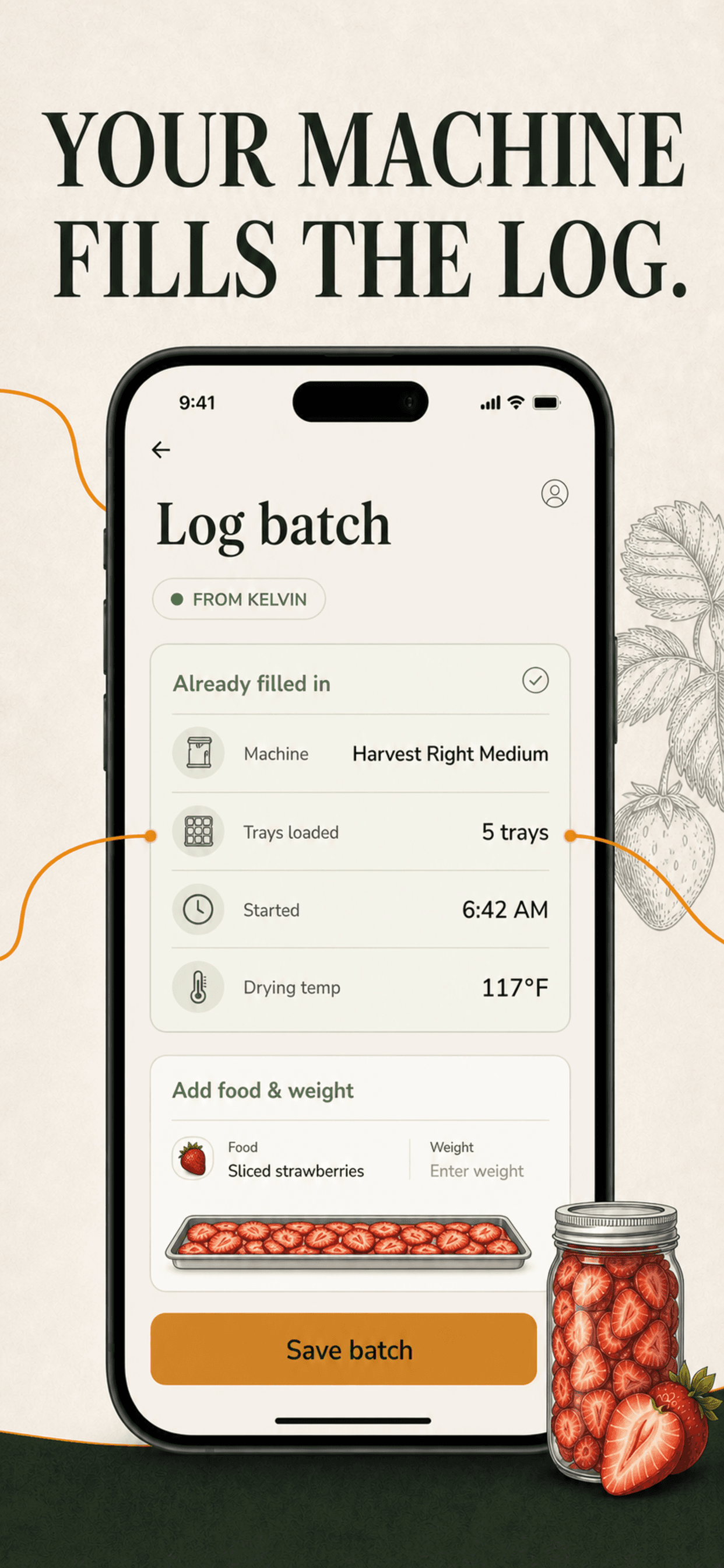
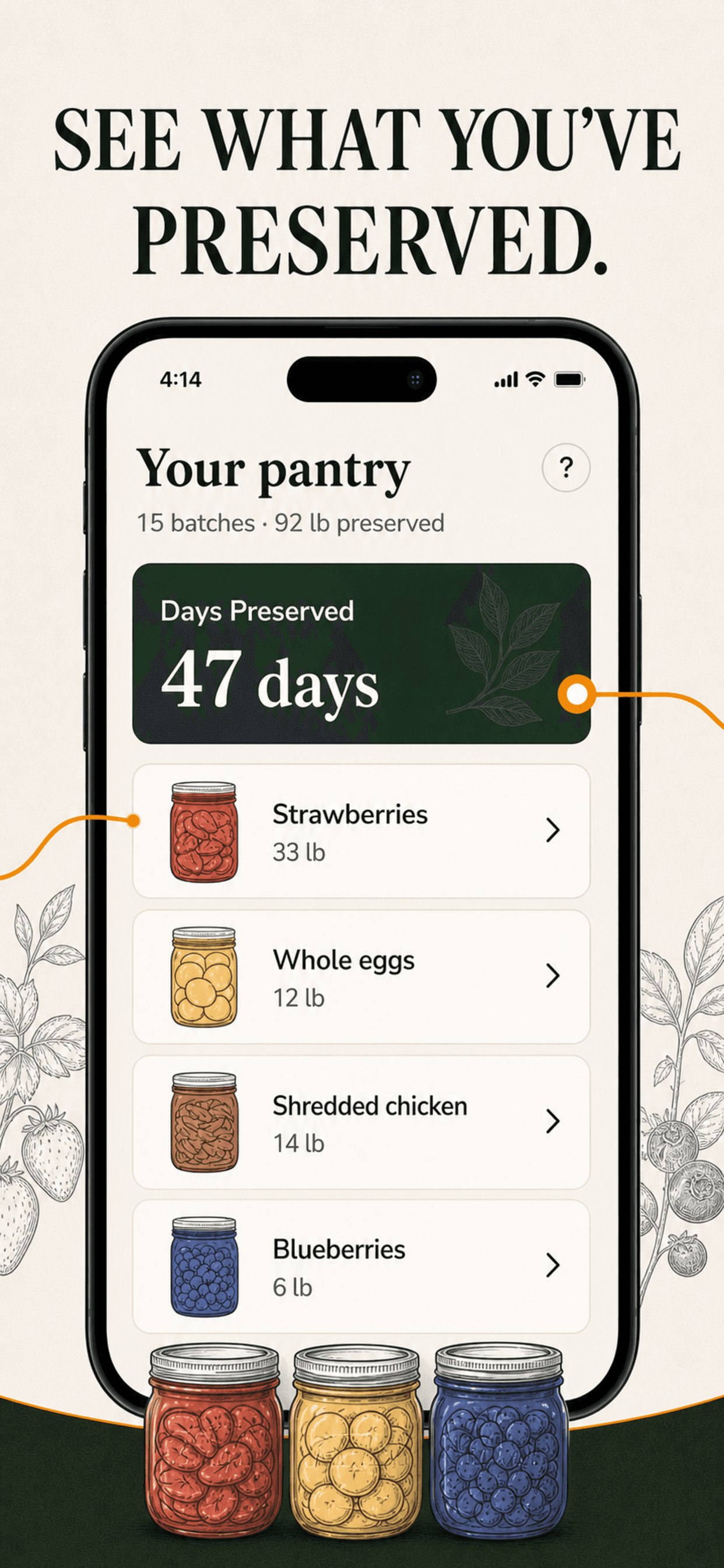
Freeze drying made foolproof, from a homesteader who's done it 1,000 times.

Top Food App1.4M+ followers
Read the case study
Kristen Donathan

Kristen Donathan

Founder & CEO of Stain Fix

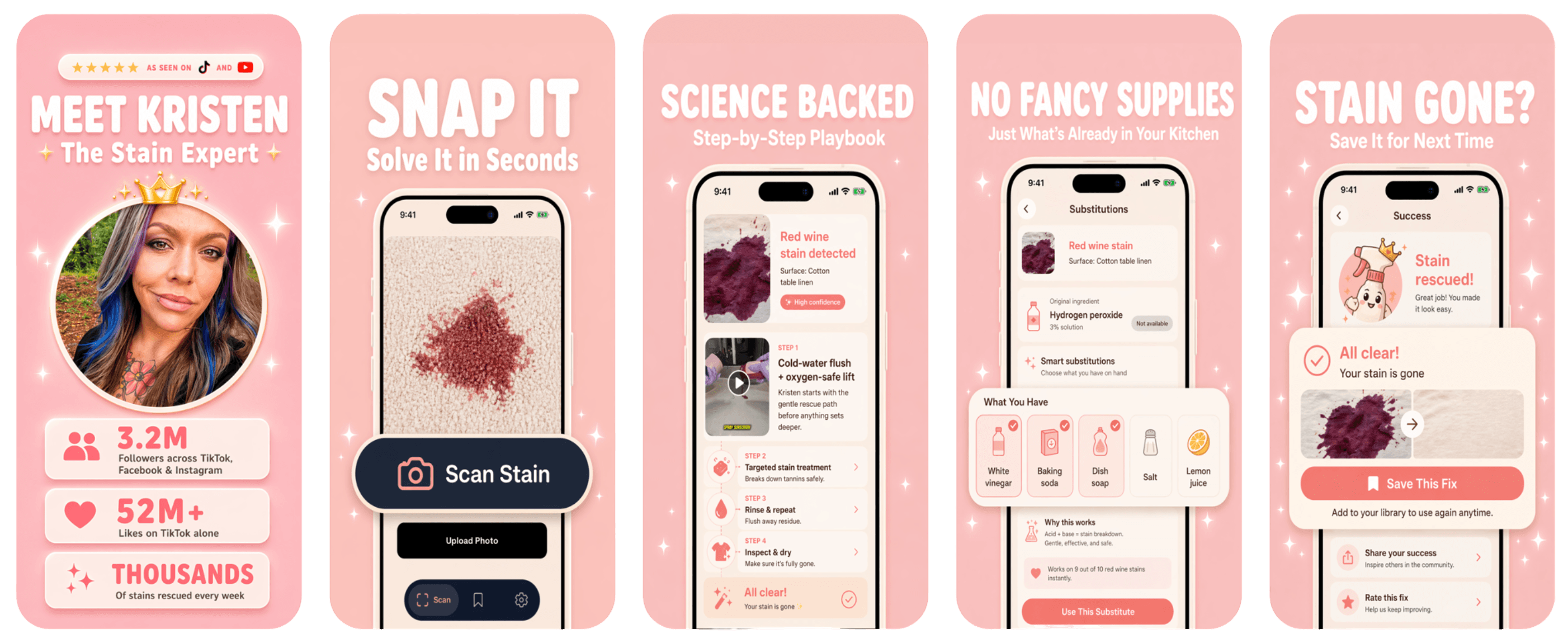
Snap a stain. Get the fix in seconds.

Top Lifestyle App1.5M+ followers
Read the case study
Stain Fix screenshots
Ellie Fausett

Ellie Fausett

Founder & CEO of Vector Guard

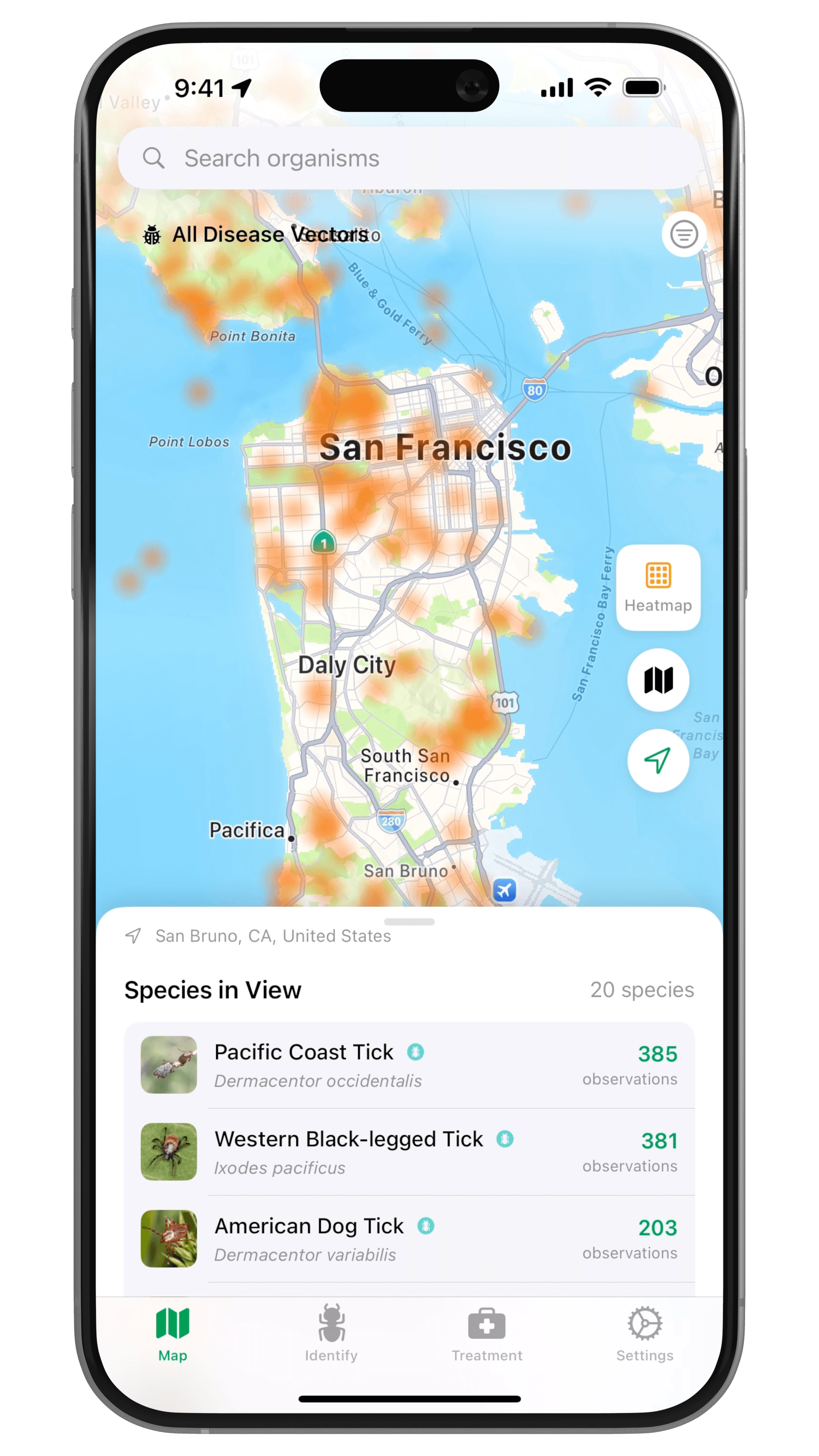
Spot disease-carrying pests before they reach your family.

Top Health App
Read the case study
Vector Guard screenshots

Creator app strategy

Curious what your app could be?

Enter your handle and BUILT BY FOUNDRY will research your audience and present custom app concepts. Free.

What Is Clipping? $1 per 1,000 Views Across 50 Campaigns