
Case Studies & Success Stories

Hyram Sells 6 Skincare Products. His Audience Runs the Routine 730 Times a Year

August 29, 2026
Share
Hyram Sells 6 Skincare Products. His Audience Runs the Routine 730 Times a Year

Get Creator Revenue Insights

How creators are turning audiences into subscription businesses
Share
Key Takeaways:
  • Hyram Yarbro has 4.35 million YouTube subscribers and 5.5 million TikTok followers, built on one format: reading an ingredient list out loud and saying whether it is worth the money
  • His brand's public storefront listed 10 items on August 29, 2026: six single products from $20 to $30, three kits from $35 to $50, and a gift card. Not one of them is a subscription
  • Two of those six singles were out of stock the same day, including the cleanser that is step one of the brand's own published routine
  • A twice-daily routine runs 730 times a year. Skincare is one of the few things a creator's audience genuinely does every single day, on a schedule nobody has to sell them
  • An App Store search for "skincare routine" returns a shelf owned entirely by strangers. SkinSort leads it with 6,008 ratings. Nothing under Hyram's name has ever shipped
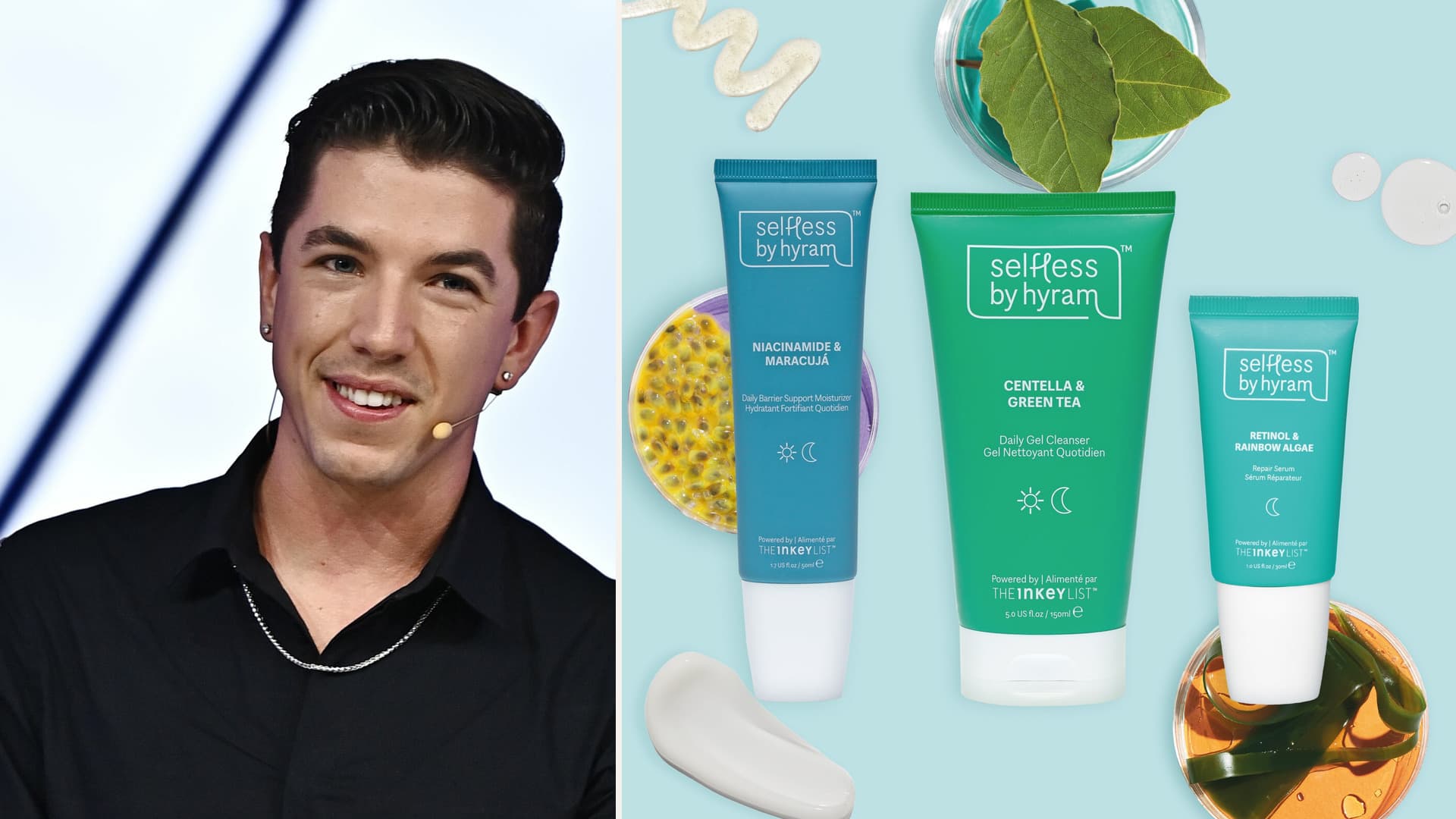
Hyram Yarbro made a career out of a sentence almost nobody else was saying in 2019: turn the bottle over and read what is in it. He was 23, working as a makeup artist at Saks Fifth Avenue after leaving Brigham Young University-Hawaii for financial reasons. He had started a YouTube channel in 2017 that nobody watched. Then the algorithm found him. Wikipedia's account of that year, sourced to contemporaneous coverage, records the shape of it: 50,000 subscribers to 500,000 in under two weeks, and a million by the end of 2019. TikTok arrived in 2020 and did it again. What he actually sold was literacy. Millions of people learned from him that niacinamide is not a marketing word, that fragrance in a moisturizer is a choice somebody made, that the expensive thing and the good thing are frequently not the same thing. He got two Streamy nominations for it. He also got something rarer: a standing position as the person a generation checks with before spending money on their own face. Then he did what every creator with that position is told to do. He made a product. Selfless by Hyram sells physical skincare in single units. Pulling the brand's public storefront catalog on August 29, 2026 returns 10 listings: six single products priced $20 to $30, three multi-product kits at $35, $35, and $50, and a $25 gift card. Every one is a one-time purchase, and the feed carries no subscription or replenishment plan of any kind. The brand launched on June 24, 2021 with Colette Laxton and Mark Curry, the co-founders of The Inkey List, as a Sephora exclusive across 29 countries at $20 to $30 a product. It left Sephora by the end of 2022. In March 2024, BeautyMatter reported that Hyram had bought the brand outright from The Inkey List, terms undisclosed, making him sole owner. That is a good outcome. He owns his name back, the products are well formulated, and the brand routes money to the Thirst Project and Rainforest Trust rather than pretending charity is a marketing layer. None of that is the problem.
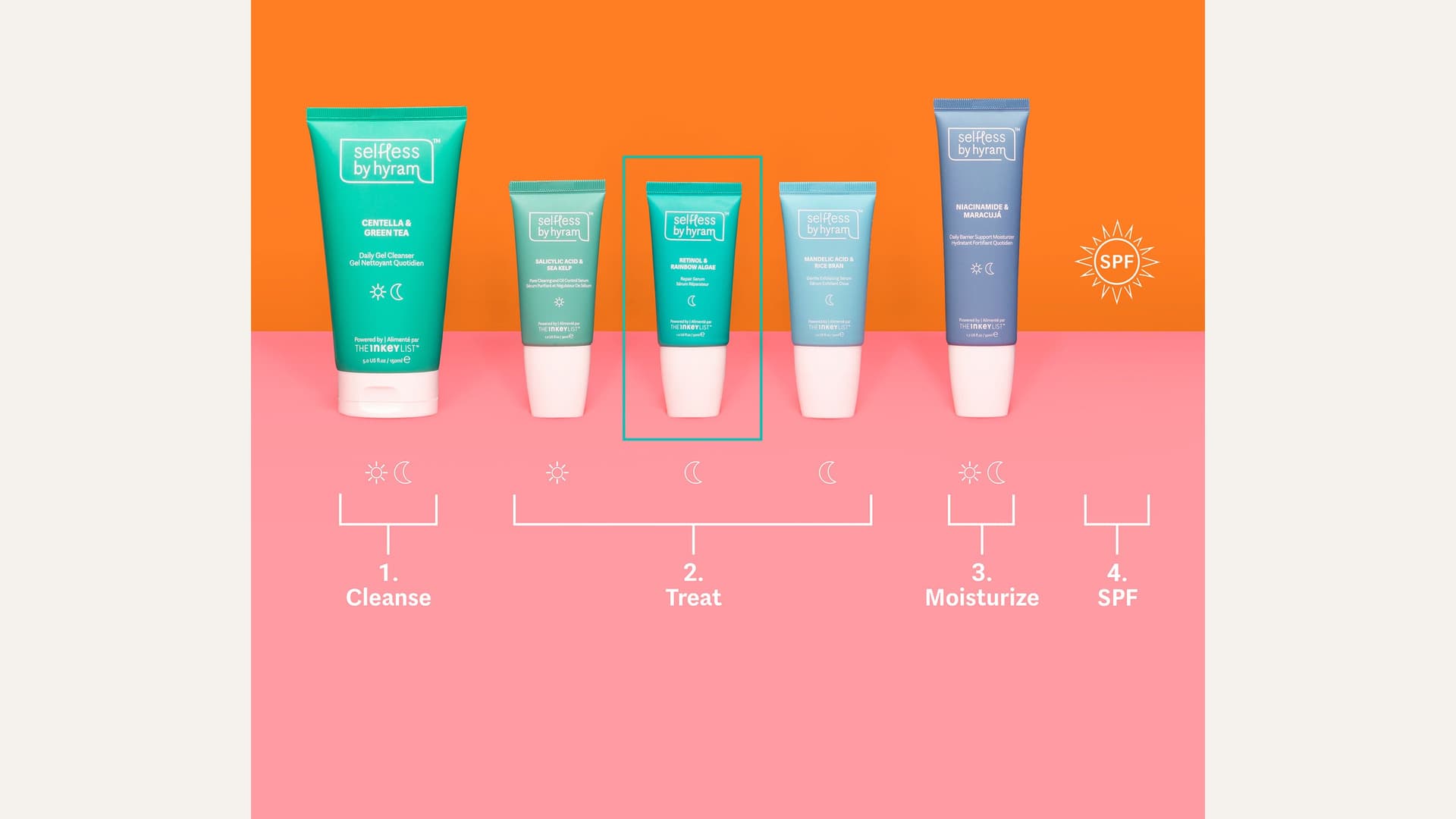
Five real Selfless by Hyram tubes arranged under the brand's own four-step routine diagram, with steps labeled Cleanse, Treat, Moisturize and SPF
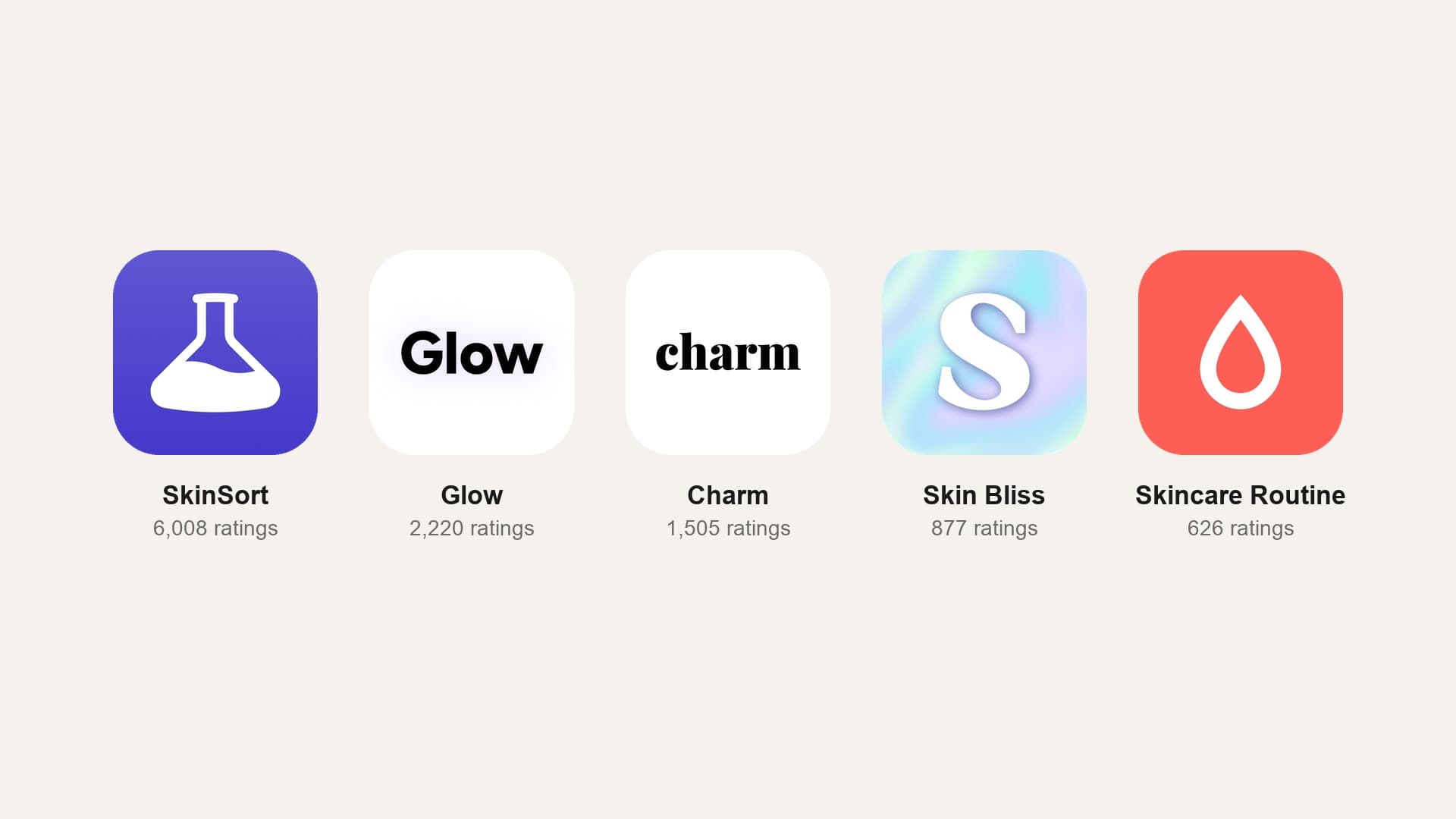
The problem is the picture above, which is the brand's own graphic. Four steps. Cleanse, treat, moisturize, SPF. Step four is an empty slot with a sun drawn where a product would go. And on the day this was written, step one was out of stock, along with the moisturizer at step three. Because a consumable sells again without remembering anything. A bottle that runs out in ten weeks produces a second transaction, but it arrives with no record of what the customer bought last time, what it was layered with, whether their skin got better, or what season it is where they live. Recurring revenue that cannot accumulate context is just a transaction on a timer. This is the trap that catches beauty, supplements, coffee, and every other creator category built on something people use up. Founders in those categories look at their reorder rate and conclude the recurring-revenue problem is already solved. It is not. Reorder rate is a fact about the product running out, not a fact about the relationship. When product buyers never come back, a catalog resets to zero and has to be resold from scratch, which is the same arithmetic that makes creator income reset every month. Look at what happens when the supply chain hiccups. Two of six products unavailable is a normal week in physical goods. In a subscription business, a temporary stockout is an inventory problem. In a catalog business where the bottle is the only relationship, it is a churn event, because there is nothing left for the customer to open. Here is the number that should keep a beauty creator awake. A morning routine and an evening routine, performed daily, is 730 sessions a year. Not 730 impressions, not 730 chances to be scrolled past. Seven hundred and thirty times a person stands at a sink, alone, for two to six minutes, deliberately performing a sequence in a fixed order. Very few creators have anything like that. A cooking creator has to persuade someone to make dinner. A photography creator has to wait for them to pick up the camera. Skincare is already scheduled, already habitual, and already anxious, which is the combination software is built for. And the routine is where all the hard questions live. Can I use this acid on the same night as the retinol. It has been three weeks, is this working or is it making things worse. I am flying to a dry climate on Thursday, what changes. My skin did something new this morning and I do not know which of the five things I added caused it. Every one of those questions is the exact thing Hyram is trusted to answer, and every one of them arrives at the sink, at 7am, with wet hands, and no way to ask him. The answers exist. They are in nine years of video, indexed by YouTube, retrievable in about four minutes if you are willing to scrub a timeline while your face dries. Nobody Hyram's audience has ever heard of. An App Store search for "skincare routine" on August 29, 2026 returns eleven apps, led by SkinSort with 6,008 ratings, Glow with 2,220, Charm with 1,505, Skin Bliss with 877, and a $3.99 app named Skincare Routine with 626. A search for "Selfless by Hyram" returns no app by that brand at all.
Five real App Store icons for skincare routine apps, SkinSort, Glow, Charm, Skin Bliss and Skincare Routine, with their rating counts
Read that shelf carefully. These are not bad products. They are anonymous ones. SkinSort has six thousand ratings and no voice, no point of view, and nobody its users would trust over a dermatologist or over Hyram. They are databases with a UI. The thing they cannot buy is the only thing that matters here, and it is the thing Hyram spent nine years building for free: a specific person whose judgment a user already accepts. This is why niche creator apps keep beating big tech inside a niche. The incumbent has the ingredient database. The creator has the reason to believe it. Not a shop. Not a catalog with a skin quiz bolted to the front. The product is the routine itself, held for the user between sessions. It knows the eleven things on their shelf, including the ones he did not make, because a routine tool that only accepts one brand's bottles is an advertisement and everyone can tell. It knows what goes on in what order tonight, and it says so in one screen with wet hands. It refuses the combination that will wreck a barrier and explains why in his register rather than a warning label's. It keeps a photographic record so that "is this working" becomes a comparison instead of a feeling. It changes in November when the air changes. That is a $7.99 a month product for people who already spend $30 on a serum because he said it was good. It is the same move Adriene Mishler made: the free library stays free and enormous, and the paid surface is the daily practice, held on a schedule. Daily use is the rarest asset in software, and skincare hands it over without being asked. This is the section for creators in beauty, supplements, coffee, protein, candles, and skincare adjacent categories with 50K or more followers who already sell a physical product and are quietly frustrated that the second year does not feel like it compounds. Run this test on your own catalog. Take your most engaged customer and ask what they are doing at the exact moment your product is in their hand. If the honest answer is "using it up," you sell an ingredient, not a practice. The practice is the durable asset, and the practice is almost always something you already teach for free on a feed. The bottle empties. The question of what to do with the bottle never does, and that question is a subscription. He built the asset that cannot be bought and monetized the one that can. Ingredient literacy at his scale took nine years and cannot be acquired, licensed, or replicated by a better app. Contract manufacturing can be bought by anyone with a budget, and the shelf he competes on is crowded with brands that have more of one. Owning your brand outright is the hard half, and he already did it. Buying the company back from The Inkey List in March 2024 is the move most creators never manage. It also means nobody else has to approve what he builds next. A stockout should not be able to end a relationship. When the only thing you sell is inventory, a supply problem and a churn problem are the same event. A subscription survives an empty warehouse. Free content and a paid surface are not in competition. The reviews should stay free forever. They are the best acquisition engine in the category. What is missing is anything that costs money every month and gets opened twice a day. Hyram Yarbro convinced millions of people to slow down, turn the bottle over, and think for themselves about what goes on their face. They do that now, twice a day, 730 times a year. He is not in the room for any of it. Hero photograph of Hyram Yarbro by Web Summit, CC BY 2.0, via Wikimedia Commons. Product imagery from the Selfless by Hyram storefront.
Our work

Creators who already did this

These are apps we designed, built, shipped, and still run today, with the creator keeping the code and the audience.

Creator app strategy

Curious what your app could be?

Enter your handle and BUILT BY FOUNDRY will research your audience and present custom app concepts. Free.

Hyram Sells 6 Skincare Products. His Audience Runs the Routine 730 Times a Year