

Turning Knowledge into Products

How to Run a Paid 30-Day Challenge in Your Creator App

July 24, 2026
Share
How to Run a Paid 30-Day Challenge in Your Creator App

Get Creator Revenue Insights

How creators are turning audiences into subscription businesses
Share
Key Takeaways:
  • Andy Frisella's 75 Hard app hit #1 in Health & Fitness on its first day and holds a 4.6 rating across 6,400+ reviews at $4.99 a month
  • Kayla Itsines built Sweat, a $400M exit, on the back of a repeating 12-week challenge format
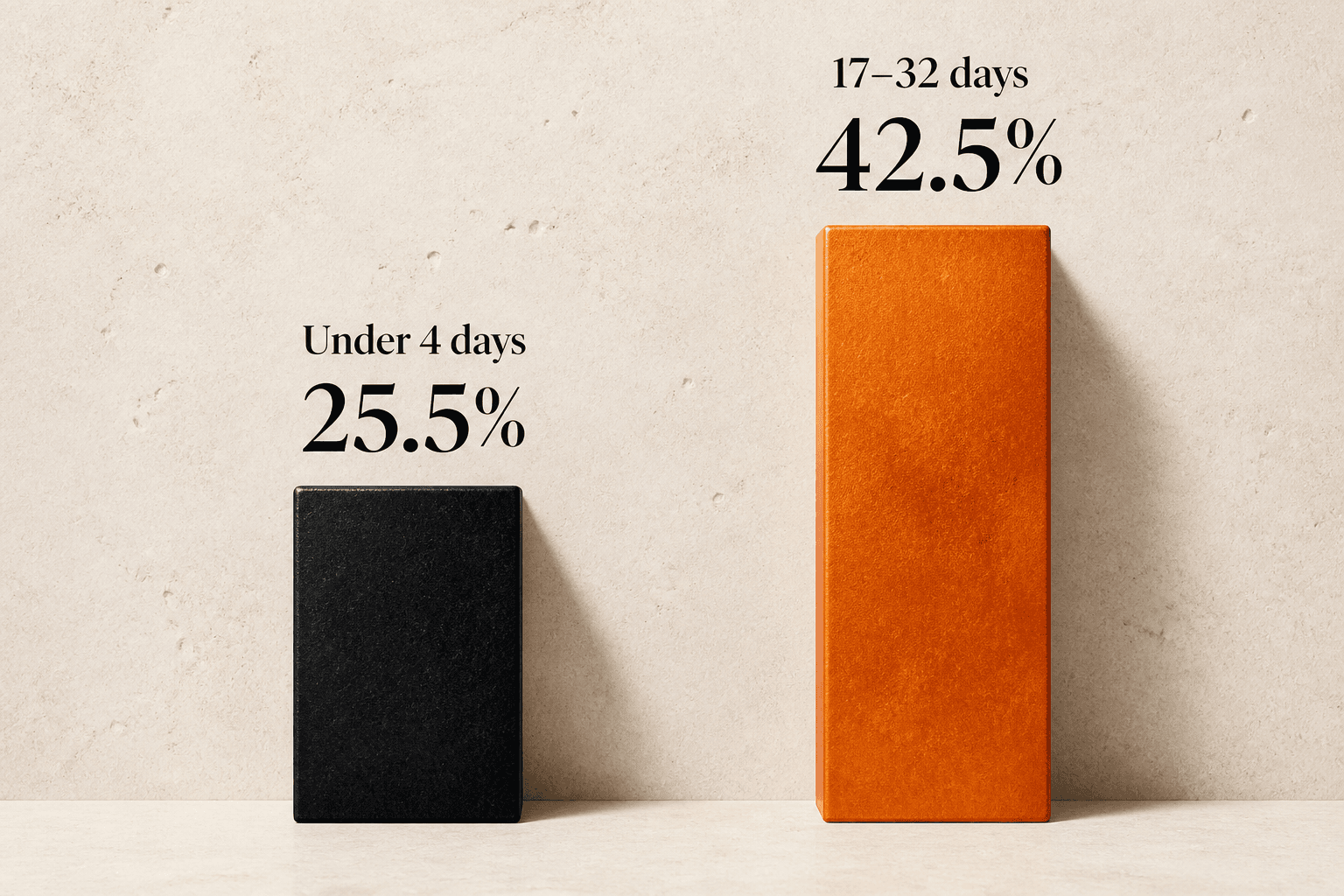
  • Subscription trials lasting 17 to 32 days convert at a 42.5% median, versus 25.5% for trials under four days (RevenueCat, 2026)
  • When Duolingo tested a streak-protection feature, Day-7 retention jumped 14%
  • A challenge is not a product launch. It's a repeatable revenue event you can run four times a year.
A paid challenge is the single most reliable way to turn passive followers into paying, daily-active app users. Not a course. Not a PDF. A challenge: fixed length, clear finish line, money on the table. Creators have used the format to build some of the biggest apps in the App Store, and the subscription data explains exactly why it works. This is the playbook for running one inside your own creator app, with the numbers behind each step. A paid challenge is a fixed-length program with a defined start, a daily required action, and a binary outcome: you finish or you don't. Users pay to enter, check in every day inside the app, and see their progress against the group. That definition matters because most creators sell the opposite: open-ended memberships with no deadline and no finish line. "Access to my content library" gives a fan no reason to open the app today. "Day 12 of 30, don't break the streak" does. The format is everywhere once you look for it. 75 Hard is a 75-day pass/fail protocol where missing one task sends you back to day one. Kayla Itsines' original Bikini Body Guide was a 12-week challenge before it was an app, and the Sweat Challenge cohorts kept running long after Sweat became a subscription business. The mechanic predates the apps. The apps just made it scale. Because a deadline does what a discount never will: it forces a decision. The subscription data backs this up from an unexpected angle. RevenueCat's analysis of more than 115,000 apps found that trials lasting 17 to 32 days convert at a 42.5% median, versus 25.5% for trials under four days. A month-long commitment window outperforms a quick taste by roughly 70%. A 30-day challenge is that window with stakes attached: the user isn't sampling your app, they're protecting an investment they already made. Then loss aversion takes over. Duolingo has built one of the most retentive consumer apps on earth around a single number: the streak. When their team tested a streak-protection wager, Day-7 retention rose 14%, their biggest gain across every cohort tested. People will do a lot to avoid losing a number they spent 12 days building. And 75 Hard proves the extreme version sells. The rules are brutal: two workouts a day, no alcohol, a gallon of water, and one slip restarts the clock. The app hit #1 in Health & Fitness on day one. We broke down the full story in our profile of Andy Frisella's 75 Hard empire, but the short version is this: the hard finish line IS the product.
Bar chart showing 42.5% median trial conversion for 17 to 32 day trials versus 25.5% for trials under four days
Every strong challenge answers one question in under ten words: what will be true about me on the last day? Run 30 days straight. Finish the 12-week program. Post every day for a month. Cook 20 dinners at home. The transformation is the offer. Your app is just the referee. Three design rules:
  • One required daily action. Not five. The check-in should take under two minutes even if the workout takes forty.
  • Binary completion. Done or not done. Partial credit kills the psychology that makes challenges work.
  • A visible cohort. Everyone starts the same day. A leaderboard of strangers is noise; a leaderboard of people on day 12 with you is fuel.
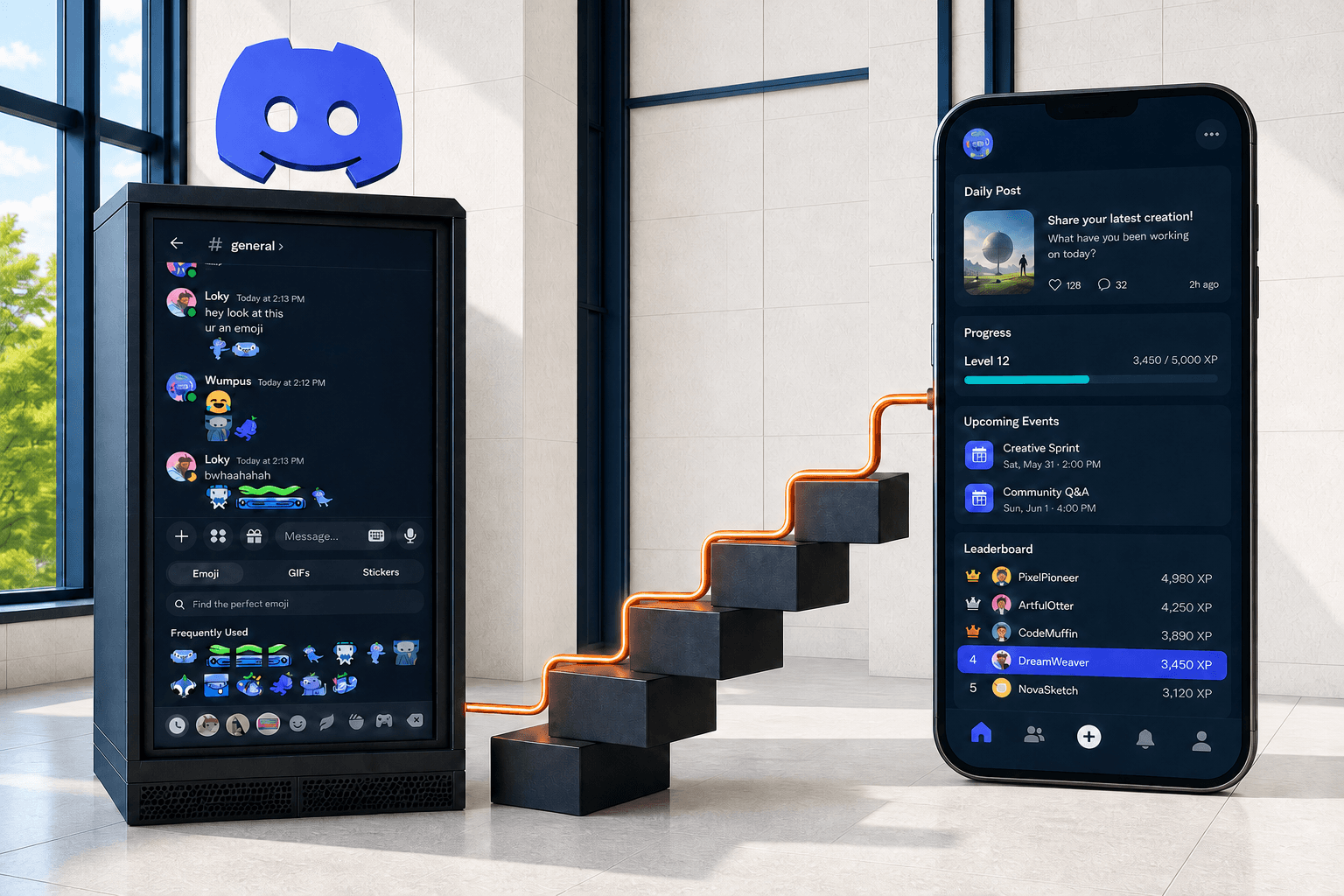
If you already run a community, you've seen this work in miniature. Every time you post "who's in for January?" and 400 people comment, that's a challenge trying to exist. The app is how it stops being a comment thread and starts being revenue. We covered the community-to-app move in how to turn a Discord community into a subscription app. Price it like an event, not like content. These are the four models that work, with real reference points:
ModelLengthPrice pointBest for
Low-price recurring30-75 days, repeatable$4.99-$9.99/month (75 Hard)Mass audience, viral formats
Subscription with challenge cohorts6-12 weeks, seasonal$19.99/month (Sweat)Fitness and habit programs
Premium one-time cohort6-8 weeks$49-$149 per entryHigh-touch, smaller audiences
Annual with quarterly challenges4 events per year$79-$149/yearRetention-first creator apps
The mistake is charging course prices for challenge access. A challenge isn't 40 hours of video, it's 30 days of accountability, and buyers price those differently. 75 Hard charges $4.99 a month or $39.99 a year and converts at volume. Sweat wraps its challenges inside a $19.99 monthly subscription, and that engine carried it to 450,000 paying subscribers and a $400M exit. A challenge run through Instagram Stories and a spreadsheet leaks people every single day. The app's job is to make progress impossible to ignore:
  • The streak counter is the home screen. Not buried in a profile tab. The first thing a user sees is their number.
  • Push notifications tied to the streak, not the content. "New video posted" gets ignored. "4 hours left to keep your 12-day streak" gets opened.
  • Photo or metric check-ins. 75 Hard requires a daily progress photo. That single design choice generates the before/after material that markets the next cohort for free.
  • A restart path. When someone breaks day 9, the app should offer day one again in two taps. Frisella built restarting into the culture of 75 Hard. Failure becomes a re-entry point, not an exit.
This is also where the content engine kicks in. Every leaderboard is a weekly roundup post. Every finisher is a transformation story. Every restart is a relatable confession you can share. You stop asking "what do I post?" because the app answers it every morning. Plan for it, because the data says it's coming early. RevenueCat found that 84% of trial cancellations happen within the first 24 hours. Commitment decays fastest at the start, which means your challenge lives or dies in week one. The countermeasures:
  • Win day zero. The moment someone pays, they should complete a setup action that counts as day one. Instant progress beats a welcome email.
  • Front-load the wins. Days 1 through 7 should be the easiest of the whole program. The hard part of week one is showing up, not the workout.
  • Name the milestones. Day 7 badge. Halfway mark. Final week. Duolingo's entire retention machine is built on protecting these numbers, and their streak experiments moved Day-7 retention double digits.
  • Make quitting visible to the cohort. Not as shaming, as gravity. People stay in challenges because their name is on a board next to people they started with.
Retention isn't a challenge-only problem, and the same mechanics keep working after the confetti. We went deeper on the full toolkit in how to reduce creator app churn.
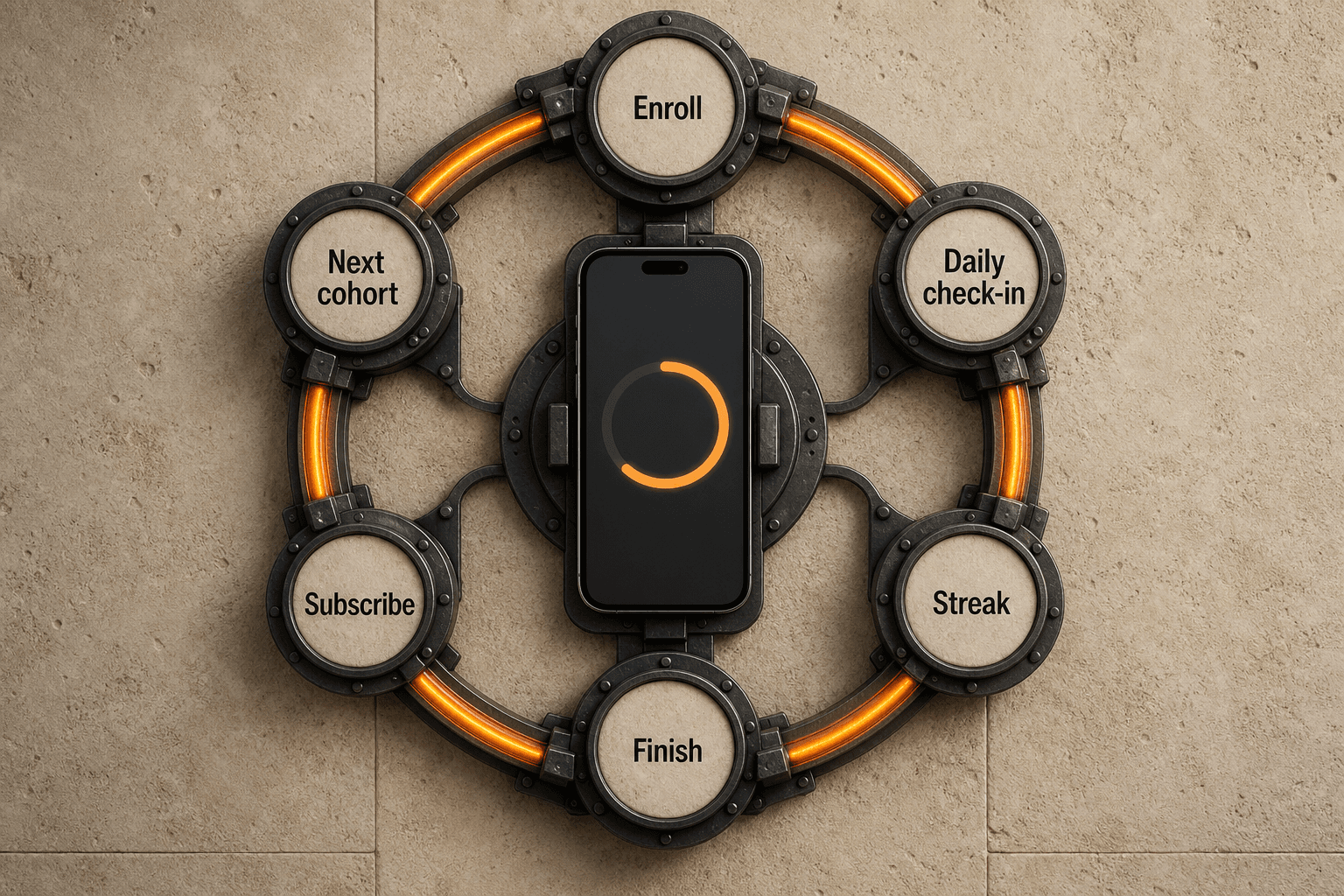
Diagram of the challenge flywheel: enroll, daily check-in, streak, finish, subscribe, next cohort
The challenge ends. The business doesn't. Day 30 is the highest-trust moment you will ever have with a fan: they paid you, showed up daily for a month, and got a result. What you do in the next 48 hours decides whether that becomes recurring revenue. The sequence that works:
  • Celebrate inside the app. Completion screen, shareable graphic, final leaderboard. Give them the artifact they'll post.
  • Offer the next thing immediately. The maintenance program, the advanced cohort, the annual plan with all four challenges included. Finishers convert to subscriptions at rates cold traffic never touches.
  • Harvest the proof. Before/afters, streak screenshots, testimonials. This is the marketing for cohort two, generated by cohort one.
  • Put the next start date on the calendar publicly. Scarcity works when it's real. "Doors open January 1" turns your challenge into a seasonal event fans wait for.
Most creator products get bought once and forgotten. Roughly 7 in 10 creator product buyers never come back for a second purchase. A quarterly challenge calendar is the structural fix: four built-in reasons a year for every past customer to return, and every return compounds your MRR instead of resetting it. Running this well takes more than shipping version one. Streaks break on time zones, push notifications need tuning, and every cohort teaches you something the app should do better. That ongoing iteration is exactly what our App Care program exists for: we keep building while you keep coaching. 30 days is the sweet spot for a first challenge: long enough to build a habit and justify the price, short enough that fans believe they can finish. Once the format proves out, 6-week and 12-week versions raise both price and retention. Paid. A free challenge fills your funnel with people who cost nothing to quit. Payment is the first act of commitment, and the data consistently shows paying users show up at multiples of free users. Price low before you price free. No. The mechanic is a daily action with a finish line, and it works for cooking 20 dinners, posting for 30 days, reading 12 books, saving $1,000, or shipping a side project. Fitness got there first because results photograph well. Quarterly is the proven cadence. Four cohorts a year creates urgency around each start date, gives past finishers a reason to return, and turns your revenue from launch spikes into a repeating calendar. You can duct-tape one together with a community platform and spreadsheets, but streaks, check-ins, push notifications, and payments are exactly the features rented platforms do worst. An owned app keeps the data, the subscription, and the customer relationship with you. The creators who win with challenges aren't the ones with the biggest audiences. They're the ones who gave their audience a start date, a streak to protect, and a finish line worth paying for. You already have the audience. You already have the program in your head. Want challenge mechanics built into your own app? We build custom apps for creators: $0 upfront, 3-week delivery, and we handle all the tech forever.
See What We’d Build You →

Creator app strategy

Curious what your app could be?

Enter your handle and Built by Foundry will research your audience and present custom app concepts. Free.