Case Studies & Success Stories

Andy Frisella: Free Challenge to #1 App and $200M Empire

July 23, 2026
Share
Andy Frisella: Free Challenge to #1 App and $200M Empire

Get Creator Revenue Insights

How creators are turning audiences into subscription businesses
Share
Key Takeaways:
  • Andy Frisella released 75 Hard as a completely free program in 2019. No course, no paywall, no upsell on day one.
  • By the time the 75 Hard app launched in July 2020, over 100,000 people had already completed the program. The app hit #1 in Health & Fitness on its first day.
  • The #75hard hashtag has passed 1 billion views on TikTok, and every one of those videos markets his product for free.
  • Copycat apps now have more App Store ratings than the official one. Waiting to ship your app has a price, and Frisella paid it.
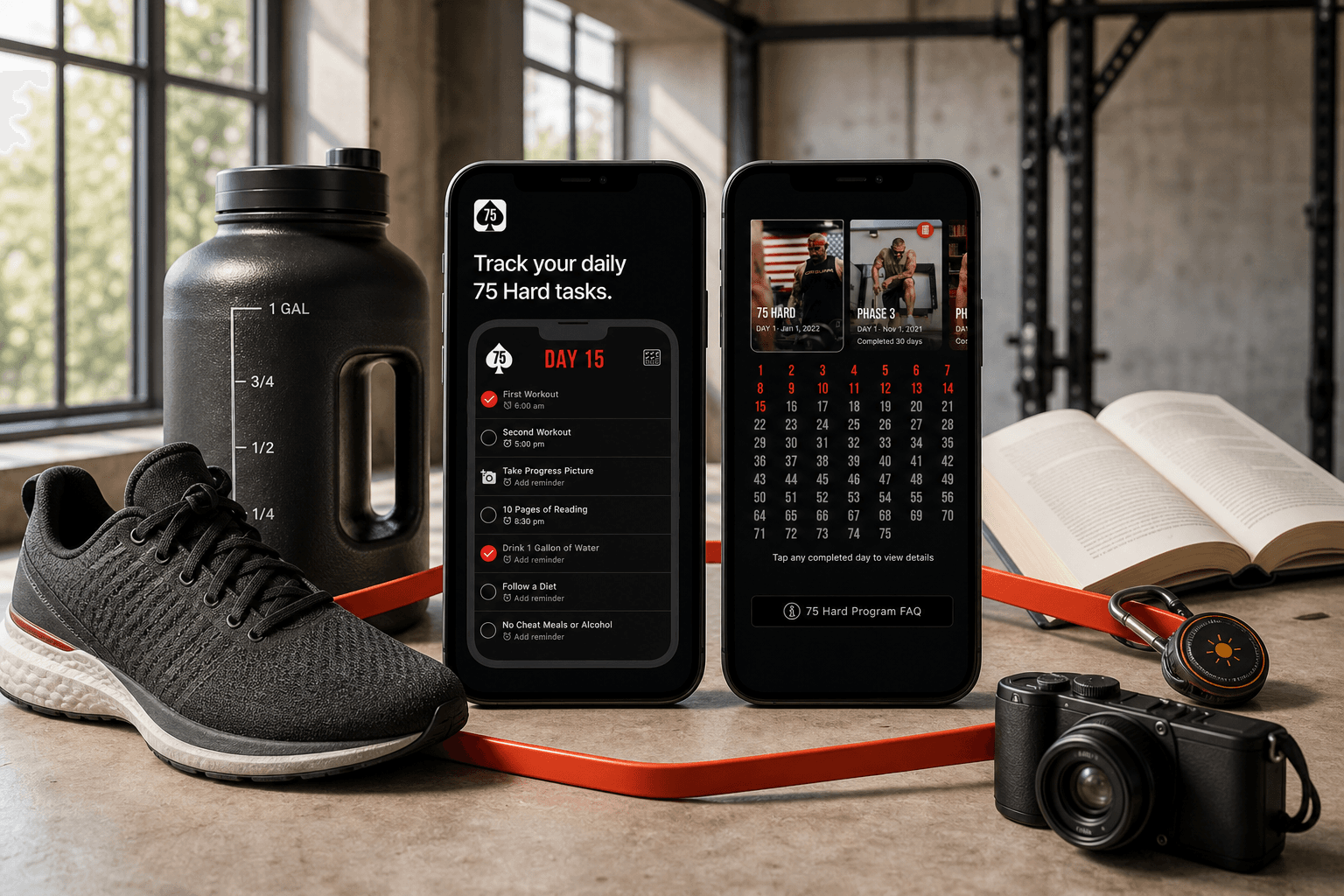
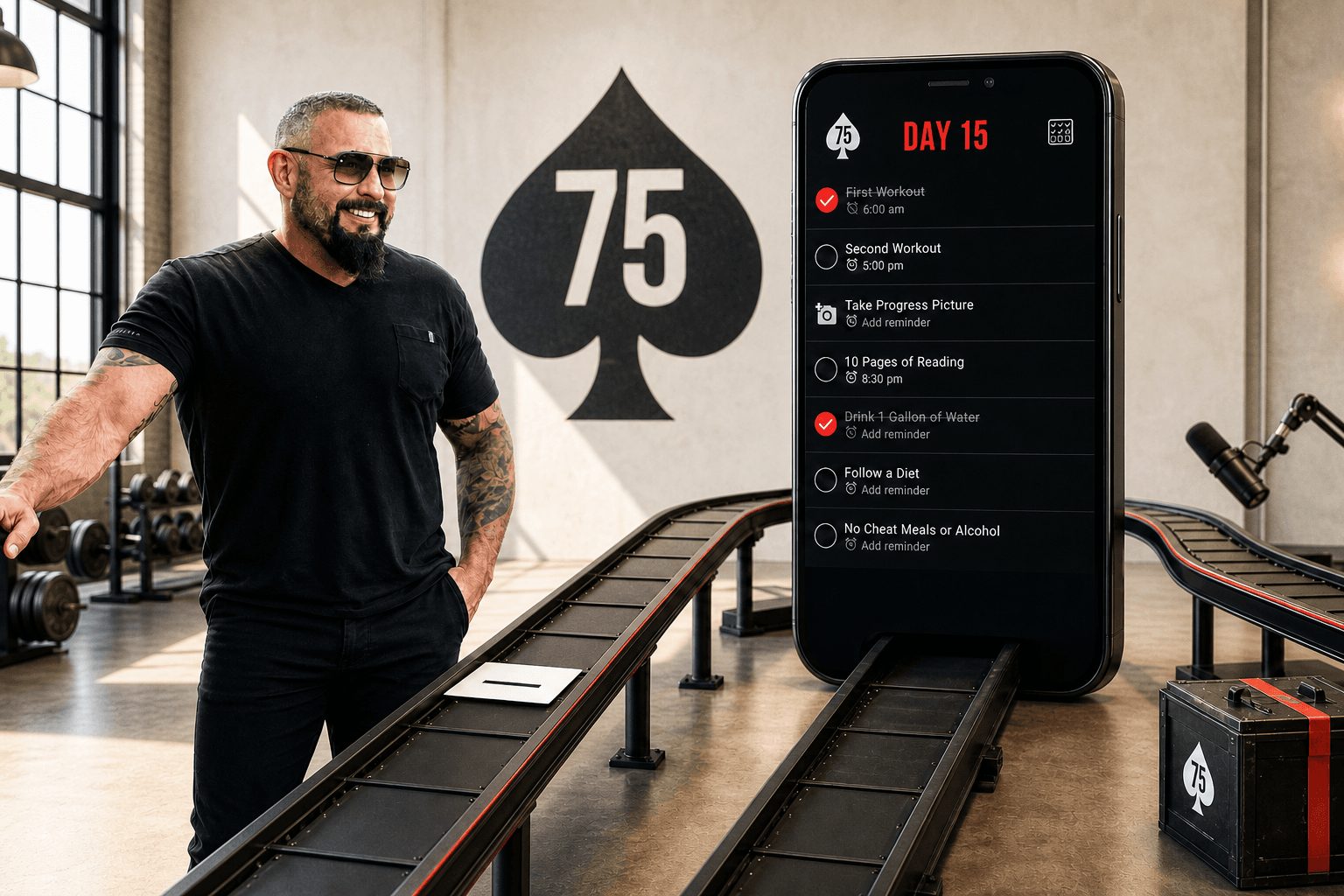
Most creators protect their best idea. They wrap it in a $997 course, drip it over eight weeks, and wonder why nobody talks about it. Andy Frisella did the opposite. He gave his best idea away to anyone who wanted it, and it became one of the most viral fitness programs on the planet. Then he shipped an app, and the free idea became owned software with his name on the icon. That sequence, free idea first, owned product second, is the playbook this profile breaks down. Andy Frisella is a St. Louis entrepreneur who opened his first supplement store in 1999, back when he was sleeping on a mattress in the shop and clearing almost nothing. A decade of retail grind later, he co-founded the supplement company 1st Phorm, which a 2019 St. Louis Business Journal report said was on track for $200 million in annual revenue. He built his audience the same way he built his stores: volume and consistency. His podcast, REAL AF (formerly The MFCEO Project), spent years at the top of the business charts, and he has 1.8 million followers on Instagram. Here's what matters for creators: Frisella was never the biggest name in fitness. Plenty of influencers out-follow him. But he understood something most of them still don't. Attention is an input. Products are the output. As we broke down in Alex Hormozi's path from gym owner to a $250M portfolio, the creators who win biggest treat content as distribution for something they own. What is 75 Hard? 75 Hard is a 75-day mental toughness program created by Andy Frisella in 2019: two 45-minute daily workouts (one outdoors), a gallon of water, 10 pages of reading, a strict diet with zero alcohol or cheat meals, and a daily progress photo. Miss anything and you start over at day one. He announced it on his podcast and published the rules on his site. Free. Anyone could start that day without paying him a cent. The structure did the marketing. A program where failure sends you back to day one generates stories: streaks, restarts, day-75 transformations. The daily progress photo requirement meant every participant was building a before-and-after archive designed to be posted. TODAY reported the #75hard hashtag has over 1 billion views on TikTok, and Fast Company covered the challenge blowing up all over again in 2025, six years after launch. That's the content engine most creators dream about. Frisella never has to brainstorm 75 Hard content because a million strangers make it for him, exactly the dynamic we mapped in how your app becomes your content calendar. Because a viral program without a product is a donation to the internet. By mid-2020, more than 100,000 people had completed 75 Hard. They tracked it in notes apps, on paper, in random third-party habit trackers. The demand for a dedicated tool was proven at a scale most founders never see. Frisella didn't need to guess whether people wanted this; 100,000 completions was the validation most creators skip before building. So his media company, 44Seven Media, shipped the official 75 Hard app: daily task checklist, reminders per task, in-app progress photos, notes, and one-tap sharing to Instagram. Nothing fancy. It digitized the exact behavior 100,000 people had already performed manually. It went to #1 in Health & Fitness on the App Store on day one, by Frisella's own announcement, and ranked in the top 15 across the entire App Store.
The official 75 Hard app tracks the program's daily tasks, reminders, and progress photos
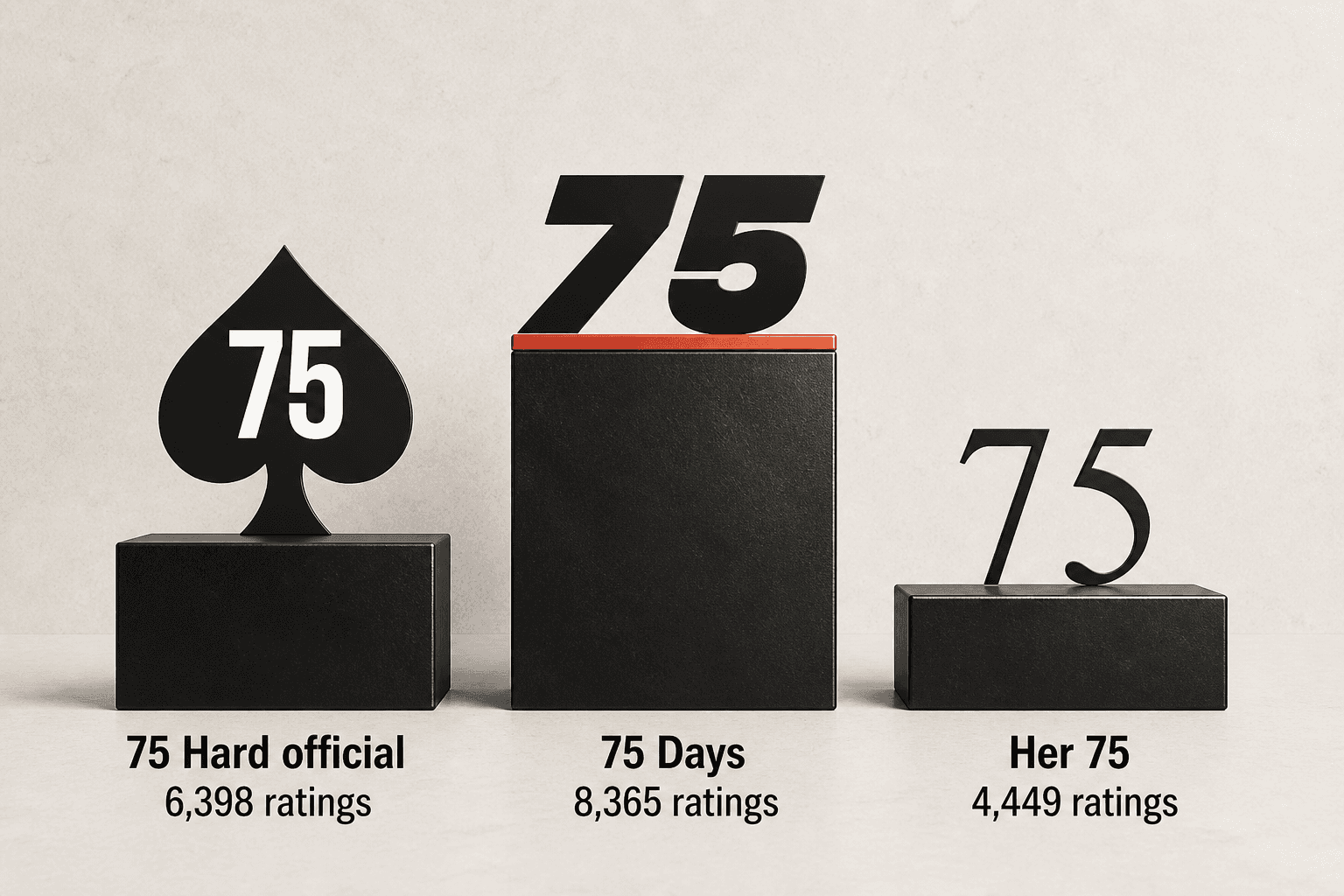
Read that again in creator terms. A one-day chart takeover, with zero paid acquisition, because the audience was already running the program. The app didn't create demand. It captured demand that had been leaking into notes apps for a year. And the app is the cheapest part of his stack. It feeds the book, the live events, the speaking, and above all 1st Phorm, the $200M-a-year supplement business where a motivated person on day 12 of a 75-day discipline program is the most qualified customer on earth. The software sits at the center of an ecosystem, which is exactly how we tell creators to think about it: the app is the engine, not the merch table. Here's the part of this story nobody tells, and it's the most useful part. Frisella waited a year to ship the app. In that year, the market noticed. Search "75 hard" on the App Store today and the official app is surrounded by clones. As of July 2026, the copycats have caught up and passed him on social proof:
AppDeveloperRatingRatings count
75 Hard (official)44Seven Media, LLC4.56,398
75 Days Challenge Tough & SoftBeHard, Inc.4.88,365
Her 75My Viral Agent4.84,449
App Store ratings count for the official 75 Hard app versus copycat apps, July 2026
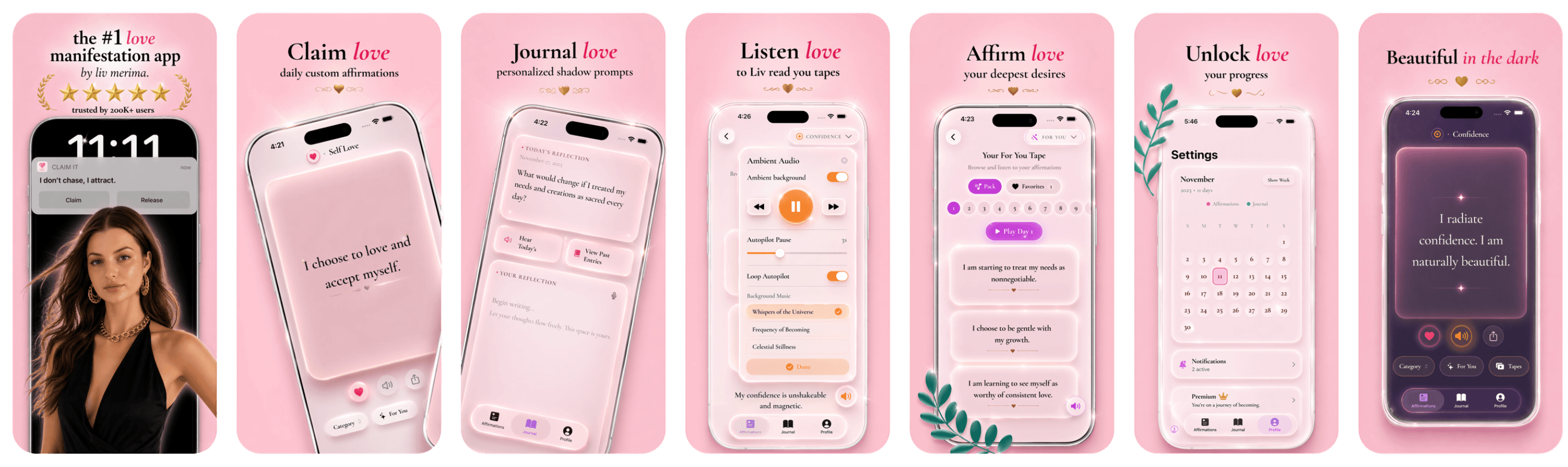
The unofficial "75 Days Challenge" app has nearly 2,000 more ratings than the official 75 Hard app. An entire app called Her 75 exists purely to serve the female audience Frisella's marketing under-indexed on. Every download those apps get is revenue and audience data walking away from the person who invented the program. That's the copycat tax. You pay it for every month between "my idea is working" and "my app is live." The App Store rewards whoever ships and keeps shipping, not whoever thought of it first. It's the same lesson from a different angle as why your followers aren't your customers yet: attention you don't convert becomes someone else's business. 1. Give the idea away, sell the infrastructure. The free program built the audience and proved demand. The app, book, and supplements monetized it. Your free content and your paid product aren't competitors; one is the ad for the other. 2. Ship the app while the trend is yours. 100,000 manual completions was a green light most creators would have acted on a year earlier. The chart position says the delay didn't kill him. The copycat table says it cost him. 3. Design for the daily habit, not the download. 75 Hard works as software because it demands daily opens for 75 straight days. A user who opens your app every day for 75 days doesn't unfollow, doesn't churn, and doesn't forget you exist. Frisella has 1.8 million Instagram followers. The #75hard hashtag has a billion views. The gap between those two numbers is the whole thesis: the product reached hundreds of times more people than the person, and it keeps reaching them whether he posts or not. That's what we mean at Built by Foundry when we say build bigger than your audience. A creator's income stops when the posting stops. A founder's product runs the challenge, sends the reminders, and collects the progress photos at 6 a.m. while the founder sleeps. Frisella built it. Your turn. Want to turn your program, method, or challenge into an app your audience opens every day? We build custom apps for creators, $0 upfront, 3-week delivery, and we handle all the tech forever.
Let's Build →

Creator app strategy

Curious what your app could be?

Enter your handle and Built by Foundry will research your audience and present custom app concepts. Free.