
Turning Knowledge into Products

How to Get Your App Recommended by AI Search: 6 Signals

August 14, 2026
Share
How to Get Your App Recommended by AI Search: 6 Signals

Get Creator Revenue Insights

How creators are turning audiences into subscription businesses
Share
AI search recommends an app when the machine-readable record of that app is complete, crawlable, and corroborated by sources outside the app itself. No hidden trick, no schema tag, no vendor. Apple, Google, and OpenAI have each published what their systems read, and almost none of it is a secret. Key Takeaways:
  • Google states plainly that appearing in AI Overviews and AI Mode requires no new markup: a page must be "indexed and eligible to be shown in Google Search with a snippet," and there is "no special schema.org structured data that you need to add" (Google Search Central)
  • OpenAI runs a separate crawler, OAI-SearchBot, purely to "surface websites in search results in ChatGPT's search features," and your robots.txt decides whether it may (OpenAI)
  • Apple says App Store search results come from "text relevance (matches for your app's title, subtitle, keywords, and primary category), as well as user behavior (downloads, ratings and reviews, and more)" (Apple Developer)
  • Your App Store keyword field is 100 characters, your subtitle is 30, your app name is 30, and promotional text does not affect ranking at all (Apple Developer)
  • ChatGPT passed 900 million weekly active users in February 2026 (TechCrunch), which is the size of the room where these recommendations get made
AI search matters because the question changed shape. People used to type "best sourdough app" into a store and scroll a ranked list. Now a meaningful share of them ask an assistant "what should I use to keep track of my starter?" and receive three names and a sentence of reasoning about each. That is a different competition. A ranked list rewards whoever bought the most installs this quarter. A named recommendation rewards whoever is easiest for a machine to describe accurately. Those two things are not correlated, which is the opening. A creator app walks into that competition with an advantage that no venture-funded consumer app can buy. Your app is attached to a documented human being with a public body of work, press coverage, a following, and years of specific expertise. When a model assembles an answer about a niche, it is assembling it out of what the open web says. A creator app has a great deal more of that raw material than a nameless one does. Before ranking, relevance, or authority, there is a binary question: is your content retrievable at all? This is where most creator app sites quietly disqualify themselves, usually through a robots.txt copied from a template. OpenAI documents four distinct crawlers with four distinct jobs. GPTBot collects training data. ChatGPT-User fetches pages a user asked for in real time. OAI-AdsBot checks ad safety. And OAI-SearchBot exists to "surface websites in search results in ChatGPT's search features." OpenAI is explicit that sites opting out of that one will not display in ChatGPT's search results. Many publishers, reasonably, blocked GPTBot to keep their work out of model training. A large number of them blocked every OpenAI user agent in the same edit. That is a training decision that silently doubled as a decision to be invisible inside a 900-million-user product. Google's side is simpler than the SEO industry suggests. Its documentation says the requirement to be a supporting link in AI Overviews or AI Mode is that a page be indexed and snippet eligible, and that "there are no additional technical requirements." It goes further and says you do not need to "create new machine readable files, AI text files, or markup." So the first thing to do is not to add anything. It is to open your robots.txt and read it.
CrawlerWhat OpenAI says it doesBlock it if
OAI-SearchBotSurfaces sites in ChatGPT search resultsYou do not want to be recommended
GPTBotImproves generative AI foundation modelsYou object to training use
ChatGPT-UserHandles user-initiated fetchesRarely, since a user asked for it
OAI-AdsBotValidates pages submitted as adsYou never advertise on ChatGPT
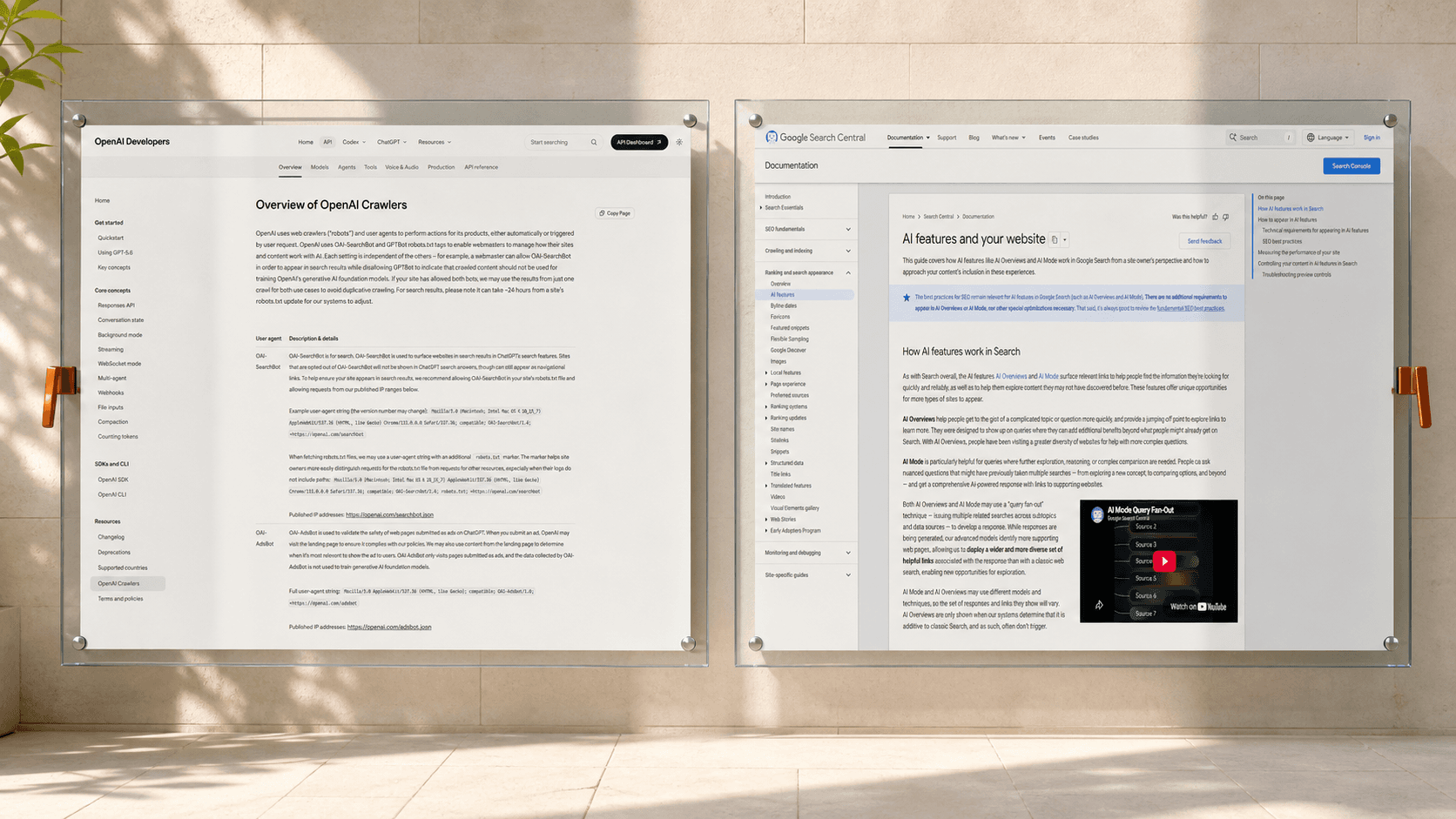
OpenAI's crawler documentation and Google's AI search documentation displayed side by side with both access latches open
Your App Store product page is the only structured description of your app that Apple, Google, and every assistant reading them can all agree on. Treat those fields as data entry, not copywriting. Apple's published limits are tight and specific. The app name gets 30 characters. The subtitle gets 30. The keyword field gets 100 characters total, comma separated. Promotional text gets 170 characters and, in Apple's own words, "doesn't affect your app's search ranking so it should not be used to display keywords." Apple also publishes what not to waste those 100 characters on: plurals of words you already used in singular, category names, the word "app," duplicate words, and competitor names. Every one of those is a slot spent on nothing. If you have not audited the field since launch, you are likely carrying a dozen dead characters. The deeper point is that these fields answer the machine's actual question. An assistant asked to recommend a sourdough tracking app is trying to establish what your app is for, who it is for, and whether it does the specific thing asked about. A subtitle reading "Bake better bread daily" answers none of that. A subtitle reading "Sourdough starter tracker" answers all three in 25 characters. Our App Store optimization guide for creators covers the full field-by-field version. Apple states directly that ratings and reviews "appear on your product page and in search results, and can influence how your app ranks in App Store search." That is the platform telling you a customer-satisfaction number is also a distribution number. For AI recommendations the mechanism is even more direct. When an assistant is choosing among four apps that all technically do the job, star rating and review count are two of the very few comparable, numeric, unambiguous facts available about all four. They are exactly the kind of evidence a model reaches for when it has to justify a pick. A creator app collects these faster than a cold app, because the first thousand users already like you. The catch is that nobody leaves a review unprompted. Asking for reviews properly is a product decision made at the moment a user has just succeeded at something, not a banner shown on launch. A model will not repeat a claim that exists only on the page making it. This is the single hardest signal to fake and the one creator apps are structurally best positioned to win. Corroboration means your app's name appears in places you do not control: a podcast interview where you explain why you built it, a trade publication covering your niche, a Reddit thread where a user answers someone else's question with your app's name, an interview on a channel in your category. Each of those is an independent record that your app exists and does the thing you say it does. This is the part that dies on a spreadsheet and works in real life. One good interview about why a former physiotherapist built a rehab app produces more durable machine-readable authority than six months of posting. Name the person, name the credential, name the problem. Vague founder stories corroborate nothing.
A podcast microphone, newspaper, and five-star review card all carrying the same app tile beside one orange product dossier
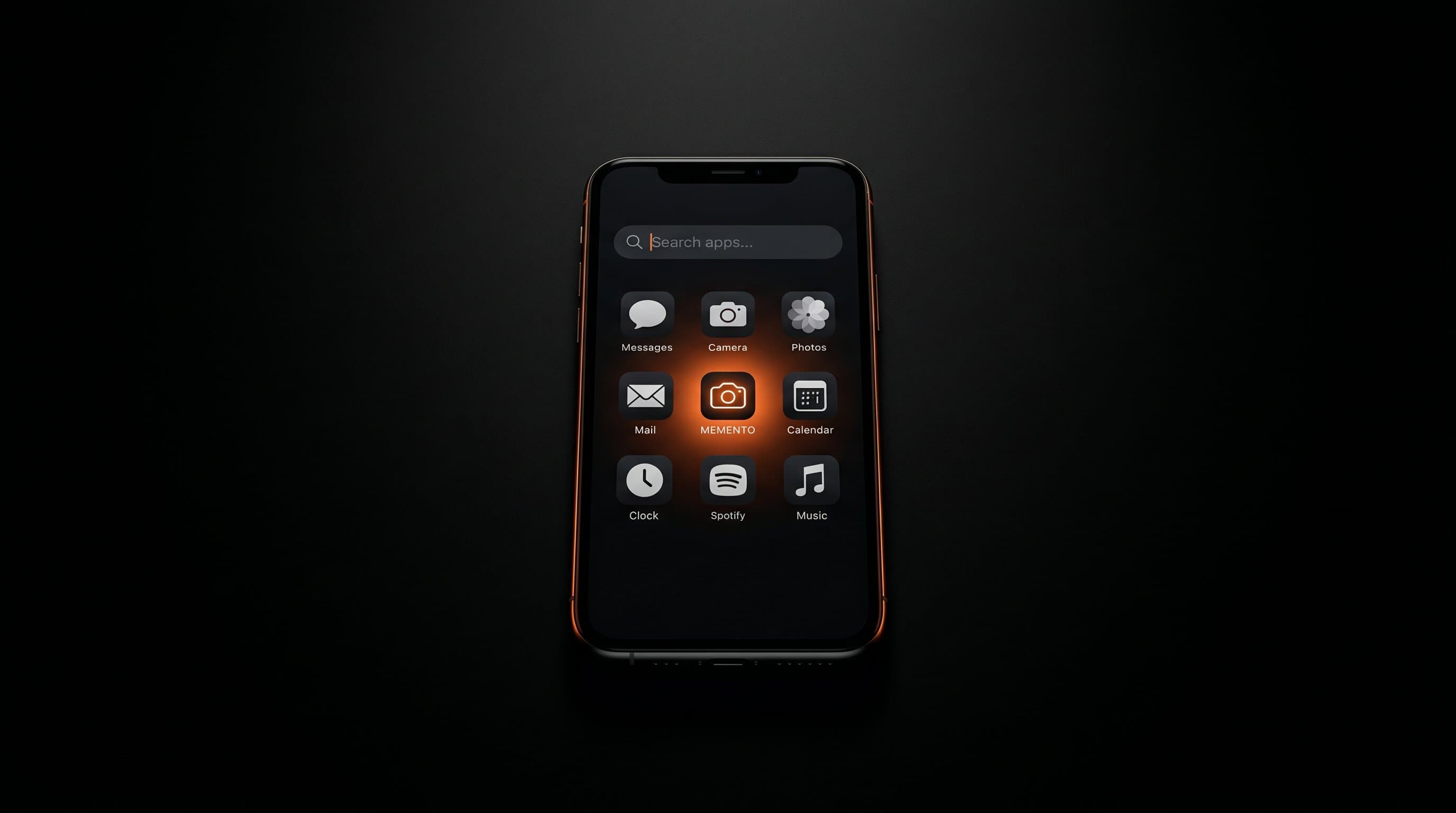
Apple's App Intents framework makes your app's actions and content discoverable by Apple Intelligence, Siri, Spotlight, and Shortcuts (Apple Developer). It is the one signal on this list that lives in code rather than in copy. The practical shape: you expose your app's core actions and entities to the system, and the system can then surface them when a user searches Spotlight or asks Siri, including for users who already have the app but have not opened it in three weeks. For a subscription app, re-entry from a system surface is retention, and retention is the number the whole business rests on. Most creator apps never implement this, because it requires a developer who is thinking about distribution rather than closing tickets. That gap is exactly why we argue creators need product partners rather than developers. The pages that get quoted are the ones that answer a question completely in one place, in plain text, without requiring the rest of the page. Google's guidance for AI features is unromantic about this: create helpful, reliable, people-first content, keep it crawlable, keep it text-based, and support it with images and video where they help. Apply that to your app's own site. The page that gets cited when someone asks "how do I track sourdough hydration" is a page that answers the question, mentions the app once, and does not gate the answer behind an email form. The page that never gets cited is your feature grid. This is the same discipline as marketing a creator app generally. Give away the answer. The app is what makes doing the thing repeatedly bearable, and nobody needs convincing of that until after they trust the answer. Here is the segment where this whole list collapses into something easy. If you have 50,000 engaged followers in a defined niche, you have already generated the corroboration that a cold app spends a $200,000 PR budget trying to manufacture. People discuss you by name. Publications in your category have quoted you. Your archive answers real questions in your own words. The open web already contains a detailed, independently sourced record of what you know and who you know it for. What is missing is a product for that record to point at. That is the entire gap. Not audience, not credibility, not proof of expertise. A thing to recommend. An assistant asked "who should I follow to learn Olympic weightlifting programming" can already answer with your name. Asked "what app should I use to run an Olympic weightlifting program," it names somebody else's, because you do not have one. That is not a marketing failure. It is an inventory problem, and it resolves the week the app exists. No. Google's documentation states there is "no special schema.org structured data that you need to add" to appear in AI Overviews or AI Mode, and that a page only needs to be indexed and eligible to appear in Google Search with a snippet. Standard structured data still helps conventional search results; it is not an AI-specific requirement. Allow the OAI-SearchBot user agent in your robots.txt. OpenAI documents it as the crawler used to surface websites in ChatGPT's search features, and states that sites opting out will not display in those results. It is separate from GPTBot, which handles training data, so you can permit search visibility while declining training use. Yes. Apple's own documentation lists text relevance across your app's title, subtitle, keywords, and primary category as a factor in search results, alongside user behavior such as downloads, ratings, and reviews. The keyword field holds 100 characters, and Apple advises against spending them on plurals, category names, the word "app," or duplicates. No. Apple states that promotional text does not affect search ranking and should not be used to display keywords. Its 170 characters are best used for time-sensitive news, such as a new feature or a seasonal program, since it can be updated without submitting a new app version. There is no published timeline, and anyone quoting one is guessing. The controllable part is the sequence: crawlability first, complete store metadata second, then reviews and third-party coverage accumulating over the following months. The signals that take longest to build are the ones a creator with an existing audience already has.
Every assistant answering a question in your niche today is naming somebody else's app. BUILT BY FOUNDRY builds subscription apps for creators, then runs and optimizes them after launch. $0 upfront, revenue share, three weeks to the App Store.
See What We’d Build You →

Our work

Creators who already did this

These are apps we designed, built, shipped, and still run today, with the creator keeping the code and the audience.

Creator app strategy

Curious what your app could be?

Enter your handle and BUILT BY FOUNDRY will research your audience and present custom app concepts. Free.

How to Get Your App Recommended by AI Search: 6 Signals