

Turning Knowledge into Products

How to Build a Creator App Referral Program

Foundry
June 20, 2026
Share
How to Build a Creator App Referral Program

Get Creator Revenue Insights

How creators are turning audiences into subscription businesses
Share
Key Takeaways:
  • Referred users are 18% less likely to churn and worth 16% more over their lifetime than users you paid to acquire (Journal of Marketing, 2011)
  • Dropbox grew 3900% in 15 months and credited 35% of daily signups to its referral program, not paid ads (SaaSquatch)
  • 84% of people trust a recommendation from someone they know more than any other form of advertising (Nielsen)
  • A double-sided reward, where the referrer and the friend both get something, is the single biggest lever in a referral loop
  • The best creator app referral programs fire the invite at the user's happiest moment, not on a buried settings screen
What is a referral program? A referral program is a system built into your app that rewards existing subscribers for inviting new ones, turning your most active users into a free, trusted acquisition channel. Your best users already tell their friends about your app. They do it in group chats, in the comments, at the gym. You just get nothing for it, no tracking, no reward to make it happen more often, no way to turn a passing mention into a paid subscriber. A referral program is the system that captures that word of mouth you're already earning and pays you back in growth. For creators, this matters more than it does for most companies. You don't have a paid acquisition budget the size of Duolingo's. What you have is a tribe of fans who trust you and trust each other. A referral program turns that trust into your cheapest, stickiest growth channel. Here's how to build one that works. A creator app referral program is a built-in loop where a current subscriber shares a unique link or code, a friend signs up through it, and both people get a reward. The reward is usually free time on the subscription, a discount, or unlocked content. The mechanic is old. Refer-a-friend has powered banks, ride-share apps, and SaaS tools for decades. What's new is how well it fits a creator audience. Your fans are densely connected. They follow the same accounts, share the same goals, and already talk about your work. Drop a referral loop into that network and it spreads faster than it would through a random consumer base. The goal is not a one-time growth spike. It's a compounding loop: every new subscriber becomes a potential referrer, who brings in more subscribers, who refer again. When the loop is tuned right, your growth stops depending entirely on how often you post.
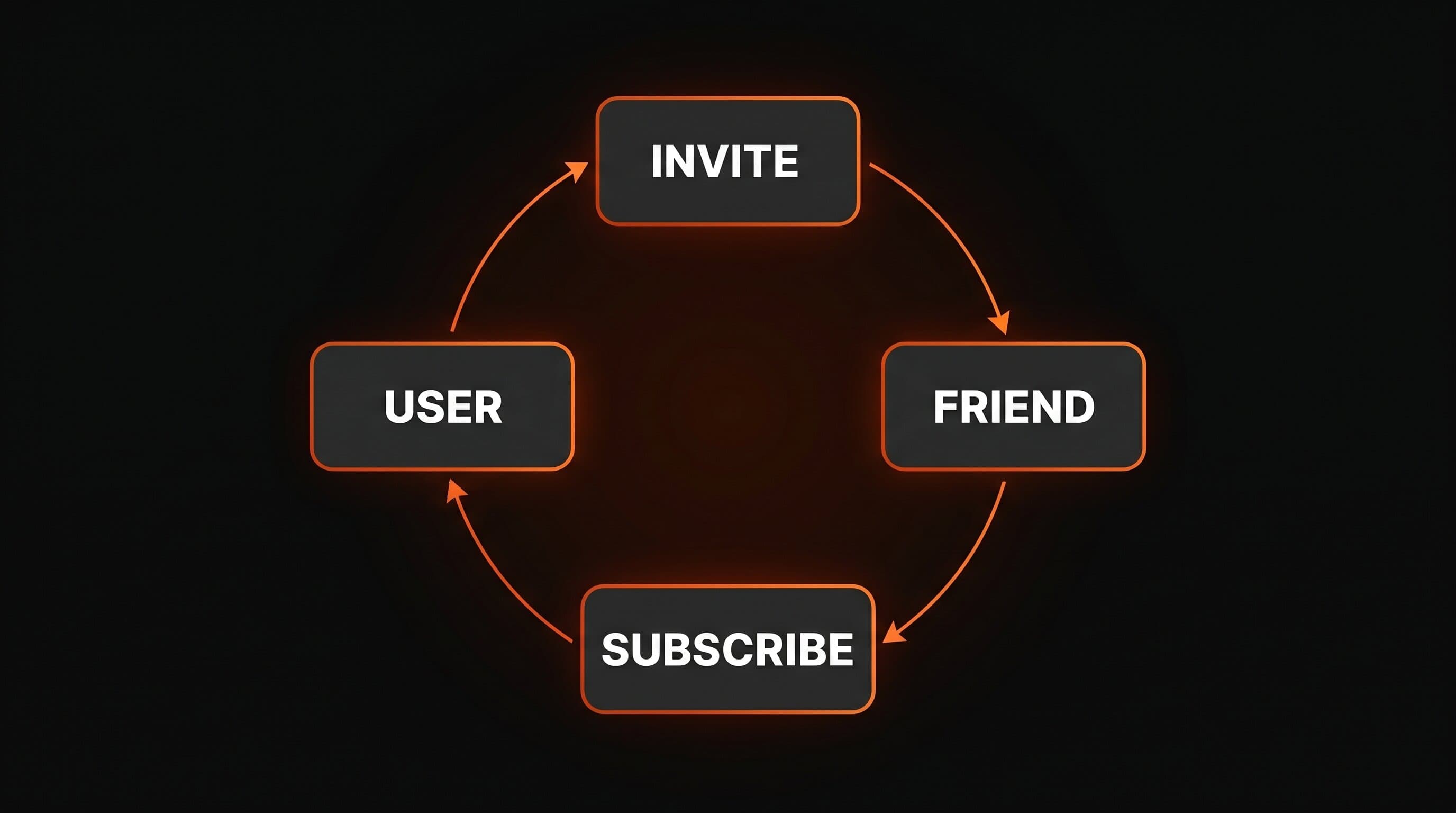
Diagram of a creator app referral loop cycling from user to invite to friend to subscribe and back to user
Referred users churn less and spend more because they arrive pre-trusted. A friend already vouched for the app, so the new user shows up with realistic expectations and a reason to stick. The numbers are not subtle. A study of nearly 10,000 customers published in the Journal of Marketing found that referred customers were 18% less likely to churn and had a 16% higher lifetime value than customers acquired through other channels, with the loyalty gap holding steady over a six-year window (Schmitt, Skiera, and Van den Bulte, 2011). Referred customers were also roughly 25% more profitable per year early in the relationship. That happens because trust transfers. 84% of people say a recommendation from someone they know is the most trustworthy form of advertising they encounter, ahead of every paid channel (Nielsen). A TikTok ad interrupts a stranger. A friend's text lands on someone already primed to say yes. Lower customer acquisition cost and higher lifetime value at the same time is rare. Referrals give you both. A well-built referral loop can become your single largest growth channel. Dropbox is the canonical proof. In September 2008 it had 100,000 registered users. By December 2009 it had 4 million, a 3900% jump in 15 months, and it credited 35% of daily signups to the referral program rather than advertising (SaaSquatch). You won't hit Dropbox numbers, and you don't need to. The metric that decides whether a loop compounds is the viral coefficient, often called the k-factor: the average number of new users each existing user brings in. What is the viral coefficient? The viral coefficient is the number of invites each user sends multiplied by the percentage of those invites that convert to signups. A k-factor above 1 means pure exponential growth. Most real creator apps land between 0.1 and 0.4, which is still a meaningful discount on your acquisition cost. Here's what a modest loop adds on top of your normal growth:
Active SubscribersAvg Invites SentInvite ConversionNew Referred Users
1,000210%200
5,000212%1,200
10,000312%3,600
25,000315%11,250
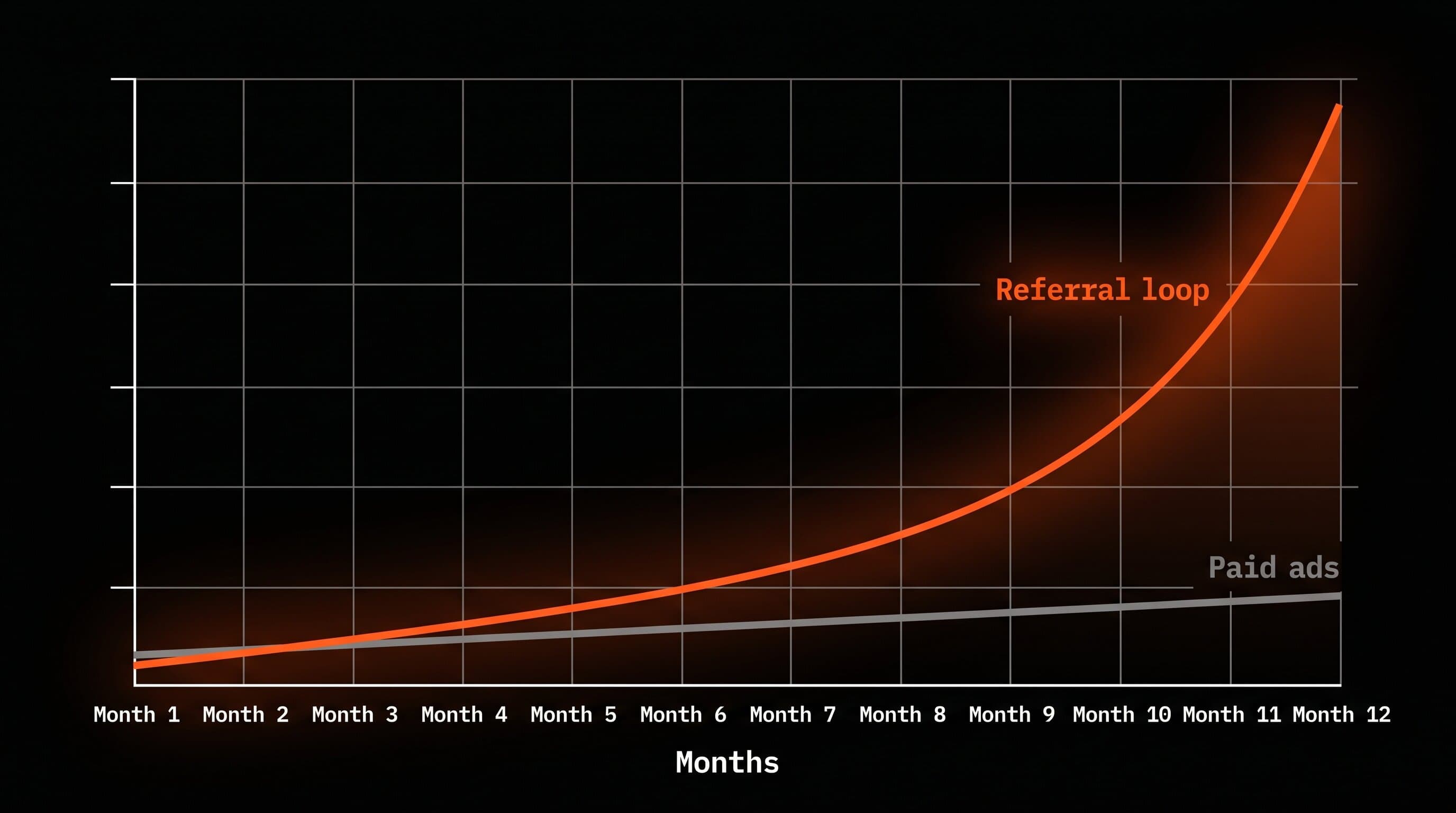
Line chart contrasting flat paid ad growth against a compounding referral loop curve over twelve months
Those referred users then refer their own friends, and the loop keeps turning. A creator with 1,000 paying subscribers and a 0.2 k-factor adds hundreds of new users a year without buying a single ad. Pair that with your first 1,000 subscribers playbook and the channel starts to stack. Reward both people, every time. The referrer gets something for inviting, and the friend gets something for joining. One-sided programs convert far worse because they ask your user to spam their friends for personal gain, which most people won't do. Dropbox gave 500MB of free storage to both sides. For a creator app, the equivalent is free subscription time on both ends. The referrer earns a free month when their friend subscribes; the friend gets an extended trial or a discounted first month. Both sides feel like they won, so both sides act. Match the reward to your app's value, not to a generic coupon:
App TypeReferrer RewardFriend Reward
Fitness / workout1 free month14-day extended trial
Education / skillsUnlock a bonus courseFirst month 50% off
Finance / planning1 free month30-day extended trial
Community / coachingExclusive live session accessFounding-member pricing
Free subscription time is almost always better than cash. It costs you very little, it keeps the user inside the product longer, and a user who earns three free months by referring three friends is a user who is now deeply unlikely to churn. Trigger the invite at the user's peak moment, not in a settings menu nobody opens. People share when they feel good, so the timing of the ask matters more than the copy. The peak moment depends on what your app does. After a user finishes a workout, hits a 30-day streak, completes a lesson, or sees a real result, they feel the value most sharply. That's the instant to surface a clean prompt: "Loving this? Give a friend 14 days free and earn a free month." A finance app should ask after a savings milestone. A learning app should ask after a course completion or a level-up. Compare that to the default approach, a static "Invite friends" button buried three taps deep. Nobody navigates to it. The peak-moment prompt does the navigating for them, which is the difference between a referral feature and a referral loop. This is the same instinct behind strong onboarding that converts: meet the user at the emotional moment, not the menu. Cut every step between "I want to share this" and the friend's phone. Each extra tap, each form field, each "copy this code and paste it" instruction kills a chunk of your conversions. The mechanics that work:
  • One unique link per user. Generate it automatically. The user should never type or copy a code by hand.
  • Native share sheet. Tap once, the phone's share menu opens, the user picks the group chat or text thread. This is where creator audiences actually live, not email.
  • Pre-written message. Fill in the share text for them: "I've been using [App] for my training, here's 14 days free." They can edit it, but they don't have to write it.
  • Deep link that lands on the offer. The friend taps the link and arrives on a screen that already shows the reward and the signup, not a generic App Store page that makes them hunt for what they were promised.
Friction is the silent killer of referral loops. A program that works on paper dies in practice because it asked the user to do four things when one would have worked. Your content is the fuel that keeps the loop running. The referral system lives in the app, but the reason people open the app and reach a share-worthy moment is the audience you already command. Every post is a top-of-funnel push into the loop. A workout video that ends with a real client result. A finance reel that shows the planning feature in action. A before-and-after that came straight out of the app. Each one sends fans into the product, where the peak-moment prompt is waiting to turn them into referrers. This is the content engine working in both directions: your content drives app usage, and app usage drives more referrals. This is why referral loops work better for creators than for faceless apps. A SaaS company has to buy its way to the top of the funnel. You post your way there, for free, to an audience that trusts you. The app and the audience compound on each other, which is exactly why your next 10,000 fans won't come from chasing the algorithm. Free subscription time beats cash, discounts, and physical merch for almost every creator app. It's the cheapest reward to give and the one most likely to deepen retention. Here's how the common reward types stack up:
Reward TypeCost to YouRetention EffectBest For
Free subscription timeVery lowStrong, keeps user in-appAlmost all creator apps
Percentage discountLowWeak, trains price sensitivityNew apps building early volume
Exclusive content unlockOne-timeStrong, ties reward to valueEducation, coaching, community
Cash / gift cardHighNone, attracts mercenariesRarely worth it for creators
Cash rewards pull in people who want the cash, not the app. They refer, collect, and churn. Free months pull in people who want more of what you make, and keep your referrer subscribed longer in the process. When you're choosing, optimize for retention, not for the size of the bribe. Most referral programs fail on placement and friction, not on the size of the reward. Creators assume a small reward is the problem and keep raising it, when the real issue is that nobody can find the share button or the share takes too many steps. The recurring mistakes:
  • Burying the ask. A referral screen three taps into settings gets almost no traffic. Surface the prompt at the peak moment instead.
  • One-sided rewards. Paying only the referrer makes the user feel like they're spamming friends for personal profit. Reward both sides.
  • Too much friction. Manual codes, copy-paste flows, and email-only sharing leak conversions at every step.
  • Rewarding signups, not subscriptions. Pay out when the friend becomes a paying subscriber or finishes the trial, not the second they download. Otherwise you'll fund a flood of installs that never pay.
  • Launching and forgetting. A referral loop is a feature you tune, not a switch you flip. Watch the conversion at each step and fix the leakiest one.
Female Invest grew a finance education business by turning a tight community into an engine that brings in new members, the same dynamic a referral loop formalizes, which we covered in how Female Invest built a women's finance app. The mechanic only works when the program is easy and the timing is right. If you're building from scratch, a referral system is meaningful engineering work: unique link generation, attribution tracking, reward fulfillment, and fraud checks. Built by Foundry includes the referral loop in the app we build and run for you, with $0 upfront and a revenue share, so there's no separate bill for it. A healthy creator app sees 2% to 5% of active users send at least one invite per month, with invite-to-signup conversion around 10% to 20%. Anything in that range, layered on top of your normal growth, meaningfully lowers your blended acquisition cost. Both. Double-sided rewards consistently outperform one-sided ones because they remove the feeling that the user is exploiting their friends. Give the referrer free subscription time and the friend an extended trial or discount. Pay out when the referred friend becomes a paying subscriber or completes their trial, not at install. Rewarding installs invites low-quality signups and outright fraud. Rewarding real subscriptions aligns the reward with revenue. For many creators, yes. With an engaged audience feeding the top of the funnel, a tuned referral loop can become your largest growth channel, the way it did for Dropbox. Most creators never need a paid acquisition budget at all. You're already earning the word of mouth. Fans already recommend your app in group chats you'll never see, and right now that growth leaks out untracked and unrewarded. A referral program is the plumbing that captures it and turns it into compounding subscribers who churn less and pay longer. A creator with an engaged audience and a referral loop has something most startups would pay millions for: a growth channel that runs on trust instead of ad spend. The only question is whether the app exists to plug it into. Want a referral loop built into an app you own? We build custom subscription apps for creators. $0 upfront, three-week delivery, and we run the tech, updates and all, forever.
Let's Build →

Creator app strategy

Want us to review your creator business?

Apply for a Foundry Creator App Review. We'll tell you whether there is a real app opportunity hiding in your audience.

How to Build a Creator App Referral Program