

Creator App Retention: 7 Tactics That Beat Churn

Creator App Retention: 7 Tactics That Beat Churn

Foundry
May 11, 2026
Key Takeaways:
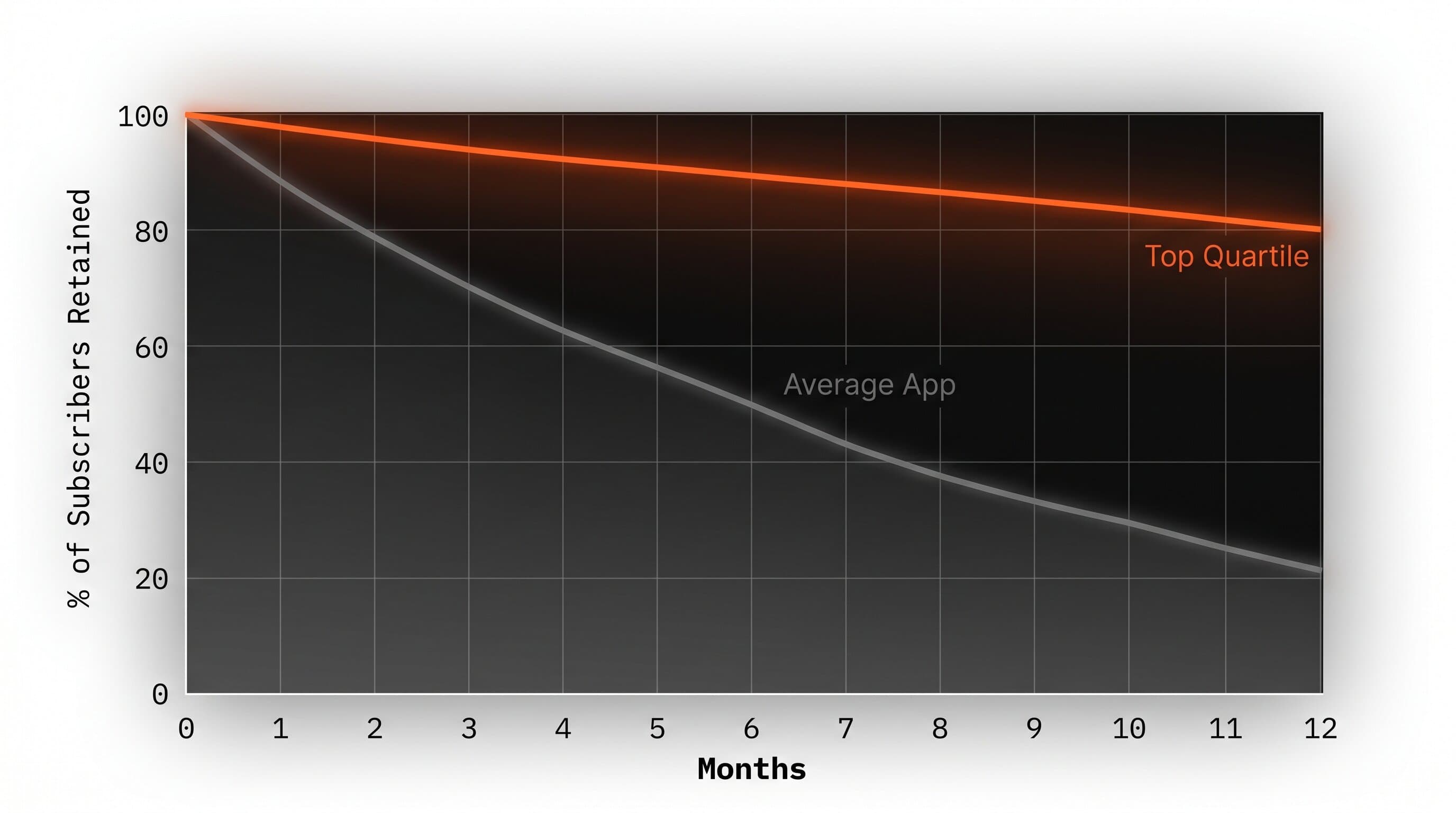
  • The median monthly churn for a consumer subscription app is 5 to 7%, which means roughly half of all paying subscribers are gone within 12 months
  • Apps that drive a meaningful action in the first 24 hours retain 2x better at month 3 than apps that wait for the user to find their own way
  • A push notification cadence of 2 to 4 well-timed messages per week beats both daily spam and silence
  • Annual plans cut effective monthly churn by 60 to 70% compared to monthly only, because the cancellation moment only happens once a year
  • A 5 percentage point improvement in monthly retention can double the lifetime value of every paying subscriber
What is creator app retention? Creator app retention is the percentage of paying subscribers who keep their subscription active month over month. It is the inverse of churn. If 100 subscribers pay you in January and 92 are still paying in February, your monthly retention is 92% and your monthly churn is 8%. Retention is what turns an app launch into a real business. You can spend a year shipping a creator app, run a perfect launch, hit the App Store charts, and still go broke. Acquisition gets the press release. Retention pays the bills. Every subscriber who cancels in month two is a subscriber you paid to acquire and lost before they paid for themselves. This is the part of the business creators usually do not see until they look at month-six revenue and realize the line is flat. Installs are climbing. Trials are converting. The MRR is not. The fix is not one big lever. It is seven small ones, applied in order. Here they are. Most creator app churn happens in the first 30 days, and most of it is not a pricing problem. It is an activation problem. RevenueCat's 2024 State of Subscription Apps report found that the median consumer subscription app loses about 50% of new paid subscribers within 12 months. The losses are front-loaded. Roughly 30% of those churners are gone in the first 60 days. They paid, they opened the app once or twice, they forgot it existed, and the next month's charge felt like a mistake on their statement. The pattern is the same across fitness, meditation, finance, and education apps. The user did not hate the product. They never built a habit around it. By the time the second charge hit, the app was buried three home screens deep behind a folder labeled "later." This is what we mean when we talk about churn in creator apps. Churn is not a single event. It is the slow erosion of a habit that was never formed in the first place. The seven tactics below are all habit interventions in different costumes.
Dark editorial photograph of a glowing dashboard showing a retention curve with warm orange highlights
A healthy creator subscription app holds 92 to 95% of paying users month over month after the first 60 days. Top performers clear 96%. Anything below 88% is a leaky bucket no amount of marketing will fill. Here is the benchmark grid we use when we audit a creator app:
Monthly RetentionAnnual RetentionQualityWhat It Means
96%+61%+Top quartileHabit-forming product, healthy LTV
92 to 95%37 to 54%GoodReal business, room to optimize
88 to 91%25 to 35%AverageProfitable only if CAC is very low
Below 88%Below 25%Leaky bucketAcquisition spend will not compound
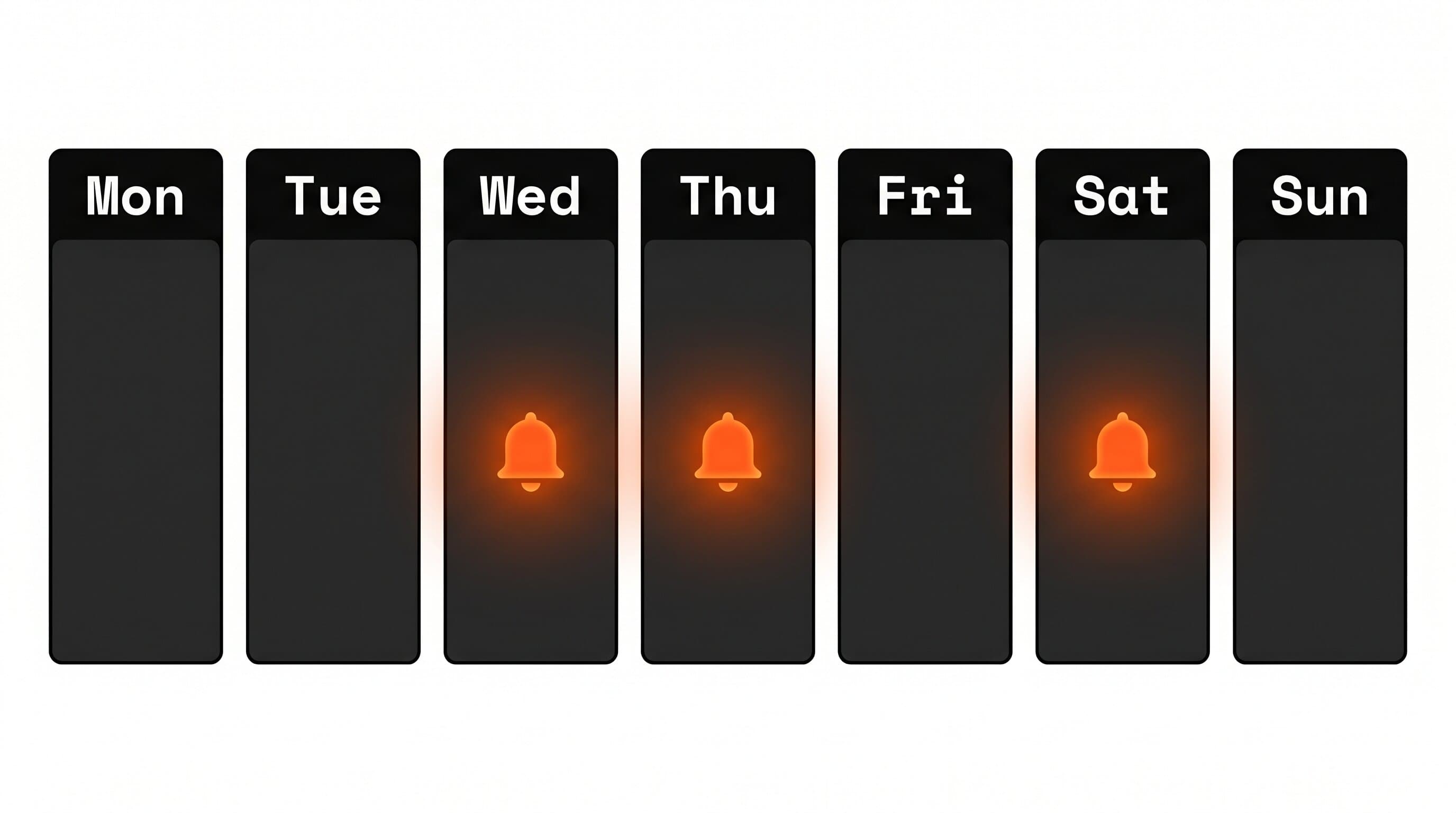
These are the numbers that determine whether a creator app becomes a $5K/month side income or a $50K/month business. The math is brutal in either direction. At 96% monthly retention, a subscriber stays for an average of 25 months. At 88%, they stay for 8. Same price, three times the lifetime revenue. The single biggest predictor of month-three retention is whether the user completed one meaningful action in the first 24 hours. Not opened the app. Not scrolled the home screen. Completed something. For a fitness creator app, this is finishing one workout. For a meditation app, it is completing one session and rating it. For a recipe app, it is cooking one meal and marking it done. The action has to produce a feeling the user can connect to the app, not just a screen they scrolled past. The way to engineer this is to script the first session. The user opens the app, the onboarding answers their context, and the very next screen recommends one specific thing they should do right now. Not a library to browse. One thing. Then a second screen confirms they did it. Apps that do this well show 40 to 60% higher day-30 retention than apps that drop the user into a content library and hope for the best. The apps that win retention have a single recurring action the user is supposed to take every day. A workout of the day. A meditation of the day. A market briefing. A recipe of the week. The content does not have to be huge. It has to be predictable and small. Adriene Mishler's Yoga with Adriene subscription succeeds on this principle. The 30-day yoga journey is not a library, it is a calendar. Day 7 is on the calendar whether the user shows up or not. Missing day 7 creates a small ache the user wants to resolve, and the way to resolve it is to open the app. The mechanic is simple. Pair the daily action with a streak counter, a calendar view, or a "today's session" card on the home screen. The user should never have to decide what to do when they open the app. The app should already know. Two to four push notifications a week, sent at the time the user is most likely to act, beats both daily notifications and silence. Daily notifications train users to swipe them away without reading. Silence lets the app fall out of mind. The middle path is fewer, better notifications that respect the user's attention. The notifications that work are not "we miss you" or "check out today's content." They are notifications that name something specific the user has already committed to. "Day 8 of your 30-day program is ready." "You hit a 5-day streak. Day 6 is one tap away." "Your weekly progress report is ready." The notification continues a story the user is already in, not a new pitch. Time them to the user's behavior, not the clock. A user who usually opens the app at 7am gets the notification at 6:50am. A user who only opens on weekends gets nothing on Tuesdays. Most subscription tooling, including OneSignal and Customer.io, supports per-user send-time optimization. Turn it on.
Conceptual diagram showing a weekly push notification calendar with two to four warm orange highlights
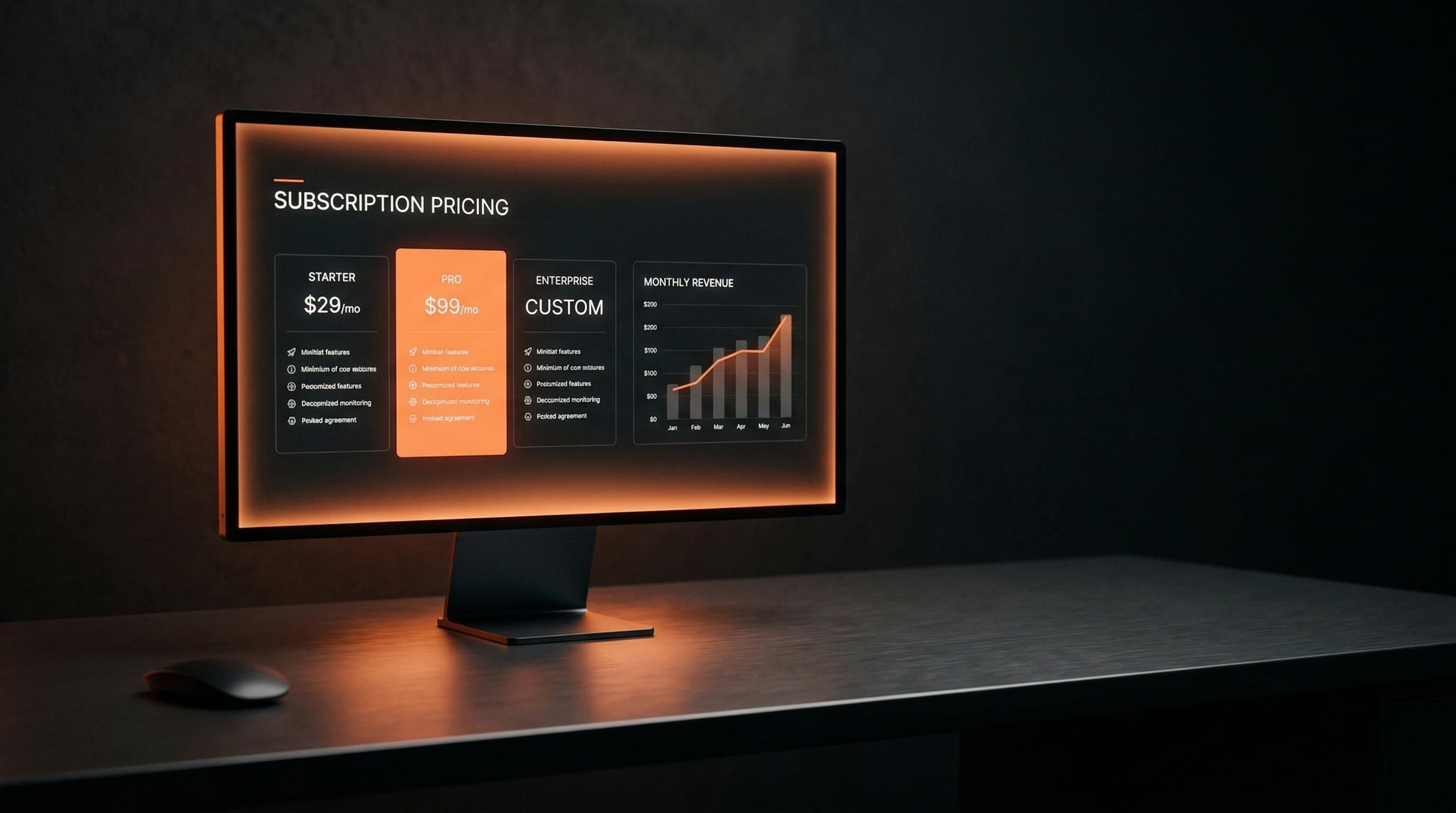
Annual plans are the single largest retention lever in a subscription business, and most creator apps under-use them. A monthly plan gives the user 12 cancellation moments per year. An annual plan gives them one. The math compounds fast. If your monthly subscriber churns at 7% per month, their effective annual retention is 42%. If your annual subscriber renews at 75%, that single decision per year produces an effective monthly retention equivalent of 97.6%. Same product, a different default. The pattern that works on the paywall:
PlanPricePer-Month EquivalentDefault?
Monthly$14.99$14.99No
Annual (upfront)$89.99$7.50Yes, pre-selected
Free trial7 daysn/aAvailable on both
Pre-select the annual plan. Show the per-month equivalent next to it. Make the monthly option visible but not default. RevenueCat's data shows annual plan opt-in lifts lifetime revenue by 50 to 70% versus monthly only. Pricing is the lever, but the default is the trick. For more on plan structure, see our guide to pricing strategies for creator subscription apps. Streak counters are not a gimmick. They are a behavioral commitment device that turns a habit into a cost the user does not want to lose. Duolingo built a $9 billion company largely on the strength of one streak counter. The mechanic works for creator apps too, with one rule: the streak has to reward something the user values, not the app's vanity metric. A streak for "days opened" is hollow. A streak for "workouts completed," "meditations finished," or "lessons passed" is real. Pair streaks with milestone rewards the user can show off. A 30-day badge. A "first 10 workouts" certificate. A "year one" thank-you message from the creator. Anything that creates a small emotional moment the user wants to screenshot and post. That screenshot is also free user-generated content for the creator's social feeds, which is the content engine flywheel that compounds outside the app. Most subscription cancellations are predictable two weeks in advance. Inactivity, a missed daily action, a closed push notification: the signals are visible if you watch for them. Build a simple risk score in your analytics. A user who has not opened the app in 7 days, missed their last 3 daily actions, and disabled push notifications is at high risk. Trigger an intervention before the next renewal date. Not a discount offer. A re-engagement that gives them something useful: a personalized message from the creator, a "welcome back" session designed for returning users, a one-tap way to reset their goals. The creators who do this best treat the high-risk subscriber list like an ongoing customer relationship, not a churn statistic. Every saved subscriber is roughly $60 to $200 in lifetime revenue you do not have to re-acquire. The economics of saving a user are 5 to 10x better than acquiring a new one. The cancel flow is the last conversation you get to have with a paying user. Most creator apps waste it. The standard "are you sure?" screen does almost nothing. The cancel flows that recover 15 to 25% of cancellations have three properties:
  • They ask one specific question about why the user is leaving, with a small set of real answers (too expensive, not using it enough, technical issue, found alternative)
  • They offer a tailored response to each answer. Too expensive gets a one-time discount or a downgrade to a cheaper plan. Not using it enough gets a 30-day pause. Technical issue routes to support and offers credit
  • They confirm the cancellation cleanly if the user still wants to leave, with no dark patterns
The "pause subscription" option alone recovers 8 to 12% of cancellations on most apps. A user who pauses is a user you can re-engage in 30 days. A user who cancels is gone. For more on the trial and conversion side of this funnel, see our guide on trial to paid creator app conversion. A 5 percentage point improvement in monthly retention roughly doubles the lifetime value of every paying subscriber. That is not a marginal gain. That is a different business. Run the math at $9.99 per month:
Monthly RetentionAvg Subscriber LifetimeLifetime Revenue1,000 Subscribers Worth
88%8 months$80$80,000
92%12 months$120$120,000
95%20 months$200$200,000
97%33 months$330$330,000
This is why retention is the part of the business that pays for everything else. A 7-percentage-point improvement, from 88% to 95%, takes the same audience and the same acquisition spend and turns an $80K business into a $200K business. The work to get there is not glamorous. It is the seven tactics above, applied with discipline. A creator app at 96% retention does not need to chase virality. The compounding does the work. That is the business we help creators build, and the part most founders only see clearly after they have already lost their first 1,000 subscribers. A good monthly retention rate is 92% or higher. Top quartile apps hold 96% or more. Below 88% means the product is not forming a habit and acquisition spend will not compound. Retention is the inverse of churn. If 8% of subscribers cancel each month, monthly churn is 8% and monthly retention is 92%. They measure the same thing from opposite directions. Annual plans typically reduce effective monthly churn by 60 to 70%. The cancellation decision happens once per year instead of every month, so the same product retains far more revenue at the same price point. Yes. Daily push notifications train users to ignore the app. Two to four well-timed notifications per week, tied to a daily action the user already cares about, retain better than either daily spam or silence. Yes. A pause option alone recovers 8 to 12% of cancellations on most subscription apps. A paused subscriber is a subscriber you can re-engage. A canceled subscriber is gone. Want to build a creator app with retention designed in from day one? Foundry builds, launches, and runs custom apps for creators. $0 upfront. Three weeks to App Store. We handle the activation flow, the paywall, the push schedule, and the cancel flow alongside the build.
Let's Build →

Get Creator Revenue Insights

How creators are turning audiences into subscription businesses

You might also enjoy...

Creator App Retention: 7 Tactics That Beat Churn