
Creator Economy Trends

Why 96% of Creators Don't Make a Living

Foundry
June 19, 2026
Share
Why 96% of Creators Don't Make a Living

Get Creator Revenue Insights

How creators are turning audiences into subscription businesses
Share
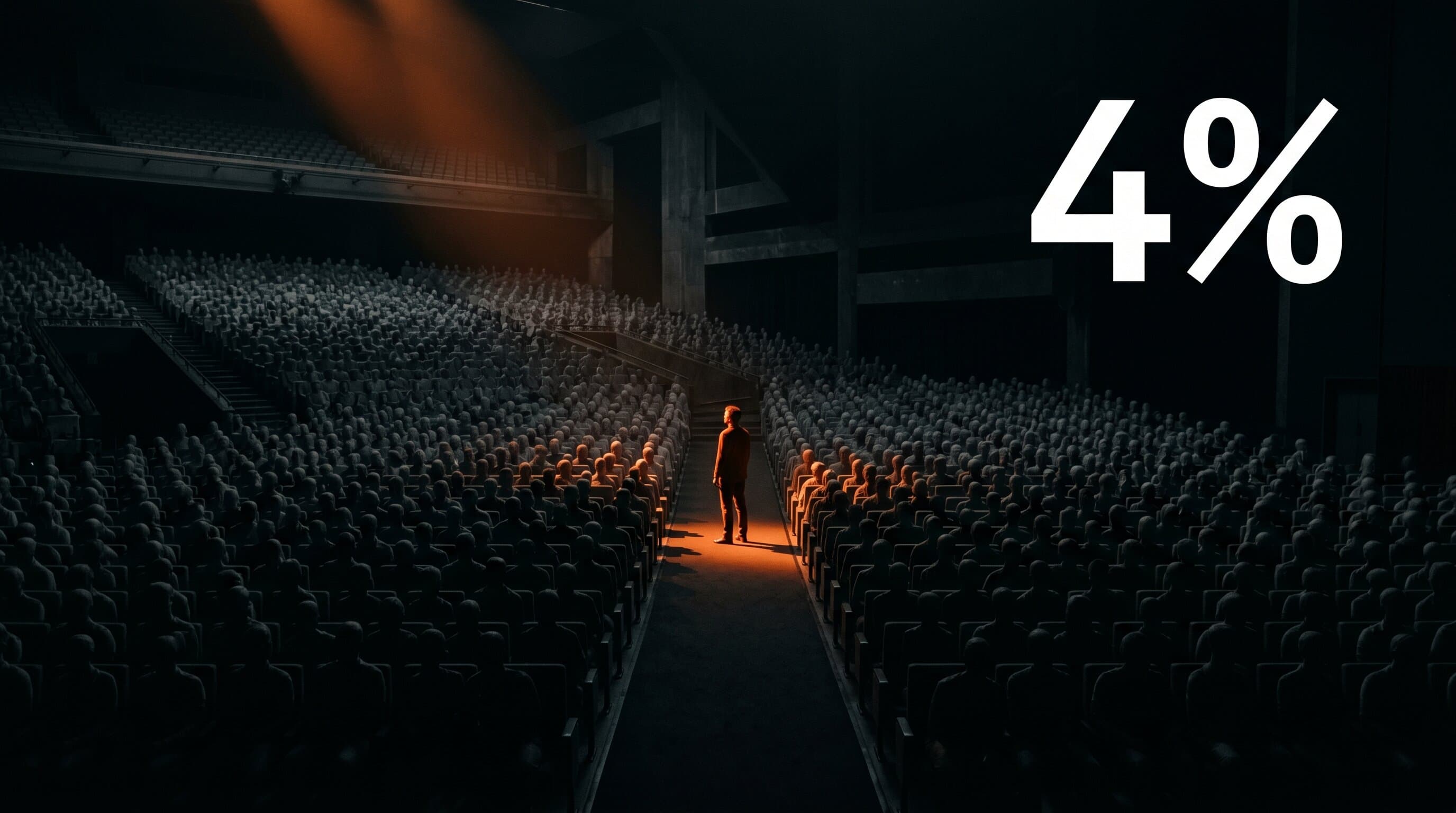
There are roughly 50 million creators on Earth, and Goldman Sachs says about 4% of them earn more than $100,000 a year. That leaves 48 million people posting daily for an income that never arrives. The creator economy is on track to hit $480 billion by 2027, and most creators will watch that money flow past them. The gap is not about talent or follower count. It is about who owns the revenue. Key Takeaways:
  • Only about 4% of the world's ~50 million creators earn more than $100K a year (Goldman Sachs).
  • 46% of full-time creators make less than $1,000 a year, and only 12% clear $50K (TechCrunch).
  • Brand deals make up about 70% of creator income, the single most volatile and least scalable revenue source.
  • The 4% who win share one trait: they own a product with recurring revenue, not a feed that resets to zero.
  • Subscriptions are the fastest-growing creator revenue stream. Substack alone hit 5 million paid subscriptions in March 2025, up 67% year over year.
Almost none of them. Linktree surveyed 9,500 creators and found that 46% of full-time creators earn less than $1,000 a year, while only 12% make more than $50,000 (TechCrunch). For part-time creators, 68% make under $1,000. Stack that against the Goldman Sachs figure and the picture sharpens: in a market about to clear $480 billion, the vast majority of the people building it cannot pay rent with it. The creator economy is not a middle-class job market. It is a lottery with 50 million tickets and a handful of winners. That should bother you, because the winners are not 100 times more talented. They built something the other 96% did not. Because most creator income is rented, not owned. Goldman Sachs found that brand deals account for roughly 70% of creator revenue. Brand deals are the worst possible foundation for a business: they pay once, they depend on someone else's budget, and they vanish the moment a brand reallocates spend or your engagement dips. The other common income sources are just as fragile. Platform ad share is set by the platform and changed without warning. Affiliate links pay pennies on the dollar. One-time digital products sell once and then go quiet. Every one of these resets to zero the day a creator stops posting. This is the structural trap. A creator with 500,000 followers and a brand-deal income has no asset. They have a job that requires them to perform every single day, on a stage someone else owns, for pay someone else sets. Miss a month and the income disappears. We mapped where all this money actually ends up in The Creator Economy Hits $480B by 2027. Who Wins?, and the creator is rarely the answer. Ownership of recurring revenue. The creators who make a real living almost all run a product that charges money every month, automatically, whether they post that day or not. They stopped selling their attention to brands and started selling a product to their audience. The math is not close. Look at what each revenue model actually does for a creator over a year.
Revenue ModelPaysScales WithResets If You Stop
Brand dealsOnce per dealBrand budgetsYes
Platform ad sharePer viewPlatform payoutsYes
One-time digital productsOnce per saleNew launchesMostly
Subscription appEvery monthYour subscriber baseNo
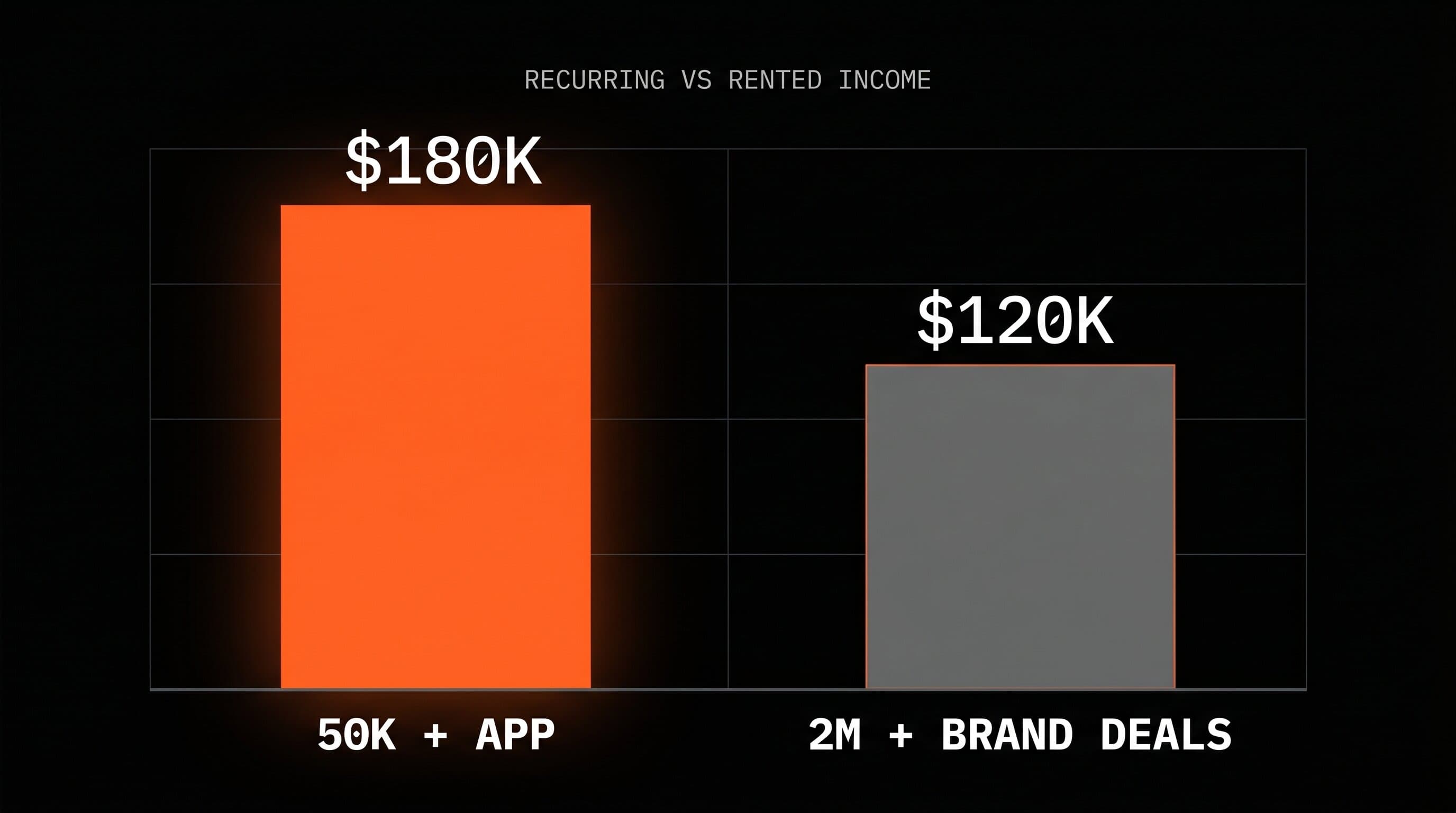
A brand deal is a paycheck. A subscription app is an asset. The first depends on you showing up. The second compounds while you sleep, because every existing subscriber renews and the App Store keeps sending new ones who never watched a single video. Here is the part most creators get backwards. They assume they need more followers to make more money. They do not. A creator with 50,000 engaged followers and a $10 monthly app can out-earn a creator with 2 million passive followers living on sporadic brand deals. Run it: 50,000 followers, 3% convert to a $10/month app, that is 1,500 subscribers paying $15,000 a month. That is $180,000 a year of recurring revenue from an audience most agencies would call too small to matter. The 2-million-follower creator chasing brand deals might clear that in a good year, then start over at zero the next. Follower count is vanity. Paying subscribers are a business. The 4% figured out that the bottleneck was never reach. It was the absence of a product their audience could pay for monthly.
Bar chart comparing annual income for a 50K-follower creator with a subscription app versus a 2M-follower creator on brand deals, on a dark background with orange bars
They build a product, not more content. The fastest-growing slice of creator income is subscriptions, and the proof is in the numbers. Substack reached 5 million paid subscriptions in March 2025, up about 67% year over year (The Hollywood Reporter). Creators are routing their audiences toward channels they own, where the money is recurring and the relationship is direct. The biggest creator businesses took this further and built apps. Joe Wicks turned free park workouts into a multimillion-pound business through the Body Coach app, where he owns the subscriber list and keeps the revenue. We broke down the full playbook in Joe Wicks: The £24M Body Coach App Empire. An app does something a newsletter cannot: it turns daily usage into content. Every leaderboard, streak, and user result is something to post about, which solves the creator's hardest daily problem of deciding what to make next. If you already run a newsletter or community, the pivot is closer than you think. Read Turn Your Newsletter Into a Subscription App for the step-by-step. And once it is live, App Care keeps it updated, optimized, and earning without you touching code. A creator earns money when they perform. A founder earns money when their product performs. One income resets to zero every time the posting stops. The other keeps arriving on the first of the month, from people the creator may never meet. The 96% are not failing because they are bad at their craft. They are failing because the craft was never the business. The business is the product their audience pays for on repeat. The creators who understood that quietly joined the 4%, and most of them did it without a viral moment, a bigger following, or a single extra hour of filming. They just stopped renting and started owning. For the exact targets to aim for, see Creator App Benchmarks: The Numbers to Hit in 2026. Very few. Goldman Sachs estimates only about 4% of the world's roughly 50 million creators earn more than $100,000 a year. Linktree's survey of 9,500 creators found 46% of full-time creators make under $1,000 annually, and only 12% clear $50,000. Most creator income comes from brand deals, which Goldman Sachs puts at around 70% of total creator revenue. Brand deals pay once, depend on someone else's budget, and disappear when a creator stops posting. Without an owned product that charges monthly, income never compounds. They build products their audience pays for on a subscription, most often an app or paid membership. Subscriptions are the fastest-growing creator revenue stream, with platforms like Substack passing 5 million paid subscriptions in 2025. A subscription app keeps earning every month, independent of the posting schedule. No. A creator with 50,000 engaged followers converting 3% to a $10 monthly app earns $180,000 a year in recurring revenue. Engaged audience plus an owned product beats a large passive following living on brand deals. Most agencies charge $50K to $200K upfront. Built by Foundry charges $0 upfront, builds your app in about three weeks, handles App Store submission, and takes a revenue share, so we only earn when you earn. Want to join the 4% instead of the 96%? We build custom apps for creators: $0 upfront, three-week delivery, and we run the tech forever.
Let's Build →

Creator app strategy

Want us to review your creator business?

Apply for a Foundry Creator App Review. We'll tell you whether there is a real app opportunity hiding in your audience.

Why 96% of Creators Don't Make a Living