

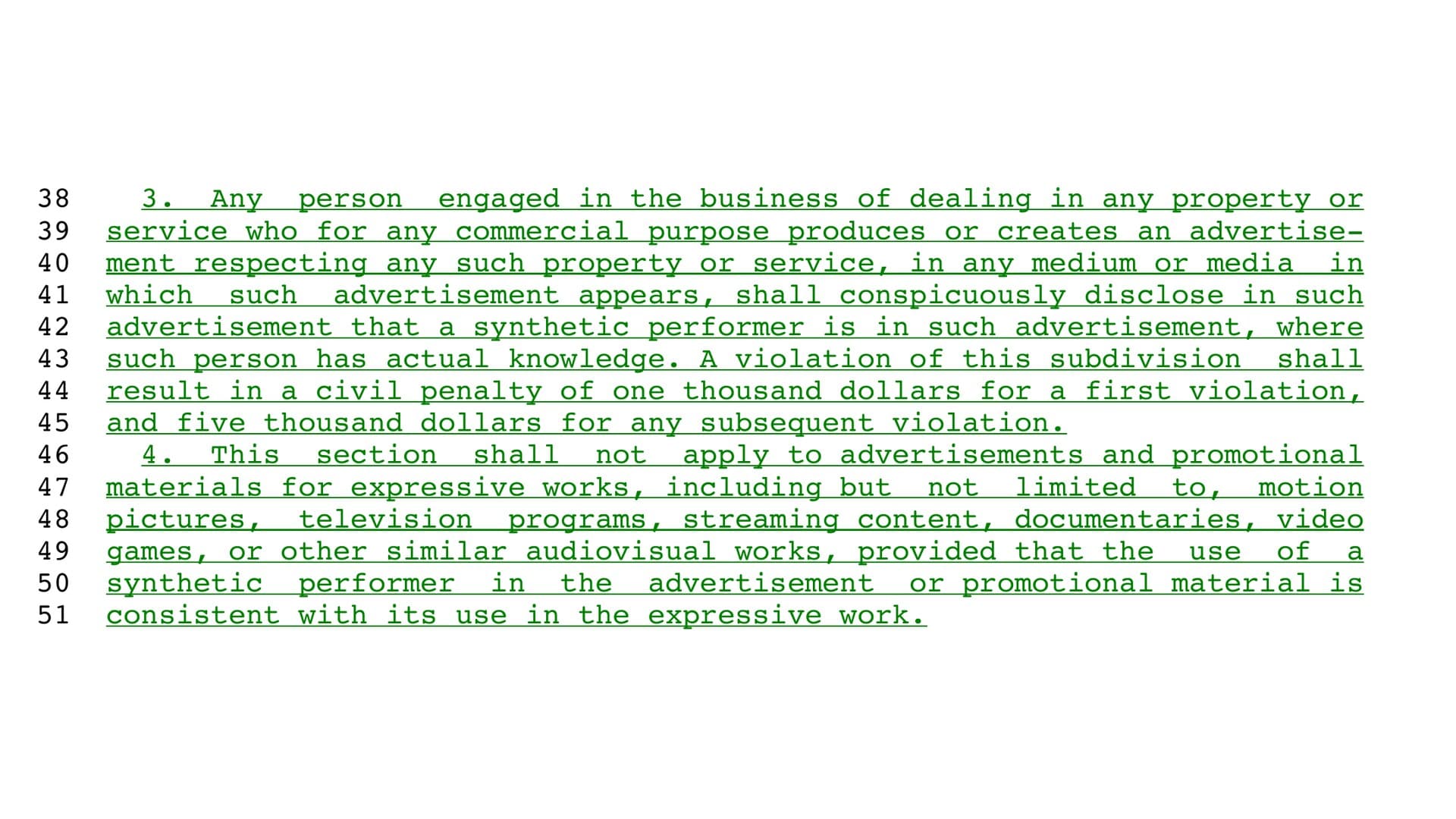
- New York is the first US state to require it. Since June 9, 2026, General Business Law § 396-b(3) says a person who produces an advertisement "shall conspicuously disclose in such advertisement that a synthetic performer is in such advertisement, where such person has actual knowledge"
- The penalty is small and the reach is not. One thousand dollars for a first violation and five thousand for every one after, applied to any company advertising to New Yorkers, which is why Amazon told third-party sellers in July 2026 to disclose AI-generated people in listing images
- A synthetic performer is a generated stranger, not a deepfake of someone real. The statute defines it as an asset "intended to create the impression that the asset is engaging in an audiovisual and/or visual performance of a human performer who is not recognizable as any identifiable natural performer"
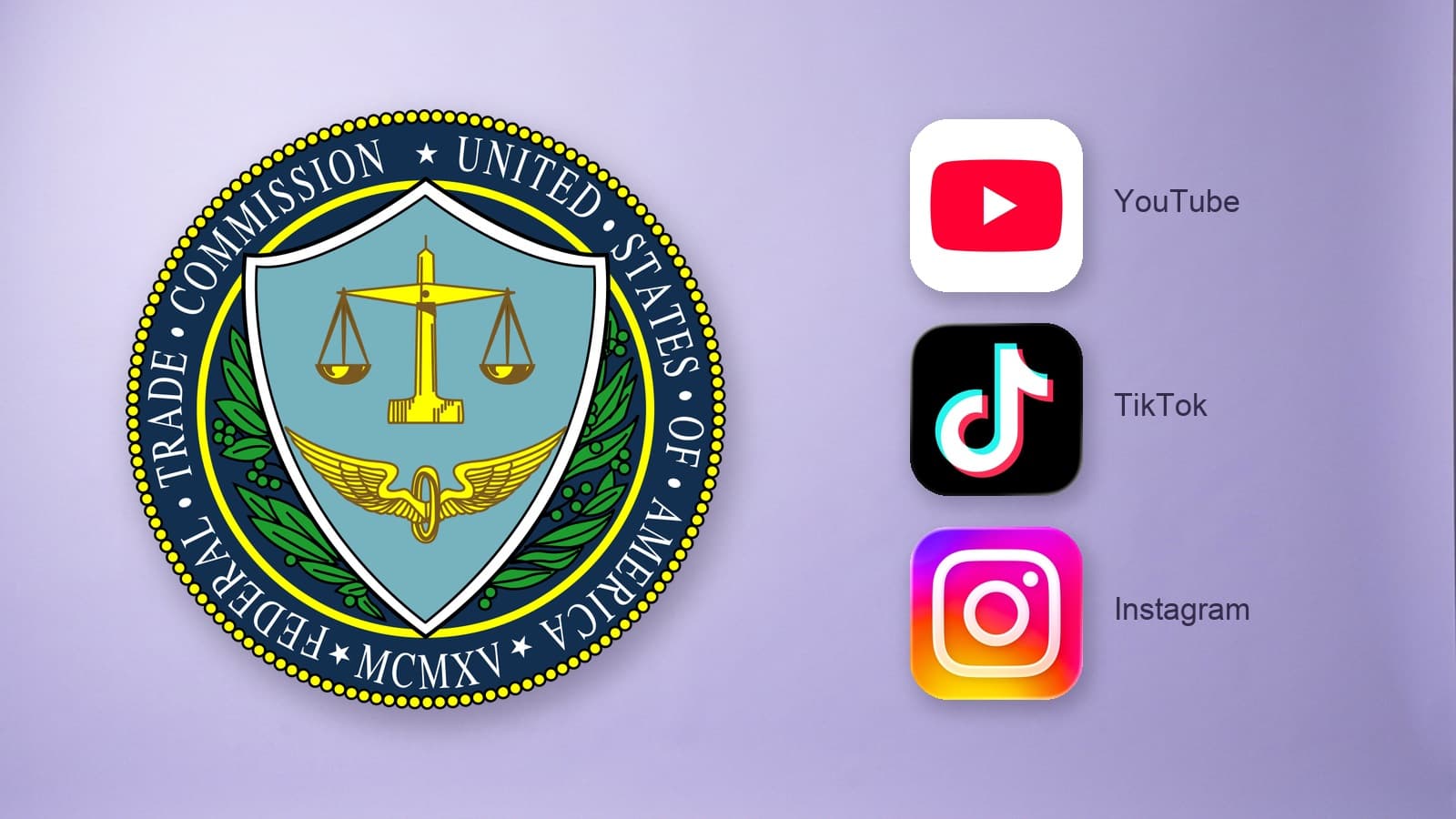
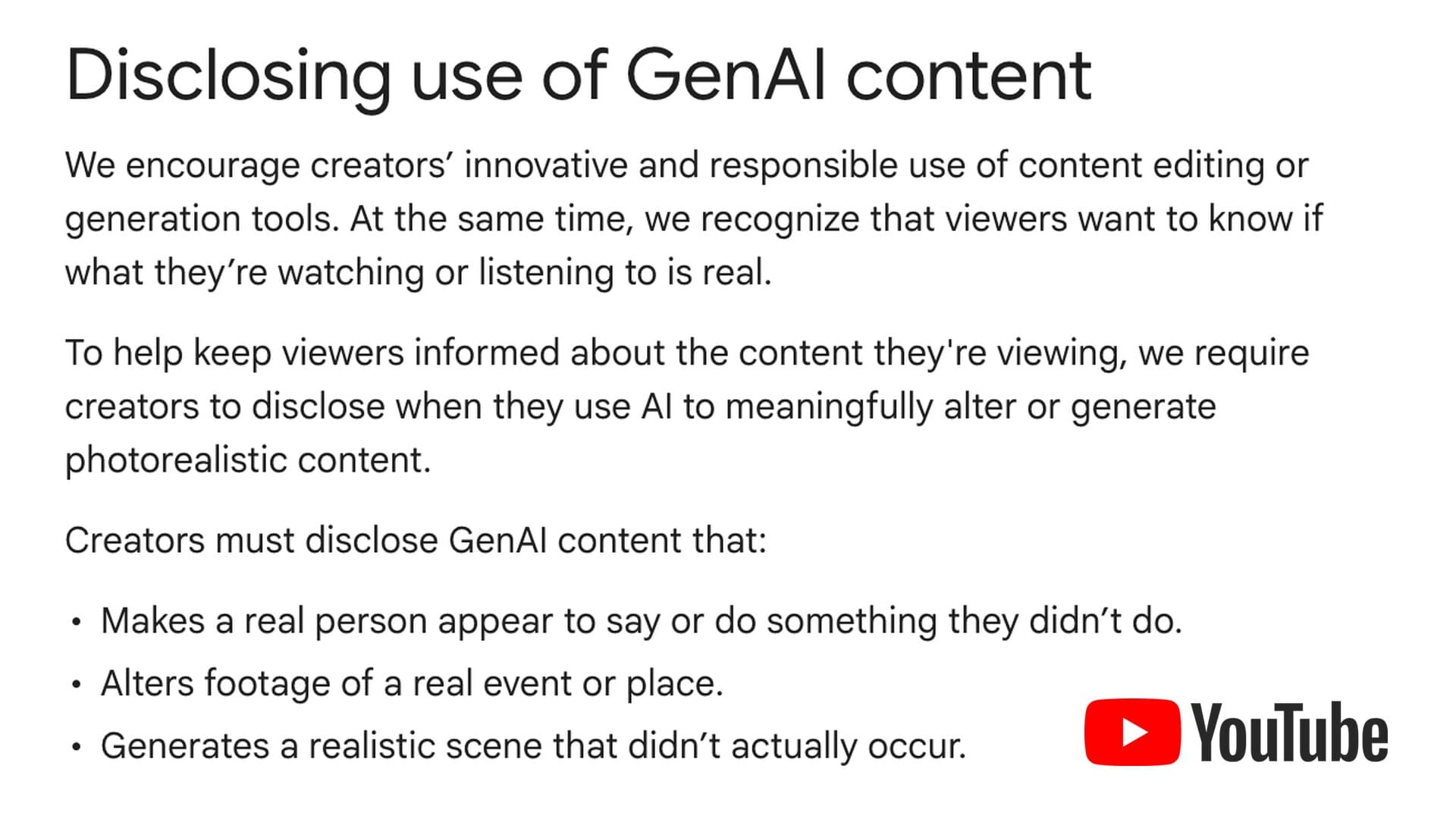
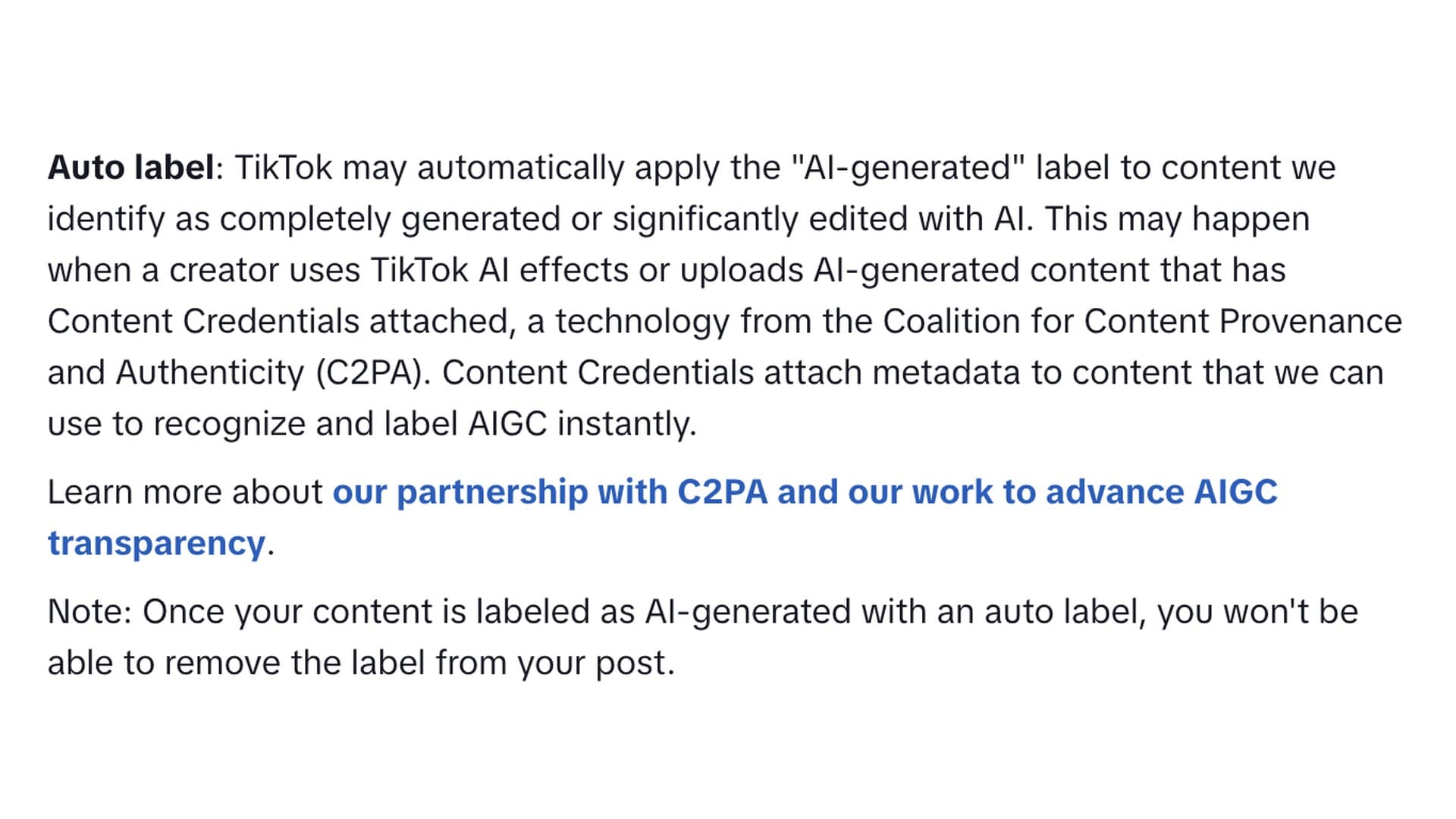
- YouTube, TikTok and Meta all require a label on realistic AI content, and all three will apply one themselves if you do not. TikTok's own help pages say an auto label cannot be removed from your post
- The exemptions are narrower than they sound: audio ads, translation of a real performer's language, and promotional material for an expressive work when the synthetic performer is used the same way inside the work
- Hawaii was widely reported to have copied New York. The enrolled text of Act 247 contains no labeling requirement at all. It prohibits realistic AI imitations of identifiable people in advertising and lets them sue for up to $25,000 per advertisement
- No label cures a fake testimonial. 16 CFR § 465.2 makes it an unfair or deceptive practice to misrepresent "that the reviewer or testimonialist exists"
- Every rule here attaches to an advertisement or a post. None of them attaches to a product somebody subscribes to, which is worth knowing when you decide what your business actually sells
Somebody is about to hand you a finished ad with a model in it who does not exist.
It will be cheaper than the shoot you were quoted. It will be on brand. And in one state it is now illegal to run it without saying so in the ad itself, which means the question has moved out of ethics and into production.
Here is the working version of the rules, checked against primary sources on September 20, 2026. Three platform policies, two state laws that do very different things, one federal rule that no label fixes, and a deadline in California that quietly takes the choice away from you.
Do You Have to Label AI Content?
| Where the rule comes from | What triggers a label | What you have to do | What happens if you skip it |
|---|---|---|---|
| New York General Business Law § 396-b(3) | An advertisement containing a synthetic performer, where you have actual knowledge | Conspicuously disclose it in the advertisement | $1,000 for a first violation, $5,000 for each one after |
| YouTube | Realistic content generated or meaningfully altered with AI | Set "AI use" to Yes in the Attributes section at upload | A manually applied label, removal, or suspension from the YouTube Partner Program |
| TikTok | AI-generated or significantly edited content showing realistic scenes or people | Apply the AI-generated content label to the post | Content "may be removed, restricted, or labeled by our team" |
| Meta (Facebook, Instagram, Threads) | Photorealistic AI images, video or audio | Disclose at upload, or let industry signals do it | Meta attaches its own "AI info" label |
What Counts as a Synthetic Performer?
Which Platform Rules Actually Fire, and What Slips Through?
Hawaii Was Reported to Have Copied New York. It Did Not.
The Federal Rule That No Label Fixes
Your business should not depend on how the next disclosure rule is written.
See What We’d Build You →
Why Does California Matter If You Never Read a Statute?
If You Produce Ads for Other People's Products
- Ask what is in the asset. A written answer from the brand about whether any person in the footage was generated is the only way to reach "actual knowledge" honestly, in either direction.
- Put the duty in the contract. One sentence assigning the disclosure obligation, and indemnity if the brand's answer was wrong, costs nothing at signature.
- Flip the platform switch anyway. It is separate from the legal disclosure, it is free, and YouTube says it does not affect reach or monetization.
- Never let a generated person make a claim. No testimonial, no expertise, no results. That is the federal line, and no label moves it.
- Get consent for any real face. If the likeness is recognizable, disclosure is not the requirement. Written permission is.
The Part of Your Business That Never Needs a Label
The Label Is on the Pitch
See What We’d Build You →
Sources verified September 20, 2026: N.Y. General Business Law § 396-b and the enacted text of Senate bill S. 8420-A; the New York Governor's announcement of June 9, 2026; Hawaii's enrolled HB 2137 CD1; AB 853 amending the California AI Transparency Act; YouTube's Disclosing use of GenAI content policy; TikTok's Integrity and Authenticity guidelines and its About AI-generated content help pages; Meta's labeling approach, last updated October 23, 2025; 16 CFR § 465.2 and the FTC's 2025 civil penalty amounts; and reporting by Mashable and Straight Arrow News on the first complaints and the Amazon seller notice. This article is information, not legal advice. Current-state claims require revalidation before later use.