
Creator Economy Trends

YouTube's 2027 Monetization Rules: 4 Numbers to Know

August 11, 2026
Share
YouTube's 2027 Monetization Rules: 4 Numbers to Know

Get Creator Revenue Insights

How creators are turning audiences into subscription businesses
Share
On February 1, 2027, YouTube doubles the entry requirements for the YouTube Partner Program: new channels will need 1,000 subscribers plus either 8,000 qualified watch hours in the last 365 days or 20 million qualified Shorts views in the last 90 days. YouTube announced the change on August 10, 2026, in its post New opportunities to earn and changes to the YouTube Partner Program. It is the first significant change to the program since 2018. Key Takeaways:
  • Entry thresholds double on February 1, 2027: 8,000 qualified watch hours over 365 days (up from 4,000) or 20 million qualified Shorts views over 90 days (up from 10 million), on top of the unchanged 1,000 subscribers (YouTube Help)
  • Every channel already in the program keeps its status. The new entry bar does not apply retroactively
  • A new recurring test starts the same day: 10 million qualified Shorts views in the trailing 90 days to earn from the Shorts Creator Pool that month. Miss it and Shorts revenue pauses, long-form earnings and program membership are untouched
  • YouTube says over 3 million creators are in the program, and expects total creator payments to rise in 2027 compared with 2026
  • Premium Lite expands to every country where YouTube Premium is available, with creators sharing a pool set at 60% of net Premium Lite subscription revenue
Two of the three entry numbers doubled, and the subscriber count stayed the same. Here is the before and after, from YouTube's own help documentation.
RequirementUntil Jan 31, 2027From Feb 1, 2027
Subscribers1,0001,000
Qualified public watch hours (365 days)4,0008,000
Qualified public Shorts views (90 days)10 million20 million
A channel applying on January 30, 2027 is measured against the old bar. A channel applying two days later needs twice the watch time or twice the views. Nothing about the content changed. The price of admission did. YouTube's framing is that the program has over 3 million creators and the thresholds needed to keep pace with a platform now serving more than 200 billion daily Shorts views. TechCrunch reported the same numbers the day of the announcement. Nobody currently earning through the Partner Program loses access because of the new entry thresholds. YouTube states plainly that existing members are not impacted by the updated entry bar. To keep monetizing, they review and sign the updated terms in YouTube Studio. So the people this lands on are the ones with no leverage to absorb it: channels at 3,000 watch hours who planned to cross 4,000 by winter, and Shorts channels at 12 million views who were about to qualify and now need 20 million. They do not get a grace period. They get a new finish line placed twice as far away, on a schedule they did not set. That is the mechanic worth naming, because it is not unique to YouTube. Patreon cut 20% of its staff and creators found out with everyone else. TikTok changed hands in January 2026 and no creator had a vote. A platform can change what your work is worth between one upload and the next, and the only notice you get is a blog post. The headline numbers are the entry bar. The number that changes how a business runs is the fourth one. From February 1, 2027, every channel in the program needs 10 million qualified Shorts views in the trailing 90 days to earn from the Shorts Creator Pool that month. Fall below it and Shorts revenue sharing pauses. YouTube is specific that this does not remove a channel from the program and does not touch long-form earnings, and that Shorts revenue resumes automatically once the channel is back above 10 million. Read that as a business term rather than a policy note. Qualification is no longer something you earn once. It is something you re-earn every 90 days, forever, at a rate of roughly 111,000 Shorts views a day, every day, with no month off.
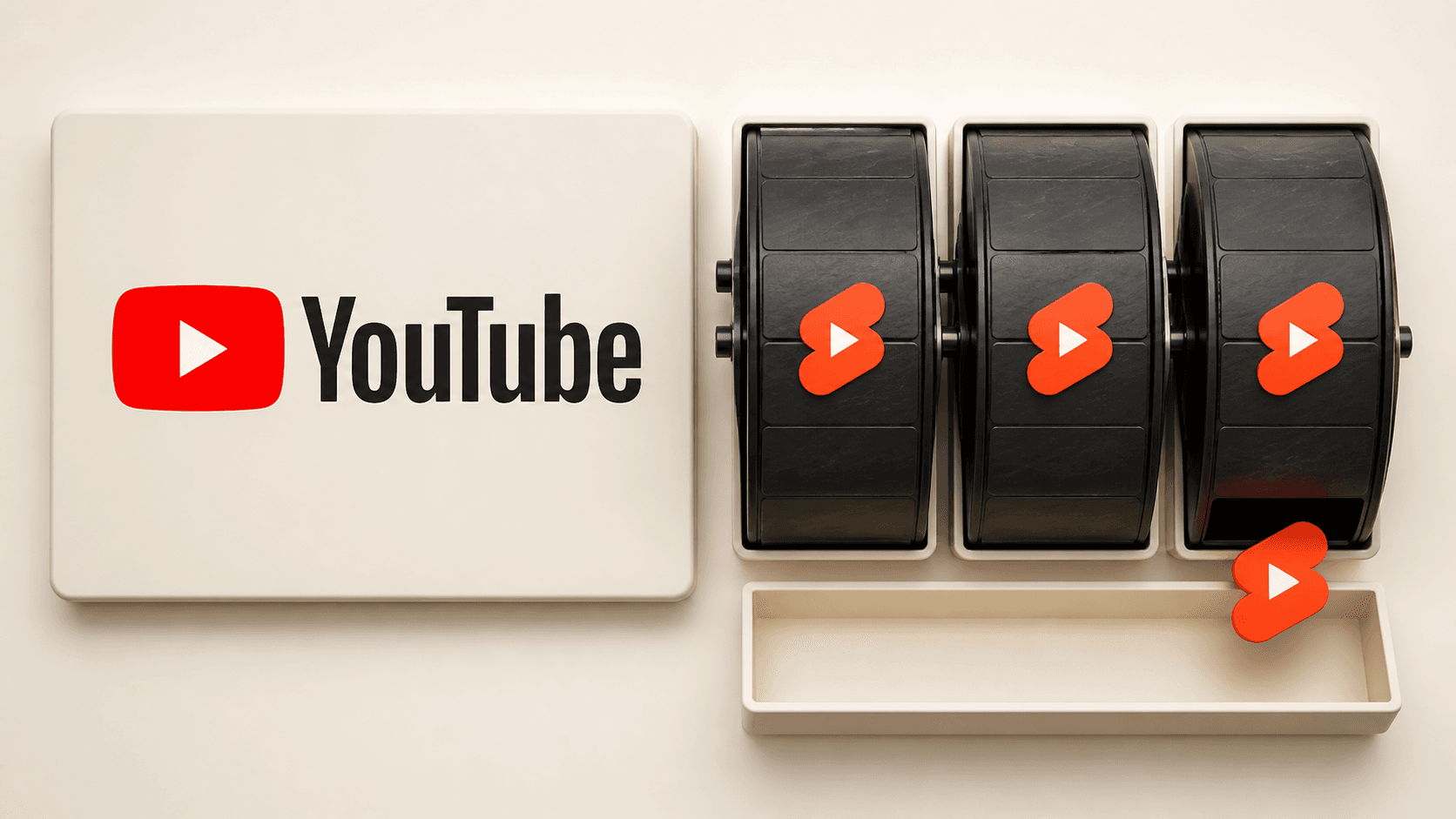
A large YouTube mark beside three physical rolling windows that discard an expired Shorts token
A creator who takes six weeks off after a health scare does not lose their audience. They lose a revenue line, on a rolling window they cannot pause. That is the same structure as the income that resets to zero every month, except now the reset is written into the terms. Compare it to a subscription business. A subscriber who signed up in March pays in April whether you posted or not. The renewal is theirs to cancel, not a threshold to re-clear. Both models have a retention problem, but only one of them lets a third party set the number.
A YouTube plaque hanging from removable hooks beside the Built by Foundry mark bolted to its own foundation
Live every Thursday

Watch us tear down a creator business, live

Every Thursday at 11 AM PT we take a real creator business and show the app hiding inside it: the wedge, the paid loop, the pricing, and what would sink it. Free, and the replay goes to everyone who registers.

Save your seat → (opens in a new tab)
Four things, in order of how much they matter.
  • Sign the updated terms in YouTube Studio. If you are already in the program, this is the only action required to keep monetizing. It is also the easiest one to miss because nothing appears to break until it does.
  • Work out your trailing 90-day Shorts view count today. YouTube Analytics has it. If you are between 8 and 15 million, you are the channel this rule was written for, and you need to know that now rather than in February.
  • Check what share of your income depends on a threshold someone else sets. Ad revenue, Shorts pool, brand deals priced off your view count. Add it up as a percentage. That percentage is your exposure.
  • Start the revenue line that does not get reset. Products your audience buys from you directly, on terms you write.
Here is the uncomfortable version. If you have 50,000 engaged followers and you sell something already, the entire 20 million view conversation is a race you were never going to win and never needed to enter. Twenty million Shorts views in 90 days is a volume game. It rewards output, not expertise. A cooking creator with 60,000 followers who trust her enough to buy her meal plans will not hit that number, and she does not have to. Two thousand of those followers paying $9.99 a month is $19,980 in monthly gross revenue, close to $14,000 after Apple's 30% commission, and it arrives whether the algorithm was kind that week or not. The math on the platform side is what makes this stark. YouTube's ad revenue share for long-form is 55% to the creator, and Shorts pool payouts land in cents per thousand views. That is why turning a channel into a subscription app changes the shape of the business rather than just adding a line to it. It is also why a channel cannot be sold and an app can: one is a permission, the other is an asset. None of that means leaving YouTube. Keep the channel. It is the best discovery engine ever built for an expert with something to say. Just stop letting it be the only thing that pays you, because on February 1, 2027 it will remind you again that it sets the terms. The four numbers to write down: 1,000, 8,000, 20 million, 10 million. Not one of them is yours. Built by Foundry exists to give creators a fifth number that is. From February 1, 2027, new applicants to the YouTube Partner Program need 1,000 subscribers plus either 8,000 qualified public watch hours in the previous 365 days or 20 million qualified public Shorts views in the previous 90 days. The previous thresholds were 4,000 watch hours or 10 million Shorts views. No. YouTube states that channels already in the Partner Program are not impacted by the new entry thresholds. Existing members do need to review and sign the updated Partner Program terms in YouTube Studio to continue monetizing. Starting February 1, 2027, a channel below 10 million qualified Shorts views in the trailing 90 days stops earning from the Shorts Creator Pool for that period. The channel stays in the Partner Program, long-form video earnings continue, and Shorts revenue sharing resumes automatically once the channel passes 10 million views again. YouTube says the program now has over 3 million creators and that the thresholds needed to keep pace with the platform's growth, citing more than 200 billion daily Shorts views. It is the first significant change to the program since 2018, and YouTube expects total creator payments to increase in 2027 compared with 2026. Yes. YouTube is expanding Premium Lite to every country where YouTube Premium is available. Creators share a pool set at 60% of net Premium Lite subscription revenue, distributed 55% to long-form videos and 45% to Shorts.
A platform that can double your requirements can halve your income. Built by Foundry builds subscription apps for creators, then runs and optimizes them so the revenue keeps arriving. $0 upfront, revenue share, three weeks to the App Store.
See What We’d Build You →

Creator app strategy

Curious what your app could be?

Enter your handle and Built by Foundry will research your audience and present custom app concepts. Free.

YouTube's 2027 Monetization Rules: 4 Numbers to Know