

You Can't Sell a YouTube Channel. You Can Sell an App.

You Can't Sell a YouTube Channel. You Can Sell an App.

Foundry
May 6, 2026
Key Takeaways:
  • Every major creator exit in the last decade was a product exit, not a content exit. Sweat sold for $400M. Ipsy, $170M. Chamberlain Coffee took on growth equity. Nobody bought a YouTube channel.
  • A content channel has almost no transfer value because the audience follows the person, not the URL. A subscription app keeps earning when the founder takes a year off.
  • Public SaaS comps trade at 3 to 7 times annual recurring revenue. A creator with $20K in monthly app revenue owns a business worth $720K to $1.7M on paper. The same creator with $20K in monthly brand deals owns a job.
  • The fastest path to a sellable asset is a software product the audience already wants. The creator brings demand. The product captures it.
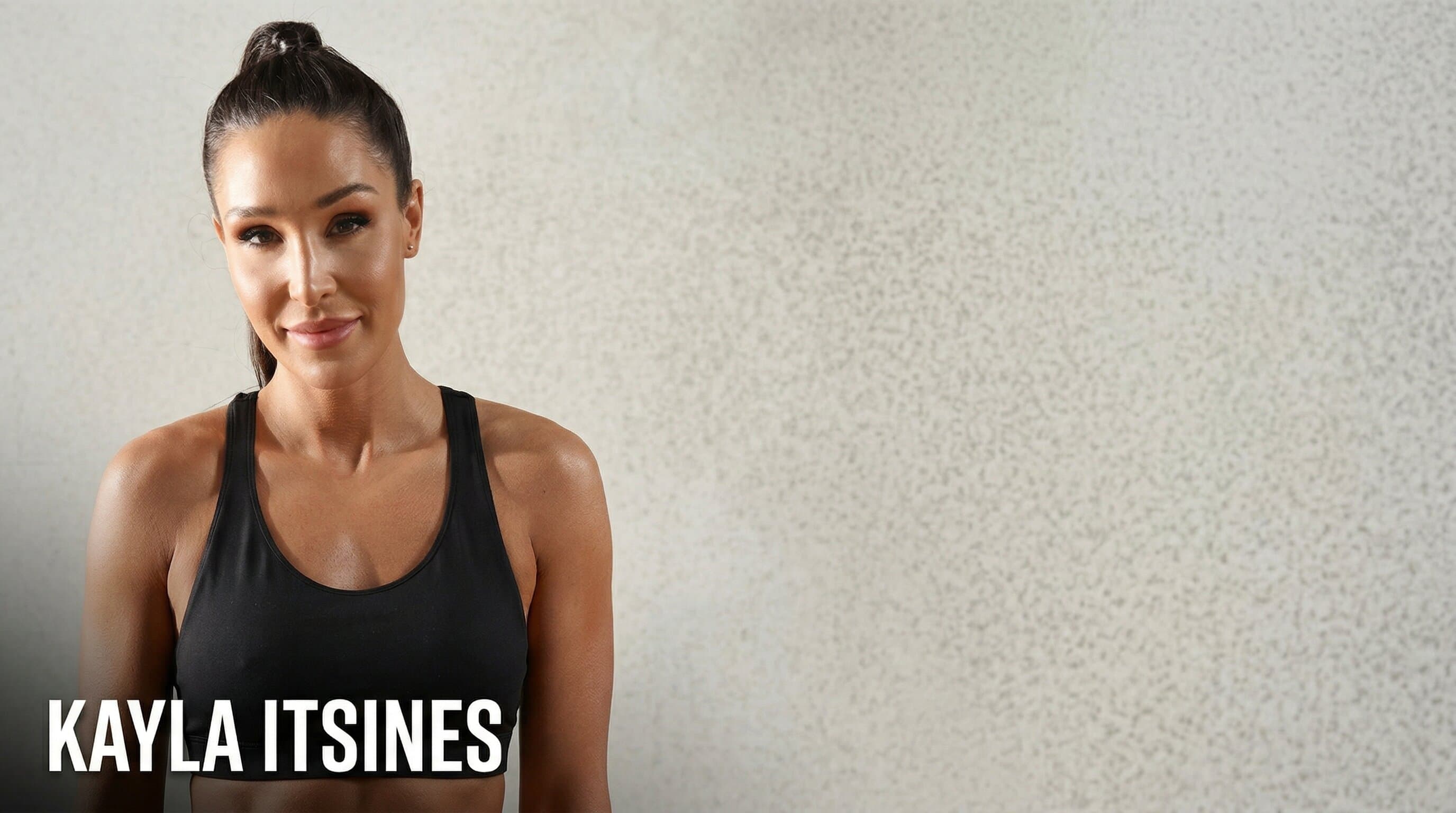
A 5 million follower YouTube channel is not a business. It is a job at a company you do not own. That sentence makes most creators flinch. It should. Because the moment you try to put a price on what you have built, the gap between "creator" and "founder" becomes a number, and the number is uncomfortable. So let's look at the number. Pull up the list of biggest creator-led exits and one pattern shows up immediately. Nobody is selling content. They are selling software, products, or brands. Kayla Itsines built an Instagram following posting bikini-body workouts. She did not sell that audience. She sold the Sweat app for a reported $400 million in 2021, then bought it back four years later. The exit was the app, not the audience. As we covered in Kayla Itsines' journey from a $52 PDF to a $400M app exit, the transferable asset was 450,000 paying subscribers and the code that served them, not her social presence. Michelle Phan grew the second-largest beauty channel on YouTube, then co-founded Ipsy, which raised at a $500M valuation and reached over a million subscribers on a recurring beauty subscription model. The buyout did not include her vlogs. MrBeast did not sell the channel either. Feastables, his chocolate brand, reportedly cleared $250M in retail sales by 2024 according to multiple press reports. Walmart shelf space transfers. Subscriber counts do not. The pattern is unmissable. Every major creator wealth event in the last decade was a product exit. The creators who got rich did not cash out their following. They built something the following bought, then sold the something. Because what makes a channel work also makes it untransferable. Followers subscribed to a person. The voice, the face, the editing style, the running jokes. None of that is property in any legal sense, and none of it survives a change of ownership. Try to picture the alternative. A buyer wires $5M to a creator with 3 million subscribers. The next morning, the creator hands over the channel password and walks away. Now what? The new owner cannot post in the creator's voice. The audience opens a video, sees a stranger, and unsubscribes within six weeks. The asset evaporates the moment the person stops driving it. That is why almost no full creator channels change hands at meaningful prices. There are exceptions, like Spotter buying back-catalog licensing rights from creators including MrBeast and Marques Brownlee, but those deals license old uploads. They do not sell the channel. The creator keeps making new videos. Spotter is buying a royalty stream, not a business. Compare that to a subscription app. The new owner gets recurring revenue from named customers, the code that serves them, the App Store listing, the analytics, the subscription churn data, the brand. The creator can disappear and the app still bills $20 a month on the first of the month. That is what makes it salable. It runs without you.
A dim television showing a faded play button on a dusty surface, contrasted with a glowing smartphone displaying a subscription app on a clean desk, divided by a vertical orange accent line
Buyers are not paying for vibes. They are paying for predictable cash flow. The standard valuation lens for a subscription business looks at three things. First, monthly or annual recurring revenue. Second, gross margin (how much of every dollar drops to the bottom line). Third, retention (how long the average customer stays). Those numbers feed a multiple, and the multiple gets applied to revenue. Public SaaS companies have traded between 3x and 12x ARR depending on growth rate, with median public SaaS revenue multiples around 5.6x in early 2025 according to Bessemer Venture Partners. Smaller, private creator-led apps tend to trade lower, in the 2x to 5x ARR range, because they carry concentration risk on a single founder. Apply that to two real-world creators with the same gross income.
AssetMonthly RevenueAnnual RevenueTypical Sale MultipleApproximate Sale Value
YouTube channel (ad rev)$20,000$240,0000x to 0.5x$0 to $120,000
Brand deal slate$20,000$240,0000x$0
Subscription app$20,000$240,0003x to 5x$720,000 to $1,200,000
Subscription app + brand$20,000$240,0004x to 7x$960,000 to $1,680,000
Same monthly check. Wildly different equity. The brand deal slate is worth zero because there is nothing to transfer. The contracts are with the creator personally. The next quarter starts at zero and depends on the creator picking up the phone. The YouTube channel is worth slightly more than zero only if a back-catalog buyer like Spotter takes a partial position on past uploads. The creator keeps showing up to keep the lights on. The subscription app is worth seven figures because the buyer gets revenue, customers, and code that all keep working when the creator goes on vacation. Because the platforms they live on are designed to make followers feel like wealth. Instagram shows you a number going up. YouTube hands out plaques. TikTok pays a Creator Fund check that, if you do the math, works out to roughly $0.02 to $0.04 per thousand views. So creators chase the leading indicator. More followers, more views, more posts. Each one feels like progress. None of it shows up on a balance sheet. This is the same trap we wrote about in Your Followers Aren't Your Customers (Yet). Followers are an audience metric. Customers are a business metric. The mistake is treating one as the other. There is a quieter reason too. Building a product is harder than posting. It requires committing to a single problem, talking to actual users, watching them churn, fixing the thing, and shipping again. Most creators have no part of their workflow that looks like that. So the followers pile up and the equity does not. Five things. Get all five and you have a business a buyer will pay for. 1. Recurring revenue from named customers. Not ad revenue. Not affiliate cuts. Real subscribers who pay you on the first of the month with a credit card on file. This is the spine of any salable creator business and the thing every comparable exit, from Sweat to Ipsy to Calm, had in common. 2. A product that runs without the founder. If the business stops earning the day you stop posting, you do not have a business. You have a personality. The test: take 30 days off. If the revenue does not move, you have something sellable. If it craters, you do not. 3. Software-grade margins. A consumer subscription app at scale runs 70 to 85 percent gross margin. Merch at 30 to 40 percent. Brand deals at 90 percent but with zero recurrence. Buyers pay multiples on margin. This is part of why every fitness exit we cover, including the Krissy Cela $70M EvolveYou empire, is structured around recurring software revenue, not one-time courses. 4. Customer data the buyer can use. Email, payment history, in-app behavior, churn cohorts. A buyer can do something with that. They can run win-back campaigns, raise prices, expand into adjacent products. A list of Instagram followers is not actionable in the same way. 5. Brand independence from the face. The hardest one. The strongest exits build brands that survive a founder transition. Sweat survived Kayla stepping back. Ipsy survived without Michelle. Feastables works whether or not Jimmy films a chocolate video this week. The product is the lead actor, not the founder. A subscription app is the cleanest path to all five at once. The recurring revenue, the data, the margin, the operational independence. They come built in. That is the point of the Foundry model: build the company, not just the app, and keep running and improving it long after launch so the asset compounds instead of decays.
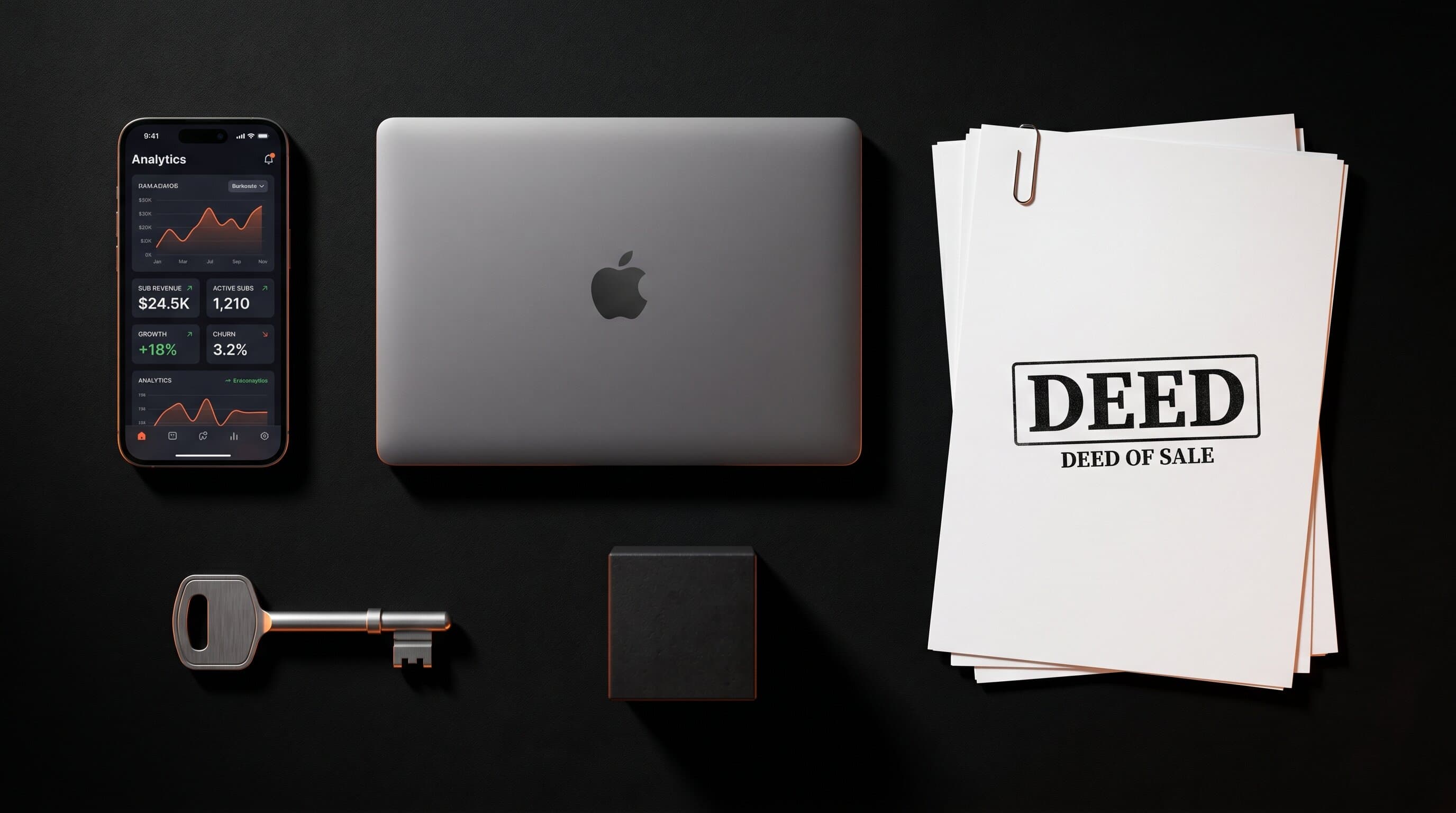
Overhead flat-lay showing the components of a sellable creator business: a smartphone with subscription analytics, a laptop, a deed of sale, a key, and a small black cube, lit with warm orange accents on a black surface
Good news: you should keep the channel. The channel is the demand. The app is the asset. Think of it as a two-layer business. The top layer is content. It generates attention, trust, and a steady drip of new app installs. The bottom layer is the product. It captures that attention into recurring revenue. You do not stop posting when you launch an app. You start posting differently. Every workout you film becomes an app feature post. Every recipe is a screen recording. Every transformation is a testimonial. This is the same engine described in How Your App Becomes Your Content Calendar. The app does not compete with the channel. It feeds it material that did not exist before. When the time comes to sell, the channel is still a marketing channel, but it stays with the creator. The buyer purchases the app, the customers, the brand, the code, and a non-compete that lets them keep growing without the founder. The creator keeps the audience and the next chapter, with the cash from the exit funding whatever comes next. That is what an exit actually looks like for a creator. It is not the channel. It is the company the channel made possible. In theory yes. In practice almost never at meaningful multiples. Some niche faceless channels change hands on broker sites for low five figures. A handful of personality-driven channels have been licensed in part (Spotter has spent over a billion dollars on back-catalog rights with creators), but the channel itself, with the creator still inside, almost never sells as a standalone business. The asset is the person, and the person cannot be sold. Subscription apps, consumer product brands with recurring purchase patterns, and software with proprietary data. Buyers like predictability. Recurring revenue is predictable. Ad revenue, sponsorship income, and merch sales are not. Most strategic acquirers do not engage seriously below $1M in annual recurring revenue, which is roughly 8,000 paying subscribers at $9.99/month. Below that, you are still in the build phase. The good news: getting from zero to $1M ARR in a creator app is a 12 to 24 month project, not a 10 year one, especially if the creator already has an audience to seed it. When the app sells, both sides get paid out per the revenue share agreement. The creator owns the business and we run the operations. We are aligned on building the asset, not just shipping the launch. Most creator-founders stay on as a brand ambassador for 12 to 36 months post-acquisition, often with an earnout tied to retention. After that they are free, with the cash, the audience, and a track record that makes the next thing easier to fund. Kayla Itsines literally bought her company back in 2024. That is the kind of optionality a YouTube channel never gives you. Most creators read pieces like this and nod along and post a Reel about it the next day. That is the exact behavior that produces a 10 year career and zero sellable business at the end of it. If you have an audience that watches you, you already have the hardest part done. Distribution is the moat that VCs spend a decade and a hundred million dollars trying to build. You have it. You just have not pointed it at anything you actually own. Point it at a product. Build the asset. Make something a buyer would write a check for.
Let's Build →

Get Creator Revenue Insights

How creators are turning audiences into subscription businesses

You might also enjoy...

You Can't Sell a YouTube Channel. You Can Sell an App.