

Creator Economy Trends

The Creator Economy Hits $480B by 2027. Who Wins?

Foundry
June 3, 2026
Share
The Creator Economy Hits $480B by 2027. Who Wins?

Get Creator Revenue Insights

How creators are turning audiences into subscription businesses
Share
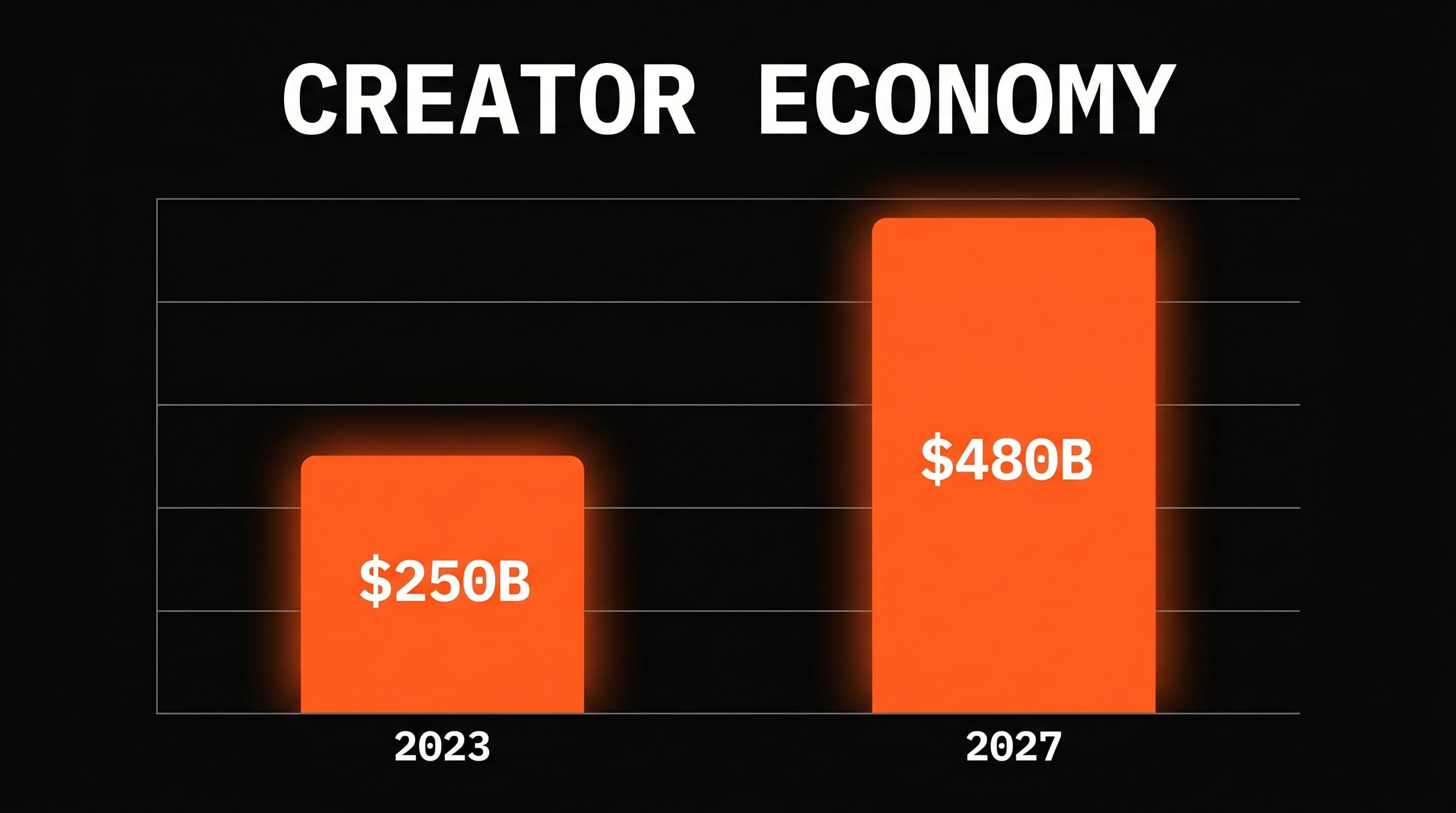
The creator economy is on track to roughly double to $480 billion by 2027, up from about $250 billion, according to Goldman Sachs Research. That is a half-trillion-dollar market growing in plain sight. Here is the part nobody puts on the slide: almost none of that new money lands in a creator's bank account on terms the creator controls. A bigger market is not the same as a bigger paycheck. The creators who win the next phase won't be the ones with the most followers. They'll be the ones who own the revenue. Key Takeaways:
  • Goldman Sachs projects the creator economy to grow from ~$250B to ~$480B by 2027, with 50 million global creators expanding 10-20% per year.
  • The primary growth drivers are influencer marketing and ad-funded platform payouts, money creators rent, not own.
  • Fewer than 4% of creators earn more than $100,000 a year; more than half earn under $15,000.
  • The winners of the next phase are creators who convert audience into owned recurring revenue, mostly through subscription apps.
  • A subscription app keeps earning when a creator stops posting. A brand deal does not.
Most of it goes to advertising and platform payouts. Goldman Sachs points to influencer marketing and the monetization of short-form video, through ads, as the main engines pushing the market toward $480 billion. In plain terms: brands pay platforms, platforms pay creators a cut, and the size of that cut is set by someone else. That money is real. It is also rented. A creator on the TikTok or YouTube payout treadmill earns based on views, CPMs, and policy decisions made in a room they will never sit in. When the algorithm shifts or the payout rate drops, income drops with it. We wrote about this exact trap in The Platform Trap: Why Creators Build on Rented Land. The 50 million creators Goldman counts are not splitting that $480 billion evenly. They are competing for a slice of an ad pie that a handful of platforms control. Because the money concentrates at the top and the terms favor the platform. Fewer than 4% of creators earn more than $100,000 a year, and more than half earn under $15,000, based on widely cited creator-income research. The market can double while the median creator's income barely moves. This is the uncomfortable math. A $480 billion economy with a 4% top tier means the headline number is a story about platforms and a few mega-creators, not about the working creator with 50,000 to 500,000 engaged followers. And that mid-tier creator is exactly the person with the most to gain from changing how they earn. We broke down why in Why 50K Engaged Followers Beats 5M Passive Ones.
Bar chart showing the creator economy doubling from $250 billion to $480 billion between 2023 and 2027
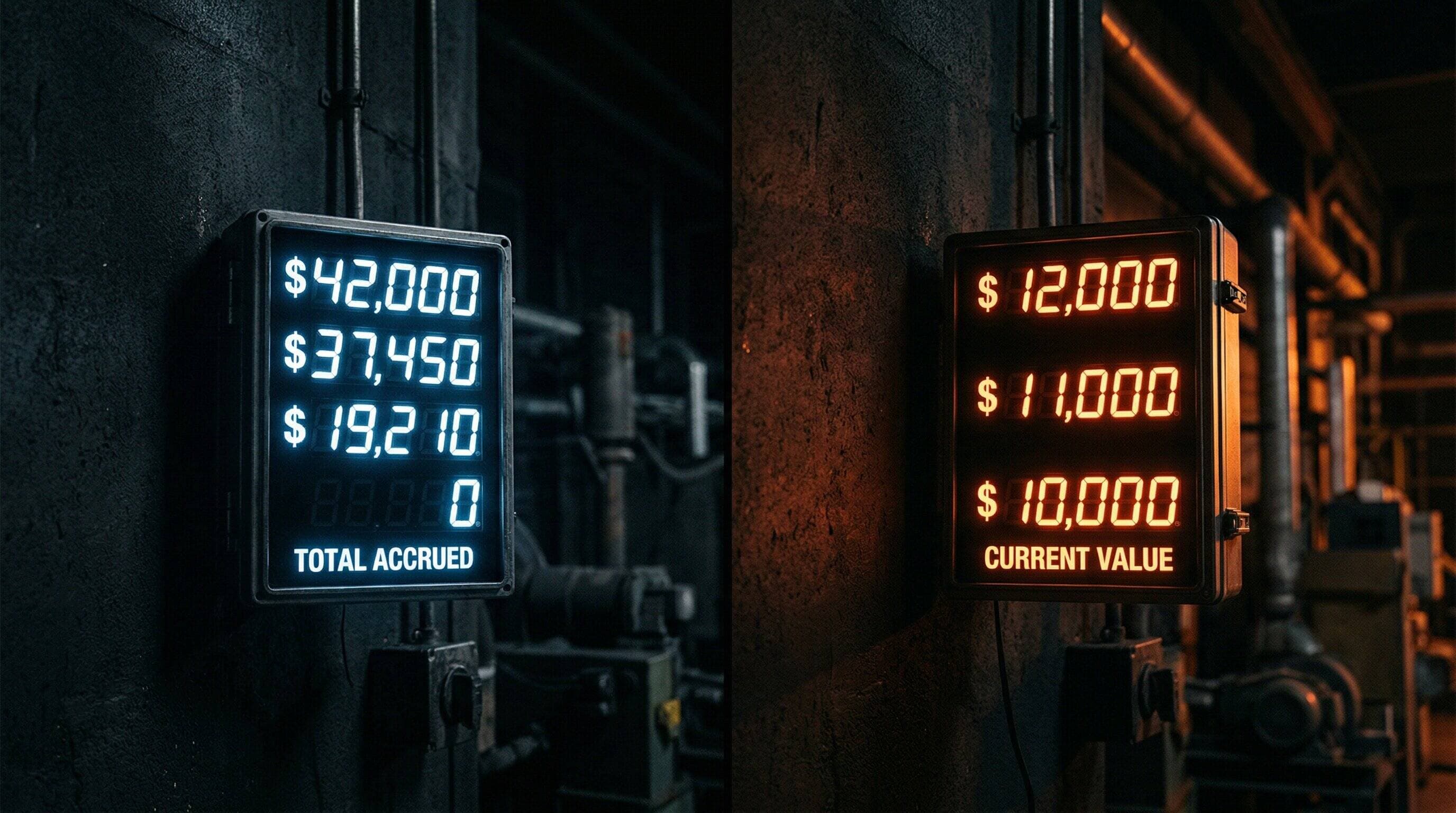
There are three pools a creator can earn from, and they are not equal. The difference is who sets the terms and what happens when you stop posting. What is rented revenue? Rented revenue is income controlled by a third party, ad payouts, brand deals, and platform funds, where the rate, the rules, and the relationship belong to someone else. You earn it, but you don't own it.
Revenue PoolWho Sets the TermsEarns When You Stop Posting?Scales Beyond Followers?
Ad payouts (YouTube, TikTok)The platformNoNo
Brand dealsThe brandNoNo
Owned subscription (your app)YouYesYes
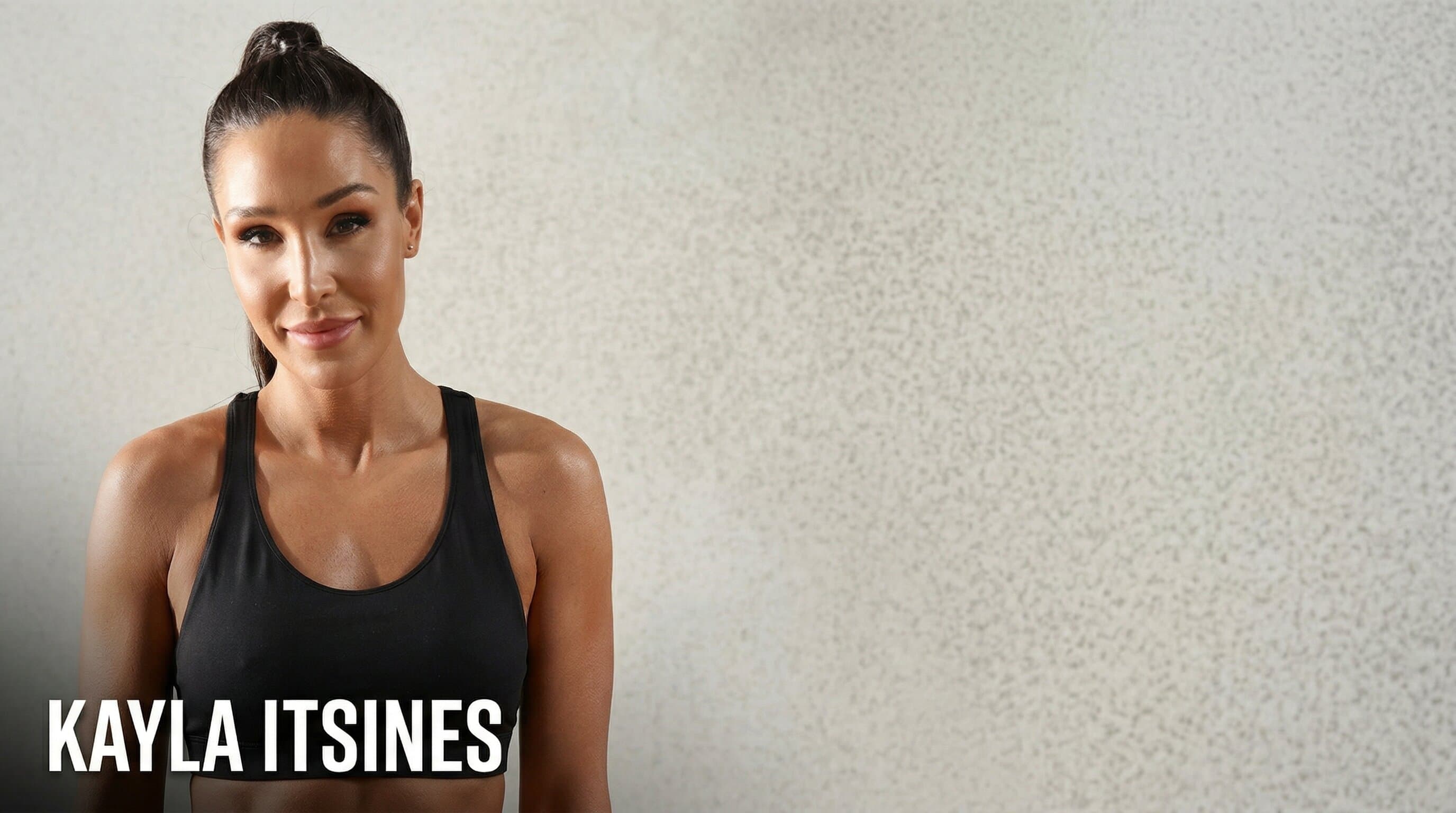
The first two pools are where the $480 billion headline lives. They are also where income resets to zero the moment a creator goes quiet. We made that case in Your Income Resets to Zero Every Month. The third pool is small today and growing fast. It is the only one where a creator owns the customer, sets the price, and keeps earning while they sleep. The creators who convert attention into owned recurring revenue. They stop renting and start owning. The proof is already on the App Store. Kayla Itsines turned Instagram workout posts into the Sweat app and a business that sold for a reported $400 million. We covered the full arc in Kayla Itsines: From Instagram Trainer to $400M App Exit. She didn't win by getting more followers. She won by building a product her followers paid for every month. That is the pattern across niches now: fitness, cooking, finance, parenting, chess. A creator with a real audience builds a subscription app, and a few thousand paying subscribers turn into recurring revenue that dwarfs their old brand-deal income. The creator middle class, the $10K to $50K per month tier, is being built this way. We mapped it in The Creator Middle Class: $10K-$50K/Month.
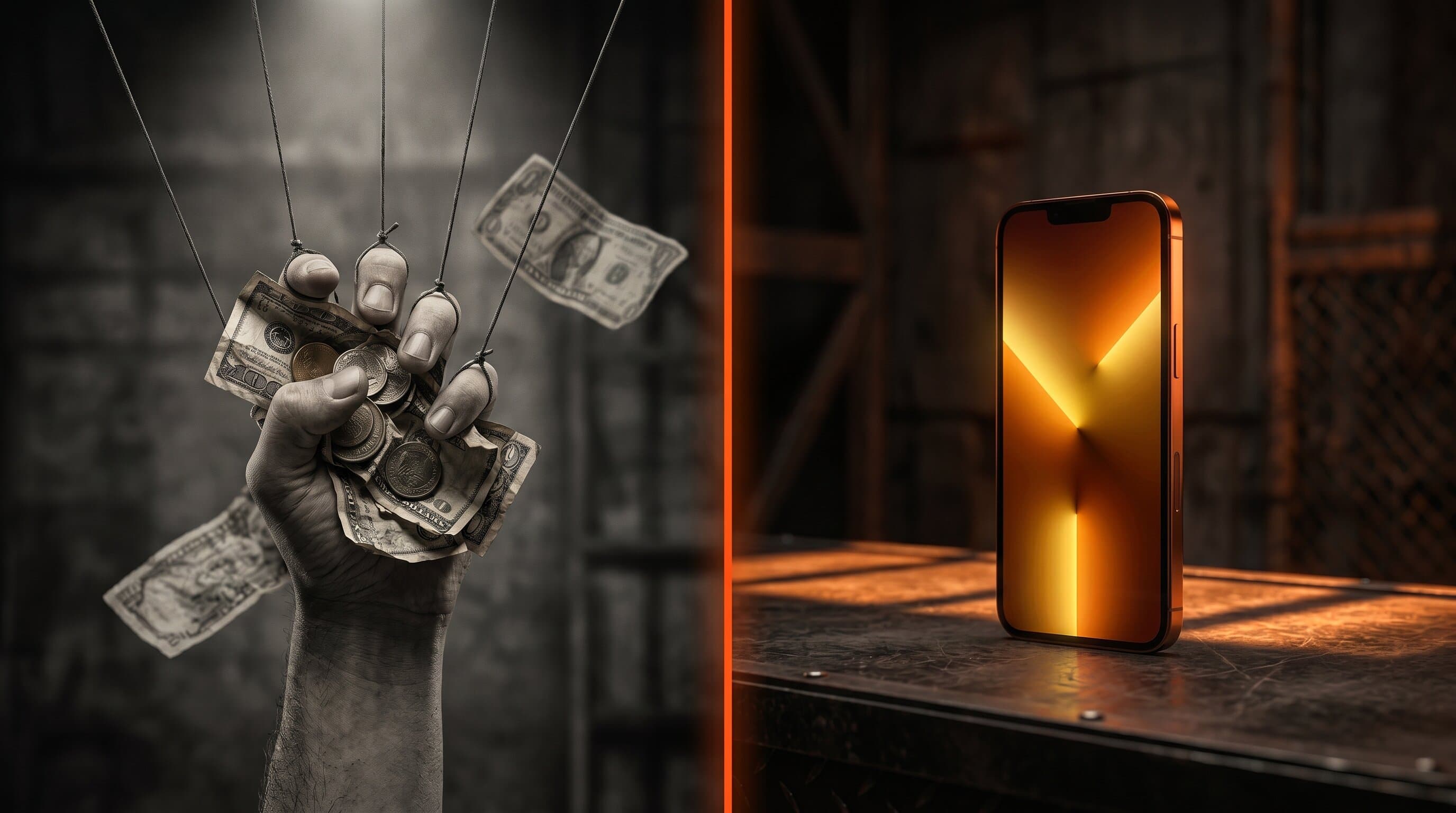
Split conceptual image contrasting rented platform revenue on one side with owned subscription revenue on the other
A subscription app also fixes the creator's other daily problem: what to post. Every user submission, every leaderboard, every before-and-after result becomes content the creator didn't have to brainstorm. The product feeds the content, and the content feeds the product. They build a product their audience already wants and charge for it monthly. The mechanics are simpler than most creators think. You don't need to learn to code, raise money, or hire a team. You need an audience with a clear problem and a product that solves it on a subscription. The recurring part is what changes the math. One thousand subscribers at $10 a month is $120,000 a year that compounds, not a one-time payment that evaporates. New users find the app through App Store search, people who never saw the creator's content. That is growth beyond followers, the one thing the ad-payout model can never give you. You can read how we think about the model on our about page. You are not too small. You are exactly the right size. The $480 billion headline is a distraction if you are waiting to be a mega-creator before you build something you own. The data says the top is crowded and the median is broke. The opening is in the middle, for creators with engaged audiences who decide to become founders. A content creator chases the next payout. A founder builds a business that pays them whether they post or not. The market is doubling. The only question is which side of that line you want to be on when it does. Goldman Sachs Research projects the creator economy to grow from roughly $250 billion to about $480 billion by 2027, driven by influencer marketing and ad-funded platform payouts. The number of global creators, around 50 million, is expanding 10-20% per year. Income concentrates at the top. Fewer than 4% of creators earn more than $100,000 a year, and more than half earn under $15,000. Most of the market's value flows to platforms and a small group of mega-creators, not the median creator. A subscription app is the most durable model because the creator owns the customer, sets the price, and keeps earning when they stop posting. One thousand subscribers at $10 a month is $120,000 a year of recurring revenue that grows through App Store discovery. No. Creators with 50,000 to 500,000 engaged followers are often better positioned than mega-creators with passive audiences. A few thousand paying subscribers can produce more income than a year of brand deals. Want to turn your audience into recurring revenue? We build custom apps for creators, $0 upfront, 3-week delivery, and we run the tech forever.
Let's Build →

Creator app strategy

Want us to review your creator business?

Apply for a Foundry Creator App Review. We'll tell you whether there is a real app opportunity hiding in your audience.

The Creator Economy Hits $480B by 2027. Who Wins?