

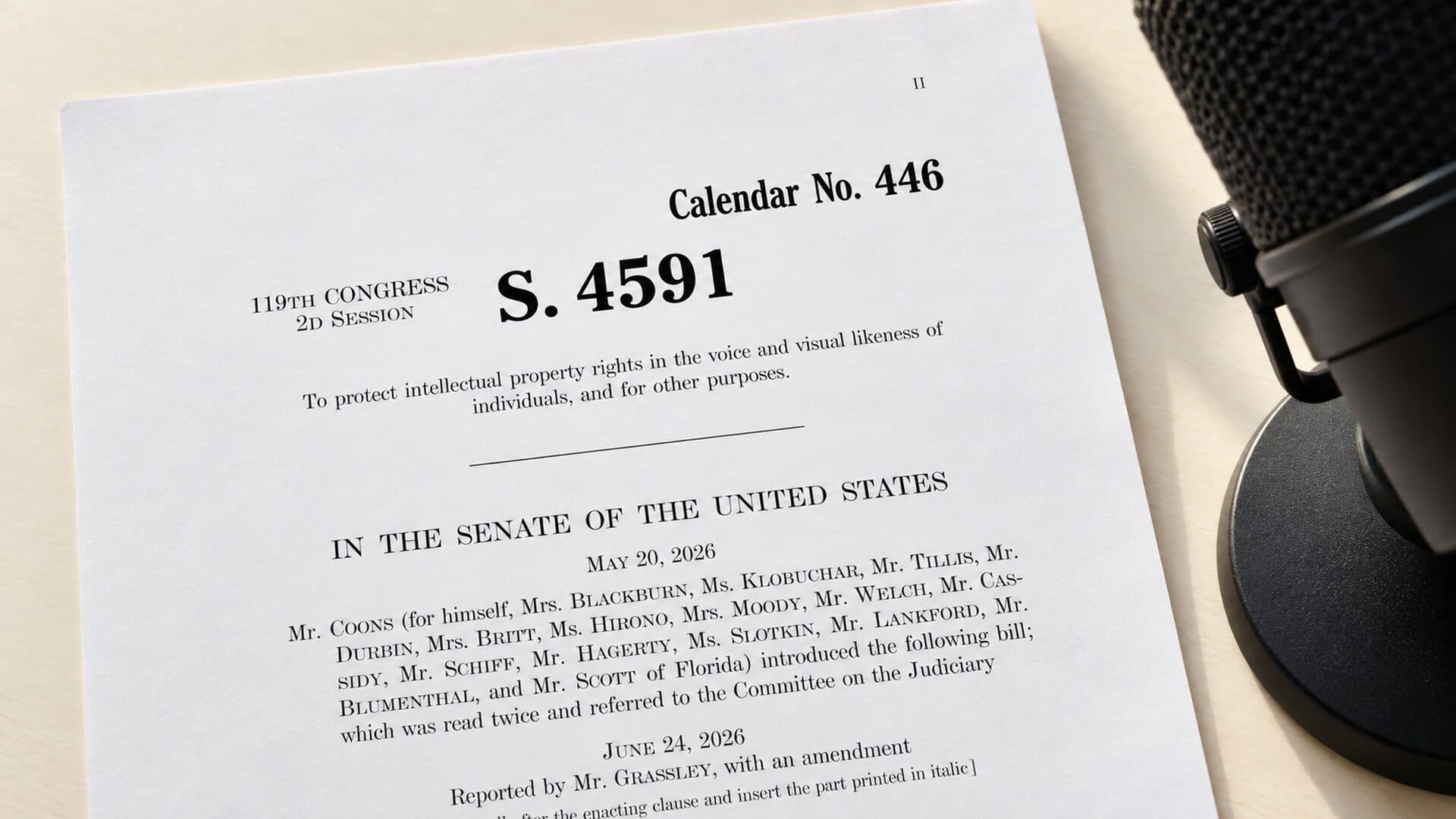
- The NO FAKES Act of 2026 is S. 4591, introduced on May 20, 2026 by Senator Chris Coons with 15 cosponsors, eight Republicans and seven Democrats. The Senate Judiciary Committee reported it on June 24 with a full substitute, and it has sat on the Senate calendar as Calendar No. 446 since then. It is not law
- It would create a federal property right in your voice and visual likeness. You could license it, but you could not sell it outright while you are alive
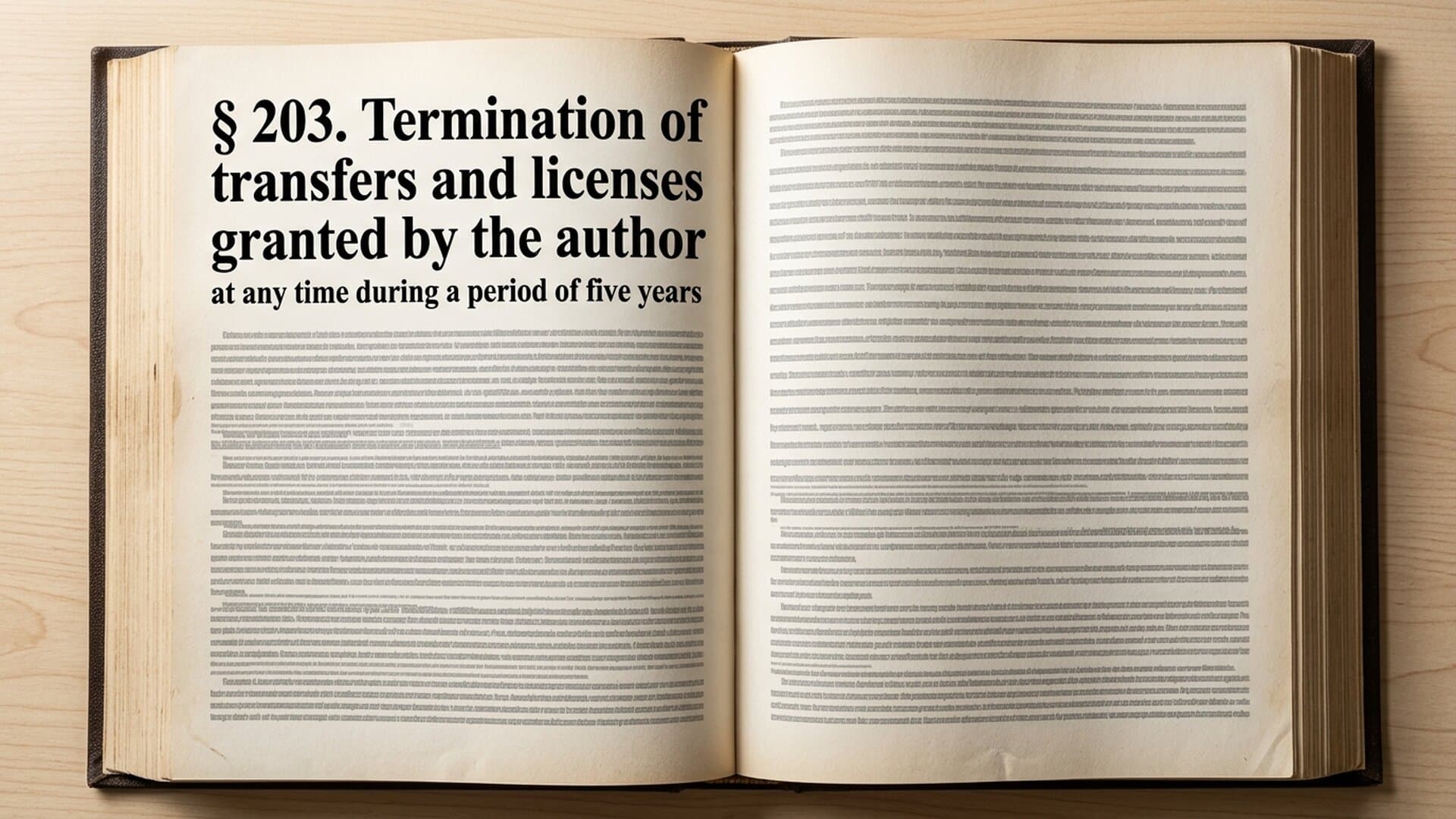
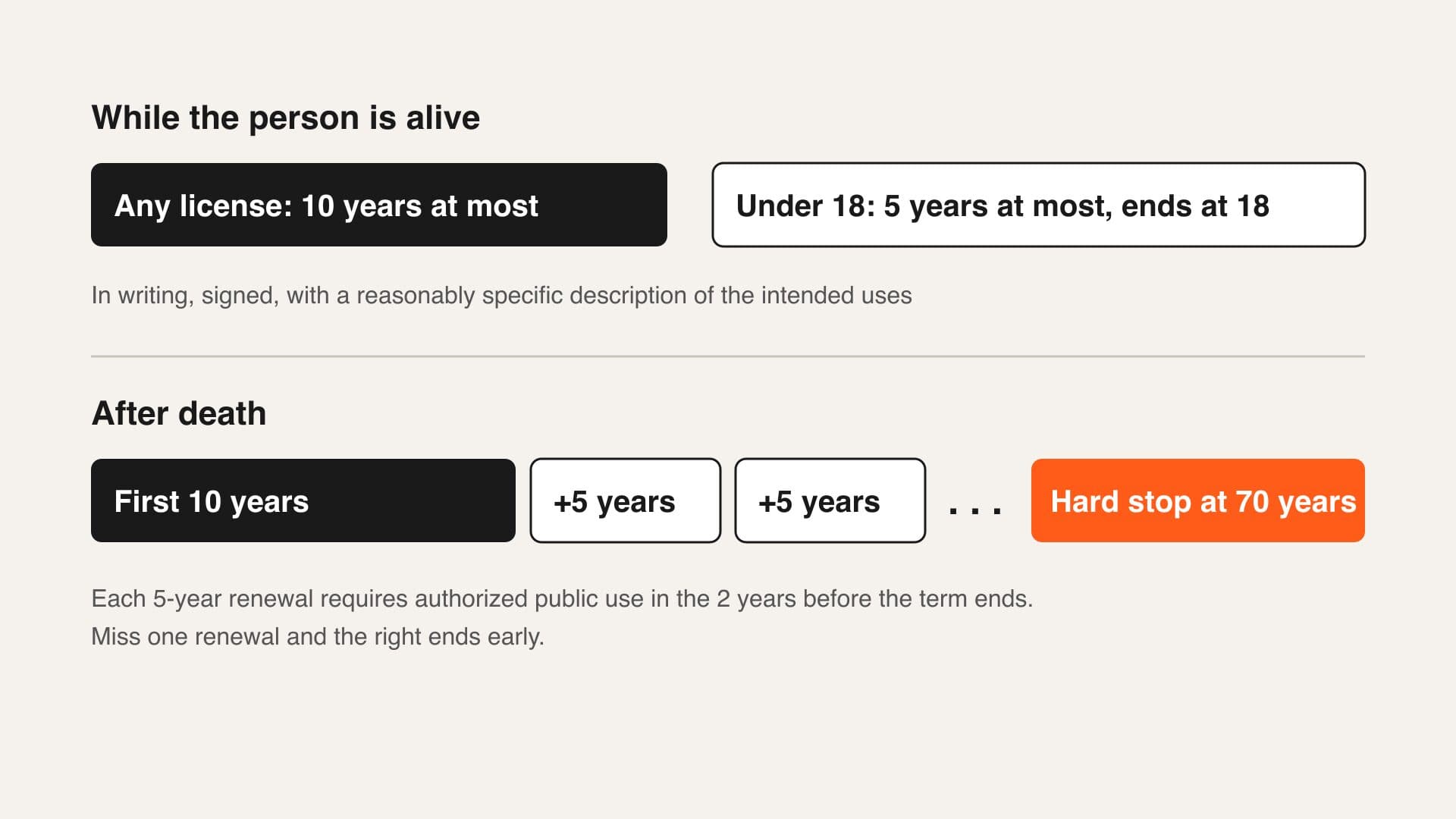
- Any license would be capped at 10 years, must be in writing and signed, and must describe the intended uses. For a creator under 18 the cap is 5 years, and the license ends at 18
- After death the right runs 10 years, then renews in 5-year blocks only if the likeness was in authorized public use during the prior two years. It ends 70 years after death no matter what
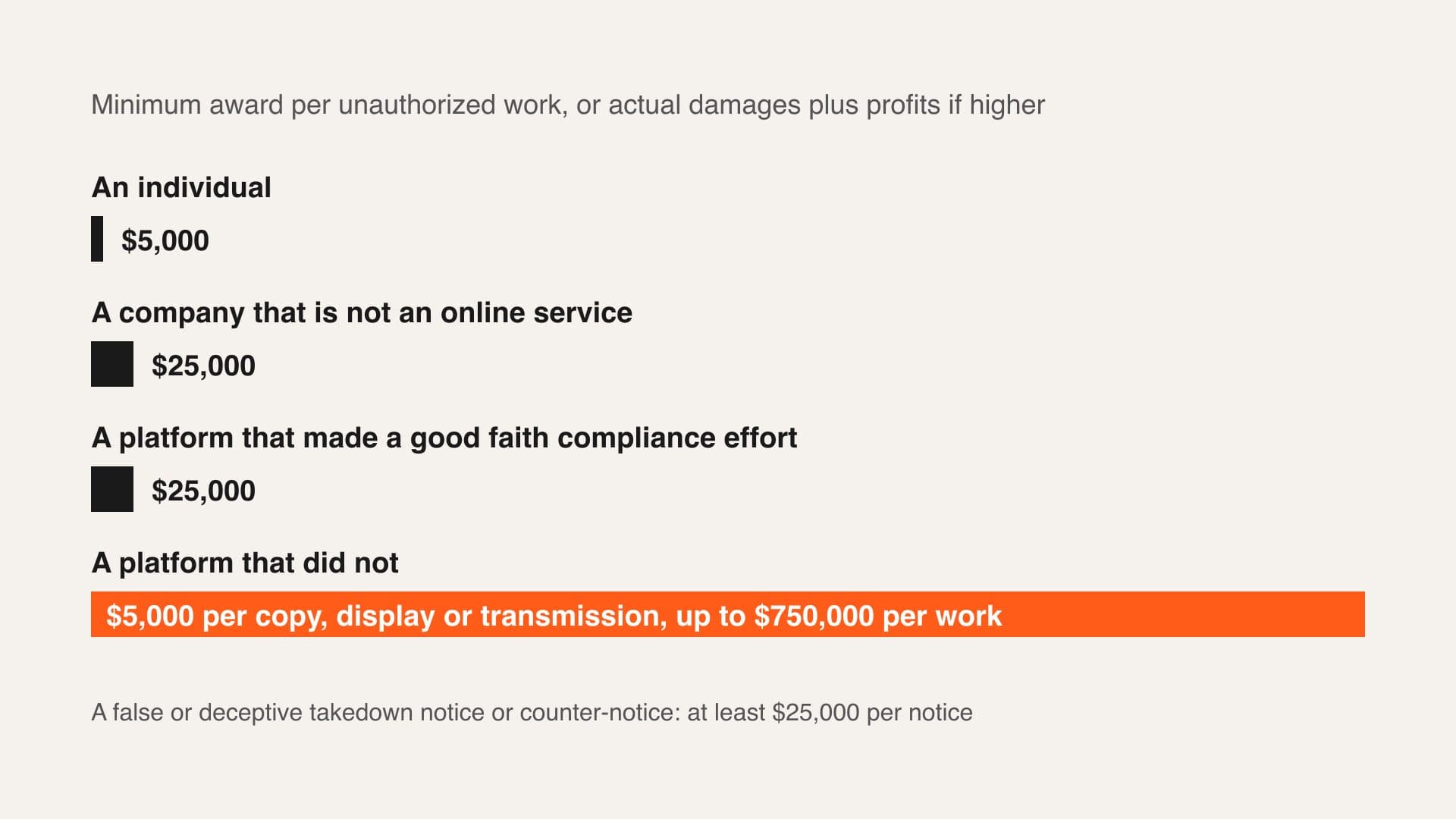
- The minimum award is $5,000 per work against an individual and $25,000 per work against a company. A platform that ignores the takedown rules faces $5,000 per copy, up to $750,000 per work
- A "made with AI" label is explicitly not a defense. Consent is the only thing that makes a replica of a real person lawful under the bill
Somebody has already made a version of you that you did not record. For most creators with a real audience, that stopped being hypothetical a while ago: a cloned voice in a supplement ad, a face swapped into a crypto pitch, a "new episode" you never taped.
Right now the answer depends on which state you live in and which platform hosts the fake. The NO FAKES Act is Congress's attempt to replace that patchwork with one federal right. We read the version the Senate Judiciary Committee reported on June 24, 2026 so you do not have to. Here is what it would do, checked against the bill text on September 30, 2026.
What Is the NO FAKES Act?
How Long Can Someone License Your Voice and Face?
Who Would Be Liable for a Deepfake of You?
What a Copy Would Cost: $5,000 to $750,000 per Work
A right you can license is worth more when there is a business built to use it.
See What We’d Build You →
Does the NO FAKES Act Replace State Laws?
If You Are a Voice-Driven Creator, Start Here
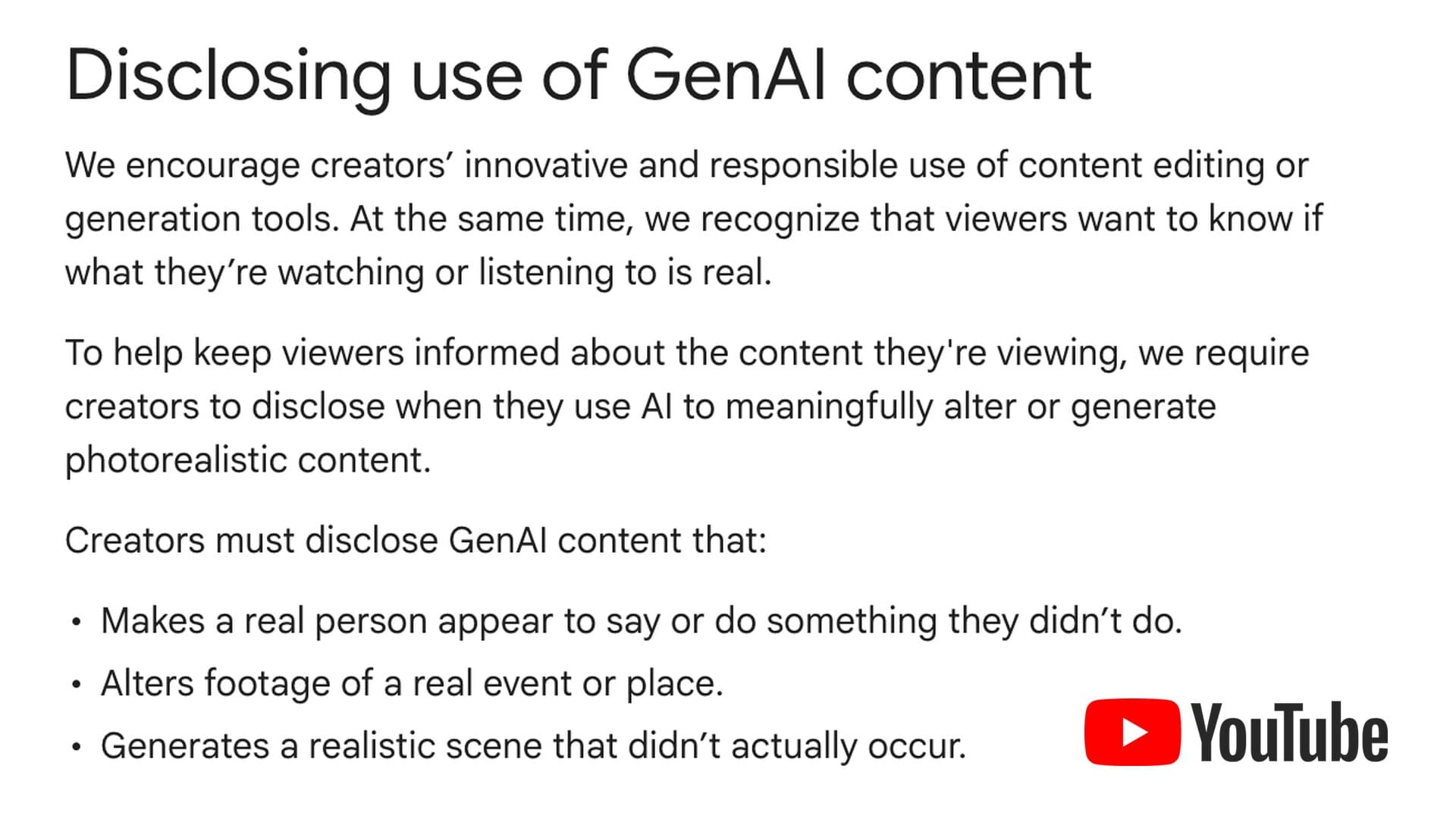
- Turn on YouTube's likeness detection. It is available in YouTube Studio to channel owners and managers over 18, after you verify with a government ID and a short selfie video. YouTube's help page says it currently matches faces only, and that the company aims "to extend likeness detection to audio in the near future." For voice today, use its privacy complaint process.
- Find the perpetuity clauses. Search your current brand, agency and platform agreements for "likeness," "voice," "simulation" and "in perpetuity." Those are the grants S. 4591 would cap at 10 years for replicas. Renegotiating them now costs less than litigating later.
- Keep your claims records. The three-year clock runs from discovery, so a dated folder of links, screenshots and takedown requests is worth more than a memory of them.
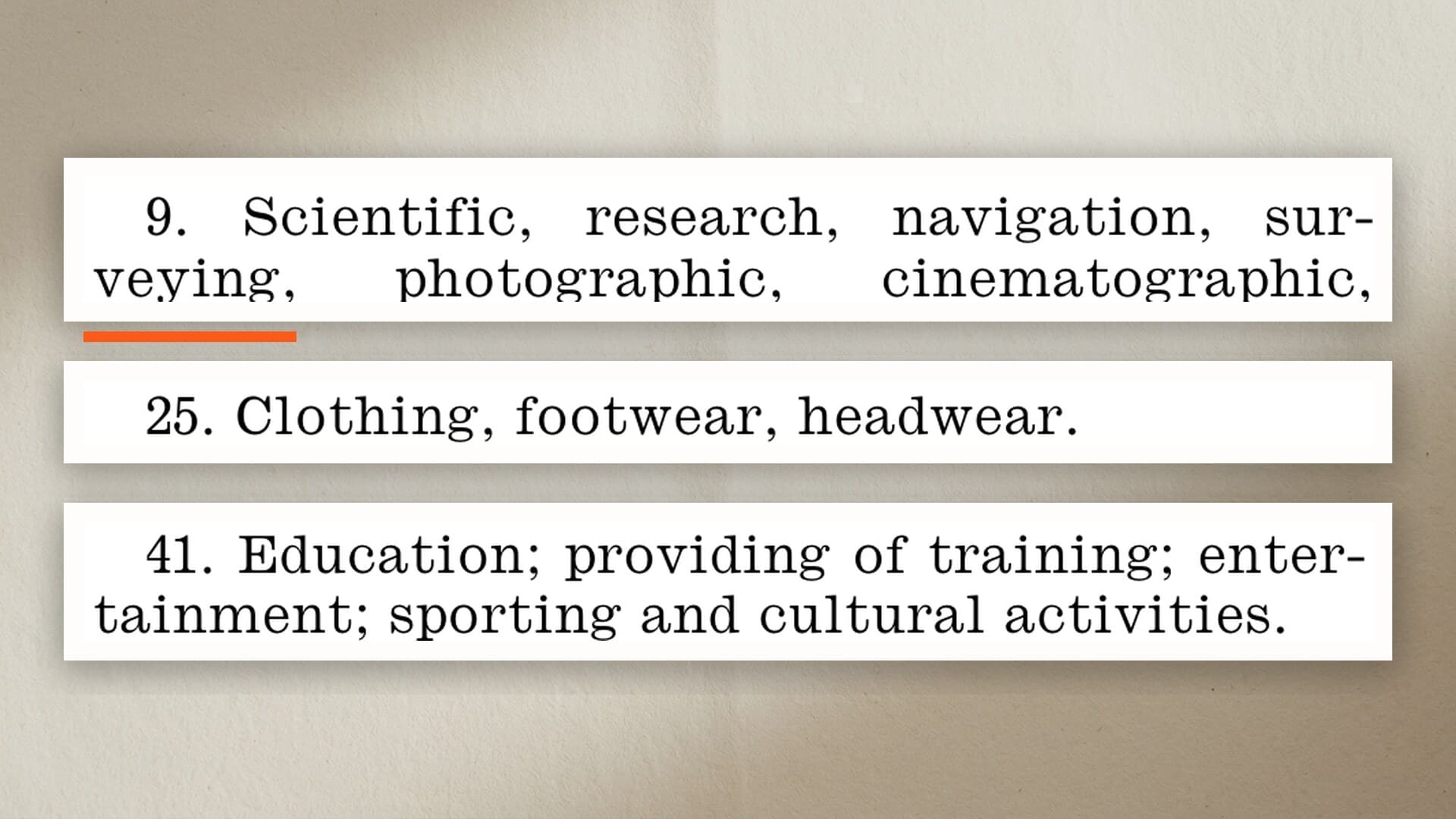
- Register the name, too. A voice right does not stop someone using your brand name on a product. That is a separate system with its own 45 classes and filing fees.
What the Bill Assumes About Creators
See What We’d Build You →