
Turning Knowledge into Products

Do You Own Your Product's Name? 45 Classes, $350 Each, and a 10-Month Queue

September 14, 2026
Share
Do You Own Your Product's Name? 45 Classes, $350 Each, and a 10-Month Queue

Get Creator Revenue Insights

How creators are turning audiences into subscription businesses
Share
Key Takeaways:
  • App Store names are one-per-name. Apple's own help states "You can use an app name for one app per localization," and a scan of 2,803 US App Store listings on September 14, 2026 turned up 2,689 distinct names and zero exact collisions
  • Apple's remedy for a name someone else took is not a form about fairness. It is one sentence: "If another developer is using the app name and you have trademark rights to it, you can submit a claim"
  • A trademark is not a name. It is a name inside a category, and the schedule at 37 CFR 6.1 runs to 45 of them: classes 1 through 34 for goods, 35 through 45 for services
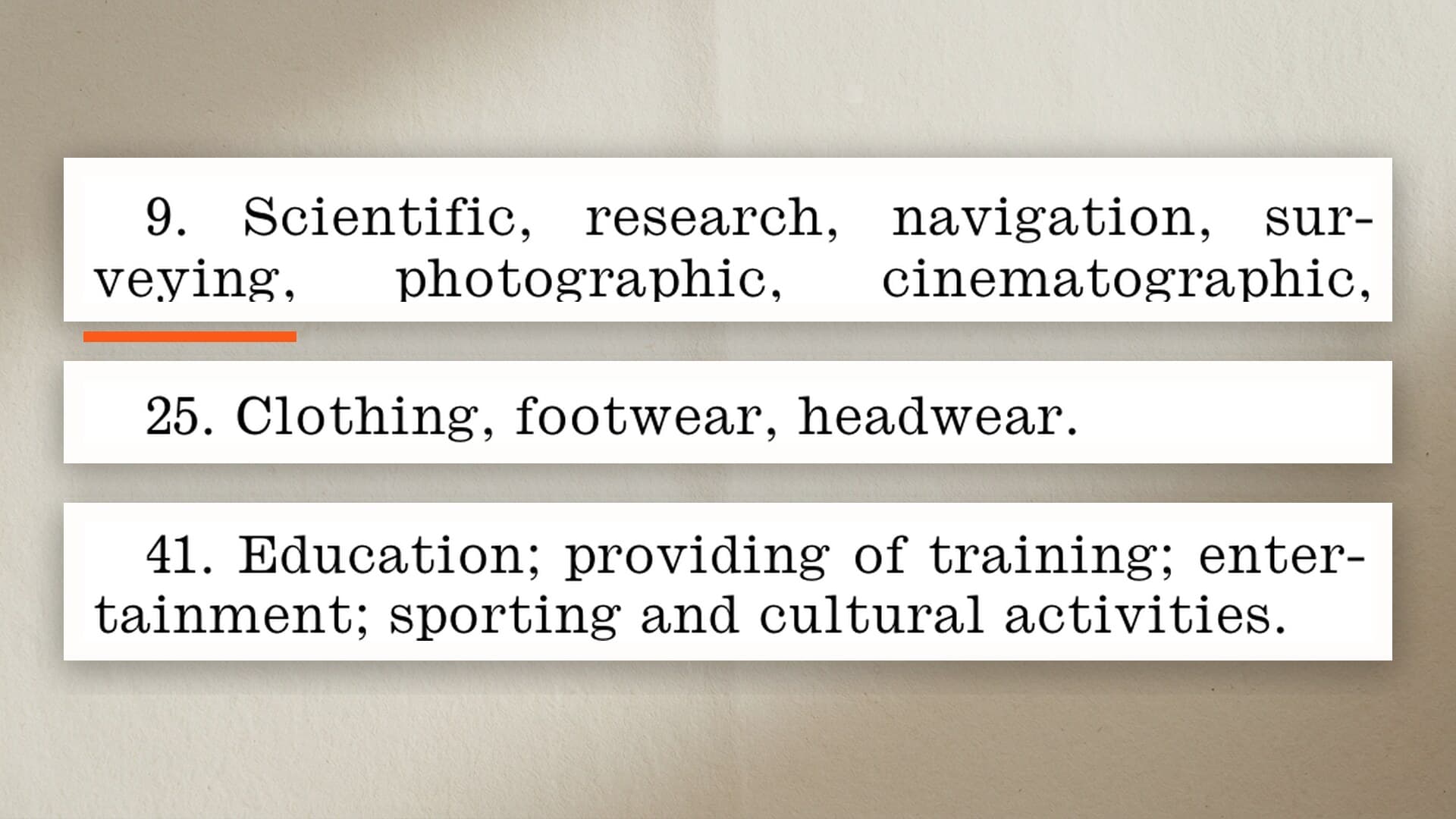
  • The app lives in class 9, the merch lives in class 25, and the channel, the course and the community live in class 41. A registration on one of those does nothing for the other two
  • The USPTO base application fee is $350 per class as of January 18, 2025. Three classes is $1,050 before anything goes wrong
  • Describing your own product in your own words costs $200 more per class. The free-form text fee applies whenever an identification "is not taken directly from the USPTO's Acceptable Identification of Goods and Services Manual"
  • The queue is the real constraint. The USPTO reported first action pendency of 4.45 months and total processing of 10.03 months in the first half of FY 2026. We build a finished product in about three weeks
  • Registration is optional and unregistered rights are real, but the USPTO writes that common law rights are "based on use of the trademark in commerce within a particular geographic area"
You typed a name into App Store Connect, it came back available, and you felt something close to ownership. That feeling is the most expensive misreading in the creator economy. What you did was reserve a string in one company's database. What you did not do was acquire a single right you could use against anybody, including the person who registers the same word next month for the hoodies you have been selling for three years. Those are two different systems, run by two different institutions, and only one of them is a registry of rights. Here is what each one actually gives you. It gives you exclusivity inside Apple's catalog and nothing outside it. Apple's App Store Connect help says "You can use an app name for one app per localization," so the name is genuinely taken once you take it. But Apple grants that slot on a first-claimed basis, and Apple hands it back to someone else on exactly one showing: proof of trademark rights held somewhere else. That is not a reading between the lines. It is the sentence Apple prints on the page where you create an app record: "If another developer is using the app name and you have trademark rights to it, you can submit a claim." The link goes to a legal form, and the form is asking about a registry Apple does not operate. The scarcity is real. Searching the public iTunes Search API across fifteen ordinary creator-product words on September 14, 2026 returned 2,803 US listings carrying 2,689 distinct names, and not one exact name was shared by two different publishers. The word "coach" appears inside 167 of those names, "club" in 177, "academy" in 149. Everyone is crowding the same vocabulary and nobody is sharing a name, because the field does not allow it. That scarcity is the same reason the listing itself is worth working on, which is a separate craft with its own published rules. So the App Store is a queue, and the trademark registry is the tiebreaker for the queue. Getting there first is worth something right up to the moment somebody with a registration shows up. A name inside a category, never a name by itself. The international schedule written into 37 CFR 6.1 has 45 classes, numbers 1 through 34 for goods and 35 through 45 for services, and a registration protects your mark only for the goods and services you listed in the classes you paid for. This is the part that catches creators, because a creator business is almost never one category. It is a downloadable product, a physical product, and a body of teaching, and the schedule files those in three different places. Read the actual class text. It is short, it is federal regulation, and it sorts your business for you.
ClassThe verbatim schedule text, abridgedWhat a creator puts hereBase fee
9"recorded and downloadable media, computer software"The app itself, downloadable guides, presets, LUTs$350
25"Clothing, footwear, headwear."Every piece of merch you have ever dropped$350
35"Advertising; business management, organization and administration; office functions."Online retail store services, sponsorship work$350
41"Education; providing of training; entertainment; sporting and cultural activities."The channel, the course, the community, live events$350
42"design and development of computer hardware and software"Software you host and run for someone else$350
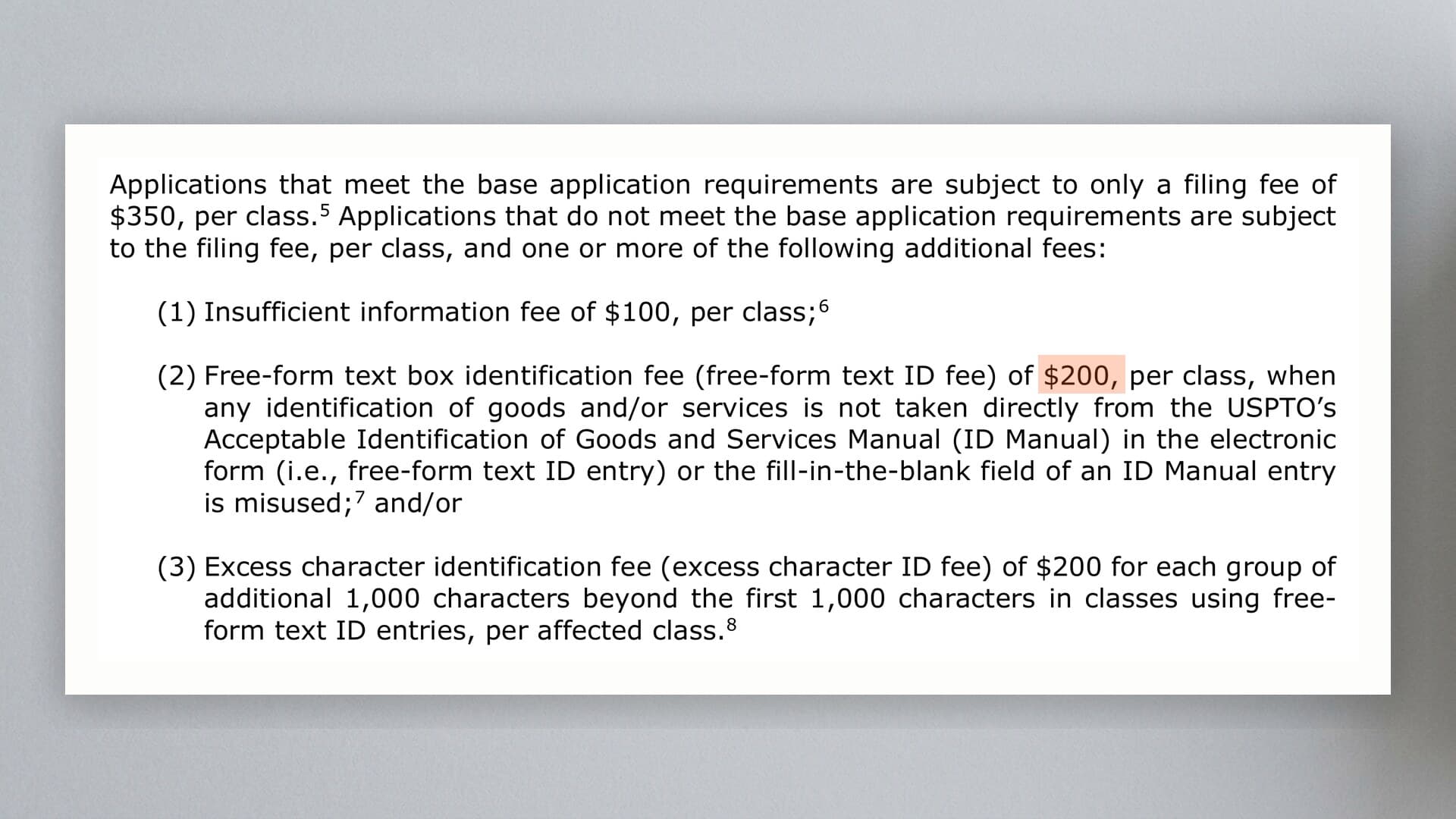
A creator with an app, a merch line and a membership needs 9, 25 and 41. That is $1,050 at the base rate, and a registration covering only class 25 leaves classes 9 and 41 open to anyone who files for them. The apparel registration you got in 2023 does not stop a stranger from registering your name for a fitness app in 2026. It was never asked to. The USPTO is explicit that none of this is mandatory. Its own page says "It is your choice whether to file for federal trademark registration," and unregistered rights exist: common law rights, in the office's words, are "based on use of the trademark in commerce within a particular geographic area." Read that phrase slowly. Geographic area. A creator audience is not a geographic area, which is exactly why the unregistered version of this protection fits a creator business badly. Because the USPTO prices originality in the one place creators are most original. Since January 18, 2025 the base electronic application is "a filing fee of $350, per class," and the office adds a "free-form text box identification fee (free-form text ID fee) of $200, per class, when any identification of goods and/or services is not taken directly from the USPTO's Acceptable Identification of Goods and Services Manual." There are two more surcharges in the same rule, both per class. An application that does not meet the base requirements picks up an "insufficient information fee of $100, per class." And a free-form description that runs long picks up an "excess character identification fee" of "$200 for each group of additional 1,000 characters beyond the first 1,000 characters."
A crop of the printed United States Code of Federal Regulations showing the base application filing fee of $350 per class and the $200 free-form text box identification fee
Stack it on the three-class creator business and the arithmetic moves fast.
What you fileClasses 9, 25 and 41Running total
Base application, pre-approved wording$350 x 3$1,050
Your own wording in all three classesplus $200 x 3$1,650
Plus an insufficient information fee in all threeplus $100 x 3$1,950
Filing on paper instead is worse and the rule says so: "a paper application is subject to a flat fee of $850, per class." The practical instruction is almost boring. Go to the Acceptable Identification of Goods and Services Manual, find the pre-approved wording that fits, and use it verbatim. Every sentence you write yourself is a $200 sentence. The one place to stop being a creator is the identification field. About ten months end to end, and getting shorter. The USPTO reported that it "further reduced first action pendency by 20% in the first half of FY 2026, from 5.6 months to 4.45 months," and cut "total processing time from 11.7 months in FY 2025 to 10.03 months in the first half of FY 2026." Its stated FY 2028 targets are four months to first action and nine months to disposal. Those are the best numbers the office has posted in years and they are still an order of magnitude slower than the thing they are supposed to protect. Built by Foundry builds a finished, submitted product in about three weeks. The examiner assigned to your name will not have looked at the file yet when your app goes live, and will not have finished when you run your first price change. That mismatch has one correct response and it is not to hurry the filing. It is to move the filing earlier. The application date, not the registration date, is the date that matters when two people want the same word, so the day you settle on a name is the day to file, months before there is a product to attach it to. You are the exact person this costs money. You have been selling something under a name for two or three years, which means you have built real value in a word, distributed it to an audience that is national rather than local, and filed nothing. Your position is strong on the goods you actually sell and empty everywhere else. Run this in ten minutes. Open the USPTO's public trademark search and look up your own name. Three outcomes and each has one move:
  • Nothing comes back. You have first-mover position and no registration. File on the class your product will live in before you announce it, which for a subscription product is class 9.
  • You come back, registered by you, in one class. Check which one. If it is 25 and you are about to ship software, you are unprotected in the class that matters and the fix is $350.
  • Somebody else comes back. Stop naming and start reading. A registration in a related class for related goods is the thing that gets an app pulled, and you would rather find it now than after 40,000 people have the icon on a home screen.
This is the same discipline as checking whether anyone wants the thing before you build it. Name work and creator-product fit are both cheap in September and ruinous in January.
  • Search the federal register for your name, in your classes. Not Google, not the domain registrar. A domain is not a right. The USPTO is blunt that "registration of a domain name with a domain name registrar does not give you any trademark rights," and that you "could later be required to surrender it if it infringes someone else's trademark rights."
  • Write down every category you sell in. App, merch, course, community, events, physical goods. Then map each to a class number. Most creators find three, and are surprised by class 41.
  • Copy your goods description out of the ID Manual. Verbatim. That is $200 per class saved for about fifteen minutes of reading.
  • File before the launch date, not after it. Ten months of queue against three weeks of build means the name has to start moving first.
  • Read Apple's rule once, out loud. "You cannot use another developer's icon, brand, or product name in your app's icon or name, without approval from the developer." That rule protects everyone who registered. If you did not, it is protecting them from you.
The whole point of a creator becoming an owner is that the assets stop being borrowed. Followers are borrowed. Reach is borrowed. A catalog slot at another company is borrowed too, and the borrowing terms are one sentence long on a help page. A name is the first asset in a creator business that can actually be owned, recorded and enforced, and it is the cheapest one that will ever be on the list. $350 a class, once, against a business that is supposed to pay you for a decade. Creators spend more than that on a single sponsored post's props. BUILT BY FOUNDRY builds the product your audience is already asking you for in about three weeks, at $0 upfront, on a revenue share. You own the business and you own the revenue, which means you should also own the word on the icon. We keep running the product after launch, through store listings, pricing surfaces and the review process, so the boring, dated, load-bearing work like this gets done on time rather than after somebody else does it to you. The creators who lose a name almost never lose it to a thief. They lose it to somebody ordinary who filed a form they did not know existed, eleven months before they got around to it. No. It gives you one slot in Apple's catalog. Apple's help states "You can use an app name for one app per localization," which makes the name exclusive inside the App Store, and the same page routes name disputes outward: "If another developer is using the app name and you have trademark rights to it, you can submit a claim." Apple is deciding who gets the listing, not who owns the mark. $350 per class of goods or services for an electronic base application, under the rule effective January 18, 2025. Add $100 per class if the application does not meet the base requirements, $200 per class if any identification of goods or services is not taken directly from the USPTO's Acceptable Identification of Goods and Services Manual, and $200 for each additional group of 1,000 characters of free-form identification text in an affected class. A paper application is a flat $850 per class. Usually three. The app is class 9, which covers "recorded and downloadable media, computer software." Merch is class 25, "Clothing, footwear, headwear." The channel, courses, community and live events are class 41, "Education; providing of training; entertainment; sporting and cultural activities." Software you host and operate for a customer rather than ship to them falls in class 42, and online retail store services fall in class 35. The USPTO reported first action pendency of 4.45 months and total processing of 10.03 months across the first half of FY 2026, improved from 5.6 and 11.7 months respectively. Its stated FY 2028 goals are four months to first action and nine months to disposal. Plan for roughly a year from filing, which is why the filing should happen when you choose the name rather than when you launch. Some, and they are narrower than they feel. The USPTO writes that "it is your choice whether to file for federal trademark registration" and that common law rights are "based on use of the trademark in commerce within a particular geographic area." A creator audience is distributed nationally rather than concentrated locally, so the geographic framing that makes unregistered rights work for a local business fits a creator business poorly. No. The USPTO states that "registration of a domain name with a domain name registrar does not give you any trademark rights," and that even a registered domain "could later be required to surrender it if it infringes someone else's trademark rights." Domains, state business name filings and App Store listings are three separate things, and none of the three is a trademark. Yes, and the guideline is published. App Store Review Guideline 4.1(c) says "You cannot use another developer's icon, brand, or product name in your app's icon or name, without approval from the developer." Guideline 5.2.1 adds that apps "should be submitted by the person or legal entity that owns or has licensed the intellectual property and other relevant rights." Every figure above is a live published page or a live endpoint and can change without notice. Nothing here is legal advice, and a name with real money behind it deserves a trademark attorney rather than a blog post. Verify against the sources before you file.
Our work

Creators who already did this

These are apps we designed, built, shipped, and still run today, with the creator keeping the code and the audience.

Ellie Fausett

Ellie Fausett

Founder & CEO of Vector Guard

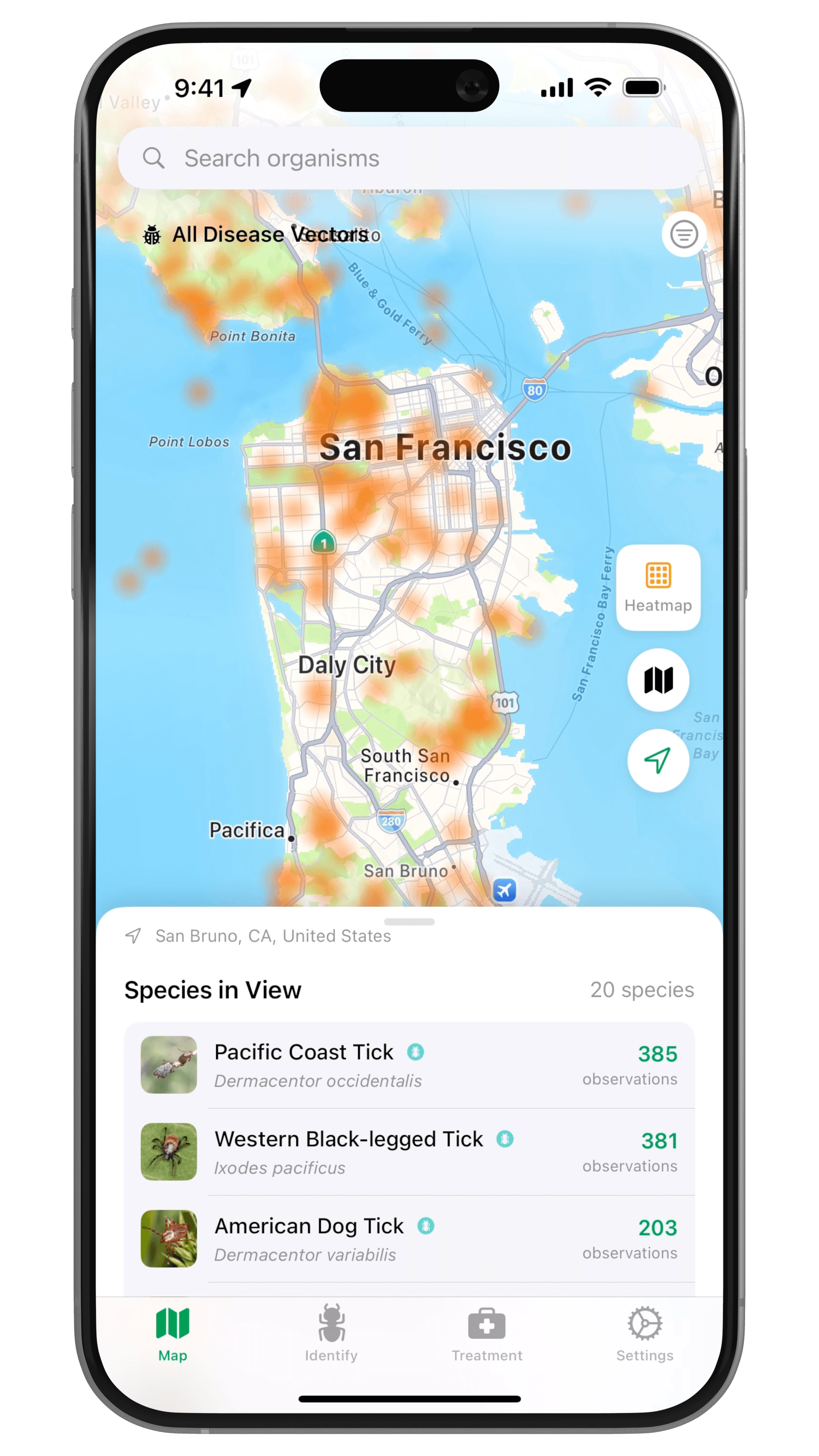
Spot disease-carrying pests before they reach your family.

Top Health App
Read the case study
Vector Guard screenshots
Samantha Mae

Samantha Mae

Founder & CEO of NineLives

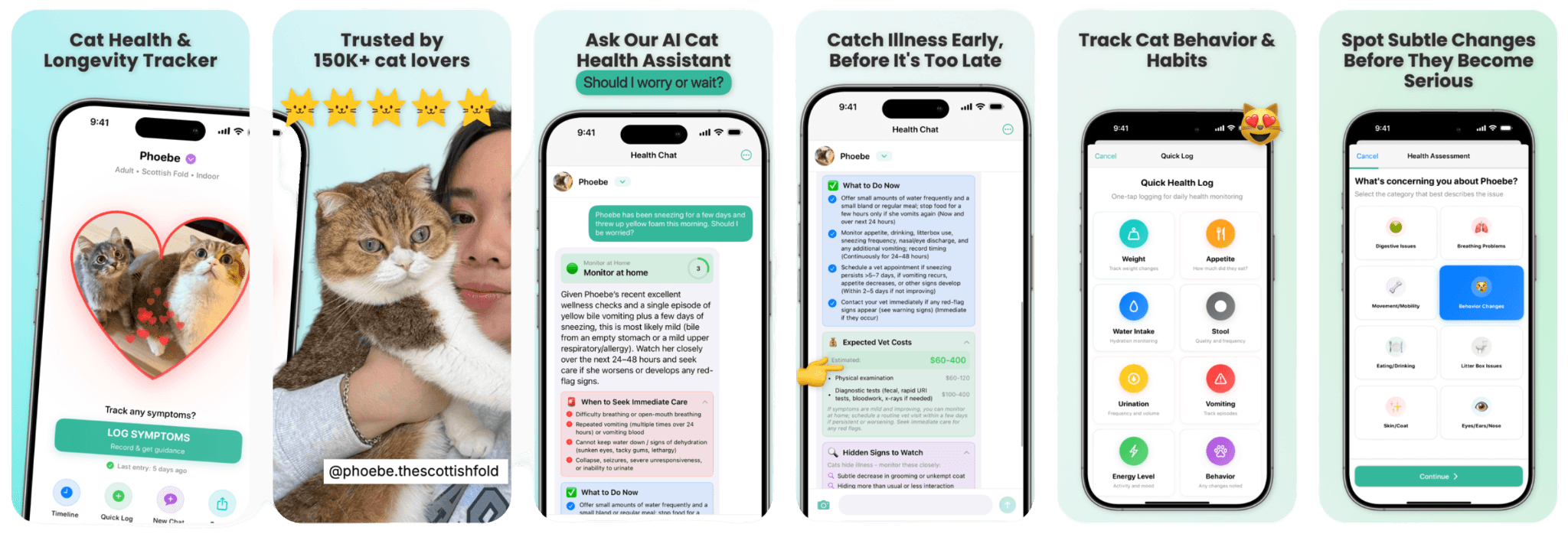
Cat health tracking from the world's most beloved Scottish Fold.

Top Health App150K+ followers
Read the case study
NineLives screenshots
Liv Merima

Liv Merima

Founder & CEO of Claim It

Custom affirmations that help millions choose themselves.

Top Lifestyle App150K+ followers
Read the case study
Claim It screenshots

Creator app strategy

Curious what your app could be?

Enter your handle and BUILT BY FOUNDRY will research your audience and present custom app concepts. Free.

Do You Own Your Product's Name? 45 Classes, $350 Each, and a 10-Month Queue