

Turning Knowledge into Products

What Is GEO? 5 Ways Creators Get Cited by AI Search

August 22, 2026
Share
What Is GEO? 5 Ways Creators Get Cited by AI Search

Get Creator Revenue Insights

How creators are turning audiences into subscription businesses
Share
GEO (generative engine optimization) is the practice of making your content, your name, and your products visible inside AI-generated answers from tools like ChatGPT, Claude, Perplexity, and Google's AI Overviews. SEO gets you ranked. GEO gets you cited. And for creators, being cited is starting to decide who gets the brand deal, the fan, and the customer. Key Takeaways:
  • The term was coined in a Princeton and IIT Delhi research paper presented at KDD 2024, which found the right optimizations boost visibility in generative engine responses by up to 40%
  • Adding quotations, statistics, and citations from credible sources were the top performing tactics across roughly 10,000 test queries in that study
  • Brands and agencies now ask AI chatbots which creators to work with, and some agencies include AI visibility in campaign briefs, per Digiday's August 2026 reporting
  • AI referral traffic to US retail sites grew 62% year over year in July 2026, and those visitors generate 53% more revenue per visit, per Adobe Analytics data reported by Digital Commerce 360
  • Being cited is visibility, not revenue. The creators winning at GEO point that visibility at something they own
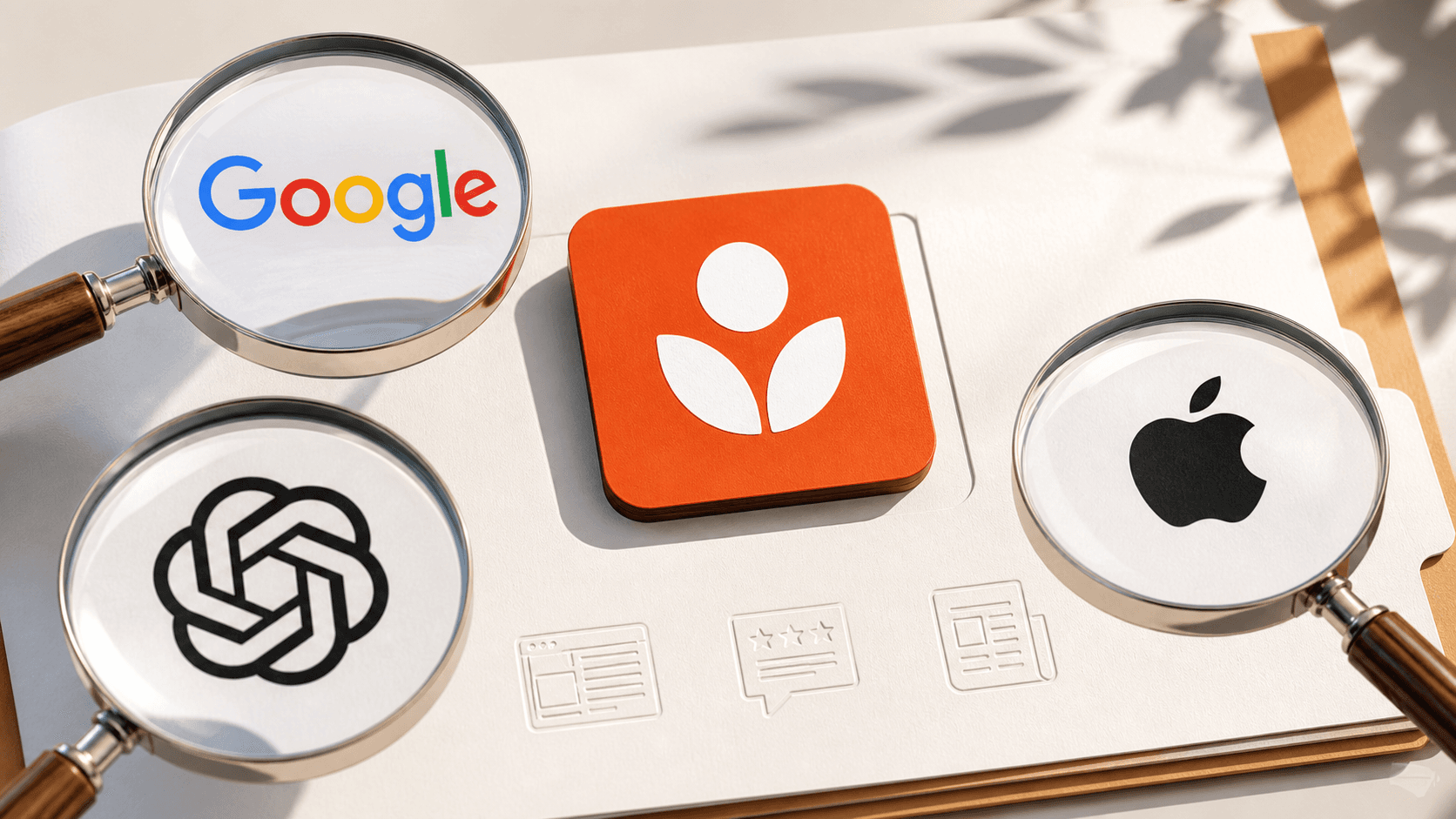
Generative engine optimization is the discipline of shaping content so that AI systems retrieve it, trust it, and name it when they answer a question. Researchers at Princeton and IIT Delhi introduced the term in a paper presented at KDD 2024, testing nine optimization strategies across roughly 10,000 queries. The winners were unglamorous: cite credible sources, include quotations, include statistics. Content carrying those signals gained up to 40% more visibility in generative engine responses. You will also hear AEO (answer engine optimization) and LLMO. They describe the same job. A search engine returns ten links and lets the reader choose. A generative engine returns one answer and chooses for them. GEO is the fight to be inside that answer. For a creator, that fight happens on three fronts at once: when a fan asks an AI for "the best mobility routine for runners," when a brand asks it "which finance creators should we sponsor," and when a customer asks "is this creator's app worth paying for." Three different questioners, one gatekeeper. Because the people with money have started asking the machine. Digiday reported in August 2026 that brands and agencies are using AI chatbots to shortlist creators for partnerships. The olive oil brand Kosterina uses Claude to search for creator partners. Agencies have begun writing AI visibility into campaign briefs. A survey by SponsorCX cited in the same reporting found nearly one in five consumers have replaced traditional research with AI for product recommendations. The creators in that story are not waiting. Colin Rocker, a career development creator who has landed partnerships with Apple, Adobe, and Meta, ran an audit of where AI systems cite his content. Courtney Johnson launched a dedicated website that repurposes her social content as text articles built for AI crawlers; it has drawn 10,766 Google search impressions and 435 clicks since launch, climbing month over month. The commercial weight behind this is not speculative. Adobe Analytics, drawing on more than 1 trillion visits to US retail sites, measured AI referral traffic up 62% year over year in July 2026, with AI-referred visitors converting at a 60% higher rate and generating 53% more revenue per visit than everyone else (Digital Commerce 360). The answer engines are not just answering questions. They are routing buyers. And the routing compounds the same way Google's new 35K-follower search profiles do: discovery is detaching from the feed. The next fan who finds you may never have seen a single post, which is a shift we mapped in why your next 10K fans won't come from social media. The tactics that work are the ones that make you easy to retrieve and safe to cite. Here are the five with evidence behind them. 1. Run a citation audit. Ask ChatGPT, Claude, and Perplexity the questions your audience actually asks: best workout program for busy parents, how to negotiate a raise, easiest gluten free meal prep. Note who gets named. That list is your competitive map, and it is the same audit Colin Rocker ran on his own niche. 2. Publish text you own. AI crawlers read text on the open web far more reliably than they parse video or feed content. Johnson's move, turning social posts into articles on her own domain, is the pattern: a home for your expertise that OpenAI's and Anthropic's crawlers can actually index. A link-in-bio page is not that. 3. Carry statistics, quotations, and sources. These were the three highest performing optimizations in the Princeton study, worth up to 40% more visibility. A page that says "protein matters" is filler. A page that says "3 grams of leucine per meal, per this named study" is citable. 4. Get named by third parties. Generative engines weigh corroboration. Press coverage, podcast appearances, and expert quotes in other people's articles all teach the model that you are the entity to name for your topic. One real feature in a trade publication outweighs ten self-descriptions. 5. Give the engine a product to recommend. When the question is "what should I use," an AI answers with things, not people: apps, programs, tools. A creator with a named product occupies answer slots a personal brand alone cannot. We broke down that mechanism in how to get your app recommended by AI search.
A bright studio scene showing an orange megaphone on a pedestal beside a row of small identical grey megaphones, one voice separated from the noise
The three disciplines answer to three different gatekeepers, and they reward different work.
DisciplineThe gatekeeperThe prizeThe unit of work
SEOGoogle's ranking algorithmA position on a results pagePages and backlinks
GEOThe model's answerBeing named in the answer itselfCitable claims and corroboration
ASOApp Store searchAn installKeywords, screenshots, ratings
They stack rather than compete. The same authoritative page that ranks in Google is raw material for a generative answer. And ASO turns the visibility either one produces into installs and subscribers. The creators treating these as one pipeline, from question to answer to product, are building a discovery machine that runs while they sleep. Being cited pays nothing by itself. An AI answer that names you is a referral, and a referral has to land somewhere: a page, a product, a subscription. Rocker's and Johnson's endgame in the Digiday reporting is brand partnerships, which is real money and still someone else's budget, renewed at someone else's discretion. Run the other branch. The fan asks the AI, the AI names your app, the fan installs it, and $12.99 a month starts compounding. That referral did not produce a negotiation. It produced a customer you own, in a channel where AI-referred visitors already convert 60% better than average. Visibility is the top of a funnel, and the question that matters is who owns the bottom of it. If you are a creator with 50K engaged followers, run the citation audit today. Ask three AI tools the five questions your audience asks most, and count how many times your name comes up. If the answer is zero while smaller creators in your niche get named, you have a GEO problem. If you get named and there is nothing to buy, you have a product problem, and that one is the problem we exist to solve. GEO stands for generative engine optimization: the practice of optimizing content to appear in answers generated by AI systems such as ChatGPT, Claude, Perplexity, and Google's AI Overviews. The term was introduced in a Princeton and IIT Delhi research paper presented at the KDD 2024 conference. No. GEO extends SEO rather than replacing it. Generative engines retrieve much of their material from the same indexed web pages that search engines rank, so authoritative, well-sourced pages serve both. The difference is the output: search engines return ranked links, while generative engines return a single composed answer that names a small number of sources. Ask them directly. Put the questions your audience asks into ChatGPT, Claude, and Perplexity, and record which creators, sites, and products each answer names. Repeat the audit monthly, because answers shift as models and their retrieval sources update. Poorly. AI crawlers index open-web text far more reliably than social feeds or video, so creators whose expertise lives only on social platforms are hard to retrieve and easy to omit. A text site under your own domain, plus third-party coverage and a named product, gives generative engines something durable to cite.
Every month, more of your future audience asks a machine instead of a feed. BUILT BY FOUNDRY builds the subscription app that turns those answers into revenue you own, then runs and optimizes it forever. $0 upfront, revenue share, three weeks to the App Store.
See What We’d Build You →
Our work

Creators who already did this

These are apps we designed, built, shipped, and still run today, with the creator keeping the code and the audience.

Creator app strategy

Curious what your app could be?

Enter your handle and BUILT BY FOUNDRY will research your audience and present custom app concepts. Free.

What Is GEO? 5 Ways Creators Get Cited by AI Search