

Case Studies & Success Stories

Steven Bartlett: 21.4M Subscribers, 3 Decks at £25 Each

November 3, 2026
Share
Steven Bartlett: 21.4M Subscribers, 3 Decks at £25 Each

Get Creator Revenue Insights

How creators are turning audiences into subscription businesses
Share
A familiar closing ritual on The Diary of a CEO has Steven Bartlett hand his guest an anonymous question written by the previous guest. That ritual became a physical product line: The Conversation Cards, three decks at £25 each on his store, The Diary. Photo: Steven Bartlett with The Conversation Cards, from the product photography on thediary.com. Key Takeaways:
  • The Diary of a CEO YouTube channel showed 21.4M subscribers and 948 videos on November 3, 2026. The channel joined YouTube on March 22, 2019
  • The first deck of 52 cards turns the show's closing ritual into a product. A QR code on each card opens the episode where a guest answered that question
  • The store's public product data shows a new deck or diary listing each gift season from 2022 to 2025: decks in December 2022, December 2023 and November 2025, and The 1% Diary in November 2024
  • Every deck sells for £25. The 1% Diary sells for £35, and a cards and diary bundle starts at £54
  • In October 2025, Bartlett's holding company Steven.com announced an eight-figure round at a $425 million valuation, with Bartlett keeping more than 90% ownership
Steven Bartlett is an entrepreneur, a Dragons' Den investor and the host of The Diary of a CEO, which he started in 2017. According to his own biography, he was born in Botswana, grew up in Plymouth and co-founded the Manchester social media agency Social Chain in 2014. He stepped down as its co-CEO in 2020. The show also supplies the name for his book, The Diary of a CEO: The 33 Laws of Business and Life, shares its name with the podcast, and his biography calls it a number one Sunday Times bestseller. In May 2025 he also became a co-owner of Stan, the creator storefront we covered in our Stan Store review. He posts on Instagram as @steven, and the deck's own instructions ask buyers to tag that account with the questions they write. The cards came straight out of the show's format. The first-edition listing traces its questions to the anonymous handoff between podcast guests. Bartlett started with a format his audience already recognized. The deck lets a viewer take that moment to a dinner table. Recognition gives a creator a product idea worth testing; it does not establish how many viewers will pay. The first edition is advertised as a 52-card pack and includes a blank card for the buyer's own question. Each card carries a QR code that opens the episode where a guest answered that question on camera. So the product sends its buyers back to the show, and the show keeps advertising the product at the end of every episode.
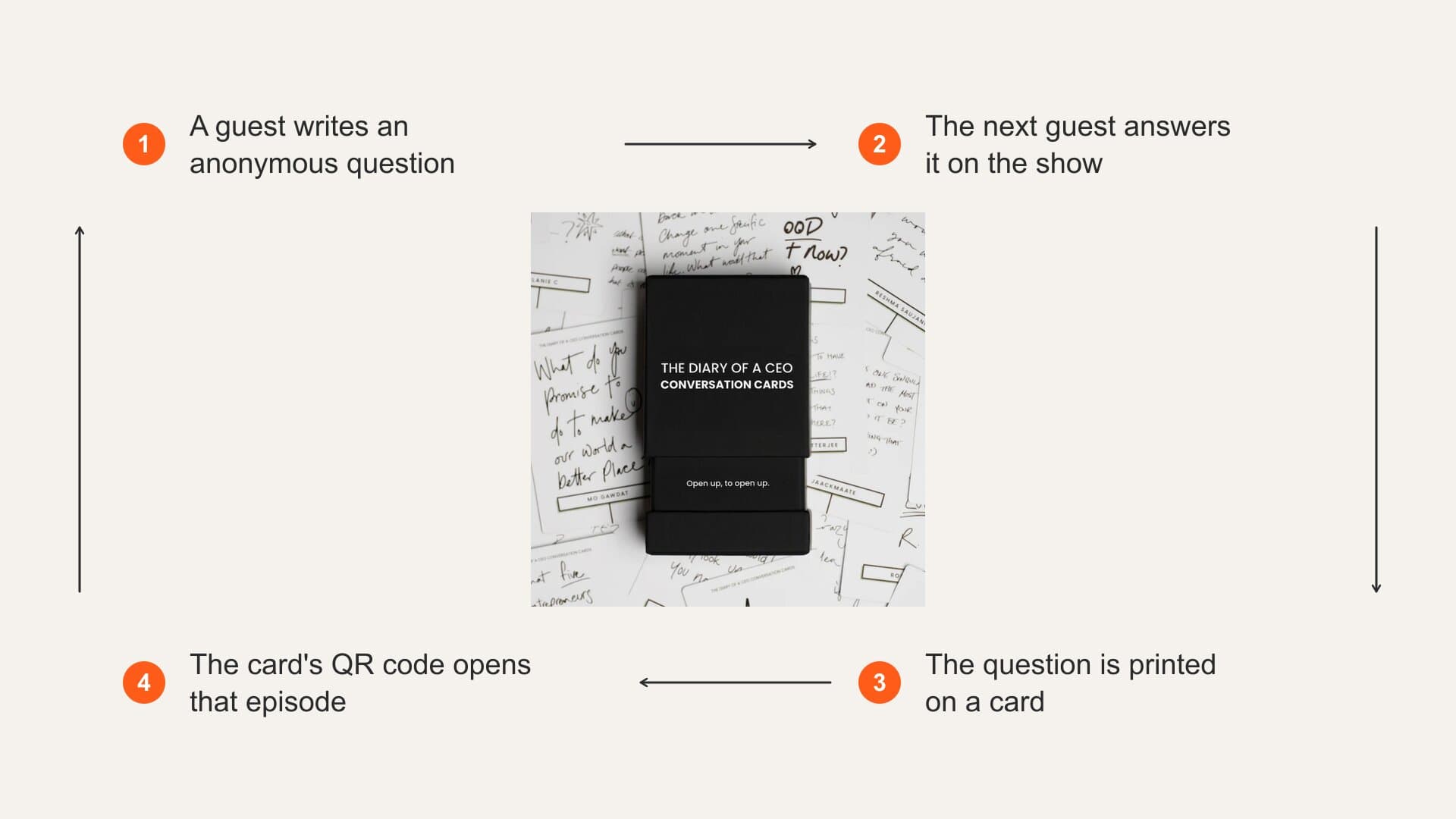
A flat diagram of the Diary of a CEO question loop: a guest writes an anonymous question, the next guest answers it on the show, the question is printed on a Conversation Cards card, and the card's QR code opens that episode.
This is what we mean when we say a product can be a content engine. The product and the episodes feed each other. The store's public product data, read on November 3, 2026, lists 12 products in pounds sterling. The publish dates on the main listings fall into a steady pattern. These are listing dates, which can differ from a product's original launch date.
Listing publishedProductPrice
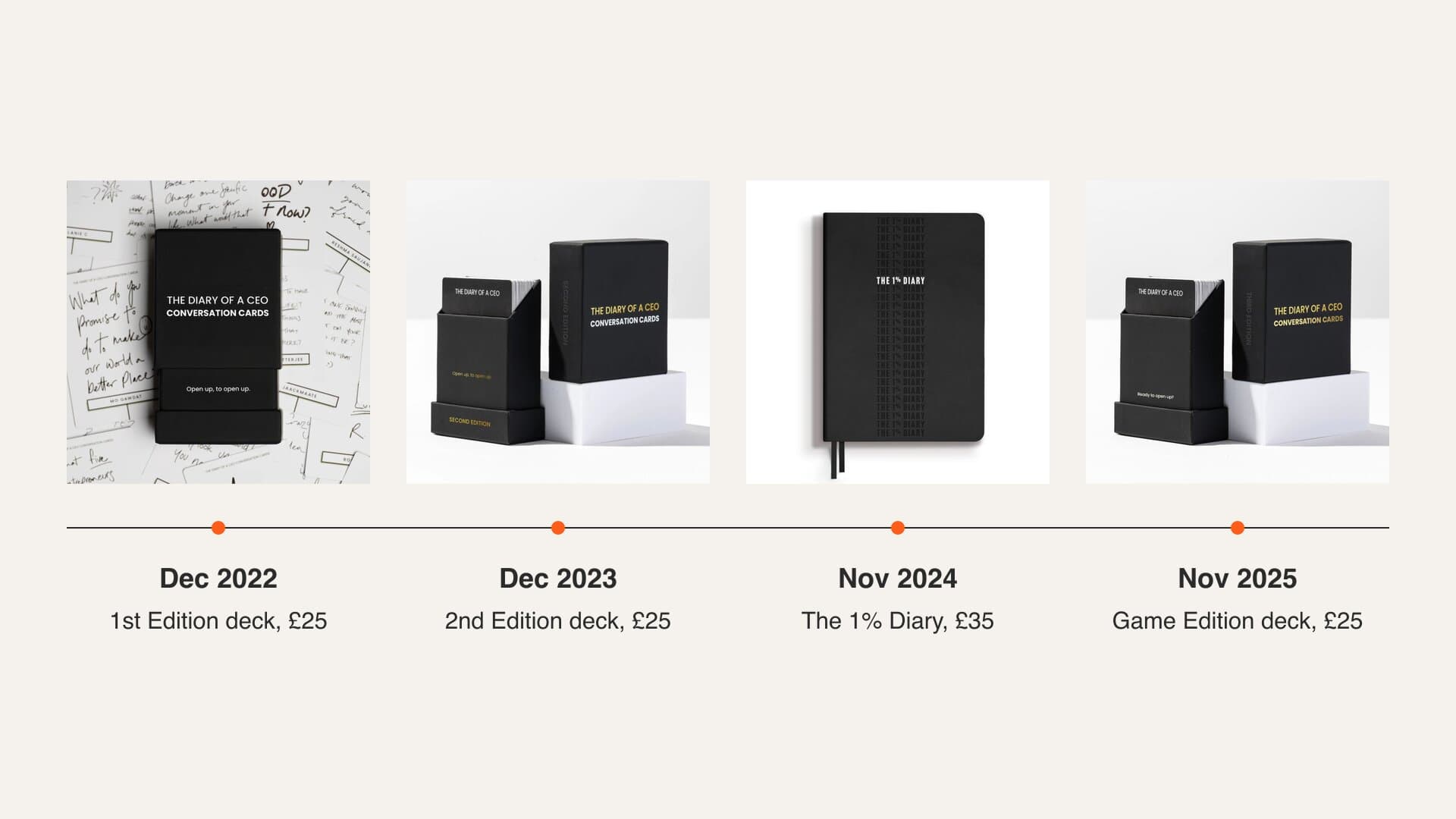
December 20, 2022The Conversation Cards: 1st Edition (52 cards)£25
December 5, 2023The Conversation Cards: 2nd Edition (52 new questions in 3 levels)£25
November 21, 2024The 1% Diary£35
November 12, 2025The Conversation Cards Game Edition (new questions plus 10 twist cards)£25
November 12, 2025Growth Toolkit (Cards and Diary)£54 to £60 by colour
September 16, 2026The 1% Lock In Bundle£42
The main listings show a new deck or diary in each holiday season from 2022 to 2025. All three current decks share the same £25 price. The Game Edition listing says a limited gold run of cards includes a question from Bartlett himself, and states that the previous launch "sold out in 24 hours." That is the store's own claim. The store does not publish unit sales.
The four main products from Steven Bartlett's store, The Diary, laid out in order of their store listing dates: the Conversation Cards first edition (2022), second edition (2023), The 1% Diary (2024) and the Game Edition deck (2025), each with its listed price.
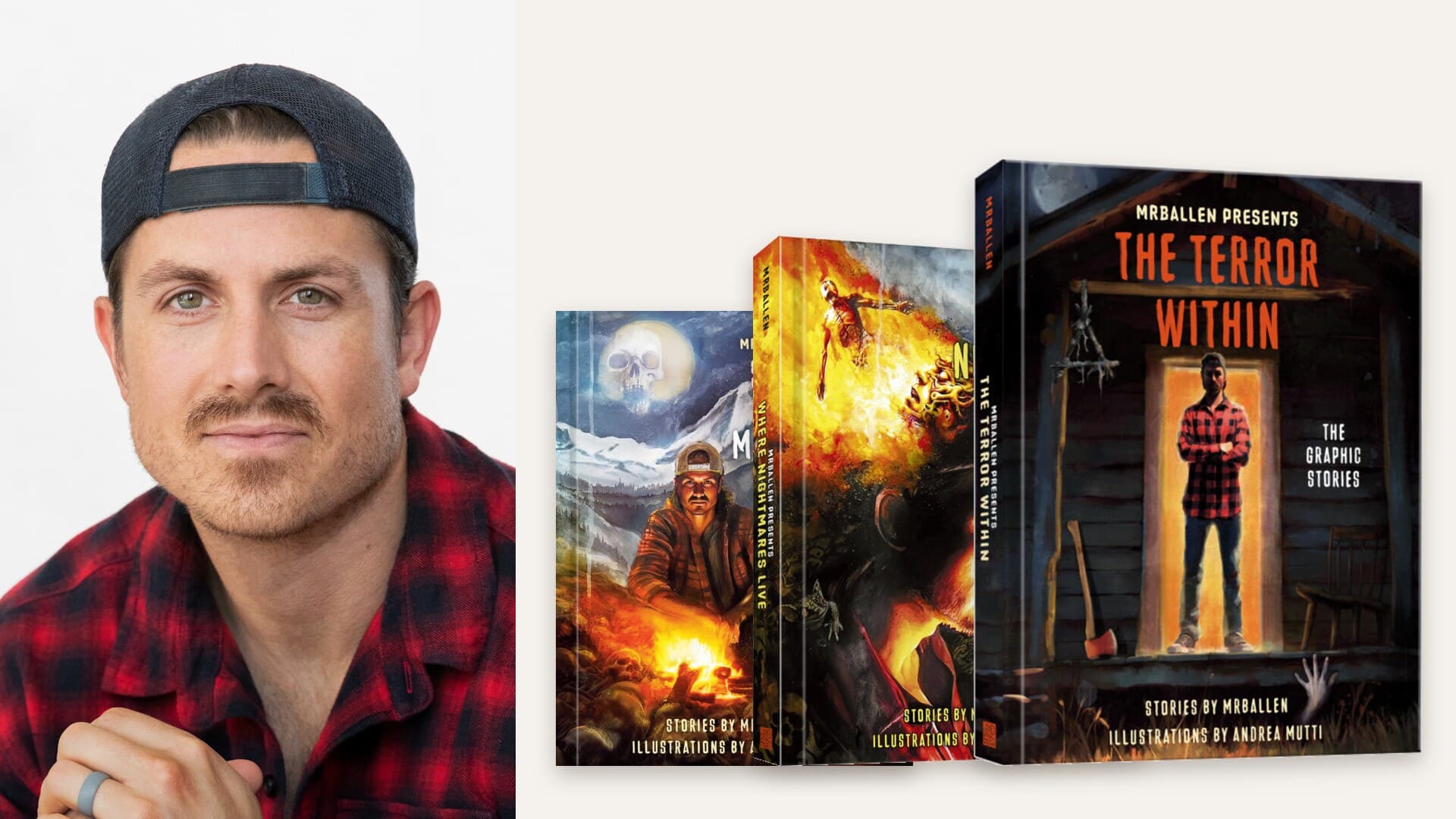
We saw a similar annual rhythm in MrBallen's graphic novel every October. A creator with a reliable release date gives fans a reason to come back every year. A deck is paid for once, and buyers can reuse its questions. A new edition gives them another purchase to consider. Those listing dates suggest a seasonal sales strategy; they do not show how many customers return. The show itself runs on a different model. The question ritual returns in the free episodes. The audience's habit is weekly and open-ended, while the product is sold in yearly boxes. That gap is worth noticing for any creator with a recurring format. A box of questions can work as a gift and a first product. A fresh question delivered every week, from the guest who wrote it, with a link to the moment it was answered, would match the habit the show already built. Bartlett can promote those boxes alongside the show. For another creator, a recurring version would be worth testing if buyers want fresh questions enough to pay again. The free show remains a substitute, so a paid version needs a clear benefit. Our breakdown of annual and monthly pricing covers how that choice changes revenue.
See What We’d Build You →

Bartlett told investors exactly how he sees this. In the Steven.com announcement, he compared his plan to Disney building films, parks and merchandise around Mickey Mouse, then said: "But in our world, the IP is not a fictional character. The creator is the new franchise." The same announcement says Steven.com owns FlightStory, FlightCast and FlightFund and employs more than 100 people full time. Slow Ventures led the round. The Conversation Cards show that idea at its smallest scale. A ritual inside one show became a product, which became a yearly product line, which sits inside a company valued at $425 million. Each layer is owned by Bartlett. Ryan Holiday followed a similar path with Daily Stoic, building physical products and paid memberships around one idea his audience already returned to daily.
  • Look for the moment your audience repeats. The Conversation Cards package a familiar closing segment from his episodes. Your recurring segment, sign-off or challenge may already be the product.
  • Link the product back to the content. A QR code that opens the original episode turns every card into a reason to watch again. The product should send people back to your work, and your work should keep showing the product.
  • Match the business model to the habit. A yearly box suits a gift. A weekly or daily habit can support a recurring offer when customers value the continuing service enough to renew. If you are weighing that next step, Kris Collins's monthly candy box is a recurring physical product built on a comedy audience.
Built by Foundry builds and runs these businesses with creators, most often as a subscription app, and the creator owns what we build together. After launch, App Care keeps the product maintained and improving, so the creator's attention stays on the show.
See What We’d Build You →
The Conversation Cards are question card decks sold by Steven Bartlett's store, The Diary. The first edition collects questions taken from the closing ritual of The Diary of a CEO, where each guest answers an anonymous question left by the previous guest. Each deck costs £25. On November 3, 2026, thediary.com listed each Conversation Cards deck at £25, The 1% Diary at £35, the Growth Toolkit bundle at £54 to £60 depending on colour, The 1% Lock In Bundle at £42 and The 1% Pen at £12. A goal-setting guide was free. The Diary of a CEO YouTube channel showed 21.4 million subscribers and 948 videos on November 3, 2026.
Our work

Creators who already did this

These are apps we designed, built, shipped, and still run today, with the creator keeping the code and the audience.

Liv Merima

Liv Merima

Founder & CEO of Claim It

Custom affirmations that help millions choose themselves.

Top Lifestyle App150K+ followers
Read the case study
Claim It screenshots
Brandon Whiteleather

Brandon Whiteleather

Founder & CEO of Freeze Dry Buddy

Freeze drying made foolproof, from a homesteader who's done it 1,000 times.

Top Food App1.4M+ followers
Read the case study
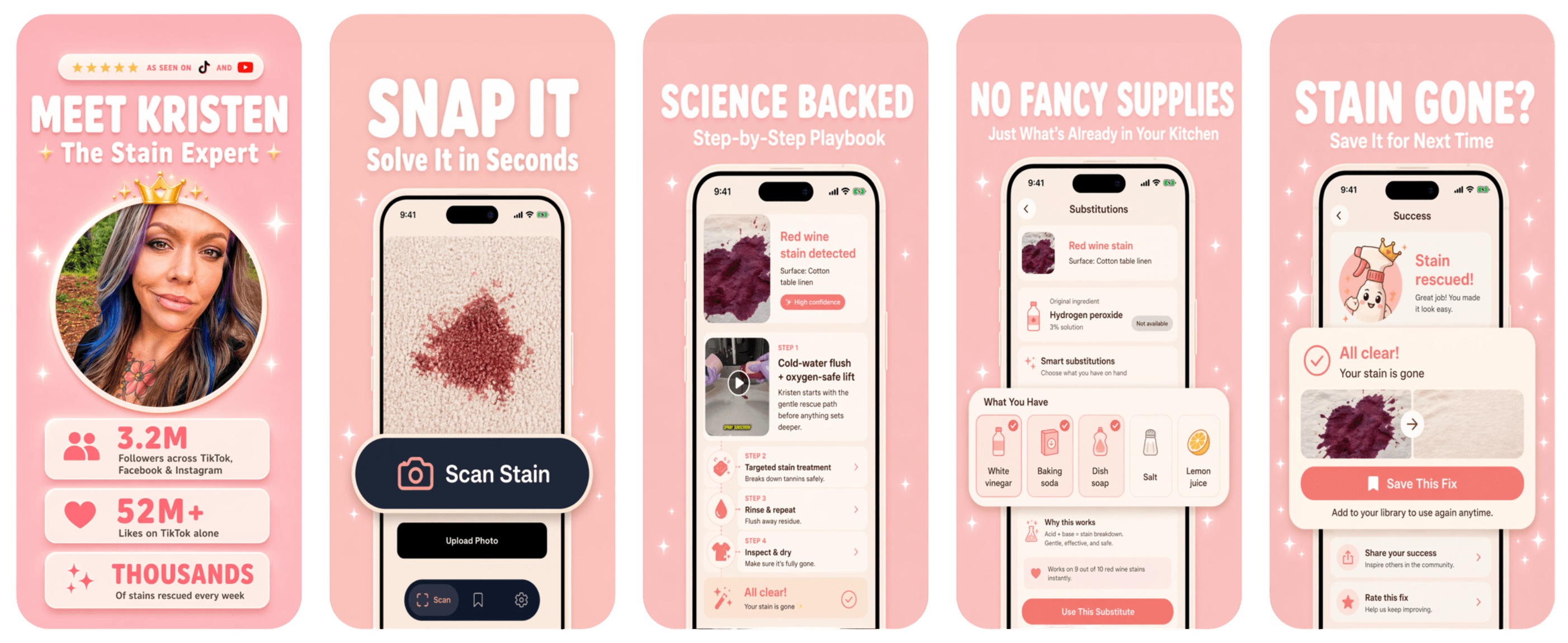
Kristen Donathan

Kristen Donathan

Founder & CEO of Stain Fix

Snap a stain. Get the fix in seconds.

Top Lifestyle App1.5M+ followers
Read the case study
Stain Fix screenshots

Creator app strategy

Curious what your app could be?

Enter your handle and BUILT BY FOUNDRY will research your audience and present custom app concepts. Free.

Steven Bartlett: 21.4M Subscribers, 3 Decks at £25 Each