
Platform Reviews

Shopify Review 2026: 4 Plans, 3 Fee Layers, and a $0 Add-On

September 8, 2026
Share
Shopify Review 2026: 4 Plans, 3 Fee Layers, and a $0 Add-On

Get Creator Revenue Insights

How creators are turning audiences into subscription businesses
Share
Key Takeaways:
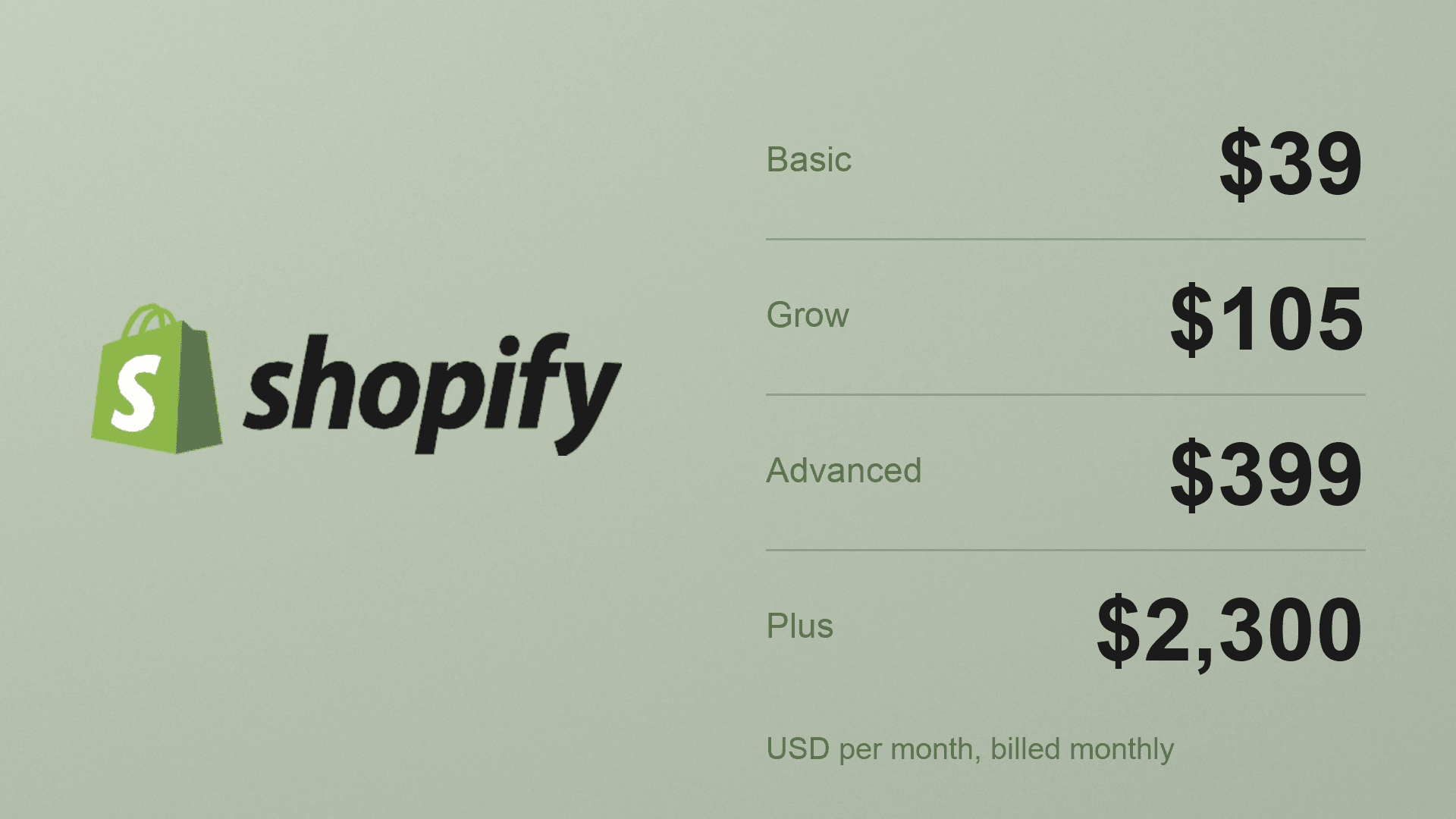
  • Shopify's four plans cost $39, $105, $399, and from $2,300 a month billed monthly, or $29, $79, and $299 billed yearly on the first three, verified on the live pricing page September 8, 2026
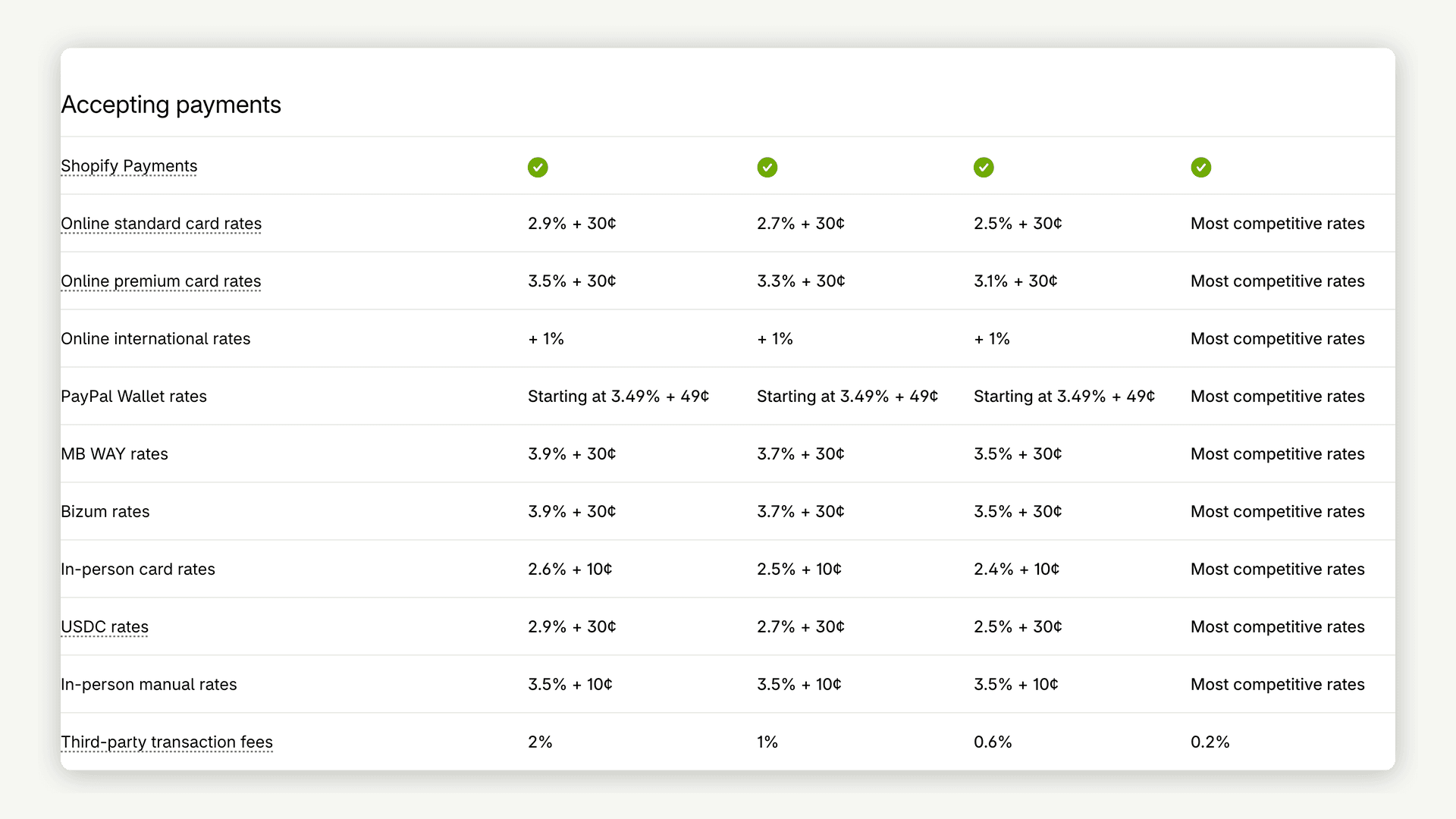
  • There are three fee layers, not one: the plan, the card rate (2.9% + 30 cents down to 2.25% + 30 cents), and a third-party transaction fee of 2%, 1%, 0.6%, or 0.2% if you process payments outside Shopify Payments
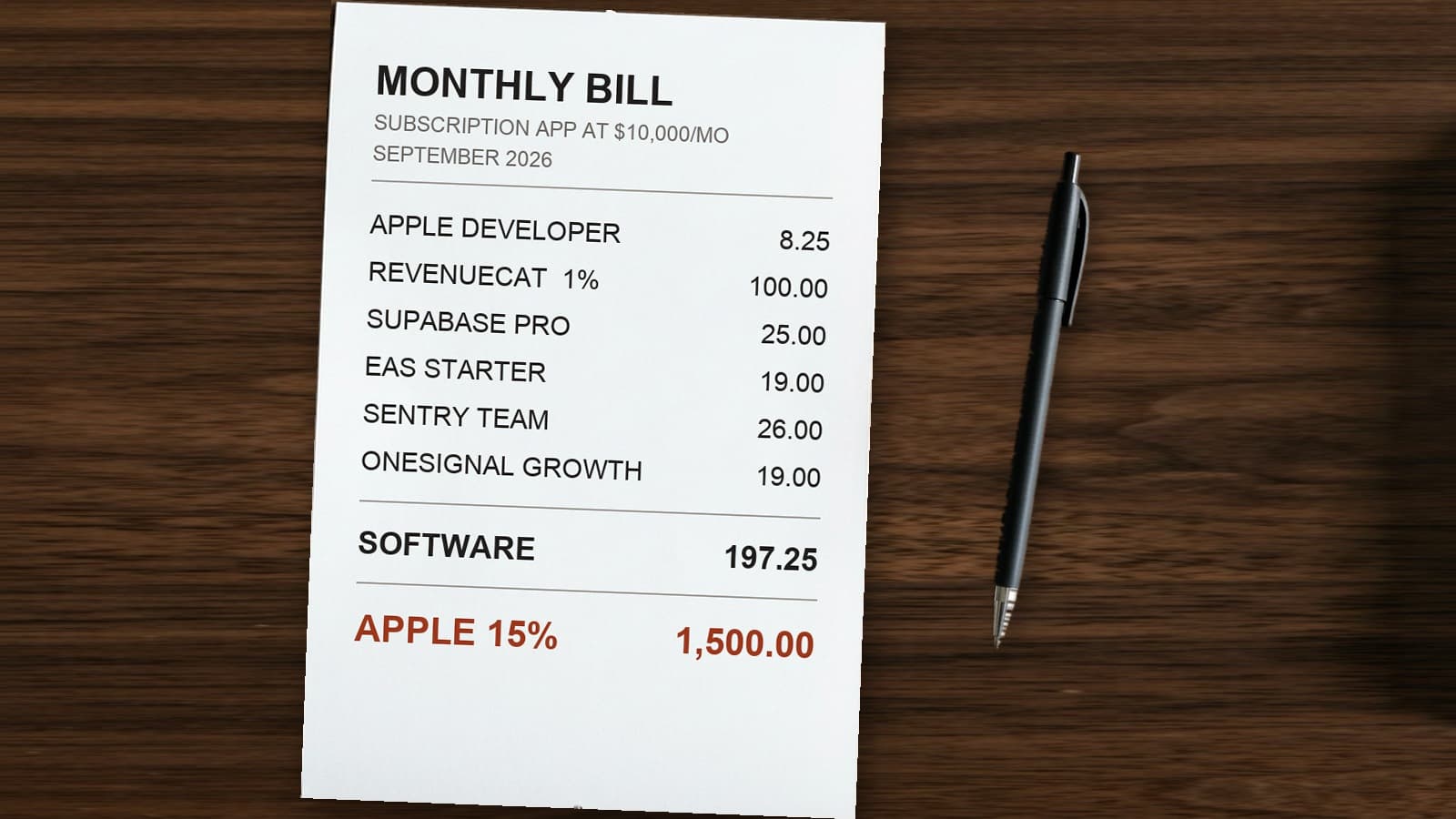
  • On $10,000 of monthly sales across 333 orders, a Basic store pays about $429 all in, roughly 4.3%. That is cheap. It is also a fee on a sale, not a subscription
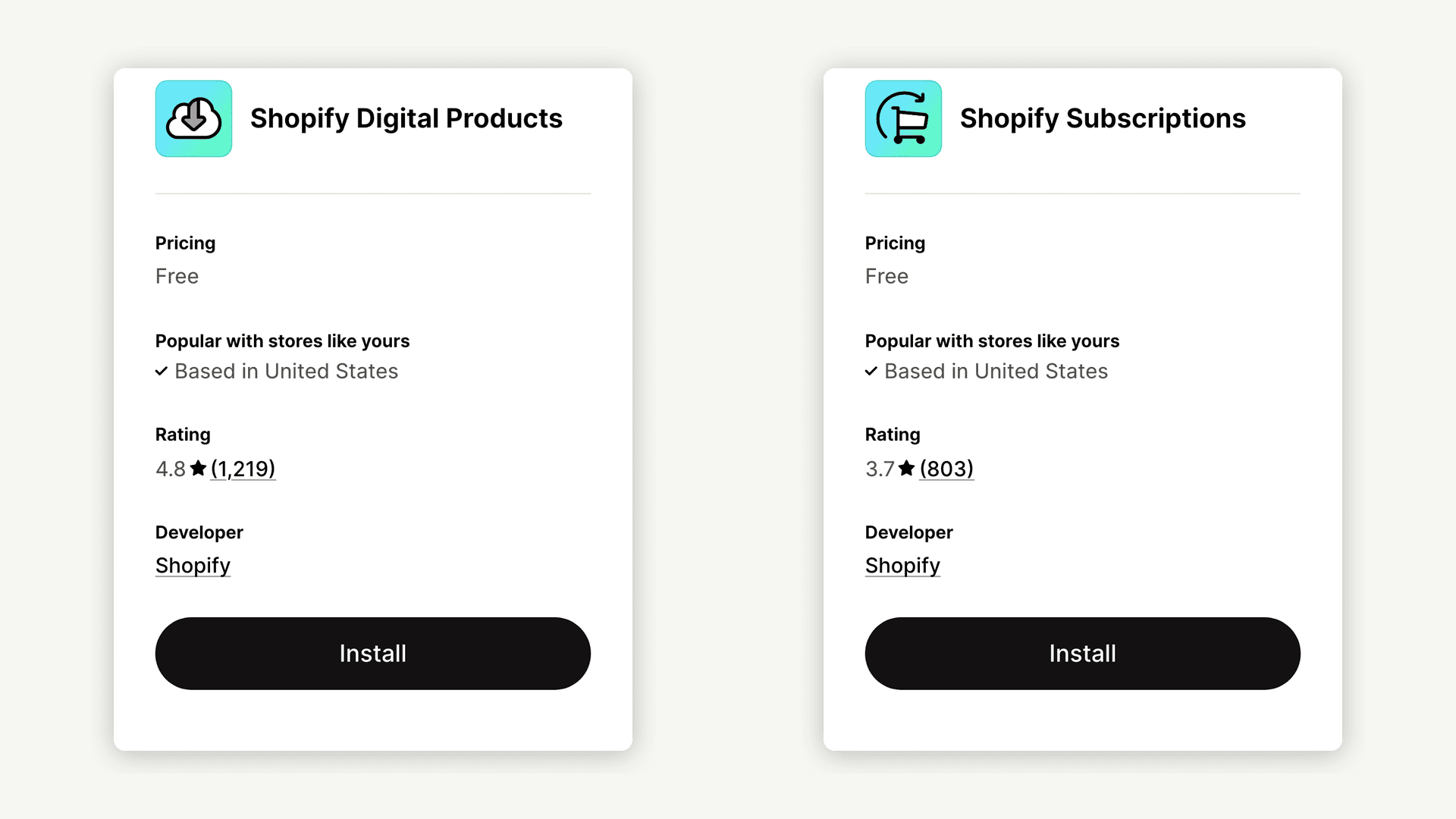
  • Shopify's own recurring-revenue tool, Shopify Subscriptions, costs $0 and carries 803 reviews at 3.7 stars, against 1,219 at 4.8 for the free tool that sells a file once
  • Rating: 4 out of 5. Best checkout in the business, and no answer to the question of who brings the buyer back
Verdict: Shopify is the strongest storefront a creator can rent, and the pricing is honest enough that you can compute your effective rate in one sitting. Buy it for what it is. It is a machine for converting traffic you already own into one-time purchases, priced at roughly 4% to 6% all in. What it does not do is make anyone come back. The recurring-revenue feature is a free add-on you have to go find, and the traffic is entirely your problem. The 4 out of 5 reflects a product that executes its job beautifully and leaves the two hardest jobs in a creator business, retention and discovery, on your desk. Shopify is hosted commerce software that gives you a branded online store, a checkout, payment processing, and inventory tools for a monthly fee plus a percentage of each sale. It does not supply customers, and it does not sell your product for you. It sells you the counter, the register, and the back office. The scale is real. Shopify's pricing page says merchants have collectively made $1.1 trillion in sales on the platform, and that an entrepreneur makes their first sale every 26 seconds. The company is also pushing hard into machine-mediated shopping: its Spring '26 Edition is built around agentic commerce, and the pricing page now lists an Agentic plan at $0 a month for merchants who want their catalog available in AI channels and are willing to pay only when a sale lands. For a creator with 50K engaged followers, Shopify is usually the right call for physical goods. Print runs, apparel, supplements, gear, and books all belong behind a real checkout with real inventory records. The question this review answers is what happens to the other half of your business. Shopify costs $39, $105, $399, and from $2,300 a month on Basic, Grow, Advanced, and Plus when billed monthly, or $29, $79, and $299 on the first three when billed yearly. POS Pro adds $89 a month per location. We read every figure below off the live pricing page on September 8, 2026.
PlanBilled monthlyBilled yearlyOnline card rateThird-party fee
Basic$39$292.9% + 30 cents2%
Grow$105$792.7% + 30 cents1%
Advanced$399$2992.5% + 30 cents0.6%
Plusfrom $2,300not offered2.25% + 30 cents0.2%
Run it on a real month. A creator selling $10,000 across 333 orders of about $30 on Basic pays $290 in percentage fees, $99.90 in per-order fees, and $39 for the plan. That is $428.90, or 4.3% of revenue. Move to a third-party payment gateway and Shopify adds 2% on top, taking the same month to $628.90, or 6.3%. Compare that to the platforms creators usually weigh against it. Patreon charges new creators a standard 10% platform fee before processing, as we covered in our Patreon review. Fourthwall takes 5% of memberships. Shopify at 4.3% is the cheapest way to take money from someone who has already decided to buy. Shopify charges a plan fee, a payment processing rate, and a third-party transaction fee that only appears when you process payments outside Shopify Payments. App subscriptions form a fourth cost that varies by store. The third layer is the one that surprises people, because it is charged on top of whatever your outside gateway already charges.
Shopify's published payments comparison showing card rates from 2.9% plus 30 cents and third-party transaction fees of 2%, 1%, 0.6%, and 0.2% across the four plans
Read the published table closely and two things stand out. Premium card rates run higher than standard ones, 3.5% + 30 cents on Basic, and international cards add another 1%. If a meaningful share of your audience is outside the United States or paying with rewards cards, your real blended rate is above the headline. The third-party fee is structural rather than punitive. Shopify discounts the plan and recovers the difference in payments, which is why the fee falls as the plan price rises. It also means the cheapest-looking plan is the most expensive place to bring your own processor. Decide your payment stack before you pick a plan, not after. No. A Shopify store gives you a checkout, and a checkout produces revenue only when a person decides to buy again. Recurring billing is a free add-on called Shopify Subscriptions that you must install and configure yourself. This is the most consequential thing in the review, and Shopify's own App Store is the evidence. Both tools are free and both are built by Shopify. The one that sells a file once carries far more reviews than the one that makes money arrive on a schedule.
Two Shopify App Store listings side by side: Shopify Digital Products rated 4.8 from 1,219 reviews and Shopify Subscriptions rated 3.7 from 803 reviews, both free and both built by Shopify
Shopify Digital Products holds 4.8 stars from 1,219 reviews. Shopify Subscriptions holds 3.7 from 803, with 19% of its ratings at one star. Review counts are not install counts and a rating is not a verdict on your store. The shape is still hard to miss: the free tool that repeats a charge is both less reviewed and less loved than the free tool that delivers a download. You can check your own side of this in about a minute. Our guide to reading four fields in your store's public catalog shows how to tell whether anything you sell can be bought on a repeating schedule. Most creator stores return the same answer, which is nothing. Shopify supplies no discovery. Every visitor to your store arrives from a post, an email, an ad, or a search result that you produced. That is the honest difference between a storefront and a marketplace, and it is priced into how cheap Shopify is. Set that against a distribution channel you do not rent. Apple reported more than 813 million average weekly visitors to the App Store in 2024, people arriving with intent to install something. A product listed there can be found by someone who has never heard of you. A Shopify store cannot, which is why a 4.3% fee and a 15% fee are not actually comparable numbers. One is the cost of a transaction. The other includes the cost of demand. If you are a fitness creator, a chef, a coach, or a teacher whose audience performs the same action every day, this is the fork in your business. Your store sells them the thing. It does not hold the streak, the plan, the progress, or the reason to open something tomorrow morning. We wrote about that gap in why creators are moving past merch, and the five signals of creator-product fit are the test to run before you build anything.
  • No demand. You bring 100% of the traffic, forever.
  • Recurring revenue is opt-in. Subscriptions exist, cost nothing, and sit behind a decision most creator stores never make.
  • The catalog has no memory. A second order knows nothing about the first, so nothing personalizes and nothing compounds.
  • Costs scale with complexity. Add-ons, themes, and POS Pro at $89 a month per location move the real bill well past the plan price.
  • Bring-your-own-processor is taxed. The 2% third-party fee on Basic is the single most expensive line most small stores can trigger by accident.
None of these are defects. They are the boundaries of what commerce software is for. Shopify charges roughly 4% to 6% of a one-time sale and asks you to supply the customer. An owned App Store product charges 15% under Apple's Small Business Program, bills automatically every month, and can be found by strangers. The five-year view is where the two paths separate. A store's value is the traffic you point at it, which means it is worth what your posting cadence is worth. A subscription product accumulates monthly recurring revenue, a subscriber list, a store listing with its own search ranking, and a business you can hand to someone else. The counterargument is cost, and it is a real one: building the thing yourself runs into six figures, which is exactly why storefronts win by default. We broke down the ongoing side of it in what it costs to run a subscription business. That price wall is the problem BUILT BY FOUNDRY exists to remove. We build, launch, and run the entire product for $0 upfront on a revenue share, in about three weeks, and the creator owns the business. Keep the Shopify store. Sell the hoodie. Then put the daily habit somewhere it can bill. Ready to own the recurring side of your business? BUILT BY FOUNDRY builds it, launches it, and runs it forever.
See What We’d Build You →
Shopify earns its 4 out of 5. The pricing is public, legible, and genuinely cheap for what it does. The checkout is the best in commerce, the fee ladder rewards growth, and the free digital-products tool means a creator can sell a PDF this afternoon. If you sell physical goods, use it. Be precise about what you bought. You bought a counter and a register in a building with no street outside. The register is excellent. The street is your job, every single day, and the moment you stop posting, the counter goes quiet. Before you spend another year optimizing a 4.3% fee, ask whether the number worth optimizing is how many people are billed next month without you doing anything at all. Shopify costs $39 a month on Basic, $105 on Grow, $399 on Advanced, and from $2,300 on Plus when billed monthly. Billed yearly, the first three drop to $29, $79, and $299. POS Pro adds $89 a month per location. We verified all figures on Shopify's public pricing page on September 8, 2026. Shopify charges card processing on every sale, from 2.9% + 30 cents on Basic down to 2.25% + 30 cents on Plus, plus 1% on international cards. If you use a payment provider other than Shopify Payments, Shopify adds a third-party transaction fee of 2% on Basic, 1% on Grow, 0.6% on Advanced, and 0.2% on Plus. Yes. Shopify Subscriptions is a free first-party tool that offers auto-billed weekly, monthly, or yearly renewals with discounts, and lets customers pause, skip, or cancel. It is not enabled by default, so a store only has recurring revenue if someone installed it and built selling plans on the products.
Our work

Creators who already did this

These are apps we designed, built, shipped, and still run today, with the creator keeping the code and the audience.

Liv Merima

Liv Merima

Founder & CEO of Claim It

Custom affirmations that help millions choose themselves.

Top Lifestyle App150K+ followers
Read the case study
Claim It screenshots
Brandon Whiteleather

Brandon Whiteleather

Founder & CEO of Freeze Dry Buddy

Freeze drying made foolproof, from a homesteader who's done it 1,000 times.

Top Food App1.4M+ followers
Read the case study
Kristen Donathan

Kristen Donathan

Founder & CEO of Stain Fix

Snap a stain. Get the fix in seconds.

Top Lifestyle App1.5M+ followers
Read the case study
Stain Fix screenshots

Creator app strategy

Curious what your app could be?

Enter your handle and BUILT BY FOUNDRY will research your audience and present custom app concepts. Free.

Shopify Review 2026: 4 Plans, 3 Fee Layers, and a $0 Add-On