
Turning Knowledge into Products

What It Costs to Run a Subscription App in 2026: 7 Line Items

September 1, 2026
Share
What It Costs to Run a Subscription App in 2026: 7 Line Items

Get Creator Revenue Insights

How creators are turning audiences into subscription businesses
Share
Key Takeaways:
  • The fixed monthly bill for a live subscription app is $8 a month at 100 subscribers and $97 a month at 5,000, because six of the seven line items are flat and five of them start free
  • RevenueCat charges nothing up to $2,500 in monthly tracked revenue and then 1% of what you track, which is the only line item that scales with your success
  • The Apple Developer Program is $99 a year and a Google Play developer account is a one-time $25. Those two fees are the entire cost of existing in both stores
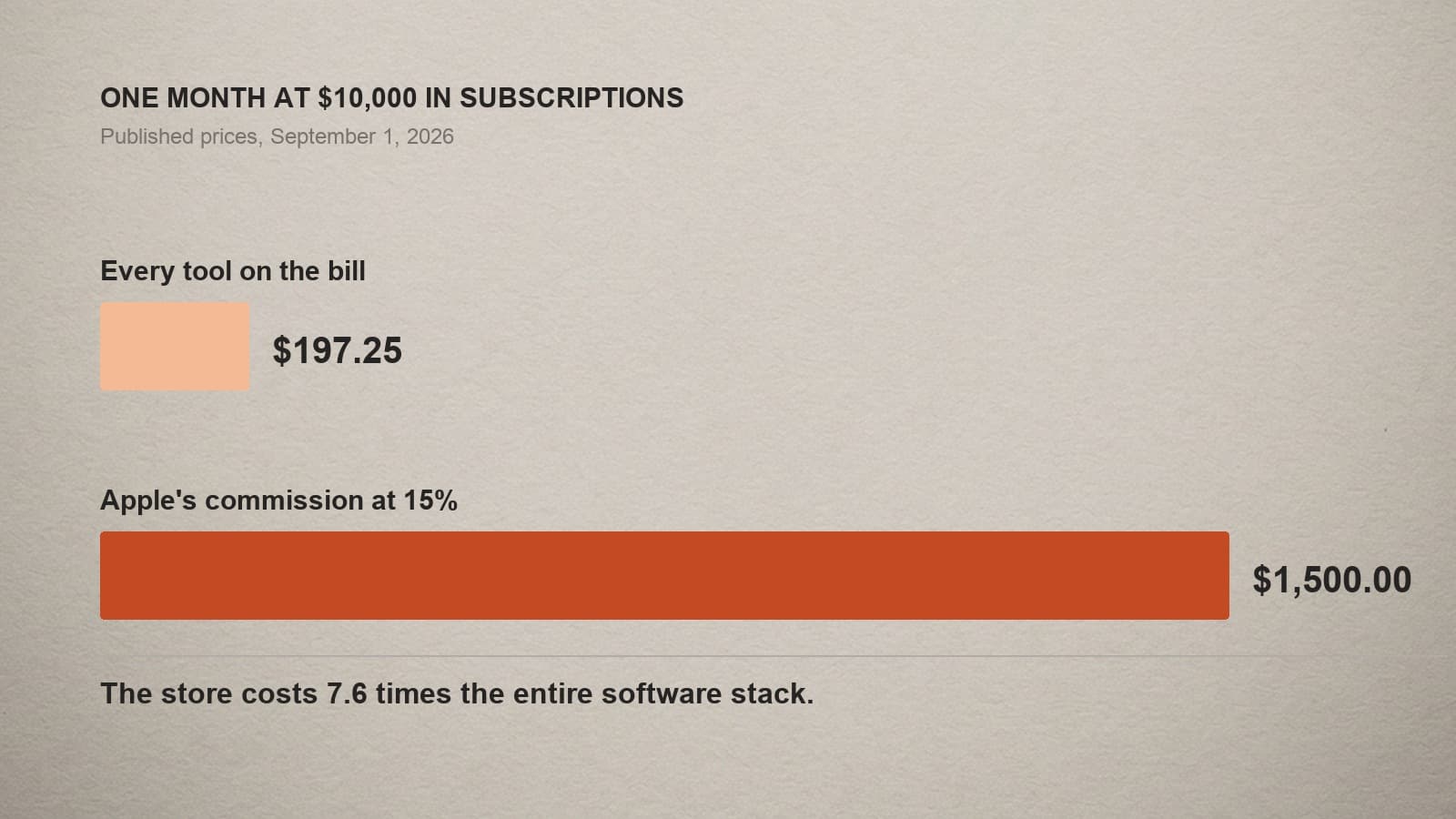
  • On $10,000 a month in subscriptions, the full tooling stack costs about $197 and Apple's commission costs $1,500. Software is 2% of revenue and the store is 15%
  • Nobody negotiates the $197. The number worth arguing about is the 15%, and the Small Business Program is how you halve it
"What does it cost to keep the thing running?" is the question that stops most creators one step short of building anything. The answers on offer are useless. Agencies quote a retainer, no-code tools quote a seat price, and nobody itemizes the actual bill that arrives every month after a real subscription app is live in the App Store. So here is the bill. Seven line items, every price taken from the company's own published page and checked on September 1, 2026, priced at three revenue levels a creator business can actually reach. The total is smaller than almost anyone guesses, and the reason that matters is not frugality. It is that the cost of running the software is a rounding error next to the cost of the surface you sell on, and only one of those two numbers is negotiable. About $8 a month at 100 subscribers, about $197 a month at 1,000 subscribers, and about $597 a month at 5,000 subscribers. The fixed portion never exceeds $97 a month at any scale, because the only bill that grows with revenue is subscription infrastructure at 1% of tracked revenue. Apple's commission is a separate 15%, and it is larger than everything else combined at every level. That spread is the whole finding. A creator app is not a factory. Nothing about serving the ten thousandth subscriber costs meaningfully more than serving the hundredth, because the database, the crash reporter, the build pipeline, and the push service all sit on free or near-free tiers designed for exactly this size of business.
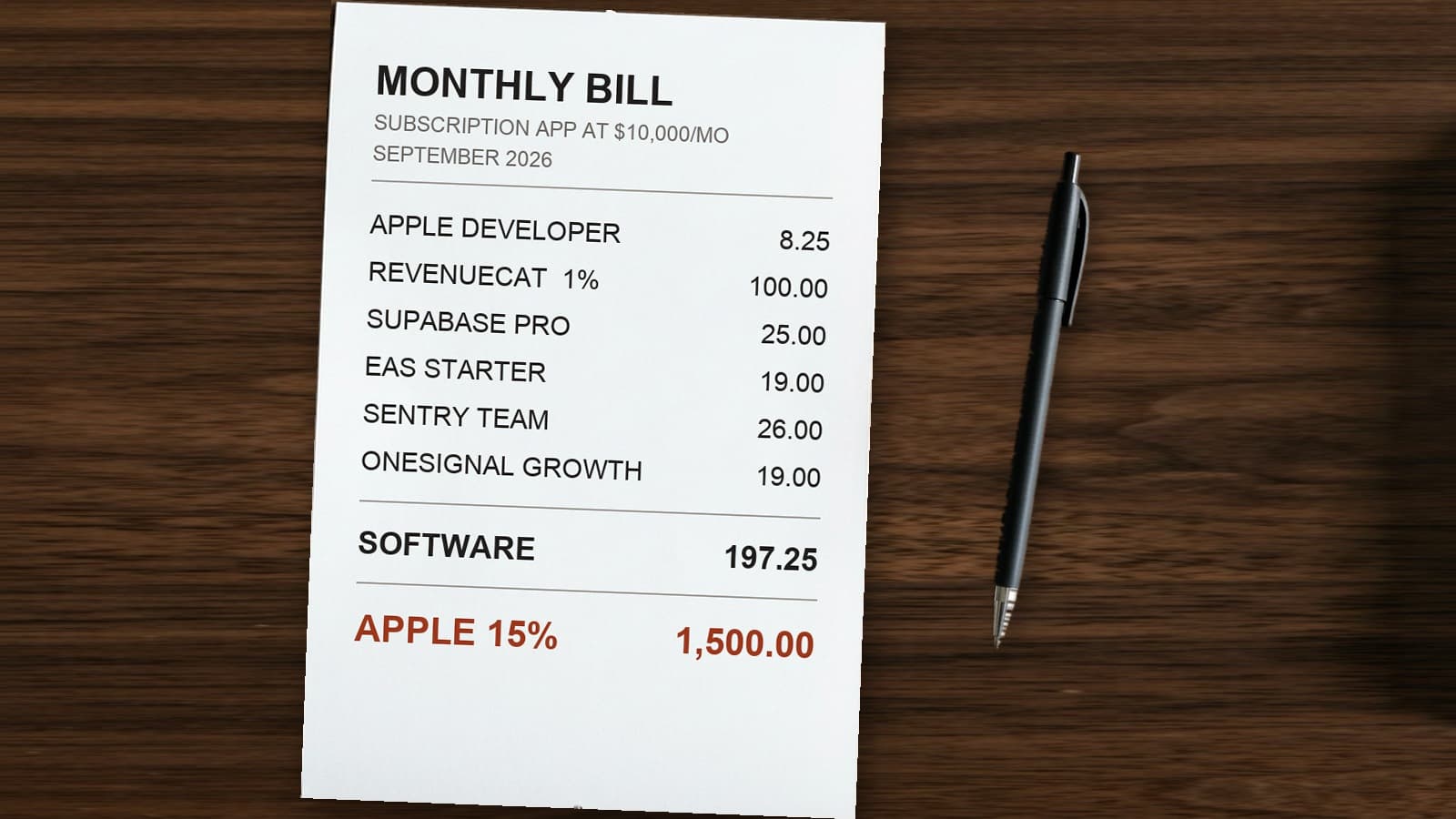
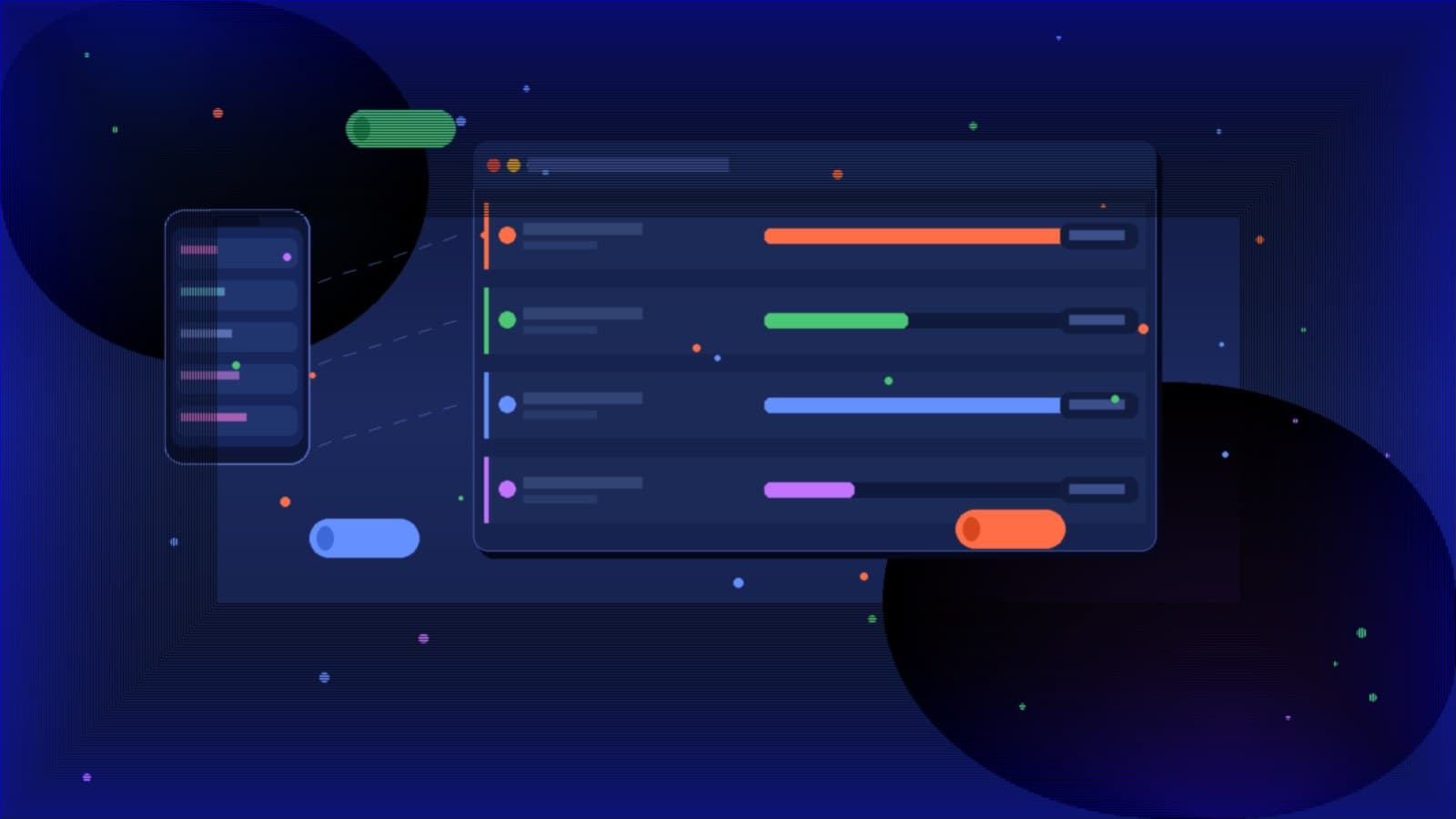
An itemized bill for running a subscription app in 2026 listing seven real services with their published prices, printed on a receipt and photographed on a desk
Each of these is a real service a live subscription app in the App Store depends on, with the price its own pricing page published on September 1, 2026.
Line itemWhat it doesFree tierPaid price
Apple Developer ProgramLets you ship to the App Store at allNone$99 a year
Google Play developer accountLets you ship to AndroidNone$25 one time
RevenueCatRuns subscriptions, receipts, and renewalsUp to $2,500 monthly tracked revenue1% of tracked revenue
SupabaseDatabase, auth, and file storage500 MB database, 50,000 monthly active users$25 a month (Pro)
Expo Application ServicesBuilds and ships every release and update15 iOS and 15 Android builds$19 a month (Starter)
SentryCatches the crash before a subscriber emails you5,000 errors a month$26 a month (Team)
OneSignalSends the push notification that brings people backFree planFrom $19 a month (Growth)
Two of those are not monthly bills at all. Apple's $99 a year works out to $8.25 a month, and Google's $25 is a single lifetime charge to open the account. Together they are the entire admission fee to both of the world's app stores, forever, and they are less than one month of most creator platform subscriptions. RevenueCat is the interesting one, and the only line on the bill that behaves like a partner rather than a supplier. Its published terms: nothing up to $2,500 in monthly tracked revenue, then 1% of what you track. A business doing $30,000 a year in subscriptions pays it zero. Supabase publishes a free plan with a 500 MB database and 50,000 monthly active users, and a Pro plan at $25 a month that raises that to 100,000 monthly active users and 8 GB of disk. Expo publishes a free plan with 15 iOS and 15 Android builds and store submission included, then Starter at $19 a month. Sentry publishes a free Developer plan at 5,000 errors a month and a Team plan at $26 a month billed annually. OneSignal publishes a free plan and a Growth plan starting at $19 a month.
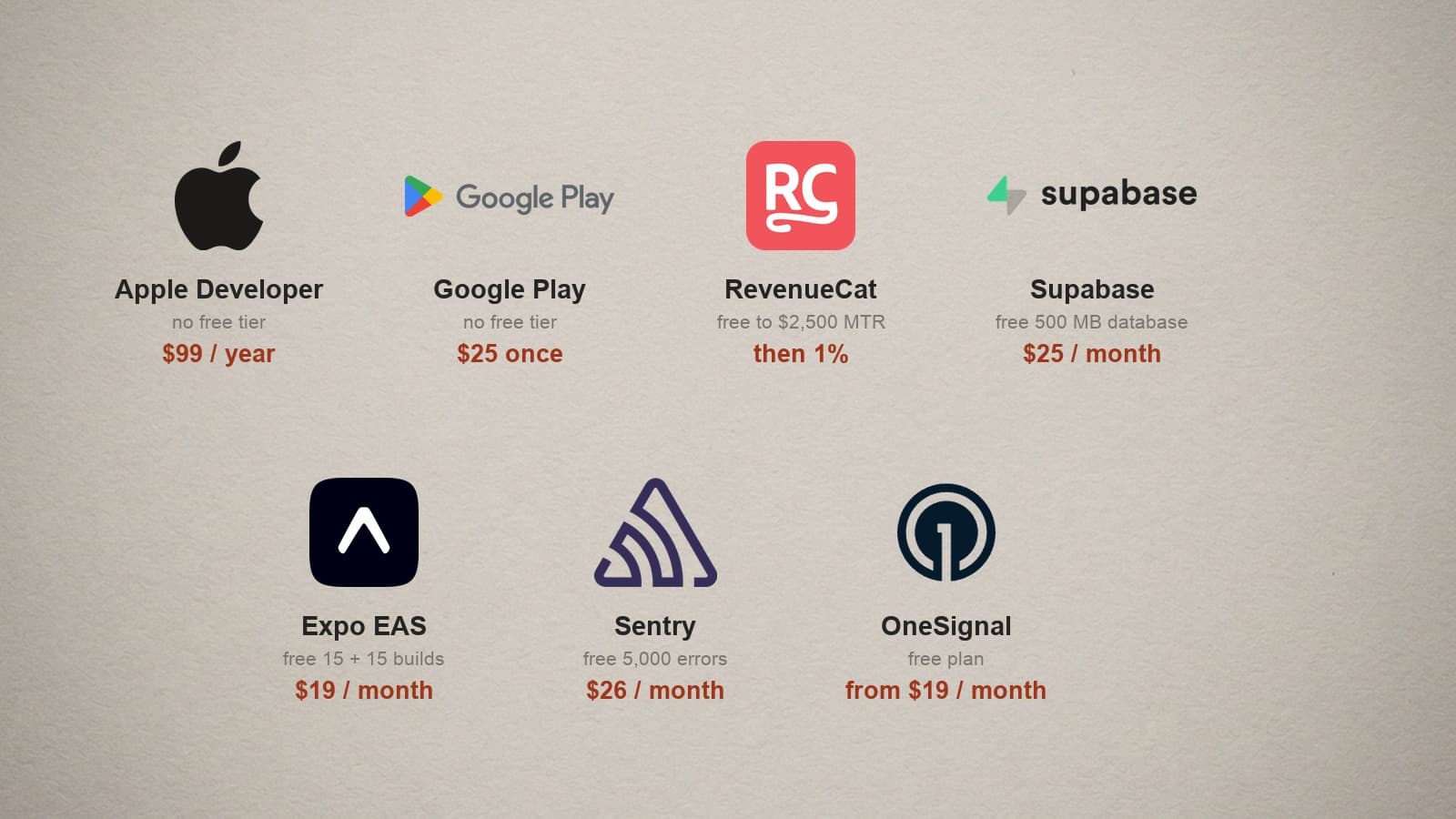
The real brand marks of seven services a live subscription app pays for in 2026, each with its published free tier and paid monthly price
Five of the seven. RevenueCat, Supabase, Expo Application Services, Sentry, and OneSignal all publish free tiers that comfortably cover an app under $2,500 a month in subscription revenue. The only two you must pay before launch are the $99 Apple Developer Program and the one-time $25 Google Play fee. That is $124 to put a subscription product in front of the entire iOS and Android world in year one, and $99 a year after that. Not a metaphor, not a starting price with an asterisk. The published fee. It is worth sitting with how strange that is compared to every other way a creator has ever sold something. A merch drop needs inventory. A course needs a platform subscription before the first student. A membership platform takes its percentage from the first dollar and keeps taking it. The software business is the one where the fixed cost of being open is roughly the price of a dinner, and everything after that is a share of money you already collected. Priced on a $10 a month subscription, with each service on the cheapest plan that genuinely covers that load.
SubscribersMonthly revenueFixed toolingRevenueCatTotal softwareSoftware as % of revenueApple's 15%
100$1,000$8$0$80.8%$150
1,000$10,000$97$100$1972.0%$1,500
5,000$50,000$97$500$5971.2%$7,500
Read the last two columns together. At 100 subscribers, the store takes eighteen times what the entire software stack costs. At 1,000 it takes almost eight times. At 5,000 it takes twelve and a half times, and the gap in dollars is $6,903 a month. The fixed tooling column is the one to stare at. It goes from $8 to $97 and then stops, because at that point every service is on its paid tier and nothing else changes. A business fifty times larger pays the same $97. Because it is the only cost on the page that grows without limit and the only one you can change. Every tool on this bill is a flat fee or 1%, and no amount of optimizing them moves your margin by a full percentage point. Apple's cut is 15% or 30% depending on one form you either filed or did not. The App Store Small Business Program sets commission at 15% for developers with up to $1 million in proceeds in the prior calendar year. Outside it, Apple's published subscription terms are 30% in a subscriber's first year of paid service and 15% after that subscriber accumulates one year, with Small Business Program members getting 85% at every billing cycle regardless of subscription age.
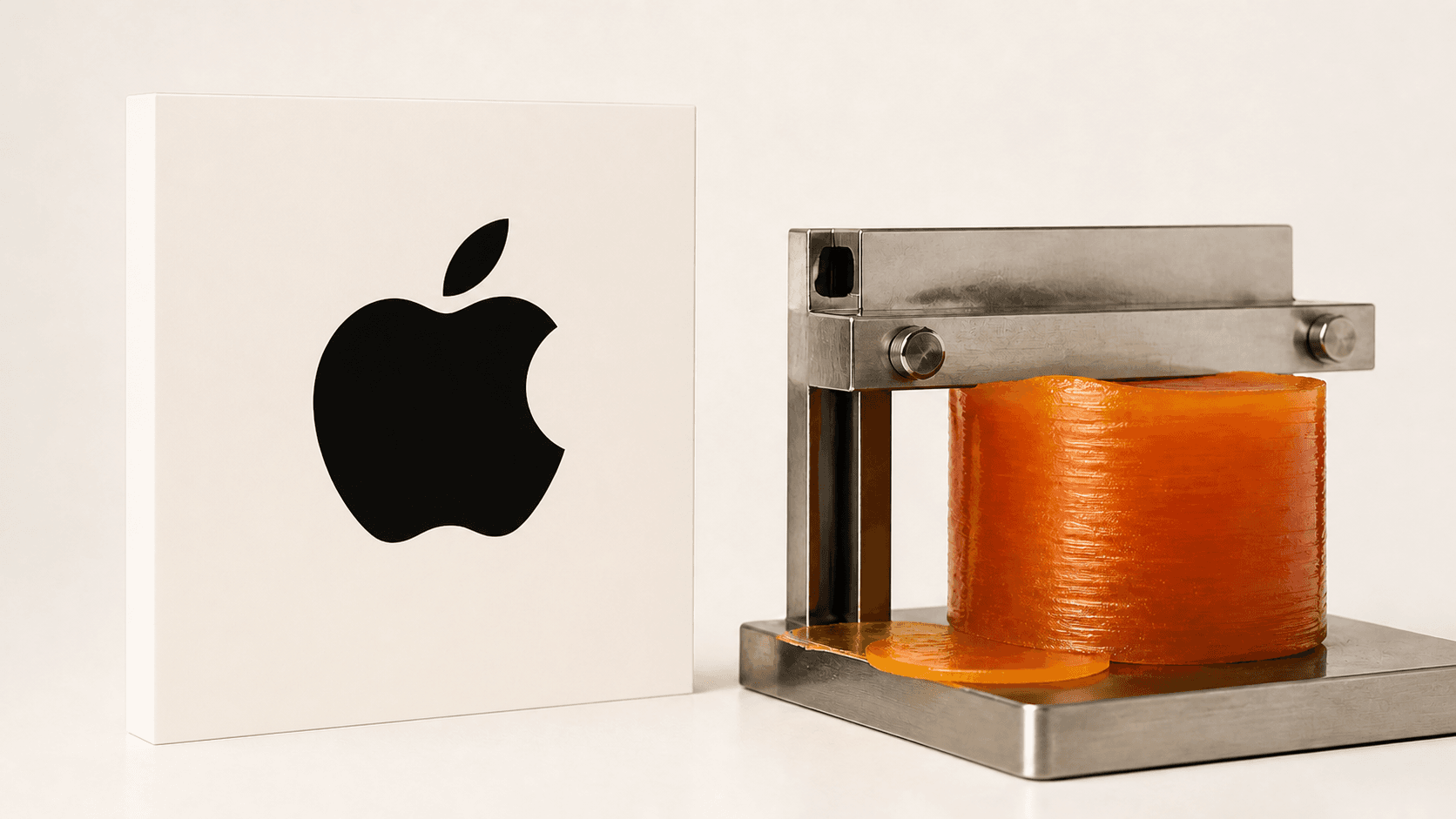
The full software bill for a subscription app at $10,000 a month set against Apple's 15% commission on the same revenue
On $10,000 a month, that single enrollment is worth $1,500 a month. It is the highest paid hour of administrative work available to a creator with an app, and we wrote up exactly who qualifies and how the enrollment works because it is the rare piece of App Store paperwork that pays for itself immediately. Now put 15% next to what the alternatives charge. We priced six podcast paywalls against an identical $10,000 month and five of the six landed between 12.5% and 17.9% effective. Membership platforms sit in the same band once processing is counted. The App Store is not the expensive option. It is the mid-priced option that also hands you a listing that ranks in search, a payment relationship Apple maintains in 175 regions and 50 languages, and reviews that accumulate under your name instead of somebody else's. Three things, and they are the honest ones. Building it. None of these numbers include getting the product made. That is a separate conversation with a much wider range, and we broke down all four paths and what each really delivers in the true cost of a creator app. A bill for a running app assumes a running app exists. Keeping it alive. Apple ships a new iOS version every September, and an app that is not rebuilt against it eventually breaks in ways a subscriber notices before you do. Somebody has to ship those updates, answer the App Review rejection, and fix the crash Sentry caught at 2am. That labor is the real recurring cost of software, and it is the reason creators need product partners rather than developers: a developer hands you a codebase, and a codebase is a liability until somebody owns it. Getting people in. Nothing here is a marketing budget. The good news for a creator specifically is that this is the line item an audience replaces. You already have the distribution that a venture-funded competitor pays for, which is most of why the revenue math on an app beats the math on a course for anyone with a following that already buys. You are the person this arithmetic is aimed at, so run it on yourself rather than on a hypothetical. Take whatever you sell now. Count the people who bought in the last twelve months. Assume one in twenty of them would pay $10 a month for software that does the thing you teach, every day, instead of a file they downloaded once. If you sold to 2,000 people, that is 100 subscribers, $1,000 a month, and a tooling bill of $8. Then notice which of those numbers you have been treating as the obstacle. It was never the $8. It was not the $99 either. What has actually been in the way is that building the product looked like a $60,000 decision with a six month timeline, and the running costs were a convenient thing to worry about instead. BUILT BY FOUNDRY removes the part that was actually blocking you. We build a creator's subscription software business in about three weeks, $0 upfront, on a revenue share. The creator owns the business and owns the revenue. We keep running and improving the product after launch, because a revenue share only works for us if the thing keeps earning for you. The seven line items above are what it costs to keep a real business open. Read them again and ask what you were actually waiting for. The Apple Developer Program costs $99 per membership year, and an app cannot stay listed without an active membership. That is the entire cost of remaining on the App Store. Apple's commission on subscription revenue is separate: 15% for developers in the Small Business Program, and 30% in a subscriber's first year of paid service outside it. RevenueCat's published pricing charges nothing up to $2,500 in monthly tracked revenue, then 1% of what you track once you pass that threshold. An app earning $2,000 a month in subscriptions pays $0. An app earning $10,000 a month pays roughly $100. Not at the start. Supabase publishes a free plan with a 500 MB database, 50,000 monthly active users, and 1 GB of file storage, which covers a creator app well past its first few hundred paying subscribers. Its Pro plan is $25 a month and raises the limits to 100,000 monthly active users and 8 GB of disk. $124 in year one: $99 for the Apple Developer Program plus a one-time $25 Google Play developer registration fee. Every other service a subscription app needs, including subscription infrastructure, database, builds, crash reporting, and push notifications, publishes a free tier that covers a launch. No. Apple's Small Business Program rate is 15% all in, with Apple acting as merchant of record and no separate payment processor on top. Membership and course platforms typically land between 12% and 18% effective once their percentage and payment processing are combined, and none of them leave you owning the listing, the search ranking, or the reviews.

Creator app strategy

Curious what your app could be?

Enter your handle and BUILT BY FOUNDRY will research your audience and present custom app concepts. Free.

What It Costs to Run a Subscription App in 2026: 7 Line Items