Case Studies & Success Stories

Nate Stone Quit a 300K Channel. Now 136 Billion Views Run Through His Software.

August 13, 2026
Share
Nate Stone Quit a 300K Channel. Now 136 Billion Views Run Through His Software.

Get Creator Revenue Insights

How creators are turning audiences into subscription businesses
Share
Key Takeaways:
  • Nate Stone started the Keystone Science YouTube channel at 15 and grew it to what his own site calls a 300K+ subscriber community, then stopped uploading.
  • He came back to YouTube as a founder instead of a creator, co-founding the AI dubbing company DittoDub in Salt Lake City with his brother Jackson Stone.
  • DittoDub says its technology has been used on more than 136 billion views of dubbed video on YouTube since March 2024, across channels including MrBeast, KSI, Marques Brownlee and Erling Haaland.
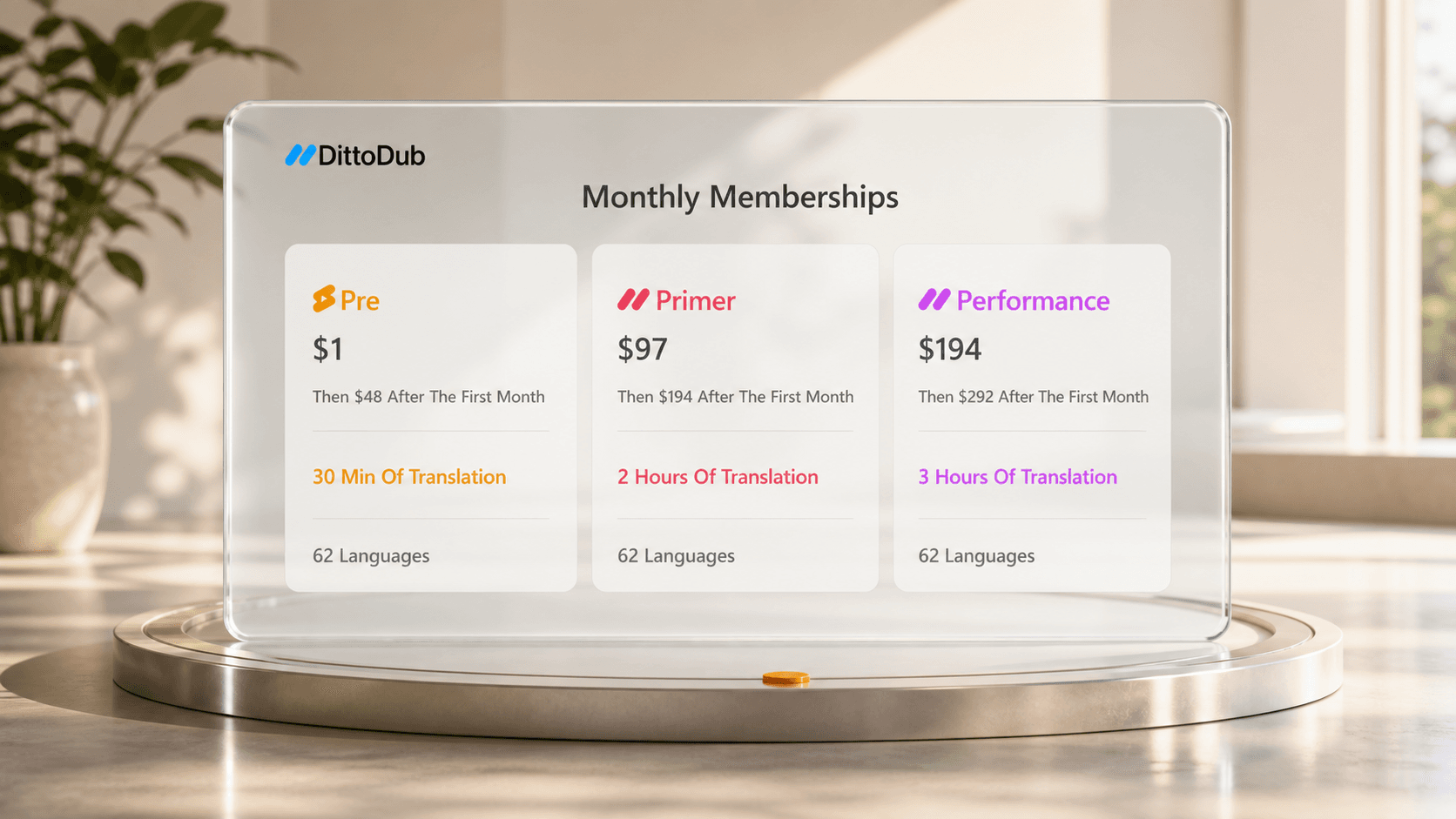
  • The product is a subscription: $48, $194 or $292 a month after an introductory rate, for 30 minutes, 2 hours or 3 hours of translation into 62 languages.
  • Stone told TechBuzz News the company has taken no outside investment. The business earns monthly whether or not he ever uploads again.
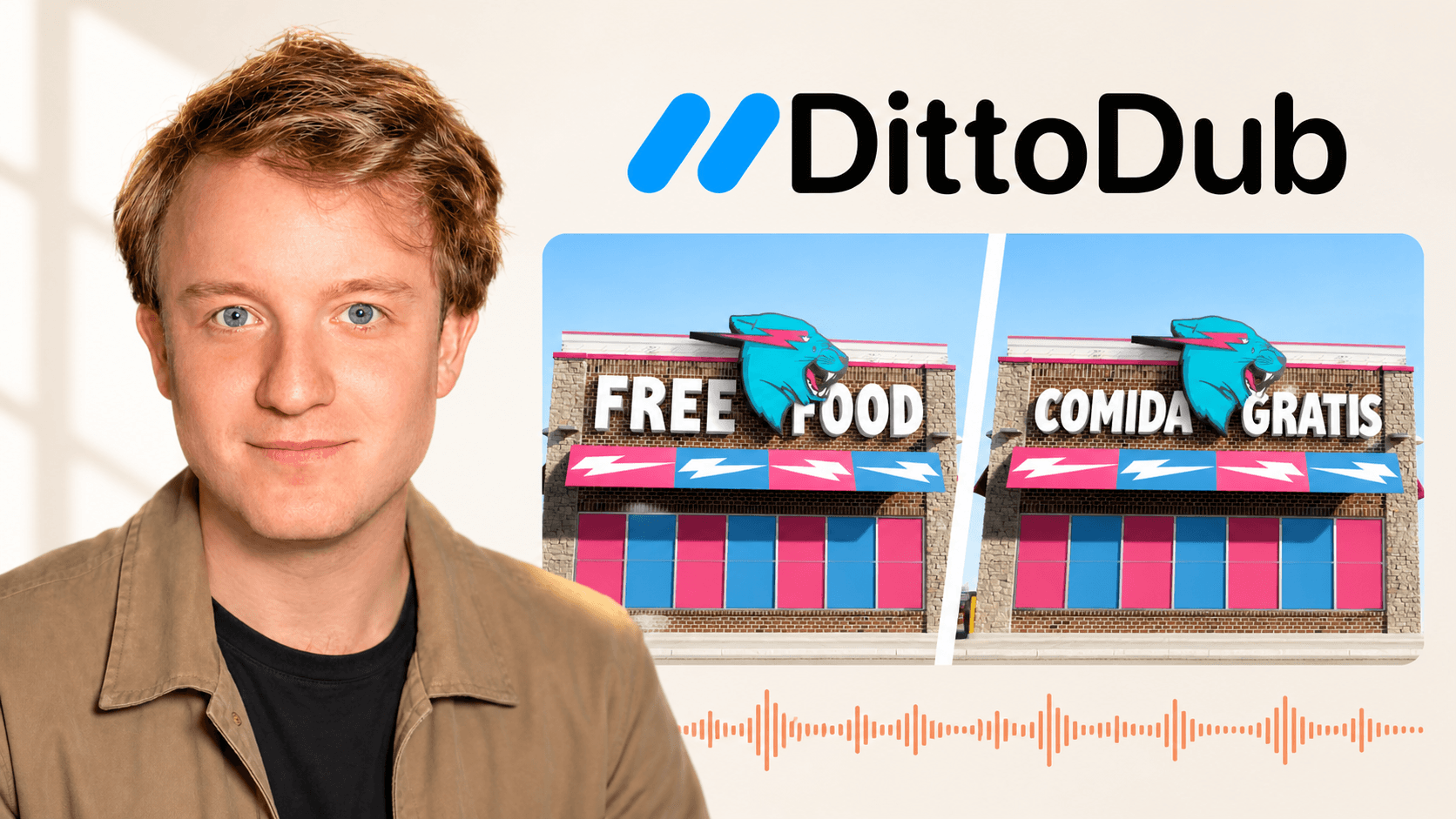
There is a version of this story where the moral is "quit YouTube." That version is wrong, and it is the one most people will take from it. Nate Stone spent his teens building a science channel about high voltage electricity and homemade electronics. It worked. Then he stopped, got three degrees, and took a job doing AI work on Amazon's Alexa. Years later he came back to YouTube, not with a camera but with a company that now sits underneath some of the largest channels on the platform. He earns from YouTube every month without posting to it. The interesting part is not that he left. It is what he had to give up to get there, and how little of it was necessary. Nate Stone is the cofounder and CEO of DittoDub, an AI dubbing platform for YouTube creators, and the creator behind the science channel Keystone Science, which he launched at age 15. His own site describes Keystone Science as a 300K+ subscriber community built on physics experiments, and lists local and national coverage from KSL, KUTV and Fox News. KSL covered him early, when the channel was a Utah teenager's project past 60,000 subscribers. He holds three bachelor's degrees, in physics with a quantum information emphasis, mathematics, and computer science, and he worked on AI at Amazon before founding a company. He is, in other words, exactly the kind of person a weekly upload schedule is bad at holding onto. Because the channel demanded a video a week, and a video a week left no room to build anything larger than a video. That trade is invisible while it is happening. The channel grows, the comments are good, the analytics are up. What you cannot see on the dashboard is the project you did not start because it would have taken four months and produced nothing postable in the meantime. Stone's fix was to stop feeding the algorithm. That is one available answer, and it is the most expensive one, because the 300,000 people were never the problem. The container was. We have written about this exact failure mode in why the algorithm owes you nothing: the audience is real, the reach is rented, and the treadmill is a design choice somebody else made for you. The creators who solve this without quitting do what Stone did, in the other order. They build something that earns while they are not posting, and they keep the channel that feeds it. That path is laid out in how to turn a YouTube channel into a subscription app. Stone and his brother Jackson founded DittoDub in Salt Lake City. The origin was a complaint Nate got repeatedly on Keystone Science: international viewers asking him to slow down, because they could not follow an electrical engineering explanation in English at speed. The product dubs a creator's video into other languages while preserving their voice, then pushes the audio into YouTube's multi language audio feature along with translated subtitles, metadata and thumbnails. TechBuzz News reported a 40 person team across Salt Lake City and San Francisco, 62 supported languages, and 136 billion views of dubbed content tracked on YouTube since March 2024, a figure the company measures itself. Net Influencer reported that Erling Haaland's channel runs in 44 languages through it. Here is what the company charges, from its pricing page as of 13 August 2026.
TierIntroductory priceOngoing priceTranslation includedLanguages
Pre$1 first month$48 per month30 minutes62
Primer$97 first month$194 per month2 hours62
Performance$194 first month$292 per month3 hours62
Read that table as a creator, not as a customer. Every row is money that arrives on the first of the month from someone who did not have to be re sold. Nobody at DittoDub pitched a brand, negotiated a rate, or flew to a conference to earn the $194. The software earned it while the founders slept, and it will earn it again in September.
DittoDub's official monthly membership plans displayed on a circular renewal track
Stone's own framing of what he sells is the sharpest line in any of the coverage. "People aren't really buying translations, they aren't really buying dubs," he told Net Influencer. "They are just buying access to a wider audience." That is a description of every good creator product ever built. Nobody buys the feature. They buy the outcome they could not reach on their own. Stone now owns something a channel can never be. TechBuzz News reported that DittoDub has taken no outside investment, with Stone saying, "From a monetary standpoint, I don't see much need there." A profitable, unfunded software company with recurring revenue is an asset with a price. He can sell it, borrow against it, or hand it to someone else to run. A YouTube channel is none of those things, a point we have made at length in why you cannot sell a YouTube channel but you can sell an app. But look at the cost. He gave up 300,000 people who trusted him, spent years on three degrees and a job at Amazon, and rebuilt an audience relationship from zero as a vendor rather than as the person on camera. That is a fine outcome for a physicist who likes building software. It is a terrible template for a creator whose whole advantage is the audience. The premise of BUILT BY FOUNDRY is that the sequence is optional. You do not need the physics degree, the Amazon years, or the empty upload schedule. You need a product your existing audience will pay for monthly, and somebody else to build and run it. That takes about three weeks, not seven years.
An archived Keystone Science channel cabinet opening onto an orange path toward a DittoDub software flywheel
Live every Thursday

Watch us tear down a creator business, live

Every Thursday at 11 AM PT we take a real creator business and show the app hiding inside it: the wedge, the paid loop, the pricing, and what would sink it. Free, and the replay goes to everyone who registers.

Save your seat → (opens in a new tab)
A 2 percent conversion on 50,000 engaged followers is 1,000 subscribers, which at $9.99 a month is $9,990 in gross monthly recurring revenue. DittoDub's smallest paying tier is $48 a month. Yours does not have to be bigger than that to matter. If you are a fitness creator, a language teacher, a finance explainer, or a maker with 50,000 people who actually watch, you are in the position Stone was in at 15, with one difference. He had to invent the software himself. You do not. The mechanic is the boring part, and it is the part that changes everything: money that recurs, from customers who are yours, through a listing you own in App Store search. If the term is unfamiliar, start with what MRR actually means for creators. BUILT BY FOUNDRY covers strategy, design, engineering, App Store launch, and the operation afterwards under one revenue share partnership. Our about page explains the model, and App Care covers the part that quietly kills most creator apps, which is year two. 1. Listen to the complaint you keep getting. DittoDub exists because non English speakers kept asking one YouTuber to slow down. The most valuable product idea you will ever have is already sitting in your comments, repeated by strangers who do not know they are writing a spec. 2. Sell the access, not the feature. Stone does not sell dubs, he sells a wider audience. Your app does not sell workouts, recipes or lessons. It sells the version of themselves your audience cannot get to alone. 3. Price it monthly. $48 a month from a customer who stays is worth more than a $500 one time sale, and it does not need to be re earned. Every DittoDub tier renews. 4. Do not pay for it with your audience. Stone's path cost him a channel and most of a decade. Yours does not have to. Keep posting, keep the trust, and put the business underneath it rather than in place of it. Nate Stone is the cofounder and CEO of DittoDub, an AI dubbing platform for YouTube creators. He started the science channel Keystone Science at age 15, which his site describes as a 300K+ subscriber community, and he holds bachelor's degrees in physics, mathematics and computer science. He worked on AI at Amazon before founding DittoDub with his brother Jackson Stone. DittoDub is a Salt Lake City company that uses AI to dub YouTube videos into other languages while preserving the creator's voice, then delivers them through YouTube's multi language audio feature along with translated subtitles and metadata. It supports 62 languages and is used by channels including MrBeast, KSI, Marques Brownlee and Erling Haaland. As of 13 August 2026 its pricing page lists three tiers: Pre at $1 for the first month and $48 per month after, for 30 minutes of translation; Primer at $97 then $194 per month, for 2 hours; and Performance at $194 then $292 per month, for 3 hours. All three include 62 languages. He grew frustrated with the demands of a weekly upload schedule, which left no room for the more ambitious engineering projects he wanted to build. He stopped uploading, completed three degrees, and worked on AI at Amazon before returning to YouTube as a software founder rather than a creator.

Creator app strategy

Curious what your app could be?

Enter your handle and BUILT BY FOUNDRY will research your audience and present custom app concepts. Free.

Nate Stone Quit a 300K Channel. Now 136 Billion Views Run Through His Software.