Mel Robbins: 100M Podcast Downloads, Still No App

Mel Robbins: 100M Podcast Downloads, Still No App

Foundry
May 16, 2026
Key Takeaways:
  • Mel Robbins was a broke 41-year-old lawyer when her 2011 TEDx talk on the 5 Second Rule went viral, now sitting at over 35 million views
  • She turned that single idea into four bestselling books, the most recent being The Let Them Theory, which spent more than 50 weeks on the New York Times list
  • The Mel Robbins Podcast, launched October 2022, has been the #1 podcast on Apple in the US and crossed 100 million downloads
  • Her stack today: free podcast, paid books, paid speaking, courses on Mindvalley and Audible Originals, plus a Substack
  • The one thing she has not built: her own subscription app, the one product left that compounds without her on stage
In 2008 Mel Robbins was 41, $800,000 in debt, and watching the bank threaten to foreclose on her family's house. In 2025 a single book of hers, The Let Them Theory, was outselling almost everything not written by James Clear. That is not a feel-good arc. That is a creator playbook, and most of it is repeatable. The piece worth studying is not the comeback story. It is the structure of the business she built on the other side of it. She owns a top-five podcast, four books in print, a paid Mindvalley course, a Substack, a speaking calendar that books out a year ahead, and a brand audience of 11 million people. What she does not own is the single product type that would turn all of that gravity into recurring revenue: an app her audience pays for every month. Mel Robbins is an American author, podcast host, and former lawyer best known for the 5 Second Rule and the Let Them Theory, with an audience of more than 11 million across social platforms. She was born Melanie Lee Schneeberger on October 10, 1968 in Kansas City, graduated from Dartmouth, then Boston College Law School, and spent her early career as a public defender before becoming a CNN legal analyst and commentator. Her first viral moment did not come from the law. It came from a 2011 TEDx talk in San Francisco titled "How to Stop Screwing Yourself Over," in which she described a trick she had invented in her own life: count backwards from five and physically move before your brain talks you out of it. That talk sat quietly for years, then climbed past 35 million views and became one of the most-watched TED videos ever uploaded. The 5 Second Rule became a 2017 book that sold more than 2 million copies. After that came The High 5 Habit in 2021, then The Let Them Theory in December 2024, written with her daughter Sawyer Robbins. The Let Them Theory sold over 1 million copies in its first five months on shelves and held its New York Times bestseller spot for more than a year.
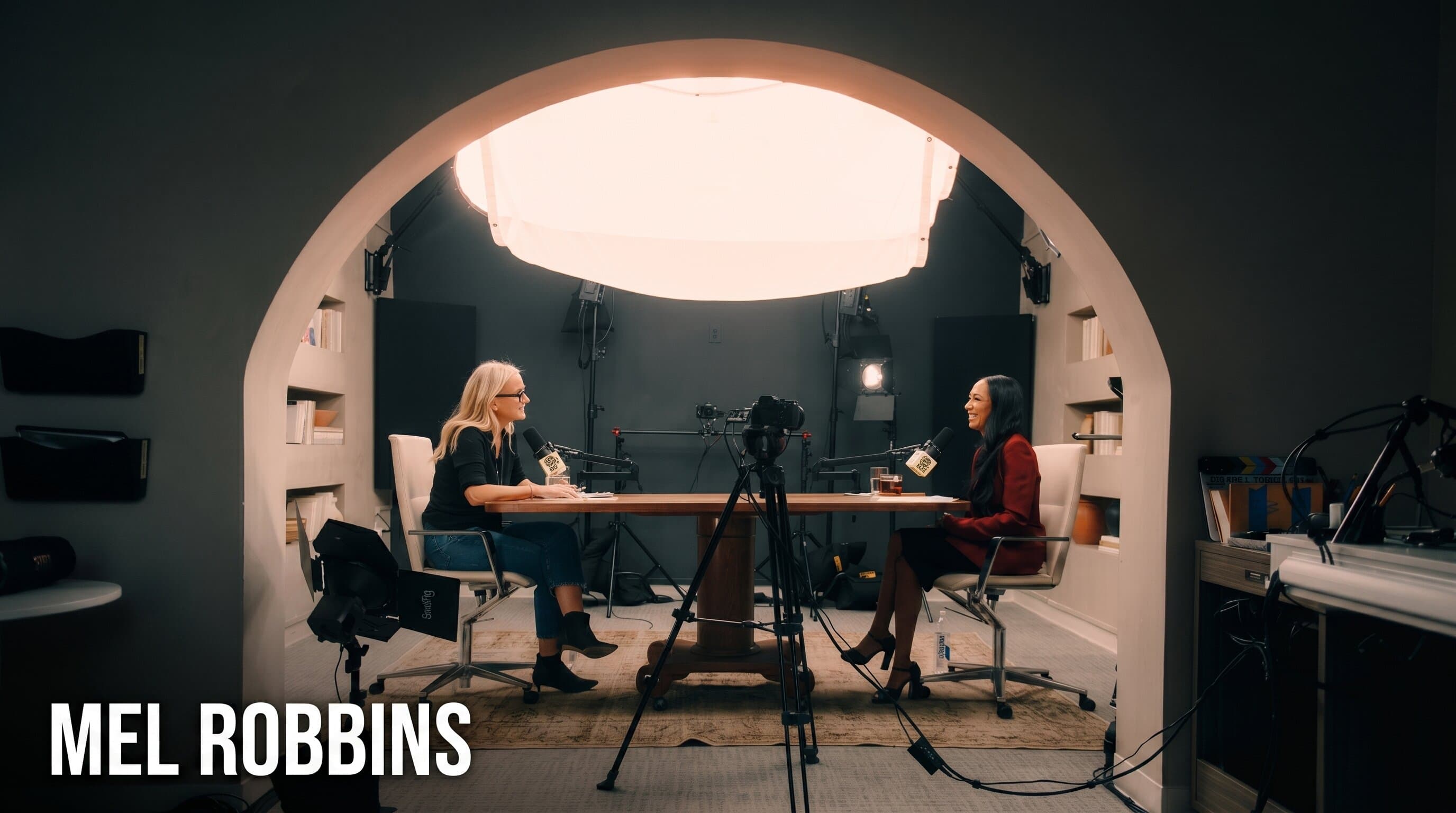
Empty podcast studio with warm orange accent lighting representing the Mel Robbins Podcast
She built it by giving away the most-cited tool in personal development for free, then attaching her name to it for the next decade. The 5 Second Rule was an unusually small idea. Count backwards from five. Move your body. That is the entire framework. What made it travel was that anyone could test it in the next 90 seconds. Robbins repeated it on every stage that would have her, gave it to corporate audiences, put it in her TED talk, wrote a book about it, and then a journal, then a card deck. By the time she launched The Mel Robbins Podcast in October 2022, she already had the rarest asset in audio: a brand that meant something specific before episode one. The podcast hit #1 in the US within months. As of 2024 it had crossed 100 million downloads and ranked among the top-five podcasts globally on Apple. Her platform breakdown is wide rather than deep on any single channel:
PlatformAudienceFormat
Instagram~10MDaily short-form, podcast clips
The Mel Robbins Podcast100M+ downloadsWeekly long-form interview
TikTok~1.5MShort-form motivational clips
YouTube~3MPodcast video, talks
Newsletter / Substack~1M+ subscribersWeekly written
That spread is the foundation. Each channel feeds the books, the books feed the speaking calendar, the speaking calendar feeds the podcast bookings. Every product points at the next product. Almost everything except recurring software. Her current monetization stack is a textbook example of how a top-1% creator extracts value today, and exactly the kind of stack that leaves money on the table the moment the personal brand stops posting daily. Public and reasonably inferable products in the Robbins stack today:
  • Books and journals. Four bestsellers, plus the High 5 Daily Journal sold through Hay House and major retailers. One-time payments, royalty-based.
  • The Mel Robbins Podcast. Free to listeners, monetized through host-read sponsorships from brands like LMNT, Notion, and Athletic Greens. Ad-driven revenue scales with downloads, not with audience loyalty.
  • Speaking. Corporate keynotes reported in the six-figure range per event, with a small number of slots per year.
  • Audible Originals. Two paid audio productions, including Kick Ass with Mel Robbins. Per-purchase revenue.
  • Mindvalley courses. Make It Happen and Wake Up Workshop, sold through Mindvalley at one-time or program-based pricing.
  • High 5 Daily Journal and merchandise. Physical inventory with retail margins.
  • Substack. Free with paid tier; the first owned recurring revenue line, but small relative to the rest.
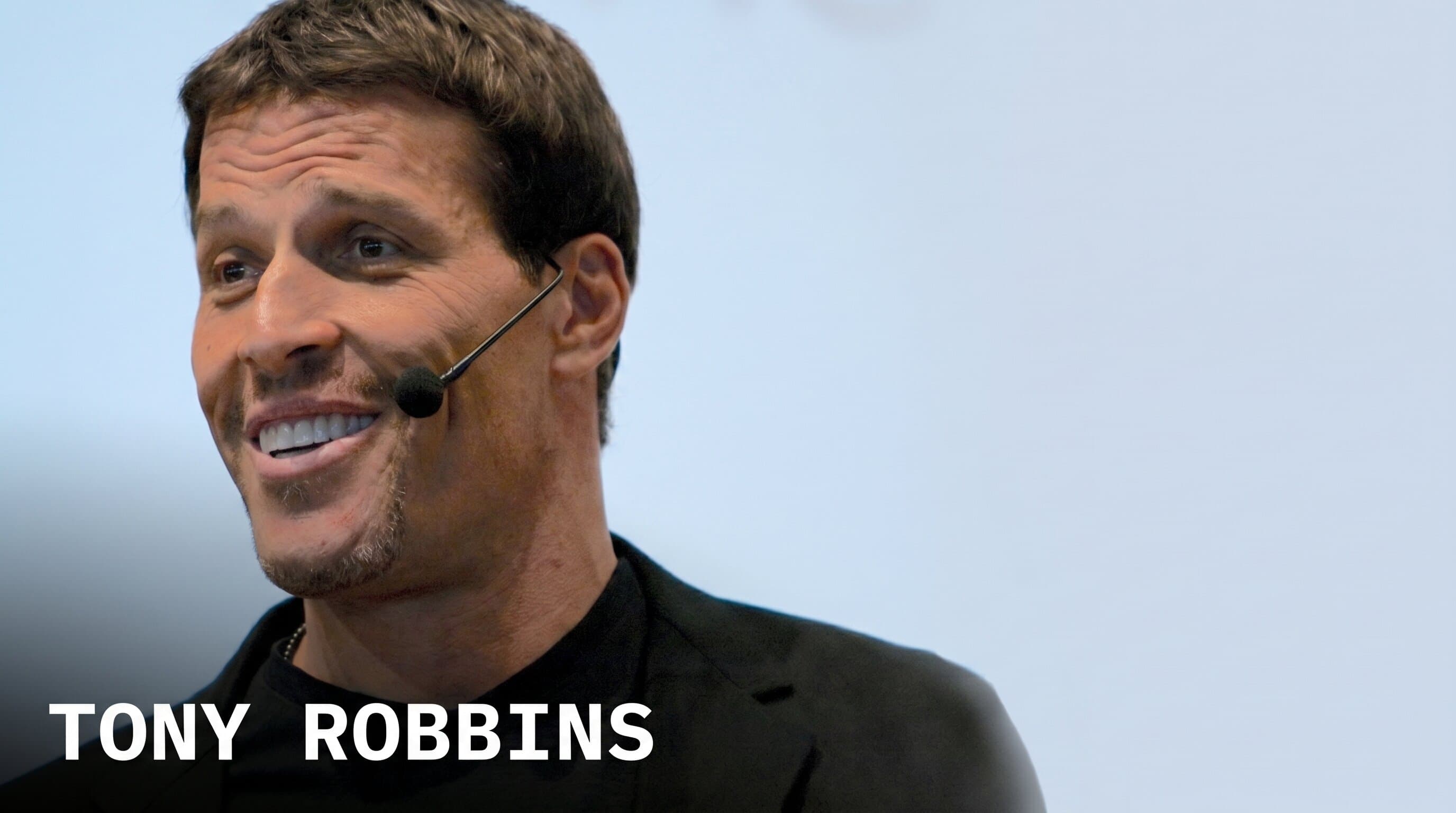
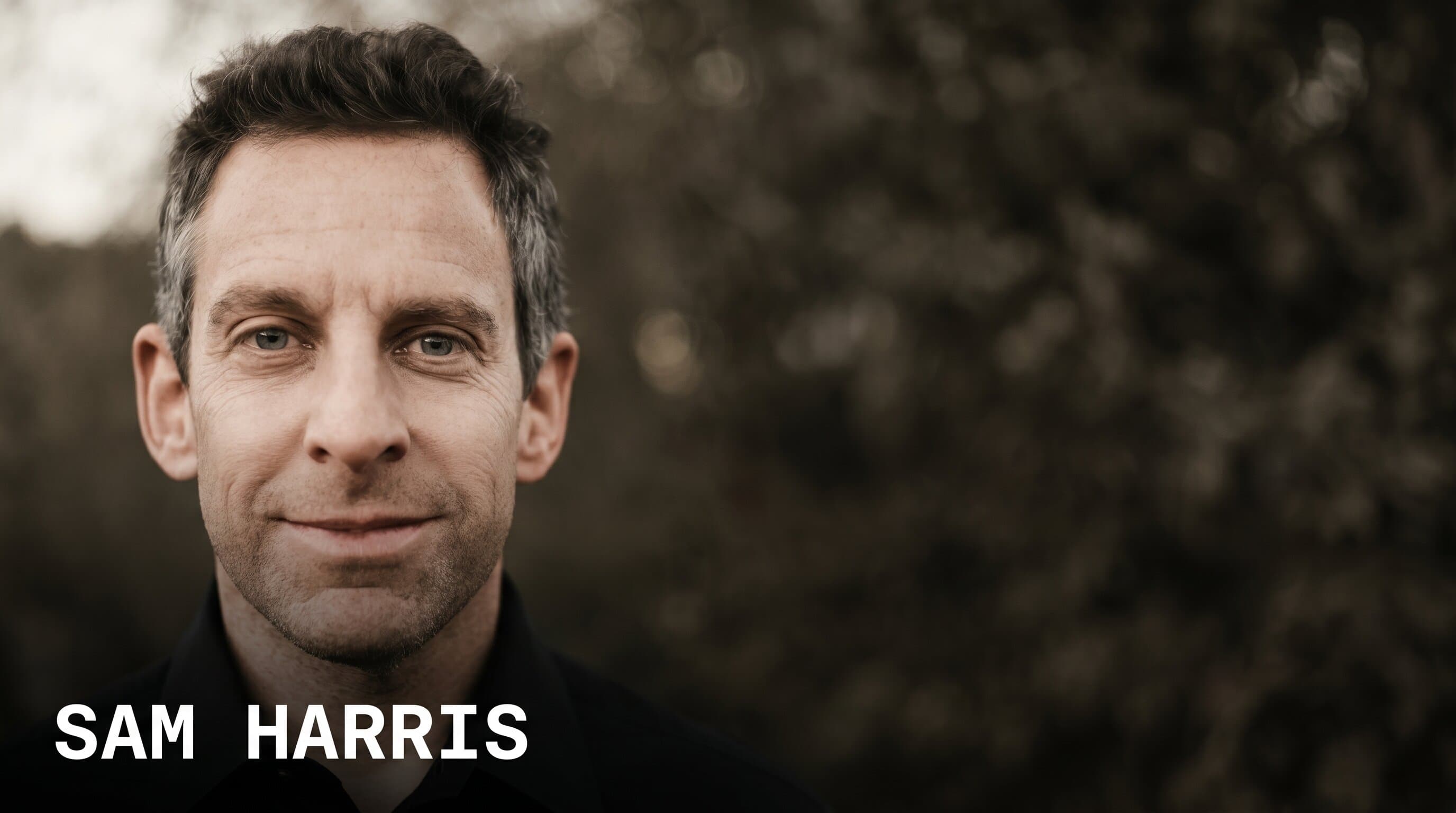
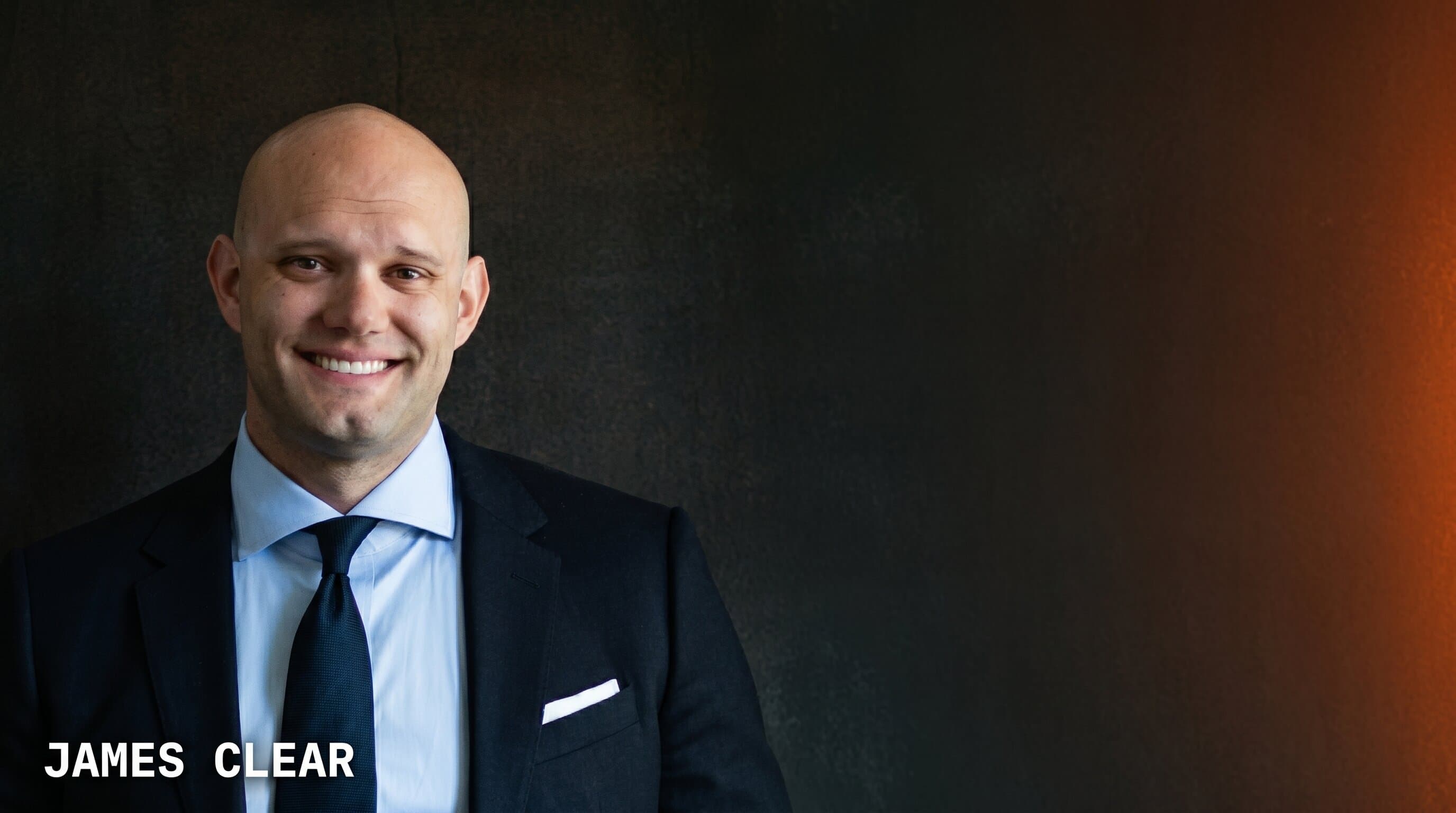
Compare that to the structure of a creator who has built around recurring revenue. James Clear's Atoms app bolts a paid daily habit tool directly to a hugely successful book. Sam Harris's Waking Up turned a podcast brand into a subscription app that does not depend on weekly publishing. Tony Robbins shipped a $99/month AI coaching app in 2025 after 40 years of selling seminars at $1,000 a seat. Mel Robbins has the audience, the IP, and the brand to do the same thing. She has not. The honest answer is that none of the obvious off-the-shelf options fit. A Skool community would water down the brand. A Mighty Networks group would feel like a course site. A standalone habits app would look derivative the day after launch. And building a real, custom mobile product has historically meant hiring a dev shop, agreeing to a six-figure invoice, and praying it ships before the next book tour. That is the gap Built by Foundry exists to close. Recurring revenue is the only line item a creator owns that compounds even when they stop posting, and a custom-built app is the only product that delivers it at App Store-discoverable scale. What a Robbins-grade app could plausibly look like:
  • Daily 5 Second Rule challenge that uses the most famous IP she owns, free tier with streaks and prompts.
  • Let Them Theory check-ins that turn the book into a daily emotional inventory.
  • Premium tier with private audio episodes, journaling, and a small set of guided audio sessions in Mel's voice.
  • Paid annual at $79.99, undercutting two Mindvalley courses, while taking exactly zero of her speaking calendar in return.
At only 1% conversion on her current audience, that is $8 million-plus in annual recurring revenue from a product she controls fully. No publisher, no ad platform, no Mindvalley cut. Three lessons translate directly, even if you have 50K followers instead of 11M. 1. One small, repeatable idea beats a complex framework. The 5 Second Rule is five words and a count. That is the entire reason it travels. Look at what you already say in your DMs and your top videos. If a phrase keeps appearing, that is your hook. Build the product around the phrase. 2. Books and podcasts are top of funnel, not the business. Robbins's books and podcast act as a content engine the way a creator app generates content for its owner without forcing them to brainstorm new topics. Every episode is a clip. Every book chapter is a carousel. But neither line item is recurring revenue. The product at the bottom of the funnel is the one that pays the rent. 3. Stop trading one-time payments for time. Books, courses, and speaking are all one-time transactions. The day the speaking calendar empties, the income empties with it. A creator app is the only product that earns while you sleep, and the only one that grows through App Store discovery to reach people who have never seen your content. For more on this math, see why your income resets to zero every month without it. There is a reason Built by Foundry's whole model is built around this gap. Almost every creator we talk to has the audience, the IP, and the brand. What they do not have is the time, the team, or the budget to ship a real product without taking a year off content. So we ship it for them, $0 upfront, revenue share. Public revenue figures have not been disclosed. Trade press estimates from speaking, books, podcast sponsorships, and licensed courses suggest annual income comfortably in the high seven figures, with The Let Them Theory adding millions in royalties over its first 12 months on shelves. Not yet. She has free podcasts and newsletters, paid books, paid courses on Mindvalley, Audible Originals, and a Substack. As of 2026 there is no Mel Robbins subscription app on the App Store or Google Play. The 5 Second Rule is Mel Robbins's framework: when you have an instinct to act on a goal, count backwards from five and physically move before your brain talks you out of it. It is the basis of her 2017 bestseller and her viral 2011 TEDx talk, now at over 35 million views. Because a custom subscription app is the only product type that earns recurring revenue, runs without daily posting, and reaches new fans through App Store discovery. It also stops the brand from being permanently dependent on a third-party platform like Apple Podcasts, Penguin, or Mindvalley. We design, develop, ship, and run a custom mobile app for the creator with no upfront cost. We take a revenue share, handle App Store submission, payments, push notifications, analytics, and ongoing app care forever. The creator approves direction; we build and operate.
Mel Robbins built it. Your turn.
Let's Build →

Get Creator Revenue Insights

How creators are turning audiences into subscription businesses

You might also enjoy...

Mel Robbins: 100M Podcast Downloads, Still No App