
Case Studies & Success Stories

Kic App: 2 Creators, 2.8M Members, 1M Downloads

August 11, 2026
Share
Kic App: 2 Creators, 2.8M Members, 1M Downloads

Get Creator Revenue Insights

How creators are turning audiences into subscription businesses
Share
Key Takeaways:
  • Steph Claire Smith and Laura Henshaw started Keep It Cleaner in 2015 as an ebook, at 21 and 22. The app followed in November 2018.
  • The business reaches 2.8 million people across more than 120 countries, per a July 2026 company announcement, and its App Store listing holds a 4.8 rating from 10,915 Australian ratings.
  • In 2023 they renamed the company Kic and removed weight loss from the pitch. Australian revenue then rose 100 percent and UK revenue 140 percent year on year, Henshaw told Women's Agenda.
  • Forbes Australia reported that about 90 percent of app downloads came through organic channels, with eight product developers on staff.
  • Henshaw handed the CEO job to an outside operator in October 2025. You cannot hand over a brand deal.
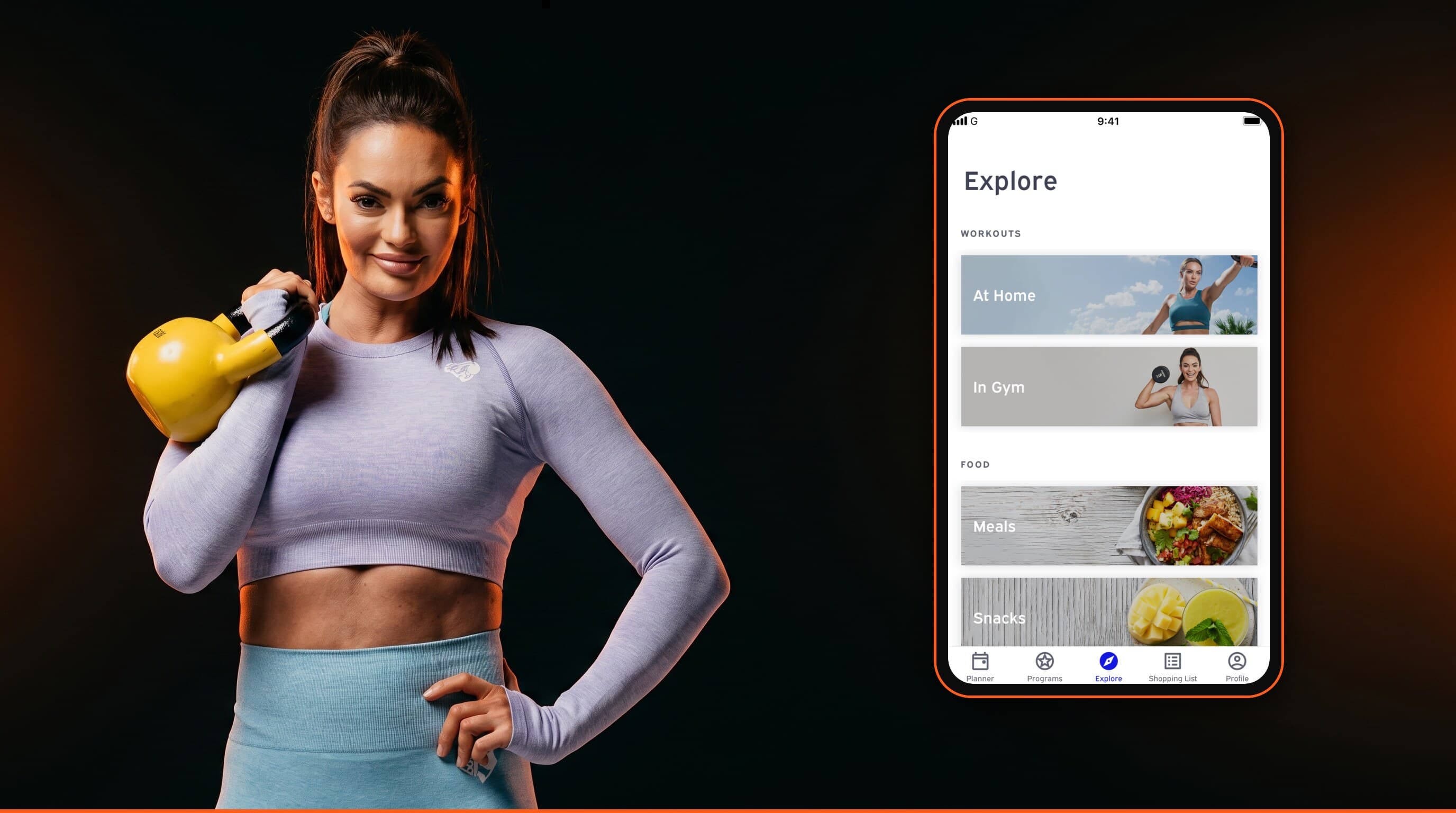
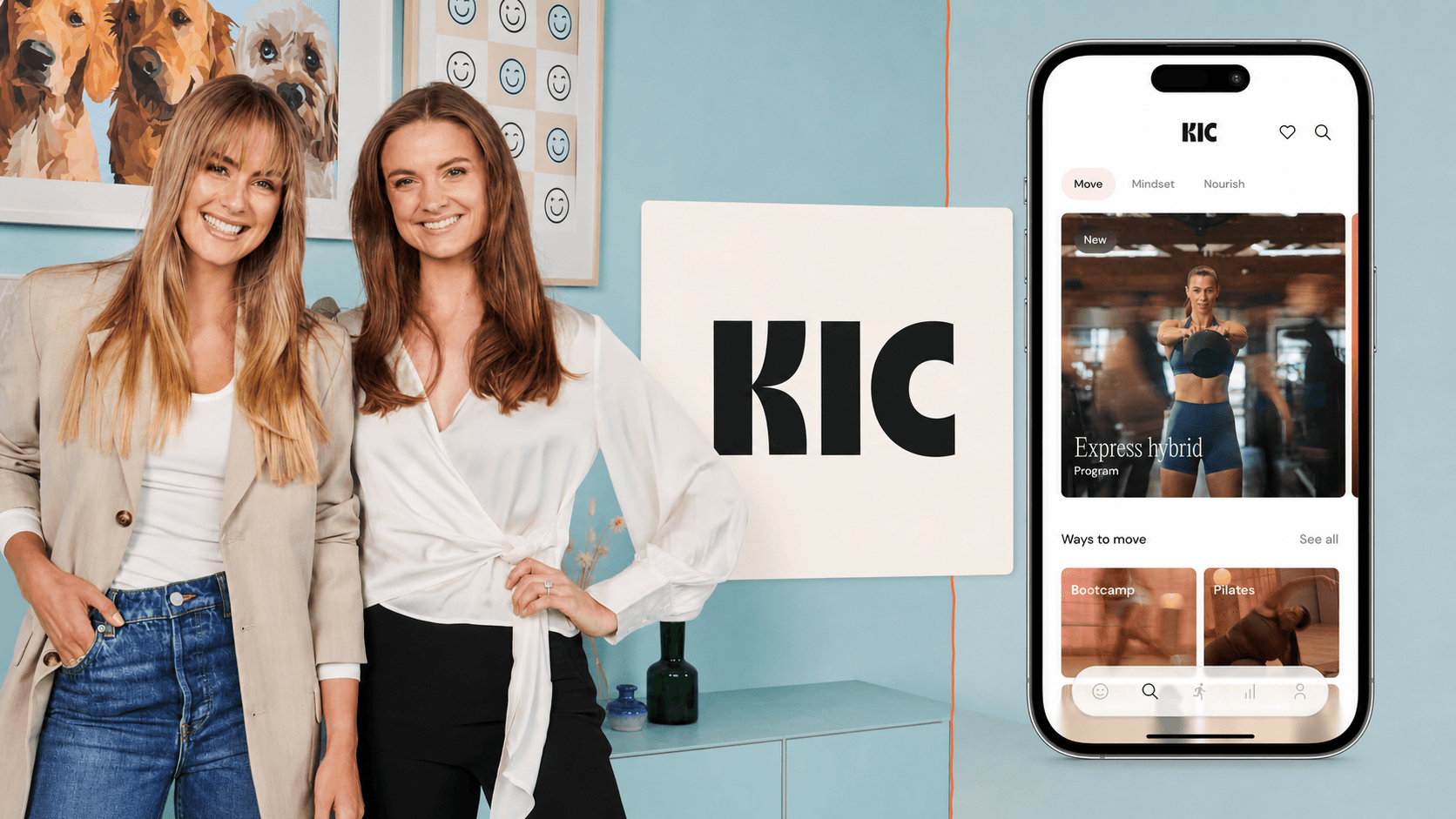
Two Melbourne creators wrote an ebook in 2015 because they were tired of five-minute-abs marketing. Eleven years later one of them stepped down as CEO of the company that ebook became, and handed it to a professional operator. That sentence is the whole argument for building software instead of renting an audience out. A creator cannot resign from their own face. A founder can promote someone. Steph Claire Smith and Laura Henshaw are the Melbourne co-founders of Kic, a subscription wellness app that grew out of the ebook business they started in 2015 as Keep It Cleaner. They were 21 and 22 when they wrote it. Their complaint with the market was specific: as they told SmartCompany in June 2022, it was "flooded with fad diets, quick fixes and 'abs in five minutes'." So the first product was recipes built from supermarket ingredients, sold as a PDF. Forbes Australia put Smith's social following at 1.5 million and Henshaw's at 326,000 in a March 2024 cover story. You can find them at @stephclairesmith and @laurahenshaw. Those accounts matter less to the business every year, which is the point. They stopped selling one-time files and started selling a subscription, then put it inside an app they own on the App Store. The Kic app has been live since 2 November 2018 under the developer name Kic App Pty Ltd. Apple's own listing data, checked on 11 August 2026, shows a 4.8 rating from 10,915 ratings in Australia. The company's site claims more than a million downloads and a community of 2.8 million. Forbes reported 750,000 downloads and 121 countries in March 2024. A July 2026 company announcement puts the community at 2.8 million across more than 120 countries. That growth is unremarkable month to month and enormous over a decade, which is what recurring revenue looks like from the inside. If the mechanic is new to you, start with what MRR actually means for creators. The number in that Forbes piece worth stealing: roughly 90 percent of downloads arrived organically. "That's something we haven't had to do," Smith said about paid acquisition. An App Store listing is a search engine that keeps working while you sleep, and most creators hand it to somebody else. Because they owned the product and could make that call without asking a platform, a sponsor, or a media buyer for permission. In 2023 Keep It Cleaner became Kic. The founders told Mumbrella that "clean eating" had been absorbed into restrictive dieting and no longer described what they sold. They dropped the aesthetic promise entirely: no weigh-ins, no calorie counting, no before and after photos.
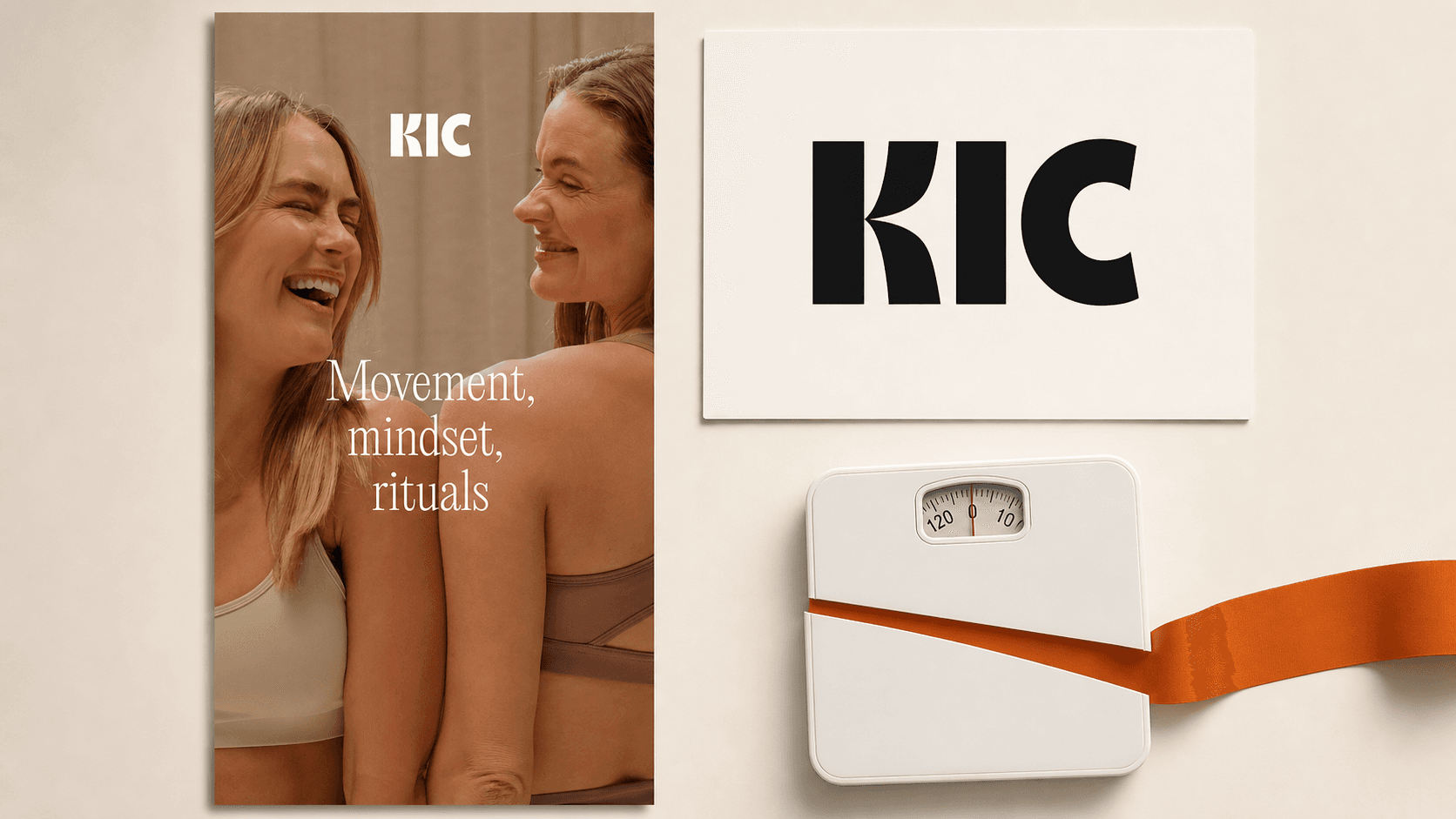
The real Kic campaign creative and mark beside a bathroom scale being cut from the brand story
That is the most expensive-looking decision in this whole story, because weight loss is the conversion lever the category runs on. "The wellness industry is a billion dollar industry," Henshaw told Women's Agenda in March 2024. "And a lot of that money comes from making people feel shit about themselves." Then the numbers came in. Australian revenue up 100 percent year on year, UK revenue up 140 percent, subscribers up 19 percent. Notice what made that possible. A creator whose income is brand deals cannot delete a category from their marketing, because the category is the buyer. Kic could, because Kic sells directly to the person using it. Kayla Itsines ran the same ownership play in Australia a decade earlier and sold Sweat for a reported $400 million. Stain Fix by Kristen Donathan
Our work

How Kristen Donathan Turned Stain-Removal Content Into Stain Fix

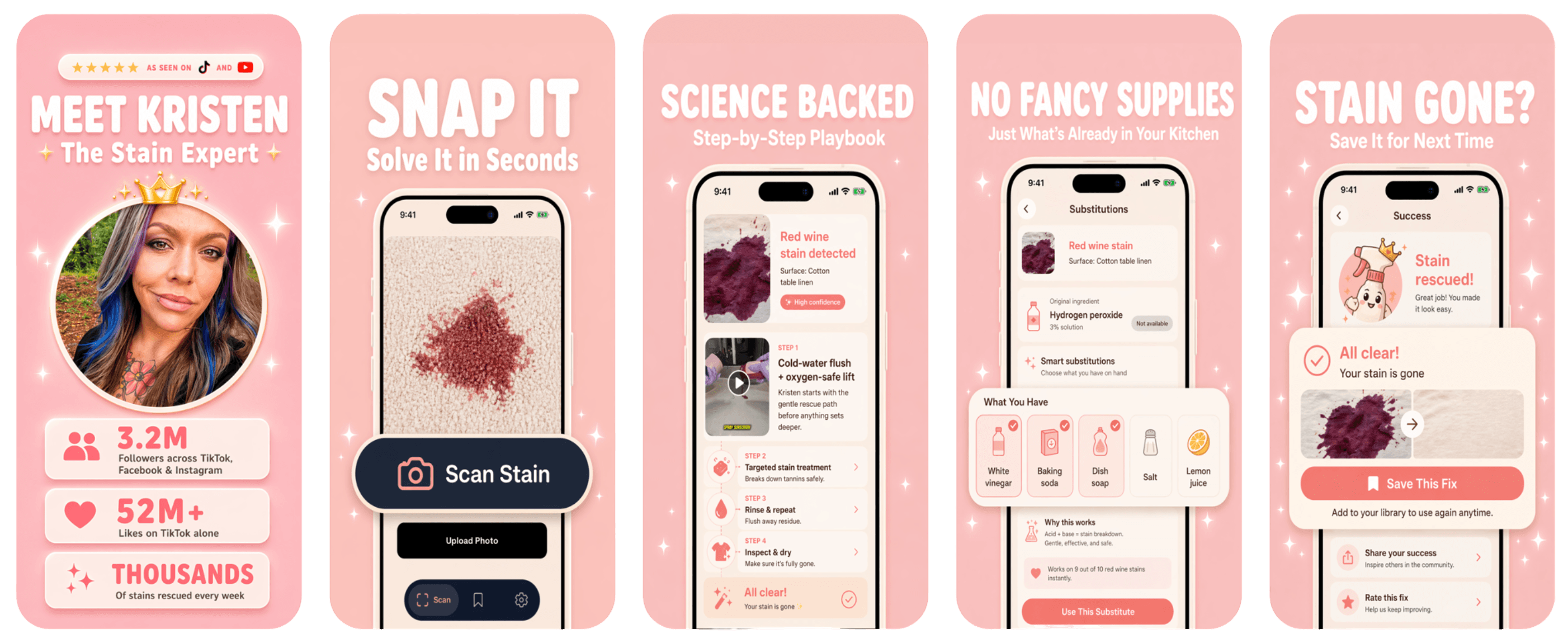
Kristen Donathan gets the same stain questions on repeat. So she and Built by Foundry made Stain Fix: photograph the spill, get her step-by-step plan for that exact surface.

Read the case study → (opens in a new tab)
Kic costs $19.99 per month, $49.99 per quarter, or $119.99 per year on the US App Store, after a seven-day free trial. Prices are from the App Store listing, checked on 11 August 2026.
PlanPrice (US App Store)Effective monthly
Monthly$19.99$19.99
Quarterly$49.99$16.66
Annual$119.99$10.00
Free trial7 daysn/a
For that, the listing describes more than 1,000 guided workouts across Pilates, strength, running, yoga and mobility, 20 or more expert-led programs, more than 100 meditations and breathwork sessions, more than 1,000 dietitian-approved recipes, and pregnancy-friendly programming. A recent build adds an in-app suggestion feature called Attune, marked beta on the store screenshots. That is the same knowledge the 2015 ebook contained, in a container that charges every month instead of once. The container is the business. The subscription is the engine. Everything else Kic runs was funded by it.
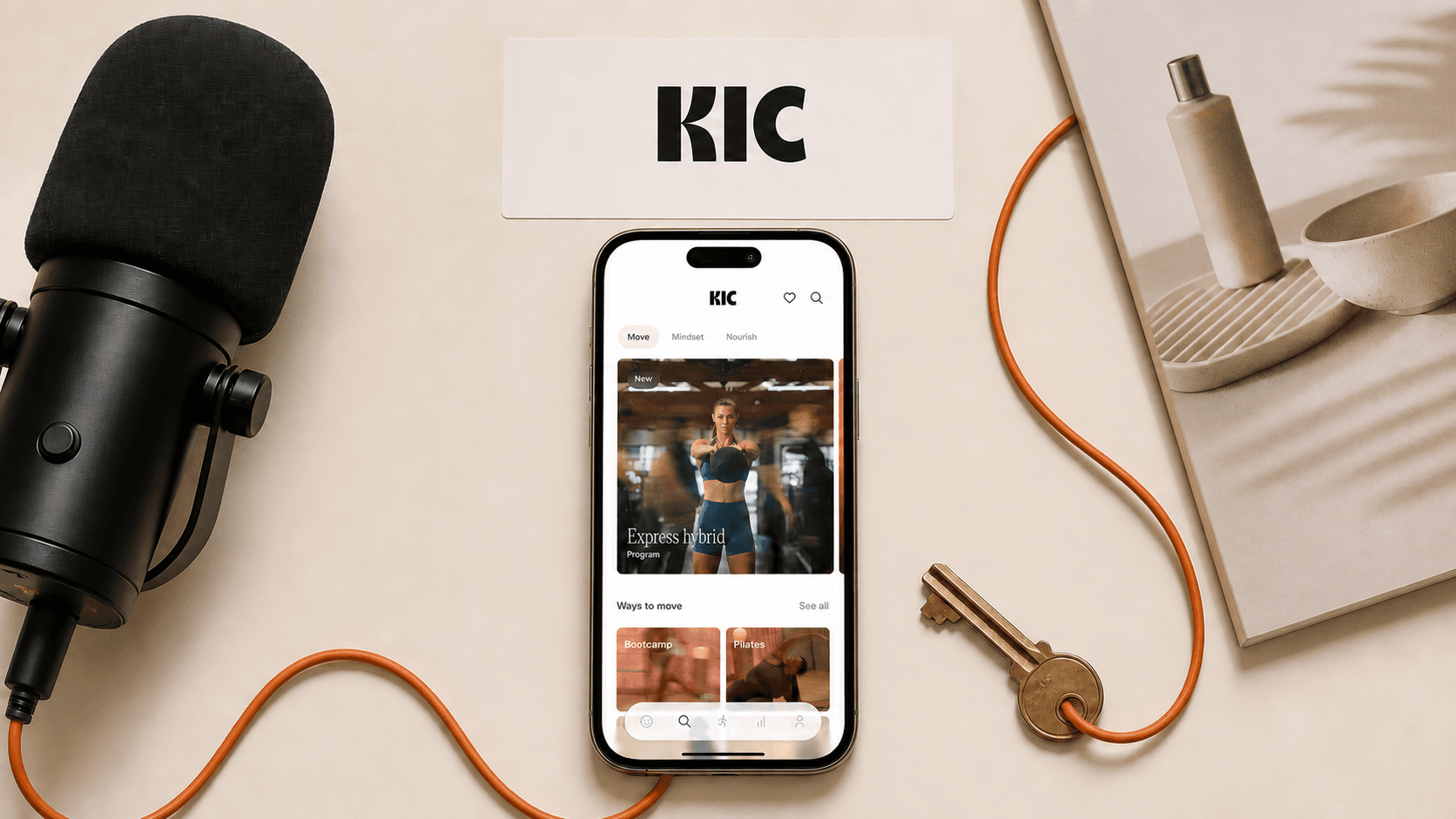
The real Kic app connecting a podcast microphone, wellness magazine, and studio key
KICPOD reached about 160,000 unique monthly listeners and 14 million total downloads by March 2024, per Forbes. The Ritual, a wellness newsletter launched in February 2026, reports an average weekly readership above 100,000 and a 54.5 percent open rate against a 30 percent industry benchmark, and it has since gone to print. KICStudio, a physical space in Cremorne, Melbourne, opened in April 2026. Every one of those exists because a paying subscriber base funded it. This is the evergreen content engine working in the right direction: the product creates the material, and the material feeds the product. Fitness creators keep landing on this structure for a reason, which we broke down in why fitness creators dominate the app economy.
Live every Thursday

Watch us tear down a creator business, live

Every Thursday at 11 AM PT we take a real creator business and show the app hiding inside it: the wedge, the paid loop, the pricing, and what would sink it. Free, and the replay goes to everyone who registers.

Save your seat → (opens in a new tab)
In October 2025, Henshaw stepped down as CEO. Jane Martino, co-founder of Smiling Mind, took the job after two years advising the company. Forbes Australia reported that Henshaw moved into a founder role and was expecting her first child. "When I stepped into the role, we knew it wouldn't be a forever thing," Henshaw told Forbes Australia, "and had always hoped we'd get to a stage where we could bring in a leader I could hand the baton over to." Read that as a business fact rather than a career update. A company that runs without its founder in the chair is an asset. A content business that stops earning the week the creator stops posting is a job. Australian creator Emily Skye built the same kind of asset with her FIT app, and the difference shows up the moment life happens. Run the arithmetic before you decide this only works at 2.8 million. Fifty thousand engaged followers converting at 2 percent is 1,000 subscribers. At $19.99 per month that is $19,990 in gross monthly recurring revenue, and it arrives whether you posted that week or not. Kic was charging AU$19.50 a month back in 2022, when SmartCompany counted 17 full-time staff and a 46,000-member community, so this is not a price that requires millions of followers to support. What you need is the container. That means an app you own, a listing that ranks, a payment relationship with the person using it, and somebody whose job is the next release. Built by Foundry handles product strategy, design, engineering, App Store launch, and ongoing operation under one revenue-share partnership. Our about page explains the model, and App Care covers the part most creator apps die from: the second year. 1. Sell the subscription, not the file. The ebook proved the demand. The app collected on it every month for eight years. 2. Own the store listing. Ninety percent organic downloads is a growth channel with a name on it. Make sure the name is yours. 3. Make the values call that costs you a conversion lever. Only people who own the product get that option. 4. Build toward being replaceable. Henshaw hired her own successor. That is what turns a following into a company. Kic is a subscription wellness app founded by Steph Claire Smith and Laura Henshaw, published under Kic App Pty Ltd. It offers guided Pilates, strength, running and yoga workouts, meditations, and dietitian-approved recipes, and it launched on the App Store in November 2018. Kic costs $19.99 per month, $49.99 per quarter, or $119.99 per year on the US App Store, with a seven-day free trial, as listed on 11 August 2026. The founders renamed the company in 2023 because "clean eating" had become associated with restrictive dieting, which contradicted what the product actually taught. They removed weight loss messaging at the same time. Jane Martino, co-founder of Smiling Mind, became CEO in October 2025 when co-founder Laura Henshaw moved into a founder role. Martino had advised the company for two years beforehand.
Our work

Creators who already did this

These are apps we designed, built, shipped, and still run today, with the creator keeping the code and the audience.

Creator app strategy

Curious what your app could be?

Enter your handle and Built by Foundry will research your audience and present custom app concepts. Free.

Kic App: 2 Creators, 2.8M Members, 1M Downloads