
Case Studies & Success Stories

Jomboy Media: 964 Products, 2,430 Games, 0 Subscriptions

August 27, 2026
Share
Jomboy Media: 964 Products, 2,430 Games, 0 Subscriptions

Get Creator Revenue Insights

How creators are turning audiences into subscription businesses
Share
Key Takeaways:
  • Jomboy Media has 2.32 million YouTube subscribers, built on a format Jimmy O'Brien invented: slowing down one baseball play and explaining exactly what happened
  • Major League Baseball took a minority stake in the company in June 2025 and handed over club intellectual property to sell against
  • The Jomboy Media store lists 964 products, priced from $14 to $175. Every one is a single purchase. Not one is a subscription
  • Each MLB club plays 162 regular-season games. League-wide that is 2,430 scheduled three-hour windows a year, roughly 13 of them on a Wednesday night in August
  • Jomboy monetizes the morning after the game. The game itself is the surface nobody has claimed
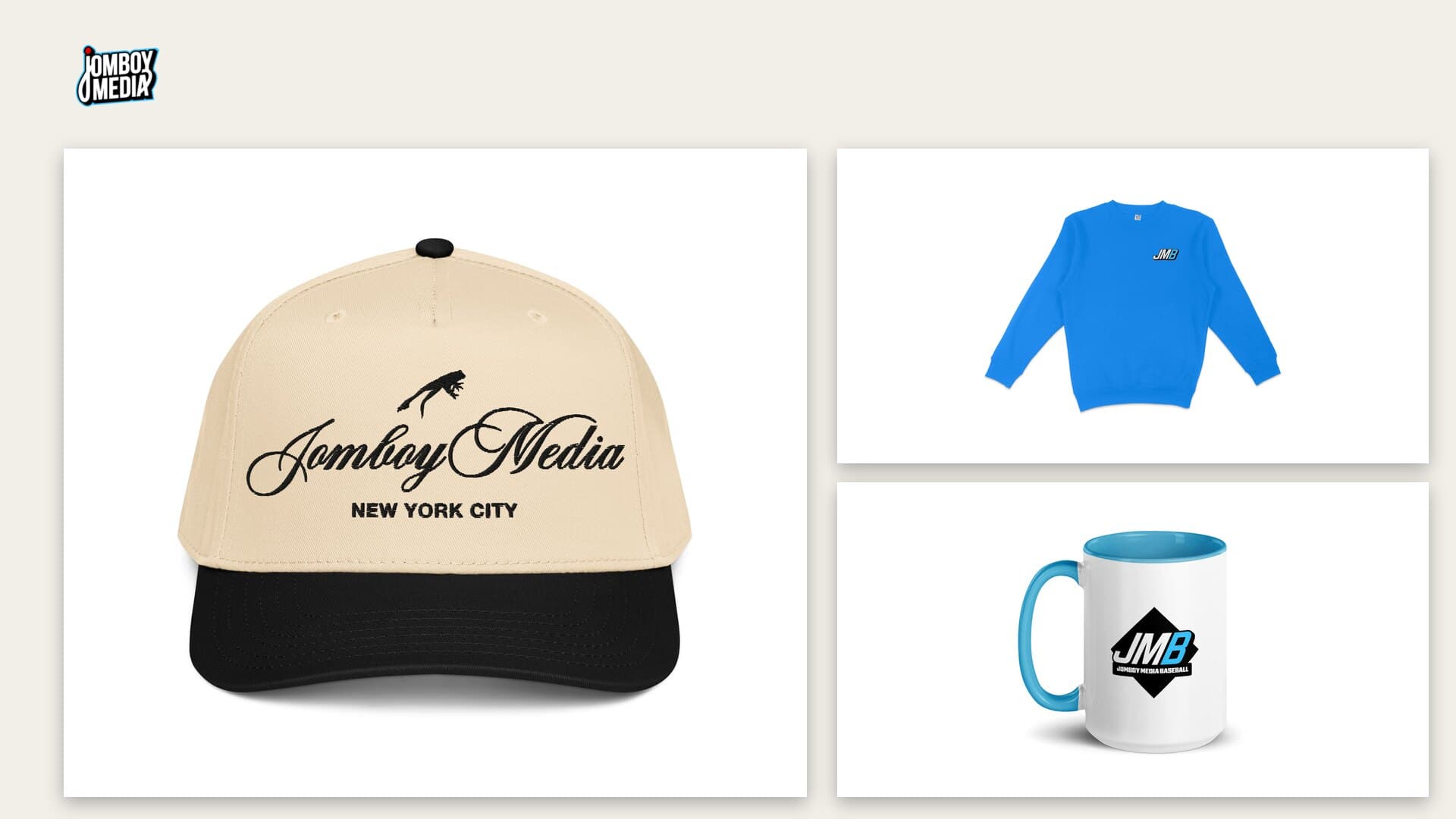
Jimmy O'Brien found something almost nobody in the creator economy ever finds: a format that only he could have made, about a subject millions of people already care about, that works on every platform at once. The breakdown. One play, slowed to a crawl, with O'Brien narrating what the catcher said, why the umpire moved, what the pitcher was hiding. He was a Yankees fan in California in 2017 who mostly wanted more people to talk baseball with. He started the Talkin' Yanks podcast with his friend Jake Storiale, kept posting breakdowns, and the format did what great formats do. It made a complicated thing legible. Nine years later that is a company with a staff, a slate of podcasts, an original sports league called The Warehouse Games, and a 24/7 linear channel on Fubo that launched in April 2026. Then in June 2025, Major League Baseball itself bought in. Front Office Sports reported the deal alongside the numbers that justified it: 93 million social engagements in the prior year and nearly 400 million video views across the company's history. MLB executive Kenny Gersh described the logic plainly: "Having people out there with an authentic voice talking about baseball is good for us." That is the ceiling of what a creator business is normally allowed to reach. And it still has a hole in it big enough to drive a season through. Jomboy Media sells apparel and free ad-supported content. Pulling its full public storefront catalog on August 27, 2026 returns 964 products, priced between $14 and $175, and every single one is a one-time purchase. Comfort Colors tees, MLBPA player shirseys, dad hats, mugs, crewnecks, camo hoodies. There is no membership tier, no paid app, no subscription of any kind. A search of the App Store for "Jomboy" on the same day returns zero results. Nothing under that name has ever shipped.
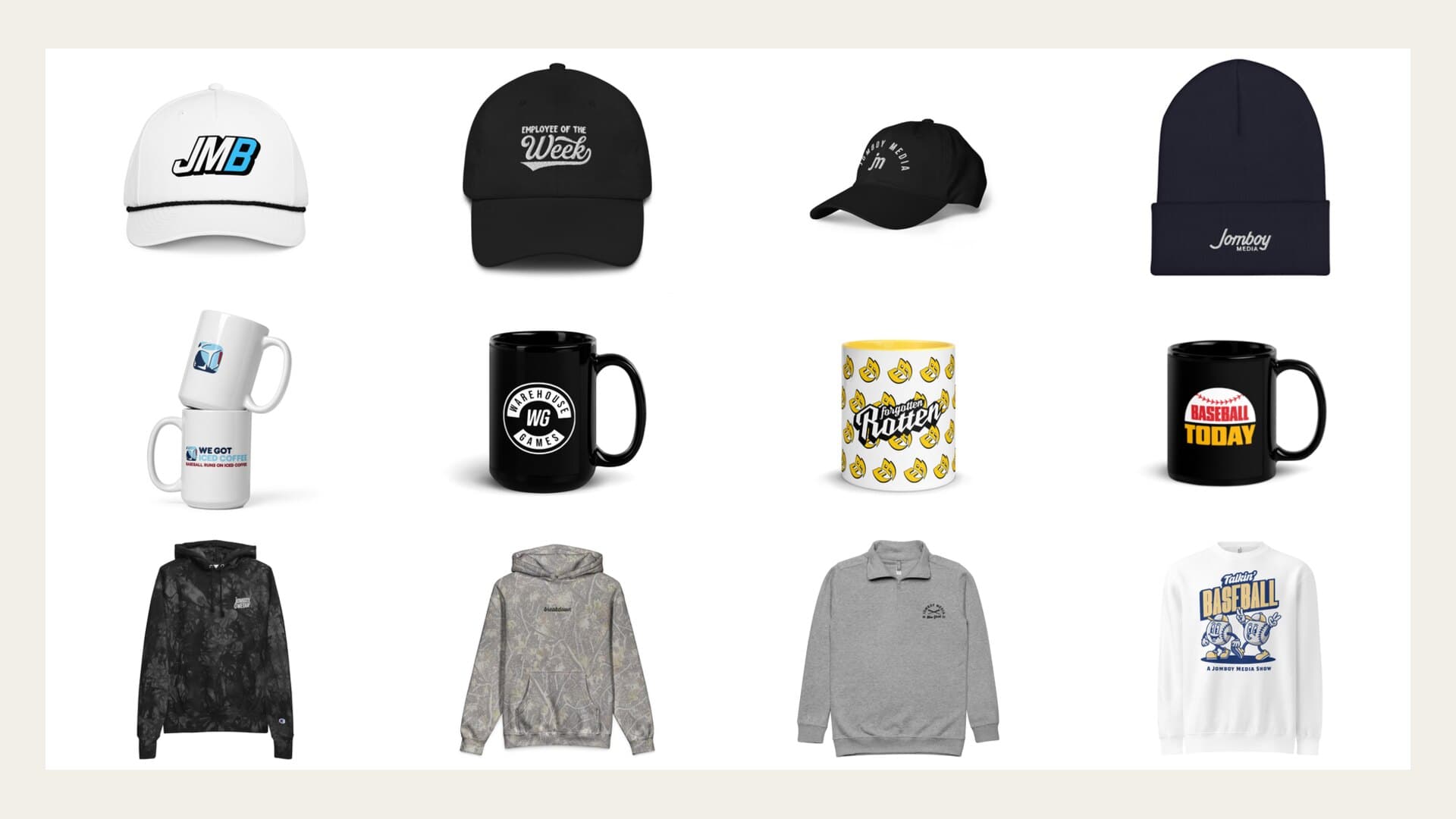
A flat overhead grid of real Jomboy Media store goods, caps, mugs and folded sweatshirts, repeating across a bright cream field
The MLB deal made the merchandise better, not different. Part of what the league handed over was club intellectual property for apparel and home goods, which is why 152 of those 964 items now carry MLBPA licensing. A creator got the rarest asset in American sports and used it to print more shirts. The store is real money and the designs are good. But merch is the business model that empties out every January. A tee sold in October is not a customer in November, which is the same reason creators keep moving off merch entirely once they run the arithmetic on the second year. Because Jomboy Media monetizes the retelling of a game rather than the watching of one, and the retelling is free by design. Ads pay for the breakdown. Sponsors pay for the podcast. Fubo carries the channel. Merch converts the affection into a purchase. Every one of those arrives after the last out. Sort the catalog by when a fan actually touches it and the shape is impossible to unsee.
When a fan touches itWhat Jomboy Media offers thereWhat it costs
Before first pitchNothingn/a
During the game, about three hoursNothingn/a
The morning afterBreakdowns, podcasts, the Fubo channelFree, ad-supported
Any time, once964 store products$14 to $175
The middle two rows are the entire business opportunity, and they are empty. Here is the fact that makes baseball different from almost every other creator category. The habit is already scheduled, and someone else pays to schedule it. Each of the 30 clubs plays 162 regular-season games. That is 2,430 games league-wide, spread across roughly six months, and on an ordinary Wednesday night in late August the MLB schedule carries about 13 of them at once. A creator in cooking, drawing, or photography has to manufacture a daily habit out of nothing. A baseball creator inherits one, pre-built, six nights a week, for half the year, and the league pays to keep it there.
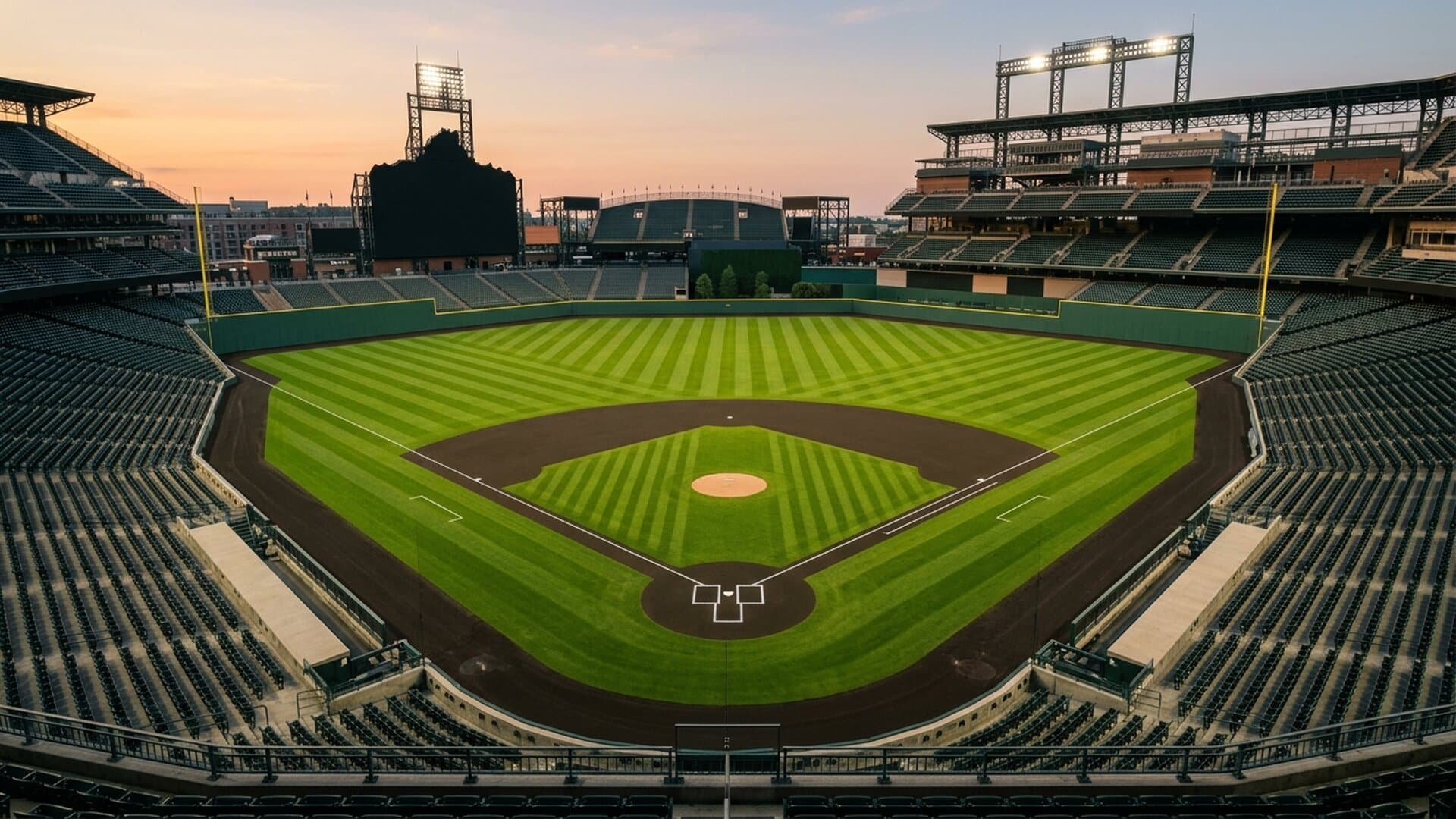
An empty major league ballpark from high behind home plate at dusk with the field lights on and the infield freshly chalked
And during those three hours, the exact thing Jomboy Media is best in the world at is what the audience most wants and cannot get. The manager is arguing about a rule nobody in the section can name. The broadcast said "automatic runner" and half the people watching are 24 and half are 64 and they disagree about whether that is baseball. Someone in that room is on their phone right now looking it up, and the company that owns baseball literacy is not there. The breakdown arrives the next morning, packaged as content, monetized at whatever CPM YouTube feels like paying that quarter. It would do during the game what the breakdown does the day after: explain the thing that just happened, in ten seconds, in a voice the fan already trusts. Flag the moment in tonight's slate worth switching over for. Give the group chat a place to be. Keep a record of what a fan watched all season, which turns a passive viewer into someone with a streak they will not break in September. That is a $6.99 a month product for people who already buy a $32 hat because they like a podcast. It is the same move Levy Rozman made with Chessly: take the thing your audience watches you do and let them do it, on a schedule they keep. Chess players play daily. Baseball fans watch nightly. Both are appointments, and appointments are what subscriptions are for. The objection worth taking seriously is that MLB has its own app, and it is good. That is true and it does not matter. The league's app is built for every fan of all 30 clubs, so it cannot have a voice, and voice is the entire product here. This is why niche creator apps keep beating big tech inside the niche: the incumbent has the data and the rights, and the creator has the one thing that cannot be licensed. Sports. Elections. Markets that open at 9:30. Awards shows. Esports splits. A show that drops on Thursdays. F1 weekends. If you make content about something that happens on a calendar you did not set, you are in a rare position and most creators in it never notice. You do not have to build a habit. The world already built one and your audience is already inside it. Your only job is to be in the room during the window instead of narrating it afterward. The test takes ten seconds. Picture your most engaged follower fifteen minutes into the thing you cover, phone in hand, wanting something from you right then. What do they open? If the honest answer is your feed, that is the gap. Daily use is the rarest asset in software, and a schedule hands it to you. He built the hard asset and priced the easy one. Baseball literacy at scale took nine years, a format nobody else had, and a league buying in to validate it. The store attached to that asset sells cotton. A league stake is distribution, not recurring revenue. MLB access bought more IP for apparel and content placement on league platforms. Neither charges anybody monthly, and neither is an asset the company owns outright. Partnership terms change. A subscriber list does not. Free is a strategy for the format, not for the surface. The breakdown should stay free forever. It is the best top-of-funnel in sports media. The mistake is having nothing behind it that costs money every month. The window beats the artifact. A shirt is a memory of a season. An app opened during 2,430 games is a companion for one. The second one compounds, generates tomorrow's post by itself, and gets found by fans who have never heard the podcast, because the App Store puts it in front of people searching for exactly this at 7:05 on a Tuesday. Jimmy O'Brien did the part that cannot be outsourced. He made millions of people want an explanation from him specifically, at the moment they are most confused and most engaged. The company just is not in the room when that moment happens.

Creator app strategy

Curious what your app could be?

Enter your handle and Built by Foundry will research your audience and present custom app concepts. Free.

Jomboy Media: 964 Products, 2,430 Games, 0 Subscriptions