
Platform Reviews

Is Creator Merch Worth It in 2026? 7 Costs on One $30 T-Shirt

September 14, 2026
Share
Is Creator Merch Worth It in 2026? 7 Costs on One $30 T-Shirt

Get Creator Revenue Insights

How creators are turning audiences into subscription businesses
Share
Key Takeaways:
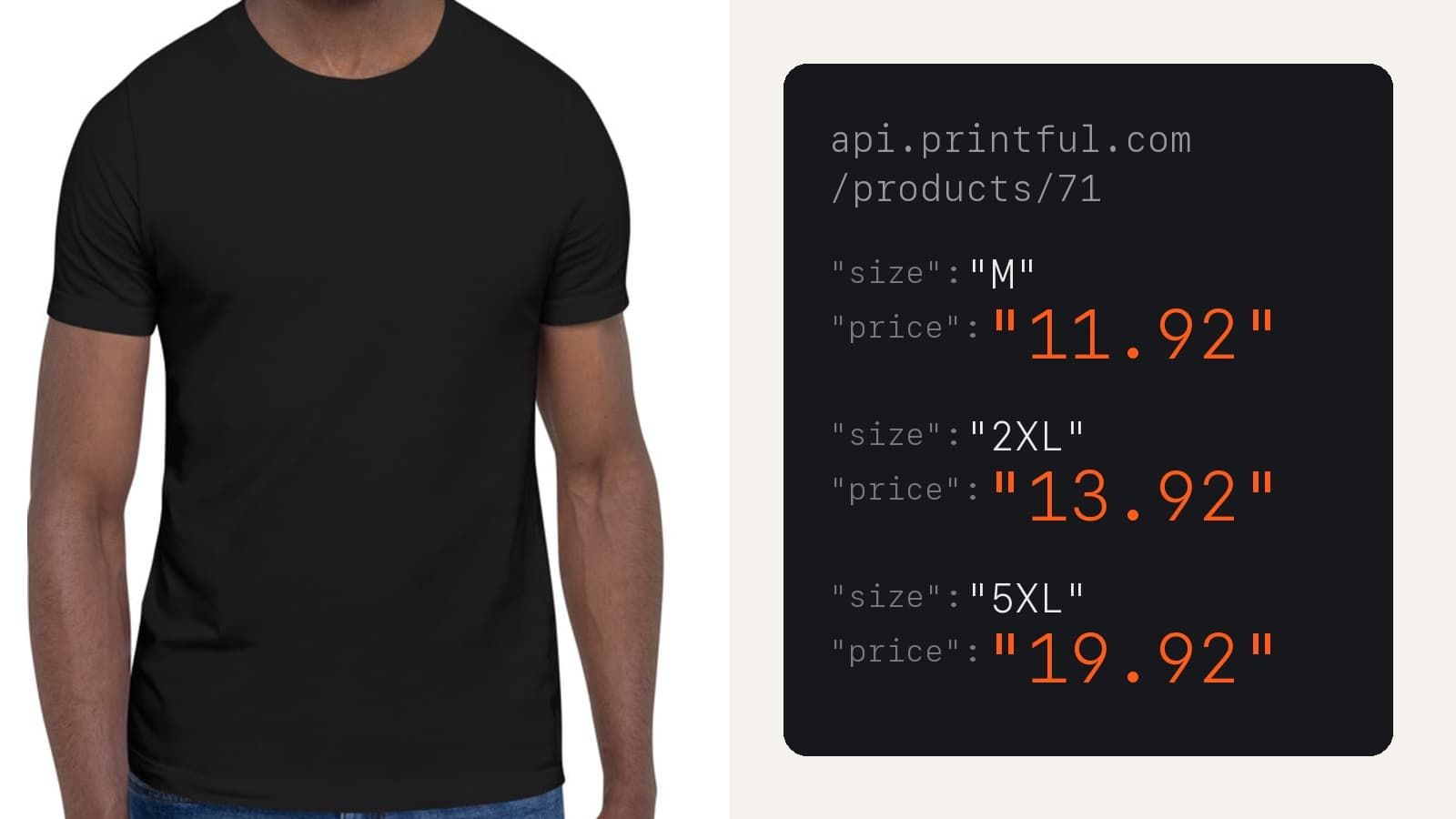
  • Printful's public catalog API returns a base price of $11.92 for a Bella + Canvas 3001 unisex tee in sizes XS through XL, read on September 14, 2026. Nobody has to take that number on trust, because the endpoint answers without a key
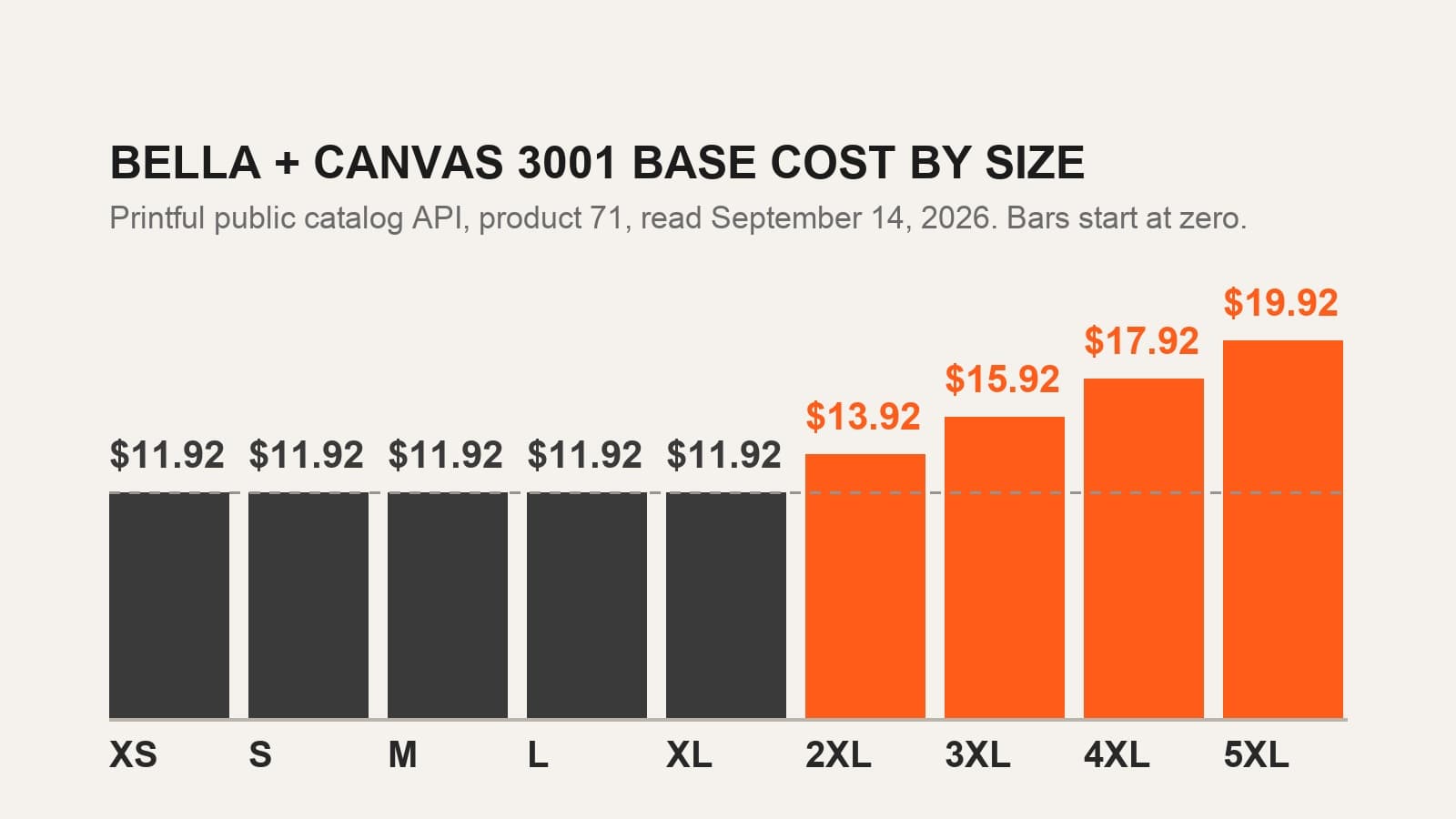
  • The same product charges $13.92 at 2XL, $15.92 at 3XL, $17.92 at 4XL, and $19.92 at 5XL. Every apparel product we checked stepped up by exactly $2.00 per size above XL, so a store with one retail price earns less on its largest customers
  • Printful's own shipping table adds $4.95 to put a single shirt in a United States mailbox and $8.79 for a hoodie. Stripe's published United States card rate takes another 2.9% plus $0.30
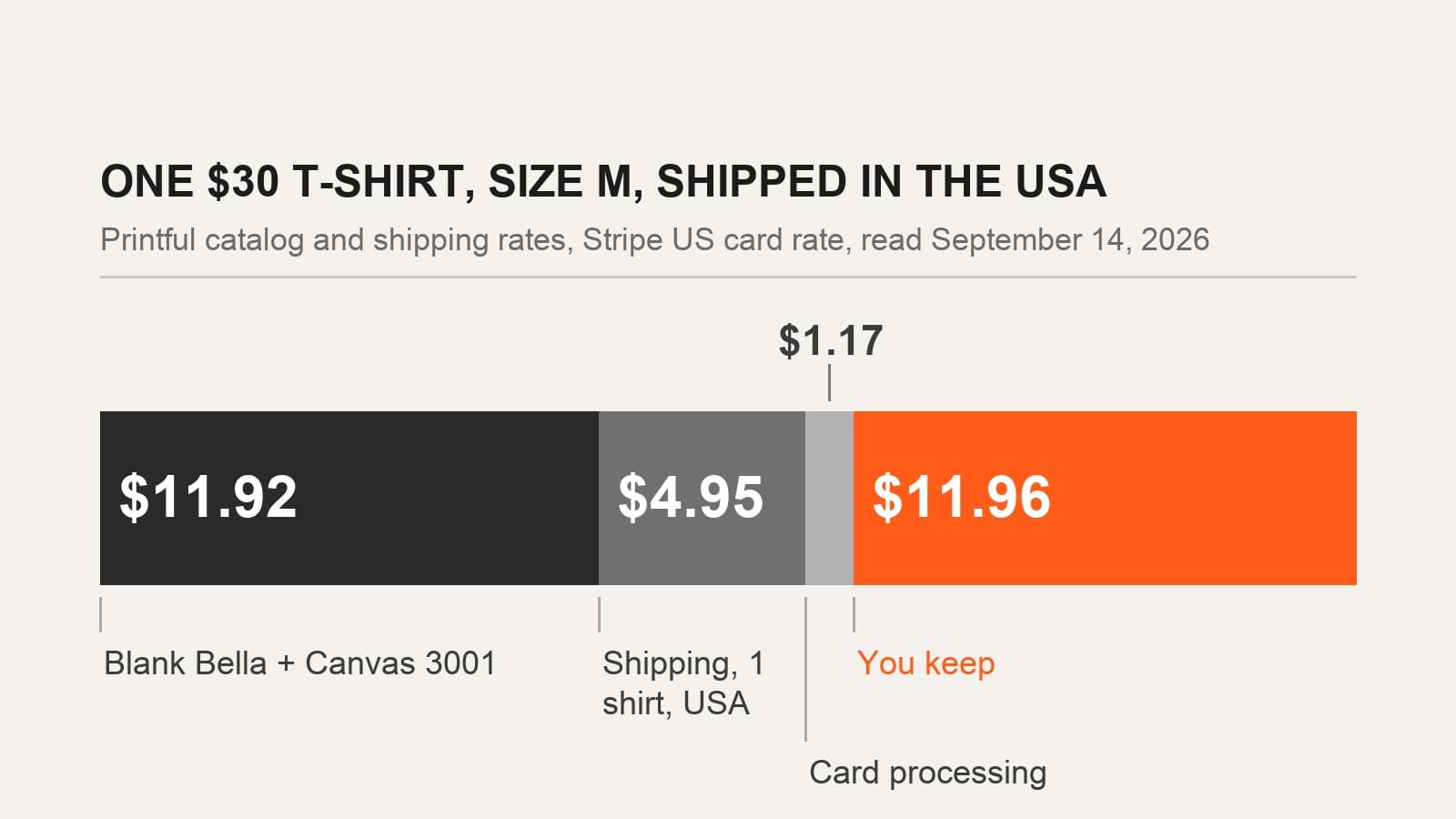
  • On a $30 tee with free shipping, the seven costs leave $11.96. At 2XL they leave $9.96, and Printful's $24.99 a month Growth plan means the third sale of the month is the first one that pays you anything
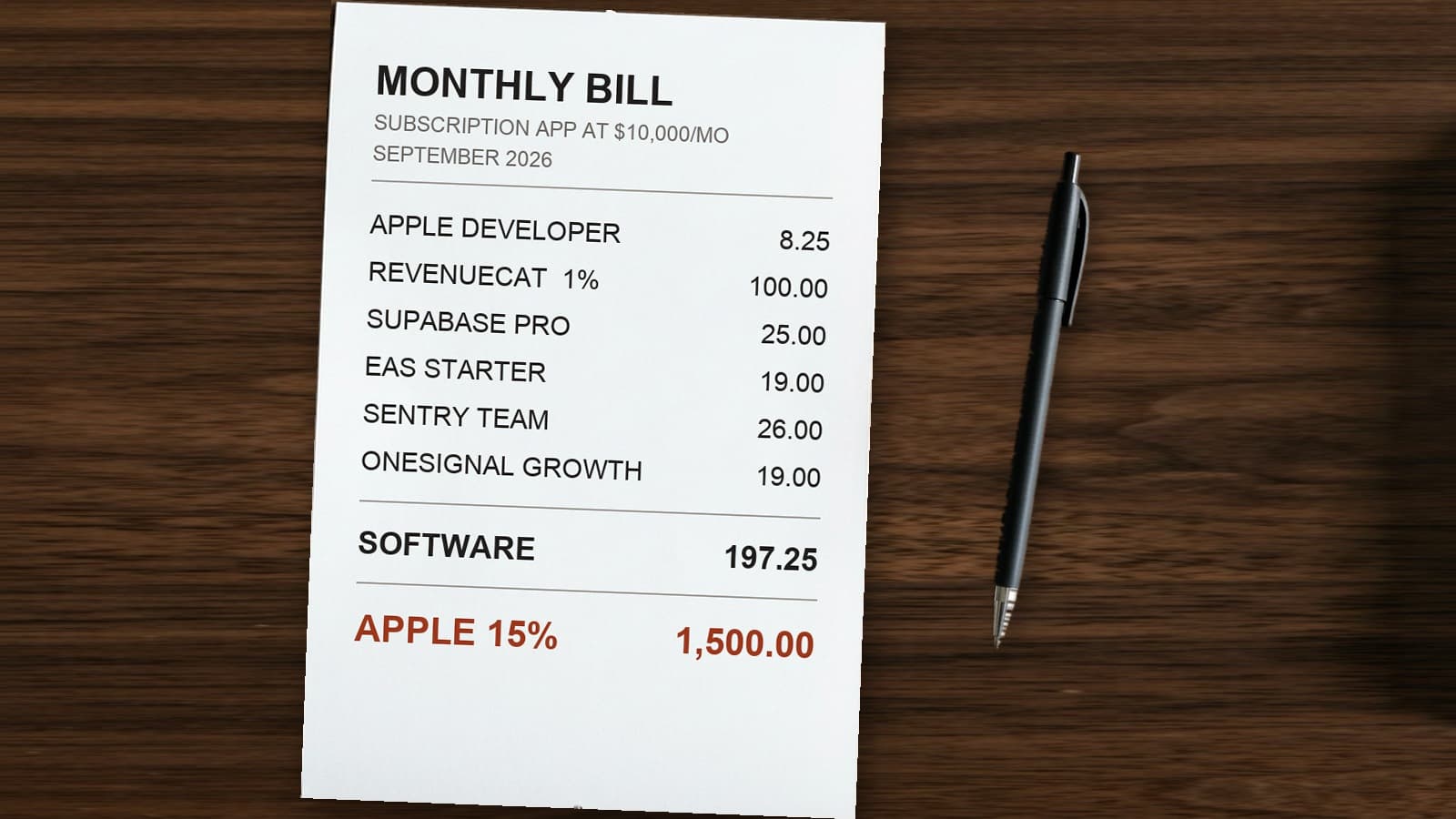
  • One $4.99 subscriber nets $4.24 a month under Apple's 15% Small Business Program rate and passes that same $11.96 in month three, then keeps going. The tee does not come back
Merch is the first business most creators build, and it is the only one where the price of the product is set by somebody else and published in public. You can read Printful's cost of a blank shirt in a browser tab right now, without an account, without a sales call, and without a single word of marketing in between. We did exactly that on September 14, 2026, and then priced every other line that sits between a customer's $30 and a creator's bank account. There are seven of them. Four are unavoidable, two are optional and easy to trigger by accident, and one of them is a monthly bill that arrives whether anything sells or not. Here is the full stack on a single sale: one Bella + Canvas 3001 in size M, one print, shipped to a United States address, sold at $30 with free shipping through your own store.
#CostAmountWho publishes it
1Blank garment, sizes XS to XL$11.92Printful catalog API, product 71
2Size upcharge at 2XL+$2.00Printful catalog API, product 71
3Shipping, one shirt, USA$4.95Printful shipping rates
4Card processing, 2.9% + $0.30$1.17Stripe pricing
5Growth plan, monthly$24.99Printful pricing
6Printed outside apparel label$2.49Printful pricing
7Premium image, per item sold$1.00Printful pricing
Costs one, three, and four happen on every single order and cannot be switched off. Cost two happens on roughly the share of your audience that wears 2XL and above. Cost five is a subscription you pay to get a discount on cost one. Costs six and seven are per unit charges that creators add during a design session and then forget are running. Strip out the optional lines and a $30 tee in size M leaves $11.96. That is the honest number, and it is a good one for a first product. The trouble starts when you ask what happens to it next month. Printful's public catalog API returns a base price of $11.92 for a Bella + Canvas 3001 tee, $9.63 for a Gildan 64000 softstyle tee, $19.17 for a Gildan 18000 crewneck, $22.63 for a Gildan 18500 hoodie, $6.07 for an 11 oz white glossy mug, and $7.95 for an A4 matte poster, all in the smallest offered size and read on September 14, 2026.
ProductBase cost, smallest sizeLargest offered sizeTop cost
Bella + Canvas 3001 tee$11.925XL$19.92
Gildan 64000 softstyle tee$9.633XL$13.63
Gildan 5000 classic tee$9.445XL$17.44
Gildan 18000 crewneck sweatshirt$19.175XL$27.17
Gildan 18500 heavy blend hoodie$22.635XL$30.63
White glossy mug$6.07 (11 oz)20 oz$9.69
Enhanced matte paper poster$7.95 (A4)A1$17.23
Read the hoodie row twice. A Gildan 18500 costs $22.63 blank at size M and $8.79 to ship one unit inside the United States, which is $31.42 before anyone has processed a card. A hoodie priced at $45 with free shipping returns about $12.28 after Stripe's cut, which is roughly what the $30 tee returns. The more expensive product does not pay you more. It only moves more money through your hands. This is the part that separates a merch line from a business. Your retail price is a decision. Your cost is a lookup, performed by a company that will change it when its own costs change, published at a URL you do not control. We made the same point about storefront catalogs in our breakdown of what it actually costs to run a subscription app, where almost every line is a rate you negotiate once and then keep. Because the size upcharge is on the cost side, not the price side. Printful charges $2.00 more per size step above XL on every apparel product we checked, so a shop with one retail price keeps $2.00 less on a 2XL, $4.00 less on a 3XL, and $8.00 less on a 5XL.
A stepped cost ladder for the Bella + Canvas 3001 tee from Printful's public catalog API, flat at eleven dollars ninety two from XS through XL, then rising two dollars per step to thirteen ninety two at 2XL, fifteen ninety two at 3XL, seventeen ninety two at 4XL and nineteen ninety two at 5XL
We checked five apparel products. The Bella + Canvas 3001, the Gildan 64000, the Gildan 5000, the Gildan 18000, and the Gildan 18500 all price XS through XL identically and all add exactly $2.00 at 2XL. It is the most consistent number in the entire catalog. Now look at what that does to a real storefront. A creator who sells a $30 tee at one price across all sizes keeps $11.96 on an M and $9.96 on a 2XL, which is 17% less revenue from a customer who wanted the product just as much. Charge more for larger sizes and you have solved an accounting problem by creating a customer relations one. Absorb it and your margin quietly tracks the body composition of your audience. There is no version of this you win. It is simply a feature of selling a physical object whose cost is set by a factory. The only reason it matters here is that creators evaluate merch against a mental model of a software product, where the second unit costs nothing and the tenth customer costs nothing and a 2XL does not exist. Both companies run the same shape of offer: a free tier, a paid tier, and a discount on product costs that is supposed to outrun the fee.
PrintfulPrintify
Free plan$0 a month$0 a month
Paid plan, monthly$24.99From $39
Paid plan, billed yearlyNot offered at a lower monthly rateFrom $24.99 a month, billed yearly
Product discount on the paid planUp to 33%Up to 33%
Fee waiverFree once you reach $12K a year in salesNot published
Stores included, free planUnlimited stores, 10 Quick Stores5 stores per account
Printful publishes something Printify does not, and it is the most useful line in the table: the Growth plan "becomes free once you reach $12K/year in sales." That is a real threshold, it is $1,000 a month in merch revenue, and it tells you precisely who the fee is aimed at. Below $12,000 a year you pay $24.99 a month for the privilege of a discount. Above it, you do not. Run that against the $11.96 you keep on a tee. At $24.99 a month, the first two sales of the month go to the platform and the third sale is the first one that reaches you. A creator selling ten shirts a month on the Growth plan is working for $95 before a single hour of design, photography, or posting is counted. Not on its own. Printify's pricing page shows a tee with an $8.77 fulfillment cost sold at $19.99 and says it "earns over $11 per sale," then adds a footnote on the same page stating that the figure "doesn't include shipping fees, taxes, and other possible storefront expenses." The footnote is the honest part, and it is worth taking seriously because it is the company's own language. Both numbers are published side by side on Printify's pricing page. The calculator is not lying. It is answering a narrower question than the one a creator is asking, which is "what lands in my account," not "what is the gap between two catalog numbers." Put the missing lines back on Printful's published rates and the $11 becomes something else. Add $4.95 of United States shipping and $0.88 of card processing on a $19.99 order and the gap closes to roughly $5.40, before the plan fee and before any tax the creator is responsible for collecting. The order of magnitude changed. The advertised margin did not.
The four costs stacked across one thirty dollar t-shirt sale: eleven dollars ninety two for the blank garment, four ninety five to ship it, one seventeen in card processing, and eleven dollars ninety six left for the creator
This is the same arithmetic gap we found when we mapped how fast six payers actually pay creators. The published headline number is always true and almost never complete. Every company on this page tells you the rate and lets you discover the stack. About three. A $30 tee returns $11.96 once. A $4.99 monthly subscription returns $4.24 a month after Apple's 15% Small Business Program commission, so it passes the tee in month three and keeps paying in month four, month twelve, and month thirty.
MonthOne $30 tee, cumulativeOne $4.99 subscriber, cumulative
Month 1$11.96$4.24
Month 2$11.96$8.48
Month 3$11.96$12.72
Month 6$11.96$25.44
Month 12$11.96$50.88
Month 24$11.96$101.76
Apple publishes the 15% rate on its Small Business Program page for developers under $1 million in annual proceeds, which is every creator reading this and most who are not. That is the rate the whole comparison runs on. A year of one subscriber is $50.88. A year of merch reaching the same total means selling four and a quarter shirts to four and a quarter people, designing them, photographing them, posting about them, and answering the emails when one arrives in the wrong size. Then January starts and the shirt count resets to zero while the subscriber renews without being asked. We are not arguing that creators should stop selling merch. We are arguing about what merch is for. It is a margin product with a reset button, which makes it excellent at converting attention into cash on a launch week and poor at holding a business up in a quiet month. A creator with 3,000 products and no subscription, like the catalog we counted in Teddy Baldassarre's 3,043 listings, has enormous revenue and zero of it scheduled. If you are a creator with 50,000 or more engaged followers and a store that already sells shirts, you have everything you need to run this in about ten minutes. Open your fulfillment dashboard and write down four numbers. The base cost of your best selling product in your most common size. The shipping rate your provider charges to your most common destination. Your payment processor's rate. Your monthly plan fee. Subtract the first three from your retail price, then divide the plan fee by that result. The answer is how many units you sell each month before you earn a dollar. Then run the second number, which is the one nobody runs. Count how many units you sold last month, multiply by what you keep, and ask what that figure would be if you posted nothing at all for thirty days. For almost every merch business the answer is close to zero, because a shirt is bought by a person who just watched something. That is the whole difference between revenue that follows attention and revenue that survives it. And before you scale a name across a catalog, check that you own it. We walked through the registry side of that question this morning in 45 classes, $350 each, and a 10-month queue, and merch is the category where an unregistered name gets tested first. Every number in this article belongs to somebody else. Printful sets $11.92 and $4.95. Stripe sets 2.9% and $0.30. Gildan and Bella + Canvas set the $2.00 step at 2XL. A creator selling merch is a marketing department attached to a supply chain they have no say in, and the only lever on the whole machine is the retail price, which the audience votes on. Software is the opposite shape. The cost of the second copy is zero, there is no 2XL, the shipping rate is nothing, and the customer pays again next month without being sold again. That is not a better business because it is fashionable. It is a better business because nothing in the cost stack is being published by a factory. BUILT BY FOUNDRY builds that side of the portfolio. We build a creator's software business in about three weeks, at $0 upfront, on a revenue share, and the creator owns the business and the revenue. Then we run it, improve it, and keep it earning after launch and permanently, because our side only works if the product keeps paying. Keep the merch. Print the hoodies. Just stop expecting a product with a published cost and a reset button to be the thing that holds up your year. Printful's public catalog API returns $11.92 for a Bella + Canvas 3001 unisex tee in sizes XS through XL and $9.63 for a Gildan 64000 softstyle tee, read on September 14, 2026. Sizes 2XL and above add $2.00 per step, so the same 3001 costs $13.92 at 2XL and $19.92 at 5XL. Those figures are the garment plus one print and exclude shipping, card processing, and any plan fee. On a $30 tee sold with free shipping to a United States address, the realistic take is about $11.96, or roughly 40%. That is $30.00 minus $11.92 for the blank garment, $4.95 for Printful's published single shirt United States shipping rate, and $1.17 for Stripe's published 2.9% plus $0.30 domestic card rate. Selling the same shirt in 2XL drops the take to $9.96, and a $24.99 monthly plan fee consumes the first two sales of every month. Their published plan structures are close and the difference is in the fee waiver. Printful's Growth plan costs $24.99 a month and its pricing page states the plan "becomes free once you reach $12K/year in sales." Printify's Premium plan starts at $39 a month, or from $24.99 a month when billed yearly, and publishes no equivalent waiver. Both advertise up to 33% off product pricing on the paid tier, so the right choice depends on whether your annual merch revenue clears $12,000. Because the upcharge sits on the fulfiller's cost, not on your retail price. Every apparel product we checked in Printful's catalog on September 14, 2026 priced XS through XL identically and added exactly $2.00 at 2XL, $4.00 at 3XL, $6.00 at 4XL, and $8.00 at 5XL. A store with a single retail price absorbs that difference, which means margin falls on the customers who buy the larger sizes. They do different jobs. A $30 tee returns about $11.96 once and then stops. A $4.99 monthly subscription returns $4.24 a month at Apple's 15% Small Business Program rate, passes the tee's total in month three, and reaches $50.88 over a year without a second sale. Merch converts a moment of attention into cash, which is why launches work. A subscription converts a relationship into scheduled revenue, which is what pays in the months when nothing is posted.
Our work

Creators who already did this

These are apps we designed, built, shipped, and still run today, with the creator keeping the code and the audience.

Kristen Donathan

Kristen Donathan

Founder & CEO of Stain Fix

Snap a stain. Get the fix in seconds.

Top Lifestyle App1.5M+ followers
Read the case study
Stain Fix screenshots
Ellie Fausett

Ellie Fausett

Founder & CEO of Vector Guard

Spot disease-carrying pests before they reach your family.

Top Health App
Read the case study
Vector Guard screenshots
Samantha Mae

Samantha Mae

Founder & CEO of NineLives

Cat health tracking from the world's most beloved Scottish Fold.

Top Health App150K+ followers
Read the case study
NineLives screenshots

Creator app strategy

Curious what your app could be?

Enter your handle and BUILT BY FOUNDRY will research your audience and present custom app concepts. Free.

Is Creator Merch Worth It in 2026? 7 Costs on One $30 T-Shirt