
How to Monetize TikTok Beyond the Creator Fund

How to Monetize TikTok Beyond the Creator Fund

Foundry
April 21, 2026
Key Takeaways:
  • TikTok's original Creator Fund paid $0.02 to $0.04 per 1,000 views; the Creativity Program pays better but still averages under $1 per 1,000 views
  • Brand deals pay 10x to 100x more per impression, but the income resets to zero between partnerships
  • The creator economy is projected to hit $480 billion by 2027 (Goldman Sachs), with subscription products growing fastest
  • Kat Norton turned TikTok virality into a $1M+ business by building a product, not chasing platform payouts
  • 500 app subscribers at $15/month generate $7,500/month of recurring revenue that compounds regardless of algorithm changes
What is TikTok monetization? TikTok monetization refers to the ways creators earn money from their TikTok content and audience, including the Creator Fund, Creativity Program, brand partnerships, TikTok Shop, and driving followers to owned products like subscription apps. You have 200,000 TikTok followers. You post three times a week. Your videos pull 500,000 views a month. And TikTok pays you roughly $10 to $20 for all of it. That's the reality of the Creator Fund. Even with TikTok's newer Creativity Program paying better rates, platform payouts alone won't build a business. Goldman Sachs estimates the creator economy will reach $480 billion by 2027, but most of that money flows to creators who own products, not those waiting for platform checks. Here are five strategies that actually turn a TikTok audience into real revenue. TikTok's original Creator Fund launched in 2020 with a $200 million pool (later expanded to $1 billion). The problem: payouts were split across every eligible creator, diluting earnings as the platform grew. Most creators reported earning $0.02 to $0.04 per 1,000 views according to Influencer Marketing Hub. In 2023, TikTok replaced the Fund with the Creativity Program Beta. Rates improved to roughly $0.50 to $1.00 per 1,000 qualified views, but only for videos longer than one minute. You need at least 10,000 followers and 100,000 views in the past 30 days to qualify. Here's what that looks like in practice:
Monthly ViewsCreator Fund PayoutCreativity Program Payout
100,000$2 to $4$50 to $100
500,000$10 to $20$250 to $500
1,000,000$20 to $40$500 to $1,000
5,000,000$100 to $200$2,500 to $5,000
Even at 5 million monthly views (which puts you in the top fraction of all creators), the Creativity Program pays $2,500 to $5,000. That's better than the old Fund. But it's not a business. And it resets to zero every month based on how the algorithm feels about your content. Less than 4% of TikTok creators earn enough from platform payouts alone to consider it full-time income, according to surveys aggregated by Influencer Marketing Hub. Brand deals are the first place most creators look after the Creator Fund disappoints them. And the money IS better. According to NeoReach's 2024 Creator Economy Report, average TikTok brand deal rates by follower count look like this:
Follower CountAverage Rate Per Sponsored Post
10K to 50K$125 to $1,200
50K to 500K$1,200 to $2,500
500K to 1M$2,500 to $5,000
1M+$5,000 to $25,000+
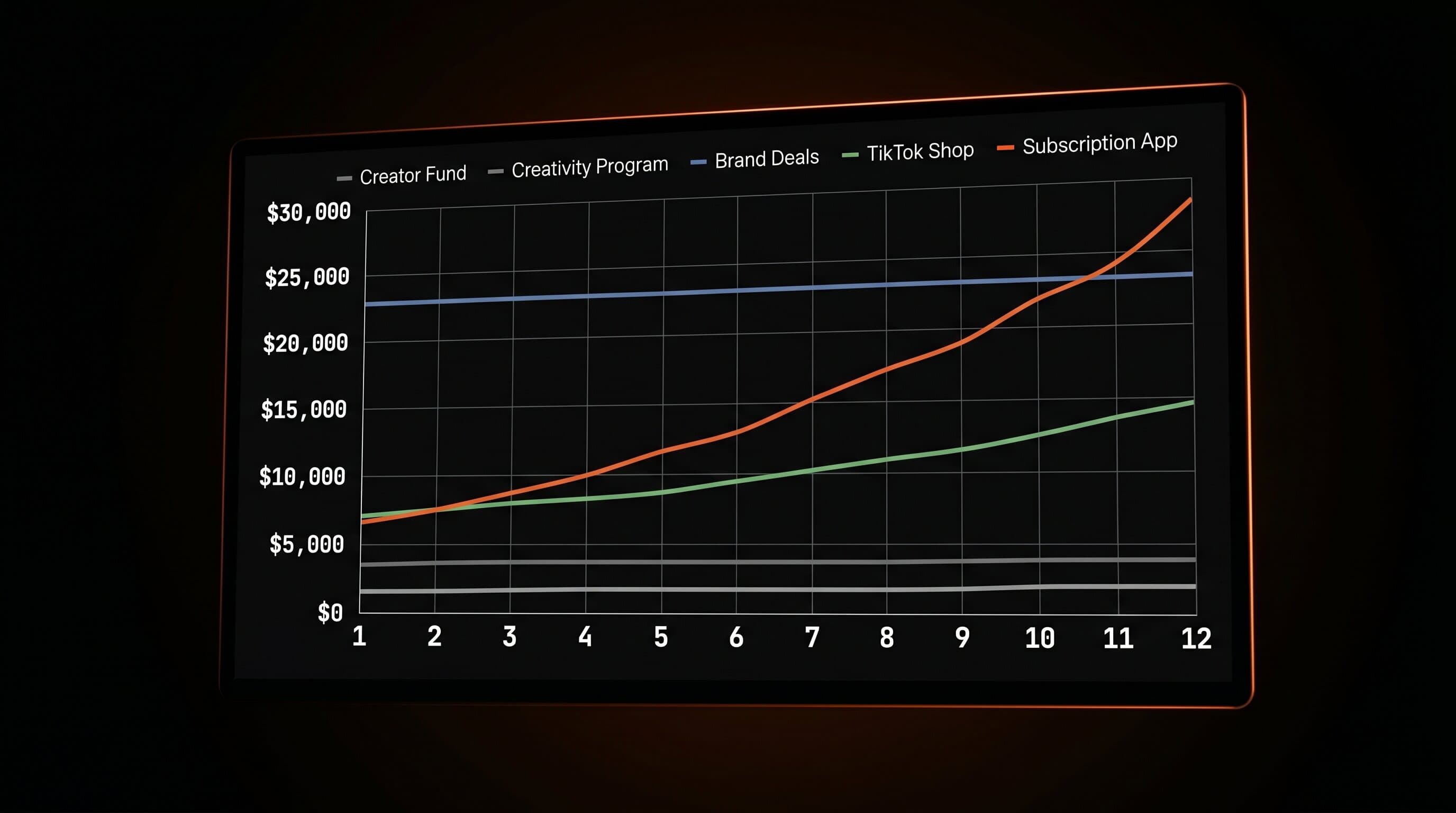
A creator with 200K followers might land $1,500 to $3,000 per sponsored post. Book four of those a month and you're earning $6,000 to $12,000. Real money. But brand deal income has three problems. It's entirely controlled by the brand: budgets tighten, niches fall out of favor, and campaigns end without warning. Every deal requires fresh negotiation, new content, and your time on someone else's schedule. And the income doesn't stack. Finish a $5,000 campaign and your revenue resets to zero until the next one. As we covered in our breakdown of brand deals vs. subscription apps, 200 subscribers paying $15/month generates $3,000 that arrives every single month without a pitch email. TikTok Shop has exploded. Bloomberg reported TikTok Shop hit roughly $9 billion in US GMV in 2024, up from about $3 billion the year before. Creator commissions typically run 5% to 20% depending on the product category. That sounds promising. But there are catches. TikTok Shop works best for physical product creators in beauty, fashion, food, and gadgets. If you teach fitness, finance, music, or any knowledge-based skill, there's not much to sell in the Shop. And even for product creators, margins are thin. A $30 product with a 10% commission pays $3.00 per sale. You need volume to make that meaningful. TikTok Shop also keeps you dependent on TikTok's platform and algorithm. If your reach drops or TikTok changes its Shop policies (which it does regularly), your revenue drops with it. It's the same platform trap that plagues every creator who builds on someone else's infrastructure. The math changes when you stop renting and start owning. A subscription app generates monthly recurring revenue (MRR) that compounds over time. You keep subscribers from month one while adding new ones. And because your app lives on the App Store, it reaches users who have never opened TikTok. Here's how five TikTok monetization strategies compare over 12 months for a creator with 200K followers:
StrategyMonth 1 IncomeMonth 12 Income12-Month TotalEffort Per Month
Creator Fund$15$15$180Low
Creativity Program$400$400$4,800Low
Brand Deals (4/mo)$8,000$8,000$96,000High
TikTok Shop$1,500$2,000$21,000High
Subscription App$3,750$7,500+$67,500+Low (ongoing)
The subscription app row assumes you reach 250 subscribers in month one and grow to 500 by month twelve. That's 0.25% of your TikTok following converting to paid users. The recurring nature means your income builds: month over month, you're stacking new subscribers on top of existing ones. And the app earns money you never expected. People searching for "[your niche] app" on the App Store find you without ever opening TikTok. That's a second distribution channel working while you sleep.
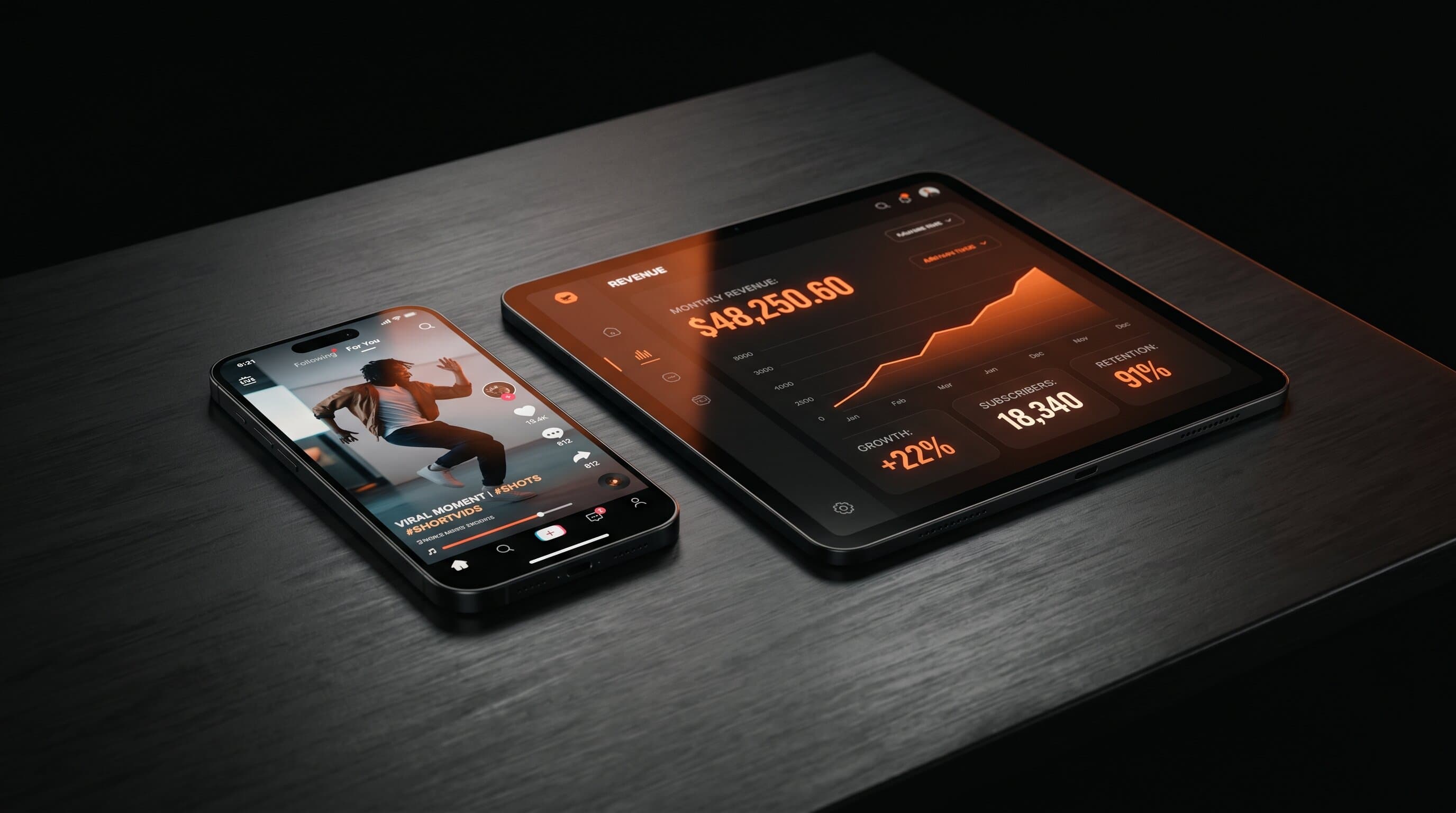
Comparison of TikTok monetization strategies showing subscription app revenue compounding over 12 months
Kat Norton was working a corporate sales job in 2020 when she started posting Excel tips on TikTok. Her first video went viral. Within a year, she had 1.3 million TikTok followers. But Norton didn't wait for the Creator Fund to pay her. She built Miss Excel, a course business that Business Insider reported earned over $1 million in its first year. She used TikTok as the top of the funnel and a product as the revenue engine. Norton's story proves the pattern: TikTok is the attention machine. The product is the money machine. Without a product, attention decays. With one, it converts. The same logic applies across every niche. Fitness creators turn followers into app subscribers. Cooking creators turn viewers into meal plan members. Finance creators turn watchers into community subscribers. The platform gets people to notice you. The product gets them to pay you. Bobby Parrish of FlavCity built a food scanning app from his TikTok audience. Adriene Mishler built FWFG, a yoga subscription platform, from her YouTube following. The pattern repeats because it works. Here's how to make the shift from platform payouts to owned revenue: 1. Identify your highest-value content. Look at your top TikToks. What do viewers save, share, or comment "I need this" on? That content signal is your product signal. 2. Pick the right product format. For most creators, a subscription app is the strongest long-term play. It generates recurring revenue, lives on the App Store as a second distribution channel, and gives your fans something to use daily. 3. Use TikTok as distribution, not the business itself. Keep posting. But shift your content strategy so that every third or fourth video naturally references your app: what it does, how users benefit, or results your subscribers are getting. Your app becomes your content calendar because every subscriber interaction is a video you didn't have to brainstorm. 4. Convert followers to subscribers. Your bio link, pinned videos, and comment replies should all funnel toward your app. Even converting 0.5% of your TikTok audience to $15/month subscribers is meaningful recurring revenue. 5. Let the App Store work for you. Once your app is live, people searching for "[your niche] app" on the App Store find you without ever opening TikTok. That's organic growth that costs nothing and runs 24 hours a day. You don't need to quit brand deals tomorrow. But every month you spend without an owned product is a month of TikTok attention going to waste. Ready to turn your TikTok audience into a real business? Built by Foundry builds, launches, and runs custom subscription apps for creators. $0 upfront. Three weeks to the App Store. We handle the tech so you keep creating.
Let's Build →
The original Creator Fund paid roughly $0.02 to $0.04 per 1,000 views. TikTok replaced it with the Creativity Program Beta in 2023, which pays approximately $0.50 to $1.00 per 1,000 qualified views on videos longer than one minute. You need at least 10,000 followers and 100,000 views in the past 30 days to qualify for the Creativity Program. For brand deals, most brands start working with creators at 10,000+ followers. For a subscription app, even 50,000 engaged followers can generate meaningful recurring revenue. Brand deals offer the quickest payoff, but subscription apps offer the highest long-term value. A subscription app generates recurring monthly revenue that compounds over time and reaches users beyond your TikTok audience through App Store discovery. Less than 4% of TikTok creators earn enough from platform payouts to consider it full-time income. Most successful TikTok creators treat the platform as an audience-building tool and monetize through products, brand partnerships, or subscription businesses. Rates vary by follower count. Creators with 50K to 500K followers typically earn $1,200 to $2,500 per sponsored post. Creators with 1M+ followers can earn $5,000 to $25,000+ per post, according to NeoReach's 2024 Creator Economy Report.

Get Creator Revenue Insights

How creators are turning audiences into subscription businesses

You might also enjoy...

How to Monetize TikTok Beyond the Creator Fund