
Key Takeaways:
- Kat Norton started posting Excel tips on TikTok in June 2020 while working a corporate job
- Her first viral video led to over 1.3 million TikTok followers within a year
- She left her corporate sales role to run Miss Excel full-time after hitting $100K/month in course revenue
- Business Insider reported she earned over $1 million in her first year selling Excel courses
- Her story is a masterclass in niche authority—but also shows the ceiling of one-time course sales vs. recurring subscriptions
Most Excel tutorials are boring. Kat Norton made them go viral on TikTok.
She wasn't a software engineer. She wasn't a data scientist. She was a corporate sales rep who happened to know Excel well—and figured out how to teach it in 60 seconds while dancing. That specific combination of skill, format, and platform turned into a business generating over $1 million in its first year.
Her story isn't just about TikTok virality. It's about what happens when a creator takes niche expertise seriously, builds a real product around it, and refuses to wait for permission.
Who Is Kat Norton (Miss Excel)?
Kat Norton is a content creator and entrepreneur who built her brand, Miss Excel, from scratch by making Microsoft Excel tutorials go viral on social media. She works under the handle @miss.excel across TikTok and Instagram.
Before Miss Excel, Norton worked in enterprise software sales at Veeva Systems. She was good at Excel—genuinely good, the kind of good where colleagues ask you to build their reports for them. She started posting tutorials in June 2020, not as a business plan, but as a creative outlet during the pandemic.
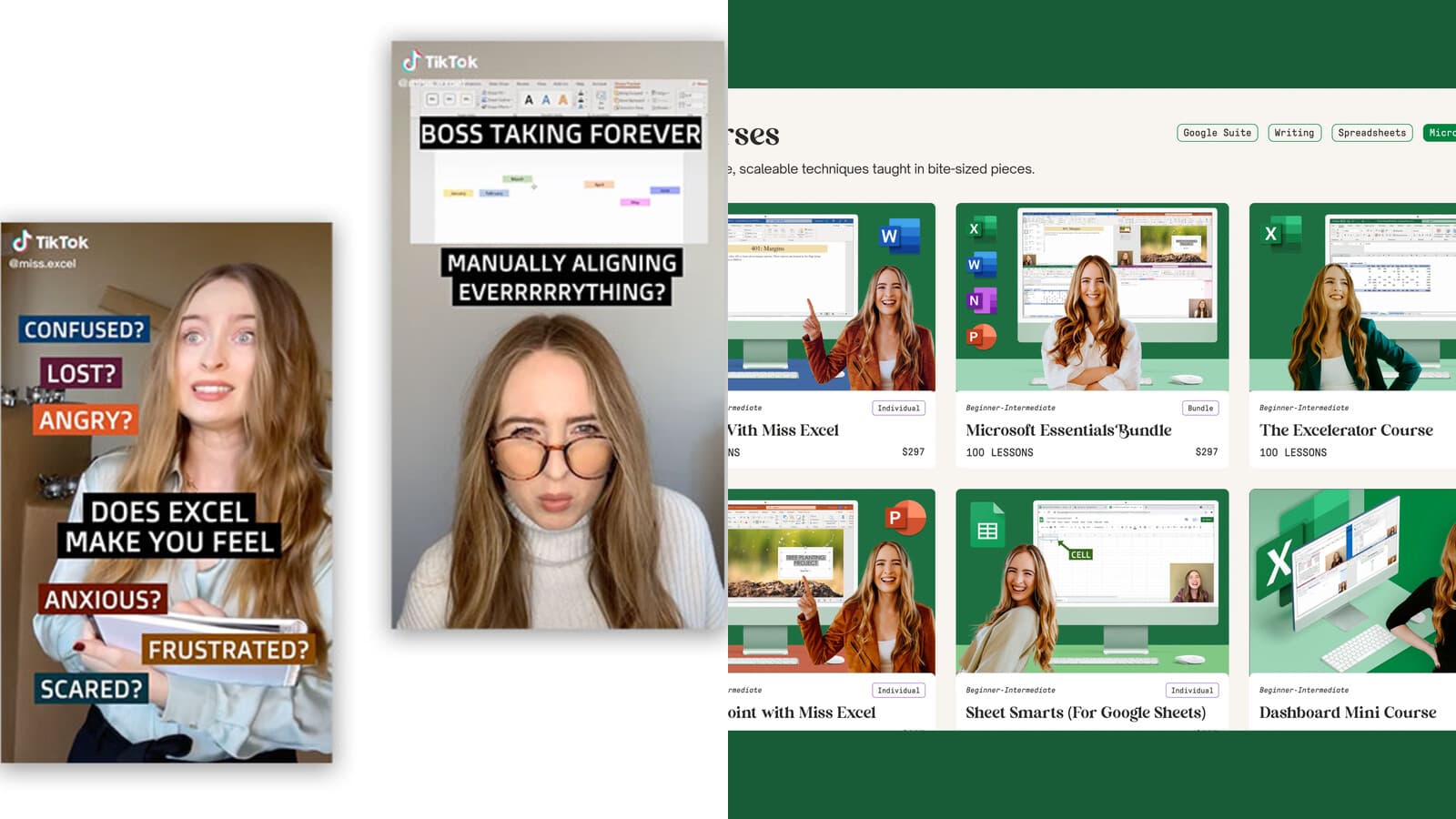
Her hook was simple: she danced. She taught pivot tables while doing the renegade. She walked through VLOOKUP formulas with the energy of a music video. At a moment when TikTok's algorithm favored short, entertaining content, she found a format that nobody else owned.
The first viral video changed everything. Millions of views in days. Thousands of followers overnight. And comments that all said roughly the same thing: "Wait, I actually learned something."
That feedback loop—entertainment plus genuine education—became the foundation of a real business.
How Did Excel Go Viral on TikTok?
The content strategy was counterintuitive by design. Excel is not a glamorous subject. It's the tool people complain about at work. Norton leaned into that tension: here's the thing you're afraid of, and here's how to actually learn it in 60 seconds.
Her TikTok formula:
- One tip per video, always actionable
- Upbeat music, on-trend audio
- Genuine energy—she actually enjoyed teaching this
- Practical examples from real work scenarios
By mid-2021, her TikTok had over 1.3 million followers. Her Instagram crossed similar numbers. She was featured in Business Insider, Fast Company, and HuffPost—not as a TikTok personality, but as someone who had built a real business from an unconventional platform.
That coverage matters for two reasons. First, it validates the business. Second, press links are domain authority—each mention drove new audiences to her work.
Want to turn your expertise into a product?
We build subscription software businesses for creators—$0 upfront, we handle all the tech.Book a free strategy call →
The Miss Excel Business Model
By late 2020, Norton had converted her audience into paying customers. Her product line centered on Excel courses: structured, self-paced video programs that went deeper than any TikTok could.
The pricing was intentional. At $197–$497 per course bundle, her products weren't cheap—but they weren't positioned as cheap. They were positioned as professional development: invest in your Excel skills, get better at your job, get promoted, get paid more. That framing justified the price point and attracted buyers who were motivated to complete the course.
Her course lineup included offerings on Excel fundamentals, data analysis, pivot tables, Power Query, and Microsoft Office more broadly. She also partnered with LinkedIn Learning to distribute content to their enterprise customer base—a smart move that got her in front of corporate teams and extended her reach beyond social media.
The business model that made this work:
| Revenue Stream | Type | Notes |
|---|
| Self-paced courses | One-time purchase | $197–$497 per bundle |
| LinkedIn Learning | Revenue share | Enterprise distribution |
| Brand partnerships | Sponsorship | Microsoft, tech companies |
| Cohort programs | Time-limited | Live learning with community |
How Much Has Miss Excel Made?
Business Insider reported in December 2021 that Norton earned over $1 million in her first year selling Excel courses. At her peak, she was clearing over $100,000 per month from course sales alone.
She left her corporate job in 2020—not after hitting some large number, but after the math was already clear. Her course revenue had surpassed her salary before the end of the year.
This timeline matters. She didn't wait until she had a million followers to start monetizing. She started building products as the audience grew. By the time she had real scale, the product was already proven.
Ready to stop waiting and start building?
Your audience is already paying attention. Let's talk about what to build.Let's talk →
Why Course-Based Businesses Hit a Ceiling
Kat Norton's story is impressive by any measure. But there's a structural challenge built into the course model that's worth naming.
Every course sale is a new transaction. Launch a course, drive traffic, capture buyers—then do it again next month. Revenue spikes during launches and dips in between. The business depends on constant content output and fresh marketing to maintain income.
Compare that to a subscription model. The math behind subscriptions vs. one-time products is stark: a customer who pays $20/month generates more lifetime value than a customer who buys a $200 course once and never comes back. And subscription revenue compounds—each new subscriber adds to a base that keeps paying.
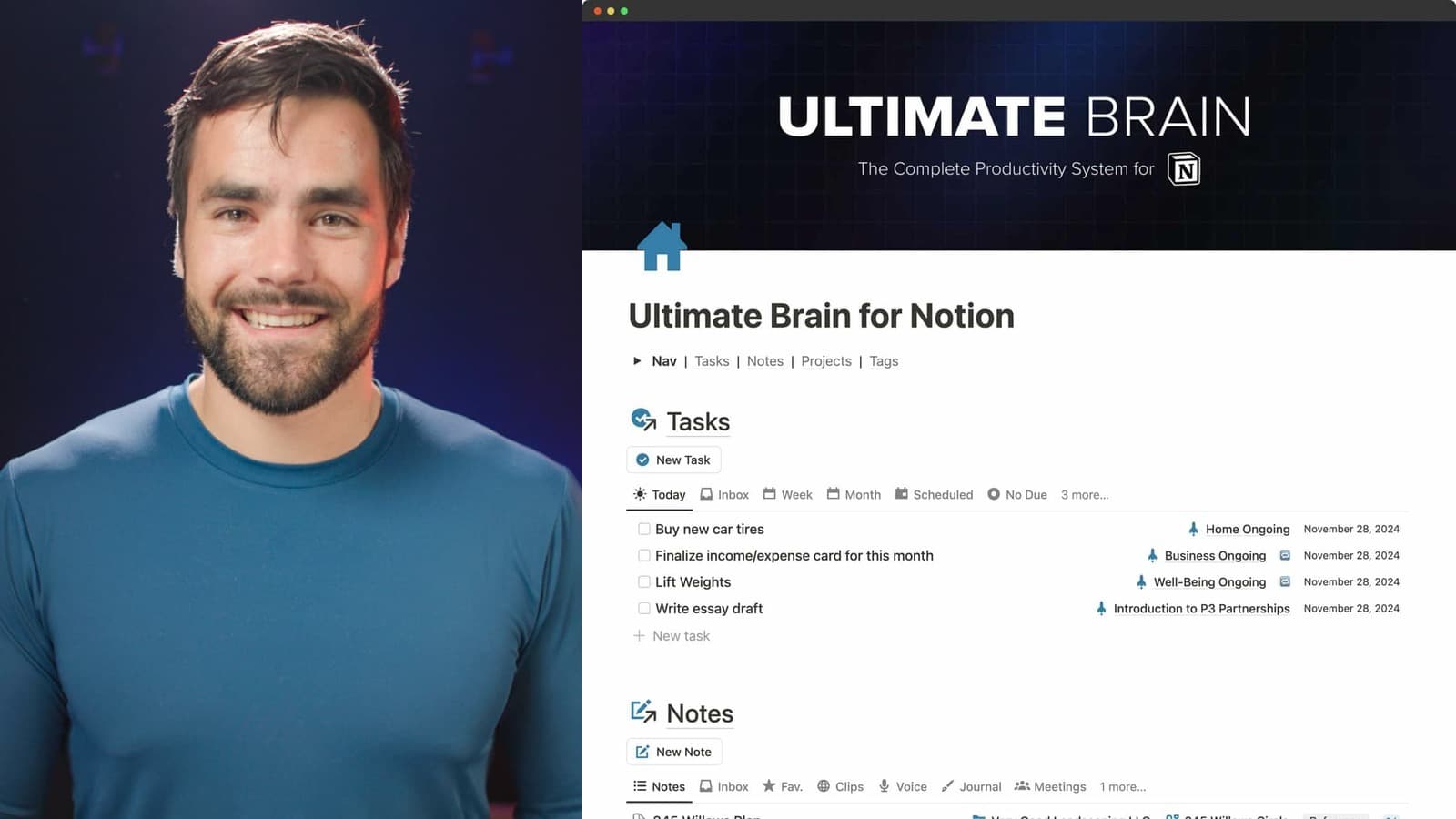
Thomas Frank faced the same crossroads. He built $120K/month in Notion template revenue—but templates are one-time purchases, not subscriptions. The creators who convert that niche authority into recurring revenue build fundamentally more durable businesses.
Norton's cohort programs are a step toward recurring engagement. The potential here—a subscription platform for ongoing Excel and Microsoft Office skill-building, personalized to career goals—is significant. The niche is proven. The audience is there. The next step is the recurring model.
What Creators Can Learn from Miss Excel
Norton's path from corporate job to seven-figure creator business contains lessons that apply far beyond Excel:
1. Niche specificity beats breadth. "Business software" is a category. "Excel on TikTok" is a defensible position. The narrower your niche, the faster you build authority—and the easier it is to build a product that solves a specific problem for a specific person.
2. Format is a competitive advantage. Dancing while teaching pivot tables wasn't accidental—it was a creative choice that nobody else had made. Platform-native formats that feel native to the medium travel further than content that could exist anywhere.
3. Build the product before you need it. Norton launched courses while her audience was still growing. She didn't wait until she had a million followers and then ask "now what?" The framework for moving from content to product is learnable—and the earlier you apply it, the better.
4. Press coverage compounds. Each Business Insider or Fast Company mention drives new traffic years later. When you build something genuinely impressive, seek out the coverage. It's long-term SEO and brand equity you can't buy.
Building Bigger Than Your Audience
Kat Norton didn't wait for Excel to become a trending topic. She created the category. She made spreadsheet education entertaining, built an audience that trusted her, and immediately turned that trust into revenue.
The gap between where she is and what's possible is the subscription model. She has a niche (Microsoft Office productivity), an audience that pays for expertise, and a proven product market. A subscription platform—ongoing skill development, new modules monthly, community and accountability features—would convert her existing buyers into recurring revenue that compounds year over year.
That's the difference between building a business and building an asset. A business runs on launches. An asset compounds.
Kat Norton built the proof of concept. The next chapter is recurring revenue.
Frequently Asked Questions
Who is Kat Norton (Miss Excel)?
Kat Norton is an American content creator and entrepreneur who built the Miss Excel brand by teaching Microsoft Excel on TikTok. She started posting in June 2020 while working a corporate sales job, went viral within months, and left her job after her course revenue surpassed her salary. She now runs Miss Excel full-time, selling Excel and Microsoft Office courses to a global audience.
How much money does Miss Excel make?
Business Insider reported that Kat Norton earned over $1 million in her first year selling Excel courses, with monthly revenue exceeding $100,000 at her peak. Revenue comes from self-paced course bundles ($197–$497), LinkedIn Learning partnerships, brand sponsorships, and cohort programs.
How did Miss Excel go viral on TikTok?
Kat Norton's TikToks combined Excel tutorials with trending music and dance moves—making a dry corporate skill entertaining and shareable. Her first viral video attracted millions of views and thousands of followers rapidly. The format was novel: nobody else was teaching Excel with the energy of a music video, and TikTok's algorithm rewarded the engagement.
Can you really build a business from Excel tutorials?
Yes. Kat Norton's $1M+ first year proves the demand. The key is niche specificity (Excel, not "productivity"), audience trust built through consistent valuable content, and a product that goes deeper than free content. Norton's courses provided structured learning that her free TikToks couldn't deliver, creating a clear reason to pay.
How can I build a business like Miss Excel?
The playbook: pick a specific expertise your audience searches for, build niche authority through consistent content, and design a product that delivers ongoing value rather than a one-time transaction. If you want to build a subscription product around your expertise—learn how we work →.
Want to turn your expertise into a subscription business? We build software products for creators—$0 upfront, 3-week delivery, we handle all the tech forever.
Book Your Free Strategy Call →